
Acting
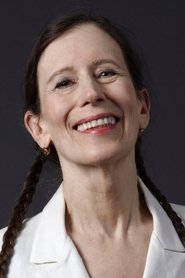
Meredith Monk
Born
1942-11-20 (83)
Place of birth
Queens, New York City, New York, USA
Known for
Acting
Credits
39 titles
Meredith Jane Monk (born November 20, 1942) is an American composer, performer, director, vocalist, filmmaker, and choreographer. From the 1960s onwards, Monk has created multi-disciplinary works which combine music, theatre, and dance, recording extensively for ECM Records.[1] In 1991, Monk composed Atlas, an opera, commissioned and produced by the Houston Opera and the American Music Theater Festival. Her music has been used in films by the Coen Brothers (The Big Lebowski, 1998) and Jean-Luc Godard (Nouvelle Vague, 1990 and Notre musique, 2004). Trip hop musician DJ Shadow sampled Monk's "Dolmen Music" on the song "Midnight in a Perfect World". In 2015, she was awarded the National Medal o…
Known for
 7.5
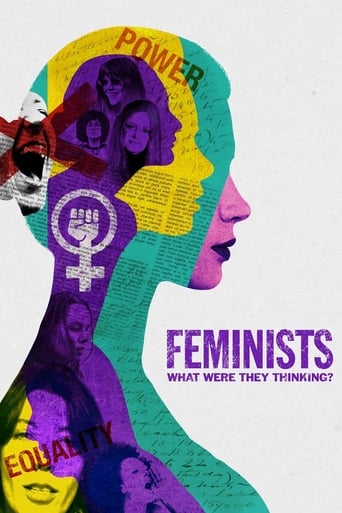
7.5In 1977, a book of photographs captured an awakening - women shedding the cultural restrictions of their childhoods and embracing their full humanity. This documentary revisits those photos, those women and those times and takes aim at our culture today that alarmingly shows the need for continued change.
Feminists: What Were They Thinking?
2018
 NR
NRTurtle Dreams, produced for WGBH-TV, originally aired September 2, 1983. Shot by Ping Chong. Composed by Meredith Monk, performed by her and her Vocal Ensemble.
Turtle Dreams
1983
 NR
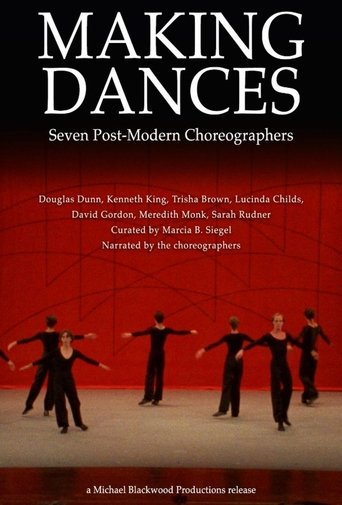
NRMade in 1980, this film explores the contemporary dance scene through the work of seven New York-based choreographers. They discuss the nature of dance and the evolution of their own work. Filmed at rehearsals, performances, and during interviews, the film is a unique primary source. The artistic roots of these seven artists can be found in Martha Graham's concern with modern life as a subject for dance and in Merce Cunningham's emphasis on the nature of movement. In the 1960s, the interaction of art forms generated choreographic innovations. Especially influential was John Cage, whose radical ideas served as a point of departure for much of the new choreography. Each of the choreographers in Making Dances draws inspiration from the Graham/Cunningham tradition, yet each makes a highly distinctive statement. Structure, movement in non-fictive time and space, and the nature of movement itself are recurring themes.
Making Dances: Seven Post-Modern Choreographers
1980
 NR
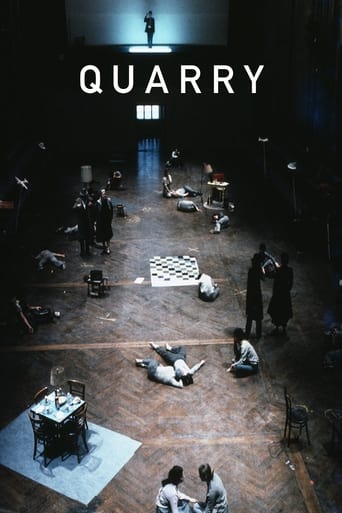
NRMonk’s meditation on WWII and recurring cycles of intolerance, fascism, and cruelty in history originated in 1976 as a live stage work utilizing elements of music, images, movement, dialogue, film, sound, and light. This film version, shot on 16mm in the Lepercq Space at the Brooklyn Academy of Music in 1977, was created in partnership with the New York Public Library for the Performing Arts as part of their initiative to document ground-breaking live performance for future restaging. QUARRY centers on a sick American child (played by Monk herself) whose world darkens as her illness progresses, this darkening including the rise of a dictator. A unique document of this innovative, boundary-blurring production, and a work of art on its own terms, replete with a film-within-a-film directed by Monk in 1975.
Quarry
1978
 8.0
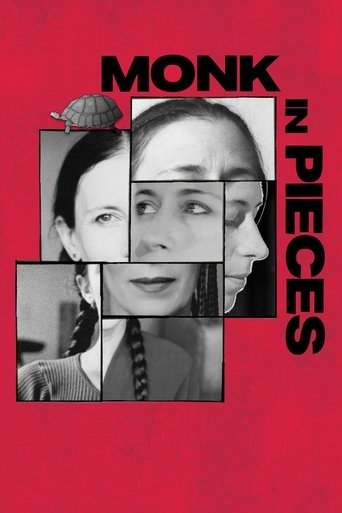
8.0Visionary composer and performer Meredith Monk overcame hostile critics to become one of the great artists of her time. In her seventh decade of creativity, she ponders how such singular work can continue without her.
Monk in Pieces
2025
Meredith Monk's "Ellis Island" is a haunting, reflective piece on Ellis Island and the immigrants who passed through there.
Ellis Island
1981
Film credits
2010s · 3 titles
7.5In 1977, a book of photographs captured an awakening - women shedding the cultural restrictions of their childhoods and embracing their full humanity. This documentary revisits those photos, those women and those times and takes aim at our culture today that alarmingly shows the need for continued change.
Feminists: What Were They Thinking?
2018
 NR
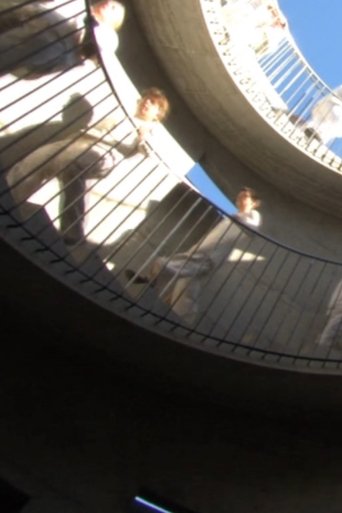
NRA beguiling film from Meredith Monk, shot at Ann Hamilton's Tower, Geyserville, CA. Likely filmed a decade previously.
Songs of Ascension
2019
 NR
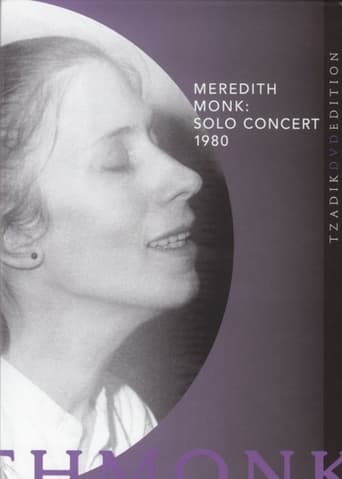
NRA rare and powerful solo performance by one of the most important and original artists in the world. Recorded in 1980 at a studio out on Long Island, Meredith is in full voice, relaxed and creatively inspired by a small audience of Monk cogniscenti. Recorded with a 3-camera shoot and then put on the shelf, Tzadik is proud to present the first release of this astonishing virtuoso solo performance. Featuring acappella compositions as well as pieces where she accompanies herself on the piano, this is an intimate view of this remarkable and sensitive Renaissance woman.
Meredith Monk: Solo Concert 1980
2013
2000s · 2 titles
 10.0
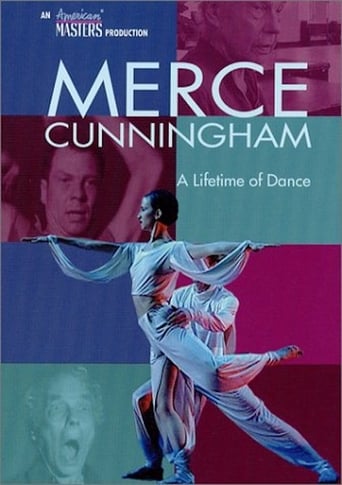
10.0A history of the work of Merce Cunningham.
Merce Cunningham: A Lifetime of Dance
2001
Meredith Monk is a composer, singer, director, choreographer and creator of new opera, music theater, films and installations. She has been proclaimed as a 'magician of the voice' and 'one of America's coolest composers.
Meredith Monk: Inner Voice
2009
1990s · 3 titles
Profile of choreographer, composer and performer Meredith Monk, recorded on location in her home base, New York City. Monk discusses some ideas underlying her work: her attraction to the eloquence of the human voice, and the direct communication made possible by the abstract qualities of music; her emphasis on the poetic rather than the political; her belief in the power of images; her willingness to take risks. She describes her experiences in working in different media, such as audio recordings, films, and videos, and the challenge of weaving them together.
Meredith Monk
1994
 NR
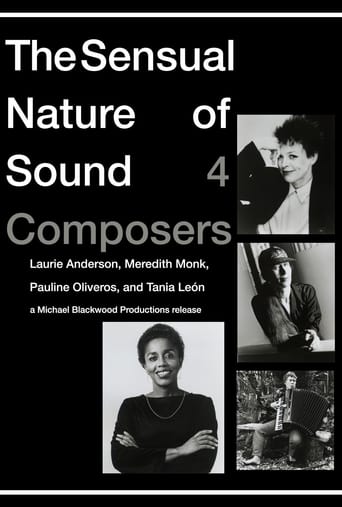
NRThe Sensual Nature of Sound portrays four New York based composers and performers in terms of their musical lives and artistic passion. Though Laurie Anderson, Tania Leon, Meredith Monk and Pauline Oliveros are all pioneers in American music, each composer pursues a distinct direction of her own. Their rehearsals and performances show a common pursuit of lyrical storytelling through which a new set of contemporary narratives has been forged. Through body, sound, movement and composition, these women have forged their own path through the wild world of modern music.
The Sensual Nature of Sound: 4 Composers Laurie Anderson, Tania Leon, Meredith Monk, Pauline Oliveros
1993
A documentary on Meredith Monk, a composer, singer, director/choreographer, and creator of new opera, music theater works, films, and installations. She pioneered what is now called "extended vocal technique" and "interdisciplinary performance."
Meredith
1995
1980s · 6 titles
NRTurtle Dreams, produced for WGBH-TV, originally aired September 2, 1983. Shot by Ping Chong. Composed by Meredith Monk, performed by her and her Vocal Ensemble.
Turtle Dreams
1983
NRMade in 1980, this film explores the contemporary dance scene through the work of seven New York-based choreographers. They discuss the nature of dance and the evolution of their own work. Filmed at rehearsals, performances, and during interviews, the film is a unique primary source. The artistic roots of these seven artists can be found in Martha Graham's concern with modern life as a subject for dance and in Merce Cunningham's emphasis on the nature of movement. In the 1960s, the interaction of art forms generated choreographic innovations. Especially influential was John Cage, whose radical ideas served as a point of departure for much of the new choreography. Each of the choreographers in Making Dances draws inspiration from the Graham/Cunningham tradition, yet each makes a highly distinctive statement. Structure, movement in non-fictive time and space, and the nature of movement itself are recurring themes.
Making Dances: Seven Post-Modern Choreographers
1980
 NR
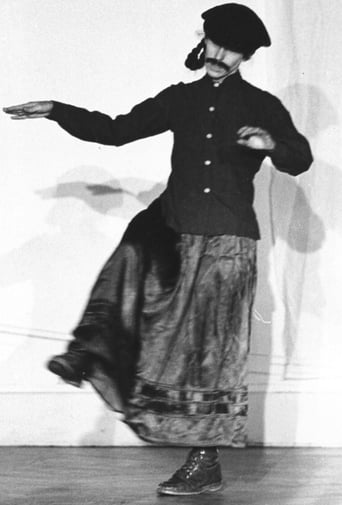
NRA filming of Meredith Monk and Ping Chong's 1973 experimental theatre piece.
Paris
1982
 NR
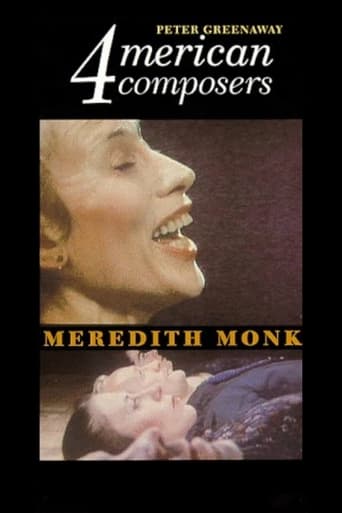
NRA television documentary produced for British Television directed by Peter Greenaway
Four American Composers: Meredith Monk
1983
 8.2
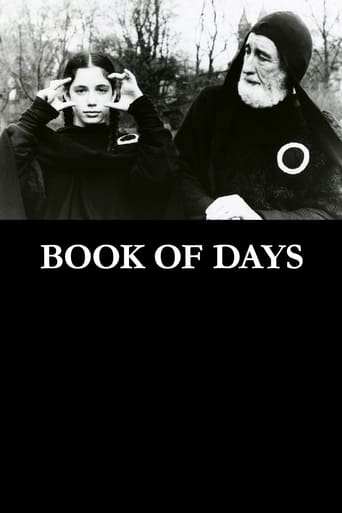
8.2This film is a rich and haunting reinvention of medieval life that never loses its contemporary perspective. When the plague afflicts a village, this world seems to go up in an apocalypse of hatred and disease that presages our own century.
Book of Days
1989
 6.3
6.3This is a documentary about an unfinished movie. Frank Zappa and the Mothers of Invention try to film the sci-fi epic "Uncle Meat."
Uncle Meat
1987
1970s · 4 titles
NRMonk’s meditation on WWII and recurring cycles of intolerance, fascism, and cruelty in history originated in 1976 as a live stage work utilizing elements of music, images, movement, dialogue, film, sound, and light. This film version, shot on 16mm in the Lepercq Space at the Brooklyn Academy of Music in 1977, was created in partnership with the New York Public Library for the Performing Arts as part of their initiative to document ground-breaking live performance for future restaging. QUARRY centers on a sick American child (played by Monk herself) whose world darkens as her illness progresses, this darkening including the rise of a dictator. A unique document of this innovative, boundary-blurring production, and a work of art on its own terms, replete with a film-within-a-film directed by Monk in 1975.
Quarry
1978
After World War II a group of young writers, outsiders and friends who were disillusioned by the pursuit of the American dream met in New York City. Associated through mutual friendships, these cultural dissidents looked for new ways and means to express themselves. Soon their writings found an audience and the American media took notice, dubbing them the Beat Generation. Members of this group included writers Jack Kerouac, William Burroughs, Allen Ginsberg. a trinity that would ultimately influence the works of others during that era, including the "hippie" movement of the '60s. In this 55-minute video narrated by Allen Ginsberg, members of the Beat Generation (including the aforementioned Burroughs, Anne Waldman, Peter Orlovsky, Amiri Baraka, Diane Di Prima, and Timothy Leary) are reunited at Naropa University in Boulder, CO during the late 1970's to share their works and influence a new generation of young American bohemians.
Fried Shoes Cooked Diamonds
1979
 NR
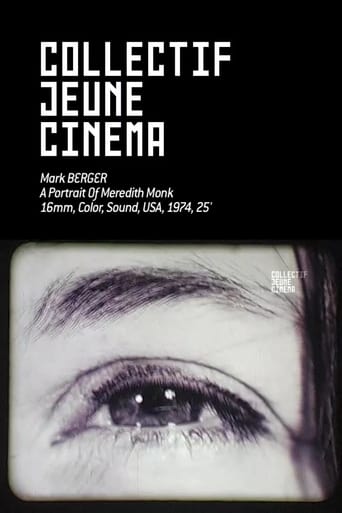
NR‘Mark Berger’s years of work as a representational painting can be found here, in this film portrait. Mark Berger was an actor in the Meredith Monk company and the House, from 1971 to 1974, and he uses an improvisation technique in this vision of interaction painter/subject, filmmaker/actor, artist/artist. Mark Berger’s camera records and interviews a relationship between himself and Meredith Monk, in the same way that Meredith Monk’s music as soundtrack, is a fundamental and structural aspect of film material editing. The shooting, like the painting of a portrait, was executed in a number of sessions, over a period of several weeks.’ A. Sichel.
A portrait of Meredith Monk
1974
 10.0
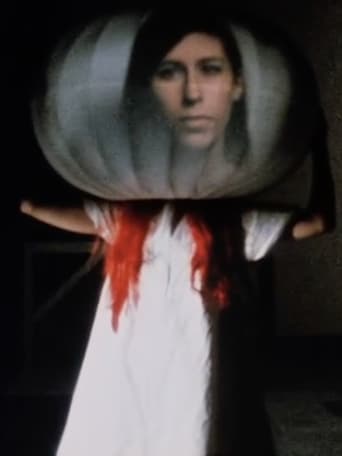
10.0A re-creation for film of Meredith Monk's seminal dance/theater work incorporating film and original music, voice, guitar, and audiotapes. Originally performed in 1966, Judson Memorial Church, New York.
16 Millimeter Earrings
1979
1960s · 2 titles
Constructed around a found soundtrack in which a strict female voice delivers a test of perception and comprehension, Institutional Quality’s sound and image relationship become detached as the filmmakerloses interest in his subject.
Institutional Quality
1969
 6.0
6.0Schneemann's classic 1966 aerial "Kinetic Theatre" work was first staged at St. Mark's Church in the Bowery, with eight performers moving to a score of randomized encounter on layers of rigged ropes and pulleys. One of two video documents of this early and influential performance, this version is enacted outdoors in trees and across the surface of a lake, in sequences directed by Schneemann.
Water Light/Water Needle (Lake Mah Wah, NJ)
1966
Behind the camera
NRMonk’s meditation on WWII and recurring cycles of intolerance, fascism, and cruelty in history originated in 1976 as a live stage work utilizing elements of music, images, movement, dialogue, film, sound, and light. This film version, shot on 16mm in the Lepercq Space at the Brooklyn Academy of Music in 1977, was created in partnership with the New York Public Library for the Performing Arts as part of their initiative to document ground-breaking live performance for future restaging. QUARRY centers on a sick American child (played by Monk herself) whose world darkens as her illness progresses, this darkening including the rise of a dictator. A unique document of this innovative, boundary-blurring production, and a work of art on its own terms, replete with a film-within-a-film directed by Monk in 1975.
Quarry
1978
NRMonk’s meditation on WWII and recurring cycles of intolerance, fascism, and cruelty in history originated in 1976 as a live stage work utilizing elements of music, images, movement, dialogue, film, sound, and light. This film version, shot on 16mm in the Lepercq Space at the Brooklyn Academy of Music in 1977, was created in partnership with the New York Public Library for the Performing Arts as part of their initiative to document ground-breaking live performance for future restaging. QUARRY centers on a sick American child (played by Monk herself) whose world darkens as her illness progresses, this darkening including the rise of a dictator. A unique document of this innovative, boundary-blurring production, and a work of art on its own terms, replete with a film-within-a-film directed by Monk in 1975.
Quarry
1978
Meredith Monk's "Ellis Island" is a haunting, reflective piece on Ellis Island and the immigrants who passed through there.
Ellis Island
1981
 NR
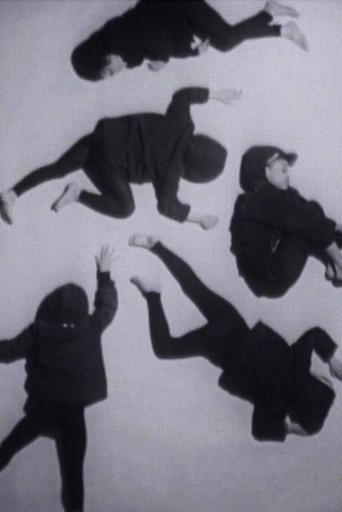
NRChildren play. First shown normally, then shown in reverse.
Children
1967
NRA filming of Meredith Monk and Ping Chong's 1973 experimental theatre piece.
Paris
1982
8.2This film is a rich and haunting reinvention of medieval life that never loses its contemporary perspective. When the plague afflicts a village, this world seems to go up in an apocalypse of hatred and disease that presages our own century.
Book of Days
1989
8.2This film is a rich and haunting reinvention of medieval life that never loses its contemporary perspective. When the plague afflicts a village, this world seems to go up in an apocalypse of hatred and disease that presages our own century.
Book of Days
1989
 NR
NRDancers rotate. Dancing shown from above. Black and white.
Rotation
2021
 NR
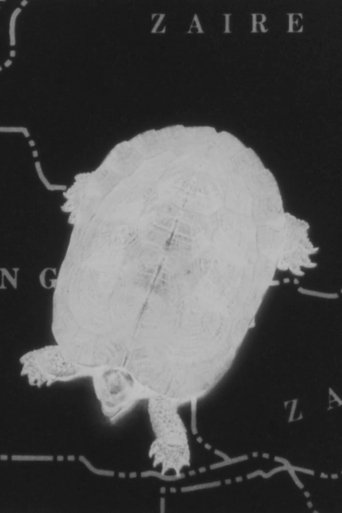
NRFilm by Robert Withers and Meredith Monk.
Turtle Dreams
1987
Early 16mm film by Meredith Monk also presented as an installation piece to play continuously forward and backward for an unrestricted time period.
Ball Bearing
1968
 NR
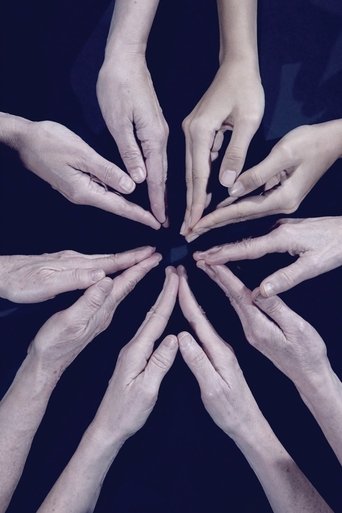
NRFive sets of hands form an ever-changing mandala.
Hand Mandala
2018
 NR
NRA key, a strawberry, diamonds. Drawing on Meredith Monk's Buddhist practice, "Offering Shrine" is a meditation on human objects.
Offering Shrine
2021
 NR
NRLike gnomes, dancers emerge from and hide again behind boulders. Not to be confused with Meredith Monk's 1978 opera of the same name.
Quarry
1975
 NR
NRHands move in front of various surfaces.
Hand Reflection
2016
 NR
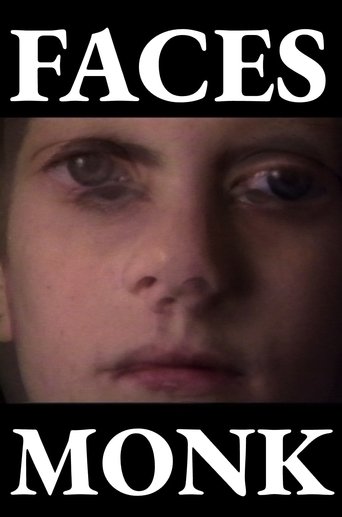
NRVarious faces are shown in close up.
Faces
1994
 NR
NRNot to be confused with her longer film from 1981, this is an earlier film about Ellis Island made by Meredith Monk.
Ellis Island
1979
NRA beguiling film from Meredith Monk, shot at Ann Hamilton's Tower, Geyserville, CA. Likely filmed a decade previously.
Songs of Ascension
2019
 NR
NRNot to be confused with Robert Withers's 1979 "16 Millimeter Earrings" which builds upon this work, Meredith Monk's 1966 "16 Millimeter Earrings" is a black and white film of a woman holding a magnifying glass to each eye and tearing apart several wigs.
16 Millimeter Earrings
1966