
Directing
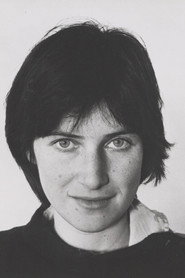
Chantal Akerman
Born — Died
1950-06-06 — 2015-10-05
Place of birth
Brussels, Belgium
Known for
Directing
Credits
99 titles
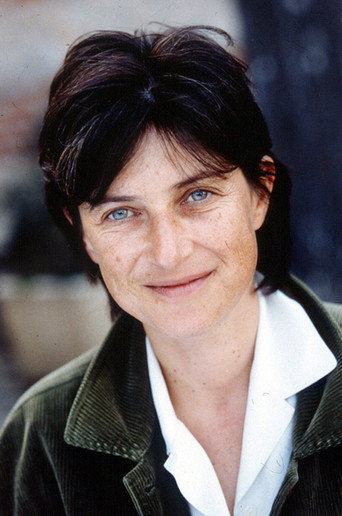
Chantal Anne Akerman (June 6, 1950 – October 5, 2015) was a Belgian film director, artist and professor of film at the City College of New York. Her best-known film is Jeanne Dielman, 23 quai du Commerce, 1080 Bruxelles (1975). Despite being categorised as such by others, Akerman frequently distanced herself from the feminist label, explaining, "when people say there is a feminist film language, it is like saying there is only one way for women to express themselves". Instead, Akerman acknowledged that her cinematic approach took inspiration from the writings of Gilles Deleuze and Felix Guattari, as well as from filmmakers Michael Snow and Jean-Luc Godard. Many directors have cited Akerman…
Known for
 6.0
6.0A talk show presented by Michel Drucker
Les Rendez-vous du dimanche
1975
 5.0
5.0No synopsis available yet.
Ciné regards
1978
 7.4
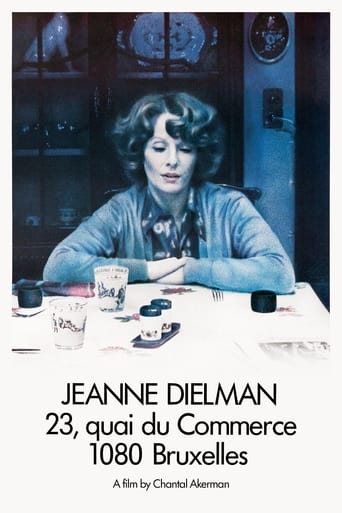
7.4A lonely young widow lives with her son following an immutable order: while the boy is in school, she cares for their apartment, does chores, and receives clients in the afternoon.
Jeanne Dielman, 23, quai du Commerce, 1080 Bruxelles
1976
 5.6
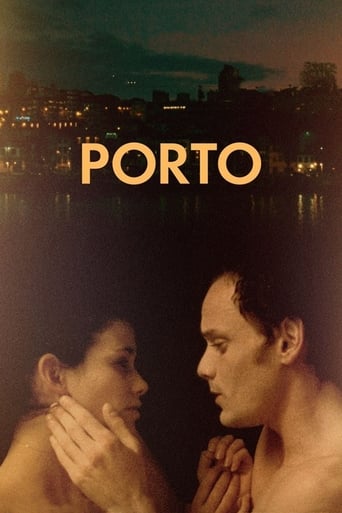
5.6Jake and Mati are two outsiders in the northerly Portuguese city of Porto who once experienced a brief connection. A mystery remains about the moments they shared, and in searching through memories, they relive the depths of a night uninhibited by the consequences of time.
Porto
2017
 6.5
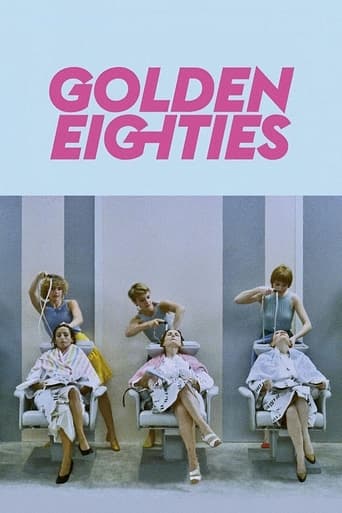
6.5In a lively shopping center, proprietors and customers are bustling, including three women vying for a man's heart with song and dance.
Golden Eighties
1986
 5.7
5.7Ariane lives with Simon in his large Paris flat. Simon is obsessed with her: he wants to know everything about her, secretly follows her when she goes out, asks questions all the time, even in the most intimate moments. Ariane seems to take it all in stride, but Simon realises that she's hiding something.
The Captive
2000
Film credits
2020s · 6 titles
 2.0
2.0We thought we'd seen, read, and heard everything there was to see about the Cannes Film Festival, from the glitz and gossip to the scandals and censorship. And yet, Emmanuel Barnault's "Morceaux de Cannes" (Pieces of Cannes), by this leading expert on Italian and French cinema, convinces us otherwise. The third largest event in the world (after the Olympic Games and the FIFA World Cup) reveals its secrets only sparingly, as this film attests. The result of passionate research in the INA archives, these 52 minutes, without interviews or voice-over narration, string together rare and sometimes previously unseen footage. Taken together, they tell a surprising, original, and heartwarming story of the Festival. On the beach, on a street corner, in a restaurant, or in the privacy of a hotel room, these forgotten archives summon the greatest filmmakers, actors, and actresses of the last seventy years, from Jean Cocteau to David Lynch, for an anthology of the Festival's history.
Morceaux de Cannes
2021
 NR
NR"Going through my mini DVs shot over the past decade, I rediscovered a forgotten night sequence of Chantal Akerman and Sonia Wieder-Atherton leaving a brasserie where we had dined together in Montparnasse. The excerpt stayed with me for a while. This prompted me to focus on Chantal’s sound work in her films and her very close collaboration with cellist, Sonia Wieder-Atherton with whom she made more than 20 films. And, since New York, Paris and Moscow were places the three of us had in common, I intertwined some of my images with hers."
Son chant
2021
 6.4
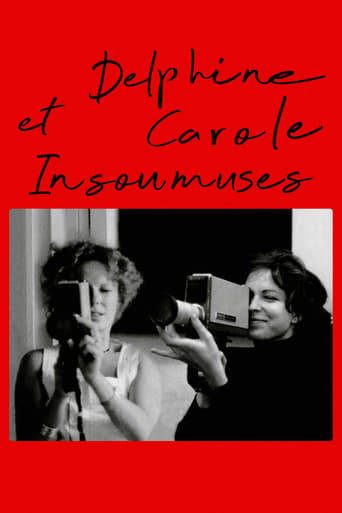
6.4In the 70s, actress Delphine Seyrig and director Carole Roussopoulos, both militant feminists, were the pioneers of video activism in France. They documented the demonstrations of French feminists and used the new technologies to counter the poor representation of women in the public media.
Delphine and Carole
2020
 NR
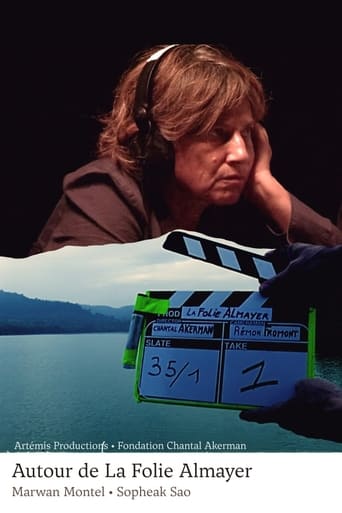
NRAn in-depth, behind-the-scenes documentary about the making of Chantal Akerman's 2011 film adaptation of Joseph Conrad's book about a merchant, whose dreams of riches for his daughter are shattered by his greed and prejudice.
Autour de La Folie Almayer
2022
 NR
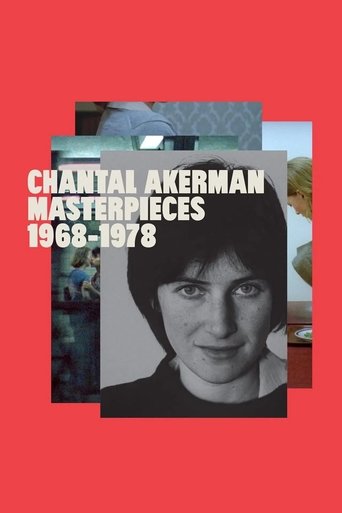
NRThis visual essay, produced in 2023, builds upon rare radio interviews that Chantal Akerman gave in 1975 and 1977, in which she reflects on her films and her ascendance to critical success.
In Her Own Words
2024
 8.0
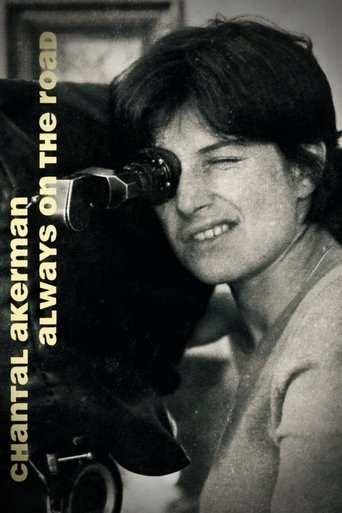
8.0An analysis of the work of Belgian filmmaker Chantal Akerman (1950-2015), an experimental and innovative artist, both in content and form, who has left her mark on cultural memory and on the creations of other artists.
Chantal Akerman: Always on the Road
2024
2010s · 12 titles
5.6Jake and Mati are two outsiders in the northerly Portuguese city of Porto who once experienced a brief connection. A mystery remains about the moments they shared, and in searching through memories, they relive the depths of a night uninhibited by the consequences of time.
Porto
2017
 6.0
6.0Filmmaker José Luis Guerin documents his experience during a year of traveling as a guest of film festivals to present his previous film. What emerges is a wonderfully humane and sincere portrayal of the people that he meets when he goes off the beaten track in some of the world's major cities.
Guest
2011
 6.4
6.4Using the words and ideas of great filmmakers, from archival interviews with Alfred Hitchcock and Robert Bresson to new interviews with Mike Leigh, David Lynch, and Jonas Mekas, Oscar-winning filmmaker Chuck Workman shows what these filmmakers and others do that can't be expressed in words - but only in cinema.
What Is Cinema?
2013
 5.7
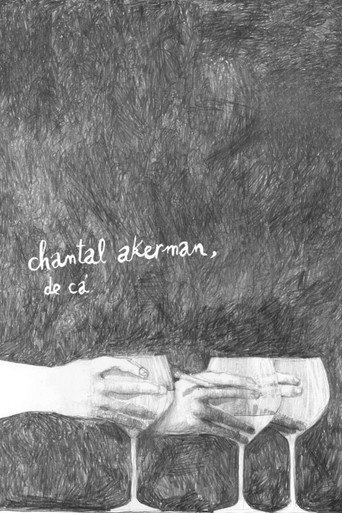
5.7Invented by the post-New Wave, the exercise is well-known: put a filmmaker in the frame, make him talk about his career, evoke his admirations, rummage in his methods, and add words to silences, spoken images to seen images. It’s always very instructive. As is the case here too. Chantal Akerman, passing through South America, talks about herself for an hour, and it’s fascinating. Even if her recalling of the relationship between the cinema and time makes up only a few rare minutes.
Chantal Akerman, From Here
2010
 6.7
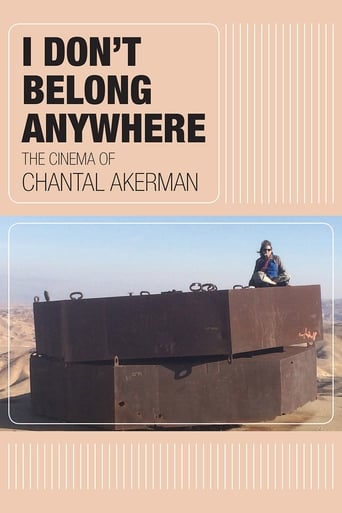
6.7I Don’t Belong Anywhere - Le Cinéma de Chantal Akerman, explores some of the Belgian filmmaker’s 40 plus films. From Brussels to Tel-Aviv, from Paris to New-York, this documentary charts the sites of her peregrinations. An experimental filmmaker, a nomad, Chantal Akerman shares her cinematic trajectory, one that has never ceased to interrogate the the meaning of her existence. Thanks in great part to the interventions of her editor, Claire Atherton, she delineates the origins of her film language and her aesthetic stance.
I Don't Belong Anywhere: The Cinema of Chantal Akerman
2015
 6.5
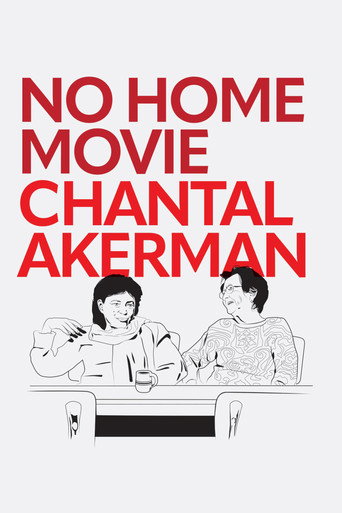
6.5Akerman films her mother Natalia, an elderly woman of Polish origin, in her Brussels apartment. For two hours, we will see them eating, chatting and sharing memories, sometimes accompanied by Sylvaine, Chantal's sister. Also, and to show how small the world has become, Chantal remains in contact with her mother at other times of the year via Skype from lands as far away from Belgium as Oklahoma or New York.
No Home Movie
2016
Ibro Hasanović met Chantal Akerman in 2014. From their recent friendship, this film was born, where the director reflects on her childhood, her work, and what "belonging" means to her.
On Belonging
2016
 NR
NRA new short film by Vivian Ostrovsky remembering Chantal Akerman, beginning with their first meeting in the early 1970s. Using her own footage of Chantal Akerman, the filmmaker remembers a few moments that illustrate Chantal's personality. Forty years of friendship condensed into four minutes...
But Elsewhere Is Always Better
2016
In August 2012, Chantal Akerman went scouting in the American South with the idea of shooting a documentary there, inspired by the story of Jake England. A project she ended up abandoning.
My Name is Chantal Akerman
2016
 8.0
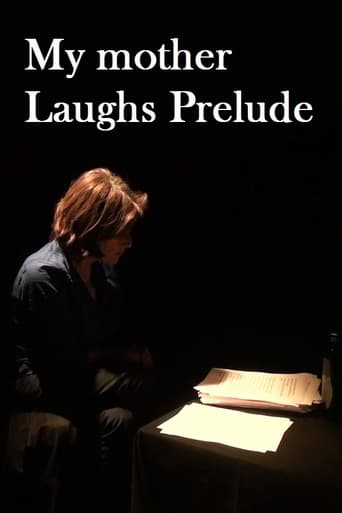
8.0“My mother laughs prelude” is a performance from the book that Chantal made about her mother. In 2013, Akerman’s mother was dying. She flew back from New York to Brussels to care for her, and between dressing her, feeding her and putting her to bed, she wrote. She wrote about her childhood, the escape her mother made from Auschwitz but didn’t talk about, the difficulty of loving her girlfriend, C., her fear of what she would do when her mother did die. Among these imperfectly perfect fragments of writing about her life, she placed stills from her films. "My Mother Laughs" is both the distillation of the themes Akerman pursued throughout her creative life, and a version of the simplest and most complicated love story of all: that between a mother and a daughter.
My Mother Laughs Prelude
2012
 NR
NRInterview with the Belgian director discussing her films from the 1970s and her mother’s influence on her work.
Chantal Akerman
2013
What Lies Beneath the Sky is a portrait of New York City hit by hurricane Sandy shot in Super 8.
What Lies Beneath the Sky
2015
2000s · 9 titles
 5.3
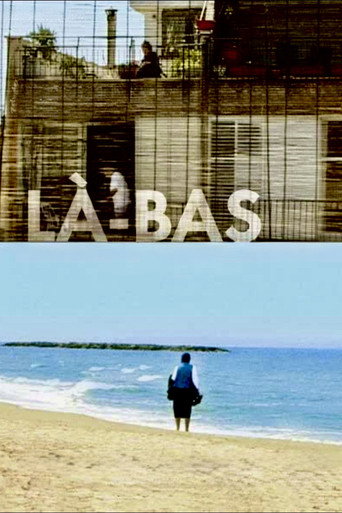
5.3Akerman spends a month in Tel Aviv, in an apartment by the sea, contemplating childhood, family, and her Jewish identity.
Down There
2006
 7.1
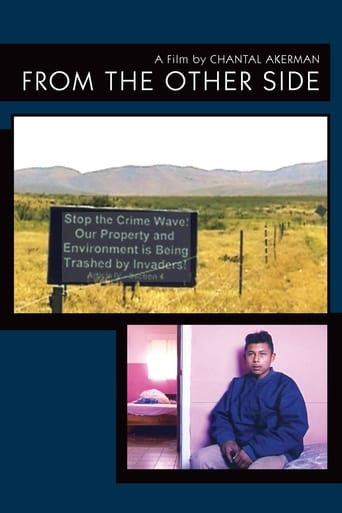
7.1From the Other Side is a haunting and minimalist documentary that explores the tragic realities of illegal immigration along the U.S.–Mexico border, focusing on the twin towns of Agua Prieta, Sonora, and Douglas, Arizona. Director Chantal Akerman utilizes her signature long, observational takes and static shots to capture the harsh desert landscape and the architectural starkness of the border wall. Through deeply personal interviews with Mexican migrants and grieving families, contrasted against the high-tech tracking systems and perspectives of white American ranchers, the film highlights how tightened border security forced migrants into increasingly perilous terrain. Ultimately, the documentary serves as a poetic, empathetic, and politically charged meditation on xenophobia, separation, and the human cost of geographic boundaries.
From the Other Side
2003
 NR
NREl Pampero records Chantal Akerman's visit to Argentina in 2005.
Chantal Akerman, an autobiography
2006
 NR
NRExplores some of the most innovative attempts by contemporary artists, filmmakers, architects etc to explore multiple Temporalities and to counter the uniform sense of time promoted by our technology-driven society.
The Art of Time
2009
 8.0
8.0"To begin with, we have Babette Mangolte, the camera technician on Hotel Monterey, La Chambre and Jeanne Dielman, but who for me also symbolises the New York years, she introduced me into the very core of what was new, even revolutionary, in New York, and our interview is about the city of New York in the early 70s." – Chantal Akerman
Interview with Babette Mangolte
2007
 NR
NRWhat a revelation and a privilege it is to see Chantal Akerman at work. Its French title a pun, this film offers behind-the-scenes footage from the production of Tomorrow We Move: makeup and costume tests, script readings, scene blocking and rehearsals, and on-set interviews with Aurore Clément and Sylvie Testud, her lead actresses, as well as Akerman herself.
Making of Tomorrow We Move
2004
"Aurore, my friend, Aurore, the main actress of Rendez-vous d'Anna and other films of mine, our meeting, the why and how of our joint work". – Chantal Akerman
Interview with Aurore Clément
2007
 8.0
8.0In this 2007 interview, an off-camera Chantal Akerman interviews her mother about her films. The producers of the interview originally intended to edit out Akerman’s questions but ultimately decided to keep them in to preserve the candor of the mother-daughter rapport.
Interview with my Mother, Natalia Akerman
2007
 8.0
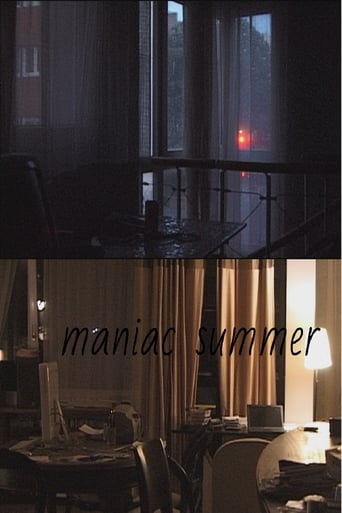
8.0Maniac Summer consists of images and sounds recorded in Paris in the summer of 2009. It is a sprawling triptych without a beginning or end and with no specific subject or topic. The camera is positioned in front of a window and left running. It observes movements, registers noises coming from the street or nearby park, captures Chantal Akerman going about her business in her apartment: smoking, working, talking on the telephone. Fragments from the artist’s everyday life are featured in the installation’s central video, while the adjoining panels are more symbolically charged; in them, various images from the former have been isolated, modified and repeated. These abstract afterimages act as a kind of memory, looking back to the images in the installation’s centrepiece as so many shadows of its reality.
Maniac Summer
2009
1990s · 4 titles
 NR
NRWhat makes European cinema so special? Find out in Paul Joyce’s feature-length documentary, Pictures of Europe, which examines the differences between American independent and Hollywood movies and films from European directors. Featuring luminary iconoclasts from European cinema such as Agnes Varda, Bernardo Bertolucci and Pedro Almodovar, as well as American counterpoints from Paul Schrader, and those who have crossed back and forth, such as Paul Verhoeven
Pictures of Europe
1990
 7.0
7.0Jonas Mekas assembles 160 portraits, appearances, and fleeting sketches of underground and independent filmmakers captured between 1955 and 1996. Fast-paced and archival in spirit, the film celebrates the avant-garde as its own “nation of cinema,” a vital community existing outside the dominance of commercial film.
Birth of a Nation
1997
 6.6
6.6Janine Bazin and André Labarthe approached Chantal Akerman about making a film for the series; eagerly, Akerman proposed a number of filmmakers—but all had already been done. So she suggested…“How about me?” Akerman creates a fascinating self-portrait that takes us through her career, aided by critics Emmanuel Burdeau and Jean Narboni and filmmaker Luc Moullet.
Chantal Akerman by Chantal Akerman
1997
 7.3
7.3Chantal Akerman reads a script detailing the woes that befell her on the day she thought about "The Future of Cinema". The camera continuously rotates 360 degrees around her apartment as she rereads the script at an exponentially increasing speed. At its heart, an homage to Godard.
The Day When...
1997
1980s · 13 titles
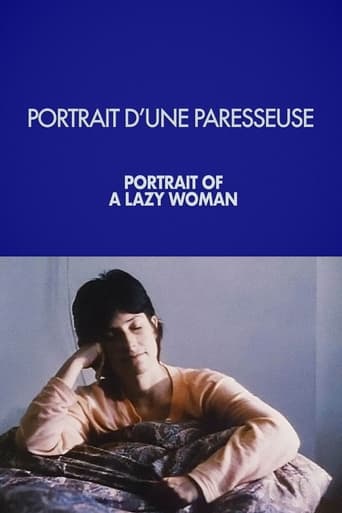 6.3
6.3Belgian director Chantal Akerman struggles to overcome her laziness in the name of making a film about the subject.
Portrait of a Lazy Woman
1986
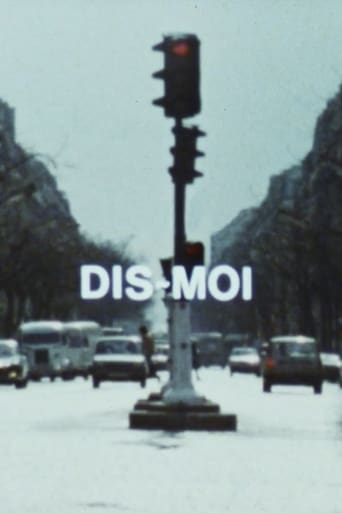 6.2
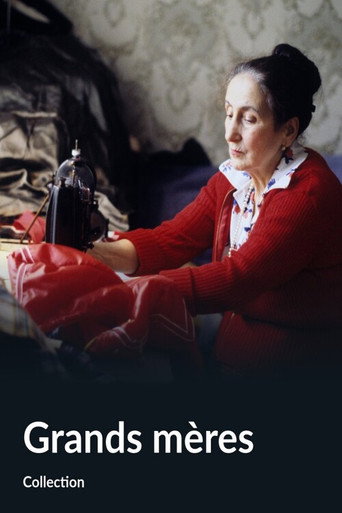
6.2Chantal Akerman meets with elderly Jewish women in Paris, all of them survivors of the Shoah, and listens to their family stories. Between interviews, Akerman's mother Natalia speaks of her own family. Made for a French miniseries on grandmothers.
Tell Me
1980
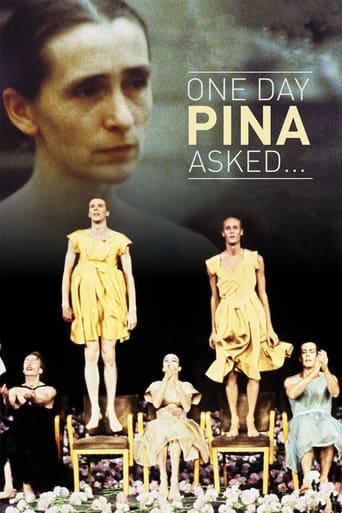 6.1
6.1Chantal Akerman followed famous Choreographer Pina Bausch and her company of dancers, The Tanzteater Wuppertal, for five weeks while they were on tour in Germany, Italy and France. Her objective was to capture Pina Bausch's unparalleled art not only on stage by behind the scenes.
One Day Pina Asked...
1989
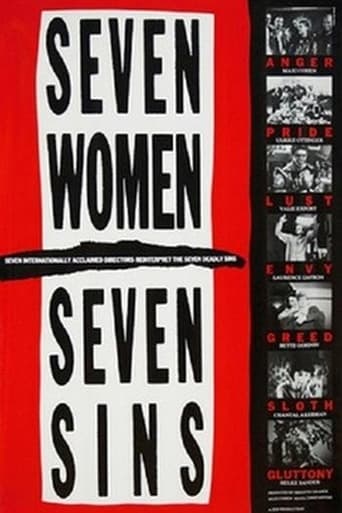 5.5
5.5Seven Women, Seven Sins (1986) represents a quintessential moment in film history. The women filmmakers invited to direct for the seven sins were amongst the world's most renown: Helke Sander (Gluttony), Bette Gordon (Greed), Maxi Cohen (Anger), Chantal Akerman (Sloth), Valie Export (Lust), Laurence Gavron (Envy), and Ulrike Ottinger (Pride). Each filmmaker had the liberty of choosing a sin to interpret as they wished. The final film reflected this diversity, including traditional narrative fiction, experimental video, a musical, a radical documentary, and was delivered in multiple formats from 16, super 16, video and 35mm.
Seven Women, Seven Sins
1986
 7.2
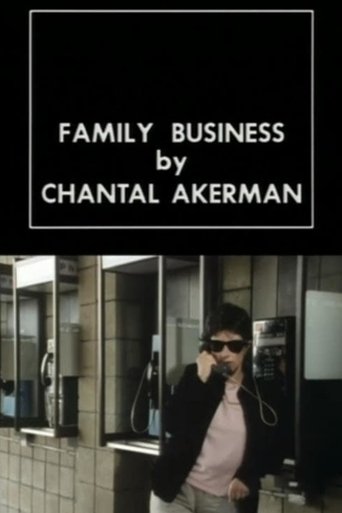
7.2Chantal Akerman was commissioned by Visions to make this short film for £20,000. It was first shown on 21 November 1984, on Channel 4. Akerman herself plays the role of a director visiting Hollywood to find financing from an uncle she hardly knows. Very little goes to plan… Also stars Aurore Clement and Colleen Camp.
Family Business
1984
 7.2
7.2Philippe Garrel’s documentary on France’s second wave of masterful filmmakers. Featuring Jean Eustache, Chantal Akerman, André Téchiné, Leos Carax, Jacques Doillon and Benoit Jacquot.
The Ministries of Art
1989
 6.8
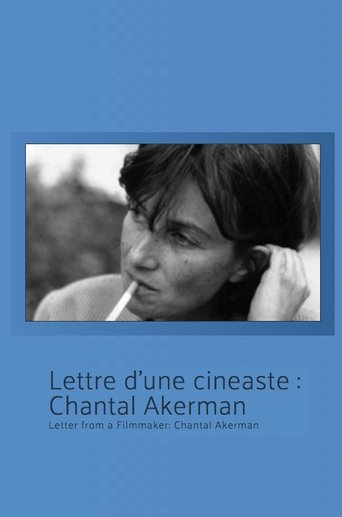
6.8A filmmaker’s self-portrait, asking hard questions of herself and of us. Invoking Aurore Clément as a kind of stand-in or proxy, a glamorous counterpart to Akerman who sports a drawn-on moustache. What is cinema for? Who is it for? If the Mosaic prohibition on making graven images includes film images, then where does that leave a Jewish filmmaker?
Letter from a Filmmaker: Chantal Akerman
1984
 9.0
9.0Documentary about women in the film industry. Numerous notable actresses and female directors share their thoughts.
Calling the Shots
1988
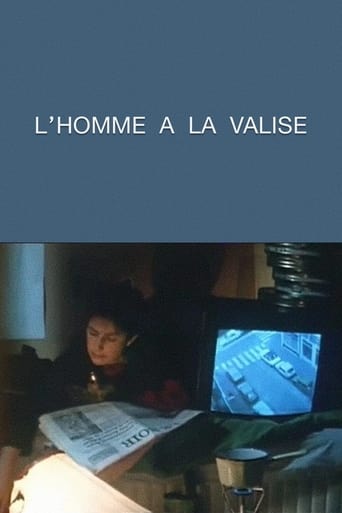 6.3
6.3A sensitivity to sounds coming from the activities of an unwelcome guest in the close quarters of an apartment is only one important component in this atmospheric, avant-garde drollery by Chantal Akerman. When the apartment owner comes home, her guest is settled in and at first, the slightly reclusive host decides simply to eat her breakfast in her room instead of having to face morning conversation with her guest. Sounds of the toilet flushing, the bath water running and splashing, footsteps pacing, and furniture moving invade the hostess' refuge in her bedroom like the frontrunners of an all-out offensive. She locks herself up for 28 days, life's detritus accumulating around her, just so she does not have to go out to face the nemesis that lurks beyond her door.
The Man with the Suitcase
1983
 7.3
7.3A young film director is making a movie with his friend Christa. In the film-within-the-film there are two couples, one real, one imagined, and the film - told through five dreams - is as much the story of a film in-production, as the birth of a child.
She Spent So Many Hours Under the Sun Lamps
1985
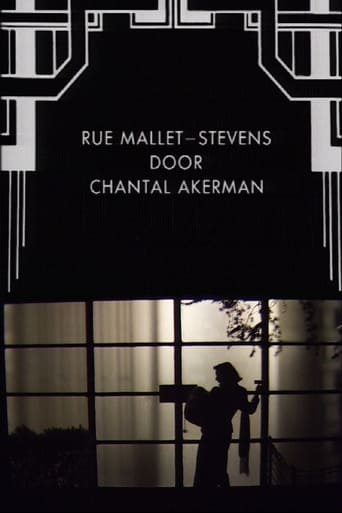 7.6
7.6Commissioned for the centenary of the famous French architect and designer Robert Mallet-Stevens and shot on the street that bears his name in Paris' 16th arrondissement, Rue Mallet-Stevens depicts a mysterious, nocturnal scene of romance (featuring Akerman and her partner, the cellist Sonia Wieder-Atherton) unfolding before and inside one of the street's modernist constructions.
Mallet-Stevens Street
1986
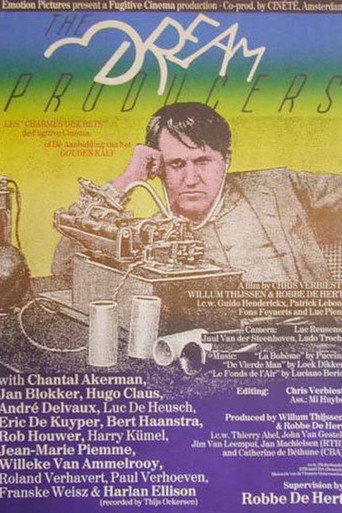 10.0
10.0Documentary exploring why Belgian television doesn't invest more money in Belgian cinema as is the case in e.g. the netherlands.
De droomproducenten
1984
No synopsis available yet.
L'inhumaine
1987
1970s · 9 titles
7.4A lonely young widow lives with her son following an immutable order: while the boy is in school, she cares for their apartment, does chores, and receives clients in the afternoon.
Jeanne Dielman, 23, quai du Commerce, 1080 Bruxelles
1976
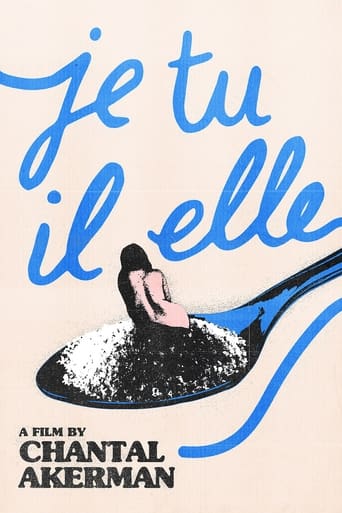 6.5
6.5A woman suffers a subdued psychological breakdown in the wake of a devastating breakup.
Je Tu Il Elle
1974
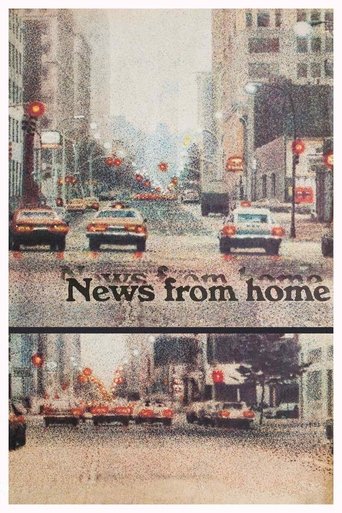 7.1
7.1Impersonal and beautiful images of Akerman's life in New York are combined with letters from her loving but manipulative mother, read by Akerman herself.
News from Home
1976
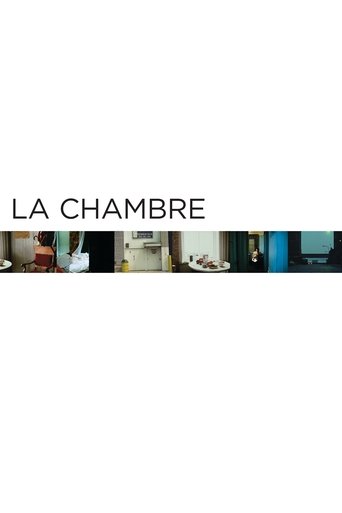 5.4
5.4Akerman, by using 360° camera pans, explores the space of a small room like a succession of still lifes : a chair, fruits on a table, solitary objects in waiting. Amidst this thread of movement, there is only one living figure: a young woman, sitting on a bed.
La chambre
1972
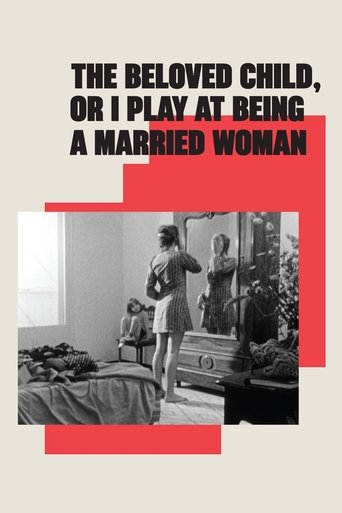 6.6
6.6In this unfinished work, a young mother, her little girl, as well as a friend of the mother's, spend the summer in a villa. The mother shares her problems – womanhood, motherhood, being married - with her friend, dresses up with the little girl, observes her body, and does a series of household tasks.
The Beloved Child, or I Play at Being a Married Woman
1971
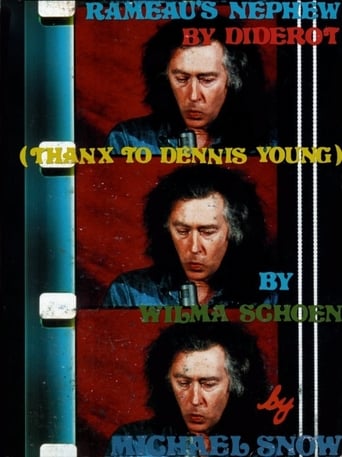 7.8
7.8Various unrelated vignettes, often juxtaposing sound and image.
‘Rameau’s Nephew’ by Diderot (Thanx to Dennis Young) by Wilma Schoen
1974
 NR
NRNo synopsis available yet.
Chantal Akerman: An Interview
1976
 6.0
6.0During the filming of "Jeanne Dielman" Sami Frey recorded what was happening on the set. A film about a film in the making.
Around Jeanne Dielman
1975
In this recently rediscovered home movie, three women—Chantal Akerman, Babette Mangolte, and Epp Kotkas—share a precious moment of laughter and friendship while filming Hotel Monterey in 1972 in New York.
Untitled
1970
1960s · 3 titles
 5.0
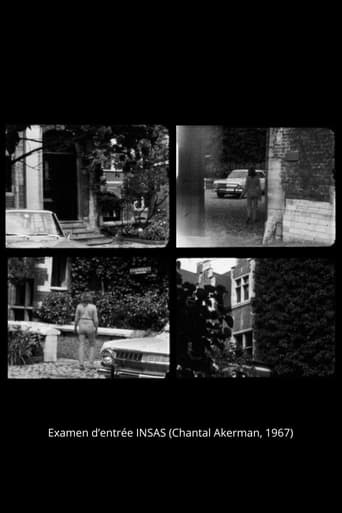
5.0The beginnings of Chantal Akerman behind the camera at the ages of 17 and 18: four films shot in Super 8 during the summer, presented to enter the National Higher Institute of Performing Arts and Broadcasting Techniques (INSAS, Brussels) in September 1967, where she was accepted.
Examen d'entrée INSAS
1967
 6.2
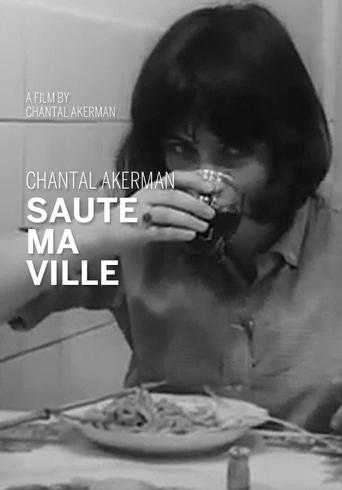
6.2Suburbs of Brussels. A young woman locks herself in the kitchen of her apartment, as she blissfully devotes herself to dismantling the household chores, frenetically humming as she goes. A burlesque pamphlet against female alienation.
Blow Up My Town
1968
 5.2
5.2A 3rd short super 8 film made by Chantal Akerman in Knokke to be used to be accepted at INSAS starring her friends her mother and herself.
Knokke: Une petite fiction 2
1967
Series credits
Behind the camera
7.4A lonely young widow lives with her son following an immutable order: while the boy is in school, she cares for their apartment, does chores, and receives clients in the afternoon.
Jeanne Dielman, 23, quai du Commerce, 1080 Bruxelles
1976
7.4A lonely young widow lives with her son following an immutable order: while the boy is in school, she cares for their apartment, does chores, and receives clients in the afternoon.
Jeanne Dielman, 23, quai du Commerce, 1080 Bruxelles
1976
6.5In a lively shopping center, proprietors and customers are bustling, including three women vying for a man's heart with song and dance.
Golden Eighties
1986
6.5In a lively shopping center, proprietors and customers are bustling, including three women vying for a man's heart with song and dance.
Golden Eighties
1986
5.7Ariane lives with Simon in his large Paris flat. Simon is obsessed with her: he wants to know everything about her, secretly follows her when she goes out, asks questions all the time, even in the most intimate moments. Ariane seems to take it all in stride, but Simon realises that she's hiding something.
The Captive
2000
5.7Ariane lives with Simon in his large Paris flat. Simon is obsessed with her: he wants to know everything about her, secretly follows her when she goes out, asks questions all the time, even in the most intimate moments. Ariane seems to take it all in stride, but Simon realises that she's hiding something.
The Captive
2000
5.3Akerman spends a month in Tel Aviv, in an apartment by the sea, contemplating childhood, family, and her Jewish identity.
Down There
2006
5.3Akerman spends a month in Tel Aviv, in an apartment by the sea, contemplating childhood, family, and her Jewish identity.
Down There
2006
6.3Belgian director Chantal Akerman struggles to overcome her laziness in the name of making a film about the subject.
Portrait of a Lazy Woman
1986
6.3Belgian director Chantal Akerman struggles to overcome her laziness in the name of making a film about the subject.
Portrait of a Lazy Woman
1986
 5.8
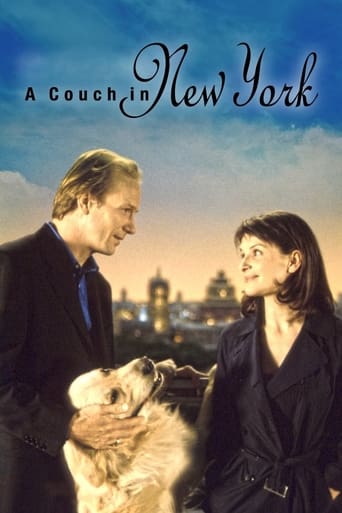
5.8A burnt-out New York psychoanalyst exchanges apartments with a Parisian woman. When his patients arrive, they talk to her and then pay. He returns early and becomes a patient as well.
A Couch in New York
1996
5.8A burnt-out New York psychoanalyst exchanges apartments with a Parisian woman. When his patients arrive, they talk to her and then pay. He returns early and becomes a patient as well.
A Couch in New York
1996
6.5A woman suffers a subdued psychological breakdown in the wake of a devastating breakup.
Je Tu Il Elle
1974
6.5A woman suffers a subdued psychological breakdown in the wake of a devastating breakup.
Je Tu Il Elle
1974
6.5A woman suffers a subdued psychological breakdown in the wake of a devastating breakup.
Je Tu Il Elle
1974
 7.0
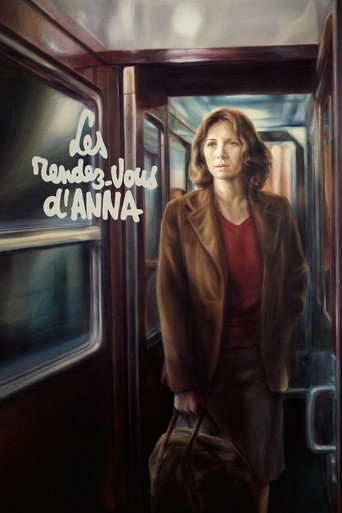
7.0Detached filmmaker Anna Silver arrives in Germany to show her latest film; over the course of some days, she encounters a variety of new and old faces, some of whom make personal revelations to her to little affect.
The Meetings of Anna
1978
7.0Detached filmmaker Anna Silver arrives in Germany to show her latest film; over the course of some days, she encounters a variety of new and old faces, some of whom make personal revelations to her to little affect.
The Meetings of Anna
1978
6.2Chantal Akerman meets with elderly Jewish women in Paris, all of them survivors of the Shoah, and listens to their family stories. Between interviews, Akerman's mother Natalia speaks of her own family. Made for a French miniseries on grandmothers.
Tell Me
1980
 6.6
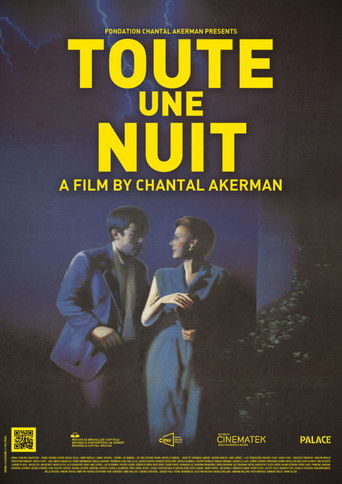
6.6Following over two dozen different individuals in the almost wordless atmosphere of a dark night in a Brussels town, acceptance and rejection in the realm of romance is examined.
Toute une nuit
1982
6.6Following over two dozen different individuals in the almost wordless atmosphere of a dark night in a Brussels town, acceptance and rejection in the realm of romance is examined.
Toute une nuit
1982
6.1Chantal Akerman followed famous Choreographer Pina Bausch and her company of dancers, The Tanzteater Wuppertal, for five weeks while they were on tour in Germany, Italy and France. Her objective was to capture Pina Bausch's unparalleled art not only on stage by behind the scenes.
One Day Pina Asked...
1989
 7.0
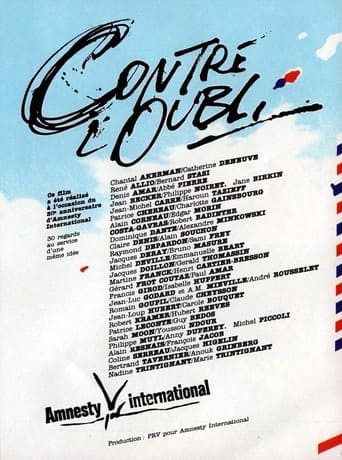
7.0A compilation of 30 French filmmakers, Alain Resnais and Jean Luc Godard among them, who use film to make a plea on behalf of a political prisoner. Jean Luc Godard and Anne Marie Mieville's film concerns the plight of Thomas Wanggai, West Papuan activist who has since died in prison. The short films were commissioned by Amnesty International.
Lest We Forget
1991
6.6Janine Bazin and André Labarthe approached Chantal Akerman about making a film for the series; eagerly, Akerman proposed a number of filmmakers—but all had already been done. So she suggested…“How about me?” Akerman creates a fascinating self-portrait that takes us through her career, aided by critics Emmanuel Burdeau and Jean Narboni and filmmaker Luc Moullet.
Chantal Akerman by Chantal Akerman
1997
 6.8
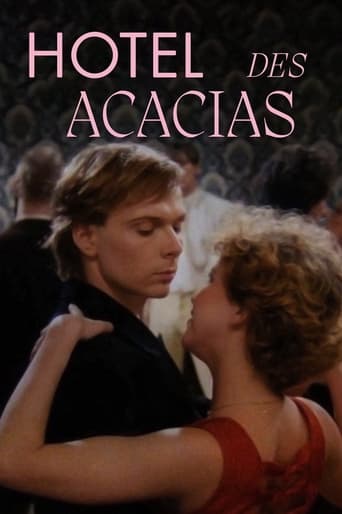
6.8Several young men and women arrive one after the other at Hôtel des Acacias, full of hope, desire and vitality. In the bustle of this hotel, everyone is looking for love. Hôtel des Acacias was an exercise guided in 1982 by Chantal Akerman at Belgium’s INSAS audio-visual college.
Hôtel des Acacias
1982
 7.1
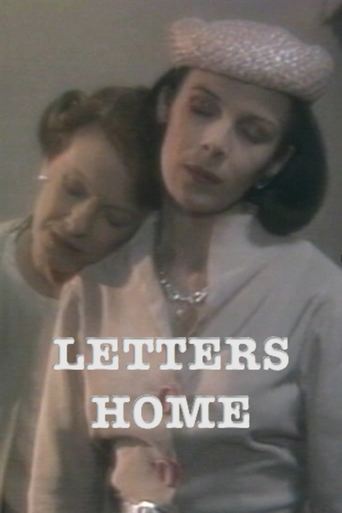
7.1A filmed adaptation of Rose Leiman Goldemberg’s play, based on Sylvia Plath’s intense correspondence with her mother Aurelia, from the time the poet was in university until her suicide. Delphine Seyrig and her niece Coralie Seyrig recite Sylvia and Aurelia’s letters to the audience directly.
Letters Home
1986
 7.0
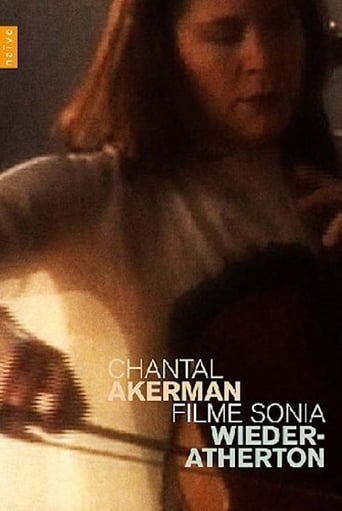
7.0Presented in 2 parts, this 83 minute piece documents Wieder-Atherton's idea to do a set of pieces from across central and eastern Europe, including Russia. Some weren't originally written for cello, but she had them transcribed. Some were songs for voices, which goes with Wieder-Atherton saying in an earlier film she made with Chantal Akerman that she aspires to play the cello in a way that it carries the specificity of emotion of the human voice. She explains at the beginning of both parts how she feels each country in the region has it's own personality expressed in its music, coming from its individual history and culture, but that each land in the area is also 'impregnated' as she puts it, by the others, so there are certain elements that run throughout.
East with Sonia Wieder-Atherton
2009
7.1From the Other Side is a haunting and minimalist documentary that explores the tragic realities of illegal immigration along the U.S.–Mexico border, focusing on the twin towns of Agua Prieta, Sonora, and Douglas, Arizona. Director Chantal Akerman utilizes her signature long, observational takes and static shots to capture the harsh desert landscape and the architectural starkness of the border wall. Through deeply personal interviews with Mexican migrants and grieving families, contrasted against the high-tech tracking systems and perspectives of white American ranchers, the film highlights how tightened border security forced migrants into increasingly perilous terrain. Ultimately, the documentary serves as a poetic, empathetic, and politically charged meditation on xenophobia, separation, and the human cost of geographic boundaries.
From the Other Side
2003
7.1From the Other Side is a haunting and minimalist documentary that explores the tragic realities of illegal immigration along the U.S.–Mexico border, focusing on the twin towns of Agua Prieta, Sonora, and Douglas, Arizona. Director Chantal Akerman utilizes her signature long, observational takes and static shots to capture the harsh desert landscape and the architectural starkness of the border wall. Through deeply personal interviews with Mexican migrants and grieving families, contrasted against the high-tech tracking systems and perspectives of white American ranchers, the film highlights how tightened border security forced migrants into increasingly perilous terrain. Ultimately, the documentary serves as a poetic, empathetic, and politically charged meditation on xenophobia, separation, and the human cost of geographic boundaries.
From the Other Side
2003
7.3Chantal Akerman reads a script detailing the woes that befell her on the day she thought about "The Future of Cinema". The camera continuously rotates 360 degrees around her apartment as she rereads the script at an exponentially increasing speed. At its heart, an homage to Godard.
The Day When...
1997
7.3Chantal Akerman reads a script detailing the woes that befell her on the day she thought about "The Future of Cinema". The camera continuously rotates 360 degrees around her apartment as she rereads the script at an exponentially increasing speed. At its heart, an homage to Godard.
The Day When...
1997
5.5Seven Women, Seven Sins (1986) represents a quintessential moment in film history. The women filmmakers invited to direct for the seven sins were amongst the world's most renown: Helke Sander (Gluttony), Bette Gordon (Greed), Maxi Cohen (Anger), Chantal Akerman (Sloth), Valie Export (Lust), Laurence Gavron (Envy), and Ulrike Ottinger (Pride). Each filmmaker had the liberty of choosing a sin to interpret as they wished. The final film reflected this diversity, including traditional narrative fiction, experimental video, a musical, a radical documentary, and was delivered in multiple formats from 16, super 16, video and 35mm.
Seven Women, Seven Sins
1986
5.5Seven Women, Seven Sins (1986) represents a quintessential moment in film history. The women filmmakers invited to direct for the seven sins were amongst the world's most renown: Helke Sander (Gluttony), Bette Gordon (Greed), Maxi Cohen (Anger), Chantal Akerman (Sloth), Valie Export (Lust), Laurence Gavron (Envy), and Ulrike Ottinger (Pride). Each filmmaker had the liberty of choosing a sin to interpret as they wished. The final film reflected this diversity, including traditional narrative fiction, experimental video, a musical, a radical documentary, and was delivered in multiple formats from 16, super 16, video and 35mm.
Seven Women, Seven Sins
1986
7.2Chantal Akerman was commissioned by Visions to make this short film for £20,000. It was first shown on 21 November 1984, on Channel 4. Akerman herself plays the role of a director visiting Hollywood to find financing from an uncle she hardly knows. Very little goes to plan… Also stars Aurore Clement and Colleen Camp.
Family Business
1984
7.2Chantal Akerman was commissioned by Visions to make this short film for £20,000. It was first shown on 21 November 1984, on Channel 4. Akerman herself plays the role of a director visiting Hollywood to find financing from an uncle she hardly knows. Very little goes to plan… Also stars Aurore Clement and Colleen Camp.
Family Business
1984
 7.0
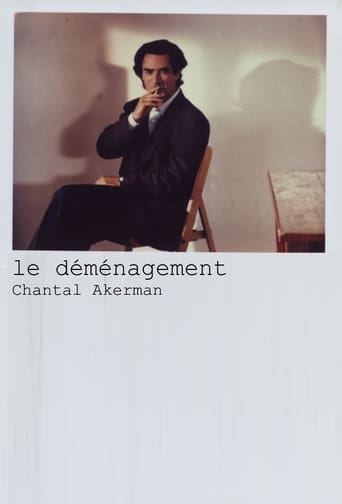
7.0"A man stands amid unpacked boxes in his new home, delivering an extended monologue on indecision and dislocation. This rarely seen, overlooked gem created by Akerman for television explores the quotidian crises and profound feelings of alienation that run through her work." - BAM
Moving In
1993
7.0"A man stands amid unpacked boxes in his new home, delivering an extended monologue on indecision and dislocation. This rarely seen, overlooked gem created by Akerman for television explores the quotidian crises and profound feelings of alienation that run through her work." - BAM
Moving In
1993
 6.8
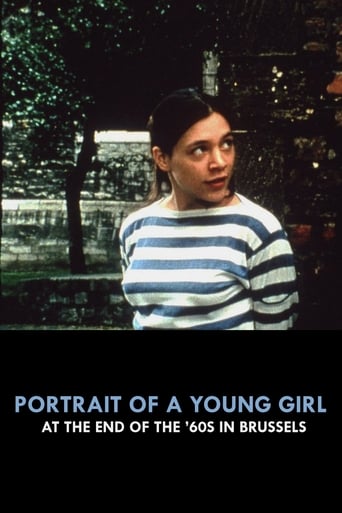
6.8The main character, Michèle, spends the hour discussing her views of life with some old and new friends, and tries to understand her own feelings about her place in the world and her sexuality, while a camera follows along at close range.
Portrait of a Young Girl at the End of the '60s in Brussels
1994
6.8The main character, Michèle, spends the hour discussing her views of life with some old and new friends, and tries to understand her own feelings about her place in the world and her sexuality, while a camera follows along at close range.
Portrait of a Young Girl at the End of the '60s in Brussels
1994
7.1Impersonal and beautiful images of Akerman's life in New York are combined with letters from her loving but manipulative mother, read by Akerman herself.
News from Home
1976
7.1Impersonal and beautiful images of Akerman's life in New York are combined with letters from her loving but manipulative mother, read by Akerman herself.
News from Home
1976