
Known for
 8.0
8.0No synopsis available yet.
Hříšní lidé města pražského
1969
Ten-year-old Martin attends religion at school and is always an altar boy at church. That's the wish of his mother Anci, a bigoted believer. However, Martin encounters hypocrisy at every turn and begins to doubt that God exists. His older brother Eda steals money from his father with impunity, his father steals materials from the cooperative building, and even Martin's best friend Kovajs "sins" without scruples. Pastor Hornof tries in various ways to maintain his influence over his sheep, but is hindered by people with a "progressive" socialist mindset. When Martin's beloved Angora rabbits, who have done nothing wrong to anyone, die, the boy's faith is clear. He decides to join a pioneer organisation. All that's left is to keep it a secret from his mother...
Králíci ve vysoké trávě
1962
 6.2
6.2Tóna Bohácek has been a great worry to his mother, Mrs Bohácková. All his friends equal in age are already married and some of them even have children - only Tóna still has nothing. Mother Bohácková thus publishes an ad in the Lonely Hearts column on behalf of her son. From among the girls who responded, she picks out Janicka, a girl from the neighboring village, and then forces Tóna to go to have a look at her and bring her home. The date of the two young people, however, does not turn out well due to the embarrassment on both sides, and Tóna returns home drowning in the feeling of ridiculousness. On the way, he picks up hitchhiker Kveta from Prague. Only then, he realizes that the mother with her festive dinner is waiting for him and Janicka at home and thus asks Kveta to substitute for the girl from the ad.
Young Bohácek's Sufferings
1969
 8.0
8.0No synopsis available yet.
Jarní píseň
1944
 5.0
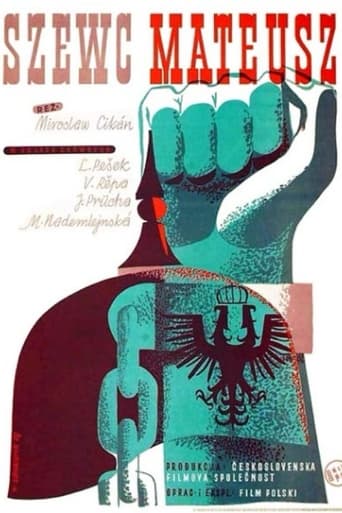
5.0The revolutionary year of 1848 brought great hopes among the hitherto silent classes, awakening social and national hopes. The response also penetrated the remote countryside, even as far as the Podkrkonoše Mountains. The young shoemaker there began to take an interest in social and political events, and he also experienced disappointment in later developments.
O ševci Matoušovi
1948
 6.0
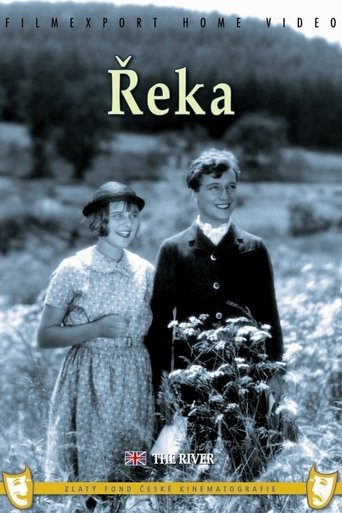
6.0The story of love, between a sturdy village boy and a gentle country girl, filmed with a movingly genuine charm.
Young Love
1933
Film credits
1960s · 9 titles
Ten-year-old Martin attends religion at school and is always an altar boy at church. That's the wish of his mother Anci, a bigoted believer. However, Martin encounters hypocrisy at every turn and begins to doubt that God exists. His older brother Eda steals money from his father with impunity, his father steals materials from the cooperative building, and even Martin's best friend Kovajs "sins" without scruples. Pastor Hornof tries in various ways to maintain his influence over his sheep, but is hindered by people with a "progressive" socialist mindset. When Martin's beloved Angora rabbits, who have done nothing wrong to anyone, die, the boy's faith is clear. He decides to join a pioneer organisation. All that's left is to keep it a secret from his mother...
Králíci ve vysoké trávě
1962
6.2Tóna Bohácek has been a great worry to his mother, Mrs Bohácková. All his friends equal in age are already married and some of them even have children - only Tóna still has nothing. Mother Bohácková thus publishes an ad in the Lonely Hearts column on behalf of her son. From among the girls who responded, she picks out Janicka, a girl from the neighboring village, and then forces Tóna to go to have a look at her and bring her home. The date of the two young people, however, does not turn out well due to the embarrassment on both sides, and Tóna returns home drowning in the feeling of ridiculousness. On the way, he picks up hitchhiker Kveta from Prague. Only then, he realizes that the mother with her festive dinner is waiting for him and Janicka at home and thus asks Kveta to substitute for the girl from the ad.
Young Bohácek's Sufferings
1969
 5.0
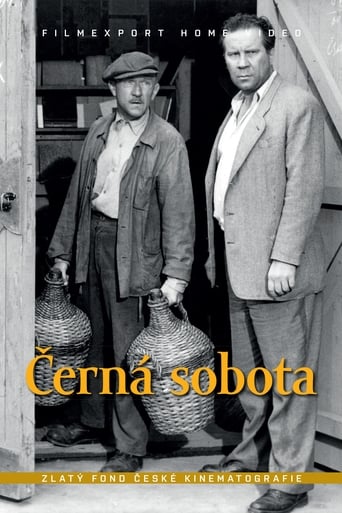
5.0In this crime story, surprisingly, neither the all-powerful criminals nor the spies or saboteurs are pursued, as was once common. The plot is almost mundane: someone unwittingly siphoned off alcohol from a tanker, unaware that it was deadly methyl alcohol, intended for industrial use. Finding out where the poison has been transported and which people it endangers requires painstaking work.
Black Saturday
1961
Based on a novel by Maria Majerova, this well-photographed but routine romantic drama is directed and co-scripted by Vaclav Krska. Set in a more old-fashioned time, the story centers around Lenka (Suzana Fisarskova), a young woman with a domineering, psychologically abusive father. When Lenka falls in love she suffers the ultimate injustice when her father and her family forbid her to marry the man. They see no advantage in such a union and want her to marry a wealthy local landowner instead, for obvious reasons. But Lenka is not as submissive as they think and she runs away to the city to look for the man she loves -- only to find a serious problem, though a surmountable one, is waiting for her.
The Day the Tree Blooms
1961
No synopsis available yet.
Šibalství Scapinova
1961
 4.7
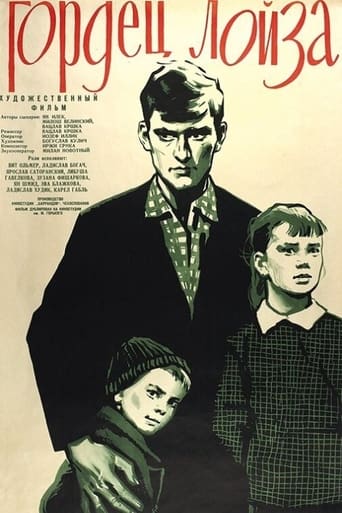
4.7Set in a village, the story of a simple-minded, not-so-responsible young man who still manages to take care of his younger siblings after their father has left the family. Good thing he could lean on the principles of exemplary socialist morality. Not surprisingly, the attempt to capture something of the mentality and conditions of the contemporary village breaks down into simple, poster-like lessons.
Osení
1961
No synopsis available yet.
Zázrak svatého Antonína
1964
An outdated fireclay factory is due to close, but its long-time employees can't imagine stopping what has fed them all their lives and what they do best...
Bez svatozáře
1964
Journalist learns about battle in a small village.
Bitva na Červeném poli
1968
1950s · 11 titles
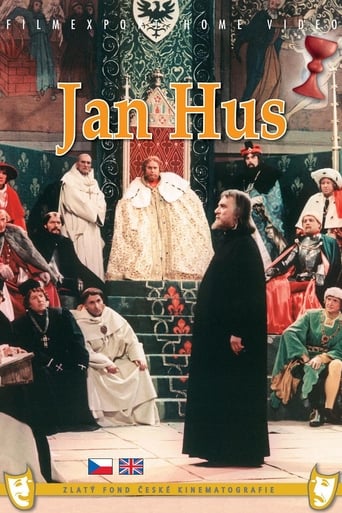 6.3
6.3The first part of the "Hussite Revolutionary Trilogy", completed with Jan Žižka (1955) and Proti všem (Against All Odds, 1957). The film captures the period from May 1412 to the summer of 1415, a turbulent time in the Czech Kingdom, during which there were protests in Prague against the sale of "omnipotent indulgences" whose sale throughout the kingdom was announced by Pope John XXIII. The ideological leader of this movement is the preacher Master Jan Hus, whose words, calling for the elimination of church abuses, are listened to in the Bethlehem Chapel by thousands of ordinary Praguers, Czech lords and Queen Sophie, wife of the Czech King Wenceslas IV.
Jan Hus
1955
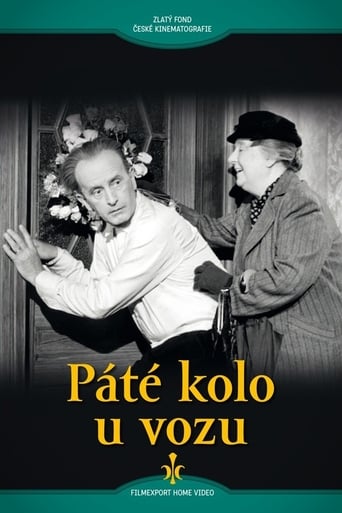 7.5
7.5Although the emancipated editor of a women's magazine proclaims that grandparents in particular should not be abused by their adult children, she accepts without scruple the fact that her mother, still a sprightly pensioner, works in her household as a jack-of-all-trades without receiving not only any pay but also no recognition. However, the grandmother learns from an article written by her daughter - and rebels.
Páté kolo u vozu
1958
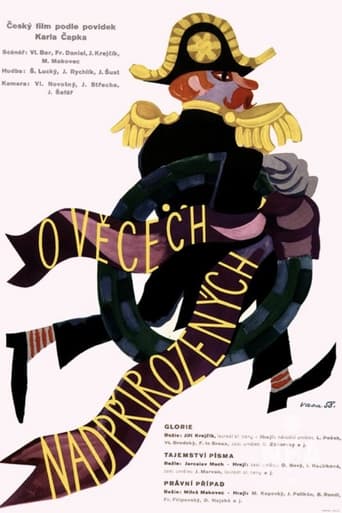 5.5
5.5An anthology of three absurd, ironic tales inspired by Čapek’s “Tales from One Pocket” and “Fables and Side Stories,” each showing uncanny forces disrupting ordinary lives: in Krejčík’s “Glorie,” a gentle clerk is haunted by a sudden halo; the other two segments by Mach and Makovec similarly blend everyday routines with ironic, supernatural twists.
Of Things Supernatural
1959
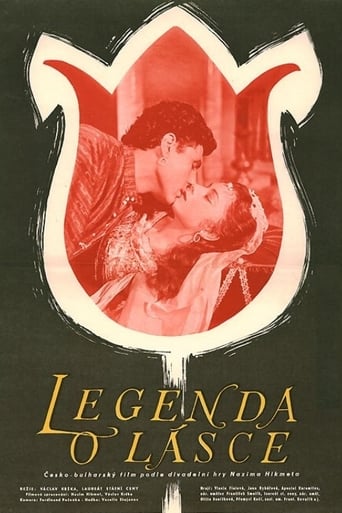 6.0
6.0A spring is hidden in the Iron Mountain but the people of Arzen cannot get to it and they are suffering from thirst.
Legend of Love
1957
The catastrophically dry weather of 1947 causes immense problems in the countryside. In the small village Klícov, only farmers Hánek and Bervida and the old Hromádka have water. The others must queue every day for a drop for themselves and their cattle. All the villagers lament over their previous decision to turn down the cooperative chairman Kouba's proposal to built a new village water-supply system.
Žízeň
1950
 6.7
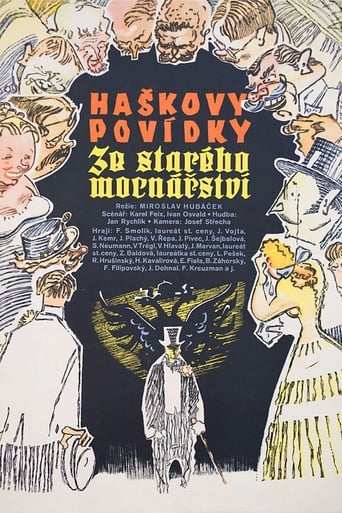
6.7Four short stories by the greatest Czech satirist Jaroslav Hašek. "Soup for Poor Children" tells the story of how Prince Robert himself cooked soup for poor children, "Meeting of the Municipal Council in Mejdlovary" is the history of filling the position of municipal policeman, "Trampotes of Mr. Tenkrát" shows how strange events lead to marriage and promotion, "Revolt of the Convict Šejba" depicts the victorious fight of the convict Šejba for a dumpling for ministering at mass.
Hasek’s Tales from the Old Monarchy
1952
 7.0
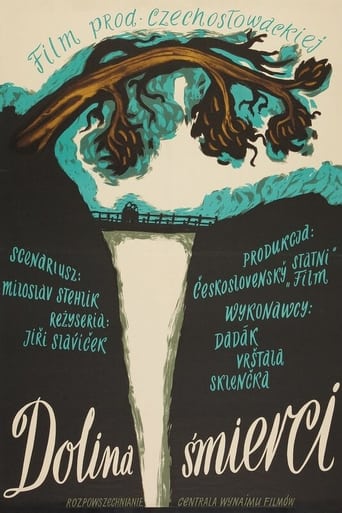
7.0A new owner of the estate, Konrád Ritter von Schiess, arrives in the Czech village of Sluky. On his orders, the inhabitants of the village are to be evicted and only 30 families are allowed to remain, who volunteer to work on the estate. However, the inhabitants refuse to work for the lords, and their solidarity only strengthens when one of them is murdered by the Gestapo based on a report by the estate manager Prokeš...
Mordová rokle
1952
 6.5
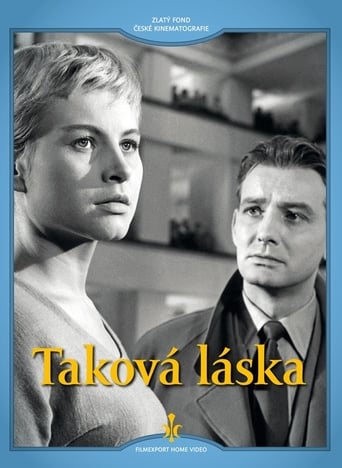
6.5A student commits suicide out of unhappy love to a married man; story is recounted in retrospective by a "judge" who asks the audience to decide who is the guilty party.
That Kind of Love
1959
Innovator Ludvík Zach is in love with his technical data and improvement proposals and does not believe that women could be able to understand these problems. However, on his way back from a conference, he meets Jarmila, an electromechanic, and arranges a meeting with her. He would prefer to talk to her about technology, but he discovers that Jarmila is more interested in poetry and music...
Slovo dělá ženu
1953
 4.5
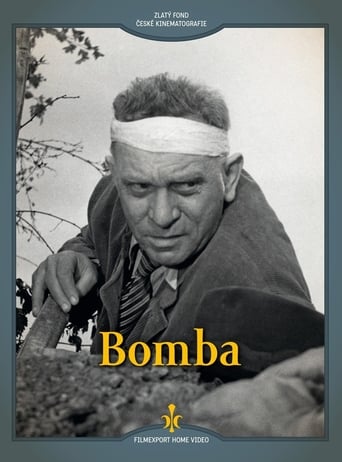
4.5The discovery of an unexploded aerial bomb on a construction site brings a shock to the peaceful existence of a small town: the sudden threat makes at least some people rethink their previous attitudes.
Bomba
1958
No synopsis available yet.
Něco se tu změnilo
1955
1940s · 22 titles
8.0No synopsis available yet.
Jarní píseň
1944
5.0The revolutionary year of 1848 brought great hopes among the hitherto silent classes, awakening social and national hopes. The response also penetrated the remote countryside, even as far as the Podkrkonoše Mountains. The young shoemaker there began to take an interest in social and political events, and he also experienced disappointment in later developments.
O ševci Matoušovi
1948
 7.5
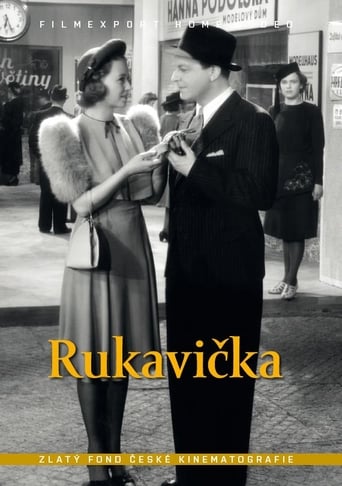
7.5A lost lady's glove that connects several human destinies. The focus here is not on the lost part of the wardrobe, but on piano virtuoso Arne Brant, a man armed with a charming smile and surrounded by women, two of whom have particularly influenced his life. The first is the daughter of a famous can-can star, dancer Pavlína Doré-Zejdová, the second is Mařenka Berková, the main character of the film and a kind of Kristián in skirts. An orderly and well-bred daughter from an honorable family who lives her second life as a lady of high society. The lost glove complicates the situation for all of them considerably, but in the end she finds her rightful place, just like the heroes of the film...
Rukavička
1941
 6.9
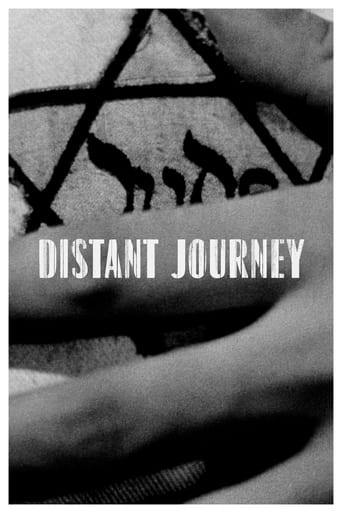
6.9Prague, during World War II. Hana Kaufmann, a Jewish ophthalmologist, marries Dr. Antonín Bureš, a Christian man. When her family is sent to the Theresienstadt concentration camp, their romance turns into a struggle for survival.
Distant Journey
1949
 5.0
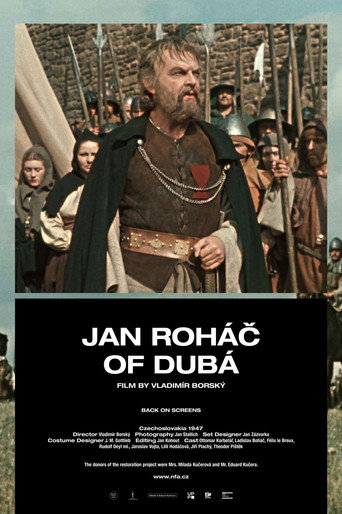
5.0After the Battle of Lipany, the remnants of the Hussite troops concentrated under the leadership of Jan Roháč of Dubé at Sion Castle. However, he had no prospects of victory against the soldiers of the Lordship. Sion was conquered, Roháč of Dubé was captured and executed as a pest in Prague on September 9, 1437.
Warriors of Faith
1947
No synopsis available yet.
The Musician
1948
 6.0
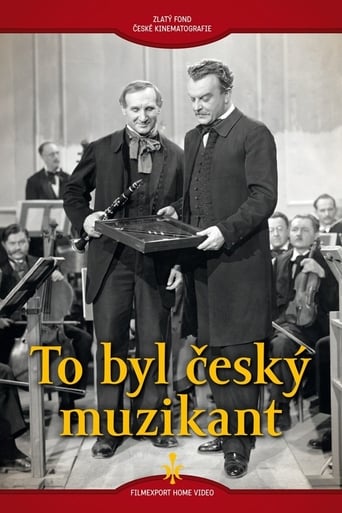
6.0Teacher František Kmoch is suspended because he plays at dances or composes at night. He forms a band in Kolín and his supporter Baron Hrubý helps him perform in public. His music is popular not only at home but also around the world...
To byl český muzikant
1940
 10.0
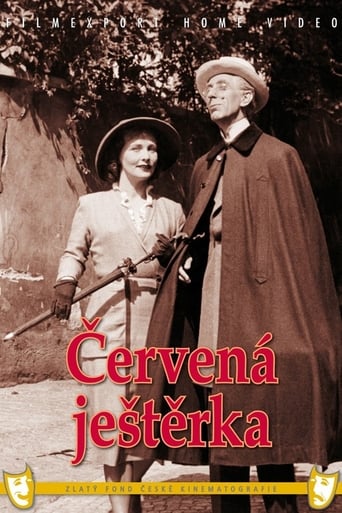
10.0Grammar school teacher Bláha hurts himself in pursuit of a red lizard, and is lying unconscious in the lonely house of Santrucek family. The postman, who found Bláha's coat and hat in the water, announces to everyone in town that the professor has drowned. But, the venerable citizens are at that moment more interested in the theatre group with the beautiful guest actress Eva Gazdová. They demand a change of repertoire and manage to persuade the theatre manager to have the group play the musical comedy The Red Lizard instead of an established play.
Red Lizard
1949
A wealthy playboy leads an irresponsible life until he meets an attractive and hard-working woman who leads him to transform his ways.
Artur and Leontyna
1940
 6.5
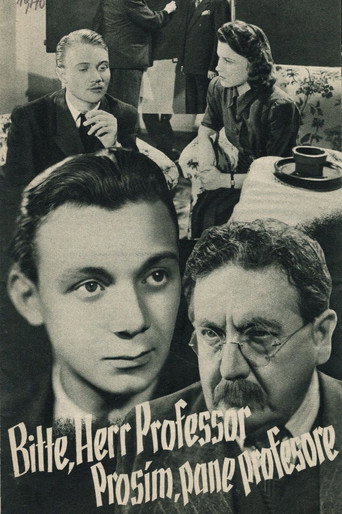
6.5No synopsis available yet.
Prosím, pane profesore!
1940
 7.5
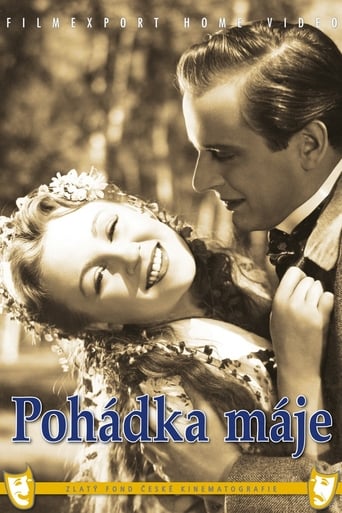
7.5Ríša, a student of law, neglects his studies in favour of parties and pranks. His angry father refuses to continue helping him out of his debts. Ríša, however, is not entirely beyond hope. He decides to go and stay for a while with his uncle, a priest, who lives in Moravia, in order to prepare for his exams. He meets Helenka, the timid daughter of the local gamekeeper, at a village ball and is enchanted by her. The days pass and their idyllic relationship begins to tire Ríša. He begins to tell Helenka about his former debauched life the about the broken hearts of beautiful women. Helenka is hurt and refuses to see Ríša anymore. His uncle, the priest, is incensed at his behaviour and orders his nephew out of the house. Ríša tries desperately to find Helenka so he can make it up to her.
May Fairy Tale
1940
 6.5
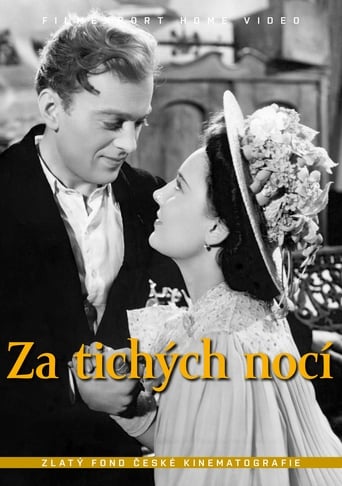
6.5Jana's beautiful niece arrives in Prague to live with two spinster aunts. Both women wish to marry her off. The son of the court councilor Petr is courting her. However, Jana has met a young official Záviš and the two fall in love. But Záviš is poor and cannot marry yet. They keep it a secret from Jana that he composes songs. Coincidentally, Petr is his friend and both men talk about the girls they love, unaware that in both cases it is Jana...
Za tichých nocí
1941
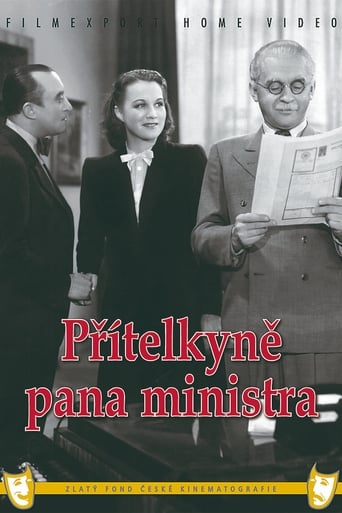 8.1
8.1The main character of the funny story is an ordinary typist Julinka Svobodová, who works for the established business firm Hrubý a syn and lives in a sublet with the seamstress Mrs. Pokorná. Although she is poor and sometimes manages to be late, she is still cheerful and pleasant. However, a small coincidence is enough and everything changes. That is when she takes an elevator ride with the Minister of Trade, Dr. Horák, who coincidentally lives in the same building. Mrs. Pokorná, in good faith, hints to the inquisitive landlady that Julinka is the Minister's girlfriend. From the talkative woman, an innocent rumor spreads like wildfire and, surprisingly, it helps the girl in every way...
Přítelkyně pana ministra
1940
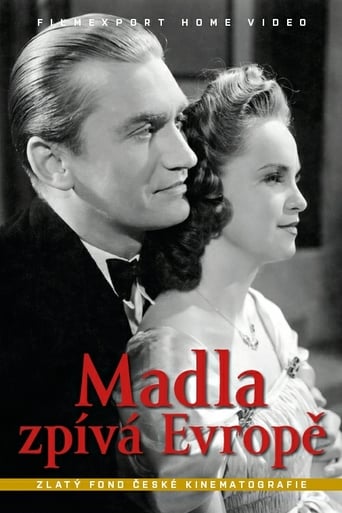 5.8
5.8Folk song collector Dr. Šerk arrives in the remote village of Lesov. He is enchanted by the singing of sixteen-year-old Madla Satranová and he records her songs for radio broadcast. Šerk's friend, composer Jaroslav Klán, takes care of a group of orphans, from whom he has formed a choir. Šerk brings the orphaned Madla to him. The teenage girl begins to help the housewife Nána with the care of the children.
Madla zpívá Evropě
1940
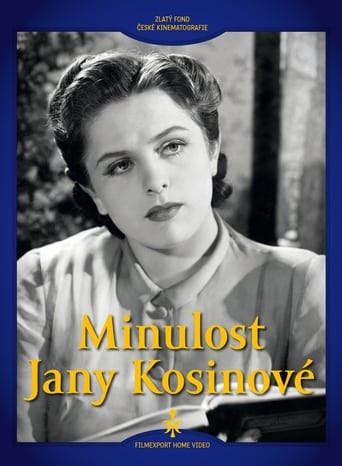 10.0
10.0No synopsis available yet.
Minulost Jany Kosinové
1940
Two good friends return from long-term military service: Jan Cimbura from Semic and Josef Piksa from Putim. Piksa farms on his own, Cimbura accepts service with the Hradiště farmer and mayor of Kovanda. The farmhand Cimbura is a real treasure for the farm. He is strong and hardworking, he doesn't drink or smoke. He can keep his eyes on the girl Marjánka, and Cimbura likes her too. However, Cimbura doesn't want to and cannot marry. First, he wants to become independent, and that may take years....
Jan Cimbura
1941
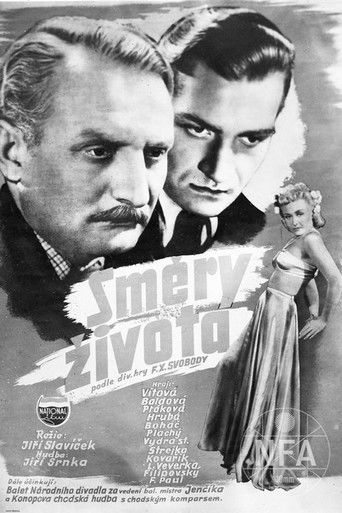 7.0
7.0No synopsis available yet.
Směry života
1940
 6.2
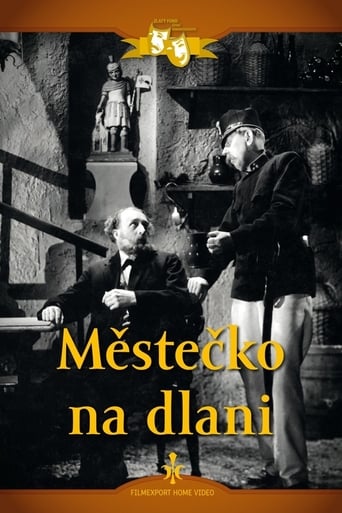
6.2Tragicomic events in the idyllic town of Rukapán reveal both the prejudices of the local residents and their solidarity. The chronicle of the town of Rukapán captures the funny and tragic fates of its inhabitants at the end of the nineteenth century. Poacher Matěj saves the council of Zimmerheier in a buried mine, mayor Buzek is warned by an angel to stop drinking, and other events form a mosaic of the small town.
Městečko na dlani
1942
 10.0
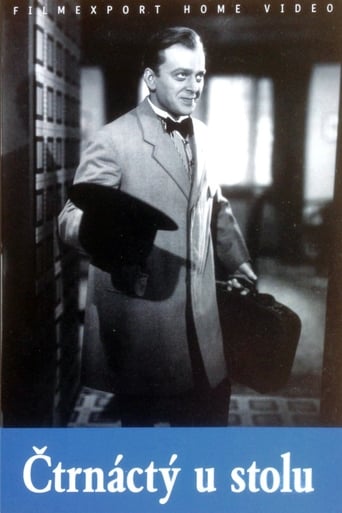
10.0Thirteen people have gathered at Mayor Bartoš's. The company is uneasy about this number and therefore warmly welcomes the fourteenth guest, who is the new librarian Pavel Čtrnáctý...
Čtrnáctý u stolu
1943
No synopsis available yet.
Pro kamaráda
1941
 7.0
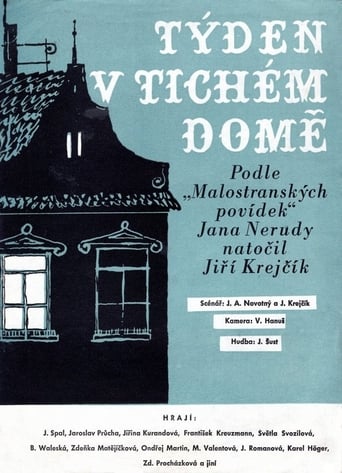
7.0A sometimes humorous, sometimes more serious look at the hustle and bustle of a house in Lesser Town with a diverse array of tenants living there, and often petty quarrels that break out between them. Behind the facade of the house in Lesser Town "U dvou slunců" (Two Suns) there is life. The Bavors live here, eternal slaves to the grocery store. The Ebros, who need to marry their daughter off at a good price. The bachelor Dr. Loukota and other interesting Nerudov characters.
A Week in the Quiet House
1947
In an unsightly tenement house, the walls of which are as peeling as the souls of the tenants, an old woman waits for her son to return from prison. However, her neighbors believe that she is hiding a large fortune in her tattered suitcase, which she protects like the apple of her eye, and they want to get hold of it at any cost.
Až se vrátíš...
1948
1930s · 14 titles
6.0The story of love, between a sturdy village boy and a gentle country girl, filmed with a movingly genuine charm.
Young Love
1933
 8.5
8.5No synopsis available yet.
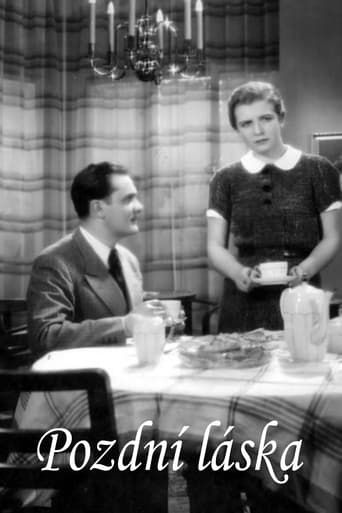
Pozdní láska
1935
 5.8
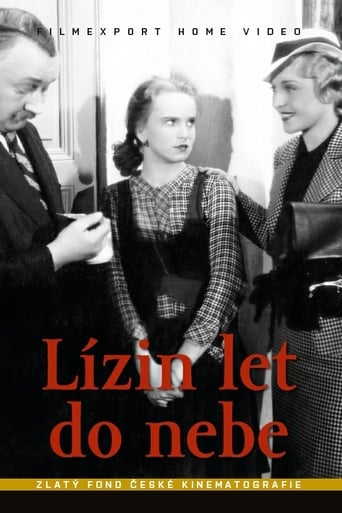
5.8The orphan Eliška Irovská, nicknamed Líza, arrives in her native village of Ptačice. As an orphan she is housed in the local poorhouse and has to go out begging. Her guardian Petr Tumlíř, however, sees that she is competent enough to go to school.
Líza Soars to the Skies
1938
 7.4
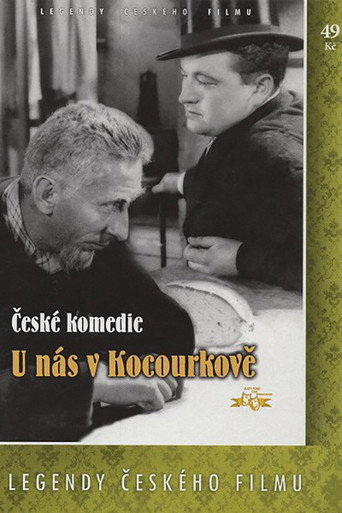
7.4Curious citizens await the arrival of an important guest, the son of poacher, who became famous abroad. Begins celebration in his honor, but nobody knows that instead of the hero arrived cursory prisoner number 1313. He quickly understand how things are and decides to take the opportunity and very quickly gets into a new role.
Here in Kocourkov
1934
No synopsis available yet.
Bláhové děvče
1938
 8.0
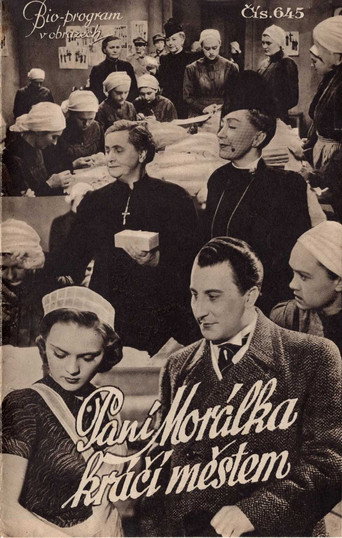
8.0No synopsis available yet.
Paní Morálka kráčí městem
1939
 7.2
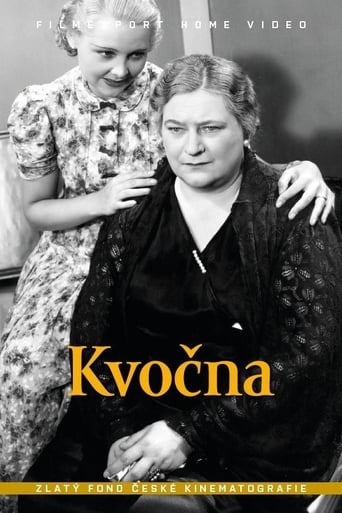
7.2A comedy about a caring protector of the family who had help, good advice and understanding for everyone. No one in the family calls Anna Svojanovská anything other than Kvočna - everyone is used to running under her protective wings as soon as any problems arise. And what a blessing this mother and grandmother has to deal with!
Mother-Hen
1937
 7.0
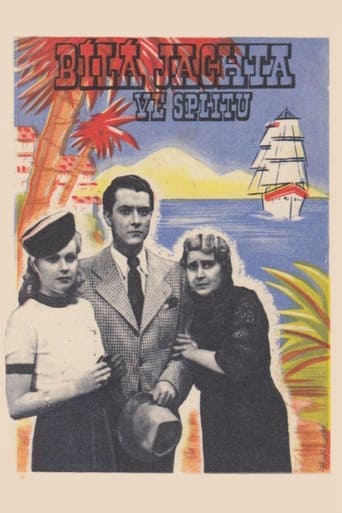
7.0When the yacht of her former lover Mario Tudor arrives in Split, widowed Countess de Milesi, plagued by financial troubles, is hell-bent on selling him a fake copy of an expensive painting.
The White Yacht in Split
1939
 7.0
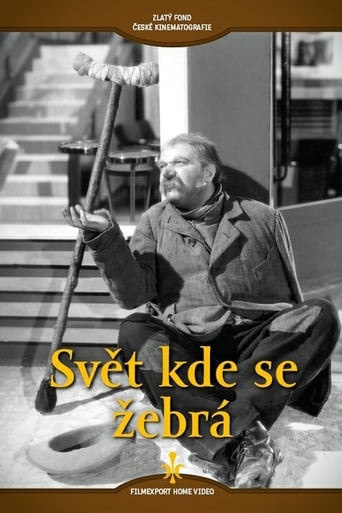
7.0The smooth narration, corresponding to the requirements of a light comedy, develops the smiling and optimistic story of the "one-armed" beggar Dostál, who earned enough money with his excellent begging skills to buy a nice house, become a respectable master of the house, and save the impoverished lawyer Neprosil from poverty, who he contributed regularly to him when he was still well off. He also wanted to get him together with his pretty ward Zorka, for whom he said he would be an ideal husband, but the young people were able to do that by themselves and without his clumsy help, or rather despite his rather ineffective help... The film was shown at the VI. IFF in Venice in 1938.
The World Where One Goes Begging
1938
 8.0
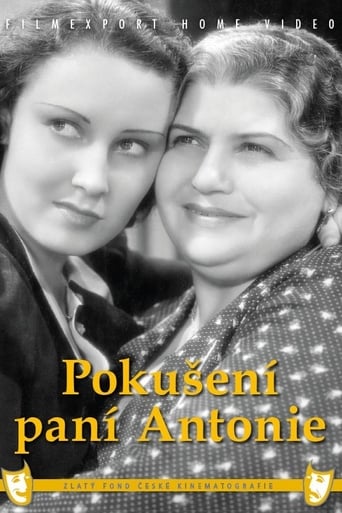
8.0No synopsis available yet.
Pokušení paní Antonie
1934
 7.5
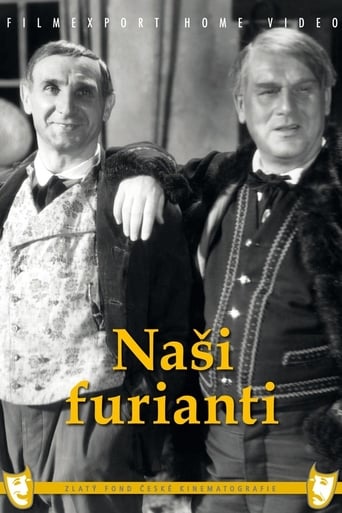
7.5The richest farmer and at the same time mayor Dubský and first councilman Bušek are constantly competing for supremacy. Their rivalry affects not only the fates of their families, but also the entire village, in which every problem, even the smallest one, everything that the board of directors discusses becomes a battleground for the two rivals. And it is not just about who will be appointed night watchman due to the increasing thefts. It is also about the love of Václav, Dubský's son, and Verunka, the daughter of councilman Bušek.
Naši furianti
1938
 8.0
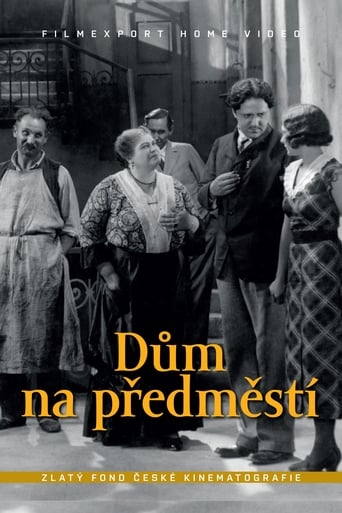
8.0The owner of a suburban house, Anna Faktorová, makes life miserable for the tenants. There is strict order in the house and the only one who gets along well with Mrs. Faktorová is the parasite and thief Gustav, who informs on the others. An old bachelor named Zajíček, a pawnshop clerk, moves into the attic. After a while, he finds a liking for his neighbor, music teacher Věra Hronová. Grocer Mejstřík is worried about the fate of his shop on the ground floor. Spiritualist Šoltys is forced to pay increased rent when he is caught at a seance, and on top of that, a clock goes missing from his apartment. A dealer later comes to the pawnshop with them. Zajíček recognizes the clock and it turns out that Gustav stole the clock. Zajíček, who has become close to Věra, is jealous when he sees her talking to an older, rich man...
Dům na předměstí
1933
 8.0
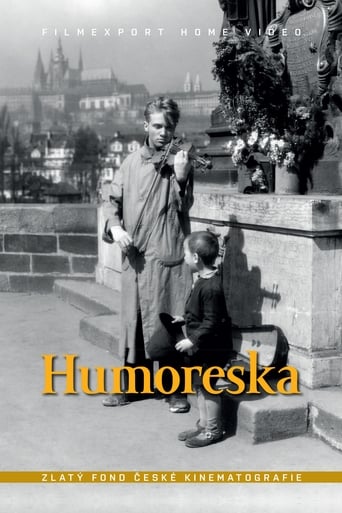
8.0Dvořák's well-known composition reappears again and again in the serious moments of the lives of the father and son Hupeks - talented non-professional musicians for whom music gives them the opportunity to rise above difficulties and problems...
Humoreska
1939
 7.0
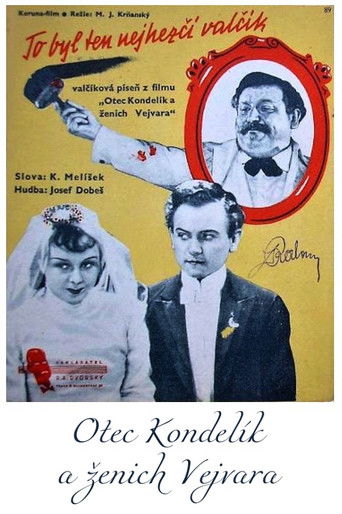
7.0The family of Prague burgher and master interior decorator Václav Kondelík lives happily in their house on Ječná Street. The peace is disturbed by an invitation to an "apron party", where their daughter Pepička meets a young municipal official, František Vejvara. The two young people fall in love. Their relationship is also supported by Mrs. Kondelíková, because Vejvara could become a welcome groom for her daughter. However, Pepička's acquaintance disrupts the established order of Kondelík's life.
Otec Kondelík a ženich Vejvara
1938
1920s · 4 titles
A Carl Lamac directed movie based on a novel by Karel Václav Rais.
The Old Man Bezousek
1927
No synopsis available yet.
Otec Kondelík a ženich Vejvara II.
1927
No synopsis available yet.
Životem vedla je láska
1928
No synopsis available yet.
Otec Kondelík a ženich Vejvara I.
1926