
Sound
Charlemagne Palestine
Known for
Sound
Credits
11 titles
Known for
 7.4
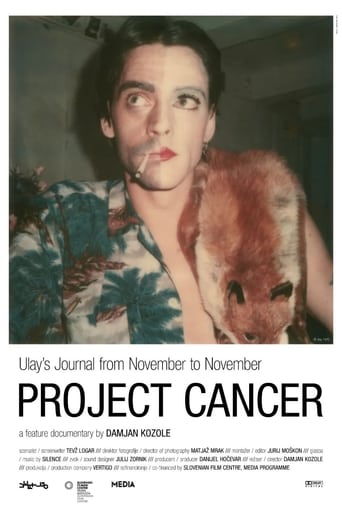
7.4Ulay is a conceptual artist whose photography pushed boundaries, and whose love affair with Marina Abramovic produced some of the best pieces of performance art. Diagnosed with cancer shortly after agreeing to film the documentary, Ulay's illness informs Project Cancer, which is part-retrospective, part-visual document of the year he believed could be the last of his extraordinary life.
Ulay
2013
 6.8
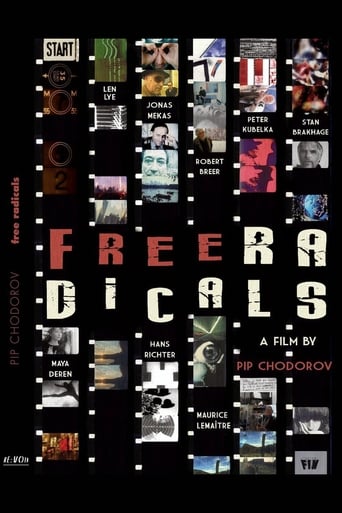
6.8Experimental filmmaker Pip Chodorov traces the course of experimental film in America, taking the very personal point of view of someone who grew up as part of the experimental film community.
Free Radicals: A History of Experimental Film
2011
 NR
NRStrapping a video camera to himself as he drives a motorcycle around an island, Palestine harmonizes with the engine, maniacally repeating the phrase, "Gotta get outta here...gotta get outta here..." His chanting voice merges with the vibrations of the motor, forming an incessant soundtrack that echoes the jarring motion of the camera. Palestine creates a kind of composite instrument in motion as well as an "articulated personal drama". His stated desire for escape is contained by the boundaries of the island. Palestine was a trained cantor, and he often used his moving body and sustained vocalizing to generate a physical and aural intensity in his musical/video performances of this period.
Island Song
1976
Artists Nancy Holt and Charlemagne Palestine attempt to have a conversation with one another while their voices are distorted.
Match-Match Their Courage
1974
 10.0
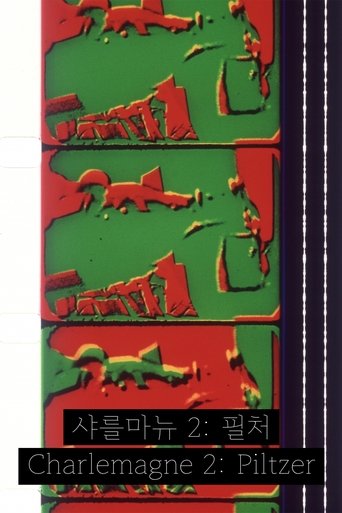
10.0Pip Chodorov's "Charlemagne 2: Piltzer" is a tour de force of hand-processed film which documents a Palestine piano concert. Chodorov uses flicker, negative/positive imagery, different printing techniques and colored filters to produce a film that is a true merging of sound and vision. - Frequent Small Meals
Charlemagne 2: Piltzer
2002
 5.5
5.5Charlemagne Palestine, holding a cheap black-and-white video camera, rides four of the rides at Coney Island, including the world-famous Cyclone roller coaster and, with his voice, keens his trademark drones while the rides progress, which, combined with the cacophony of sound that emanates from the rides, creates another version of the walls of sound for which he is known.
Four Motion Studies
1974
Film credits
2010s · 4 titles
7.4Ulay is a conceptual artist whose photography pushed boundaries, and whose love affair with Marina Abramovic produced some of the best pieces of performance art. Diagnosed with cancer shortly after agreeing to film the documentary, Ulay's illness informs Project Cancer, which is part-retrospective, part-visual document of the year he believed could be the last of his extraordinary life.
Ulay
2013
6.8Experimental filmmaker Pip Chodorov traces the course of experimental film in America, taking the very personal point of view of someone who grew up as part of the experimental film community.
Free Radicals: A History of Experimental Film
2011
Born in New York City, composer, performer, and visual artist Charlemagne Palestine was a contemporary of Steve Reich and Phillip Glass in the avant-garde classical music scene of the 1960s and 1970s. On stages filled with his own home-made stuffed animals, Palestine performs his trance-like strumming music. He is often referred to as a minimal composer, but rejects that in favour of "maximalism". Anne Maregiano's documentary about Palestine, The Golden Sound (2011), allows the artist to tell his own story while putting his music and performance, in long, unedited takes, at the centre of the film. - Close-Up Film Centre
Charlemagne Palestine, The Golden Sound
2011
 NR
NRA musical tribute to Jonas Mekas on the occasion of his 90th birthday.
Happy Birthday Jonas
2013
Behind the camera
NRStrapping a video camera to himself as he drives a motorcycle around an island, Palestine harmonizes with the engine, maniacally repeating the phrase, "Gotta get outta here...gotta get outta here..." His chanting voice merges with the vibrations of the motor, forming an incessant soundtrack that echoes the jarring motion of the camera. Palestine creates a kind of composite instrument in motion as well as an "articulated personal drama". His stated desire for escape is contained by the boundaries of the island. Palestine was a trained cantor, and he often used his moving body and sustained vocalizing to generate a physical and aural intensity in his musical/video performances of this period.
Island Song
1976
5.5Charlemagne Palestine, holding a cheap black-and-white video camera, rides four of the rides at Coney Island, including the world-famous Cyclone roller coaster and, with his voice, keens his trademark drones while the rides progress, which, combined with the cacophony of sound that emanates from the rides, creates another version of the walls of sound for which he is known.
Four Motion Studies
1974
Subtitled An Escapist Primer, Andros is the journey of a man who is desperately trying to escape from his internal world, his pain and ultimately himself. Shot entirely from a subjective point of view, this confrontational video journey begins with the man watching television in a dark room, as he talks about his lethargy, frustration and anguish. We then follow him out onto the street, through the streets and subways, and finally into the landscape of a fog-shrouded island. He runs, talking to himself and the viewer of his need to get away from the pain and the demons in his mind. Using the camera as an extension of his body and placing the viewer behind it, Palestine's journey becomes emblematic of a primal desire for escape.
Andros: An Escapist Primer
1976
Produced by Palestine at Art/Tapes/22 in Florence, Italy, these works are seminal performance-based exercises. Palestine calls Body Music I "a study in the vocal-physical responses of a species caught in an enclosed square room." He begins this ritualistic piece sitting on the floor, establishing an aural rhythm by banging his knees against its hard surface. As his momentum builds and accelerates, he rises and hurtles himself with intensity against the walls, as if trying to escape from confinement. Body Music II continues this physical intensity, as Palestine wanders through the labyrinthine hallways of a villa, recording with a hand-held camera. Moving faster and chanting into the reverberating space as though trying to escape, he creates a frenetic visual translation of his physical movements and energy.
Body Music I
1974
NRA musical tribute to Jonas Mekas on the occasion of his 90th birthday.
Happy Birthday Jonas
2013