
Directing
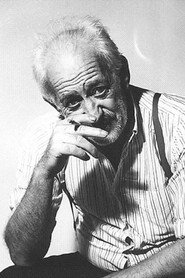
Stavros Tornes
Born — Died
1932-01-01 — 1988-07-26
Place of birth
Athens, Greece
Known for
Directing
Credits
50 titles
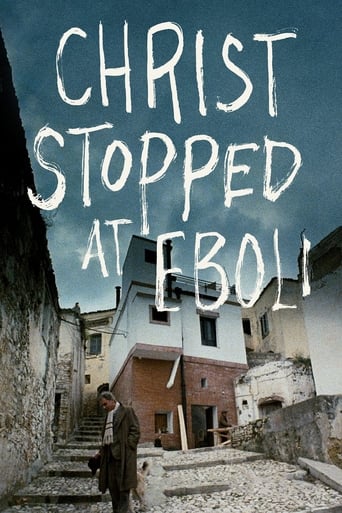
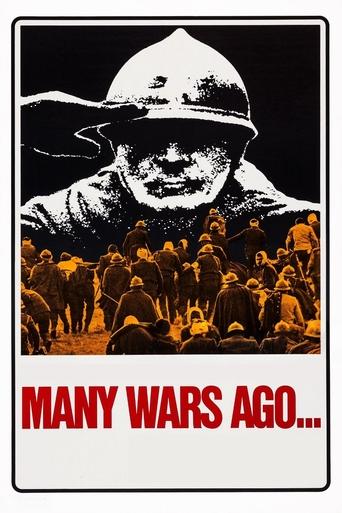
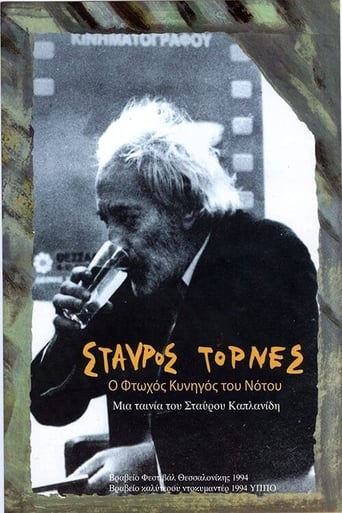
Stavros Tornes (Greek: Σταύρος Τορνές) was a Greek film actor and director. Tornes was born in 1932 in Athens. He studied at the Ioannidis School in 1957 and worked as an assistant director and as an actor in films of the 1950s and 1960s. In 1967 he directed his first short film "Theraikos orthros" together with Kostas Sfikas. During the dictatorship he went to Italy where he participated in a group of exiles, fighting against the military junta. In 1973 he secretly visited Greece and filmed the documentary Students. In Italy (Rome) he appeared in many films, such as Many Wars Ago and Christ Stopped at Empoli by Francesco Rossi, and Alonzanfan by the Taviani brothers. It is worth noting that…
Known for
 7.0
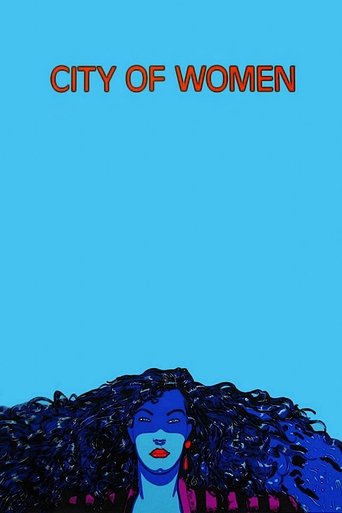
7.0The charismatic Snaporaz encounters an alluring woman on a train and pursues her through a forest. He ends up at a hotel populated by women gathered for a feminist conference, where he is an unwanted presence. Snaporaz soon discovers he’s entered a phantasmagoric world where women have taken power.
City of Women
1980
 6.3
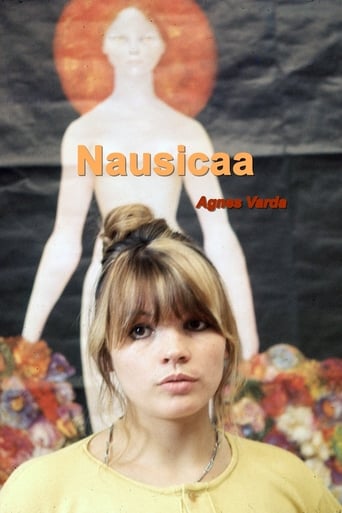
6.3A girl, whose father is from Greece, studies ancient art in France. The film was made for television but never broadcast for political reasons related to its portrayal of Greeks. A work print was screened in Belgium in 1971, and the film is now available in reconstructed form.
Nausicaa
1971
 6.9
6.9After the 1815 Restoration, an aging revolutionary finds himself reluctantly involved in an attempted insurrection in Southern Italy while growing increasingly disillusioned with his cause.
Allonsanfan
1974
 6.3
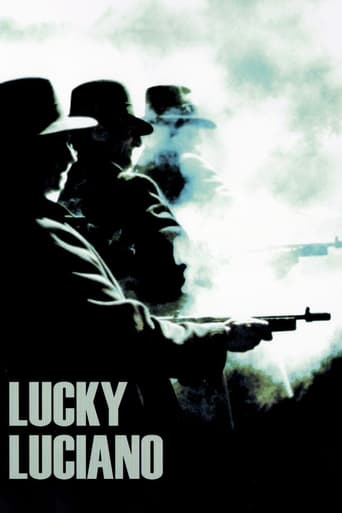
6.3Lucky Luciano is one of the bosses of the Mafia. He orders the slaughter of 40 other responsibles, therefore becoming the only boss. But a few years later he is put into jail. In 1946, he got a pardon and is sent back to Sicilia. There, he begins becoming one of the chief of the Mafia. The US Army seems to refrain from interfering.
Lucky Luciano
1973
 7.2
7.2In the fascist Italy of 1935, a painter trained as a doctor is exiled to a remote region near Eboli. Over time, he learns to appreciate the beauty and wisdom of the peasants, and to overcome his isolation.
Christ Stopped at Eboli
1979
 7.3
7.3Time after time, soldiers of the Italian Army are forced to leave their mountain trenches in attempts to storm an enemy fortress, always with the same disastrous results. As casualties mount, indignation spreads among the rank and file. Disturbed by his superiors' decisions, Lieutenant Sassu is led to question the purpose of war and reconsider where his real duties lie.
Many Wars Ago
1970
Film credits
1980s · 9 titles
7.0The charismatic Snaporaz encounters an alluring woman on a train and pursues her through a forest. He ends up at a hotel populated by women gathered for a feminist conference, where he is an unwanted presence. Snaporaz soon discovers he’s entered a phantasmagoric world where women have taken power.
City of Women
1980
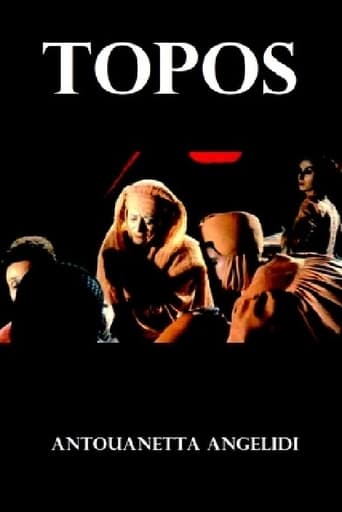 6.3
6.3During its 85-minute running time, this jarring experimental film takes a no-holds-barred look at the way women have been treated and depicted in Western art.
Topos
1985
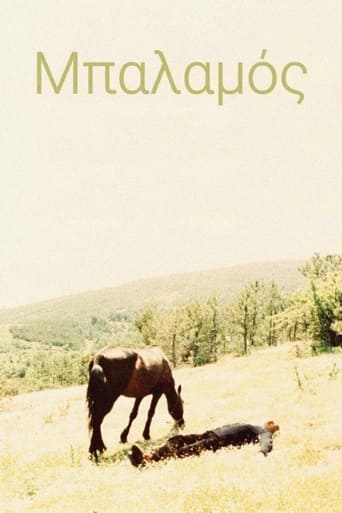 7.2
7.2In order to buy a horse, a man wanders in the bazaars of Thessaly. His journey will take him further than he imagines, as old prophets, forgotten witches and vampire princes will find himself on his way.
Balamos
1982
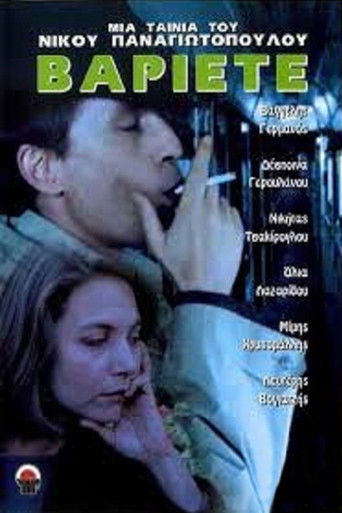 5.0
5.0An actor's troupe puts up a variety show.
Varieté
1985
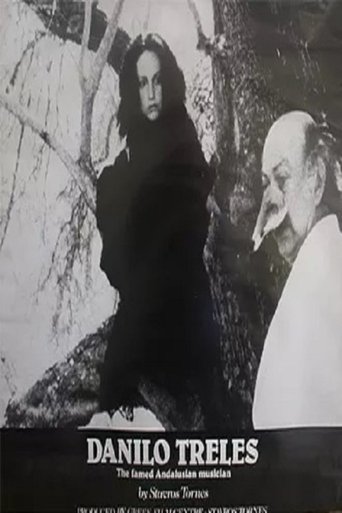 6.7
6.7The portrait of an Andalusian musician who wanders around Epirus and socializes with the strangest characters in the area.
Danilo Treles: The Famous Andalusian Musician
1986
The chronicle of Loukas Kostoglou, a publisher devoted to poetry, and Marios, his assistant, who is love with Nina.
Heron for Germany
1988
No synopsis available yet.
Witches
1988
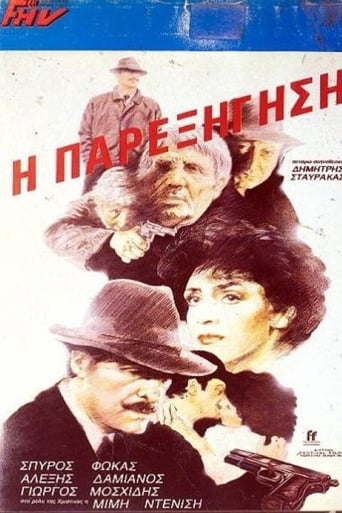 9.0
9.0Dimitris Lembessis gets out of prison, pays his friend Stratos a visit and kills him. With Ilias he organizes a big jewel heist. During the operation they discover that someone has ratted on them. In their attempt to escape, a police officer is killed and Ilias is mortally wounded...
Misunderstanding
1983
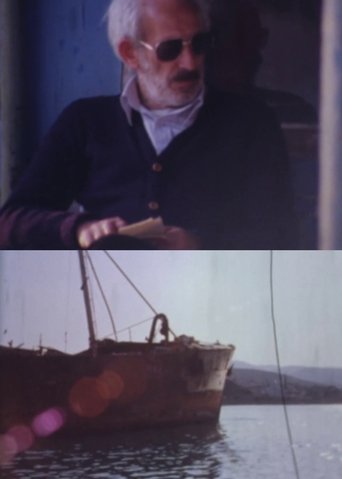 NR
NRStavros Tornes directs this documentary centered on the poet Nikos Kavvadias and his poetry.
For the Poet Nikos Kavvadias
1982
1970s · 7 titles
6.3A girl, whose father is from Greece, studies ancient art in France. The film was made for television but never broadcast for political reasons related to its portrayal of Greeks. A work print was screened in Belgium in 1971, and the film is now available in reconstructed form.
Nausicaa
1971
6.9After the 1815 Restoration, an aging revolutionary finds himself reluctantly involved in an attempted insurrection in Southern Italy while growing increasingly disillusioned with his cause.
Allonsanfan
1974
6.3Lucky Luciano is one of the bosses of the Mafia. He orders the slaughter of 40 other responsibles, therefore becoming the only boss. But a few years later he is put into jail. In 1946, he got a pardon and is sent back to Sicilia. There, he begins becoming one of the chief of the Mafia. The US Army seems to refrain from interfering.
Lucky Luciano
1973
7.2In the fascist Italy of 1935, a painter trained as a doctor is exiled to a remote region near Eboli. Over time, he learns to appreciate the beauty and wisdom of the peasants, and to overcome his isolation.
Christ Stopped at Eboli
1979
7.3Time after time, soldiers of the Italian Army are forced to leave their mountain trenches in attempts to storm an enemy fortress, always with the same disastrous results. As casualties mount, indignation spreads among the rank and file. Disturbed by his superiors' decisions, Lieutenant Sassu is led to question the purpose of war and reconsider where his real duties lie.
Many Wars Ago
1970
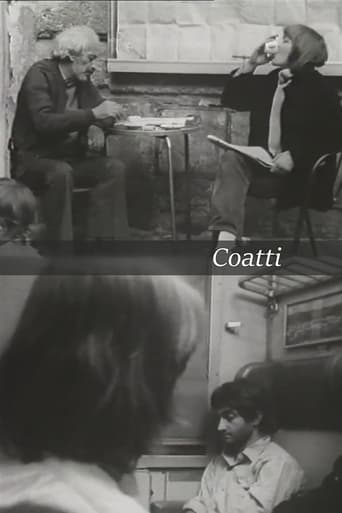 6.2
6.2Stavros and Charlotte - i.e. the director and his partner in life and art, Charlotte van Gelder - are wandering the streets of a burdensome reality like immigrants, tracing the world around them through friendships, journeys and political quests. Made with minimal means with a few rolls of black and white film they managed to scrape together, this is a thoroughly unconventional film that defies traditional narrative structures, spectacularly revealing the director's true vision: a primordial cinema full of imagery that comes out of nowhere and communicates freely, like a small wonder. A large slice of the international film critic community - including Frenchman Louis Skorecki who described the film as a comet - will adore "Coatti" and continue to support Tornes' lonely path until the end.
Coatti
1977
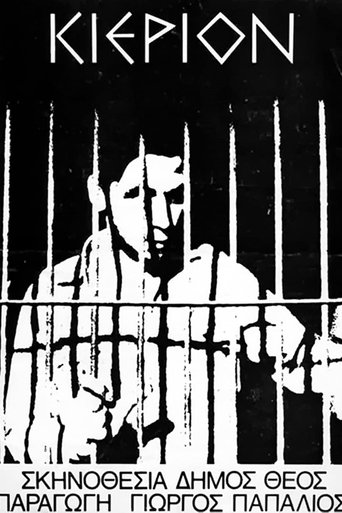 6.0
6.0Athens 1967. The political assassinations and the background between the government and foreign powers, on the occasion of the "Polk Case", where an innocent leftist was convicted for the murder of an American journalist in Greece.
Kierion
1974
1960s · 9 titles
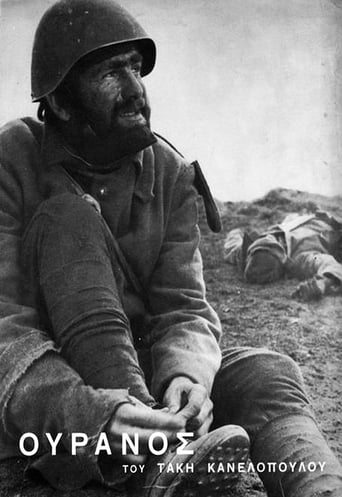 7.1
7.1During the cold spring of 1941, with Greece already under German occupation, a long-suffering squad of war-battered soldiers receives orders from the headquarters in Athens to fall back, leaving behind the Albanian Front. As the men retreat through the snow-covered landscapes of the bomb-scarred Greek countryside, the terrifying certainty that nothing will ever be the same again crushes their weary human souls.
Glory Sky
1962
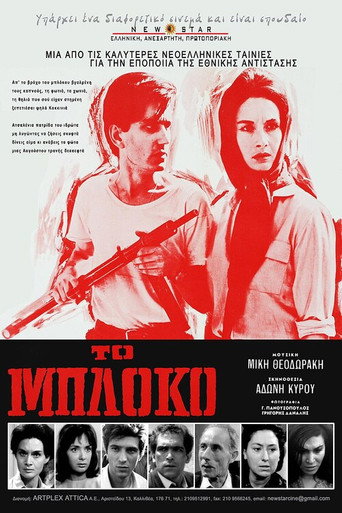 6.9
6.9A summer night in 1944 in Kokkinia, Kosmas, a black marketeer, is out with his friends before he is arrested by the German patrol. The Germans push him to turn in people from the Resistance, or they will execute him.
The Roundup
1965
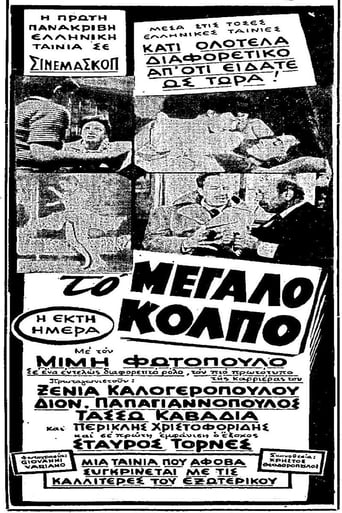 5.8
5.8Two young people are trying to make their common life although have to face the obstacle of an authoritarian mother. The young man, trying to overcome his financial difficulties, will be involved with a suspected man in a hypothetical big bay.
The Daywork of Happiness
1960
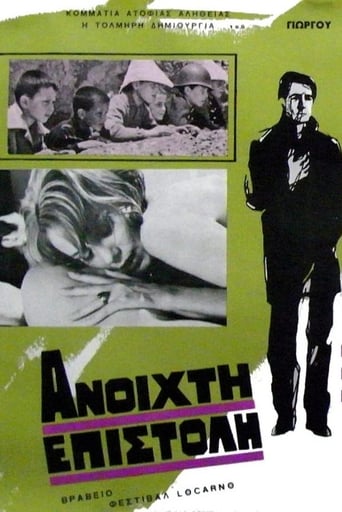 6.9
6.9Thirty-year-old lower middle class Dimitris, faint-hearted and not particularly ambitious, is ready to jump at the opportunity that will get him handsomely provided. He wavers between yesterday, the German occupation nightmare and his love debut with a neighbour and contemporary, fluid reality. He meets Thaleia, a rich woman his age, who frequents the same night club as him, but his daily routine is invariably the same. The closure of the small industry in Drapetsona, where he used to work for the last 8 years, and his relationship with Maria confront him with a different reality. Maria is a progressive, evening school teacher, full of dreams.
Open Letter
1967
 4.7
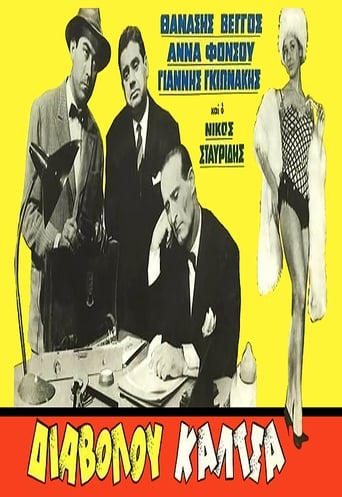
4.7Tonis and Rena are loved, but their uncles have objections, as they are deadly competitors in the field of swimwear marketing. Rena's uncle promotes a modern swimsuit, while Toni's uncle is a fan of the classic line. The two young men decide to steal ..
Sharp as a Needle
1961
 7.0
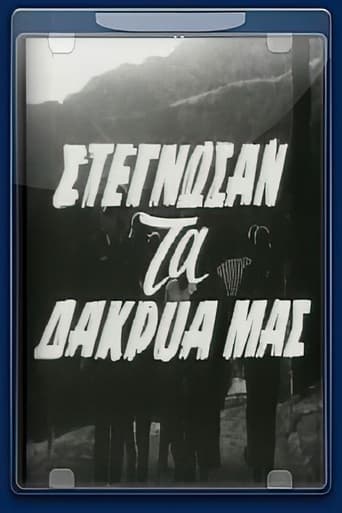
7.0Dimitris and Maria postpone their wedding, as the declaration of war will separate them. Dimitris will fight on the front lines and later join the Resistance. The deputy leader of his resistance organization is fatally wounded in a sabotage operation against the Germans. The revelation that he is Maria's father, who had been searching for her for many years, brings pain to the already troubled couple. But the war will end and the two young people will finally have the chance to live happily together.
Our Tears Have Dried Up
1961
 9.0
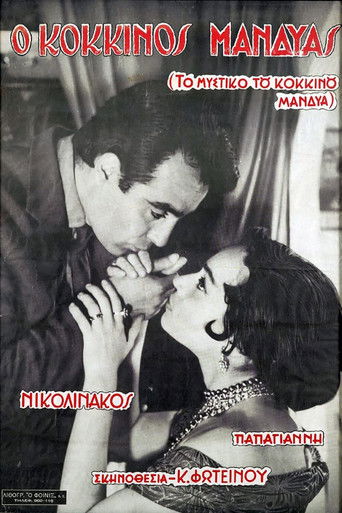
9.0A young actress who is about to star in a play by the writer Palla stays at the home of Pavlos, an actress who was left paralysed shortly before performing in Palla's play "The Red Cloak." The young actress is found murdered, and a police officer conducts a thorough investigation to find the culprit.
To mystiko tou kokkinou mandya
1960
 10.0
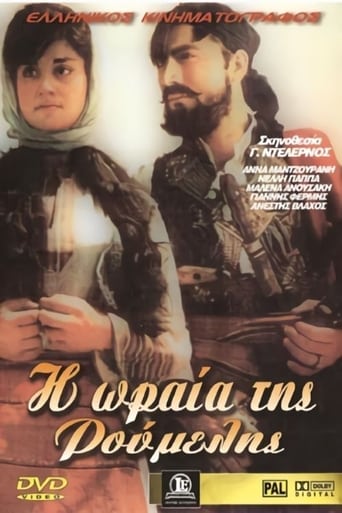
10.0Vassos and Malamo, the prettiest girl in the village, are in love and plan to get married. However, Panos, Vassos' brother, tries to seduce Malamo when, unfortunately for him, the local bandit appears.
The Beauty of Roumeli
1962
 NR
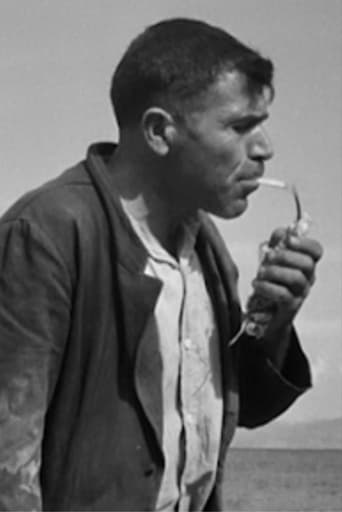
NRThe film depicts all forms of traditional fishing and the life of fishermen of the Molyvos community on the Greek island of Lesvos, as it transposes us to island life of 1961, through a series of images from another era. Fishermen sail in the open sea on a purse seine.
Fishermen and Fishing
1961
Behind the camera
 7.0
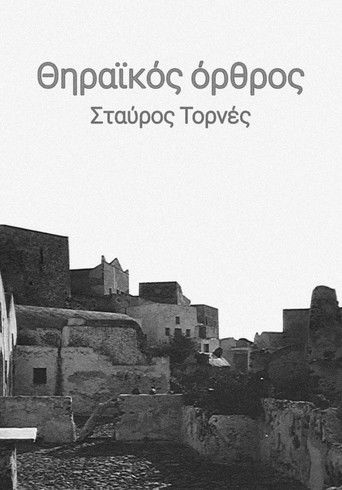
7.0A poetic documentary about the island of Santorini.
Thirean Matins
1968
7.0A poetic documentary about the island of Santorini.
Thirean Matins
1968
6.2Stavros and Charlotte - i.e. the director and his partner in life and art, Charlotte van Gelder - are wandering the streets of a burdensome reality like immigrants, tracing the world around them through friendships, journeys and political quests. Made with minimal means with a few rolls of black and white film they managed to scrape together, this is a thoroughly unconventional film that defies traditional narrative structures, spectacularly revealing the director's true vision: a primordial cinema full of imagery that comes out of nowhere and communicates freely, like a small wonder. A large slice of the international film critic community - including Frenchman Louis Skorecki who described the film as a comet - will adore "Coatti" and continue to support Tornes' lonely path until the end.
Coatti
1977
6.2Stavros and Charlotte - i.e. the director and his partner in life and art, Charlotte van Gelder - are wandering the streets of a burdensome reality like immigrants, tracing the world around them through friendships, journeys and political quests. Made with minimal means with a few rolls of black and white film they managed to scrape together, this is a thoroughly unconventional film that defies traditional narrative structures, spectacularly revealing the director's true vision: a primordial cinema full of imagery that comes out of nowhere and communicates freely, like a small wonder. A large slice of the international film critic community - including Frenchman Louis Skorecki who described the film as a comet - will adore "Coatti" and continue to support Tornes' lonely path until the end.
Coatti
1977
Stavros Tornes' last film in Italy bears a title that fits the director like a glove, especially when it comes to his ability to start out from a non-fiction perspective and descend into full-blown fantasy. A boat going up the river, a fire in the heart of the city and a man wondering around the volcanic slopes of Mount Etna, are some of the elements that comprise "Eksopragmatiko", a mournful movie (according to the director), which requires viewers to keep an open mind and an open heart.
Exopragmatiko
1980
Stavros Tornes' last film in Italy bears a title that fits the director like a glove, especially when it comes to his ability to start out from a non-fiction perspective and descend into full-blown fantasy. A boat going up the river, a fire in the heart of the city and a man wondering around the volcanic slopes of Mount Etna, are some of the elements that comprise "Eksopragmatiko", a mournful movie (according to the director), which requires viewers to keep an open mind and an open heart.
Exopragmatiko
1980
7.2In order to buy a horse, a man wanders in the bazaars of Thessaly. His journey will take him further than he imagines, as old prophets, forgotten witches and vampire princes will find himself on his way.
Balamos
1982
7.2In order to buy a horse, a man wanders in the bazaars of Thessaly. His journey will take him further than he imagines, as old prophets, forgotten witches and vampire princes will find himself on his way.
Balamos
1982
7.2In order to buy a horse, a man wanders in the bazaars of Thessaly. His journey will take him further than he imagines, as old prophets, forgotten witches and vampire princes will find himself on his way.
Balamos
1982
 5.8
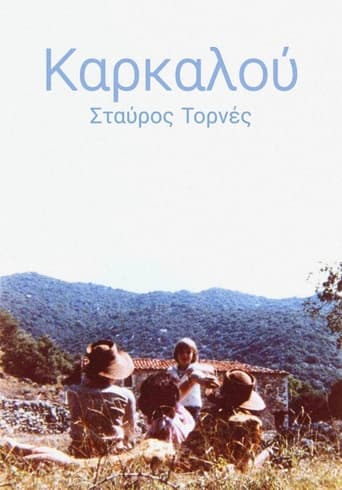
5.8An old man, cut off from his future and his past, brings a young taxi driver into his game. The two meet Karkalou, a crazy prostitute, whom the former once loved madly and the latter will soon love.
Karkalou
1984
5.8An old man, cut off from his future and his past, brings a young taxi driver into his game. The two meet Karkalou, a crazy prostitute, whom the former once loved madly and the latter will soon love.
Karkalou
1984
5.8An old man, cut off from his future and his past, brings a young taxi driver into his game. The two meet Karkalou, a crazy prostitute, whom the former once loved madly and the latter will soon love.
Karkalou
1984
6.7The portrait of an Andalusian musician who wanders around Epirus and socializes with the strangest characters in the area.
Danilo Treles: The Famous Andalusian Musician
1986
6.7The portrait of an Andalusian musician who wanders around Epirus and socializes with the strangest characters in the area.
Danilo Treles: The Famous Andalusian Musician
1986
6.7The portrait of an Andalusian musician who wanders around Epirus and socializes with the strangest characters in the area.
Danilo Treles: The Famous Andalusian Musician
1986
The chronicle of Loukas Kostoglou, a publisher devoted to poetry, and Marios, his assistant, who is love with Nina.
Heron for Germany
1988
The chronicle of Loukas Kostoglou, a publisher devoted to poetry, and Marios, his assistant, who is love with Nina.
Heron for Germany
1988
The chronicle of Loukas Kostoglou, a publisher devoted to poetry, and Marios, his assistant, who is love with Nina.
Heron for Germany
1988
 NR
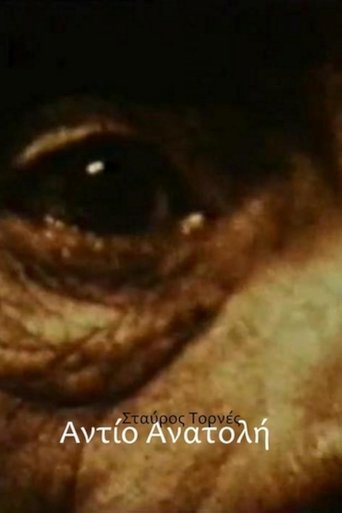
NRStaros Tornes' first non-fiction short combines a beautifully poetic text with a series of tracking shots in the streets of Rome, set to music by Charlotte Van Gelder. Somewhere between documentary and poetic essay, this film was born out of Tornes' love for Africa and the Orients, his never-ending agony over bloody revolutions and his passionate use of cinema to approach the Other
Addio Anatolia
1976
NRStaros Tornes' first non-fiction short combines a beautifully poetic text with a series of tracking shots in the streets of Rome, set to music by Charlotte Van Gelder. Somewhere between documentary and poetic essay, this film was born out of Tornes' love for Africa and the Orients, his never-ending agony over bloody revolutions and his passionate use of cinema to approach the Other
Addio Anatolia
1976
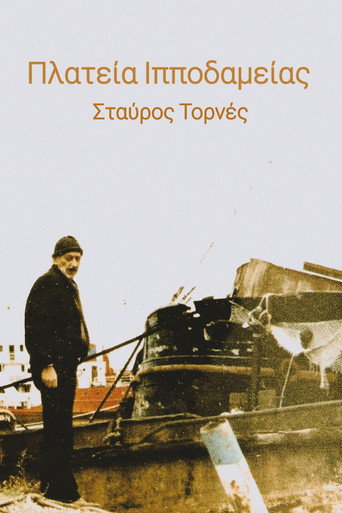 10.0
10.0No synopsis available yet.
Πλατεία Ιπποδαμείας
1983
10.0No synopsis available yet.
Πλατεία Ιπποδαμείας
1983
NRStavros Tornes directs this documentary centered on the poet Nikos Kavvadias and his poetry.
For the Poet Nikos Kavvadias
1982