

Directing
Alile Sharon Larkin
Known for
Directing
Credits
12 titles
Alile Sharon Larkin is an artist-educator and award-winning independent film and video maker. Larkin was a public school teacher in Los Angeles for over 25 years. She taught at 32nd Street/USC Visual and Performing Arts Magnet School from 1993-2013. Her teaching experience ranges from pre-K to college and filmmaking is part of Larkin’s interdisciplinary curriculum. She has received 10 Video in the Classroom Awards for teacher-produced films, documenting students learning about textile arts, storytelling, yoga, jazz, women’s history, Kwanzaa and African-American dance. Her film, Your Children Come Back To You (1979), presents a child’s perspective on wealth and social inequality, and has…
Known for
 8.0
An African American woman living away from her family in Los Angeles yearns to be recognized for more than her physical attributes. In cultivating the friendship of a male office mate, she aspires to a relationship where romance is not a factor, seeking someone who can "see her as she is," rather than see only what he wants to see. (UCLA Film & Television Archive)
A Different Image
1982
 NR
Part of a multi-platform project highlighted by an hour long documentary about black filmmakers who worked and studied at UCLA between 1965 and the 1990s.
Spirits of Rebellion: Black Cinema at UCLA
2016
 5.5
An early student work directed at UCLA by Alile Sharon Larkin and submitted as her "Project One." Larkin visualizes a mental ward as a possible equivalent to prison incarceration for women of color. –UCLA Film & Television Archive
The Kitchen
1975
 8.0
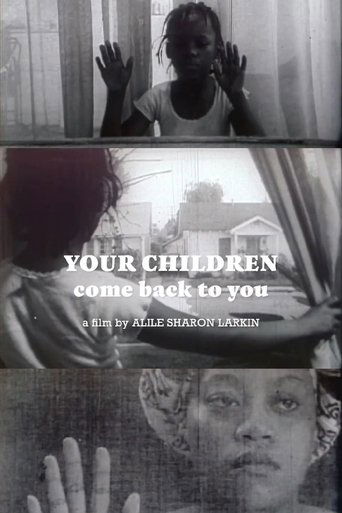
A single mother ekes out a living from welfare check to welfare check, struggling to provide for her daughter.
Your Children Come Back to You
1979
 NR
A jubilant affirmation of self-identity, Creating a Different Image is Alile Sharon Larkin in her own words defiantly declaring, "I am an artist." Learn more about the personal life and professional aspirations of the filmmaker behind Your Children Come Back to You (1979), A Different Image (1982), Dreadlocks and the Three Bears (1991) and many more. —Samuel B. Prime
Creating a Different Image: Portrait of Alile Sharon Larkin
1989
 7.0
The story of Goldilocks and the Three Bears is told from an African American perspective in this short film written and produced by Alile Sharon Larkin.
Dreadlocks and the Three Big Bears
1991
Film credits
Behind the camera
8.0An African American woman living away from her family in Los Angeles yearns to be recognized for more than her physical attributes. In cultivating the friendship of a male office mate, she aspires to a relationship where romance is not a factor, seeking someone who can "see her as she is," rather than see only what he wants to see. (UCLA Film & Television Archive)
A Different Image
1982
5.5An early student work directed at UCLA by Alile Sharon Larkin and submitted as her "Project One." Larkin visualizes a mental ward as a possible equivalent to prison incarceration for women of color. –UCLA Film & Television Archive
The Kitchen
1975
5.5An early student work directed at UCLA by Alile Sharon Larkin and submitted as her "Project One." Larkin visualizes a mental ward as a possible equivalent to prison incarceration for women of color. –UCLA Film & Television Archive
The Kitchen
1975
5.5An early student work directed at UCLA by Alile Sharon Larkin and submitted as her "Project One." Larkin visualizes a mental ward as a possible equivalent to prison incarceration for women of color. –UCLA Film & Television Archive
The Kitchen
1975
8.0A single mother ekes out a living from welfare check to welfare check, struggling to provide for her daughter.
Your Children Come Back to You
1979
8.0A single mother ekes out a living from welfare check to welfare check, struggling to provide for her daughter.
Your Children Come Back to You
1979
8.0A single mother ekes out a living from welfare check to welfare check, struggling to provide for her daughter.
Your Children Come Back to You
1979
7.0The story of Goldilocks and the Three Bears is told from an African American perspective in this short film written and produced by Alile Sharon Larkin.
Dreadlocks and the Three Big Bears
1991
The film uses interviews and photographs to tell the story of librarian and poet Fluci Moses, who is herself on-camera most of the time. She and other readers relate the story of black life in America through her and other readers' poems.
Miss Fluci Moses
1987