
Directing
Rose Lowder
Place of birth
Lima, Peru
Known for
Directing
Credits
48 titles
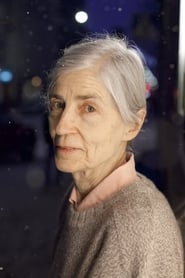
Rose Lowder (born in 1941 in Miraflores, Lima, Peru) is a French-Peruvian filmmaker. From 1947 to 1958, Lowder studied at the Colegio San Silvestre, Miraflores. She then specialized in painting and sculpture studies in artist’s studios and art schools in Lima, Peru (The Art Center (1951-1957), La Escuela de Bellas Artes (1957-1958) then in London (Regent Street Polytechnic, 1960-1962), Chelsea School of Art (1962-1964). While in London, she pursued artistic practice while working as an editor in the film industry (1964-1972). After 1977, Lowder worked on the visual aspect of the cinematographic process and had Jean Rouch, as well as his department from the Université Paris X, and presented…
Known for
 NR
NRReel 1 of Gérard Courant's on-going Cinematon series.
Cinématon I
1978
 NR
NRFugitive images of the northwestern city of France.
Souvenirs/Rouen
1983
 4.9
4.9Cinématon is a 156-hour long experimental film by French director Gérard Courant. It was the longest film ever released until 2011. Composed over 36 years from 1978 until 2006, it consists of a series of over 2,821 silent vignettes (cinématons), each 3 minutes and 25 seconds long, of various celebrities, artists, journalists and friends of the director, each doing whatever they want for the allotted time. Subjects of the film include directors Barbet Schroeder, Nagisa Oshima, Volker Schlöndorff, Ken Loach, Benjamin Cuq, Youssef Chahine, Wim Wenders, Joseph Losey, Jean-Luc Godard, Samuel Fuller and Terry Gilliam, chess grandmaster Joël Lautier, and actors Roberto Benigni, Stéphane Audran, Julie Delpy and Lesley Chatterley. Gilliam is featured eating a 100-franc note, while Fuller smokes a cigar. Courant's favourite subject was a 7-month-old baby. The film was screened in its then-entirety in Avignon in November 2009 and was screened in Redondo Beach, CA on April 9, 2010.
Cinématon
1978
 NR
NR"Turbulence was filmed in the medieval town of Alet les Bains [...] In the middle of the peaceful city, with a warm and relaxing climate, known for its thermal baths, one can see [...] a small waterfall, the images of which, as well as the title of the film refer to the present state of the world today." - Light Cone
Turbulence
2015
 NR
NRA multi-projector, single-screen work superimposedshot a positive and negative print.
Certaines Observations
1979
 NR
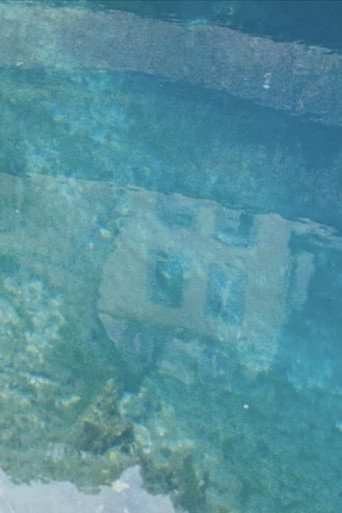
NRFilmed around the famous circular medieval wash house built on an equally famous spring, the Fosse Dionne, in the medieval town of Tonnerre, Yonne. It is surrounded by wild flowers from abandoned terraces, plants in the St. Pierre gardens, cultivated by the disabled and the injured, which lead up to the church on the hill, flowers hanging down from pots, their reflections and others growing in or around the water's edges.
BOUQUET 7
1995
Film credits
2000s · 2 titles
 NR
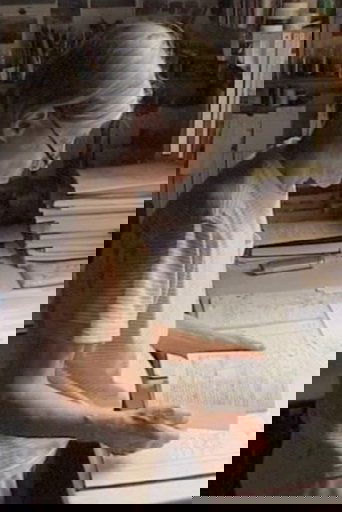
NRRose Lowder is an artisan of cinema. Her 16mm camera takes the place of a loom for the weaving of images. She has consecrated her life to these tapestries, these embroideries whose motifs have for many years come from nature, in a state of incessant becoming. Like her elders, the Impressionist painters, she renders her bouquets stroke by stroke, image by image, color after color, to give life to her pointillist compositions in motion.
Cinexpérimentaux #5 : Rose Lowder
2002
The latest in an ongoing series of portraits including inventors Maurice Seddon and Hugh de la Cruz. Here, filmmaker Rose Lowder prepares a macrobiotic meal in her tiny flat in Paris in October 2005. As Rose describes what she is cooking and why, we hear about Rose's childhood spent in Peru through to her current life in Avignon and glimpse a singular creator.
What Did You Eat Today? Rose Lowder
2005
1990s · 1 titles
1980s · 2 titles
NRFugitive images of the northwestern city of France.
Souvenirs/Rouen
1983
 NR
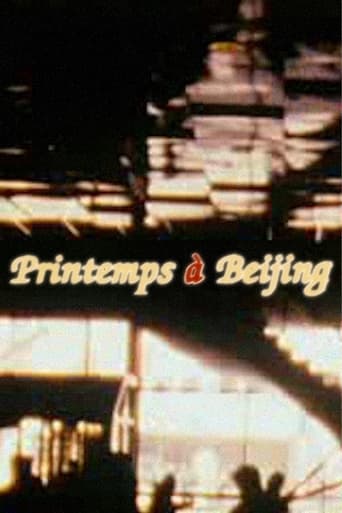
NR"One year before the massacre of Tian An Men [...] a few hundred meters from this immense square, where the tanks were going to crush the resistance, under the debonair gaze of Mao [...] I was loaned a tiny, autofocus camera, allowing me to shoot without framing, the lens wedged on my right hip. Everything is captured in clusters of images, edited directly into the camera. The diary of a stroller who travels through Beijing on foot and by bicycle - a cyclist among the cyclists who circulate in slow and tight flows." - Sudre
Printemps à Beijing
1988
1970s · 3 titles
NRReel 1 of Gérard Courant's on-going Cinematon series.
Cinématon I
1978
4.9Cinématon is a 156-hour long experimental film by French director Gérard Courant. It was the longest film ever released until 2011. Composed over 36 years from 1978 until 2006, it consists of a series of over 2,821 silent vignettes (cinématons), each 3 minutes and 25 seconds long, of various celebrities, artists, journalists and friends of the director, each doing whatever they want for the allotted time. Subjects of the film include directors Barbet Schroeder, Nagisa Oshima, Volker Schlöndorff, Ken Loach, Benjamin Cuq, Youssef Chahine, Wim Wenders, Joseph Losey, Jean-Luc Godard, Samuel Fuller and Terry Gilliam, chess grandmaster Joël Lautier, and actors Roberto Benigni, Stéphane Audran, Julie Delpy and Lesley Chatterley. Gilliam is featured eating a 100-franc note, while Fuller smokes a cigar. Courant's favourite subject was a 7-month-old baby. The film was screened in its then-entirety in Avignon in November 2009 and was screened in Redondo Beach, CA on April 9, 2010.
Cinématon
1978
Portrait of French-Peruvian filmmaker Rose Lowder shot in Paris (France) on February 17, 1978 at 11:45 AM.
Cinématon n°6 : Rose Lowder
1978
Behind the camera
NR"Turbulence was filmed in the medieval town of Alet les Bains [...] In the middle of the peaceful city, with a warm and relaxing climate, known for its thermal baths, one can see [...] a small waterfall, the images of which, as well as the title of the film refer to the present state of the world today." - Light Cone
Turbulence
2015
NRA multi-projector, single-screen work superimposedshot a positive and negative print.
Certaines Observations
1979
NRFilmed around the famous circular medieval wash house built on an equally famous spring, the Fosse Dionne, in the medieval town of Tonnerre, Yonne. It is surrounded by wild flowers from abandoned terraces, plants in the St. Pierre gardens, cultivated by the disabled and the injured, which lead up to the church on the hill, flowers hanging down from pots, their reflections and others growing in or around the water's edges.
BOUQUET 7
1995
 5.0
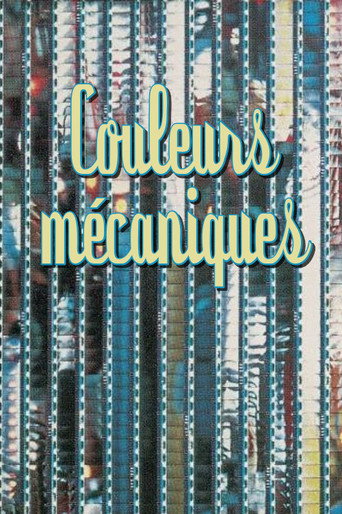
5.0Couleurs mécaniques presents, in the order they were filmed, six different viewpoints of a merry-go-round. In each case the focus is adjusted so as to select, isolate and inscribe parts of the filmed scene onto the film strip in a way that allows elements of color in movement to be recombined in a particular manner during the projection of the film.
Couleurs mécaniques
1979
 4.0
4.0Canada's king of visual alchemy teams up with France's mistress of minimalism to fashion a photo-based work of cinematic abstraction. Tactile and textured, luscious and luminescent, Two Pictures is a singular statement embodying a powerful dichotomy. This is a film that is simultaneously about nothing and about everything.
Two Pictures
1999
The film presents a field of sunflowers. The focus is adjusted frame by frame in succession according to a series of patterns on particular plants situated in different parts of the field. The diverse configurations placed on separate frames of the film strip appear, when projected successively, simultaneously on the screen. Thus, filmed one after another at different focal lengths, the sunflowers combine during projection to form one spatiotemporal image. LES TOURNESOLS COLORES is a capricious version of the film. - Film Makers' Coop
The Sunflowers
1982
 5.8
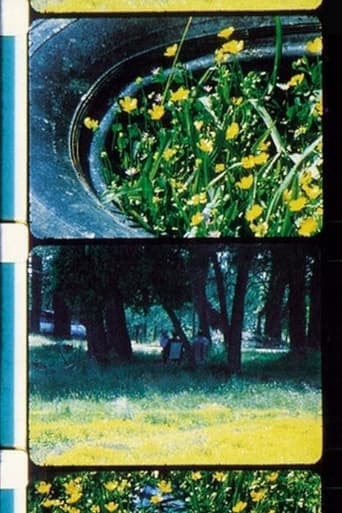
5.8Bouquets 1-10 is Lowder’s first collection in an ongoing series of one minute episodes, each composed of footage shot around a general geographic location that has been alternately woven, frame by frame, into a single film reel and connected through the interstitial still life image of a flower that cues the beginning of each integrated film Bouquet. Each bouquet of flowers is also a bouquet of frames mingling the plants to be found in a given place with the activities that happen to be there at the time. Lowder uses the film strip as a canvas with the freedom to film frames on any part of the strip in any order, running the film through the camera as many times as needed.
Bouquets 1-10
1995
In this film Lowder moves away from the notion of a work based on a preconceived filming procedure, adjusting the visual characteristics of the image in order to approach the temporal dimension of a pond full of frogs. In front of creatures that tend to be elusive, how can one record moments that are meaningful? How can one render a living moment visible and connect different recorded moments together?
Habitat, Batrachian
2006
 8.0
8.0BOUQUETS 31-40 continues, like the previous Bouquets, to explore different places, which for various reasons, are ecological. For 31-40 they are in France, in Ardèche, Alpes-de-Haute-Provence, Tarn and Vaucluse and also in Piemont, Italy.
Bouquets 31-40
2022
 NR
NRNo synopsis available yet.
Boucle/Loops
1997
Worn out by the sea, the Sète fishing boats decide to spend a day in the country amongst the poppies surrounding Arles, Bédarrides and the Thouzon Grottos.
Poppies
2000
 NR
NRthe fishing boats are out in the water the fish are caught. brought into shore the men haul the catch off the boat. the boat once again goes out to catch and the cycle continues. for centuries this pattern has repeated it's cycle like the tides which roll in and out a story which draws its energy from the sun the moon draws the tides the men work and die and it continues take a moment stretch your eyes and imagine just imagine all stories are true. (CB)
L’Invitation au Voyage
2003
Alternating frames combine footage of Parisian landmarks taken at different times of day or in different seasons.
Scènes de la vie française : Paris
1986
No synopsis available yet.
Le dessert
—
The title of “Impromptu” reflects both its creating process and the trait of life taking an unexpected course. This film intertwines time and space by being filmed frame on frame, in surprising locations, during a surprising time… but exactly this was the idea of the creator: contingency and visual improvisation. —Kaunas International Film Festival
Impromptu
1989
Champ Provençal presents a frame by frame construction of a peach orchard at three different periods from a single viewpoint : with pink blossom (April 1), with green leaves (April 16) and with red-yellow peaches (June 24). Although the filming procedure is similar to that of Rue des Teinturiers, the recording processes controlling the organization the material in Champ Provençal are adapted to specific characteristics of the location with the aim of setting up another visual experience.
Champ provençal
1979
The procedure of separating and extracting certain aspects of a scene by adjusting the focus of a series of frames in succession according to various organizational patterns is developed in Retour d'un repère. While the filmic operations are structured in relation to a limited space (a branch over a 19c duck pond), the filmic process rests on a visual transformation of a pantoun, a verse form borrowed from literary rhetorics, which characteristically transforms itself gradually and continuously in a precise manner. - Lightcone
Retour d'un repère
1979
 NR
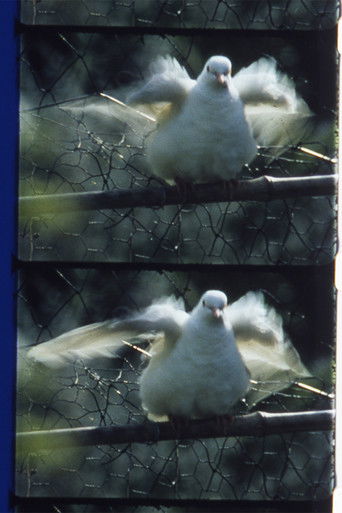
NRA quick view of three remarkable organic gardens: Le Tomple, Le jardin du Mas d’Abri in the department of Gard and Le jardin des Sambucs in the department of Hérault. The film goes over their general layout along pathways amongst the vegetation, ponds and people or animals that happen to be there at the time.
Côté jardin
2007
 6.5
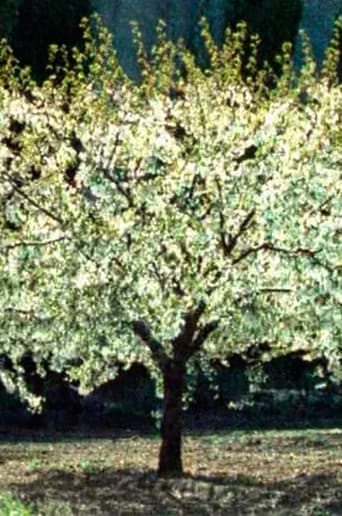
6.5Quiproquo is a dialogue on the balance to be found between nature and social-industrial technology. As the film refers to the economy of the means involved in relation to what is expressed, it is both a reflection on the potentialities of the medium and an enquiry concerning the implications of the reality portrayed. It is a question of limits and possibilities, the beauty and tragedy of the world, with a critique of contemporary society’s dominant choices constantly in the background. Filmed in Berre l’Etang, Bouches du Rhône, in the villages of Orgon, Bouches du Rhône and La Coucourde, Drôme, on the roads to Beaumont-du-Ventoux and Carpentras, Vaucluse, and Tarascon, Bouches du Rhône.—Canyon Cinema
Quiproquo
1992
Sources originated from Thomas the Gardener’s wish to celebrate the 30th anniversary of his making vegetable pâté. Leaving urban life behind him in order to renew a relationship with the land, Thomas started up an organic garden in the beautiful area of hot and cold springs, lakes and rivers, in the upper Aude Valley. In the middle of making his pâté, the gardener is surrounded, as the water sources of the Aude river rush by, by one of the sources for his recipies, the flowers and spices from his garden.
Sources
2012
With this film I wanted to pay homage to Yann Beauvais for his having, on top of his own work as an artist, against all odds, lack of funds or recognition concerning the field in question, made an important contribution to make known, as much by his writing as by his presenting and distributing, works by other authors. In hurrying and neglecting an infection on my right thumb, I had to film more or less with one hand and then spend two days in hospital. I can only think that the making of this little film reflects all the difficulties previously faced by Yann himself.
Foryannfromrose
2015
Composed frame by frame in the camera, Parcelle (fragment, particle or bit) rests upon the alternate appearance and variable duration of tiny colored squares or circles placed on black backgrounds and inserted in series between plain white or colored images, creating optical superimpositions on the screen.
Parcelle
1979
 5.0
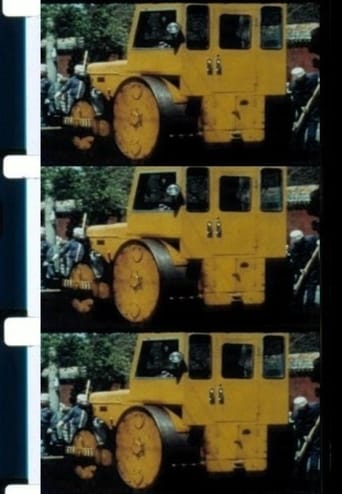
5.0China seen from Beijing May 1988, a year before the Spring 1989 Tiananmen rebellion, where the ancient traditional philosophies and social practices confront the political and economical ideological ambitions of the State.
Beijing 1988
2011
 NR
NRThe film starts in the Department of Ardèche with the Mont Gerbier de Jonc (1551 m) from where emerges the "true" source, the official, most distant one from the mouth of the Loire (1012 km), the longest wild river in France. The work looks closely time-wise on the first kilometers of the river's water flow. The scene's sound meets up with us at the end.
La Source De La Loire
2021
 NR
NRA glimpse of a spot around the Hôtel-Pension Beau-Site on the Chemin sur Martigny, Switzerland, situated in a hamlet surrounded by snow-capped mountains.
Nothing Special
2011
NRA glimpse of a spot around the Hôtel-Pension Beau-Site on the Chemin sur Martigny, Switzerland, situated in a hamlet surrounded by snow-capped mountains.
Nothing Special
2011
Footage of beachgoers and boats in harbor, shown in alternating frames taken at different times and shown with different tints.
Scènes de la vie française : La Ciotat
1986
 NR
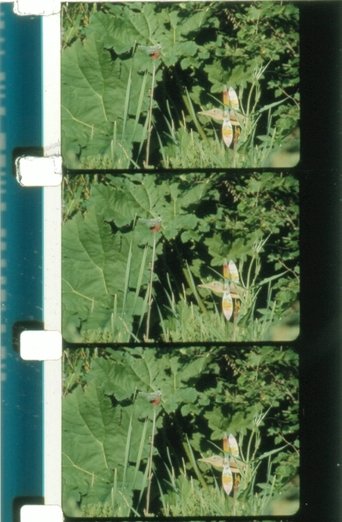
NR"The town of Asti, Piemonte, in Italy, has in its park a very small pond in which there are a great number of turtles, a species 'Trachemys scripta and Trachemys scripta elegans' protected by the 'Movimento Nationale U.N.A. Onlus Uorno-Natura_Animal'”. In spite of the very limited space in the pond, a spirit of well-being prevails, all is calm while each turtle tries to find its place even if it means falling into the water every now and then." - Light Cone
Tartarughe d’acqua
2017
 NR
NRThe magnificent garden we see in the film is part of the Brière Regional Nature Park, in the heart of the Guérande peninsula (in Loire-Atlantique), and covers over a hectare. Comprising a vegetable garden, an ornamental garden, a copse and two ponds, it is a space in constant flux, but also a visual melting pot that invites cinematic exploration. The film was shot as a tribute to the creators of this beautiful place, Annick Bertrand-Gillen and Yves Gillen.
Jardin du marais
2010
 NR
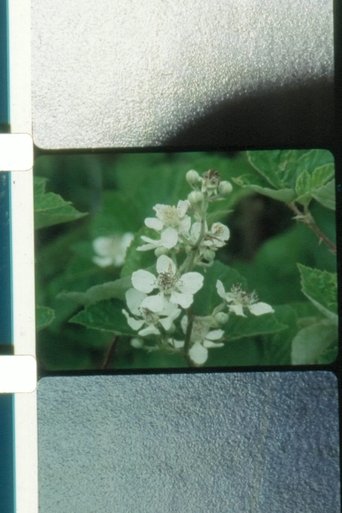
NRBased on natural light, an element that has played a fundamental role in the development of cinema, the film's subject revolves around solar panels in two locations, Cascina Piola, in Capriglio, and Le Vieil Eclis, in Asserac, in the Loire-Atlantique. As we watch, we also find ourselves in the midst of the sparkling light, exposed to the wind like butterflies, bees and clouds.
Jardin du soleil
2010
BOUQUET 25 (2002) was shot in Cantal, around Le Tahoul, the Falgoux Valley and the Aulac Pass. This reel mingles the few flowers uneaten by the Salers cows with the village residents going about their affairs. BOUQUET 26 (2003) was filmed in the middle of the animals of a small farm, La Terra di Mezzo, perched on hillside terraces of Liguria, Italy. BOUQUET 27 (2003) moves around a macrobiotic centre in St. Gaudens, Haute-Garonne. Amongst glimpses of the surrounding countryside leading to the village of St. Béat, it shows its residents working on the land, repairing items or making rice biscuits.
Bouquets 25-27
—
Six poetic pictures, five based on the sun, the wind and the sea, while the last lingers on a small park left fallow.
Salt Garden
2011
 8.0
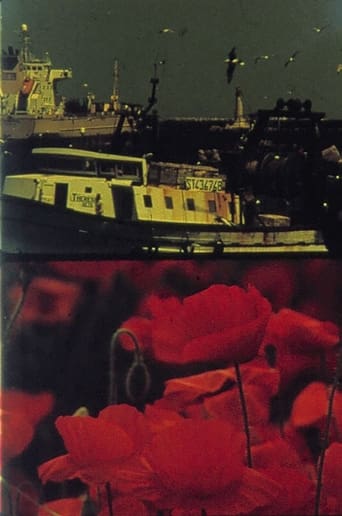
8.0Little is necessary for everything to appear differently. The date, the hour, the weather, the space's layout, one's glance or presence of mind . . . can make everything change. The boats sail out of the Vieux port in Marseille to be amongst the poppy fields.
Poppies and Sailboats
2001
 NR
NRLes tournesols colorés is derived from the same footage used in Les tournesols, but with candy colors, giving other modulations to movie movements. The two versions can be shown one after the other, although they were designed to be played separately.
Les tournesols colorés
1983
In Retour d'un repère composé the same material is presented successively in three different versions : the first third is a straight single print which corresponds exactly to Retour d'un repère. The second third is a combined picture printed twice onto the same film strip (the second printing being in another tone and shifted back one frame) and the third section is a combined image printed in a similar way thrice. The length of Retour d'un repère composé is necessary : in the process of viewing the film the work gathers momentum thus giving access to a more intricate visual experience. "Composed recurrence" is a rough translation of Retour d'un repère composé as one loses the "point of reference" aspect concerning "repère".
Retour d'un repère composé
1981
BOUQUETS 21-30 is a part of the ecological BOUQUETS series, consisting of one-minute films composed in the camera by weaving the characteristics of different environments with the activities there at the time. The filming basically entails using the film strip as a canvas with the freedom to film frames on any part of the strip in any order, running the film through the camera as many times as needed. Thus each bouquet of flowers is also a unique bouquet of film frames.
Bouquets 21-30
2005
Footage of public spaces around Avignon, shown in alternating frames captured at different times.
Scènes de la vie française : Avignon
1986
Looping carnival rides slow, stutter, and stop in the first film of Lowder's series disrupting the flow of time in quotidian French life.
Scènes de la vie française : Arles
1985
This reel consists of three short films, two in black and white and one in color, that treat of a water wheel on the Sorgue. The essence of the work rests on a series of cross-references that are set up between the operational mechanisms of the filmed object and the recorded characteristics foregrounded by the choice of film stocks and filming circumstances. The title reflects the process involved. Roulement = rotation, rouerie = wiliness, aubage = paddle wheel unit. - Film Makers' Coop
Roulement, rouerie, aubage
1978
An entry, filmed in Italy, Switzerland and France, in Rose Lowder's series collecting one minute episodes, each composed of footage shot around a general geographic location that has been alternately woven, frame by frame, into a single film reel. In spite of its numbering, this collection was completed later than Bouquets 21-30 (delayed, Lowder explains, "by the weather and a series of related technical/aesthetics incidents").
Bouquets 11-20
2011