

Acting
Faina Ranevskaya
Born — Died
1896-08-27 — 1984-07-19
Place of birth
Taganrog, Don Voisko Oblast, Russian Empire [now Rostov Oblast, Russia]
Known for
Acting
Credits
31 titles
Faina Georgiyevna Ranevskaya (born Faina Girschevna Feldman, on August 27th, 1896 in Taganrog), was a Soviet theatre and film actress. She is also very well known for her cheeky aphorisms. In childhood, she attended the Mariinskaya Gymnasium for Girls, receiving additional education usual for someone from an affluent family (music, singing, foreign languages). Heavily influenced by her mother's love for the arts, Ranevskaya had a budding interest in theatre and by the age of 14 was attending classes at the private theatre studio of A. Jagiello (A.N. Govberg), graduating in 1914. In 1915 she decided to move to Moscow, becoming estranged from her family due to her choice of career. During t…
Known for
 7.6
7.6Fitil is a popular Soviet/Russian television satirical/comedy short film series which ran for about 500 episodes. Some of the episodes were aimed at children, and were called Фитилёк, Fitilyok, Little Fuse. Each issue contained from the few short segments: documentary, fictional and animated ones. Directed by various artists, including Leonid Gaidai who presented his famous trio of Nikulin, Vitsin and Morgunov into the cast. It was called in USSR as "the anecdotes from the Soviet government".
Fuse
1962
 NR
NRNo synopsis available yet.
Legends of Cinema
2016
 6.6
6.6In the fairy kingdom live stepmother, her evil daughters — Anna and Maryana, a limp husband-forester and his daughter from his first marriage — Cinderella. The stepmother exploits the poor girl as a housekeeper. With the help of her godmother-fairy, Cinderella gets to the royal ball, where a beautiful and very kind prince falls in love with her. At midnight, the magic ends, and poor Cinderella has to return to her former life. But on the crystal shoe that Cinderella lost while fleeing the palace to the battle of the palace chimes, the prince searches for the bride.
Cinderella
1947
 7.7
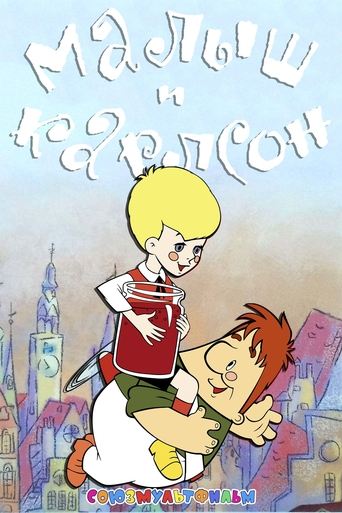
7.7A Soviet cartoon adaptation of a classic Swedish tale by Astrid Lindgren about Karlsson-on-the-Roof.
Junior and Karlson
1968
 7.1
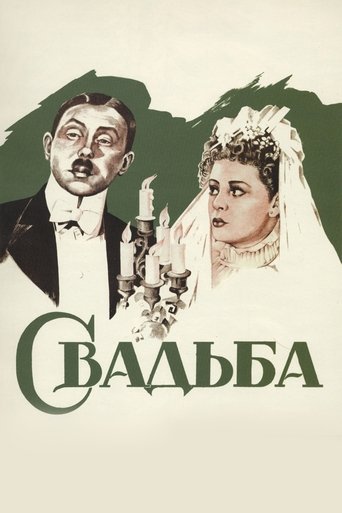
7.1Petty bourgeois Zhigalovs, whose daughter-in-law Dasha is being extradited, find out to their horror that the official Aplombov, who has been caring for Dasha all summer, has dined every day with them and has proved himself to be his bridegroom, is not going to marry at all.
Wedding
1944
 10.0
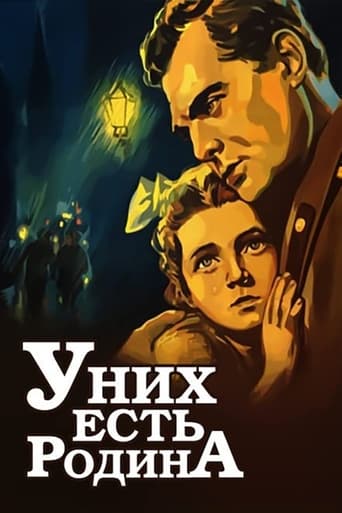
10.0The Great Patriotic War is over, but Major Sorokin and Colonel Dobrygin still have a lot to do for their homeland. They must go to West Germany in order to find and return the children who were taken out of the Soviet Union by the Nazis and are now kept in atrocious conditions under the supervision of British intelligence. Former allies want to grow real spies out of their children.
They Have a Motherland
1949
Film credits
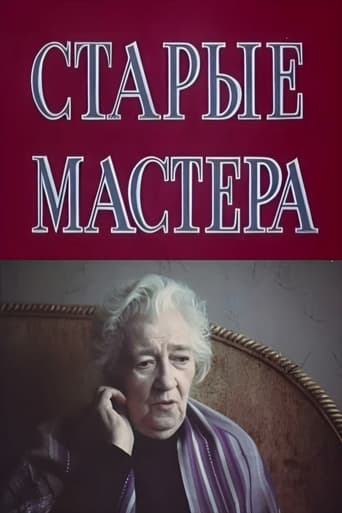
1970s · 2 titles
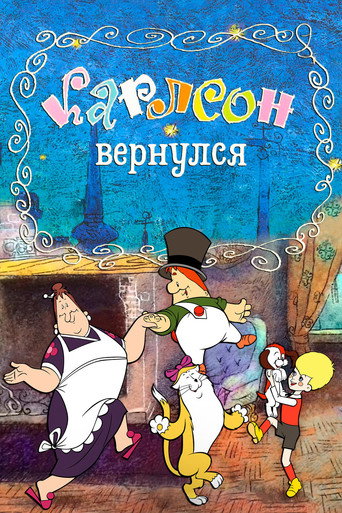 7.1
7.1The Kid didn't have to miss Carlson for long - one day he landed in his room again. This means that there will be new adventures and pranks! With Carlson's help, the harsh and bossy Freken Bock will be re-educated and become very kind. And then the friends will all put on a costume show with dancing and drink tea with buns.
Karlson Returns
1970
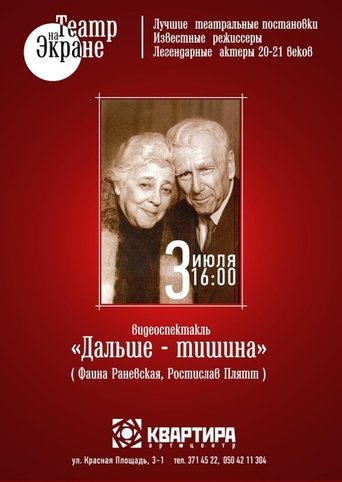 2.0
2.0TV version of the acclaimed stage production of Viña Delmar's script for the film Make Way for Tomorrow.
The Rest Is Silence
1978
1960s · 4 titles
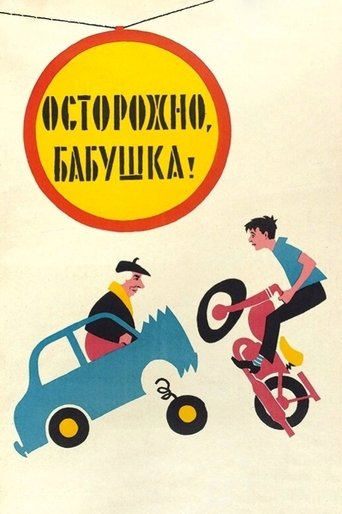 4.2
4.2Young Lena becomes a chief manager of a workers' club. The problem is this club is not constructed yet and finishing it takes too much effort from a young girl. The solution is found by her grandmother and her 'old guards'. Look out Lena's enemies. Here's her grandma coming!
Be Careful, Grandma!
1961
 5.8
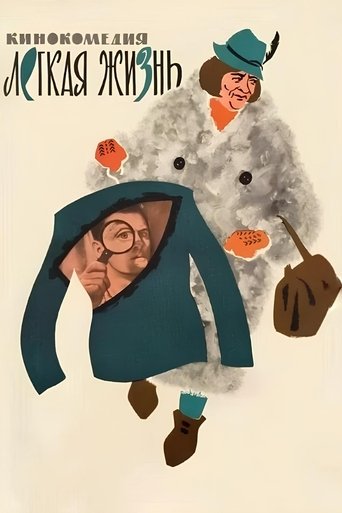
5.8A chemist by training, Alexandr Bochkin manages a Moscow dry-cleaning operation, but lives a very comfortable life, taking orders on the side for his speculative "private enterprise," run in conjunction with "Queen Margot". But when his old friend from the chemical institute, Yuri Lebedev arrives in Moscow from the Siberian city of Dalnegorsk, along with a traveling companion, Olga, Bochkin becomes uncomfortable with his job title.
An Easy Life
1964
 5.9
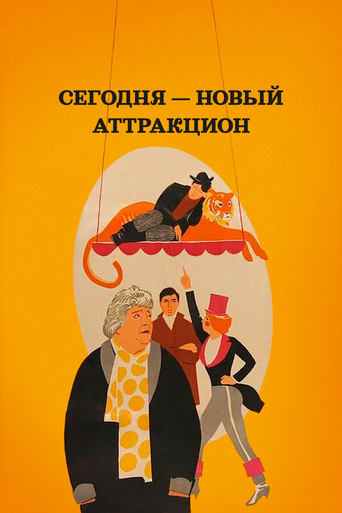
5.9A new girl becomes circus star despite her husband objective.
New Attraction Today
1966
 4.7
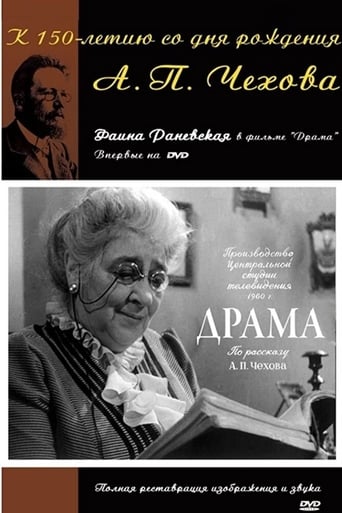
4.7A famous writer's long-awaited nap is interrupted by a visit from an aspiring playwright who wishes to show him her latest drama.
Drama
1960
1950s · 1 titles
1940s · 15 titles
6.6In the fairy kingdom live stepmother, her evil daughters — Anna and Maryana, a limp husband-forester and his daughter from his first marriage — Cinderella. The stepmother exploits the poor girl as a housekeeper. With the help of her godmother-fairy, Cinderella gets to the royal ball, where a beautiful and very kind prince falls in love with her. At midnight, the magic ends, and poor Cinderella has to return to her former life. But on the crystal shoe that Cinderella lost while fleeing the palace to the battle of the palace chimes, the prince searches for the bride.
Cinderella
1947
7.1Petty bourgeois Zhigalovs, whose daughter-in-law Dasha is being extradited, find out to their horror that the official Aplombov, who has been caring for Dasha all summer, has dined every day with them and has proved himself to be his bridegroom, is not going to marry at all.
Wedding
1944
10.0The Great Patriotic War is over, but Major Sorokin and Colonel Dobrygin still have a lot to do for their homeland. They must go to West Germany in order to find and return the children who were taken out of the Soviet Union by the Nazis and are now kept in atrocious conditions under the supervision of British intelligence. Former allies want to grow real spies out of their children.
They Have a Motherland
1949
 6.3
6.3A drab woman scientist, working on machine to harness solar energy, and a pert concert singer look-alike being courted to play her in a movie swap identities and find personal growth, professional success, love, and happiness.
Spring
1947
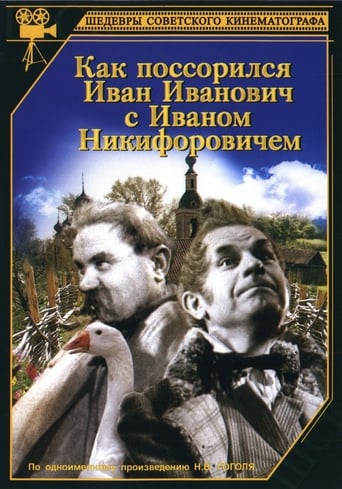 6.2
6.2No synopsis available yet.
How Ivan Ivanovich Quarreled with Ivan Nikiforovich
1941
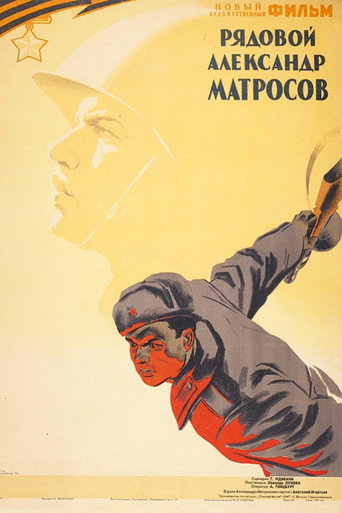 9.0
9.0The film is about the exploit of a nineteen-year-old soldier of the Great Patriotic War - Alexander Matrosov, who covered the embrasure of the enemy's bunker with his body.
Private Aleksandr Matrosov
1947
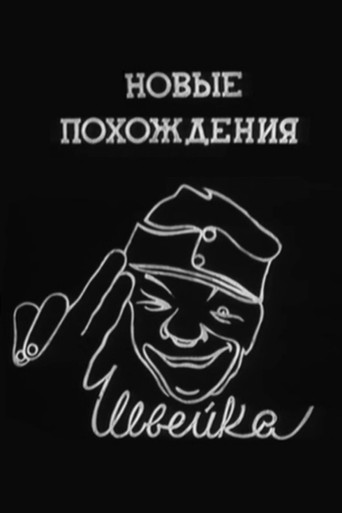 6.6
6.6The New Adventures of Schweik adopted to the WWII reality.
The New Adventures of Schweik
1943
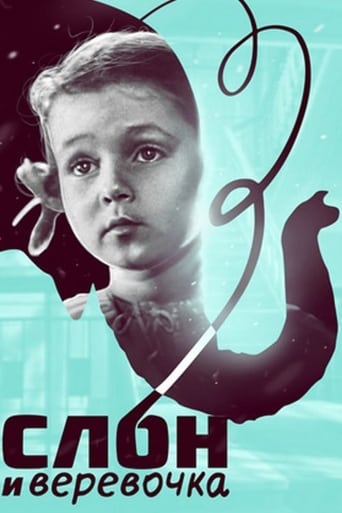 8.0
8.0All the girls of one of the Moscow houses can tirelessly jump over a skipping rope. But little Lida did: can't learn to jump. Once in a dream a wise elephant gives her a piece of advice: to learn how to jump, you must first do a good deed...
An Elephant and a Rope
1945
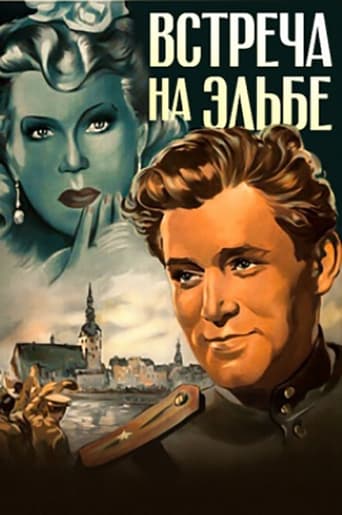 4.9
4.9Soviet and American soldiers are meeting on the shores of the Elbe river in Germany in 1945.
Meeting on the Elbe
1949
 1.0
1.0The story is about three sisters. The youngest is chosen by Tsar Saltan to be his wife. He orders the other two sisters to be his royal cook and weaver. They become jealous of their younger sister. When the tsar goes off to war, the tsaritsa gives birth to a son, Prince Gvidon (Gvidón.) The older sisters arrange to have the tsaritsa and the child sealed in a barrel and thrown into the sea. The sea takes pity on them and casts them on the shore of a remote island, Buyan. The son, having quickly grown while in the barrel, goes hunting. He ends up saving an enchanted swan from a kite bird. The swan creates a city for Prince Gvidon to rule, but he is homesick, so the swan turns him into a mosquito to help him. In this guise, he visits Tsar Saltan's court, where he stings his aunt in the eye and escapes. Back in his realm, the swan gives Gvidon a magical squirrel. But he continues to pine for home, so the swan transforms him again, this time into a fly.
The Tale of Tsar Saltan
1943
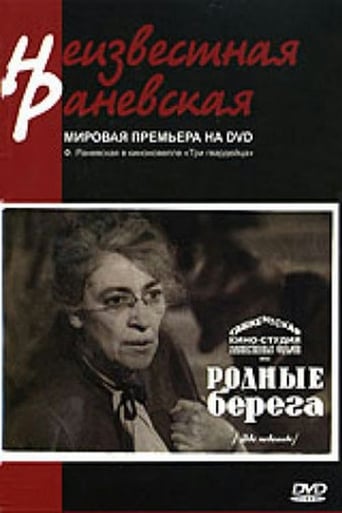 5.0
5.0Three soldiers make their way into a city occupied by the Nazis.
Native Shores
1943
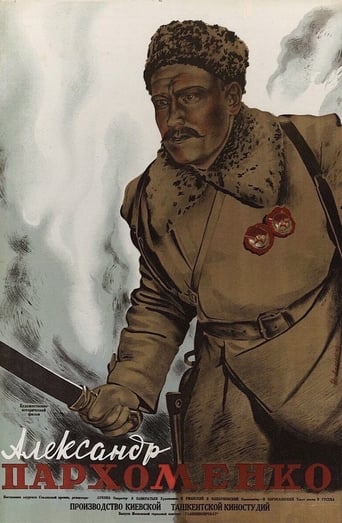 5.1
5.1About the life and heroic death of the old Bolshevik-Lugansk resident, participant in the civil war, Aleksandr Yakovlevich Parkhomenko. In 1918, capturing Ukraine, the German occupiers sought to use the Haidamaks, the White Guards and the Greens in their struggle. By order of Voroshilov, Aleksandr Parkhomenko from Lugansk arrives in Tsaritsyn. At the same time, the Germans launched an active offensive. The "red" battalions are poorly armed, however, Parkhomenko manages to raise them to the attack and put the enemy to flight.
Aleksandr Parkhomenko
1942
 5.5
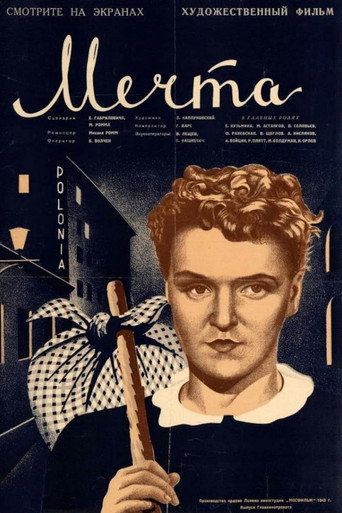
5.5In search for a better life, Anna leaves her Ukrainian village for a big city. Three years later, she finds herself working two jobs and spending most of her days in a rooming house inhabited by broken people.
Dream
1943
 6.2
6.2Friends and family are trying to bring together newlyweds who separated immediately after the wedding.
The Beloved
1940
 6.6
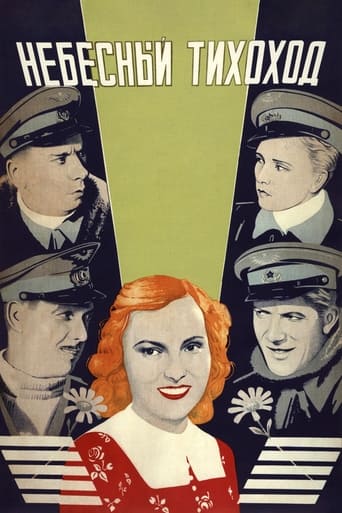
6.6Three pilots are best friends and good fighters. During the WWII they are taking an oath to refrain from love until the end of the War. But soon they meet three women-pilots. One by one they give up the oath, and all three fall in love.
The Sky Slow-Mover
1946
1930s · 5 titles
 5.7
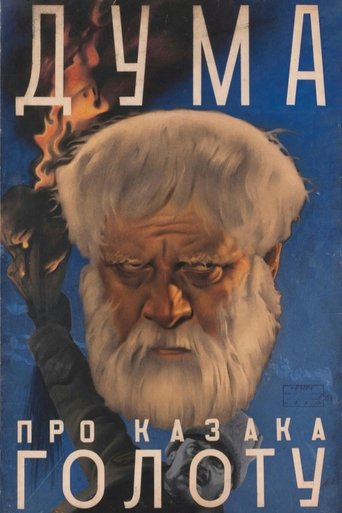
5.7The story of three young Russsian adventurers against the background of post-revolutionary skirmishes in the Ukraine. The boys get mixed up with a wounded commissar and a marauding White Russian officer. They find themselves in all sorts of predicaments before the Reds arrive to save the day, and become the mascots of a troop of Bolshevik cavalry.
The Ballad of Cossack Golota
1937
 6.6
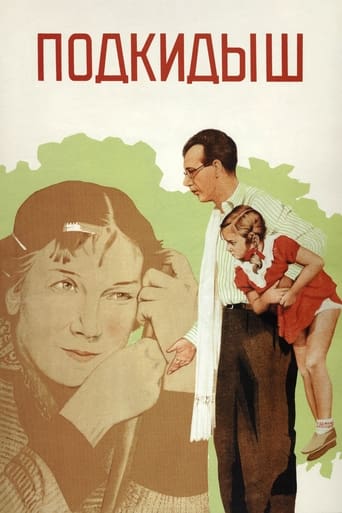
6.6A little girl is lost in Moscow and hits the road making fun (not intentionally) of everybody she meets. She'll be back home soon but she will change the life of at least one man forever...
The Foundling
1939
 6.2
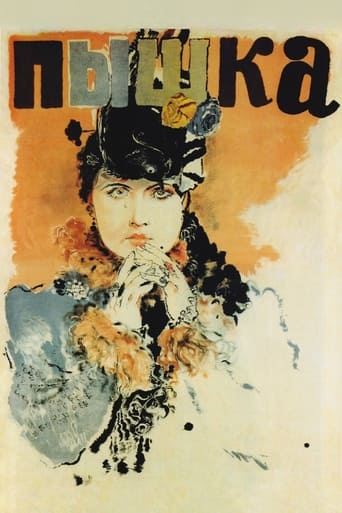
6.2A film adaptation of the short story of the same name by Guy de Maupassant. The action takes place in the XIX century. Franco-Prussian War of 1870. A group of French bourgeois leaves in a stagecoach from Rouen occupied by Prussian troops. Along with them comes one attractive demimonde lady. The only way to get out is to persuade her, nicknamed "Ball-of-Fat" a la "Boule-de-Suif" to satisfy the lust of the head of the gendarmerie...
Boule de Suif
1934
 4.3
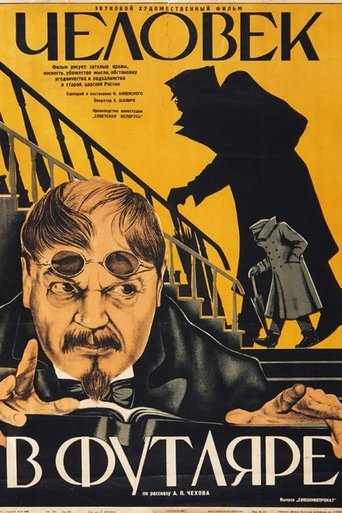
4.3The Greek teacher Belikov, who works in a rural gymnasium, loved to keep things in cases, was afraid of everything and lived himself, as if in a case, on the principle: “no matter what happens”. By this principle, he literally "terrorized" the gymnasium and the villagers. Hope appeared when Varenka arrived in the village - “not a girl, but marmalade”, although she was already aged, and “did not mind being married, even if only to a teacher of the Greek language”.
Man in a Shell
1939
 5.6
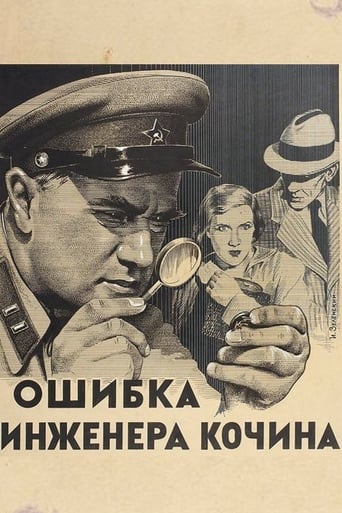
5.6Engineer-designer of the Moscow aviation plant Cochin took the secret blueprints home. He didn't know that foreign intelligence had long been hunting for these blueprints...
Engineer Kochin's Error
1939
Series credits
7.6Fitil is a popular Soviet/Russian television satirical/comedy short film series which ran for about 500 episodes. Some of the episodes were aimed at children, and were called Фитилёк, Fitilyok, Little Fuse. Each issue contained from the few short segments: documentary, fictional and animated ones. Directed by various artists, including Leonid Gaidai who presented his famous trio of Nikulin, Vitsin and Morgunov into the cast. It was called in USSR as "the anecdotes from the Soviet government".
Fuse
1962
NRNo synopsis available yet.
Legends of Cinema
2016
7.7A Soviet cartoon adaptation of a classic Swedish tale by Astrid Lindgren about Karlsson-on-the-Roof.
Junior and Karlson
1968