
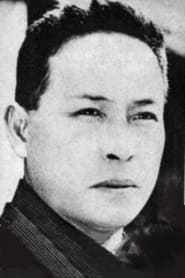
Acting
Gorō Kawabe
Born — Died
1888-07-05 — 1976-08-31
Place of birth
Osaka, Japan
Known for
Acting
Credits
46 titles
Known for
 9.0
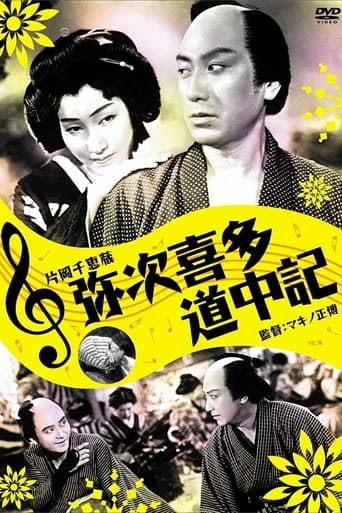
A captivating operetta by Masahiro Makino based on Juppensha Ikku's humorous novel "Tōkaidōchū Hizakurige" starring Chiezo Kataoka and Kyoji Sugi.
Yaji And Kita's Traveling Diary
1938
 NR
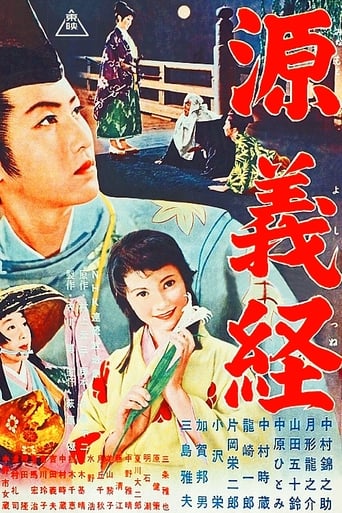
A historical scroll depicting the story of the tragic fate of the young samurai Minamoto Yoshitsune, based on the novel by Genzo Murakami. The action of the first part takes place in the late Heian period, when the Taira clan came to power, and Genji was oppressed. The great dream and ambitions of Genkuro Yoshitsune in his youth are depicted, he joins forces with his older brother Yoritomo to raise an army to defeat the Taira clan, and the second part depicts the fall of the clan, persecution and murder.
Minamoto Yoshitsune
1955
 NR
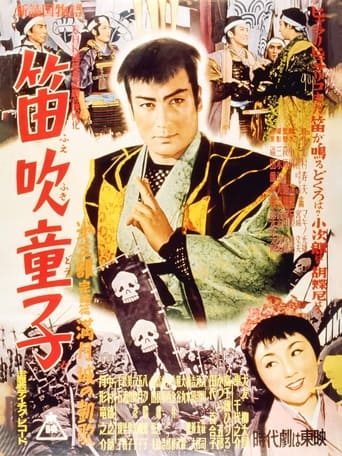
After the Onin War ended in 1477, Kyoto was left in ashes and the nation was in complete disorder. Bands of roving samurai called the "nobushi" terrorized the country under the leadership of Akagaki Genba and overthrew Mangetsu Castle in Tanba Province scattering the few survivors. Lord Niwa's two sons have been studying in China and return to Japan upon hearing of the tragedy in an attempt to restore the clan. On Mt. Oe they meet magician Kiri no Kojiro and try to enlist his aid. With touches of the supernatural and rousing sword-play can they succeed against the evil villains whose symbol is the skull mask?
Clan Revival
1954
 7.0
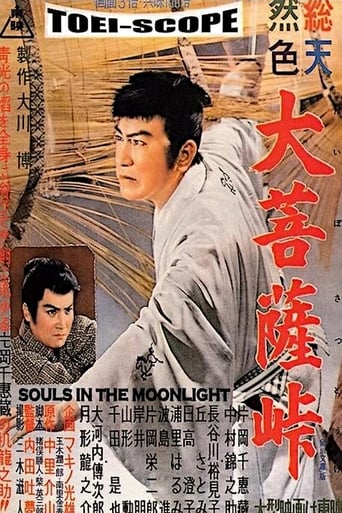
First part of the famous Dai-bosatsu toge trilogy, based on Kaizan Nakazato’s unfinished long series of novels (41 books, written from 1913 to 1941). Set in the last period of the Tokugawa Shogunate, Daibosatsu Toge tells the story of Tsuke Ryunosuke, a nihilistic swordmaster who doesnt hesitate to kill anyone, bad or good. Despite the authors explicit refusal, the series were later made into plays and movies several times.
Souls in the Moonlight
1957
 5.4
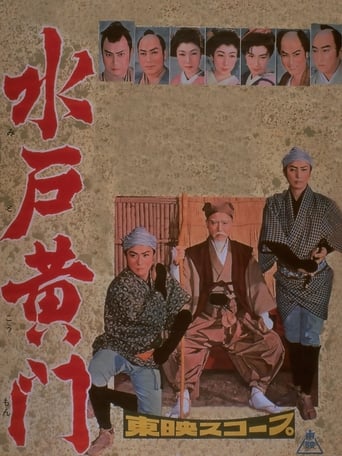
This most celebrated all-star movie version of the popular series features Tsukigata Ryunosuke as Mito Komon, the sage who wanders the countryside rectifying government corruption along with his faithful attendants Suke and Kaku.
Lord Mito
1957
 7.0
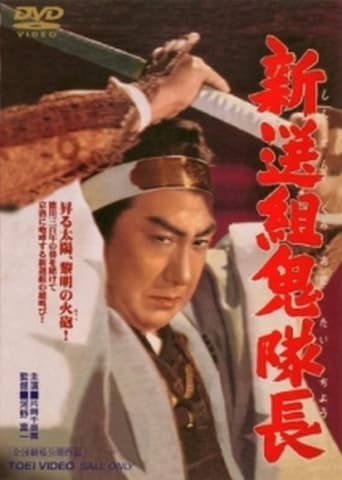
Kondo Isami, the “Devil” commander of the Shinsengumi was one of Japan’s greatest national heroes and a peerless swordsman who devoted his life to protecting the shogun and fighting on the side of the Tokugawa. This tells the story of the Shinsengumi starting at the moment of their greatest triumph through the final battles as the Tokugawa shogunate was brought down.
Fall of the Shogun's Militia
1954
Film credits
1950s · 24 titles
NRA historical scroll depicting the story of the tragic fate of the young samurai Minamoto Yoshitsune, based on the novel by Genzo Murakami. The action of the first part takes place in the late Heian period, when the Taira clan came to power, and Genji was oppressed. The great dream and ambitions of Genkuro Yoshitsune in his youth are depicted, he joins forces with his older brother Yoritomo to raise an army to defeat the Taira clan, and the second part depicts the fall of the clan, persecution and murder.
Minamoto Yoshitsune
1955
NRAfter the Onin War ended in 1477, Kyoto was left in ashes and the nation was in complete disorder. Bands of roving samurai called the "nobushi" terrorized the country under the leadership of Akagaki Genba and overthrew Mangetsu Castle in Tanba Province scattering the few survivors. Lord Niwa's two sons have been studying in China and return to Japan upon hearing of the tragedy in an attempt to restore the clan. On Mt. Oe they meet magician Kiri no Kojiro and try to enlist his aid. With touches of the supernatural and rousing sword-play can they succeed against the evil villains whose symbol is the skull mask?
Clan Revival
1954
7.0First part of the famous Dai-bosatsu toge trilogy, based on Kaizan Nakazato’s unfinished long series of novels (41 books, written from 1913 to 1941). Set in the last period of the Tokugawa Shogunate, Daibosatsu Toge tells the story of Tsuke Ryunosuke, a nihilistic swordmaster who doesnt hesitate to kill anyone, bad or good. Despite the authors explicit refusal, the series were later made into plays and movies several times.
Souls in the Moonlight
1957
5.4This most celebrated all-star movie version of the popular series features Tsukigata Ryunosuke as Mito Komon, the sage who wanders the countryside rectifying government corruption along with his faithful attendants Suke and Kaku.
Lord Mito
1957
7.0Kondo Isami, the “Devil” commander of the Shinsengumi was one of Japan’s greatest national heroes and a peerless swordsman who devoted his life to protecting the shogun and fighting on the side of the Tokugawa. This tells the story of the Shinsengumi starting at the moment of their greatest triumph through the final battles as the Tokugawa shogunate was brought down.
Fall of the Shogun's Militia
1954
 NR
No synopsis available yet.
Nangoku Taiheiki
1954
 NR
Sixth film in the ‘Travels of Lord Mito’ franchise.
Travels of Lord Mito: The Demon of Kagyuzaka
1955
 NR
Japanese film.
Picture Book of Sarutobi Sasuke
1953
 9.0
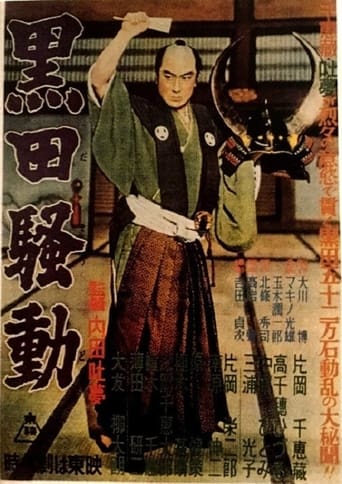
This adaptation of a Hideji Hojo novel, about the historical uprising of the Kuroda clan in 1633, is told through the eyes of retainer, Daizen. As his clan’s new leader, Tadayuki, becomes increasingly militant in his opposition to the Tokugawa shogunate, Daizen is forced to reconcile his loyalty to the clan with his loyalty to Tadayuki, who seems dead set on entangling the clan in destructive conflict. The Kuroda Affair’s mise-en-scène is said to have influenced future Toei director Eiichi Kudo. The film also features two of the greatest stars of Japanese period cinema, Chiezo Kataoka and Ryutaro Otomo.
The Kuroda Affair
1956
No synopsis available yet.
The Bloody Cherry Blossom Magistrate
1954
 NR
No synopsis available yet.
The Jumping Magistrate
1952
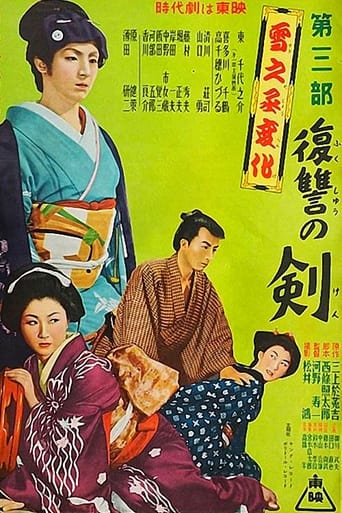 NR
The final, third part of an entertaining historical drama depicting the eventful story of the revenge of an actor with a strange fate, with a variety of characters and exciting developments.
The Revenge of Yukinojo, Part 3: Sword of Revenge
1954
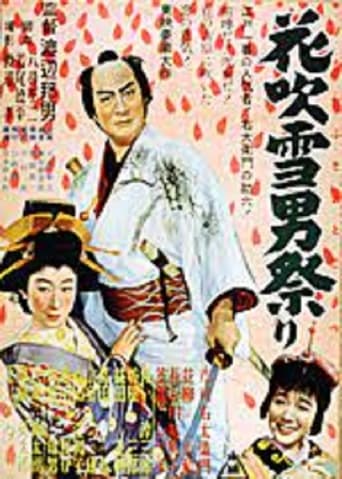 NR
No synopsis available yet.
花吹雪男祭り
1952
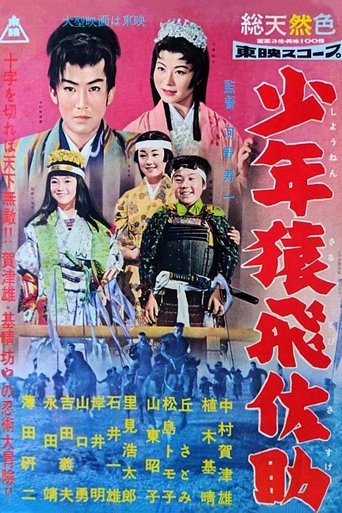 NR
In this exciting story, Sasuke Sarutobi, known as the bravest child in the world, fulfills the will of his father, growing up strong and correct, and with great success using his ninjutsu skills becomes a servant of Yukimura Sanada.
Kid Magician Sasuke
1958
 NR
The first part of an entertaining historical drama depicting the eventful story of the revenge of an actor with a strange fate, with a variety of characters and exciting developments.
The Revenge of Yukinojo, Part 1: Revenge and Love
1954
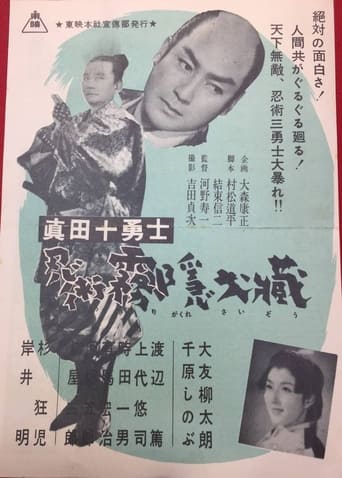 NR
1954 Japanese movie
Sanada Ten Braves
1954
 NR
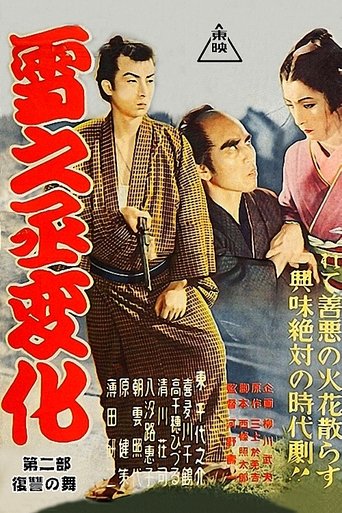
The second film in the 1953 trilogy based on the long novel series The Great Bodhisattva Pass.
Merciless Blade Part 2
1953
 NR
The second part of an entertaining historical drama depicting the eventful story of the revenge of an actor with a strange fate, with a variety of characters and exciting developments.
The Revenge of Yukinojo, Part 2: Dance of Revenge
1954
 NR
Toyama Kinshiro, a commissioner from northern Edo, goes undercover to unravel the mystery behind a series of murders. Kinshiro, played by Kataoka Chiezo, is most famous for the cherry blossom tattoos on his shoulder which he reveals at the moment of judgement.
Falcon Magistrate
1957
 NR
Japanese horror movie from 1955.
Mito Komon Travelogue: The Hunchback Man of the Ghost Castle
1955
 NR
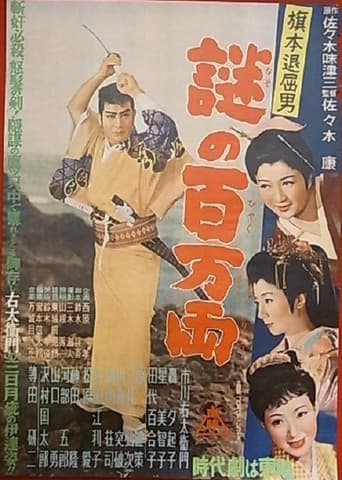
Bored Hatamoto film #16.
Bored Hatamoto: The Million-ryo Mystery
1954
 NR
The first film in the 1953 trilogy based on the long novel series The Great Bodhisattva Pass.
Merciless Blade
1953
 NR
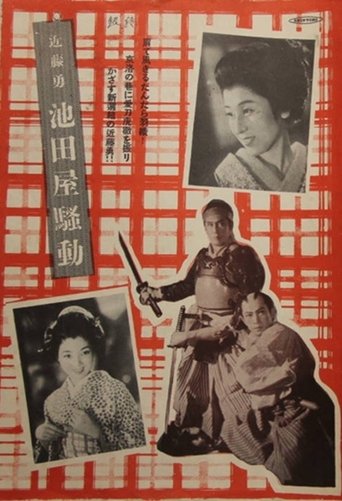
Kyoto in the third year of Bunkyu. --Serizawa Kamo, the head of the Shinsengumi, and the group around him spend their days and nights having fun in Gion and Shimabara, squandering precious military funds, and even robbing townspeople of money and valuables under the pretense of military funds. As a result, the citizens' voices of resentment towards the Shinsengumi grow louder. Kondo Isami, the deputy head, is concerned about this, but he wishes for peace within the group and suppresses the cries of spirited Okita Soji and others who call for them to be killed.
近藤勇 池田屋騒動
1953
 NR
No synopsis available yet.
少年猿飛佐助 牢獄の姫君
1958
1940s · 8 titles
A classic wartime jidaigeki about the life of the famous samurai and first of the "Great Unifiers" of Japan, Oda Nobunaga, with Kataoka Chiezo and Shimura Takashi
Oda Nobunaga
1940
Early Japanese three-part samurai / fantasy serial.
Phantom Castle
1940
 9.0
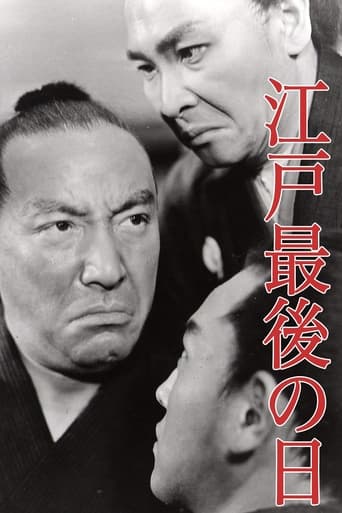
It is a historical drama that follows Katsu Kaishu's efforts to surrender Edo Castle bloodlessly in the first year of the Meiji period.
Last Days of Edo
1941
 NR
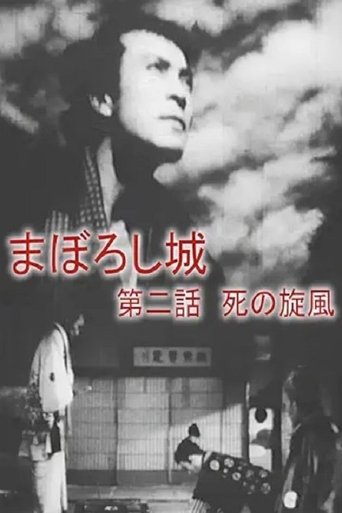
The undercover agent Tsukinosuke Kigurumi successfully escapes with Kirisaku, who possesses the coveted Shinshu Mountain map targeted by the phantom gang, but loses the key to unlocking it. The one who picks up the key is Osumi, a female courier. (Existing version. Please excuse any deterioration in image quality due to original conditions.)
Maboroshijō dainiwa shi no senpū
1940
 NR
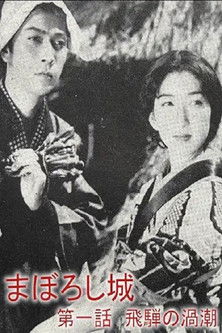
Mt. Norikura's natural fortress, the phantom castle. A white-clad iron mask, offering prayers to the eerie triple-faced deity of the Sennjogadake Rocks - the lord of the phantom castle, scheming to overthrow the Tokugawa shogunate that destroyed his lord. Sent by the shogunate to infiltrate Hida, Kigurumi Tsukinosuke's cover is blown... (Existing version. Please excuse any deterioration in image quality due to original conditions.)
Maboroshijō daiichiwa Hida no uzushio
1940
 10.0
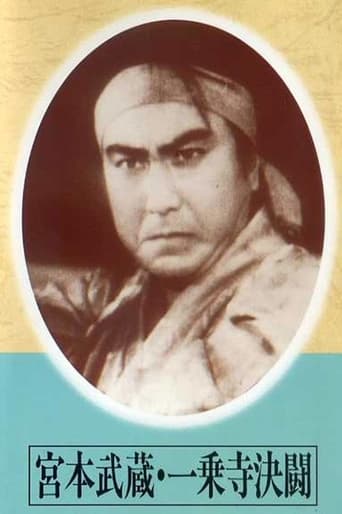
1942 Japanese movie
Miyamoto musashi Ichijōji kettō
1942
 NR
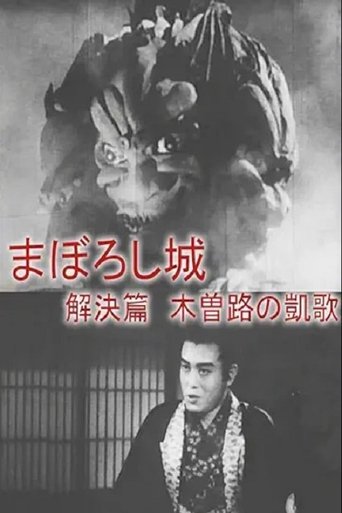
Tsukinosuke narrowly misses capturing the lord of the phantom castle by a hair's breadth. The mountain map was with Kirisaku at the Ashiwara residence, belonging to the phantom gang. Tsukinosuke heads to the Ashiwara residence to rescue Kirisaku, but in the meantime, the Matsudaira residence is attacked by the phantom gang... (Existing version. Please excuse any deterioration in image quality due to original conditions.)
Maboroshijō kaiketsu-hen kizoji no gaika
1940
 7.0
Second part of director Hiroshi Inagaki's 1940 adaptation of the story of Musashi Miyamoto.
Miyamoto Musashi - Dai-ichi-bu: Kusawake no hitobito - Dai-ni-bu: Eitatsu no mon
1940
1930s · 6 titles
9.0A captivating operetta by Masahiro Makino based on Juppensha Ikku's humorous novel "Tōkaidōchū Hizakurige" starring Chiezo Kataoka and Kyoji Sugi.
Yaji And Kita's Traveling Diary
1938
 7.0
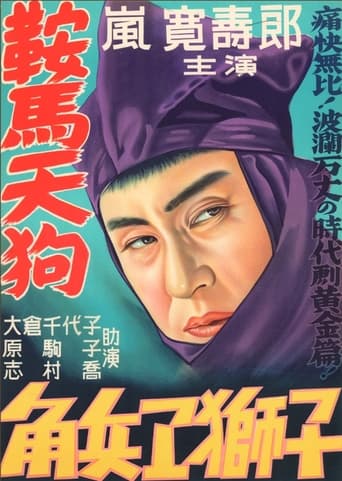
This is Kanjûrô Arashi's first film with Nikkatsu after his independent production company went bankrupt (many of these independent companies went bankrupt shortly after the transition to sound). As he is mostly famous for his portrait of Kurama tengu (and on the other hand, he's the definitive actor for Kurama Tengu as well), Nikkatsu made another version of Kurama tengu, co-directed by Masahiro Makino & Sadatsugu Matsuda who are both sons of Shozo Makino. Scripted by Yoshitake Hisa, a jidaigeki specialist who later scripted several Toei All-Star Jidaigeki.
Kurama Tengu
1938
 8.0
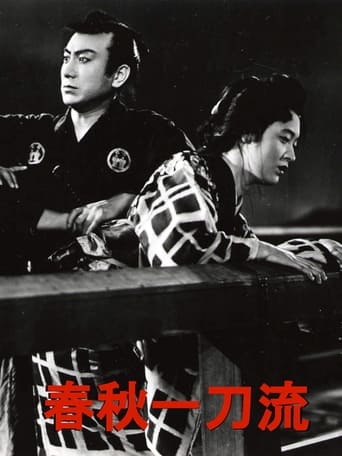
After being expelled from the Chiba Dojo , Hirate Zoshu , along with his acquaintances Tadaki Ganryu and Tamon Jubei, were hired as bodyguards by Sasagawa Shigezo, and became embroiled in a gamblers' feud known as the "Tenpo Suikoden.
Shunjû ittôryû
1939
 NR
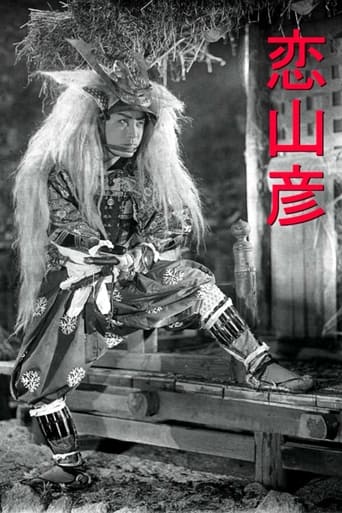
A man is brutally murdered and his famed shamisen (a three-stringed musical instrument) called the "Yamabiko" stolen. Prince Kogenta swears to avenge his father-in-law's death and retrieve the family heirloom.
Echo of Love
1937
Based on the old tale of Jiraiya, this 1937 version is essentially a revenge story with fantastic visuals.
Jiraiya
1937
 9.0
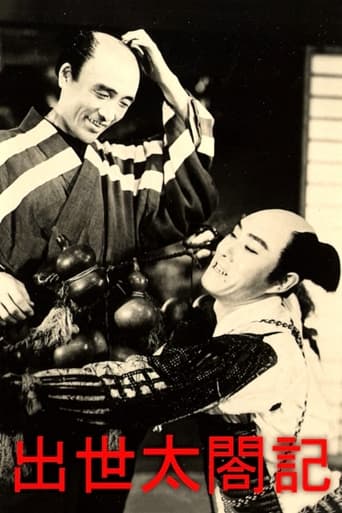
Taikoki is a legendary biography of Toyotomi Hideyoshi, who rose to the office of taikō. And the story of this film is about the rise to power of Toyotomi Hideyoshi from a farmer's son.
Taiko's Rising in the World
1938
1920s · 7 titles
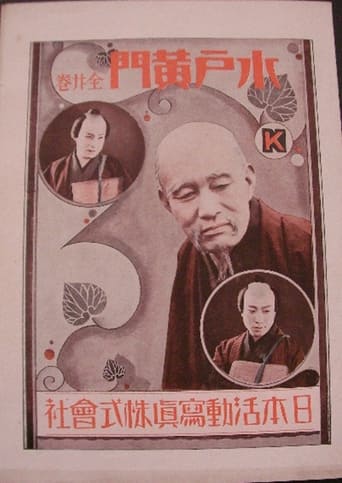 NR
No synopsis available yet.
Mito Kōmon
1926
Yaji and Kita: The Battle of Toba Fushimi is a 1928 Japanese film directed by Tomiyasu Ikeda.[1] This comedy film showcases the acting talent of Denjirō Ōkōchi and acts as a complementary film to Yaji and Kita: Yasuda's Rescue, which is part of the Yaji and Kita series. An 8-minute remnant of the film was released on DVD by Digital Meme with a benshi accompaniment by Midori Sawato. The version in the National Film Center is 23 minutes long.
Yaji and Kita: The Battle of Toba Fushimi
1928
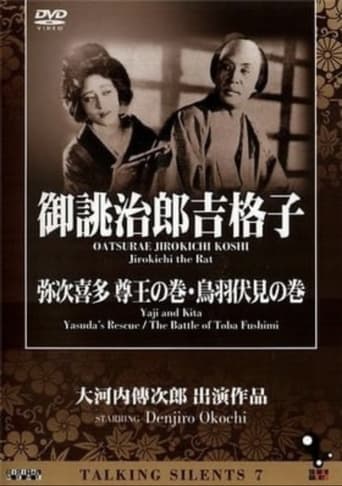 6.0
Yaji and Kita: Yasuda's Rescue is a 1927 black and white Japanese silent film directed by Tomiyasu Ikeda.[1] This comedy film showcases the comic talent of Denjiro Okochi, which contrasts markedly with his heroic performance in Oatsurae Jirokichi Koshi. The humorous exchanges with Goro Kawabe, his senior at Nikkatsu, can be priceless, with the expressions and movements of the two goofy characters making for pure, hilarious slapstick comedy. A 15-minute remnant of the film was released on DVD by Digital Meme with benshi accompaniment by Midori Sawato and Ryubi Kato.
Yaji and Kita: Yasuda's Rescue
1927
The legendary tale of the forty-seven samurai and their mission to avenge the death of their master.
Zōho kaitei Chūshingura
1927
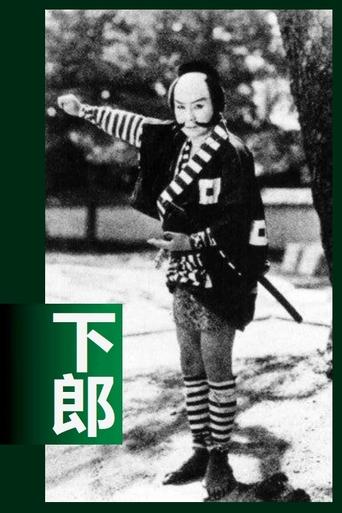 7.0
No synopsis available yet.
Gerou
1927
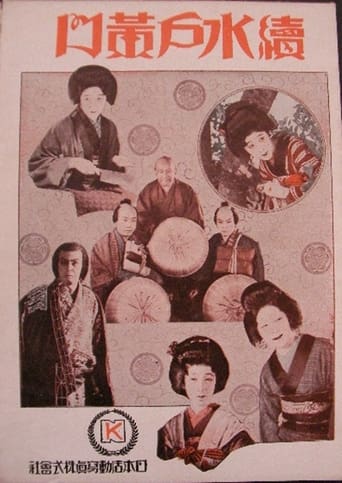 5.0
The earliest existing version (incomplete) of Mito Komon history. It was one of the most famous (and most filmed) Jidaigeki stories. Lord Mito is the sage who wanders the countryside rectifying government corruption along with his faithful attendants Suke-san and Kaku-san.
Zoku Mito Kōmon
1928
The 1000th film for actor Matsunosuke Onoe, made for Nikkatsu Studios.
Araki Mataemon
1925