
Known for
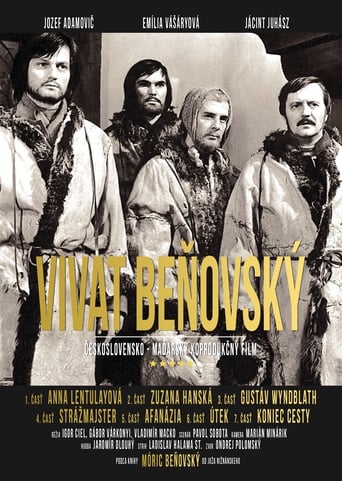 7.0
7.0No synopsis available yet.
Vivat Beňovský!
1975
No synopsis available yet.
Povstalecká história
1984
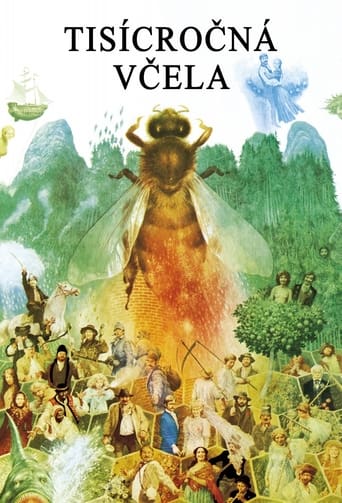 NR
NRNo synopsis available yet.
Tisícročná včela
1984
The film story of an old mountaineer from Zázrivá, takes place on the eve of Christmas Eve. Július Pántik stars in the lead role of the television film based on the short story of the same name by L. Nádaši - Jégé. It is a story about belonging and a deeply rooted sense of responsibility of an ordinary person.
Vianoce Adama Boronču
1988
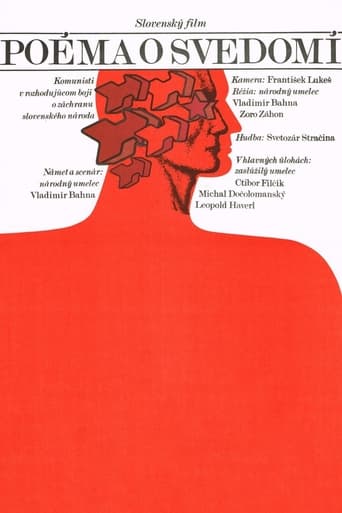 10.0
10.0Historical reconstruction of the events of the anti-fascist struggle in Slovakia in 1943 and 1944.
Poéma o svedomí
1979
No synopsis available yet.
Miesto v dome
1973
Film credits
1990s · 4 titles
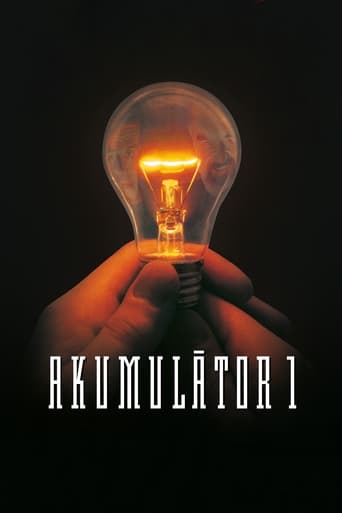 7.0
7.0In this movie, TV sets are full of life. If a person is in TV (e.g. because it was filmed on the street) it has a double that's right in the TV set. This double needs energy from the true character to survive. Each time, the real human watches TV, his Double will pull life energy from him. So there's a mysterious Death-serial. Many persons die in front of their TV set and nobody knows why. Olda, the main character, is one of the persons, that get more and more weak. He is near death, till Fisarek, the natural healer appears. He teaches Olda how he can resist this magic force and how he can fight it.
Accumulator 1
1994
 8.0
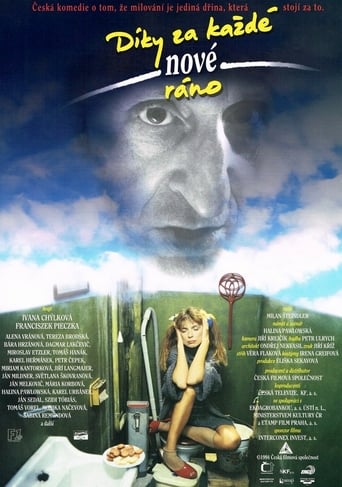
8.0This film is about life of a family, which lived in Prague since since 1968 to 1980. Father of the family comes from Ukraine and so every year someone from Ukraine to visit this family and to buy something more better than is in Ukraine. As the times go by, the friens of family live in Austria. And now for change the family visit "a better life" in west Europe and they found out how it is to be something second-rate.
Thanks for Every New Morning
1994
A tragicomic story about the "hug" that all the characters long for, especially sociologist Oskar, an indecisive loser whose daily bizarre encounters with old people in nursing homes lead to feelings of futility, emptiness, and loss of vital energy, which reinforce his refusal to bring a child into this meaningless world. However, his wife's desire for motherhood grows.
Skús ma objať
1991
The script is based on the ancient legend of Eros, the god of love. He brought happy love when he hit the victim with gold-tipped arrows, or unhappy love if the arrow had a lead tip. Since love is the spice of life, Eros influenced that too. He himself paid the price for his abilities when he met Psyche.
Eros a Psycha
1993
1980s · 22 titles
The film story of an old mountaineer from Zázrivá, takes place on the eve of Christmas Eve. Július Pántik stars in the lead role of the television film based on the short story of the same name by L. Nádaši - Jégé. It is a story about belonging and a deeply rooted sense of responsibility of an ordinary person.
Vianoce Adama Boronču
1988
 6.3
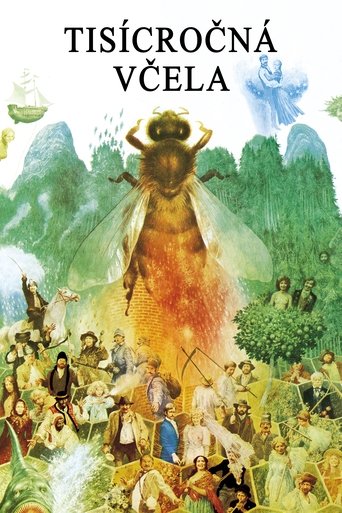
6.3A family saga taking place mostly in a small Slovak village over a period of thirty years (1887–1917). The first part captures the life of Martin Pichandu in the development of his craft, masonry; in the second part, his son is center stage living in a period of socio-political crisis, which ultimately results in the first World War. After originally airing on Czechoslovakian television in 1983 as a four-part 226-minute mini-series, this production received a 163-minute theatrical release in 1984.
The Millennial Bee
1983
 6.9
6.9Johanka had a fling with a well digger she had not met before and who, she was most likely certain, would never be around again. Just before his departure, they have sex and she eventually becomes single mother of a baby girl. Now, 18 years later, her daughter Paulina commutes by bus to work in the nearby city, which gives the village gossips the occasional opportunity to remind her of her unknown father. A resultant conflict with her mother makes Paulina take up residence in the city. Johanka, prodded by her also-single friend Jozefka who maintains that a woman without a man is nothing, begins to woo the new teacher Jarek only to discover later that he is married. Paulina, in the meantime, loses her virginity to the soldier Jirka who promptly makes himself scarce. Johanka fails to consider that she actually has a better life than some of her married neighbors, begins to see.
She Kept Asking for the Moon
1982
 7.3
7.3Schoolboys discover that if sitting in a certain rocky cliff area in the forest, they can memorize anything they read there for exams the following day. Turns out the rocky cliff has a cave in which they make an incredible discovery.
The Third Dragon
1985
 5.9
5.9Pepe and Prengel, returning from war, meet Ester and both fall in love with the girl and live together in a deserted house. Fanatic communist, Zelmira, wants to turn their world upside-down.
Sitting on a Branch, Enjoying Myself
1989
 5.5
5.5Traveling salesman in a small town before WW2 makes a solemn promise to kill himself. Later he finds that the local people took him very seriously.
The Death of Mr Goluza
1982
 5.0
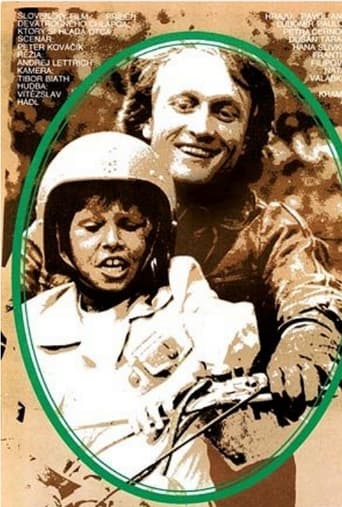
5.0Small Yozko, who lives with his mother, dreams of a real father, whose ideal is embodied in a tractor motorcyclist on Formula nickname. However, his mother perceives cheerful cool formula, finding it, like many villagers, frivolous. Friendship Formula fills the boy his father's absence, and Yozko increasingly tied to his friend. Suddenly received a telegram from the actual Yozko father, his mother will have to take a difficult decision, but life itself makes adjustments ...
Otec
1981
No synopsis available yet.
Návrat Jána Petru
1986
 6.6
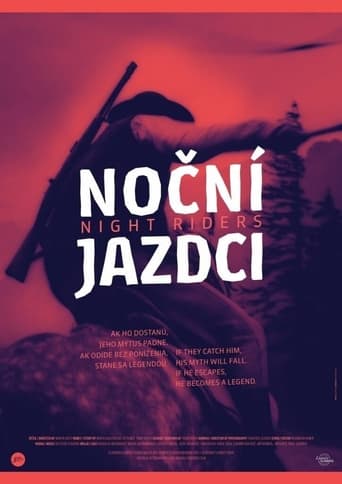
6.6Two men of principle face each other. One is backed by a whole, however poor village, the other by the law. It is a conflict that reaches it's climax in the closing shoot-out. Instead of the Wild West, the gunshots go off on the Slovak-Polish border. Michal Docolomansky as the horse smuggler and Radoslav Brzobohaty as the customs officer from Prague meet in Holly's Night Riders in a western-like confrontation set in the insecure years of the newly founded Czechoslovak Republic.
Night Riders
1981
A lyrical picture of student life. A romantic story of first student love seen through the eyes of an aging writer's memories. In the last years of his life, National Artist Štefan Králík, in addition to his theatrical work, also worked for television. A Trip to Youth takes place in the environment of a current class of high school graduates who have invited a famous writer to a discussion. Shortly before his arrival, however, something happens that contradicts the majority's opinion about morality. And so the planned official discussion suddenly becomes a sincere, open exchange of views, in which the writer becomes one of the actors in the story. A story that happened to him fifty years ago.
Výlet do mladosti
1984
 5.5
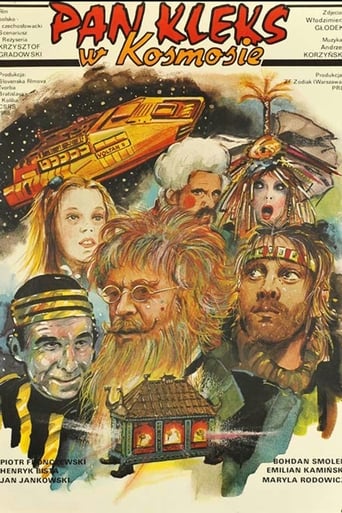
5.5It's Christmas, and children at an orphanage in Maliszewo receive a computer that was given to them by another orphan who used to live there many years ago. During the night, the computer awakes itself and tells the children a story that will happen in 25 years...
Mr. Blot in Space
1988
 NR
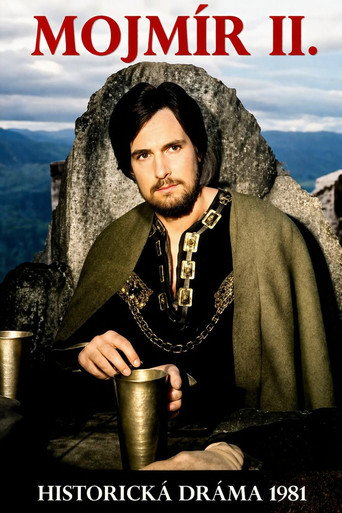
NRNo synopsis available yet.
Mojmír II.
1981
 2.5
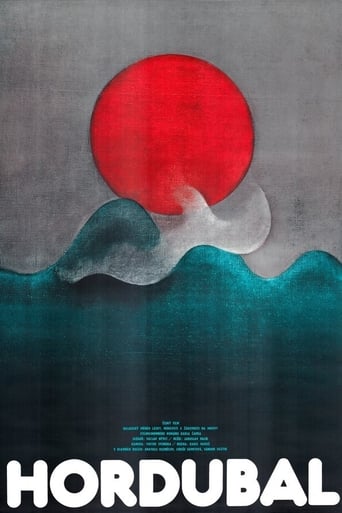
2.5After five years of hard work in America Juraj Hordubal (Anatoliy Kuznetsov) returns back home. He is looking forward to his wife Polana (Libuse Geprtová) and his little daughter Hafie. The family and the village welcome him with hesitation. Everybody believed that Juraj died in America because Polana stopped receiving money from him already two years ago. Polana's farm was prospering first of all thanks to the young stable boy Stepán (Sándor Oszter). Men in the pub first indicate and then say to Juraj directly that Polana has been unfaithful to him with Stepán.
Hordubal
1980
Ivan Hálek, son of the famous poet Vítězslav Hálek, studied medicine and devoted his life to the Slovak countryside. In the poor Kysuce region, he not only treats the local villagers, but also makes an extraordinary contribution to education. At the same time, he struggles with lingering superstitions and mistrust. However, the hero and his young wife also become acquainted with folk customs, songs, and the colorful culture of the poorest. And he proclaims that only those who rid them of terrible mass poverty can provide these poor people with true living water.
Živá voda
1981
No synopsis available yet.
Na konci diaľnice
1983
No synopsis available yet.
Mŕtvi učia živých
1984
A psychological film depicting the professional beginnings of a young architect. As the head of a design studio, his uncompromising attitude arouses hostility and hatred from colleagues and subordinates accustomed to an easy life through patronage and bribery.
Zbohom, sladké driemoty
1984
A 1984 Slovak language drama film directed by Martin Tapák.
Dies irae
1984
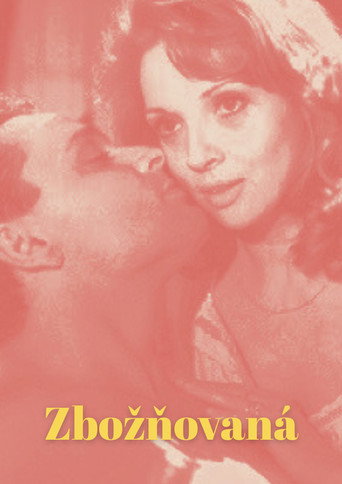 NR
NRAdapted from a short story written by Bulgarian novelist K. Stradžev, this film is set in a large quarry, where a love story unfolds between Anton, a miner, and Zora, a worker, during the era of socialism's first major construction projects. The second plotline centers on the characters' reunion thirty years later.
„Zbožňovaná“
1980
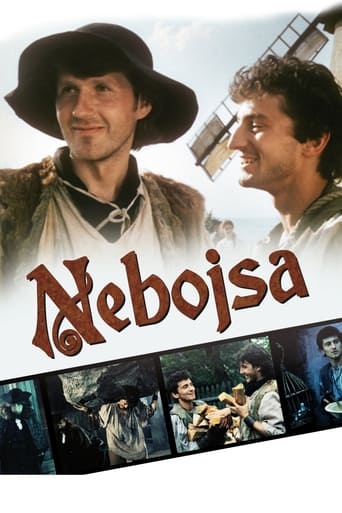 7.7
7.7Woodcutter Ondra, who for his bold nature is called Nebojsa. He goes into the world to learn fear. During his journey, on which he is accompanied by a cowardly thief Ferka, he can deal with a bunch of bandits, vicious mill, fiery rock and eventually he must confront the evil wizard who swore a beautiful princess. Will Ondra do all his courage and ingenuity to liberate Princess?
Don't Be Afraid
1989
No synopsis available yet.
Najatý klaun
1981
No synopsis available yet.
Kozubovci
1983
1970s · 18 titles
10.0Historical reconstruction of the events of the anti-fascist struggle in Slovakia in 1943 and 1944.
Poéma o svedomí
1979
No synopsis available yet.
Bývalí ľudia
1970
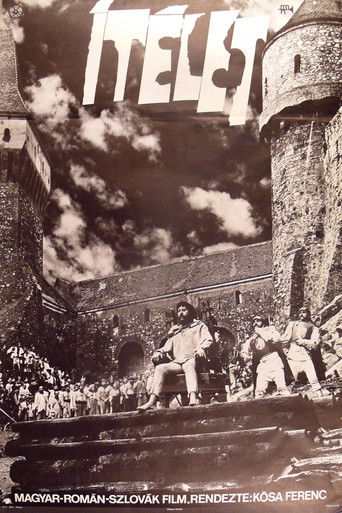 5.2
5.2The film is a historic parable about the topicality of revolution. 1514. The peasants' uprising is over, Dózsa has been arrested. Werbőczy tries to get the imprisoned peasant leader deny the revolution and offers him the lives of his people in exchange.
Judgement
1970
No synopsis available yet.
Meštiaci
1978
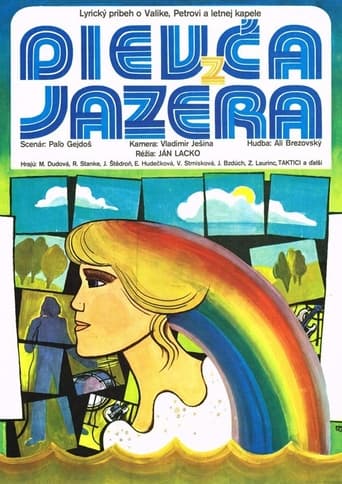 8.0
8.0A story of a teenage girl's first love and emotional disillusionment, told from the perspective of her eleven-year-old brother.
Dievča z jazera
1979
Slovakian villagers towards the end of WW II are despairing as German troops fall back to their village.
Big Night and Big Day
1975
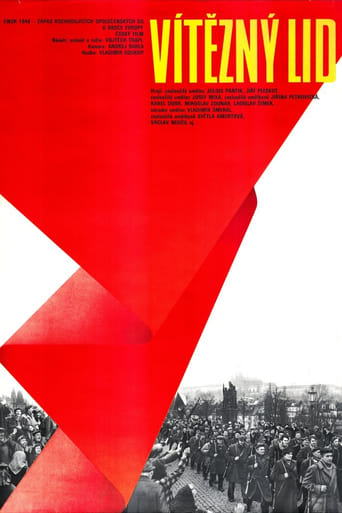 5.0
5.0February 1948. The struggle of decisive social forces for the heart of Europe.
Vítězný lid
1978
The plot takes place in the revolutionary year of 1848. It takes us to Príbelice, where Janko Kráľ returns from Pest after the March Revolution, to acquaint the Slovak people with the famous Twelve Points, together with his friend, teacher Ján Rotarides. They were voted on at the last Hungarian Diet in Bratislava with the promise of freedom and equality for Slovaks.
Príbelská vzbura Janka Kráľa
1978
No synopsis available yet.
Ďaleko je do neba
1973
No synopsis available yet.
10 % nádeje
1976
No synopsis available yet.
Letokruhy
1973
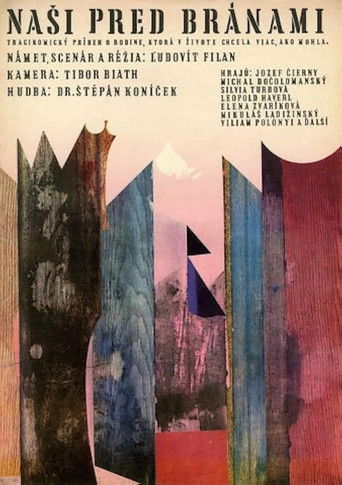 10.0
10.0A tragicomedy about people who are able to make use of the war situation for their own benefit. The Gavora family of four leave their secure village home blinded by the vision of a big career and easy earning of money in the capital city.
Naši pred bránami
1970
A balladic story situated in a Slovak mountain region before the 2nd World War. A young man returns to his native village after many years. There he meets Zuna, a mysterious girl of the forest, who opens his eyes to the charming nature to perceive hidden corners of the world and of his own soul.
The Bride of the Mountains
1972
No synopsis available yet.
Zbojnícky tanec
1978
No synopsis available yet.
Nový život
1973
A sensitive and modest girl gets married and lives with her family in the mountains. After her husband leaves for the army, she finds herself isolated by her family and her surroundings. The father-in-law perceives the bride's sadness and tries to establish a more cordial relationship with the lonely girl. This, however, gives rise to speculation about the bride's moral failure. She cannot bear the shame of suspicion and throws herself under the wheels of the locomotive. The blame for the death of a frail, honest man lies with those who acted on unverified assumptions of passion and suspicion.
Studené podnebie
1975
The poverty of Slovak workers during the Great Depression during the Masaryk Republic reached such a level that it led to a well-organized strike. The capitalists and their minions tried by all means to break it. Even the workers who had not yet been elected soon recognized their place and supported the initiative of the communists, who selflessly led the strike movement. The poster-like, purely ideological story succumbs to paper-like dialogues and plots, and the narrative portrayal hardly convinces of the credibility of the whole story.
Nie
1978
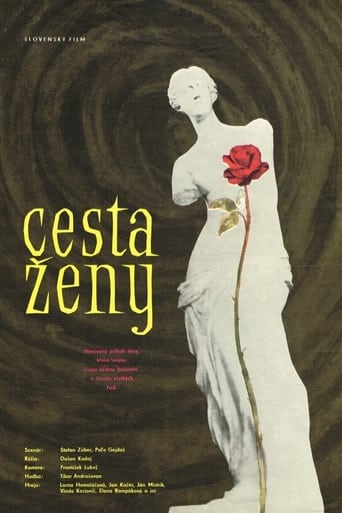 7.0
7.0A chronicle of dramatic events capturing the fates of people living in a Slovak village just after World War II. Thirty years later, the main character Anna recalls a decision that fundamentally changed her life. During the period of incipient collectivization, she chose happiness and a difficult life with a poor man founding a cooperative in the village, although this significantly weakened her relationship with her own mother and at the same time interrupted a long-standing tradition in relation to the preservation of family property.
Cesta ženy
1975
1960s · 9 titles
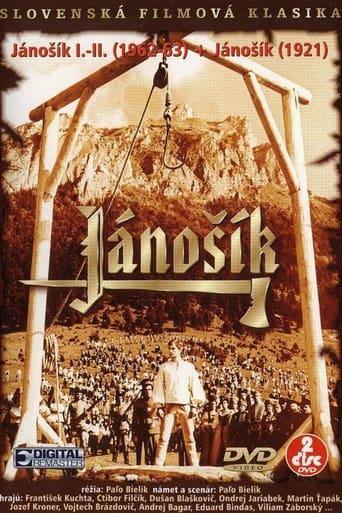 7.8
7.8This film is one of the most popular pictures of Slovak cinema and relates the story about the legendary folk hero and brigand Juro Jánošík [1688-1713] and the social situation in Slovakia of the late 17th and early 18th centuries. The first part talks about Jánošík's childhood, studies and return to his native village. In the second part Jánošík leaves for the hills, where he organizes his band of brigands and starts an anti-feudal resistance. The film concludes with Jánošík's execution.
Jánošík
1963
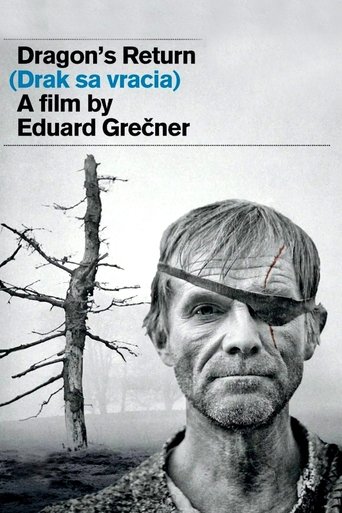 7.3
7.3This is a ballad about love, hate, and a search for a way out of loneliness. It is a dramatic story about the strange potter, Martin Leaps, nicknamed Dragon, who is suspected by the villagers as the cause of natural disasters. He lost his wife, his home, and his freedom due to false accusations. After years he returns to his native village. Putting his own life to risk, he saves a herd of cows from a forest fire in the hills. But not even this heroic deed helps him to win back the friendship of the locals.
Dragon's Return
1968
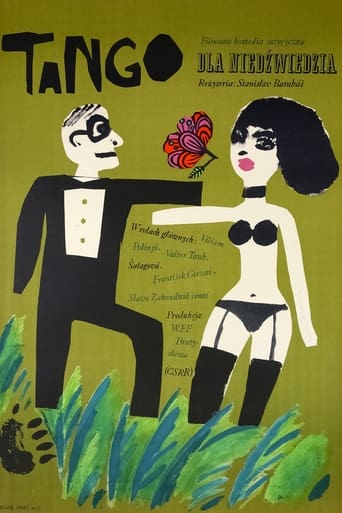 9.0
9.0The unhappy and desperate director of the Šúpala Zoo tries to sell a sick bear to a foreign tourist for shooting, because the purchase of other animals for the ZOO is only possible with anti-socialist currency, i.e. hard currency, and so the administrator does everything possible and impossible just to get them...
Tango pre medveďa
1967
A film about the dramatic lives of the people living in the village of Ráztoka during WW I. Women are left without husbands, families fall apart, finding themselves on the verge of poverty. Eva, the main heroine, is going through difficulties after her husband was drafted to the army. Her defilement and her tragic death cause a rebellion by which the village inhabitants finally stand up against their unbearable situation.
Living Whip
1967
During the Slovak National Uprising, even ordinary people were determined to perform heroic deeds, even though they knew they were exposing themselves to great danger. The heroine of this film, a simple country woman, has a hard time paying for her bravery: she is sentenced to death, postponed for now so that she can nurse her recently born baby. She is even offered salvation if she betrays, but the presence of a member of the Soviet army infuses her with determination and hope. Early Spring belongs to the usual schematic, lifeless staged views of the subject that the communist regime has elevated to the level of sacred matter.
Predjarie
1961
No synopsis available yet.
Výšiny
1968
Slovak partisans, bravely fighting against Nazi superiority, would never have succeeded to such an extent if they had not been supported by the villagers. Despite the threat of repression, it is the villagers who care for the wounded, hide them, and behave conscientiously. Although the film was made in the late 1960s, it fully adopts the patterns of partisan stories, perhaps the only thing it can be credited with is a more developed sense of authenticity in the story, characters, and setting.
Stopy na Sitne
1969
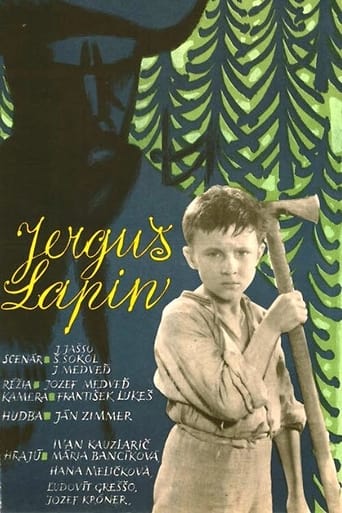 8.0
8.0Little Jerguš's father was killed by gendarmes. To help his mother, the boy is hired as a laborer, then goes to the factory, to the city, but, unable to withstand the cruel exploitation, hoping to become free and independent, returns to the mountains, where his father once fought for the good of the people.
Jerguš Lapin
1960
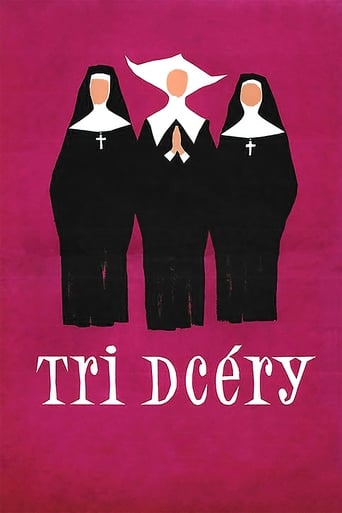 7.7
7.7A classical ballad motif about an aging father and his three daughters is quite unusually here set against the backdrop of Czechoslovakia of the 1950s. After having been expropriated, the former landowner Majda seeks refuge with his three daughters whom he had sent to a convent a long time ago. But only the youngest one is able to forgive him and she is willing to take care of him despite the threat of expulsion from the order.
Three Daughters
1968
Series credits
7.0No synopsis available yet.
Vivat Beňovský!
1975
No synopsis available yet.
Povstalecká história
1984
NRNo synopsis available yet.
Tisícročná včela
1984
No synopsis available yet.
Miesto v dome
1973
No synopsis available yet.
Jedenáste prikázanie
1977
No synopsis available yet.
Najkrajšie roky života
1977
No synopsis available yet.
Brána k domovu
1975