
Acting
J. O. Martin
Born — Died
1888-12-27 — 1958-10-09
Place of birth
Humpolec, Austria-Hungary [now Humpolec, Czech Republic]
Known for
Acting
Credits
53 titles
Known for
No synopsis available yet.
Third Company
1931
 6.9
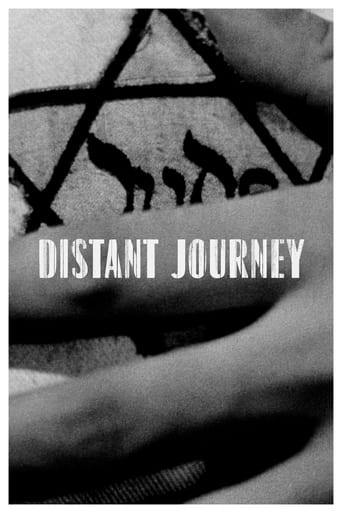
6.9Prague, during World War II. Hana Kaufmann, a Jewish ophthalmologist, marries Dr. Antonín Bureš, a Christian man. When her family is sent to the Theresienstadt concentration camp, their romance turns into a struggle for survival.
Distant Journey
1949
An old peasant from Chodský, Záhor, claims to the young Podestát that he returned three hundred gold pieces to his father before the old Podestát died. Out of greed, Záhor even decides to perjure himself in court. The indignant creditor warns him of God's wrath. Záhor's sons, Matěj and Vondra, are vying for the same girl - the daughter of a blacksmith, Nana.
Boží mlýny
1938
 7.0
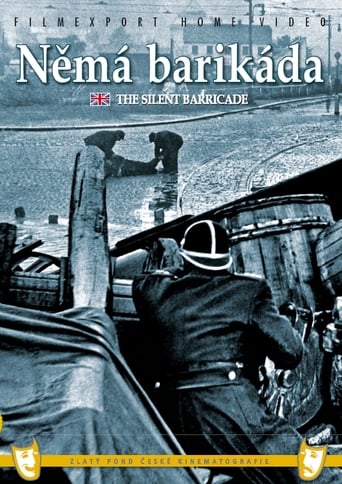
7.0A fiction piece centered around the Czech resistance to the Nazis.
Silent Barricade
1949
 6.7
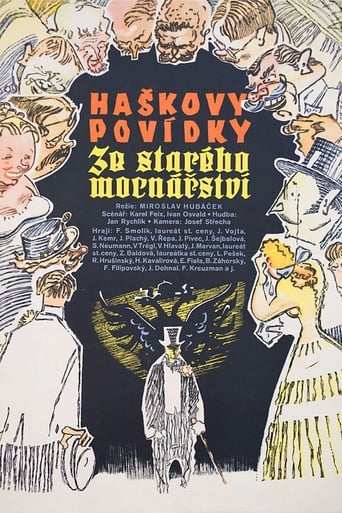
6.7Four short stories by the greatest Czech satirist Jaroslav Hašek. "Soup for Poor Children" tells the story of how Prince Robert himself cooked soup for poor children, "Meeting of the Municipal Council in Mejdlovary" is the history of filling the position of municipal policeman, "Trampotes of Mr. Tenkrát" shows how strange events lead to marriage and promotion, "Revolt of the Convict Šejba" depicts the victorious fight of the convict Šejba for a dumpling for ministering at mass.
Hasek’s Tales from the Old Monarchy
1952
 7.0
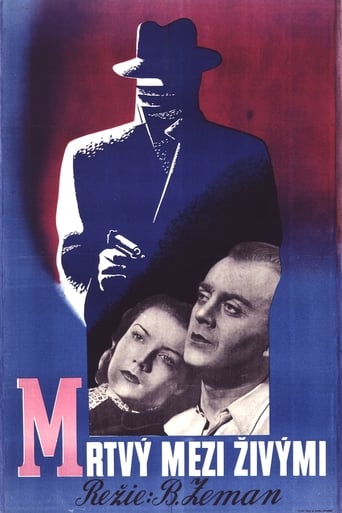
7.0Human bravery can take many forms, just as ideas about it can. Small-town public opinion begins to despise a postal clerk because he gave cash to robbers who didn't hesitate to shoot. The result is a successful study of a man whose previous certainties begin to crumble due to a fateful event.
A Dead Man among the Living
1947
Film credits
1950s · 27 titles
6.7Four short stories by the greatest Czech satirist Jaroslav Hašek. "Soup for Poor Children" tells the story of how Prince Robert himself cooked soup for poor children, "Meeting of the Municipal Council in Mejdlovary" is the history of filling the position of municipal policeman, "Trampotes of Mr. Tenkrát" shows how strange events lead to marriage and promotion, "Revolt of the Convict Šejba" depicts the victorious fight of the convict Šejba for a dumpling for ministering at mass.
Hasek’s Tales from the Old Monarchy
1952
 7.5
7.5Young bricklayers Franta Doubrav and his friend Béla meet two girls, Mařka and Vlasta, on their way back from a friend's wedding, but they only manage to call them by their name and the construction site they are currently working on. Imagine their surprise when they discover that Mařka is a trained bricklayer who has joined Franta's father's work crew, where she proposes a new way of working that will help catch up on the construction delays. As a young girl, however, she must first deal with the distrust of the older and more experienced bricklayers.
Štika v rybníce
1952
 9.0
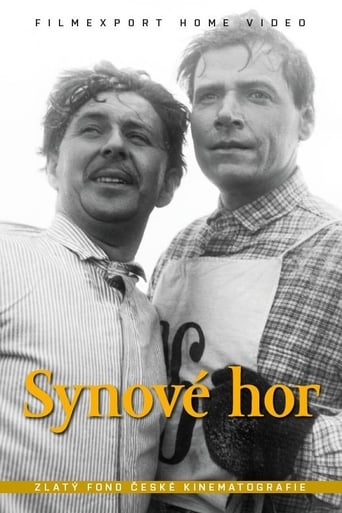
9.0The story of a friendship for life and death captures a real event that took place in the snowy Krkonoše Mountains in 1913. The actors of the drama were Bohumil Hanč, one of our first ski racers, and his friend Václav Vrbata. The film's plot takes place between 1912 and 1913 and is framed by two international 50 km races. After winning in 1912, Bohumil Hanč wants to stop racing at the behest of his wife Slávka. In 1913, strong foreign competitors enter the race, so Bohumil succumbs to the pleas of his friends and decides to race for the last time. However, the weather changes during the race. Strong winds and snow begin to blow, severe frost sets in, and for the racers, it means a fight for their lives.
Sons of the Mountains
1956
A socialist drama from the time of the February coup. The owner of the brickyard will use several workers before February in order to subvert worker solidarity and continue to do his black business. However, the vigilance of a young, aware worker prevents him from doing so.
Dva ohně
1950
The catastrophically dry weather of 1947 causes immense problems in the countryside. In the small village Klícov, only farmers Hánek and Bervida and the old Hromádka have water. The others must queue every day for a drop for themselves and their cattle. All the villagers lament over their previous decision to turn down the cooperative chairman Kouba's proposal to built a new village water-supply system.
Žízeň
1950
 5.9
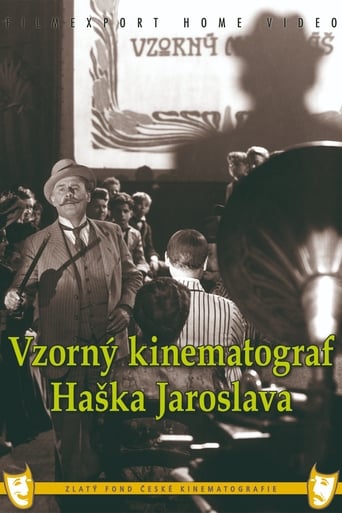
5.9Jaroslav Hašek screens four film stories in the fairground shed around 1900. After period advertising slides and a "newspaper", we see "the first part of a sensational, exemplary, parfuss, salon program - a film from the life of school-age children, shot under very difficult circumstances". The plot of this film takes place partly in a school classroom and partly in a gymnasium toilet, where the primate Chocholka took refuge from a Latin composition. "Exemplary Family Happiness" is the second film that takes the viewer into the family of the municipal official Honzátek, in which many stormy scenes occurred when the hamster, provided by Honzátek Jr., moved into the sofa - a wedding gift from Sister Ema. Equally surprising are two other stories, one of which tells about the "father of the poor", the owner of a company with unrecoverable cash flow and a famous patron, and the other about the fateful consequences of a joint trip between the old bachelor Mr. Hanzlíček and his neighbors.
Jaroslav Hasek's Exemplary Cinematograph
1956
 7.0
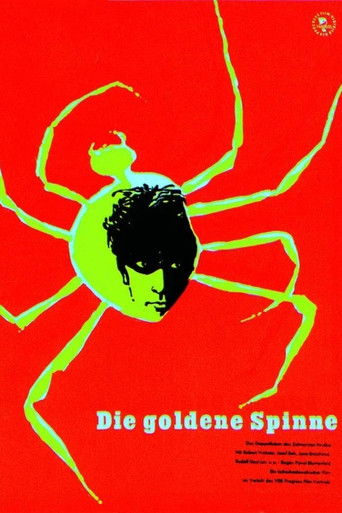
7.0A man was killed while trying to leave Czechoslovakia. One and a half kilograms of gold was found on him - not in coins, not in jewelry, not in bars - but in the form of plates used to make teeth...
Zlatý pavouk
1957
 6.3
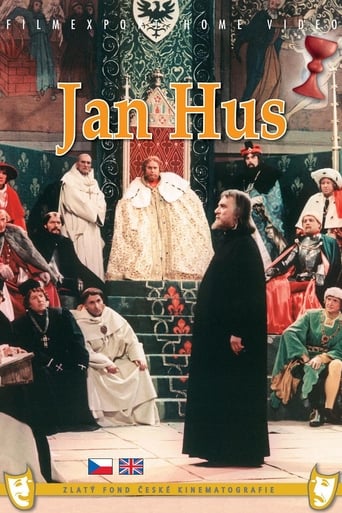
6.3The first part of the "Hussite Revolutionary Trilogy", completed with Jan Žižka (1955) and Proti všem (Against All Odds, 1957). The film captures the period from May 1412 to the summer of 1415, a turbulent time in the Czech Kingdom, during which there were protests in Prague against the sale of "omnipotent indulgences" whose sale throughout the kingdom was announced by Pope John XXIII. The ideological leader of this movement is the preacher Master Jan Hus, whose words, calling for the elimination of church abuses, are listened to in the Bethlehem Chapel by thousands of ordinary Praguers, Czech lords and Queen Sophie, wife of the Czech King Wenceslas IV.
Jan Hus
1955
"The Rally" is based on a communist writer Vaclav Řezáč's well-written novel of the same name
Nástup
1953
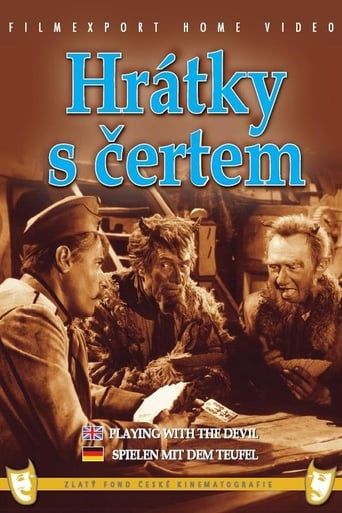 7.8
7.8Two marriageable girls, Princess Disperanda and her maid Káča, sign a betrothal with their own blood in exchange for fairy-tale grooms. Although both devilish betrothals accidentally fall into the hands of the brave retired soldier Martin Kabát, the cunning devil Solfernus takes possession of them through cunning, and Martin has no choice but to go to the burning hell.
Playing with the Devil
1957
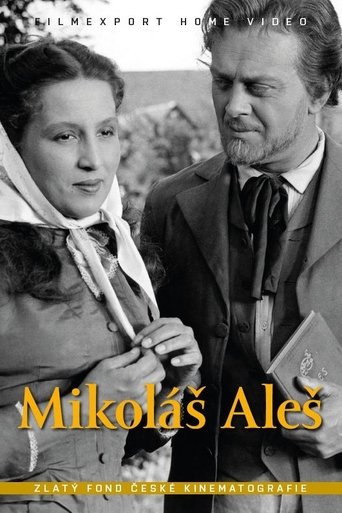 7.5
7.5A biographical film about the famous Czech painter Mikoláš Aleš, portrayed as part of the vanguard of the working class and a spokesman for the oppressed, who asserts himself despite the opposing bourgeoisie and reactionaries of all kinds. The film focuses on the period when Mikoláš Aleš participated in the competition to decorate the National Theatre.
Mikoláš Aleš
1952
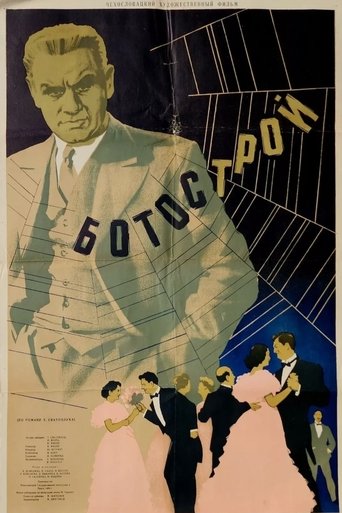 8.0
8.0The happenings in a shoe factory serve as a not very thinly veiled examination of the pros and cons of both socialism and democracy.
Shoesmachine
1954
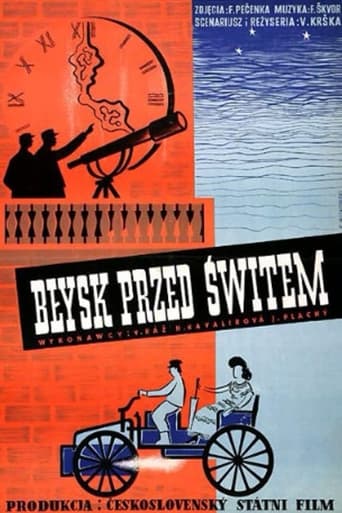 8.0
8.0A biographical film about a Czech mechanic and designer who was the first in the Czech lands to construct a steam car.
Posel úsvitu
1951
 6.3
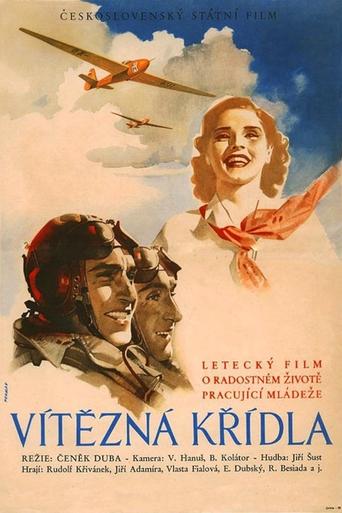
6.3Many of the young workers at an aircraft factory near Prague are members of an aviation club. On the one hand, there is the responsible Franta, who is highly regarded by his colleagues due to his understanding nature. Opposite him is the talented aircraft designer Ruda, who is also an excellent pilot, but also hotheaded, undisciplined and condescending towards his colleagues. He starts flirting with the glass grinder Lída, although he knows that she is Franta's girl friend. A conflict is not long in coming. When Franta's glider crashes due to a suspected mistake by Ruda, Ruda is banned for a certain period of time. This is fatal, because both young men were actually supposed to represent Czechoslovakia at the upcoming international gliding championships in Poland.
Victorious Wings
1951
 6.1
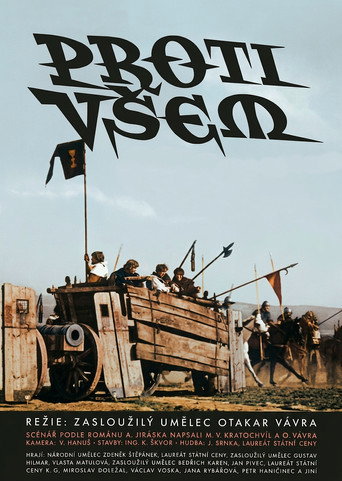
6.1After the battle of Sudoměř the Hussite teaching spreads through the whole country and people start leaving their homes to help build the fortification of Tábor. Prague citizens request help against the army of Zikmund. The Hussite army with Jan Žižka in the lead make their way towards Prague. They fortify themselves on the mountain Vítkov and engage in a bloody battle with Zikmund’s huge army.
Against All
1957
 7.3
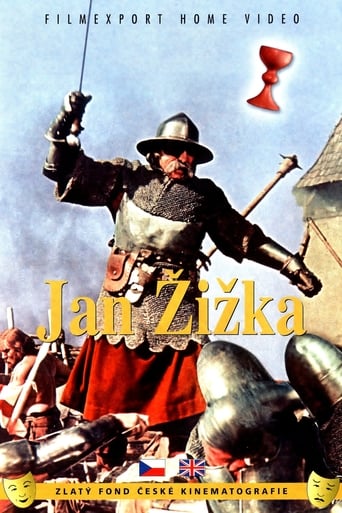
7.3The second part of the revolutionary Hussite trilogy takes place in the years 1419-1420.
Jan Žižka
1956
No synopsis available yet.
Dvaasedmdesátka
1953
 6.3
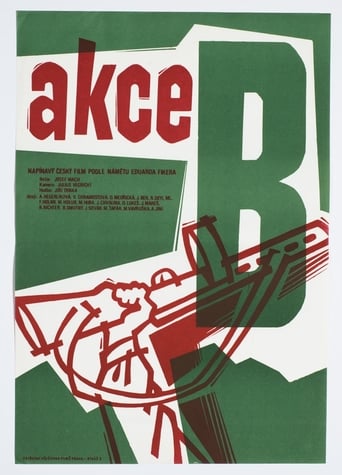
6.3Film shows the struggle of the Czechoslovak armed forces against groups of Ukrainian Insurgent Army (UPA) under command Burlak, who tried to pass through the territory of Slovakia.
Action B
1952
The Counter-Reformation period: Myslivec Machovec is forced by representatives of the Jesuit order to flee his home for his religious beliefs. His teenage children Helenka and Tomáš do not give up the faith and traditions of the Czech Brethren despite the increasing pressure.
Temno
1951
 6.3
6.3In the past, most of the wood from the mountain forests was transported to the sawmills by river. The rafters were gradually replaced by trucks and railways, but they still remember the days of their glory and the romance of water travel. Two experienced old swimmers, Váň and Šindelář, managed to push for a return to the old way, at least for one trip. They got a group of like-minded enthusiasts and rafts made of logs can set off down the river...
Plavecký mariáš
1953
Innovator Ludvík Zach is in love with his technical data and improvement proposals and does not believe that women could be able to understand these problems. However, on his way back from a conference, he meets Jarmila, an electromechanic, and arranges a meeting with her. He would prefer to talk to her about technology, but he discovers that Jarmila is more interested in poetry and music...
Slovo dělá ženu
1953
 6.3
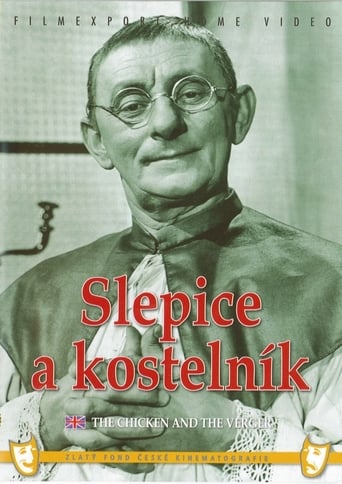
6.3Cooperative members are harvesting crops, trying to get new water piping installed and preparing to plough away the field boundaries in autumn. Local kulak Voznica (Vladimír Repa) doesn't like any of this so he forces sexton Kodýtek (Vlasta Burian) to help him sabotage their efforts.
The Hen and the Sexton
1951
 7.0
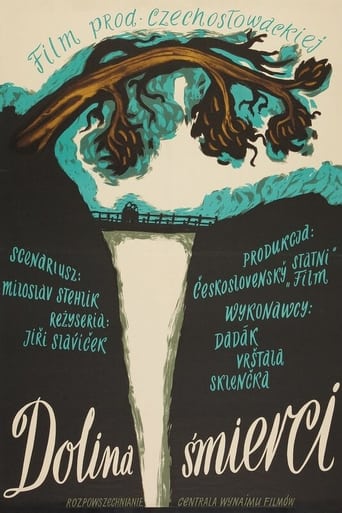
7.0A new owner of the estate, Konrád Ritter von Schiess, arrives in the Czech village of Sluky. On his orders, the inhabitants of the village are to be evicted and only 30 families are allowed to remain, who volunteer to work on the estate. However, the inhabitants refuse to work for the lords, and their solidarity only strengthens when one of them is murdered by the Gestapo based on a report by the estate manager Prokeš...
Mordová rokle
1952
No synopsis available yet.
Přiznání
1951
No synopsis available yet.
DS-70 nevyjíždí
1951
The course of an organized strike by workers from North Moravian steelworks in 1931 to resist mass layoffs during the economic crisis.
The Trap
1951
No synopsis available yet.
Pára nad hrncem
1950
1940s · 19 titles
6.9Prague, during World War II. Hana Kaufmann, a Jewish ophthalmologist, marries Dr. Antonín Bureš, a Christian man. When her family is sent to the Theresienstadt concentration camp, their romance turns into a struggle for survival.
Distant Journey
1949
7.0A fiction piece centered around the Czech resistance to the Nazis.
Silent Barricade
1949
7.0Human bravery can take many forms, just as ideas about it can. Small-town public opinion begins to despise a postal clerk because he gave cash to robbers who didn't hesitate to shoot. The result is a successful study of a man whose previous certainties begin to crumble due to a fateful event.
A Dead Man among the Living
1947
No synopsis available yet.
Odznak
1949
 7.0
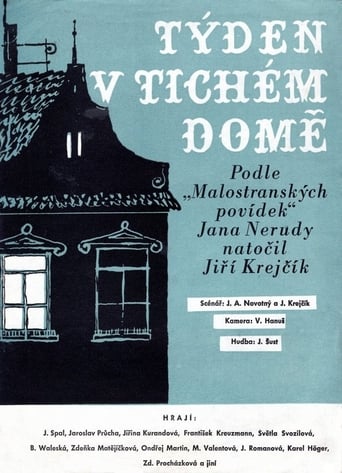
7.0A sometimes humorous, sometimes more serious look at the hustle and bustle of a house in Lesser Town with a diverse array of tenants living there, and often petty quarrels that break out between them. Behind the facade of the house in Lesser Town "U dvou slunců" (Two Suns) there is life. The Bavors live here, eternal slaves to the grocery store. The Ebros, who need to marry their daughter off at a good price. The bachelor Dr. Loukota and other interesting Nerudov characters.
A Week in the Quiet House
1947
 8.5
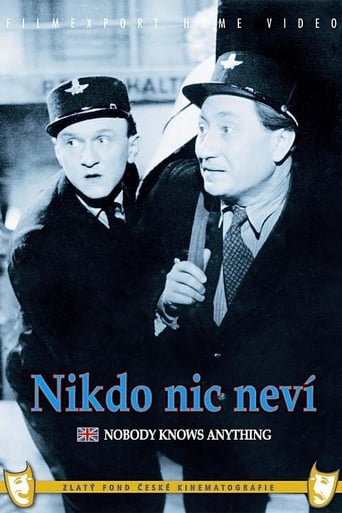
8.5Martin Plechatý and Petr Nový roam occupied Prague with their trams. Times are hard and sometimes survival is not easy - especially when, in an attempt to help a threatened (and charming) neighbor, you get involved with an SS man, hit him on the head and kill him. At least that's how the two friends explained the situation to each other when their opponent collapsed to the ground. What to do with the body now? An endless anabasis begins, in which even a baby stroller comes into play...
Nobody Knows Anything
1947
 5.0
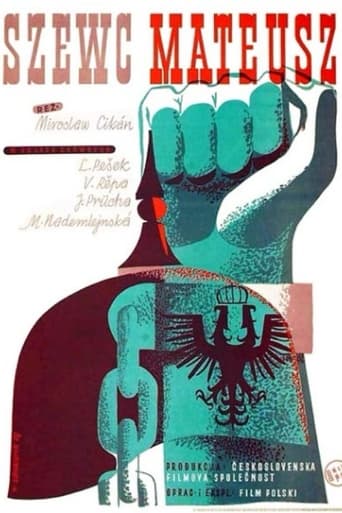
5.0The revolutionary year of 1848 brought great hopes among the hitherto silent classes, awakening social and national hopes. The response also penetrated the remote countryside, even as far as the Podkrkonoše Mountains. The young shoemaker there began to take an interest in social and political events, and he also experienced disappointment in later developments.
O ševci Matoušovi
1948
5.0The revolutionary year of 1848 brought great hopes among the hitherto silent classes, awakening social and national hopes. The response also penetrated the remote countryside, even as far as the Podkrkonoše Mountains. The young shoemaker there began to take an interest in social and political events, and he also experienced disappointment in later developments.
O ševci Matoušovi
1948
 5.6
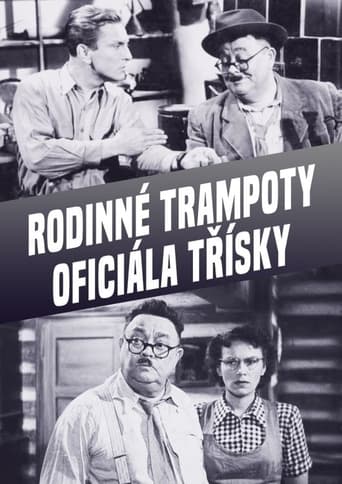
5.6The plump, punctual and slightly despotic Mr. Tříška worked as a housing officer, which completely damaged his psychological resilience, he is short-tempered and easily angered. The intended rest in the countryside, where he went with his whole family, however, turns out completely differently than he expected - because all the hardworking hands join together to ensure the fastest possible completion of the agricultural work, and there is also time left for his singing interests. And the main character is finally so carried away by the new environment that he eagerly joins in.
Rodinné trampoty oficiála Tříšky
1949
Karel Kubat, the successful director of the Globus printing house, learns on his fiftieth birthday that he has a serious heart condition. The bad news forces him to take stock of his life. In his mind, he returns to key situations that gradually changed his character and outlook on life...
Kariéra
1948
No synopsis available yet.
Léto
1949
The workers at the ironworks are working to fulfill a two-year plan. The spy group takes advantage of the bitterness of a disrespected innovator and tries to extract information from him about a new technology for pressing metal powder. However, their plans are thwarted by the vigilance and vigilance of the research staff from Department Z-8.
Případ Z-8
1949
 5.5
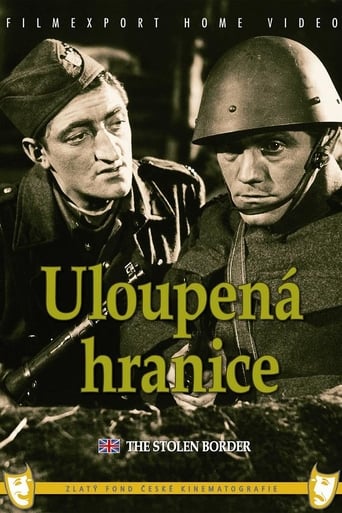
5.5Czech film tells the story of a border town in World War II. Family members and friends become enemies.
The Stolen Border
1947
 NR
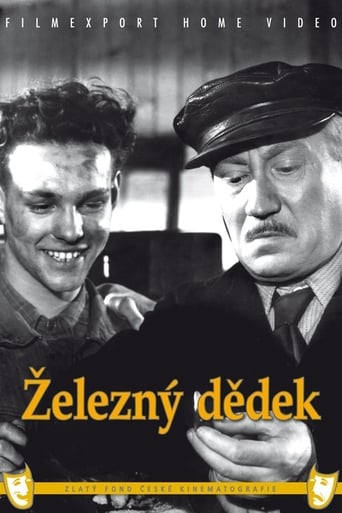
NRAt the end of the war, the old train driver Matys saves his beloved locomotive Líza from depth charges. However, the locomotive is damaged and he is injured. At a critical moment, he stands in for his son-in-law, also a train driver, and thus prevents a train accident. Despite this, he is sent into retirement. To show what the "iron old man" can do, he reconstructs Líza with a group of apprentices...
Old Ironside
1948
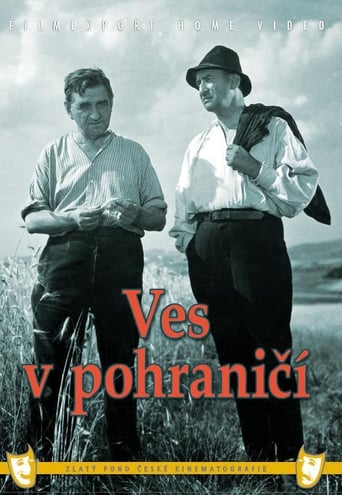 7.7
7.7The family of Prague greengrocer Pavlas was among the first immigrants to settle in the border village of Severov. Together, the new residents manage to harvest their first harvest on time and successfully - but they will have to uncover a German saboteur posing as the manager of a sawmill...
Ves v pohraničí
1948
No synopsis available yet.
Nerozumím
1947
No synopsis available yet.
Křižovatka života
1948
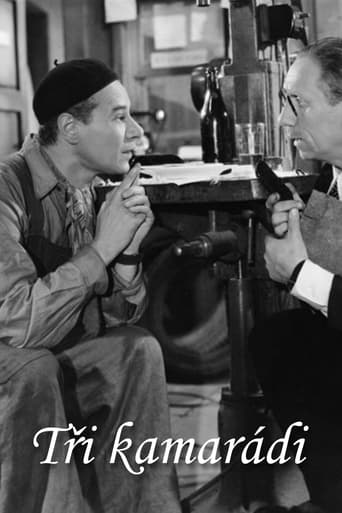 5.5
5.5Young men Štěpán, Ludvík and Karel became friends abroad, where they fought during World War II. Now they have returned home and are thinking about their future. Štěpán is a designer, so he starts a car repair shop. There is also work for Ludvík, while Karel gets a job at the Omega car factory. However, the young entrepreneurs are all in debt and their business is not prospering. Štěpán invents a car carburetor, but he has no way to test it. In his greatest need, he receives news that Štěpán will inherit from his uncle from South America...
Three Pals
1947
No synopsis available yet.
Kdo je vinen?
1946
1930s · 7 titles
No synopsis available yet.
Third Company
1931
An old peasant from Chodský, Záhor, claims to the young Podestát that he returned three hundred gold pieces to his father before the old Podestát died. Out of greed, Záhor even decides to perjure himself in court. The indignant creditor warns him of God's wrath. Záhor's sons, Matěj and Vondra, are vying for the same girl - the daughter of a blacksmith, Nana.
Boží mlýny
1938
The family of the worker Kučera lives happily. His daughter Anežka, engaged to technical draftsman Adolf, is a seamstress. His son Váš is studying to be a machinist. The family also includes his grandfather, a former miner. However, an economic crisis is beginning. Factories stop production. Adolf loses his job and has an argument with Anežka, who has no idea the cause of his nervousness.
Svítání
1933
No synopsis available yet.
Ze světa lesních samot
1933
No synopsis available yet.
Zapadlí vlastenci
1932
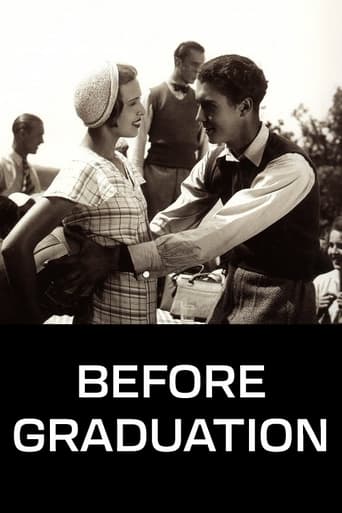 5.0
5.0The story of high school students, talented Jan and Karel, who has a problem with math. Their life affects pedantic professor of mathematics Klec, that goes with them on a school trip, which escalates the conflict between them. Jan wants to escape, but Professor Donat will discourage him. Karel fails the exam of mathematics and decides to commit suicide.
Before Graduation
1932
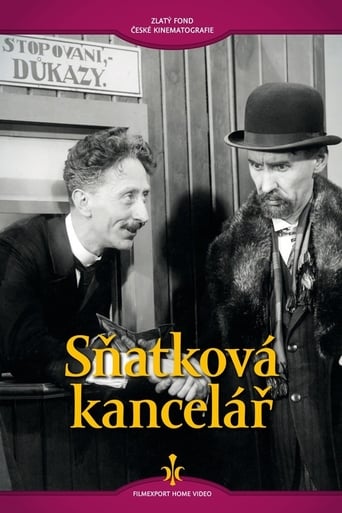 NR
NRNo synopsis available yet.
Sňatková kancelář
1932