
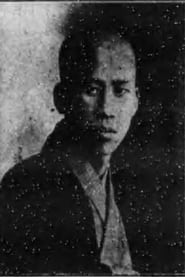
Acting
Hideo Takeda
Born
1887-02-20 (139)
Place of birth
Mie Prefecture, Japan
Known for
Acting
Credits
48 titles
Known for
 7.4
7.4Uta’s mother died when she was six years old; her father she never met. She was forced to adopt a traveller’s life when her grandmother died, and now she is a dancer and part of a family of actors who travel from town to town, setting up street performances. A way of escape from this marginal existence arises when she gets the chance to move to tea merchant Hiramatsu’s place, where she is asked to teach his daughter to dance.
Notes of an Itinerant Performer
1941
 6.9
6.9After the death of her husband, an elderly woman and her youngest, unmarried daughter are forced to sell their house to cover his debts and decide to move in with one of the former's children, each of whom is scarcely happy to accommodate.
Brothers and Sisters of the Toda Family
1941
Japanese silent film from 1931.
Sisters: Part 1
1931
A hard-working new employee at a trading company is promoted through the company president's business. However, he quarrels with his wife over something trivial, and her wife runs away from home, causing a fuss, but she returns to normal. Selected by Kinema Junpo as the 5th-best Japanese movie of 1926.
Useless Button
1926
Japanese silent film from 1929.
Triumphant Song of the Mountain
1929
 6.7
6.7"The Dancing Girl of Izu" tells of the story between a young male student who is touring the Izu Peninsula and a family of traveling dancers he meets there, including their youngest girl. The student finds the naïve girl attractive even though he eventually has to part with the family after spending memorable time together.
The Dancing Girl of Izu
1933
Film credits
1940s · 4 titles
7.4Uta’s mother died when she was six years old; her father she never met. She was forced to adopt a traveller’s life when her grandmother died, and now she is a dancer and part of a family of actors who travel from town to town, setting up street performances. A way of escape from this marginal existence arises when she gets the chance to move to tea merchant Hiramatsu’s place, where she is asked to teach his daughter to dance.
Notes of an Itinerant Performer
1941
6.9After the death of her husband, an elderly woman and her youngest, unmarried daughter are forced to sell their house to cover his debts and decide to move in with one of the former's children, each of whom is scarcely happy to accommodate.
Brothers and Sisters of the Toda Family
1941
 NR
NRNo synopsis available yet.
The Spy Has Not Died Yet
1942
 NR
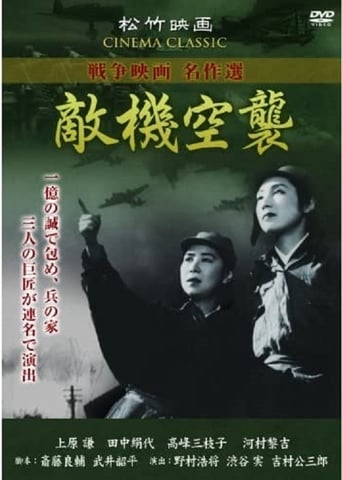
NRJapanese war movie.
Air Raid of the Enemy Plane
1943
1930s · 34 titles
Japanese silent film from 1931.
Sisters: Part 1
1931
6.7"The Dancing Girl of Izu" tells of the story between a young male student who is touring the Izu Peninsula and a family of traveling dancers he meets there, including their youngest girl. The student finds the naïve girl attractive even though he eventually has to part with the family after spending memorable time together.
The Dancing Girl of Izu
1933
 9.0
9.0It is considered to be a lost film.
Love and Power
1930
 6.6
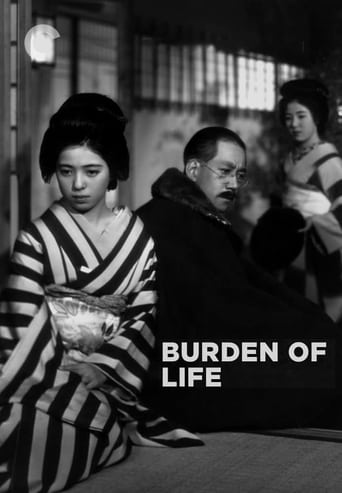
6.6A middle-aged father has just married off his third daughter, but still has his nine year old son to raise whom he resents as he was unwanted.
Burden of Life
1935
 10.0
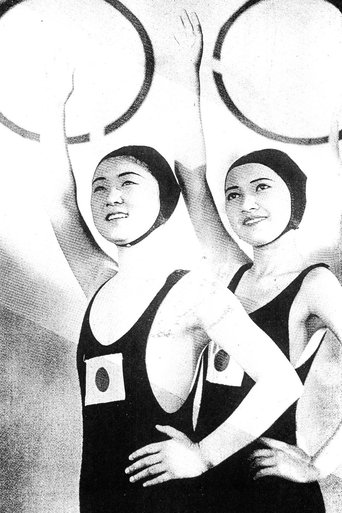
10.0Shigeko and Midori, star swimmers at the renowned Kirishima Girls’ School, are training relentlessly with their sights set on the Los Angeles Olympics. But for the past week, Shigeko has been absent from practice. Her father has fallen ill, and to support her family’s struggling finances, she has secretly taken a job at a trading company. When Masao discovers this, he asks Midori to convince her to return, but soon the school learns of her secret. The students rally to raise funds, though the principal refuses their help, promising instead to handle the situation himself. Shigeko resumes training and travels to Tokyo for the qualifying meet. She touches the wall first in the 100-meter freestyle—only to receive news of her father’s passing. Overcome with grief, she collapses, cared for by Midori, whose own exhaustion leaves her finishing fourth. Despite these hardships, their prior accomplishments earn them a place on Japan’s Olympic team.
Shine, Japanese Women
1932
 8.0
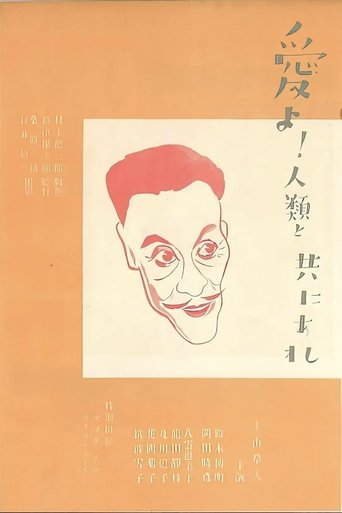
8.0The three-hour Ai yo jinrui to tomo ni are / Love, Be with Humanity (1931) starts as a satire of alienation in the world of money, develops into a lumberland epic with a forest fire on Sakhalin Island, turns into a tragedy of King Lear dimensions, and manages to amaze the blasé audience with a happy end in the Wild West.
Love, Be with Humanity: Part 2
1931
 5.2
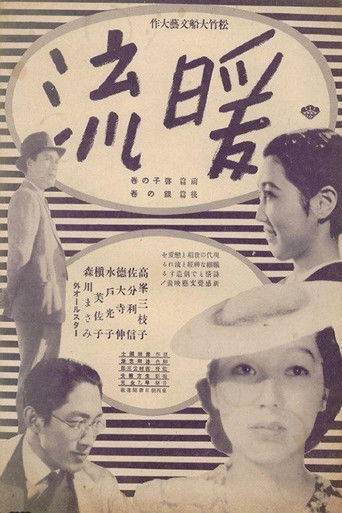
5.2Adaptation of Kishida Kunio's novel. Set against the backdrop of a power struggle within a hospital, depicts the love lives of the director's daughter, the administrative director, a doctor, and a nurse.
Warm Current
1939
 7.0
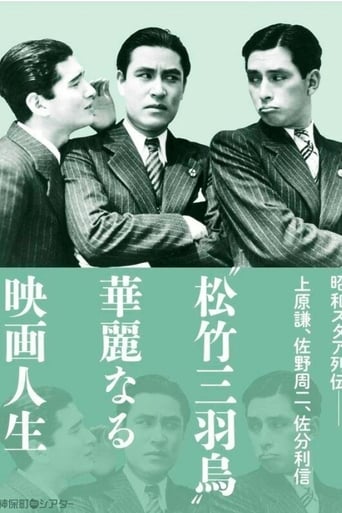
7.0Three men vying for the same job end up chasing the same girl in this comedy-drama from noted Japanese director Yasujiro Shimazu.
The Trio's Engagements
1937
 6.5
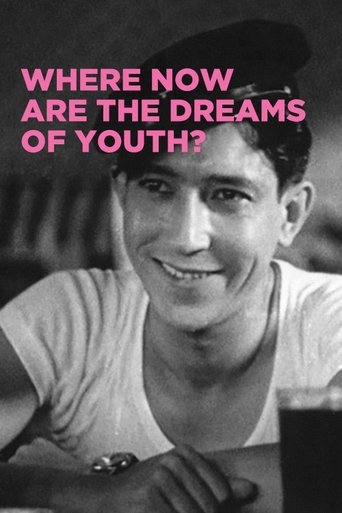
6.5When a young man inherits his father's lucrative business, he cheats the system to set up three of his college friends with jobs.
Where Now Are the Dreams of Youth?
1932
7.0The three-hour Ai yo jinrui to tomo ni are / Love, Be with Humanity (1931) starts as a satire of alienation in the world of money, develops into a lumberland epic with a forest fire on Sakhalin Island, turns into a tragedy of King Lear dimensions, and manages to amaze the blasé audience with a happy end in the Wild West.
Love, Be with Humanity: Part 1
1931
 5.3
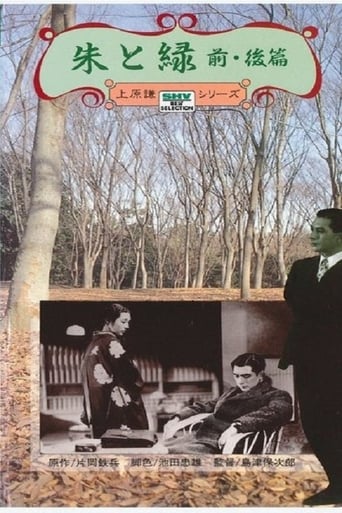
5.3A businessman’s daughter falls in love with one of her father’s employees.
Vermilion and Green
1937
 NR
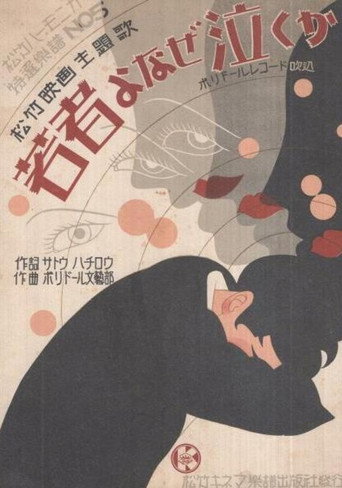
NRA modern girl suddenly intrudes into a widower's family home.
Youth, Why Do You Cry?
1930
 8.0
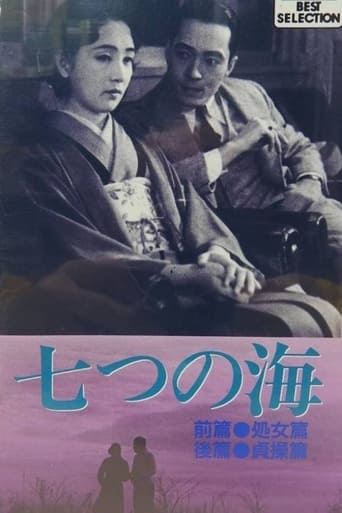
8.0Part two of Shimizu's major silent Seven Seas, a family drama of the intertwining fates of the rich, decadent Yagibashis and the far less prosperous Sone family.
Seven Seas: Chastity Chapter
1932
 NR
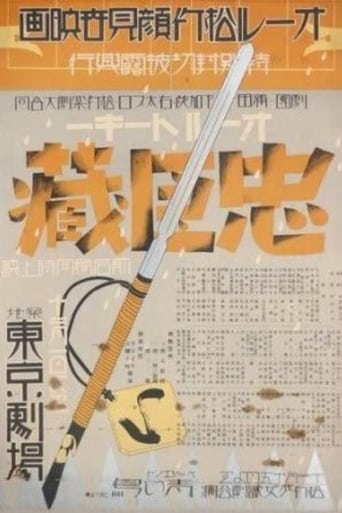
NRThis 1932 adaptation is the earliest sound version of the ever-popular and much-filmed Chushingura story of the loyal 47 retainers who avenged their feudal lord after he was obliged to commit hara-kiri due to the machinations of a villainous courtier. As the first sound version of the classic narrative, the film was something of an event, and employed a stellar cast, who give a roster of memorable performances. Director Teinosuke Kinugasa was primarily a specialist in jidai-geki (period films), such as the internationally celebrated Gate of Hell (Jigokumon, 1953), and although he is now most famous as the maker of the avant-garde silent films A Page of Madness (Kurutta ichipeji, 1926) and Crossroads (Jujiro, 1928), Chushingura is in fact more typical of his output than those experimental works. The film ranked third in that year’s Kinema Junpo critics’ poll, and Joseph Anderson and Donald Richie noted that 'not only the sound but the quick cutting was admired by many critics.
The Loyal 47 Ronin
1932
 10.0
10.0A melodrama by noted auteur and father of director Yoshitaro Nomura, Hotei Nomura. This is apparently the first adaptation of Izumi Kyoka's The Romance of Yushima.
The Genealogy of Women
1934
 6.8
6.8A period piece about the love of a wealthy blind woman, a teacher of koto and shamisen, and her devoted manservant. Based on a novella by Tanizaki Junichiro.
Okoto and Sasuke
1935
 10.0
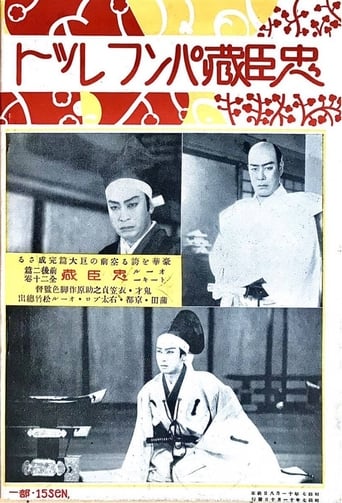
10.0No synopsis available yet.
Chûshingura - Zempen: Akahokyô no maki
1932
 6.0
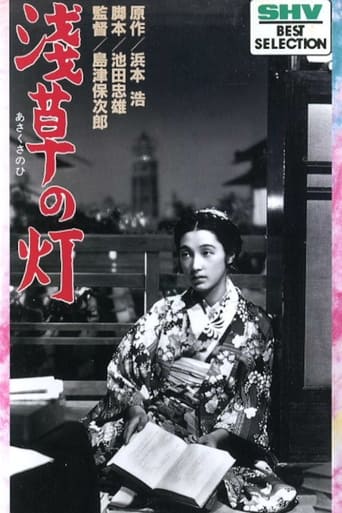
6.0Pre-war Asakusa was a riotous district of cabarets, dance-halls and brothels - a striking backdrop for Shimazu's story of innocence and experience. Pretty, young Reiko is the new dancer in an infamous theatre troupe, and her fellow performers try to protect her virtue in a land of vice. Meanwhile, an ageing actor wants to be a hero off stage as well as on, and the troupe matriarch Marie has to keep them all together.
The Lights of Asakusa
1937
 6.0
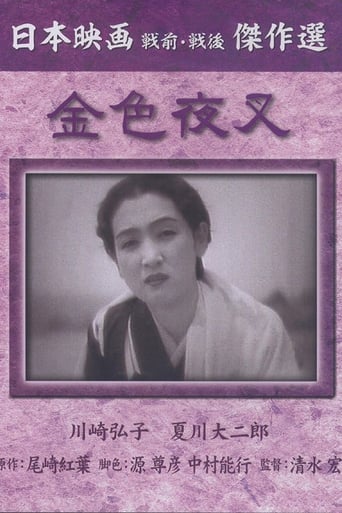
6.0A penniless orphan loses the woman he loves, when her family arranges a marriage to a wealthy playboy. He believes she was blinded by greed, and becomes a miser.
The Golden Demon
1937
 7.5
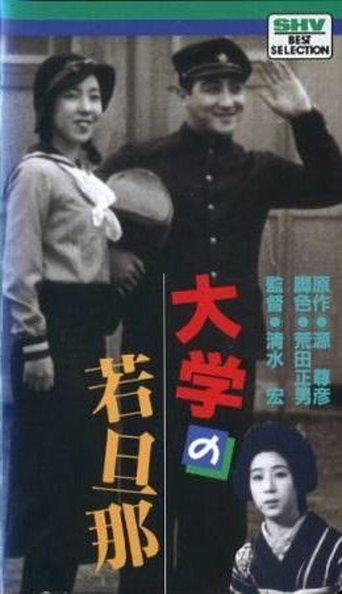
7.5The story deals with Fuji, nicknamed Waka-danna (Young Master), the star athlete on his university's rugby team. The son of a wealthy soy sauce manufacturer, Fuji basks in the glory of his athletic celebrity. Attracting the attention of admiring young women, Fuji resists family pressure to settle down and marry after college. Instead, he spends much of his time drinking and womanizing, behavior which eventually leads the college officials to expel him from the team.
The Boss's Son at College
1933
Japanese silent film from 1931.
Sisters: Part 2
1931
Based on the Sakatayama double suicide
Tengoku ni musubu koi
1932
No synopsis available yet.
天龍下れば
1933
Kan’ichi Hazama and Omiya Shigisawa are engaged to be married, but Omiya breaks the engagement to marry a wealthy banker’s son. Heartbroken, Kan’ichi becomes a moneylender, and years later their paths cross again under changed circumstances. Adapted from a popular serialized novel of the same name.
The Golden Demon
1932
 10.0
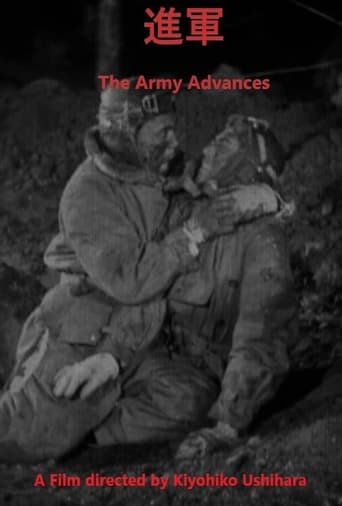
10.0A farmer’s boy, obsessed with his balsa-and-paper flying models and with dreams of real aircraft, develops a friendship with the daughter of the local squire, who introduces the lad to her pilot brother and his flying officer friends; through hard work, and despite the handicap of a lowly class status, he eventually succeeds in qualifying as a pilot and joining the air force.
Marching On
1930
The Japanese debut film of silent-era star Sessue Hayakawa, in which he not only starred but directed.
The Sun Rises from the East
1932
 7.0
7.0It is considered to be a lost film.
Pure Love
1930
Tsukamoto and Omitsu are close friends, but one day, Tsukamoto becomes fascinated by Ayako, whom he meets at the home of Miyajima.
The Cheerleading Captain's Love
1933
 NR
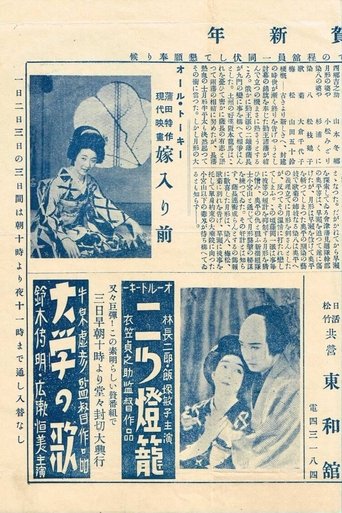
NRJapanese home drama starring Kinuyo Tanaka.
Before the Wedding
1933
Japanese silent comedy from 1930. The directorial debut of Hiromasa Nomura.
The Beating
1930
Japanese drama from 1934. A major production of Shochiku Studio, directed by Hiroshi Shimizu.
Mother of the East
1934
 NR
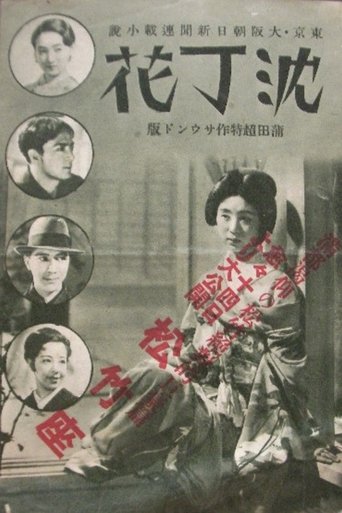
NRJapanese film from 1933, adapted from Masao Kume's serialized newspaper novel.
Daphne
1933
Japanese film from 1933, adapted from a story serialized in the entertainment magazine "Fuji."
Clear and Cloudy
1933
Japanese silent film from 1930. The second chapter of "The Big City: Labor" (1929).
The Big City: Explosion
1930
1920s · 10 titles
A hard-working new employee at a trading company is promoted through the company president's business. However, he quarrels with his wife over something trivial, and her wife runs away from home, causing a fuss, but she returns to normal. Selected by Kinema Junpo as the 5th-best Japanese movie of 1926.
Useless Button
1926
Japanese silent film from 1929.
Triumphant Song of the Mountain
1929
Japanese silent film from 1927.
The Basement
1927
Japanese silent film from 1928. Kinema Junpo ranked it among the ten best Japanese movies of the year.
The Village Bride
1928
Comedy by Kiyohiko Ushihara. Once a full-length feature film, now only 14 minutes remain.
Kaihin no joô
1927
No synopsis available yet.
Karakuri musume
1927
Japanese silent film from 1929.
The Father and His Son
1929
 NR
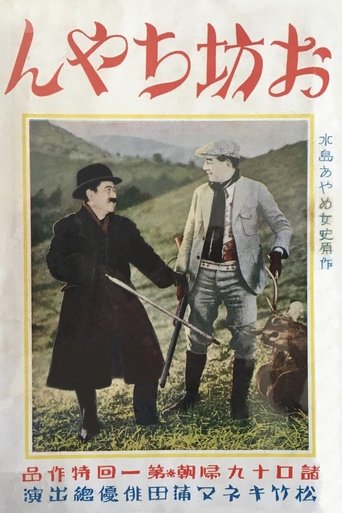
NRJapanese silent film from 1926. (Obo-chan meaning "Young Master.") Written by Ayame Mizushima, the first female screenwriter in Japan.
Young Master
1926
Japanese silent film from 1927, based on a popular serialized novel by Kan Kikuchi.
Madame Pearl
1927
Japanese silent film from 1926, directed by Heinosuke Gosho and featuring Kinuyo Tanaka.
Torrent
1926