

Editing
Ana Poliak
Born
1962-07-30 (64)
Place of birth
Buenos Aires, Argentina.
Known for
Editing
Credits
16 titles
Ana Poliak (Buenos Aires, Argentina, July 30, 1962) is a film director and screenwriter who, among other films, directed "¡Que vivan los crotos!" (1990), "La fe del volcán" (2002) and "Parapalos" (2004). He studied Drawing and Painting with Anselmo Piccoli and graduated with a specialty in Directing from the Experimental Film School of the National Institute of Cinematography (ENERC), of the National Institute of Cinema and Audiovisual Arts. In 1989 he founded the production company Viada Producciones.
Known for
 8.3
8.3A country boy tries to find his place in Buenos Aires. He goes to live with his cousin in the outer suburbs and works as a parapalos ("pin setter") in one of the city's last hand-operated bowling alleys.
Pin Boy
2004
 6.0
6.0One day in 1930, José Américo Ghezzi ("Bepo")—an unemployed anarchist stonemason—leaves his hometown, not to return until 1955. For twenty-five years, he wanders with no direction other than the path of the railway tracks, joining the silent world of the "crotos"—itinerant laborers—where he meets "the Frenchman," a mentor who leaves an indelible mark on his life. Back home, his friends and a woman await him, weaving the fabric of their own lives. Sixty years later, facing the camera, he relives his romances and his worldview in a kind of collage of perspectives and dreams, centered on the fundamental question: "Is freedom possible?"
Long Live the Hobos
1995
 NR
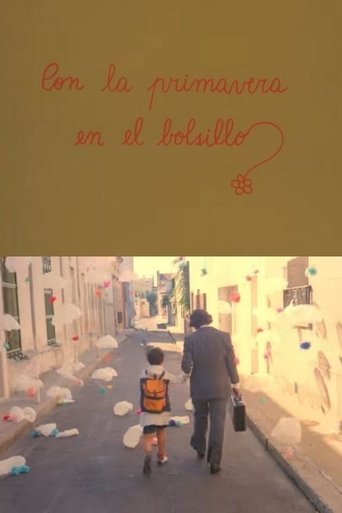
NRA young boy dreams and draws about an apparently fictional father figure. He materializes in real life, starring surrealist and colorful scenarios.
Con la primavera en el bolsillo
1985
 5.8
5.8Ani, an apprentice hairdresser who loses her job meets Danilo, a forty-something street scissors sharpener.
La fe del volcán
2002
 6.6
6.6This documentary tells the tale of Buenos Aires lesbians, focusing on three personal stories. A former militant woman who now devotes her time to feminine soccer; a young woman who is active so no girl has to go through what she went through and a lesbian mother who recounts how hostile the laws are regarding the rights of lesbian women. In spite of the difficulties their characters go through, the stories have a lot of humour, some soccer and a tour of the city.
Lesbians of Buenos Aires
2004
 10.0
10.0A little girl talks with a tramp lady.
El eco
1984
Film credits
2000s · 2 titles
5.8Ani, an apprentice hairdresser who loses her job meets Danilo, a forty-something street scissors sharpener.
La fe del volcán
2002
6.6This documentary tells the tale of Buenos Aires lesbians, focusing on three personal stories. A former militant woman who now devotes her time to feminine soccer; a young woman who is active so no girl has to go through what she went through and a lesbian mother who recounts how hostile the laws are regarding the rights of lesbian women. In spite of the difficulties their characters go through, the stories have a lot of humour, some soccer and a tour of the city.
Lesbians of Buenos Aires
2004
Behind the camera
8.3A country boy tries to find his place in Buenos Aires. He goes to live with his cousin in the outer suburbs and works as a parapalos ("pin setter") in one of the city's last hand-operated bowling alleys.
Pin Boy
2004
8.3A country boy tries to find his place in Buenos Aires. He goes to live with his cousin in the outer suburbs and works as a parapalos ("pin setter") in one of the city's last hand-operated bowling alleys.
Pin Boy
2004
8.3A country boy tries to find his place in Buenos Aires. He goes to live with his cousin in the outer suburbs and works as a parapalos ("pin setter") in one of the city's last hand-operated bowling alleys.
Pin Boy
2004
6.0One day in 1930, José Américo Ghezzi ("Bepo")—an unemployed anarchist stonemason—leaves his hometown, not to return until 1955. For twenty-five years, he wanders with no direction other than the path of the railway tracks, joining the silent world of the "crotos"—itinerant laborers—where he meets "the Frenchman," a mentor who leaves an indelible mark on his life. Back home, his friends and a woman await him, weaving the fabric of their own lives. Sixty years later, facing the camera, he relives his romances and his worldview in a kind of collage of perspectives and dreams, centered on the fundamental question: "Is freedom possible?"
Long Live the Hobos
1995
6.0One day in 1930, José Américo Ghezzi ("Bepo")—an unemployed anarchist stonemason—leaves his hometown, not to return until 1955. For twenty-five years, he wanders with no direction other than the path of the railway tracks, joining the silent world of the "crotos"—itinerant laborers—where he meets "the Frenchman," a mentor who leaves an indelible mark on his life. Back home, his friends and a woman await him, weaving the fabric of their own lives. Sixty years later, facing the camera, he relives his romances and his worldview in a kind of collage of perspectives and dreams, centered on the fundamental question: "Is freedom possible?"
Long Live the Hobos
1995
6.0One day in 1930, José Américo Ghezzi ("Bepo")—an unemployed anarchist stonemason—leaves his hometown, not to return until 1955. For twenty-five years, he wanders with no direction other than the path of the railway tracks, joining the silent world of the "crotos"—itinerant laborers—where he meets "the Frenchman," a mentor who leaves an indelible mark on his life. Back home, his friends and a woman await him, weaving the fabric of their own lives. Sixty years later, facing the camera, he relives his romances and his worldview in a kind of collage of perspectives and dreams, centered on the fundamental question: "Is freedom possible?"
Long Live the Hobos
1995
NRA young boy dreams and draws about an apparently fictional father figure. He materializes in real life, starring surrealist and colorful scenarios.
Con la primavera en el bolsillo
1985
5.8Ani, an apprentice hairdresser who loses her job meets Danilo, a forty-something street scissors sharpener.
La fe del volcán
2002
5.8Ani, an apprentice hairdresser who loses her job meets Danilo, a forty-something street scissors sharpener.
La fe del volcán
2002
5.8Ani, an apprentice hairdresser who loses her job meets Danilo, a forty-something street scissors sharpener.
La fe del volcán
2002
10.0A little girl talks with a tramp lady.
El eco
1984
10.0A little girl talks with a tramp lady.
El eco
1984
 NR
NRA boy climbs a wall to take a closer look at a snail that slowly moves along its edge and encounters an alien world. Among sheets and white clothes drying in the sun, there are two young girls playing with a bag that floats above them as if by magic.
Caracol
1982
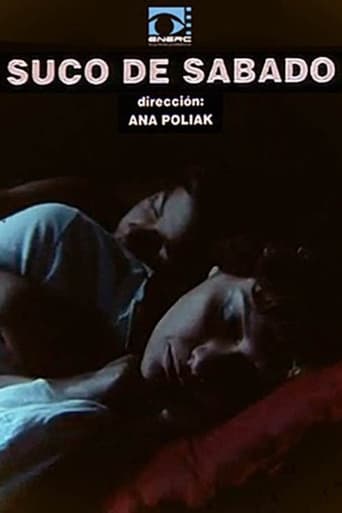 7.0
7.0Saturday night in the humble house of a working-class family, narrated in parallel between the mother and a night out and the son who lives among street children.
Suco de sábado
1989