

Directing
Leighton Pierce
Born
1954-10-27 (71)
Place of birth
Rochester, NY, USA
Known for
Directing
Credits
40 titles
Leighton Pierce, born John Leighton Pierce, is an American experimental filmmaker who works with film, video, sound, and installation. He is also the Dean of the School of Film/Video at CalArts since the summer of 2014. He is best known for his impressionistic technique in video imagery that creates a hypnotic effect as well as his use of sound design. The motif of water is dominant in his work and gave the name to the video series "Memories of Water". Pierce looks for inspiration in his immediate surroundings. He has stated that "in the simplest terms, a film or a video can be considered to be a meaningful experience in time. As a filmmaker, I take that as my mission: through the use of ima…
Known for
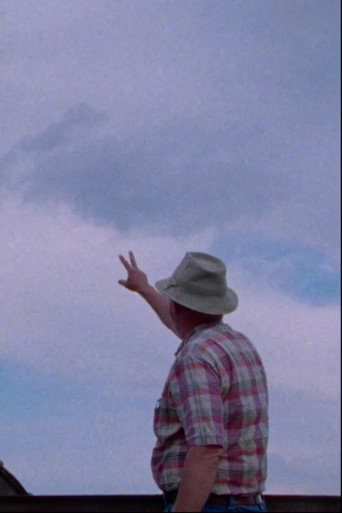
Looking outward, this is a segment from a series revolving around the relationship between Pierce's son and daughter. Their relationship is too complicated and too dynamic to understand. This piece doesn’t try to explain anything other than the fact of an overlapping acoustic environment and proximate activities. Looking inward, Wood is also a reflection on the many overlapping rhythms of the body.
Wood
2000
 NR
No synopsis available yet.
Cumulonimbus
1986
 6.8
"The slow and subtle repeated rhythms of daily life provide the material for this 12 part film. The pace is slow with the intention of inviting viewers into a more visceral and less verbally analytical state of mind. The 'action,' small events like the mail arriving, the storm coming, and the grass getting mowed, are secondary to the way of perceiving those events. In many ways this film reaches back into a kind of personal memory one might recall from early childhood." –Leighton Pierce
50 Feet of String
1995
 NR
No synopsis available yet.
Barbara Hammer Lends a Hand
2012
 6.0
The man, the woman and their multiples share the same space at different times while being in different places at the same time, creating a paradox of existence. Sometimes they meet and sometimes they don't.
And Sometimes the Boats Are Low
1983
These partly diaristic, partly poetic pieces are the first three completed segments in a long series of films and videos. They all tend toward the meditative in their exploration of water as a perceptual nodal point in daily life.
Memories of Water Parts #21, 6, and 27
1997
Behind the camera
Looking outward, this is a segment from a series revolving around the relationship between Pierce's son and daughter. Their relationship is too complicated and too dynamic to understand. This piece doesn’t try to explain anything other than the fact of an overlapping acoustic environment and proximate activities. Looking inward, Wood is also a reflection on the many overlapping rhythms of the body.
Wood
2000
NRNo synopsis available yet.
Cumulonimbus
1986
6.8"The slow and subtle repeated rhythms of daily life provide the material for this 12 part film. The pace is slow with the intention of inviting viewers into a more visceral and less verbally analytical state of mind. The 'action,' small events like the mail arriving, the storm coming, and the grass getting mowed, are secondary to the way of perceiving those events. In many ways this film reaches back into a kind of personal memory one might recall from early childhood." –Leighton Pierce
50 Feet of String
1995
NRNo synopsis available yet.
Barbara Hammer Lends a Hand
2012
6.0The man, the woman and their multiples share the same space at different times while being in different places at the same time, creating a paradox of existence. Sometimes they meet and sometimes they don't.
And Sometimes the Boats Are Low
1983
6.0The man, the woman and their multiples share the same space at different times while being in different places at the same time, creating a paradox of existence. Sometimes they meet and sometimes they don't.
And Sometimes the Boats Are Low
1983
6.0The man, the woman and their multiples share the same space at different times while being in different places at the same time, creating a paradox of existence. Sometimes they meet and sometimes they don't.
And Sometimes the Boats Are Low
1983
These partly diaristic, partly poetic pieces are the first three completed segments in a long series of films and videos. They all tend toward the meditative in their exploration of water as a perceptual nodal point in daily life.
Memories of Water Parts #21, 6, and 27
1997
How does one evoke a deeply felt emotion without simply representing it or describing it? This is the first in a series of videos that will explore that question.
A Private Happiness
2003
 NR
"Shot between 11:00 and 1:00 over a series of Thursdays while my infant son slept, this piece has something to do with the sensory pleasure of momentary solitude in a domestic setting." –Leighton Pierce
Thursday
1991
While interweaving complex images, a dense stereo soundtrack and brief interviews with local people, "On the Road Going Through" is designed to provide a portrait of a fragment of rural life in Iowa. With traffic on the road functioning as the drone, "On the Road Going Through" creates a meditative, impressionistic view of a composite small town in Iowa. While actually shot in many towns, the tape implies a unified single town that is, after all, consistent with the subjects shared concerns. The people talk about kids, dogs, traffic and storms as traffic repeatedly passes by in the background.
On the Road Going Through
1987
 NR
An elegy, this is a poetic film about the dissolution of memory - not as concrete recall of the past, but as a reconstruction and recontextualization of a fading image that is transformed through time.
What's Left is Wind
1988
 NR
A film about subjective experience. This film should be viewed as one would look at a painting or listen to a symphony. A dynamically quiet mood is created by the interplay between the densely structured sound track and complex figure/ground relationships in the images. The subjective point of view of a porch swing through a partially opened door is the image to which we constantly return as the tonic, the drone that is always present but not always perceived.
Red Swing
1986
 NR
The warning to Icarus: to apply moderation, humility, and wisdom to the use of the technology his father developed, remains more relevant than ever.
CARBON
2025
 NR
Part of UAP (Unidentified Aerial Phenomena), a series made with, on, and for the phone. Looking to the sky for threats and salvation.
Everything's gonna be OK
2022
 7.0
A film about editing, rhythm, and a bit about character.
He Likes to Chop Down Trees
1980
An impressionistic journey of subjectivity as one submits one's self to an image maker. A woman offers herself as the source of an image to a female painter. A man photographs them both. What is at stake when one submits to the gaze of another? And, what is received from that offering? Using fluid visceral imagery and a spacious soundtrack, this short video illuminates the consciousness of both the act representation and the act of seeing oneself represented. Pivoting on the perceptual tension between experience and understanding, Pierce traverses the realm of the "looker" and the "looked".
Sitting
2010
 NR
An acoustically rich and visually stunning point of view on America from the vantage point of a fourth floor loft at the edge of Skid Row in LA.
South Los Angeles Street
2023
 NR
Stone Moss is composed entirely from digital still images and is a segment of a much larger and multifaceted work titled Agency of Time, a 3 tier, long-term project consisting of a symphonic mutli channel video/sound installation, a series of single channel works and a photography book. Stone Moss is the first of the series of single channel works. The content of Stone Moss as well as of the photographs and installation focus on an awareness of perception, point of view, time, desire, and memory to encourage an active yet open emotional engagement with the piece.
Stone Moss
2008
 NR
Number One engages the experience of elasticity between varying states of mind. The contrasts in this multi-image piece -- shifts between frenetic chaos and calm order, between an intense central focus and a diffuse periphery, between hard and soft, fixed and fluid, concrete and abstract -- are all developed not in opposition to each other but rather, in an interwoven, multilayered relation to each other. There is never one set of oppositions but rather a dance of relationships between contrasting states. This is one way to think about how a mind works: at any moment, there is never just one thing (or feeling, or perception) in life; there is always a magnetized and elastic push/pull among many things at once. The flow of our attention among these things is our mind. Number One is one way to map a few moments in such a mind. Number One is a single channel evolution of the 6 channel video installation Convection.
Number One
2007
This is a one minute demonstration of the present.
Folded Time, Take 17
2000
 NR
An impressionistic documentary on the small town cafes in the rural Midwest. While the cafes function as a focal point for many aspects of the rural subculture, they also reveal the limits and somewhat closed nature of that culture.
You Can Drive the Big Rigs
1989
 NR
Short film by Leighton Pierce.
Deer Isle #8: Going Out (in the morning)
1994
 NR
An impressionistic painterly study of the work/play involved in learning simple things.
Blue Hat
1993
 NR
"While not addressing the issue in a very overt manner, this piece has something to do with the thrilling and 'awful' process of actively engaging in perception and how we oscillate between forgetting and remembering that activeness as we age. In 'Principles of Harmonic Motion', I take a painterly approach to the image and rely on a subtle but carefully composed stereo soundtrack to amplify the sense of physical and psychological space. The images, sounds and structure are sometimes somewhat abstract while preserving a strong grounding in representation." –Leighton Pierce
Principles of Harmonic Motion
1991
A woman moving in the water and the gaze of a man, both seen from beneath the water, elaborated by the vectorizing force of sound, lead the viewer toward an effervescence of feeling - a desire for merge among the knowledge of separateness.
My Person in the Water
2006
Dad and daughter at the water race of an abandoned monastery. The scene pivots on her words: “Look, dad,” she says; Water through her fingers.
Water Seeking its Level
2002
 NR
A character study showing the dissolution of the characters sense of self. The structure is based loosely on a pantoum structure in poetry.
He Said Without Moving
1981
 NR
Deck brings emphasis to the bodily experience of temporality. The principle of harmonized rhythm underpins all of Pierce’s work from the shooting (live animation) performance, to its editing and sound design, and finally in situating its reception. In all of his video and sound art, repetition and rhythm manifest the echoes and arcs of our irregular and subjective conjectures of time.
DECK
2018
Evoking a small fraction of the felt complexities of life, Pierce works with the question of absence and what of a person remains in the memory and imagination when that person is absent.
Viscera
2004
A brief impression triggers an emotion echoing with memories of the past and anticipations of the future. This quiet communication, a composition of image, sound, and text, reflects that feeling and invites its continuation. This “video letter,” originally intended for an audience of one, resonates with associations that many can embrace.
37th & Lex.
2002
 NR
Red Shovel is an impressionistic documentary focussing on a few moments in a small town along the coast of Maine on the Fourth of July (American Independence Day). The approach to image is very painterly with the simple view transformed “with Turneresque luminosity.” Most of the unusual visual effect is from the careful use of a shallow depth of field and natural objects (blowing grass, bushes, etc.) to bend and twist the images into a languid sense of time. In the end the film documents a state of mind more than a particular spot. It also resonates with the ambiguous metaphoric threat of a national symbol impinging upon the child’s toy. - Canyon Cinema
Red Shovel
1992
The videomaker was very tired for the 18 months prior to the making of this video. This short piece hints at some of the reasons.
Puppy-Go-Round
1996
The old man circles outside, looking for water with a dousing rod; the young woman circles inside, moving through a labyrinth-like house, dimly lit, all rooms connecting. Sometimes she is a narrator, existing both outside the film space and within it. The premise for this film is based on the conflict between what is inside and what is outside. It is an exploration of the windows between imagination and reality. The woman is looking for something; the old man thinks he knows what it is.
These Are the Directions I Give to a Stranger
1984
 NR
Taking place in a laundromat, this film is an exploration of territoriality, paranoia and voyeurism. The space itself exerts an oppressive force on the characters as they strive to define and maintain their individual semi-private spaces in an essentially public place. The watched and the watcher are constantly shifting roles in a "hand-off" of the point of view.
The Miracle of Change
1984
 5.2
Made in the weeks after 9/11, 2001, this is a meditation on resurgent nationalism and a distressing march toward war.
Veiled Red
2001
 NR
Pierce has recently created hundreds of short reflective loops to stimulate subtle alterations in states of mind. He shoots and processes them entirely on his phone in order to bring the active video "meaning-making" process into his daily lived experience. His camera (and NLE) is always in his pocket. Lodestar takes advantage of synergies and leaps among some of these loops and then extends them toward proto-narrative --the moment when an objective narrative is first detected. Sound is integral to the potential for an in-depth experience during this video.
Wasp Radial
2024
 NR
A bank robbery repeats several times, each time within a different context and from a different point of view. Is there a double-cross? Why are the passersby so calm? The audience must reconstruct the event and assume the role of detective in this mystery of narrative space.
Not Much Time
1982
 10.0
Pierce meticulously weaves the warp and weft of image and sound leading the viewer into a conscious meditative state. Shooting and then animating thousands of moving camera, hand-held, long exposure, digital still photographs into articulations of real spaces and events, Pierce re-articulates and recontextualizes the video by applying the lever of a judiciously and intentionally composed musique-concrète soundtrack.
White Ash
2014
A small moment from a children's Halloween party is taken as material for an exploration of folded time. Time is, in fact, what I see as my main material. THE BACK STEPS is a demonstration of that particular interests. The image loops but also progresses forward. That is fairly easy to see. However, the sound, while having looping elements, has a compositional structure that changes throughout the piece. I imagine most pieces as a series of overlain arcs, each of a different length and height and each representing a different durational element in the piece. Another way to imagine this is to think of a mechanical clock with many different internal rhythms, all of which move the hands steadily forward.
The Back Steps
2001