
Directing
Trajče Popov
Born — Died
1923-07-15 — 2007-03-30
Place of birth
Veles, Kingdom of Serbs, Croats, and Slovenes [now North Macedonia]
Known for
Directing
Credits
40 titles
Trajče Popov was a Macedonian film director, screenwriter, and cinematographer, recognized as a pioneer in Macedonian cinema. He is best known for directing Makedonska krvava svadba (Macedonian Blood Wedding, 1967), a film that portrays the resistance of Macedonian people against Ottoman rule. This work is considered a classic in Macedonian film history. Popov's contributions significantly shaped the development of the film industry in North Macedonia.
Known for
 6.6
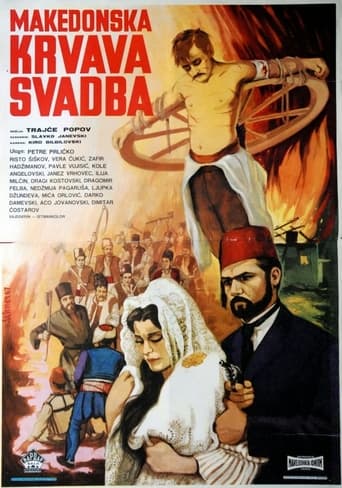
The film is the story of girl Cveta who was abducted by the Ottoman bey and taken away in his harem. Bey is trying to embrace Islam, but its persistence, and its neighbors led beloved Spasa, and beloved local priest, assisted by diplomats of the great powers manage to free themselves. On the day of her wedding comes Bey with his army to try to get it back. Cveta dies, Spasa killing Bey and and goes to the committees.
Macedonian Blood Wedding
1967
 NR
The theme of the film is the celebration of October 11, 1948 in Prilep, Kumanovo, Kichevo and the commemoration of the day of the liberation of Debar. In honor of the holiday, in Skopje, in Daut - Pashin Amam, an exhibition about the Revolution and the National Liberation War is opened. Then, the holding of folk fairs, agricultural exhibitions and a book exhibition on the occasion of the "Book Week" are shown.
October 11th
1949
 NR
The film presents a comprehensive view of the development of the region along the Vardar River. It covers its industrial development, the development of agriculture, the cultural benefits of the new socialist society, the cultural and ethnological characteristics of the inhabitants, archaeological and historical characteristics, and the last sequence is dedicated to the exodus of Macedonians from the Aegean part of Macedonia.
A Journey Down the Valley of River Vardar
1950
 NR
A journal giving information about the commissioning of Skopje's newly built neighborhoods: Aerodrom, Kozle, Vlae, Madžari, Gjorče Petrov I and II, then about the construction of prefabricated barracks in the Shuto Orizari neighborhood, the commissioning of the Children's Clinic within the Skopje hospital, as well as about the aid that Skopje received daily from all over the world and about the reception on the occasion of the Liberation Day of Skopje, in honor of the builders of the city.
Skopje Journal #5
1964
 NR
A film about the construction of the hydroelectric power plant in the village of Tresonche, on the Radika River. The film was shot with the participation of students from the Nikola Tesla Electrical School in Skopje, 1950.
Our First Sparks
1951
 NR
Through the story of the dog Murgosh, which belongs to the famous Sharplaninec breed, all noble qualities of this world-famous breed are shown: the strength, courage and loyalty.
Murgosh - The Sharplaninec
1960
Behind the camera
6.6The film is the story of girl Cveta who was abducted by the Ottoman bey and taken away in his harem. Bey is trying to embrace Islam, but its persistence, and its neighbors led beloved Spasa, and beloved local priest, assisted by diplomats of the great powers manage to free themselves. On the day of her wedding comes Bey with his army to try to get it back. Cveta dies, Spasa killing Bey and and goes to the committees.
Macedonian Blood Wedding
1967
NRThe theme of the film is the celebration of October 11, 1948 in Prilep, Kumanovo, Kichevo and the commemoration of the day of the liberation of Debar. In honor of the holiday, in Skopje, in Daut - Pashin Amam, an exhibition about the Revolution and the National Liberation War is opened. Then, the holding of folk fairs, agricultural exhibitions and a book exhibition on the occasion of the "Book Week" are shown.
October 11th
1949
NRThe film presents a comprehensive view of the development of the region along the Vardar River. It covers its industrial development, the development of agriculture, the cultural benefits of the new socialist society, the cultural and ethnological characteristics of the inhabitants, archaeological and historical characteristics, and the last sequence is dedicated to the exodus of Macedonians from the Aegean part of Macedonia.
A Journey Down the Valley of River Vardar
1950
NRA journal giving information about the commissioning of Skopje's newly built neighborhoods: Aerodrom, Kozle, Vlae, Madžari, Gjorče Petrov I and II, then about the construction of prefabricated barracks in the Shuto Orizari neighborhood, the commissioning of the Children's Clinic within the Skopje hospital, as well as about the aid that Skopje received daily from all over the world and about the reception on the occasion of the Liberation Day of Skopje, in honor of the builders of the city.
Skopje Journal #5
1964
NRA film about the construction of the hydroelectric power plant in the village of Tresonche, on the Radika River. The film was shot with the participation of students from the Nikola Tesla Electrical School in Skopje, 1950.
Our First Sparks
1951
NRA film about the construction of the hydroelectric power plant in the village of Tresonche, on the Radika River. The film was shot with the participation of students from the Nikola Tesla Electrical School in Skopje, 1950.
Our First Sparks
1951
NRThrough the story of the dog Murgosh, which belongs to the famous Sharplaninec breed, all noble qualities of this world-famous breed are shown: the strength, courage and loyalty.
Murgosh - The Sharplaninec
1960
 NR
A documentary film about the economic development of the Tetovo district.
Polog (Economic Review)
1957
 NR
A documentary film about the great floods in Macedonia, filmed from 16 to 18.11.1962. The film shows the catastrophic floods in November 1962 that hit Macedonia, when the largest Macedonian rivers: Vardar, Treska and Crna overflowed their banks. The film shows footage during and after the floods and the efforts of the people in the fight against the raging water element and in saving the endangered lives and material wealth.
Elemental Force
1962
NRA documentary film about the great floods in Macedonia, filmed from 16 to 18.11.1962. The film shows the catastrophic floods in November 1962 that hit Macedonia, when the largest Macedonian rivers: Vardar, Treska and Crna overflowed their banks. The film shows footage during and after the floods and the efforts of the people in the fight against the raging water element and in saving the endangered lives and material wealth.
Elemental Force
1962
 NR
The film records the celebration of the fifth anniversary of cultural life in the People's Republic of Macedonia, which took place in Ohrid in 1950, and included several cultural events: the unveiling of a monument to the Miladinov brothers in Struga, the opening of an exhibition of cultural achievements, as well as the II Congress of Educators.
National Culture Week
1950
NRThe film records the celebration of the fifth anniversary of cultural life in the People's Republic of Macedonia, which took place in Ohrid in 1950, and included several cultural events: the unveiling of a monument to the Miladinov brothers in Struga, the opening of an exhibition of cultural achievements, as well as the II Congress of Educators.
National Culture Week
1950
This film was made in 1998 and was dedicated to the 50th anniversary of the Exodus of the children from the Aegean part of Macedonia during the Greek Civil War. Using historical facts, archival material and actual film footage, the film tells the story of the genocide of the Macedonian people in this part of Macedonia. In the spring of 1948, over 28.000 Macedonian children left Greece and sought refuge across the border into the Vardar part of Macedonia and eventually into other countries such as Poland, Romania, Hungary and Czechoslovakia. The archival footage depicts the children leaving as well as showing film taken in both world wars.
In Continuo
1998
 10.0
Report on the visit of Josip Broz Tito and Polish officials Gomulka and Cyrankiewicz to Skopje in 1965. During the visit, the high-ranking guests from Poland were presented with a charter declaring them honorary citizens of Skopje. Review of the new urban solutions of the city, sketches and models.
Foundations of Solidarity
1966
10.0Report on the visit of Josip Broz Tito and Polish officials Gomulka and Cyrankiewicz to Skopje in 1965. During the visit, the high-ranking guests from Poland were presented with a charter declaring them honorary citizens of Skopje. Review of the new urban solutions of the city, sketches and models.
Foundations of Solidarity
1966
 NR
The film is about the Dervish ritual on the day of spring, March 22. Every year this Muslim sect performs this ritual in Prizren and according to their belief, the year begins with the arrival of spring and they have to tease the gods for spring to come.
The Calling of the Spring
1968
NRThe film is about the Dervish ritual on the day of spring, March 22. Every year this Muslim sect performs this ritual in Prizren and according to their belief, the year begins with the arrival of spring and they have to tease the gods for spring to come.
The Calling of the Spring
1968
 NR
A display of the ancient way of fishing with birds, on Lake Dojran, the only place in the world where people are fishing with birds.
Birds and Fish
1961
 6.5
Macedonian national folk dances performed by "Tanec" - a cultural and artistic society from Skopje.
Rhythm and Sound
1955
6.5Macedonian national folk dances performed by "Tanec" - a cultural and artistic society from Skopje.
Rhythm and Sound
1955
 NR
A film about migrant workers in the Drimkol region of Macedonia, when the people of this region, known as masons, made their own and their families' livelihoods by working all over the world. The tradition of migrant workers is now continued through work at the Drimkol cooperative.
Abandoned Altars
1962
 NR
Through photographs and documents this short documentary makes a reconstruction of the large demonstrations in Veles in 1939, when thousands of people went protesting to the streets under the slogan "We are asking for bread."
We Are Asking for Bread
1962
NRThrough photographs and documents this short documentary makes a reconstruction of the large demonstrations in Veles in 1939, when thousands of people went protesting to the streets under the slogan "We are asking for bread."
We Are Asking for Bread
1962
 NR
A documentary showing the stay of the delegation of the People's Republic of Macedonia in Pirin Macedonia, i.e. in the People's Republic of Bulgaria. Footage filmed in Melnik, Bansko, Sveti Vrach, Rozhdenski Monastery.
Throughout Pirin Macedonia
1948
NRA documentary showing the stay of the delegation of the People's Republic of Macedonia in Pirin Macedonia, i.e. in the People's Republic of Bulgaria. Footage filmed in Melnik, Bansko, Sveti Vrach, Rozhdenski Monastery.
Throughout Pirin Macedonia
1948
 NR
The natural beauties of Dojran Lake showing the unique method of fishing by birds.
Dojran Lake
1961
NRThe natural beauties of Dojran Lake showing the unique method of fishing by birds.
Dojran Lake
1961
 NR
The journal contains sequences from the construction of Skopje immediately after the earthquake, especially residential buildings, as well as sequences from everyday life, tent settlements, and rail and city traffic.
Skopje Journal #2
1963
 NR
A film poem based on the verses of the Macedonian poet and revolutionary Kočo Racin. His poetic journey is conveyed through a cinematic panorama of the life of the Macedonian people in the past.
White Dawns
1952
 NR
A reportage about the life in Skopje after the earthquake.
Skopje Journal #1
1963
 6.0
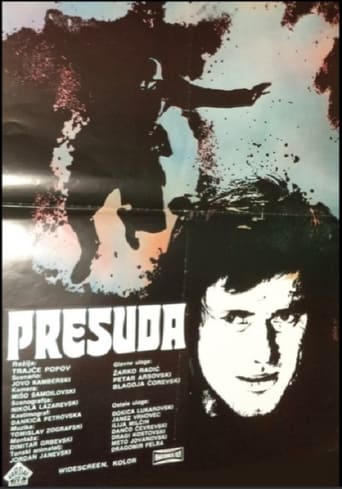
In the conflict with the enemy in one battle lost in advance, the risk to die in vain, partisan Mitko Angelov, fleeing from the battlefield. He climbs onto the train and goes to see his mother, who has just returned from internment. When he returned to the brigade, Mitko was declared a deserter and was disarmed and bound. Since he lost his weapon, the Commissioner sent him to patrol the action to take weapons from the Germans. All partisans patrol that went with him dying and the only Mitko and Vane, who was seriously injured remain alive. Thinking it was dead Vane, Angelov returns to the brigade. But the commander did not believe him, thinking that he had fled from the battle, and that is why the prison in the basement. In the meantime, get wounded fighter Vane, and the story of the heroic struggle led by Mitko. But at the same time, a military court condemned him to death for desertion.
The Verdict
1977
 NR
The work related to the liquidation of the ‘Bogoslovec’ asbestos mine, in the village of Bogoslovec, has been entrusted to a man who has been doing the job for seventeen years. The mine's facilities and the crumbling machinery themselves speak for the absurdity of the entire procedure.
Liquidator
1983
NRThe work related to the liquidation of the ‘Bogoslovec’ asbestos mine, in the village of Bogoslovec, has been entrusted to a man who has been doing the job for seventeen years. The mine's facilities and the crumbling machinery themselves speak for the absurdity of the entire procedure.
Liquidator
1983
 NR
In the form of correspondence between Ognen and his professor, illustrated with original documentary materials, Skopje is depicted as it was hit by the catastrophic earthquake of July 26, 1963, and its reconstruction and development with the help of the international community. The achievements in the field of reconstruction and development of Skopje in the period after the earthquake until 1968 are presented.
A Letter from Skopje
1968
 NR
A tourist postcard of the Polog Valley; natural beauties, tourist sites, Tetovo and other settlements and old crafts in Tetovo.
Polog (Tourist Review)
1957
 NR
A film about the formation of the Agricultural Cooperative "Mosha Pijade" from the village of Gorni Polog, which was supposed to work on the production, purchase and trade of rice, but which, due to poor management and bad investments, soon began to fall apart; it also talks about the problems the cooperative had with private rice producers. The entire film is presented in the form of a parody.
The Rule of Rice
1964
 9.0
A collage of archival materials from President Tito's stays in Macedonia from the liberation until 1962. The film uses archival materials from Vardar Film by the following authors: Trajče Popov, Branko Gapo, Dimitrie Osmanli, Ljube Petkovski, Branko Mihajlovski, Mišo Samoilovski and Kiro Bilbilovski.
Tito Among Us
1953
 NR
The film talks about the struggle to increase wool and meat in sheep farming in Macedonia, through the merinization of old types of sheep. This merinization is carried out with the merino sheep through artificial insemination of the new type of sheep that produces six times more wool than the old one. In addition, artificial insemination has other advantages such as: a larger number of fertilized sheep, a reduction in contagious diseases, and more.
Merino
1957