
Known for
 9.0
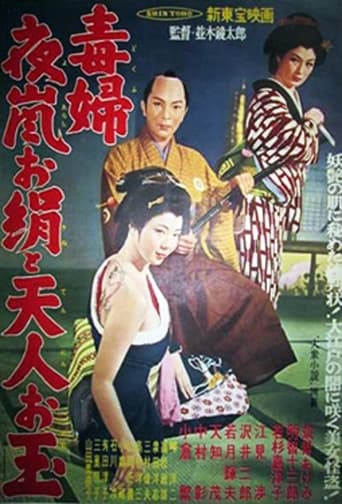
Fictionalized retelling of the life of a Geisha poisoner.
妖婦 夜嵐お絹と天人お玉
1957
 NR
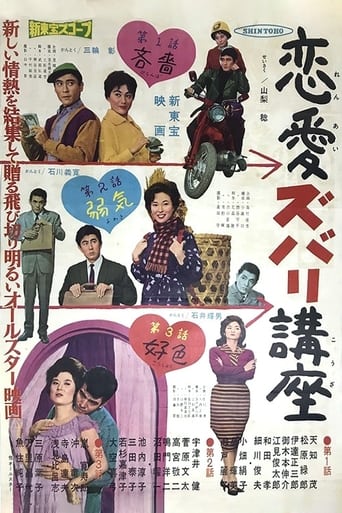
A omnibus movie consisting of the three parts: "Kechinbo", "Yowak" and "Kōshoku".
Straight Talk on Romance: The Definitive Guide
1961
 8.0
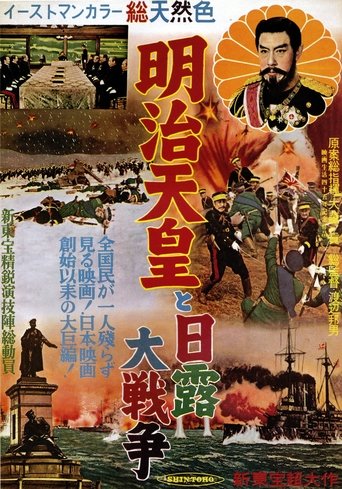
Meiji Tenno portrays the buildup to the Russo-Japan War. In addition to showing the political events that led to war, it also shows the era from the story of a farm family in rural Japan that sends their son off to war. As such, it could be considered an anti-war movie, showing how, while war is devised by governments, the people do not really understand what war is, and its combatants often do not know what they are fighting for.
Emperor Meiji and the Great Russo-Japanese War
1957
No synopsis available yet.
The Road of Love
1954
 5.0
The story is based on the serial novel by Tsunoda Kikuo.
The Seven Changes of a Paper Crane (Part 1)
1941
 NR
No synopsis available yet.
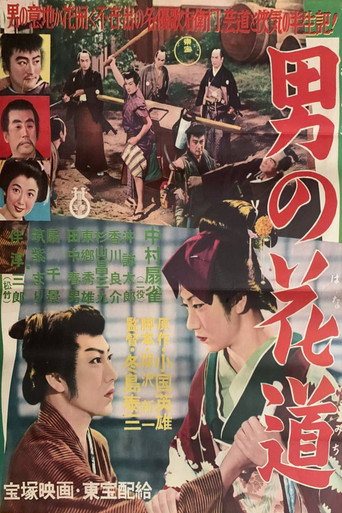
A Man's Flower Path
1956
Film credits
1960s · 12 titles
NRA omnibus movie consisting of the three parts: "Kechinbo", "Yowak" and "Kōshoku".
Straight Talk on Romance: The Definitive Guide
1961
 6.5
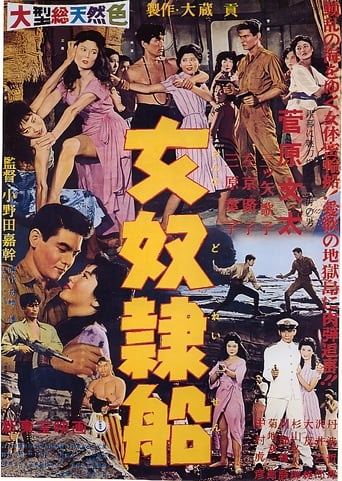
The year is 1945, months prior to Japan's ultimate defeat in WW2, and military lieutenant Sugawa is sent on a critical mission to deliver micro-fiche war plans to Tokyo from his base in Malaysia. But while flying over Chinese waters his plane is shot down and he is taken aboard a ship bound for Shanghai to deliver its merchandise - a ship filled with Female Slaves kidnapped from Japan. Will he abandon the women to pursue his main objective? Or will he fight foes, spies and pirates to save these women against all odds?
Female Slave Ship
1960
 NR
Third and last "Maboroshi tantei" film, based on the manga by Jiro Kuwata.
Maboroshi Tantei: Yûreitô no Daima Jutsudan
1960
 NR
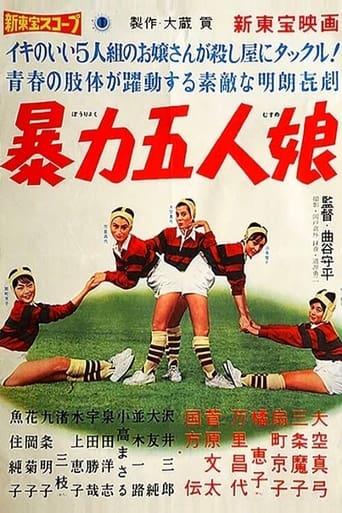
The All Girl's Rugby Team try to keep their private college from falling into the hands of Yakuza and unscrupulous businessmen.
Five Violent Girls
1960
 8.0
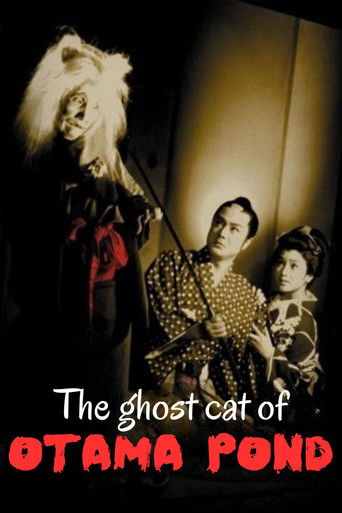
Two lovers lost in the mountains. In what direction do not go, they find themselves in a mysterious forest pond, as if some kind of force does not want to let them go. Once upon a time, over a century ago, there had been a crime, whose shadow still hovers over these places.
The Ghost Cat of Otama Pond
1960
 8.0
No synopsis available yet.
Counterattack of a Queen Bee
1961
 NR
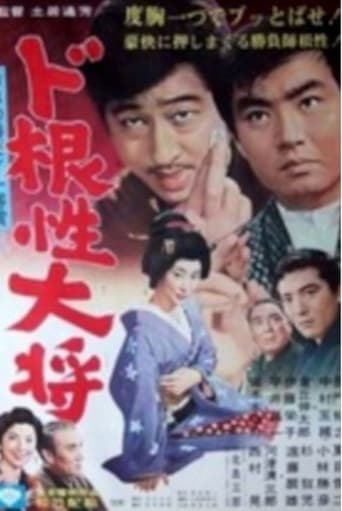
Ryosuke Kotaki's life motto was his grandfather's will, "Study, make money, drink alcohol, and win the first prize". So, first of all, he went to Osaka to win the first prize with favorite shogi. In the car, he hit it off with a woman named Okichi and decided to live in the Shogi Kaisho, which is run by Okichi's father, Yoichi. Ryosuke's skill was strong, and he was happy to make a lot of money in gambling shogi. However, he lost to a middle-aged man by dropping four cards. This man was actually Heihachi Kudo, who is said to be the best of both worlds in the Kansai chess world at the time...
Dokonjo Taisho
1966
 NR
Rumi (Yoko Mihara) and Emi (Masayo Banri) are sisters who dance nightly at the Blue Moon cabaret, which happens be the headquarters of a drug ring. Offstage, Rumi captivates the gang boss, Iwahara (Shuntaro Emi); while Emi attracts the portly club manager, Yajima (Saburo Sawai). Meanwhile their older brother Shinichi (Ryo Kuromaru), a seaman, is unwittingly assisting Iwahara with his drug running. When Shinichi’s ship is sea-jacked by another drug gang, an outraged Iwahara suspects him of treachery and has him beaten and confined in a dungeon-like basement. Rumi and Emi try to free him, but a gang hitman discovers them - and their attempt ends in failure. Now under suspicion themselves, the girls try to escape, but luck goes against them and they are taken to an island where Iwahara and his crew plan to ambush the rival gang.
Cave Queens
1960
 NR
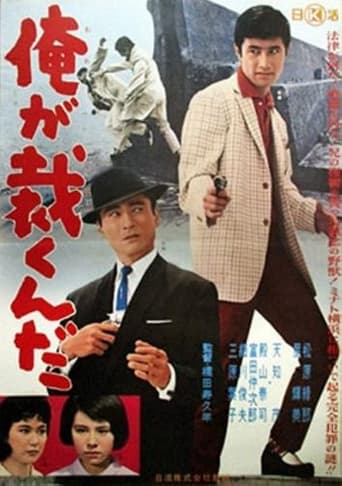
1962 Japanese movie
I am the Judge
1962
 7.4
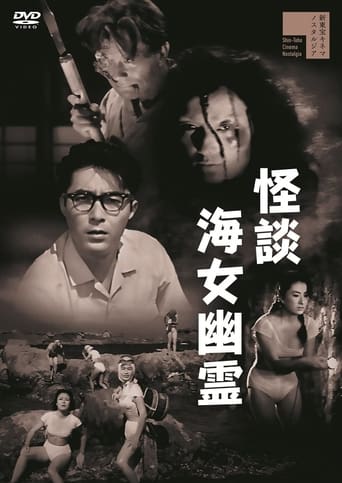
No synopsis available yet.
Ghost of the Pearl Divers
1960
Japanese comedy film.
弥次喜多珍道中 中仙道の巻
1960
 6.0
After the massacre of Christians at Shimabara, followers of Amakusa Shiro band together in a plot to overthrow the shogunate in order to exact revenge on the Tokugawa. At the same time there is a succession dispute in the Kuroda clan, as one faction tried to usurp the rightful heir and take over the honored clan. Before his untimely death, the lord of the Kuroda bestowed “Nihongo”, a magnificent spear, on his finest warrior, which ultimately brings him into contact with two of Japan’s most famous historical figures, Yagyu Jubei and Miyamoto Musashi. Can the three masters of martial art join forces to defeat their enemies and save the nation?
Decisive Battle at Kuroda Castle
1960
1950s · 23 titles
9.0Fictionalized retelling of the life of a Geisha poisoner.
妖婦 夜嵐お絹と天人お玉
1957
8.0Meiji Tenno portrays the buildup to the Russo-Japan War. In addition to showing the political events that led to war, it also shows the era from the story of a farm family in rural Japan that sends their son off to war. As such, it could be considered an anti-war movie, showing how, while war is devised by governments, the people do not really understand what war is, and its combatants often do not know what they are fighting for.
Emperor Meiji and the Great Russo-Japanese War
1957
No synopsis available yet.
The Road of Love
1954
NRNo synopsis available yet.
A Man's Flower Path
1956
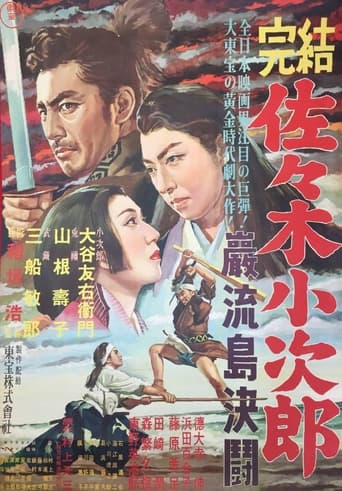 6.0
Director Hiroshi Inagaki's early version of the life and death of famed swordsman Sasaki Kojiro. Otani Tomoemon gives a brilliant performance as Sasaki Kojiro, who rises from humble beginnings to national fame, and a young Toshiro Mifune appears as the legendary master swordsman Miyamoto Musashi for the first time and essentially sets the standard for future portrayals.This masterpiece is based on the original story as written by noted author Murakami Genzo and is far superior to any other versions. Following Kojiro from his earliest days through his fateful meeting with Musashi, this movie is filled with exciting and dramatic moments culminating in the best version of the final duel ever seen on film.
Sasaki Kojiro
1951
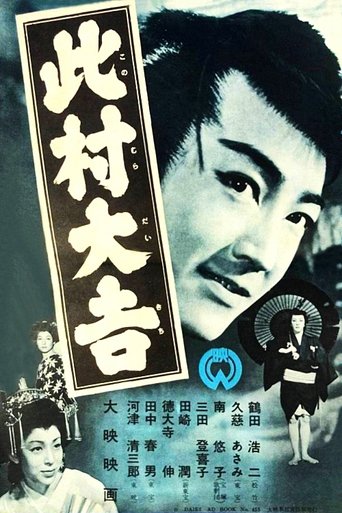 NR
A samurai is struggling to make ends meet at the end of the Edo period. He has students and, among other things, teaches them about the evils of the government. A member of the yakuza thugs has fallen in love with the samurai's daughter and conspires to report the father to the authorities in order to snatch the girl. The samurai's daughter has a boyfriend who hides the father and daughter from the thug.
Daikichi Konomura
1954
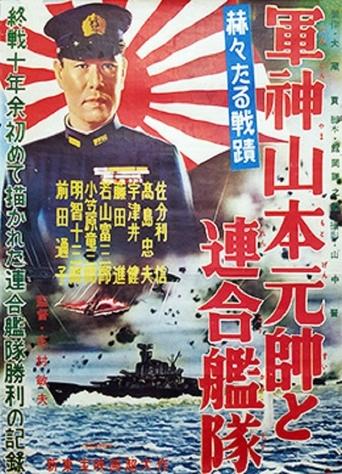 5.0
Admiral Isoroku Yamamoto leads the Combined Fleet of the Imperial Japanese Navy to defeat the American Fleet.
Admiral Yamamoto and the Allied Fleets
1956
Kizaki, an upstart at a trading company has one more assignment for the day before meeting his lovely girlfriend, Natsuki for a date. Little does he know that he's walking straight into a trap set up by his boss, Asanuma and his murderous right hand man. The next day Kizaki finds himself framed for the murder of the company president, and the robbing of the company safe. Natsuki innocently waves goodbye to her loved ones as the boat sails only find herself caught in Asanuma's evil scheming and the object of his lust. In a desperate attempt to escape, she falls to the watery depths. When we next see her she has washed ashore like a siren in the nude on a deserted island inhabited by five castaways who fight each other for her. She learns there's a rich wealth of clams underwater and eventually comes into a large fortune in pearls. Once rescued, she returns to Japan with revenge on her mind.
Revenge of the Pearl Queen
1956
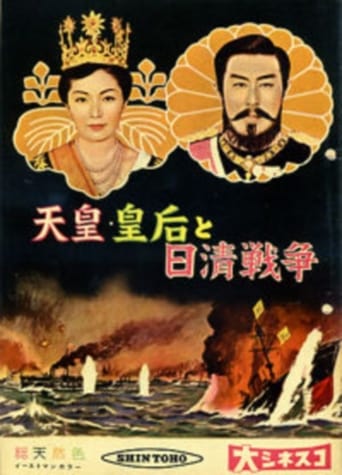 NR
No synopsis available yet.
Emperor & Empress Meiji and the Sino-Japanese War
1958
The film marked Yōko Mihara's debut as the star of Shintoho's series of ama films, a role she took over from Michiko Maeda.
Underwater Murder
1958
 7.7
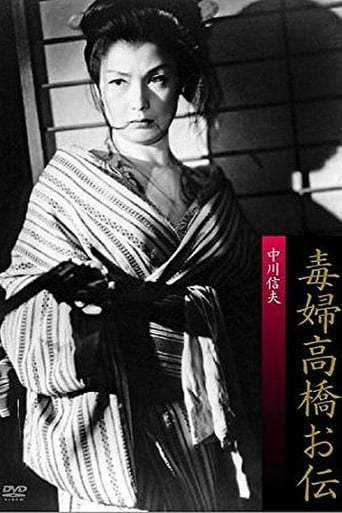
In 1870's Tokyo, Den steals to support the daughter of her first marriage and her consumptive second husband. She falls in love with a young policeman, but is coerced into becoming the mistress of and procurer for a vice boss.
A Wicked Woman
1958
Japanese film, originally released in two parts.
Kyōen Kobanzame
1958
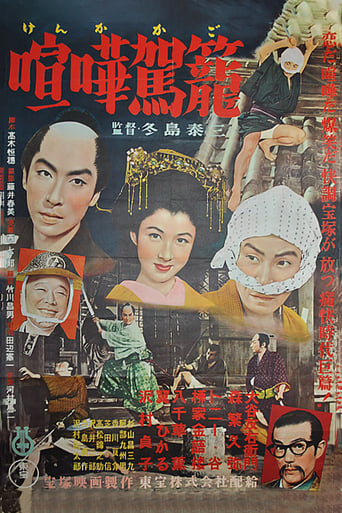
1958 jidaigeki directed by Masaki Mori for Shintoho.
関八州喧嘩陣
1958
 NR
No synopsis available yet.
Princess Finds Her Prince
1953
 NR
Sashichi investigates the mysterious murders of four beauties, all of whom were stabbed in the chest.
Casebook of Dandy Sashichi: Chests Covered In Fresh Blood
1959
Japanese crime film.
Nude Woman and Murder Maze
1959
 NR
20th film adaptation of the novel Ono ga tsumi (published 1900-1901).
Shin ono ga tsumi
1956
Harada Kai, the Date clan's Chamberlain attempts to take power from the lord himself.
Traitors of the Blue Castle
1957
 NR
Famed detective Dandy Sashichi tries to solve who's behind the serial murders of six beautiful women under the aegis of local showman Ibaragiya. The film opens with the sextet humiliating a respected painter's portraits of them, driving the man to a suspicious suicide. Later, while celebrating his son's impending marriage into a wealthy family, Ibaragiya releases six pigeons from a pleasure boat, each with a rolled up drawing of one of the beauties tied to their legs. He offers a cash reward to whomever recovers the pictures, but they instead become death notices of which of the six are next to die.
Casebook of Dandy Sashichi: Six Famous Beauties
1956
 NR
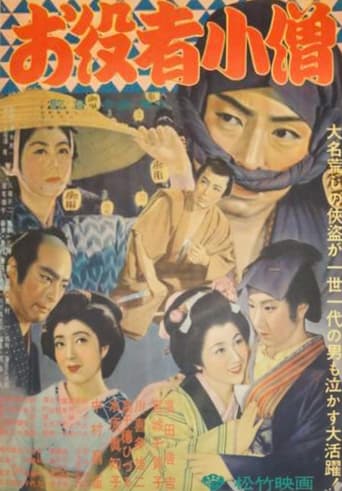
The phantom thief, known as the "Actor Kid", who was creating a stir in the Daimyo's mansion, especially in the inner chambers, was called Inaba Goutaro. He was the adopted son of a samurai, Inaba Buemon. An incident occurred where his foster father collided with the palanquin of the lord's concubine. In the subsequent altercation, Goutaro killed one of the attendants. Taking responsibility for the act, his foster father committed seppuku, and Goutaro was hunted down. Facing death, his foster father revealed to Goutaro that after the death of his biological father, Goutaro's real mother and his younger brother were forcibly made to serve a lord. This revelation ignited Goutaro's determination to infiltrate the Daimyo's mansion to meet his birth mother.
お役者小僧
1953
 8.0
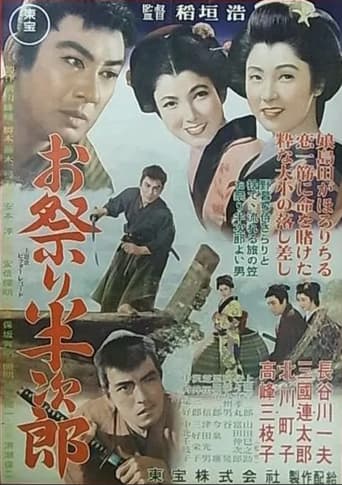
Every year, at the festival, familiar merchants such as Toraemon, a magic trick, Tokubei, a blowgun, Kaji, acrobatics, and Unsaibo, a ritual, gather toward the port town.
Omatsuri hanjiro
1953
Japanese crime film.
No Police
1959
 7.8
A samurai rescues a mischievous tanuki from hunters and sets it free. When the samurai's wastrel son hatches a plot to kill his father for his fortune, the magical tanuki is determined to protect its rescuer.
Ghost Stories of Wanderer at Honjo
1957
1940s · 11 titles
5.0The story is based on the serial novel by Tsunoda Kikuo.
The Seven Changes of a Paper Crane (Part 1)
1941
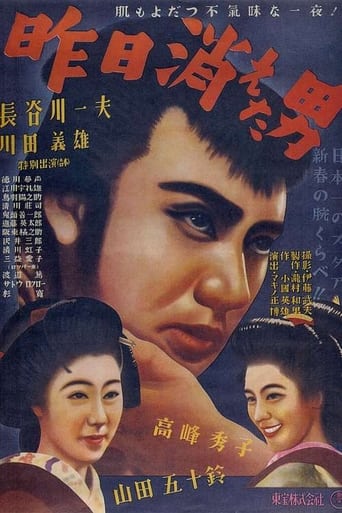 6.5
No synopsis available yet.
The Man Who Disappeared Yesterday
1941
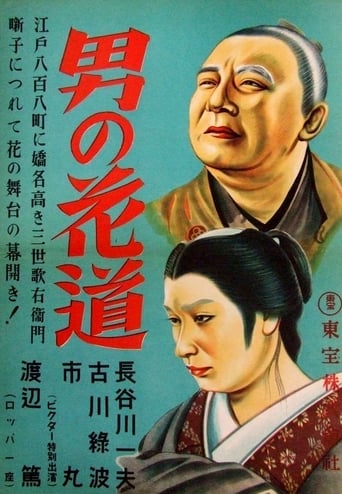 7.0
No synopsis available yet.
A Man's Flower Road of Triumph
1941
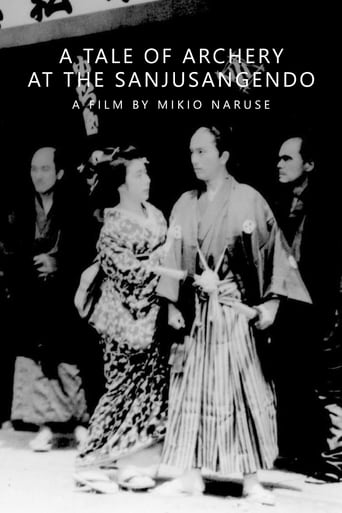 5.9
Young, timid bowmaster Kazuma seeks to beat the archery record set by Hoshino Kanzaemon, a mysterious figure who, it is rumoured, drove the previous champion—Kazuma’s father—to suicide. Possessed of much raw talent, Kazuma is very much a coward, holing up in an inn and generally avoiding confrontation. Despite his best attempts to remain clandestine, the locals know of Kazuma’s purpose and an attempt is made on his life. He's saved by Karatsu Kanbei, a samurai who offers to help Kazuma hone his archery skills, though it becomes clear that this apparently selfless stranger has potentially shady ulterior motives.
A Tale of Archery at the Sanjusangendo
1945
 NR
During the Warring States era, Hozoin Kakuzenbo and Yagyu Tajima-no-kami, being best friends, spend their days acquiring skills of the spear, sword and martial arts. Hozoin loses a series of matches with master swordsman Kozumi Ise-no-kami. Bitterly ashamed, Hozoin embarks on a journey, trying to perfect his skills. A few years later, Hozoin is ready and it's time for the ultimate showdown with Ise-no-kami!
Duel at Yagyu Valley
1945
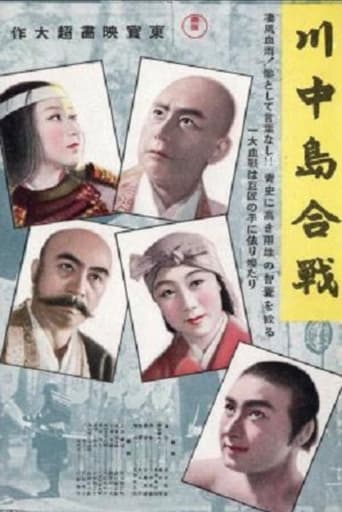 7.0
This epic depicts the battle between Uesugi Kenshin and Takeda Shingen. The focus of the story is the struggle by the unit leader in charge of the main supply wagons and the supply troops to transport materiel to the Uesugi army. To this are added episodes involving an itinerant woman.
The Battle of Kawanakajima
1941
6.0The story is based on the serial novel by Tsunoda Kikuo.
The Seven Changes of a Paper Crane (Part 2)
1941
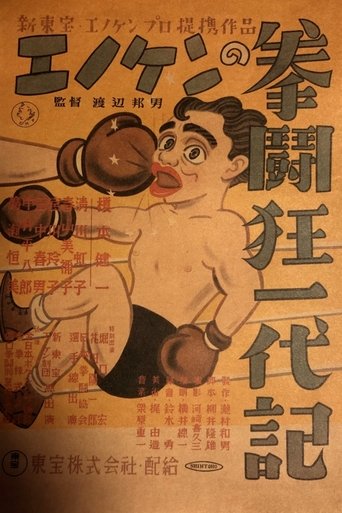 NR
Near the end of the Taisho era (1912-1926), Enokichi, a popular figure in the world of boxing entangled in the Yakuza business.
Enoken’s Boxing Generation
1949
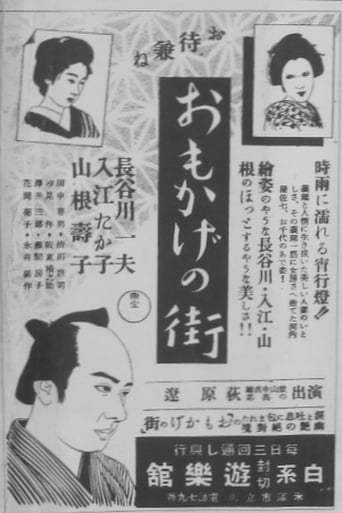 8.0
A 1942 film.
Omokage no machi
1942
 NR
No synopsis available yet.
娘十八嘘つき時代
1949
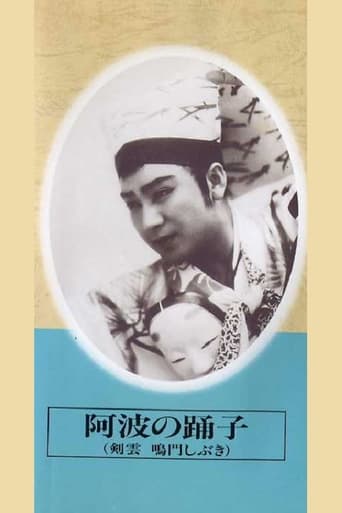 7.0
Jurobei, a kaisen tonya (wholesaler in port) in Awa, was wronged and killed on the day of the Dance Festival by the evil merchant & the chamberlin. His brother (Kazuo Hasegawa) vowed vengeance on the day of his brother's death. So every year the villains are worried during the Awa Dance Festival (which is part of the Obon festival), but nothing has ever happened, until seven years later...
Dancers of Awa
1941
1930s · 12 titles
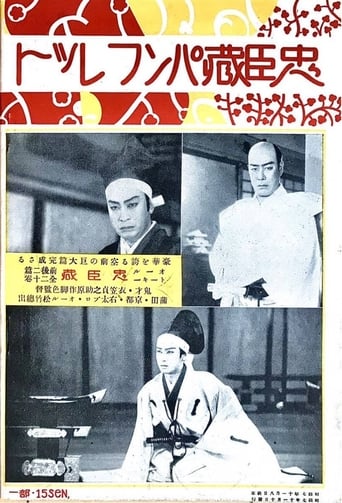 10.0
No synopsis available yet.
Chûshingura - Zempen: Akahokyô no maki
1932
 5.6
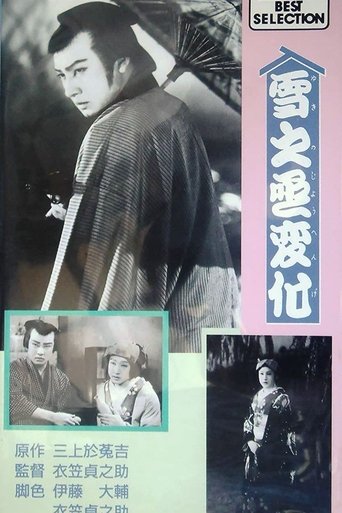
An onnagata (female impersonator) of a Kabuki troupe avenges his parents' deaths. Remade in 1963 as Yukinojô Henge.
An Actor's Revenge
1935
 NR
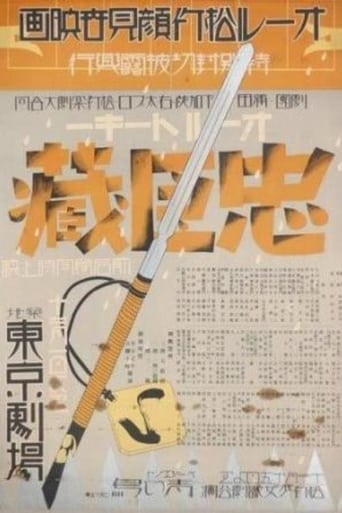
This 1932 adaptation is the earliest sound version of the ever-popular and much-filmed Chushingura story of the loyal 47 retainers who avenged their feudal lord after he was obliged to commit hara-kiri due to the machinations of a villainous courtier. As the first sound version of the classic narrative, the film was something of an event, and employed a stellar cast, who give a roster of memorable performances. Director Teinosuke Kinugasa was primarily a specialist in jidai-geki (period films), such as the internationally celebrated Gate of Hell (Jigokumon, 1953), and although he is now most famous as the maker of the avant-garde silent films A Page of Madness (Kurutta ichipeji, 1926) and Crossroads (Jujiro, 1928), Chushingura is in fact more typical of his output than those experimental works. The film ranked third in that year’s Kinema Junpo critics’ poll, and Joseph Anderson and Donald Richie noted that 'not only the sound but the quick cutting was admired by many critics.
The Loyal 47 Ronin
1932
My Daughter's Only Wish tells the story of a poorly paid and clumsy office clerk, played with much comedic talent by Atsushi Watanabe. His biggest problem: His daughter Hideko is too clever and is expected by her teachers to enter the school for higher girls after graduating from primary school. But how is our poor clerk supposed to pay the school fees? How does poor Hideko feel about the situation? How can they cope with the envious colleagues who have less brighter daughters? And - an important question for Hideko's mother - what will the neighbours think? What's the point about getting a good education for girls anyway?
My Daughter's Only Wish
1939
No synopsis available yet.
Yukinojō henge, Kanketsu-hen
1936
The legendary ninja Kurama Tengu (Enoken) uses his superhuman powers to help free a band of street urchins from their Fagin-like master. The film's incredible climax, when Enoken fends off dozens of men attacking with ladders and handcarts, brings to mind a slightly less dextrous Jackie Chan.
Enoken's Kurama Tengu
1939
Japanese film.
Nangoku taiheiki
1937
 NR
Set against the 1877 Satsuma Rebellion, two Osaka families navigate the radical social shifts of the early Meiji Era. As the merchant class ascends to economic prominence, the former samurai class faces a steady decline in status and traditional structure.
Old Songs
1939
 7.0
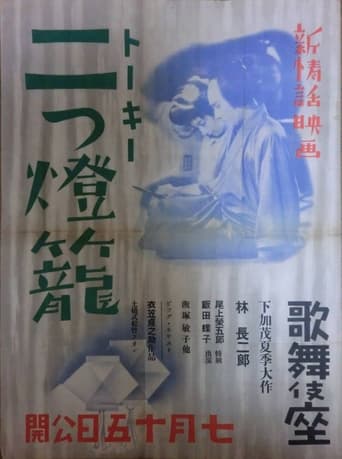
A mournful masterpiece by Kinugasa Teinosuke
Two Lanterns
1933
 7.0
Okiyo runs a restaurant in Asakusa. She struggles with the times and the relationships around her.
Yoru no hato
1937
 NR
Kichigoro, a firefighter from the Maeda family of the Kaga Principality, rescues Oshimo, the younger sister of Jirokichi, a city firefighter from the Ha-gumi group, from a samurai who is trying to kidnap her. Oshimo has feelings for Kichigoro. At this moment, a fire warning bell sounds in the city...
The Fighting Firemen
1939
 5.0
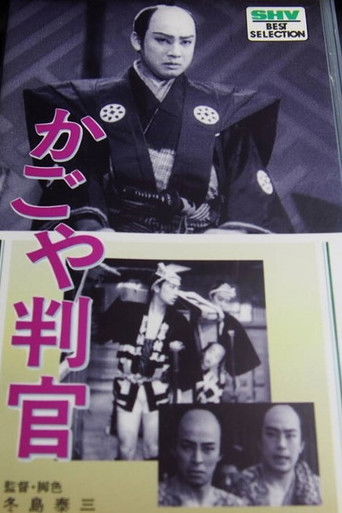
Two cowardly palanquin carriers know the culprit of a murder, but are too scared to report it to the police. In the meantime, an innocent man is arrested as the murderer and chaos ensues.
The Palanquin Carrier Magistrate
1935