
Directing
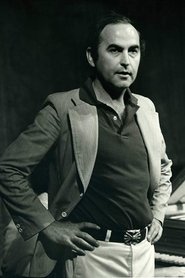
Michael Blackwood
Known for
Directing
Credits
40 titles
Michael Blackwood Productions is an independent production company that has produced over 150 documentaries on the arts and its contributors, with a focus on architecture and architects, art and artists, dance and choreographers, and music and composers. The collection features over 1,000 participants or subjects, and spans over six decades of documentation, beginning in the 1960s and including earlier material, through the second decade of the 21st Century. The films serve as primary documents for educational and archival purposes, as well as informative and special interest pieces for the general public. A growing number of educational institutions, libraries, museums and various media out…
Known for
 9.0
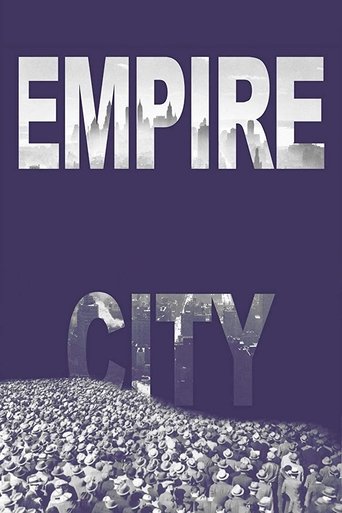
9.0A film essay contrasting the modern metropolis with its "golden age" from 1830-1930, with the participation of some of New York's leading political and cultural figures. Made at a time when the city was experiencing unprecedented real estate development on the one hand and unforeseen displacement of population and deterioration on the other. Empire City is the story of two New Yorks. The film explores the precarious coexistence of the service-based midtown Manhattan corporate headquarters with the peripheral New York of undereducated minorities living in increasing alienation.
Empire City
1985
 NR
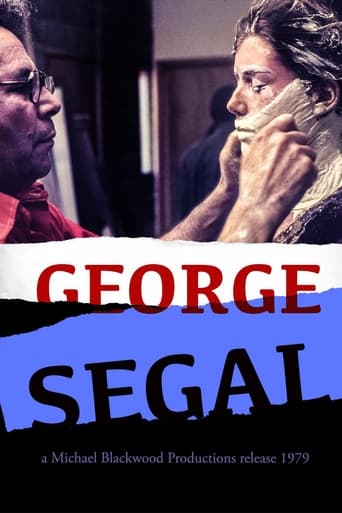
NRGeorge Segal constructs a type of human form and vulnerability that feels rare in the world of sculpture. As we follow his process at the isolated New Jersey farmhouse that serves as his studio, the intimacy between Segal and his art is contagious. He casts people who he knows, respects and admires, making the final outcome of the piece seep with personality and humanity. Segal is focused on creating a mold that does not necessarily subscribe to society’s notion of beauty. Originally released in 1979.
George Segal
2016
 NR
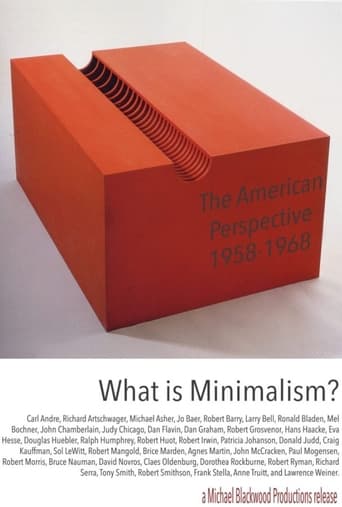
NRFeaturing notable Minimalist artists such as Bride Marden, Claes Oldenburg, and Donald Judd, What is Minimalism: The American Perspective 1958-1968 explores the movement during an explorative exhibit at the Museum of Contemporary Arts in Los Angeles. Exhibition curator, Ann Goldstein, walks us through multiple rooms of the exhibit and offers her insight on Minimalism and its role in our society, stating that "It marked a fundamental, and critical and pivotal and irrevocable change in the course of art history," (Ann Goldstein). This film observes and analyzes the compelling creative choices behind some of the featured artists most applauded works of art.
What is Minimalism? : The American Perspective 1958-1968
2004
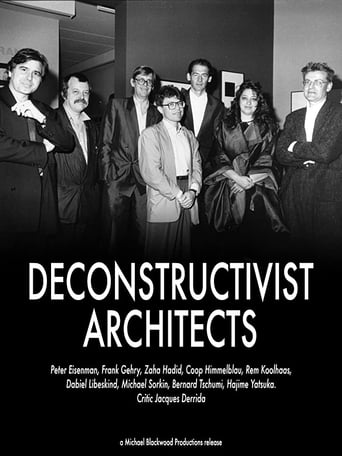 NR
NRBy the end of the 1980's a new architectural sensibility challenged the prevailing post-Modern attitude and brought forth new and daring designs. Driven by the philosophy and theory of Jacques Derrida, the architects of Deconstructivism are rooted in a movement that urges us to examine the space we move through. Deconstructivist Architects documents explosive and seemingly chaotic structures from Vienna to L.A., and interviews those who pursue its aesthetic issues. Filmed on location with the architects and at the Museum of Modern Art's exhibition Deconstructivist Architecture, which was curated by Philip Johnson.
Deconstructivist Architects
1990
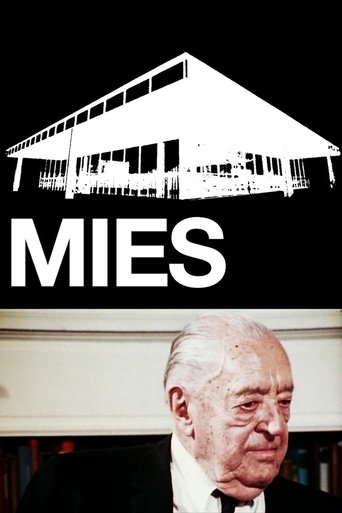 NR
NRNo understanding of the modern movement in architecture is possible without knowledge of its master builder, Mies van der Rohe. Together with documentation of his life, this film shows all his major buildings, as well as rare film footage of Mies explaining his philosophy. Phyllis Lambert relates her choice of Mies as the architect for the Seagram building. Mies's achievements and continuing influence are debated by architects Robert A.M. Stern, Robert Venturi, and Philip Johnson, by former students and by architectural historians. Mies is seen in rare documentary footage.
Mies
1986
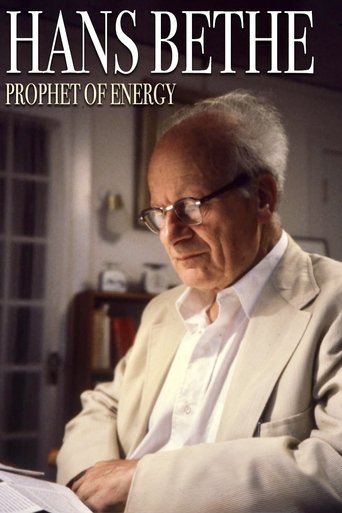 NR
NRA portrait of the eminent Nobel Prize winning physicist who greatly advanced our knowledge of the atom. Bethe discusses the milestones of his career: his student work in Germany, his flight from the Nazis, his work on the Los Alamos Atomic Bomb project under Robert Oppenheimer, and his research on the energy production in stars. In working to help solve the energy crisis of the 1970’s, Bethe established himself as one of the country’s leading spokesmen for a safe way to use nuclear energy. Speaking in support of a sensible use, he represents a side of this controversial issue that deserves more attention. The film provides crucial insight into this complex issue by one of the world’s authorities.
Hans Bethe꞉ Prophet of Energy
1980
Behind the camera
9.0A film essay contrasting the modern metropolis with its "golden age" from 1830-1930, with the participation of some of New York's leading political and cultural figures. Made at a time when the city was experiencing unprecedented real estate development on the one hand and unforeseen displacement of population and deterioration on the other. Empire City is the story of two New Yorks. The film explores the precarious coexistence of the service-based midtown Manhattan corporate headquarters with the peripheral New York of undereducated minorities living in increasing alienation.
Empire City
1985
9.0A film essay contrasting the modern metropolis with its "golden age" from 1830-1930, with the participation of some of New York's leading political and cultural figures. Made at a time when the city was experiencing unprecedented real estate development on the one hand and unforeseen displacement of population and deterioration on the other. Empire City is the story of two New Yorks. The film explores the precarious coexistence of the service-based midtown Manhattan corporate headquarters with the peripheral New York of undereducated minorities living in increasing alienation.
Empire City
1985
NRGeorge Segal constructs a type of human form and vulnerability that feels rare in the world of sculpture. As we follow his process at the isolated New Jersey farmhouse that serves as his studio, the intimacy between Segal and his art is contagious. He casts people who he knows, respects and admires, making the final outcome of the piece seep with personality and humanity. Segal is focused on creating a mold that does not necessarily subscribe to society’s notion of beauty. Originally released in 1979.
George Segal
2016
NRGeorge Segal constructs a type of human form and vulnerability that feels rare in the world of sculpture. As we follow his process at the isolated New Jersey farmhouse that serves as his studio, the intimacy between Segal and his art is contagious. He casts people who he knows, respects and admires, making the final outcome of the piece seep with personality and humanity. Segal is focused on creating a mold that does not necessarily subscribe to society’s notion of beauty. Originally released in 1979.
George Segal
2016
NRFeaturing notable Minimalist artists such as Bride Marden, Claes Oldenburg, and Donald Judd, What is Minimalism: The American Perspective 1958-1968 explores the movement during an explorative exhibit at the Museum of Contemporary Arts in Los Angeles. Exhibition curator, Ann Goldstein, walks us through multiple rooms of the exhibit and offers her insight on Minimalism and its role in our society, stating that "It marked a fundamental, and critical and pivotal and irrevocable change in the course of art history," (Ann Goldstein). This film observes and analyzes the compelling creative choices behind some of the featured artists most applauded works of art.
What is Minimalism? : The American Perspective 1958-1968
2004
NRBy the end of the 1980's a new architectural sensibility challenged the prevailing post-Modern attitude and brought forth new and daring designs. Driven by the philosophy and theory of Jacques Derrida, the architects of Deconstructivism are rooted in a movement that urges us to examine the space we move through. Deconstructivist Architects documents explosive and seemingly chaotic structures from Vienna to L.A., and interviews those who pursue its aesthetic issues. Filmed on location with the architects and at the Museum of Modern Art's exhibition Deconstructivist Architecture, which was curated by Philip Johnson.
Deconstructivist Architects
1990
NRNo understanding of the modern movement in architecture is possible without knowledge of its master builder, Mies van der Rohe. Together with documentation of his life, this film shows all his major buildings, as well as rare film footage of Mies explaining his philosophy. Phyllis Lambert relates her choice of Mies as the architect for the Seagram building. Mies's achievements and continuing influence are debated by architects Robert A.M. Stern, Robert Venturi, and Philip Johnson, by former students and by architectural historians. Mies is seen in rare documentary footage.
Mies
1986
NRNo understanding of the modern movement in architecture is possible without knowledge of its master builder, Mies van der Rohe. Together with documentation of his life, this film shows all his major buildings, as well as rare film footage of Mies explaining his philosophy. Phyllis Lambert relates her choice of Mies as the architect for the Seagram building. Mies's achievements and continuing influence are debated by architects Robert A.M. Stern, Robert Venturi, and Philip Johnson, by former students and by architectural historians. Mies is seen in rare documentary footage.
Mies
1986
NRA portrait of the eminent Nobel Prize winning physicist who greatly advanced our knowledge of the atom. Bethe discusses the milestones of his career: his student work in Germany, his flight from the Nazis, his work on the Los Alamos Atomic Bomb project under Robert Oppenheimer, and his research on the energy production in stars. In working to help solve the energy crisis of the 1970’s, Bethe established himself as one of the country’s leading spokesmen for a safe way to use nuclear energy. Speaking in support of a sensible use, he represents a side of this controversial issue that deserves more attention. The film provides crucial insight into this complex issue by one of the world’s authorities.
Hans Bethe꞉ Prophet of Energy
1980
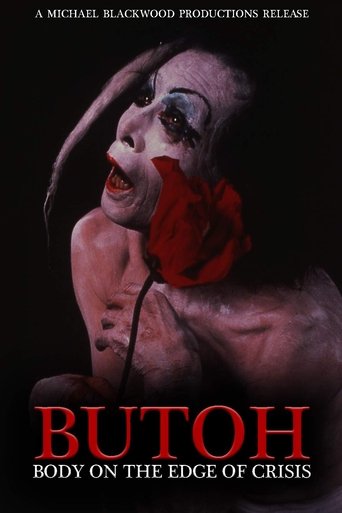 8.0
8.0"Butoh: Body on the Edge of Crisis" is a visually striking film portrait shot on location in Japan with the participation of the major Butoh choreographers and their companies. Although Butoh is often viewed as Japan's equivalent of modern dance, in actuality it has little to do with the rational principles of modernism. Butoh is a theater of improvisation which places the personal experiences of the dancer on center-stage. By reestablishing the ancient Japanese connection of dance, music, and masks, and by recalling the Buddhist death dances of rural Japan, Butoh incorporates much traditional theater. At the same time, it is a movement of resistance against the abandonment of traditional culture to a highly organized consumer-oriented society.
Butoh: Body on the Edge of Crisis
1990
8.0"Butoh: Body on the Edge of Crisis" is a visually striking film portrait shot on location in Japan with the participation of the major Butoh choreographers and their companies. Although Butoh is often viewed as Japan's equivalent of modern dance, in actuality it has little to do with the rational principles of modernism. Butoh is a theater of improvisation which places the personal experiences of the dancer on center-stage. By reestablishing the ancient Japanese connection of dance, music, and masks, and by recalling the Buddhist death dances of rural Japan, Butoh incorporates much traditional theater. At the same time, it is a movement of resistance against the abandonment of traditional culture to a highly organized consumer-oriented society.
Butoh: Body on the Edge of Crisis
1990
 7.0
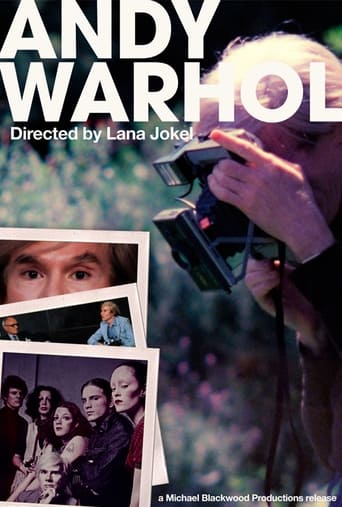
7.0With a rambling, unstructured style that echoes Andy Warhol’s own approach to filmmaking, this documentary profiles his career, showing him to be a brilliant manipulator, dedicated voyeur and person of astute commercial judgment.
Andy Warhol
1972
 9.5
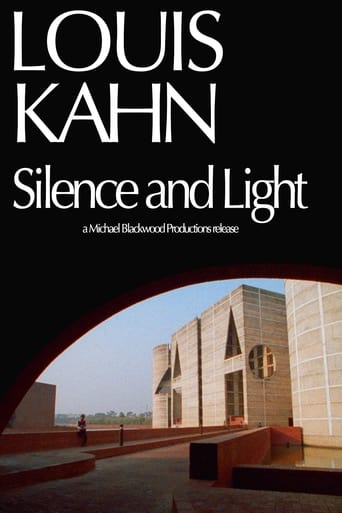
9.5As an architect, educator, and philosopher, Louis Kahn played a prominent role in the history of 20th century architecture. An examination of six of his most significant buildings: The Salk Institute; the Kimbell Art Museum; the Center for British Art; the library at Philips Exeter Academy; the Indian Institute of Management; and the Parliament Buildings of Bangladesh.
Louis Kahn: Silence and Light
1996
 NR
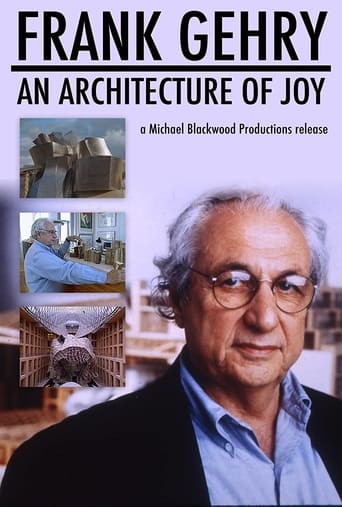
NR"Frank Gehry: An Architecture of Joy" illustrates the unique intertwining of art and architecture throughout Gehry's spectacularly eclectic career. In this portrait, Gehry explores his work of the 1990's including The Guggenheim Museum in Bilbao and the Frederick R. Weisman Museum in Minneapolis, as well as his first European commission, the EMR Communication and Technology Center in Bad Oeynhausen, Germany. Seeing himself as an artist first, Gehry discusses his early relationships in the art world and how sculpture, painting and small scale work has influenced his architectural style. Like Rauschenberg, Johns, and Warhol, he has introduced "bad taste" into his concepts, while keeping himself outside of the contemporary dialogue between modernism and post-modernism. He has translated the vocabulary of contemporary art into an architectural language of his own, disobeying the rules of his profession and questioning its historic conventions.
Frank Gehry: An Architecture of Joy
2000
 NR
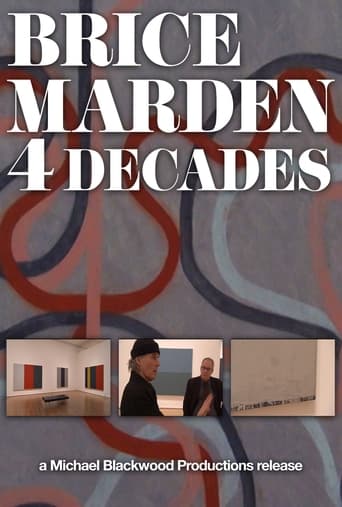
NR"Brice Marden: 4 Decades" follows the renowned abstract artist as he explores his acclaimed 2006 MoMA retrospective with curator Gary Garrels. Applauded for his bold and contemporary style, Marden speaks openly with Garrels about his approach, beginnings and influences. His fluid and colorful works demand attention but welcome the viewer to choose their own path within the painting itself. Marden's career is mapped out through a tour of the exhibition, as he and Garrels discuss key works of the last forty years.
Brice Marden: 4 Decades
2006
 8.0
8.0A film consisting of seven episodes directed by young West German filmmakers, some of whom were signatories of the famous Oberhausen Manifesto. The film focuses on the sometimes highly dramatic fates of young girls.
Hütet eure Töchter!
1964
 NR
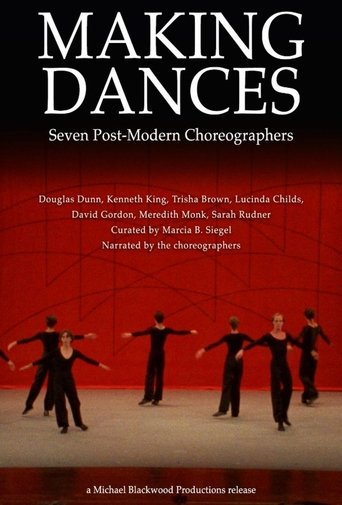
NRMade in 1980, this film explores the contemporary dance scene through the work of seven New York-based choreographers. They discuss the nature of dance and the evolution of their own work. Filmed at rehearsals, performances, and during interviews, the film is a unique primary source. The artistic roots of these seven artists can be found in Martha Graham's concern with modern life as a subject for dance and in Merce Cunningham's emphasis on the nature of movement. In the 1960s, the interaction of art forms generated choreographic innovations. Especially influential was John Cage, whose radical ideas served as a point of departure for much of the new choreography. Each of the choreographers in Making Dances draws inspiration from the Graham/Cunningham tradition, yet each makes a highly distinctive statement. Structure, movement in non-fictive time and space, and the nature of movement itself are recurring themes.
Making Dances: Seven Post-Modern Choreographers
1980
NRMade in 1980, this film explores the contemporary dance scene through the work of seven New York-based choreographers. They discuss the nature of dance and the evolution of their own work. Filmed at rehearsals, performances, and during interviews, the film is a unique primary source. The artistic roots of these seven artists can be found in Martha Graham's concern with modern life as a subject for dance and in Merce Cunningham's emphasis on the nature of movement. In the 1960s, the interaction of art forms generated choreographic innovations. Especially influential was John Cage, whose radical ideas served as a point of departure for much of the new choreography. Each of the choreographers in Making Dances draws inspiration from the Graham/Cunningham tradition, yet each makes a highly distinctive statement. Structure, movement in non-fictive time and space, and the nature of movement itself are recurring themes.
Making Dances: Seven Post-Modern Choreographers
1980
 NR
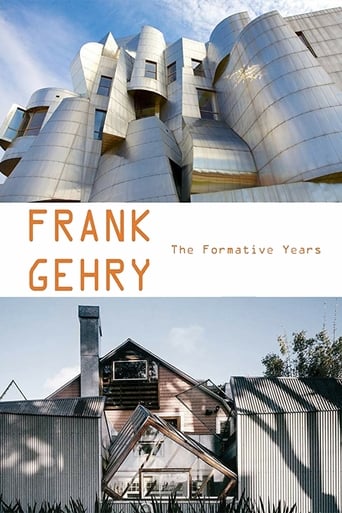
NRNarrated by the architect himself, Frank Gehry: The Formative Years explores his long standing career and unique eye. The film looks at a number of Gehry's projects from private homes to complex public institutions, all of which echo his experimental style and vision. Works such as The Norton House, The Aerospace Museum and Loyola Law School demonstrate Gehry's eccentric and distinctive touch. The Formative Years is a survey of his beginnings when Gehry experimented with his own house in Santa Monica, giving him notoriety in the architecture scene.
Frank Gehry: The Formative Years
1988
 NR
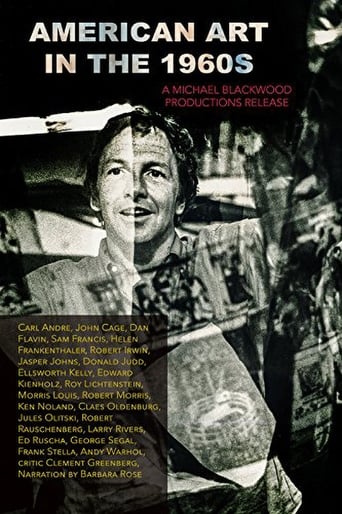
NRDuring this critical decade in American life, artists built on the styles of the 1950s. An explosion of artistic energy produced Pop Art, Minimalism, color-field painting, and hard-edged abstraction. Sculptors and painters on both coasts explored new methods and new subject matter. American Art in the Sixties examines the key figures of that decade including Rauschenberg and Johns, two crucial transitional figures between Abstract Expressionism and the sensibilities of the new decade. The art of that time mirrors the optimism and the affluence, and the technology and the vulgarity of those boom years.
American Art in the 1960s
1972
 NR
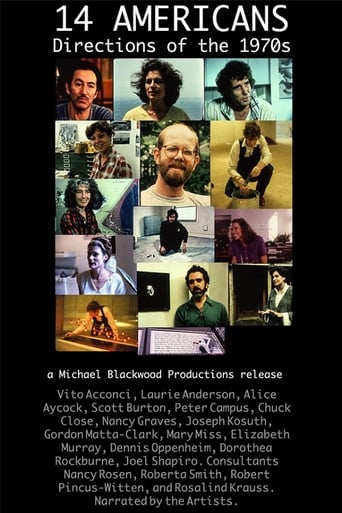
NRThe multiple means of making art after the end of illusionism led these artists to create performances, sculptures, earthworks, tableaux, furniture, shaped canvases, and more, using unusual materials. They explore the process of making forms and giving meanings to those forms. In this idea art, their focus is as often social and psychological as artistic. Some of their activities enlist engineering and construction techniques, others compose texts or scripts that are central to their art. Some cast the viewer in the role of a spectator, while the others demand active participation. The sources for their concepts and art works are equally diverse; the delicate proportions and balance of Early Renaissance painting, the exploration of the surface of the moon, the structure and inventions of vernacular architects, to name only a few.
14 Americans: Directions of the 1970s
1981
 NR
NRBeginning with their small wrapped objects of 1958, this portrait examines the continuously bold and ambitious artistic ventures of the enigmatic duo, CHRISTO AND JEANNE-CLAUDE. Though their large scale environmental projects, such as Running Fence and Wrapped Coast, are often met with distress and concern from the surrounding community, perceptions of the project are likely to shift when it comes time to interact with the grand, finished piece. Neither permanent nor purchasable, Christo and Jeanne-Claude’s works exude the essence of freedom and exist only for the sake of existing.
Christo and Jeanne-Claude: A Environmental Art Duo
1995
 NR
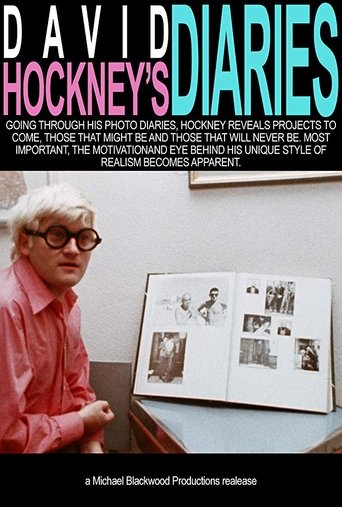
NRRenowned English painter, David Hockney, takes us on a visual journey as he shares with us his treasured photo diaries. Consisting of polaroids Hockney has been collecting since 1967, the diaries act as both a tribute and an artist's notebook, often times including images the painter used for his large canvas works. A fine example of Hockney's pictorial inspiration are several photographs of castles he took during a boat trip down the Rhine that were later adapted for a suite of etchings to accompany six Grimm's fairy tales. Seeing his projects long before the work begins, Hockney used his camera to slow time and capture images that would go on to boast his unique style of realism. In David Hockney's Diaries the artist is seen at work on a large canvas of his friends Celia and Ossie Clark and their cat Percy, commissioned by the Tate Gallery.
David Hockney's Diaries
1970
 NR
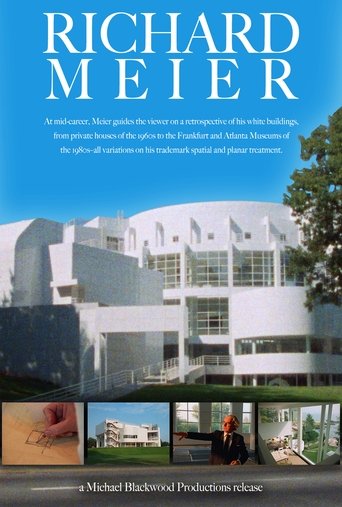
NRMeier guides the viewer on a retrospective of his white buildings, from private houses of the 1960s to the Frankfurt and Atlanta Museums of the 1980s--all variations on his trademark spatial and planar treatment. His influences from Corbusier, Wright, Mies, and Baroque Germany are shown. Clients and colleagues offer opinions.
Richard Meier
1986
 NR
NRJasper Johns’s Decoy is rooted inside the notions of reproduction, transformation and memory. Believing that an image gains new meaning each time it is presented, Johns boldly confronts his own past work, most notably Ale Cans (1964), and uses Decoy as a method of metamorphosis. The repetition of certain motifs allows both Johns and his spectators to confront the change an image goes through when approached from a different angle or placed in a new artistic context. As noted in the film, “each time a motif is used and reused additional memories accrue, new layers of meaning, and the image itself begins to acquire its own history.” (Jasper Johns) It is through Johns’s reimagining that the items he features in his work take on new life and grow from object to art, thus redirecting society’s interpretation.
Jasper Johns: Decoy
1973
NRJasper Johns’s Decoy is rooted inside the notions of reproduction, transformation and memory. Believing that an image gains new meaning each time it is presented, Johns boldly confronts his own past work, most notably Ale Cans (1964), and uses Decoy as a method of metamorphosis. The repetition of certain motifs allows both Johns and his spectators to confront the change an image goes through when approached from a different angle or placed in a new artistic context. As noted in the film, “each time a motif is used and reused additional memories accrue, new layers of meaning, and the image itself begins to acquire its own history.” (Jasper Johns) It is through Johns’s reimagining that the items he features in his work take on new life and grow from object to art, thus redirecting society’s interpretation.
Jasper Johns: Decoy
1973
 10.0
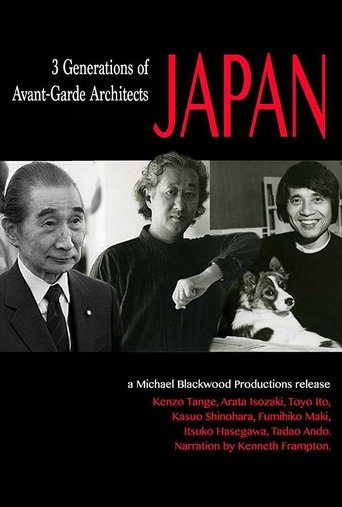
10.0Japan's establishment as an economic superpower led to a Golden Age of Japanese architecture. Six innovators stand out particularly, fusing Japanese traditions with modern materials and technology.
Japan: 3 Generations of Avant-Garde Architects
1989
10.0Japan's establishment as an economic superpower led to a Golden Age of Japanese architecture. Six innovators stand out particularly, fusing Japanese traditions with modern materials and technology.
Japan: 3 Generations of Avant-Garde Architects
1989
 NR
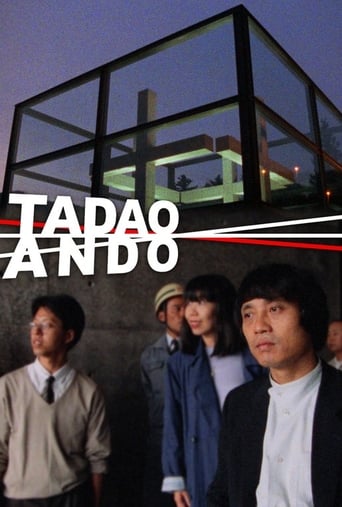
NRTadao Ando, a self-taught architect, proposes an international architecture that he believes can only be conceived by someone Japanese. His architecture mixes Piranesian drama with contemplative spaces in urban complexes, residences and chapels. This film presents the formative years of his impressive career before he embarked on projects in Europe and the United States.
Tadao Ando
1988
NRTadao Ando, a self-taught architect, proposes an international architecture that he believes can only be conceived by someone Japanese. His architecture mixes Piranesian drama with contemplative spaces in urban complexes, residences and chapels. This film presents the formative years of his impressive career before he embarked on projects in Europe and the United States.
Tadao Ando
1988
 NR
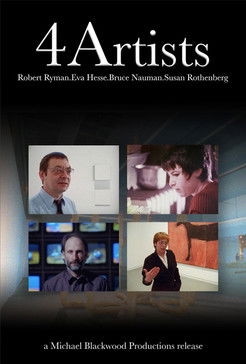
NR4 Artists: Robert Ryman, Eva Hesse, Bruce Nauman, Susan Rothenberg acts as a collective portrait of creators linked only by their stated intention of expressing ideas through art. Unconnected to traditional concepts of beauty, storytelling or pictorial representation, the artists discuss the context of their art and how their work and the public's perception of it have changed over time. This film offers the rare opportunity to see a large body of work in their studios.—Michael Blackwood Productions
4 Artists: Robert Ryman, Eva Hesse, Bruce Nauman, Susan Rothenberg
1988
NR4 Artists: Robert Ryman, Eva Hesse, Bruce Nauman, Susan Rothenberg acts as a collective portrait of creators linked only by their stated intention of expressing ideas through art. Unconnected to traditional concepts of beauty, storytelling or pictorial representation, the artists discuss the context of their art and how their work and the public's perception of it have changed over time. This film offers the rare opportunity to see a large body of work in their studios.—Michael Blackwood Productions
4 Artists: Robert Ryman, Eva Hesse, Bruce Nauman, Susan Rothenberg
1988
 NR
NRMotherwell/Alberti explores the artistic connection between Robert Motherwell's Open Series and Rafael Alberti's poetry cycle, A La Pintura. Infatuated with Alberti's text, Motherwell uses his words as the subject for his first venture into aquatints at Tatyana Grosman's printmaking workshop. Historic footage shows Alberti, the last member of the Garcia Lorca generation, reading his poetry aloud. His poetic themes voice an homage to painting, which Motherwell's set of abstract "windows" delicately complements.
Motherwell/Alberti
1984
 3.8
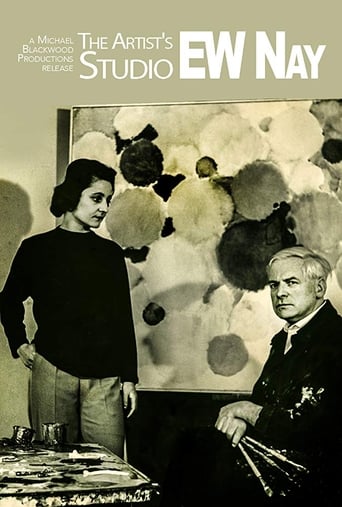
3.8A visit to the studio of Ernst Wilhelm Nay, a remarkable, if somewhat solitary German artist, who established his status at age 30, just before the advent of the Nazi takeover. Nay belonged to the persecuted generation of German artists who, just as their work began to blossom, were forced out by Hitler's art dictatorship. Labeling the art "decadent", the Hitler regime called for the removal of Nay's paintings from museum collections and the artist was banned from showcasing his new work. After the end of World War II, Nay returned to painting and worked tirelessly to make up for lost time, producing new pieces year after year and quickly becoming one of Germany's leading painters. Ernst Wilhelm Nay died in 1968 at the age of 65 yet his studio, still intact, offers a retrospective of his work starting from the 1920s. His wife, Elisabeth Nay walks us through the studio, offering insights into her husband's process and creative intent.
The Artist's Studio: E.W. NAY
2012
3.8A visit to the studio of Ernst Wilhelm Nay, a remarkable, if somewhat solitary German artist, who established his status at age 30, just before the advent of the Nazi takeover. Nay belonged to the persecuted generation of German artists who, just as their work began to blossom, were forced out by Hitler's art dictatorship. Labeling the art "decadent", the Hitler regime called for the removal of Nay's paintings from museum collections and the artist was banned from showcasing his new work. After the end of World War II, Nay returned to painting and worked tirelessly to make up for lost time, producing new pieces year after year and quickly becoming one of Germany's leading painters. Ernst Wilhelm Nay died in 1968 at the age of 65 yet his studio, still intact, offers a retrospective of his work starting from the 1920s. His wife, Elisabeth Nay walks us through the studio, offering insights into her husband's process and creative intent.
The Artist's Studio: E.W. NAY
2012
 NR
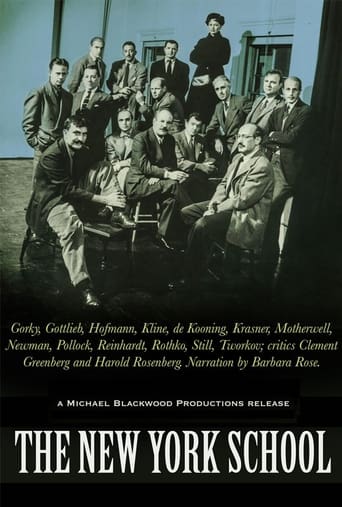
NRThe band of American artists known as the New York School toyed with tradition and rebelled against the Renaissance.Feeling as though free association yielded their best results, the painters, poets and performers of the New York School took a surrealist approach that was concerned less with aesthetic and more with expression. Those associated with the School were unified by their desire to create from within. They created a monumental, dramatic art that remains a singular expression of the crucial modern quest for individuality and personal freedom." Never knowing exactly how their pieces would turn out, the artists of the New York School embraced their own complex humanity and worked from a place of bold, sporadic realness.
The New York School
1972
 NR
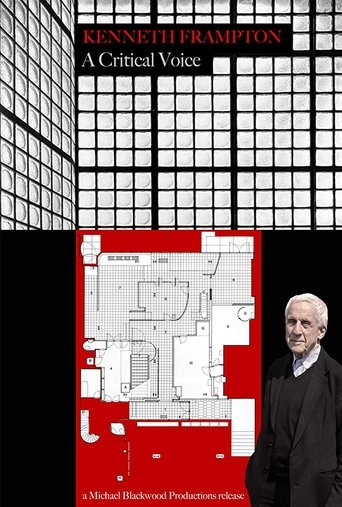
NRCritic Kenneth Frampton is a masterful commentator on the architecture of our time. At the start of his long-spanning career Frampton worked as an architect in London before settling into his writing and teaching, which mainly took place at Columbia University. Over the past fifty years Frampton has certified himself as a prolific and influential contributor towards a progressive interpretation of the role of architecture in modern society. In "Kenneth Frampton: A Critical Voice", architect Stan Allen interviews the renowned critic and questions him about his architectural contemporaries, notable past projects, and published writings.
Kenneth Frampton: A Critical Voice
2012
NRCritic Kenneth Frampton is a masterful commentator on the architecture of our time. At the start of his long-spanning career Frampton worked as an architect in London before settling into his writing and teaching, which mainly took place at Columbia University. Over the past fifty years Frampton has certified himself as a prolific and influential contributor towards a progressive interpretation of the role of architecture in modern society. In "Kenneth Frampton: A Critical Voice", architect Stan Allen interviews the renowned critic and questions him about his architectural contemporaries, notable past projects, and published writings.
Kenneth Frampton: A Critical Voice
2012
 NR
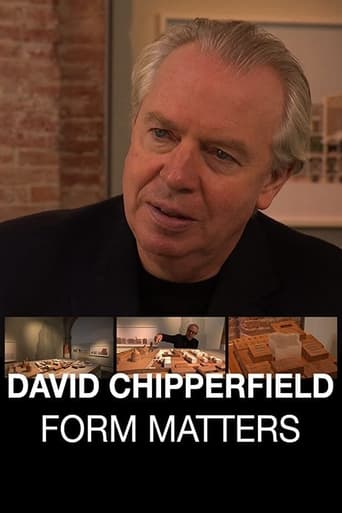
NRWhen the Tuscan city of Pisa commissioned David Chipperfield to create a master plan that would bring new vitality to this historic spot on the Arno, an exhibition of selected works produced by him in the last 25 years was also invited. "David Chipperfield: Form Matters" documents the architect as he leads the way through his models, drawings and photographs, explaining his designs in the process. Chipperfield's vast array of international work spans over Europe, China, Japan, the United States and Mexico and as he guides us through his career Chipperfield offers a detailed accounts of his creative direction at every stop.
David Chipperfield: Form Matters
2012
 NR
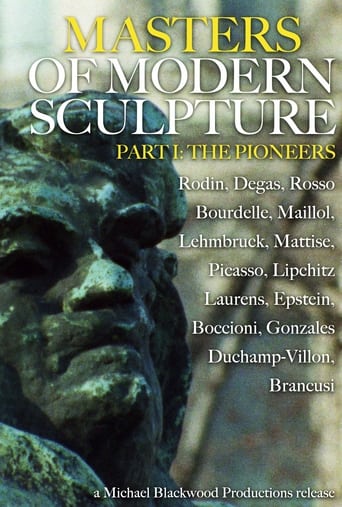
NRThe first chapter in our Masters of Modern Sculpture series looks at groundbreaking work from the brilliant minds that reshaped sculptural art and inspired generations to come. Narrated by George Segal, The Pioneers explores famed pieces from sculptors such as Rodin, Maillol and Picasso.
Masters of Modern Sculpture Part I: The Pioneers
1978