Directing
John W. Barnes
Born 1920-03-25 · Belford, New Jersey, USA
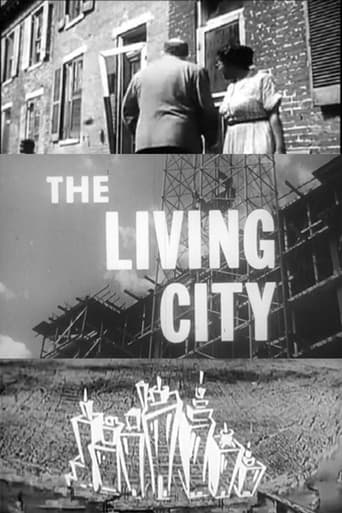
John Wadsworth Barnes (March 25, 1920 – June 27, 2000) was an American film director and producer. He was most active in the educational film industry, producing, directing and writing for Encyclopædia Britannica Films. In his career he worked on and helped create over 100 film projects. He produced the Academy Award nominated documentary The Living City. He wrote for a radio drama series, made experimental Bolex films, and produced the film To Live Together.
Acting credits
Behind the camera
An adaptation of the short story of the same title by Walter Van Tilburg Clark, in which four men who have survived a catastrophic war share memories of their past lives and a civilization which no longer exists. Here, a vintage recording of Debussy's Nocturne played by Walter Gieseking becomes the vehicle by which four lovers of the humanities hover together in a cold post-apocalyptic shack of sandbags to mourn weekly over lost art and loves gone by. Barnes, who must be considered among the greatest filmmakers ever to work in the educational world, forcibly illustrates, through flashback sequences and close-up shots, how the humanities --- music, painting, literature, and theatre --- are perhaps the most enriching of all human endeavors. Their ultimate and devastating loss may have never before or since been shown with such terrifying passion.
The Portable Phonograph
1977
Deals with the Old Testament as a collection of literary forms. Combines paintings with narrative sculptures to relate the saga of the creation, the expulsion from Eden, and the murder of Abel
The Bible as Literature: Part 1 - Saga and Story in the Old Testament
1973
Deals with the Old Testament as a collection of literary forms. Combines paintings with narrative sculptures to relate the saga of the creation, the expulsion from Eden, and the murder of Abel
The Bible as Literature: Part 1 - Saga and Story in the Old Testament
1973
 NR
NRDramatization short on British romantic poet John Keats.
John Keats: His Life and Death
1973
NRDramatization short on British romantic poet John Keats.
John Keats: His Life and Death
1973
Follows Chaucer's pilgrims on their way to Canterbury, telling stories as they ride. Chaucer's England (1958) Shows some background scenery taken in England. Presents a dramatization of the 'PARDONER'S TALE.'.
Chaucer's England
1958
A detailed account of the life and artistic journey of Michelangelo.
Michelangelo
1964
A detailed account of the life and artistic journey of Michelangelo.
Michelangelo
1964
 NR
NRJohn Canaday analyzes the place of art among the humanities as an expression of man's attempt to define what it means to be a human being. Mr. Canaday shows how the masterworks of art and architecture have formed a visual history of man's thought, ideals, and most fondly-held beliefs.
Art, what is it? Why is it?
1963
NRJohn Canaday analyzes the place of art among the humanities as an expression of man's attempt to define what it means to be a human being. Mr. Canaday shows how the masterworks of art and architecture have formed a visual history of man's thought, ideals, and most fondly-held beliefs.
Art, what is it? Why is it?
1963
 NR
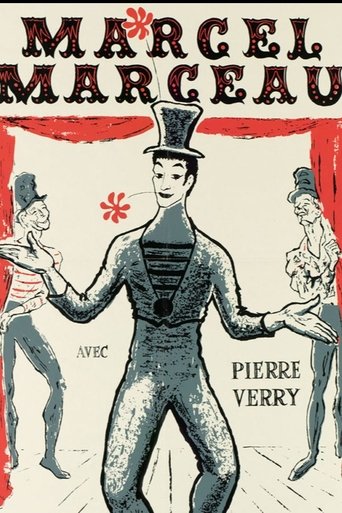
NRshort from of Series “The Art of silence: pantomimes with Marcel Marceau and his partner Pierre Verry”. Mime makes the invisible visible and the visible invisible. Marceau’s sometimes comical - but always graceful - interpretation of The Painter in Central Park allows the viewer to “see” objects which are not there.
The Painter
1975
Recreates the conflict of Roger Williams with the Puritan leaders of New England, including his attempts to achieve separation of church and state, freedom of conscience, and protection for minority groups; the heresy trial resulting in his banishment from the Massachusetts Bay Colony; and his decision to establish the new colony of Rhode Island. Starring Donald Moffat.
Roger Williams: Founder Of Rhode Island
—
NROne in a series of twelve films in which the great French mime Marcel Marceau performs some works from his repertoire. In his introduction Marceau calls mime the essence of life and suggests that it can reach the soul through silence. In this pantomime he expresses life from the womb to the grave in a few minutes and illustrates one of the art's most notable characteristics - its ability to condense time and to create through time the pulse of humanity.
The Art of Silence: Youth Maturity Old Age and Death
1975
One in a series of twelve films in which the great French mime Marcel Marceau performs some works from his repertoire. In his introduction he describes this pantomime as having a theme that goes beyond time, an allegory showing a man trying to escape an enclosure of invisible walls. He also suggests that it stands for our freedom of choice, stating that for the limited span of our life on earth, we must struggle for the enlightenment of humanity and search for a way out of the cage
The Art of Silence: The Cage
1975
 NR
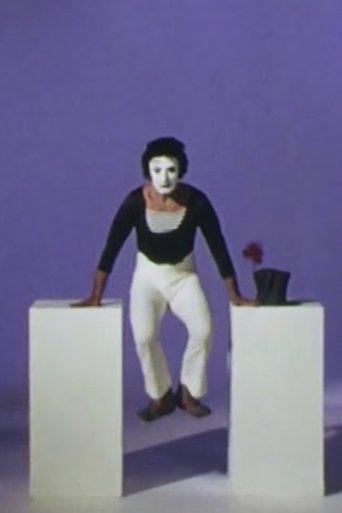
NRThis Bip pantomime deals with his visit to a skating rink. Featuring Marcel Marceau.
Bip as a Skater
1975
 NR
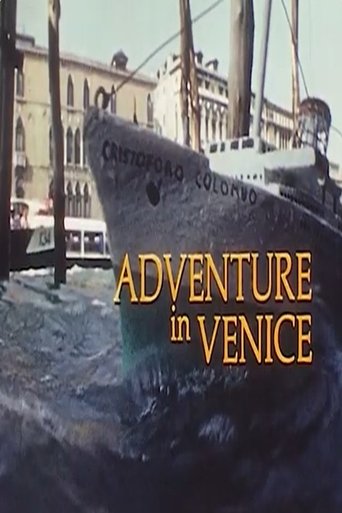
NRThis film presents aspects of day-to-day life in Venice, a city that is most renowned for its historic sites and large tourist trade. It tells a story about a boy who loses a prized model ship on the waterways of his city.
Adventure in Venice
1974
NRThis film presents aspects of day-to-day life in Venice, a city that is most renowned for its historic sites and large tourist trade. It tells a story about a boy who loses a prized model ship on the waterways of his city.
Adventure in Venice
1974
The bible from the viewpoint of literature, including a small dramatization of the account of Job.
The Bible as Literature: Part 2 - History, Poetry, and Drama in the Old Testament
1973
Follows the Pilgrims from England to Holland and to New England. Discusses the Mayflower compact and the hardships in the New World.
The Pilgrims
1954
 NR
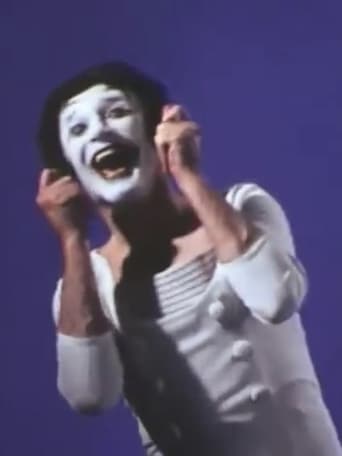
NRMarcel Marceau pantomimes the story of a man who becomes trapped in one of his ‘masks.’
The Mask Maker
1975
 5.8
5.8This short explores the early planning innovations and the subsequent mistakes that resulted in developing urban sprawl, suburbia, and gentrification in modern day US cities as well as the effects it had on its populace and industry.
The Living City
1953
Documentary concerning Baltimore's efforts at urban renewal with an emphasis on improving housing in the city's slums.
The Baltimore Plan
1953
The story of Captain John Smith.
Captain John Smith: Founder of Virginia
1954
Explains strategy, movement of forces and important battles of the revolutionary war. Geographical, social and political factors which brought victory.
The American Revolution
1953