
Directing
Bernard Devlin
Born — Died
1923-09-02 — 1983-01-01
Place of birth
Québec City, Québec, Canada
Known for
Directing
Credits
26 titles
Joseph Bernard Devlin was a French-Canadian film director, producer, and writer who played an important role in the development of French-language film production at the National Film Board of Canada (NFB).
Known for
No synopsis available yet.
Le retour
1956
How--and how not--to get thrown for a loop is demonstrated as Fred Davis visits the gymnasium of the Kano Judo Club in Hull, Québec and interviews Bernard Gauthier, judo instructor, and gets the history of judo as a sport.
Judo: Jinks
1954
This short documentary features a portrait of Ottawa in the mid-20th century, as the nascent Canadian capital grew with force but without direction. Street congestion, air pollution, and rail traffic were all the negative results of a city that had grown without being properly planned. French architect and urban designer Jacques Gréber stepped in to create a far-sighted plan for the future development of Ottawa. With tracks moved, factories relocated, and neighbourhoods redesigned as separate communities, Ottawa became the capital city of true beauty and dignity we know today.
A Capital Plan
1949
A demonstration of the basic skills required to ski.
Ski Skill
1946
This is a story of men against the sea. On the edge of the great sea lanes in the Gulf of St. Lawrence lies a tiny archipelago which is gradually shrinking from the ceaseless nibbling of the tides. Here, on the Magdalen Islands, live 10 000 sturdy fisherfolk, descended from fifteen Acadian families who, two hundred years ago, fled the threat of deportation. The film portrays the frugal but independent existence of these people and their relentless struggle to wrest a livelihood from a sea which reaches almost to their doors.
The Wind-Swept Isles
1953
 9.0
9.0The story of union branch no. 100. The dismissal of a worker in a factory shows his colleagues the instability of their situation. From the discussion that followed this event germinated the idea of a union. A national union is consulted, which appoints a representative to explain the advantages and operation of a workers' union. Branch No. 100 is created and immediately becomes a trading agency; subsequently, it obtains better working conditions for the workers. The spirit that presides over all the meetings demonstrates the democratic strength of a union.
Employment contract
1950
Behind the camera
No synopsis available yet.
Le retour
1956
How--and how not--to get thrown for a loop is demonstrated as Fred Davis visits the gymnasium of the Kano Judo Club in Hull, Québec and interviews Bernard Gauthier, judo instructor, and gets the history of judo as a sport.
Judo: Jinks
1954
This short documentary features a portrait of Ottawa in the mid-20th century, as the nascent Canadian capital grew with force but without direction. Street congestion, air pollution, and rail traffic were all the negative results of a city that had grown without being properly planned. French architect and urban designer Jacques Gréber stepped in to create a far-sighted plan for the future development of Ottawa. With tracks moved, factories relocated, and neighbourhoods redesigned as separate communities, Ottawa became the capital city of true beauty and dignity we know today.
A Capital Plan
1949
A demonstration of the basic skills required to ski.
Ski Skill
1946
A demonstration of the basic skills required to ski.
Ski Skill
1946
This is a story of men against the sea. On the edge of the great sea lanes in the Gulf of St. Lawrence lies a tiny archipelago which is gradually shrinking from the ceaseless nibbling of the tides. Here, on the Magdalen Islands, live 10 000 sturdy fisherfolk, descended from fifteen Acadian families who, two hundred years ago, fled the threat of deportation. The film portrays the frugal but independent existence of these people and their relentless struggle to wrest a livelihood from a sea which reaches almost to their doors.
The Wind-Swept Isles
1953
9.0The story of union branch no. 100. The dismissal of a worker in a factory shows his colleagues the instability of their situation. From the discussion that followed this event germinated the idea of a union. A national union is consulted, which appoints a representative to explain the advantages and operation of a workers' union. Branch No. 100 is created and immediately becomes a trading agency; subsequently, it obtains better working conditions for the workers. The spirit that presides over all the meetings demonstrates the democratic strength of a union.
Employment contract
1950
This short film recreates the story of David Thompson – a man who, over the course of his lifetime, mapped a-million-and-a-half square miles of uncharted territory. His achievement remains unsurpassed.
David Thompson: The Great Mapmaker
1964
 8.0
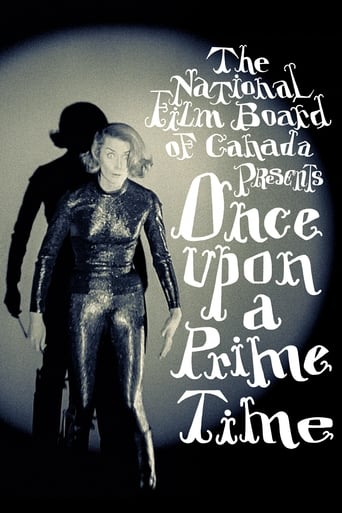
8.0This short fictional film is a zany spoof of TV content with plenty of violence borrowed from the very source it seeks to parody. Our protagonist is a housewife who has lost her family to the television set. Suddenly, her home is invaded and her life is taken over by characters that seem to spring from the V screen. Initially, she attempts to get the intruders out of her house. But eventually, she begins to see that perhaps a life on TV wouldn’t be so bad after all. Will her distracted husband even notice her departure?
Once Upon a Prime Time
1966
A glimpse behind the curtains of a puppet theatre is presented, showing the making of the marionettes and how they come to life in the hands of the puppeteer.
The Puppeteers
1952
 10.0
10.0A health problem causes a business leader to think about what will happen to his company after his death.
Dubois et fils
1961
This short film explores the effect the war of 1812 had on pioneer settlements of the Upper St. Lawrence and Niagara regions. When Britain and the United States were at war, the feud spilled over into Canada, and farmers who had worked together to clear their land had to decide on which side their allegiance lay. When many took up arms to defend their new land against the "Yankee" marauders, a feeling of Canadian identity began to emerge.
A Question of Identity: War of 1812
1966
This short drama highlights the importance of police officers maintaining a compassionate understanding of the people they both police and protect. A teenage boy and girl are falsely accused of robbing a fur warehouse. The investigating detective tries to bully a confession from them, but the police chief knows that the detective is acting beyond his mandate. The chief eventually intervenes, thereby underlining the extent of the investigator's inappropriate behaviour.
The Suspects/Les Suspects
—
This short documentary illustrates what to do when you're lost in the bush. Filmed in 1954, an NFB producer and a Native guide allow themselves to be marooned in the bush with only an axe and their wits as means of survival. They eat off the land, build their own birchbark canoe and make their way out.
Survival in the Bush
1954
In a city the size of Montreal with thousands and thousands of motorized vehicles, traffic problems are difficult to solve. Here is a panorama of such problems. This film includes an interview with Mayor Jean Drapeau, when Montreal was still the metropolis of Canada.
Circulation à Montréal: 2e partie
1955
In this documentary short, a superintendent at Vancouver's Stanley Park Zoo discusses issues related to feeding and acclimatization of birds and animals from other zones.
The Zoo in Stanley Park
1953
In a city the size of Montreal with thousands and thousands of motorized vehicles, traffic problems are difficult to solve. Here is a panorama of such problems. This film includes an interview with Mayor Jean Drapeau, when Montreal was still the metropolis of Canada.
Circulation à Montréal (1re partie)
1955
 NR
NRNo synopsis available yet.
L'abatis
1952
NRNo synopsis available yet.
L'abatis
1952
Fred Davis takes a look at Korea in 1954, and gives a sobering account of the realities of war as they affect the Korean population.
Korea, After the War
1954
This short film offers a glimpse into the life of Louis Hippolyte Lafontaine, the Chief Justice who died prematurely but left French Canada a legacy of political freedom. Shot entirely in Montreal, the film begins on the day of his death, and flashes back to tense moments throughout his life. French with English subtitles.
Louis-Hippolyte Lafontaine
1962
 9.0
9.0Pioneers struggle to establish a town in the harsh unsettled wilderness of northern Quebec during the depression.
The Promised Land
1959
9.0Pioneers struggle to establish a town in the harsh unsettled wilderness of northern Quebec during the depression.
The Promised Land
1959
Staged in old Québec City, this film is about a rebel against the time-clock, whose hobby was snaring birds but whose dream was to escape the bonds of domesticity. A kindly satire of the dreamer in every man, the film is also a memorable portrait of Québec, the "Grande Dame" of Canadian cities.
L'Homme aux oiseaux
1952
 9.0
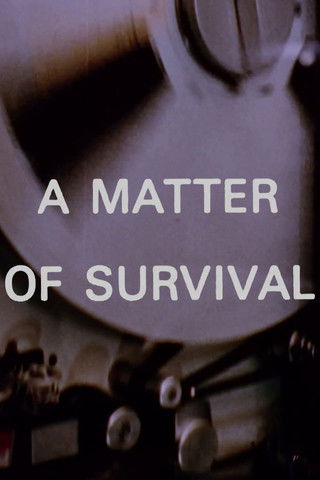
9.0The introduction of computers into the workplace in 1969 posed a threat to white-collar workers whose jobs they might replace. This drama documentary looks at the situation from the perspective of the employees and of management.
A Matter of Survival
1969
A short comedy about a group of skiers who end up spending their skiing weekend in the Gatineaus enjoying themselves despite their mishaps--but never making it onto the hill.
Winter Week-end
1952