
Acting
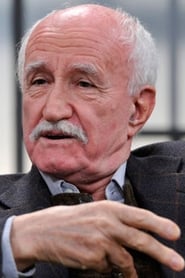
János Koltai
Born
1935-06-08 (91)
Place of birth
Budapest, Hungary
Known for
Acting
Credits
33 titles
Known for
 8.2
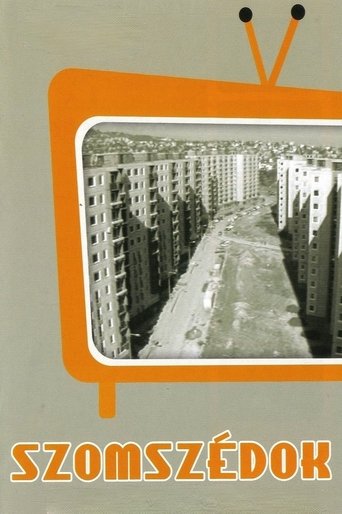
8.2Szomszédok was a Hungarian television series, occasionally called the Hungarian Dallas, that ran from 1987–1999 and produced 331 episodes, airing its grand finale on December 31, 1999. The series was a soap opera, dealing with the lives of ordinary people, living and working in or around an average lakótelep. Its characters were explored, over time, in equal depth: ranging from elderly pensioners, busy middle aged professionals, up-and-coming young people, and children growing into their teens. Many consider Szomszédok to be the definitive Hungarian television series, being a period piece of sorts that covers the last few years of the communist era, the rendszerváltozás, and nearly a decade of the new market economy Hungary thereafter.
Szomszédok
1987
 8.8
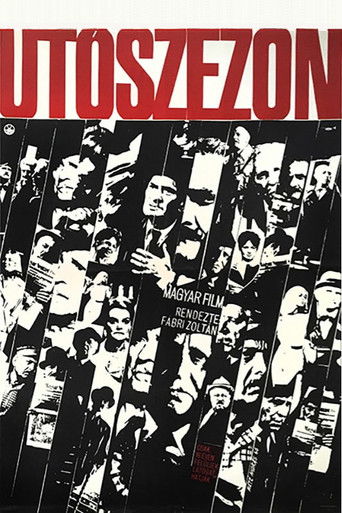
8.8Against the backdrop of the Adolph Eichmann trials, an elderly paraplegic pharmacist is summoned to the police station, where he believes that his hidden wartime guilt has caught up with him, unaware that it is all in fact an elaborate practical joke.
Late Season
1967
 6.3
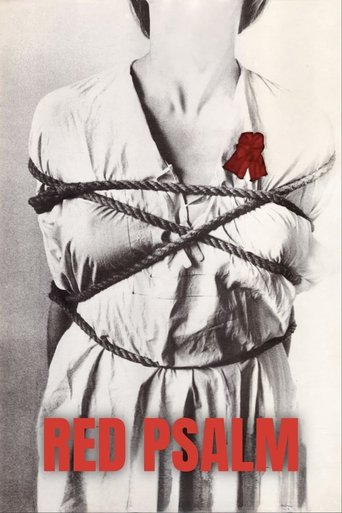
6.3Set in the 1890s on the Hungarian plains, a group of farm workers go on strike in which they face harsh reprisals and the reality of revolt, oppression, morality and violence.
Red Psalm
1972
 4.5
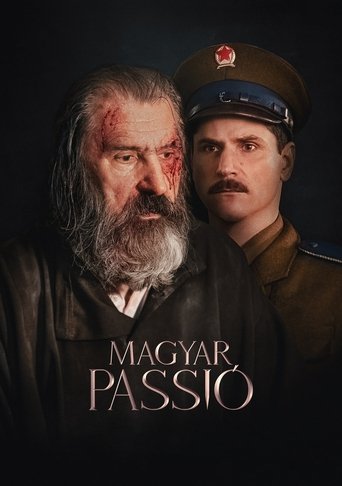
4.5The film, taking place in 1950, presents the story of Father Leopold and the monks of his order struggling to once again revive Christianity in a country trying to scrape itself together after the war. Initially, the communist powers do not hinder their work, and the Church was even able to regain possession of holy objects hidden during the war. This "peaceful" state does not last long. Father Leopold is arrested on trumped up charges, and in order to break him, he is subjected to cruel torture. His former student, Lieutenant Keller, who turned his back on religion and now believes in the socialist system, is appointed - upon the command of Major Fyodorov - to extract a confession of guilt. But the Father's perseverance and resistance changes everything.
Hungarian Passion
2021
The scene is Ukraine. In 1943, after the Hungarian' defeat at the river Don, soldier Balogh decides to visit his family.
Blindfold
1974
 7.2
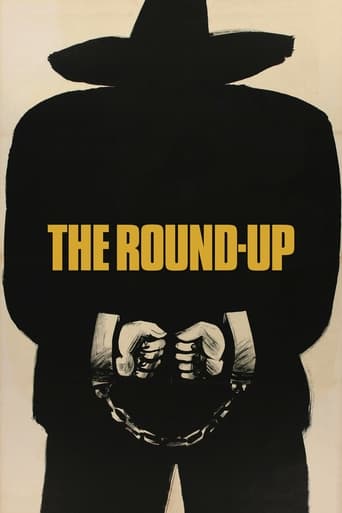
7.2After the failure of the Kossuth's revolution of 1848, people suspected of supporting the revolution are sent to prison camps. Years later, partisans led by outlaw Sándor Rózsa still run rampant. Although the authorities do not know the identities of the partisans, they round up suspects and try to root them out by any means necessary.
The Round-Up
1966
Film credits
1980s · 2 titles
 10.0
10.0In the streets of Vichy, France, during World War II, the Germans apprehend nine men and a boy. Among them are a painter, a businessman, an electrician, a waiter, an army doctor, an actor, a prince, a gypsy, and a Jew. Confined without explanation, they can only speculate about their fate.
Incident at Vichy
1981
 NR
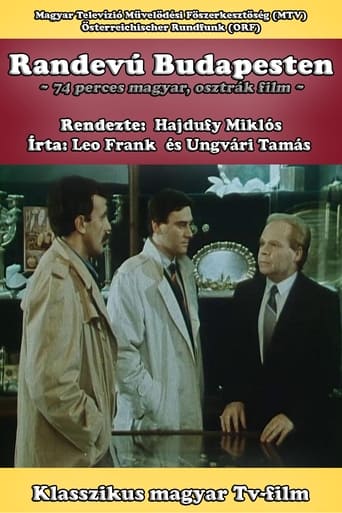
NRNo synopsis available yet.
Randevú Budapesten
1989
1970s · 8 titles
6.3Set in the 1890s on the Hungarian plains, a group of farm workers go on strike in which they face harsh reprisals and the reality of revolt, oppression, morality and violence.
Red Psalm
1972
The scene is Ukraine. In 1943, after the Hungarian' defeat at the river Don, soldier Balogh decides to visit his family.
Blindfold
1974
 5.2
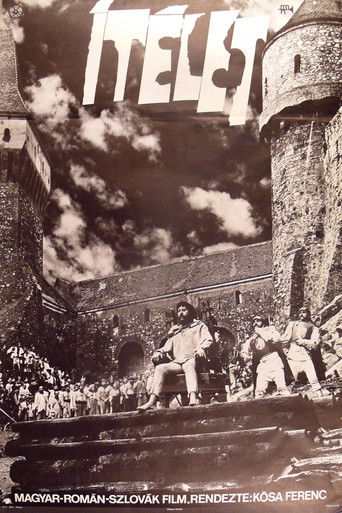
5.2The film is a historic parable about the topicality of revolution. 1514. The peasants' uprising is over, Dózsa has been arrested. Werbőczy tries to get the imprisoned peasant leader deny the revolution and offers him the lives of his people in exchange.
Judgement
1970
 6.7
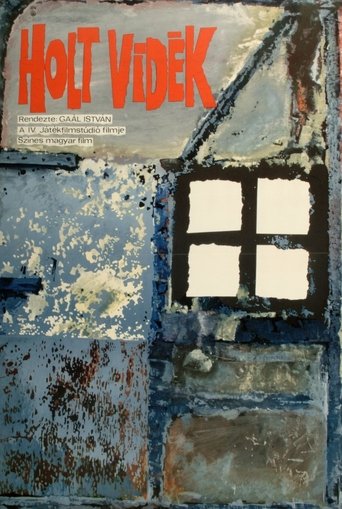
6.7This Hungarian film chronicles the slow deterioration in the life of Juli, a farmer's wife. As the countryside grows ever more deserted because people are moving to towns or large collective farms, she spends more and more time alone. Despite her best efforts to appreciate her situation, her despair grows. The loneliness is briefly interrupted when she and her husband take in an old woman and care for her, but the woman dies. Shortly after her son visits, she is killed in an accident which may have been a suicide. ~ Clarke Fountain, Rovi
Dead Landscape
1972
The story of the film with a touch of journalistic atmosphere takes place in the autumn 1919 after the fall of the proletarian dictatorship. The main figure is Zilahy Kálmán, a high-school teacher, very much attracted to Ady's ideology. He is, at the same time, a rational minded sober character keeping a certain distance from the chaotic events. During the first months of the terror of the Whites, he takes a stand for his persecuted colleague, and with his wife's help, he hides Pálos, a Communist commissar in his flat.
Fallow Land
1973
 5.0
5.0Allegory of the suppression of the 1919 revolution and the advent of fascism in Hungary; in the countryside, a unit of the revolutionary army spares the life of father Vargha, a fanatical priest. He comes back and leads massacres. A new force, represented by Feher, apparently avenges the people, but only to impose a different, more refined and effective kind of repression.
Agnus Dei
1971
 6.6
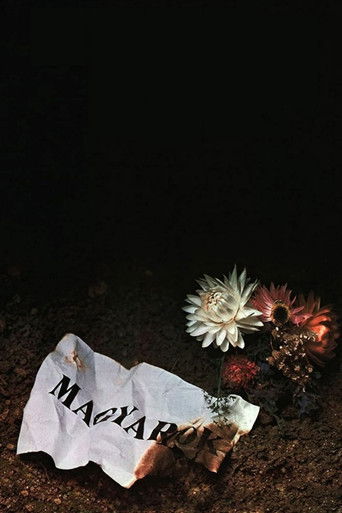
6.6A group of landless Hungarian peasants accept work as migrant-labourers on a northern German farm where the wages are good, and the wives and family are allowed to accompany them. Though in the midst of WWII, they are relatively well-off. However, as they witness the treatment accorded to POWs and others not so gently regarded, and at the conclusion of the year's harvest, they choose to return to Hungary and are quickly swept up in the tides of war.
Hungarians
1978
 8.0
8.0Eighteen years after the failure of the revolution and freedom fighting 1848-49, the politicians of Hungary preparing for a compromise with Austria try to make use of the symbol of the revolution, the figure of the poet Petőfi Sándor, to their own advantage. They visit all the memorial sites, find the witnesses and recall the famous events. Memories and political intentions conflict with each other, and the circumstances of the poet's death cannot be reconstructed entirely.
The Myth-Makers
1974
1960s · 20 titles
8.8Against the backdrop of the Adolph Eichmann trials, an elderly paraplegic pharmacist is summoned to the police station, where he believes that his hidden wartime guilt has caught up with him, unaware that it is all in fact an elaborate practical joke.
Late Season
1967
7.2After the failure of the Kossuth's revolution of 1848, people suspected of supporting the revolution are sent to prison camps. Years later, partisans led by outlaw Sándor Rózsa still run rampant. Although the authorities do not know the identities of the partisans, they round up suspects and try to root them out by any means necessary.
The Round-Up
1966
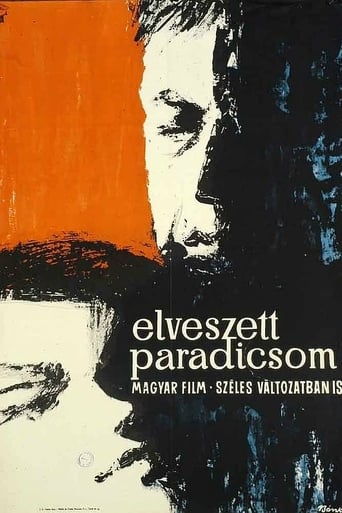 7.5
7.5A young doctor named Zoltán flees Budapest for his father’s rural estate after performing an illegal abortion on his lover that results in her death. While hiding in the countryside, he attempts to grapple with his guilt and the moral weight of his actions while reconnecting with his estranged family. His isolation is interrupted by a burgeoning relationship with a local woman, Mira, which forces him to choose between permanent escape or facing legal and ethical accountability.
The Lost Paradise
1962
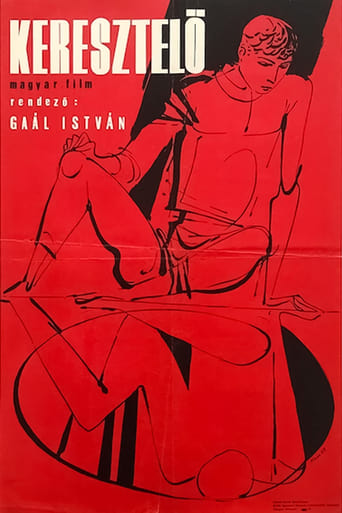 9.0
9.0A 40-year-old sculptor returns home to witness the baptism of his young nephew. His return prompts a series of flashbacks to his youth and the political upheaval experienced by his family and friends.
Baptism
1968
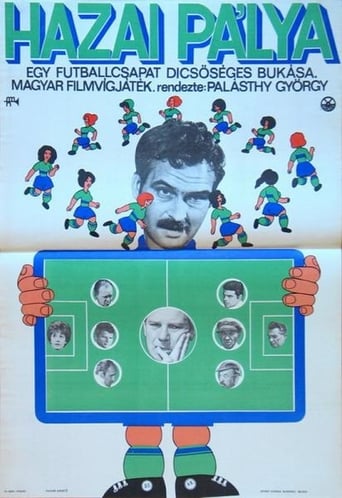 8.7
8.7This ironic comedy is set in the god-forsaken Kiskúnbékás, at the end of the fifties. There are no jobs, the town's "golden team", who once were third class national soccer players have scattered
On Home Grounds
1969
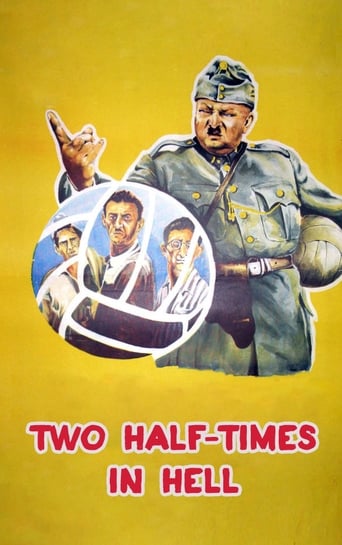 7.7
7.7To celebrate Hitler's birthday, a soccer match is organised between the Germans and a group of Hungarian political prisoners, one of whom is a famous pre-war football star.
Two Half-Times in Hell
1961
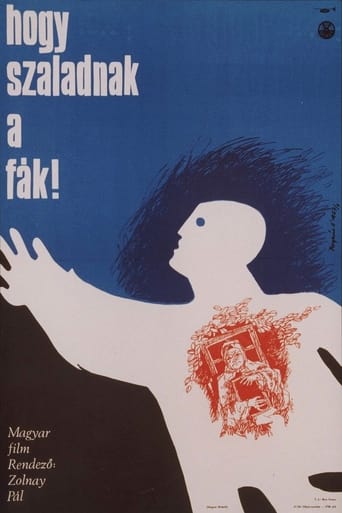 7.2
7.2For the first time after 11 years, Simon, a young historian visits the village of his childhood at Balaton and Aunt Lina, his foster-mother. He gets upset by what he experiences there: the old woman's troublesome and vexing everydays, her quiet sadness. He is overwhelmed by his own memories, the death of his foster-father and by everything he was not aware of before, or he simply wanted to forget.
The Sack
1966
No synopsis available yet.
A komp
1962
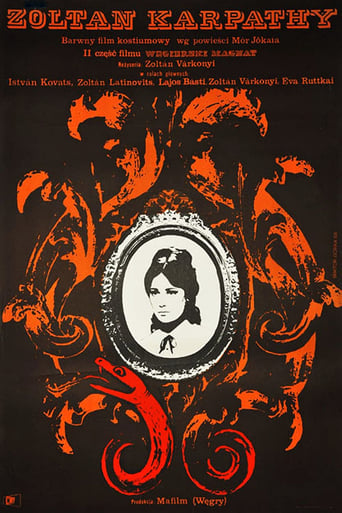 7.2
7.2On the novel by Mór Jókai. The first half of the XVIII century. Several decades of life of a noble family Karpati.
A Hungarian Nabob 2: Karpathy Zoltan
1966
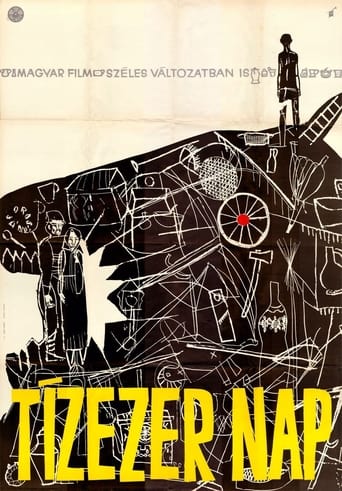 6.1
6.1The changing and turbulent history of Hungary is seen through the eyes of three men over a 30-year period in this somber drama. The three recall the highlights of their lives in flashbacks as they reminisce in the mid 1960s. The venerable trio begin their story in the 1930s, through World War II, and the decade beyond the communist invasion of 1956.
Ten Thousand Days
1967
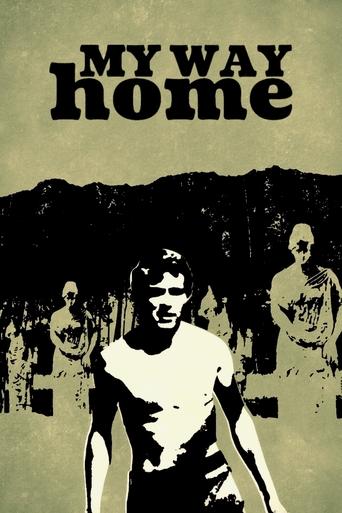 7.1
7.1In the aftermath of World War II, a Hungarian teenager, captured by Soviet troops, forms an unlikely bond with a Russian soldier in a remote prison camp.
My Way Home
1965
 8.0
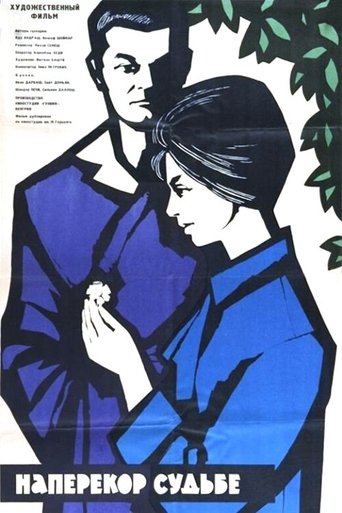
8.0The story recalling the spirit of Gilgamesh, the Sumerian king quarrelling with his approaching death, takes place in a cancer hospital in Budapest. Dávid, the young ethnography scientist resigned to his lot and is indifferent to his approaching death. His specialist reckons, however, that such a searching and stubborn mind with thorough knowledge of the nature of his own illness, will be able to fight death.
New Gilgames
1963
 7.0
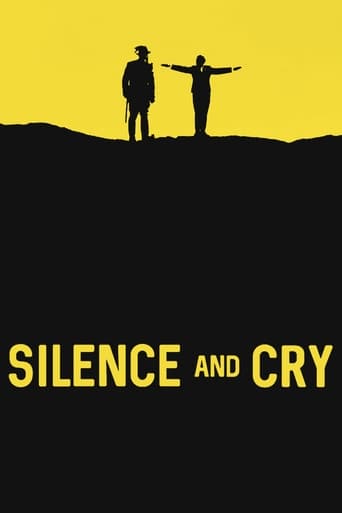
7.0Set during a turbulent era of disquiet, fear, persecution and terror, which permeates every corner of post-WWI Hungarian society. In 1919, after just a few months of communist rule the Hungarian Republic of Councils falls victim to a nationalist counter-revolution. Admiral Horthy, leader of the nationalist far right movement, becomes the self-proclaimed regent of Hungary, and assumes power as the legal Head of State. Soldiers of the short-lived Hungarian Red Army are now on the run from relentless secret policemen and patrol units of the nationalist Royal Gendarme. If caught, ex-Red Army soldiers are executed without mercy or proper trial. István Cserzi, a former soldier of the Red Army has fled to the Great Hungarian Plains and has taken refuge on a farm, which is run by two sympathetic women.
Silence and Cry
1968
 7.0
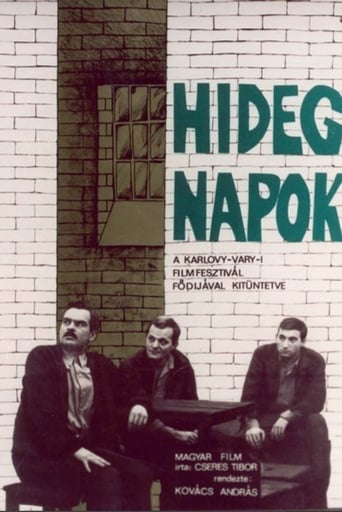
7.0Andras Kovacs' film, considered one of the most important Hungarian films of the 1960s, centers around four men who await trial for their involvement in the massacre of several thousand Jewish and Serbian people of Novi Sad in 1942. Each denies any responsibility, claiming that they were only following orders. The film is significant for its willingness to address the subject of Hungary's role in WWII, which was taboo at the time of the its release.
Cold Days
1966
 7.2
7.2Huszárik's graduation film was another short entitled Groteszk (Grotesque) in 1963 about a strange train voyage of an artist carrying his own picture.
Grotesque
1963
 7.0
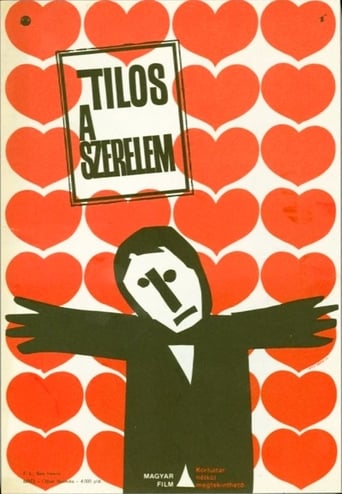
7.0Nothing is as dangerous to a really good group of friends as a woman and love. At least according to Frank, the brigade leader, who not only protects cohesion but also work performance when he gives advice to his colleagues. It's easy for him, of course, because he's never been in love. Not so his friends, who are still courting the travelling circus artists. But what goes around comes around. Then Klári, the forklift girl, appears...
No Love, Please
1965
 8.0
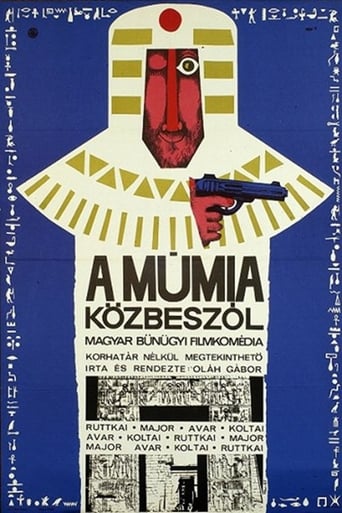
8.0No synopsis available yet.
A múmia közbeszól
1967
Five deserters hide in a village inhabited only by women.
The Valley
1968
 6.8
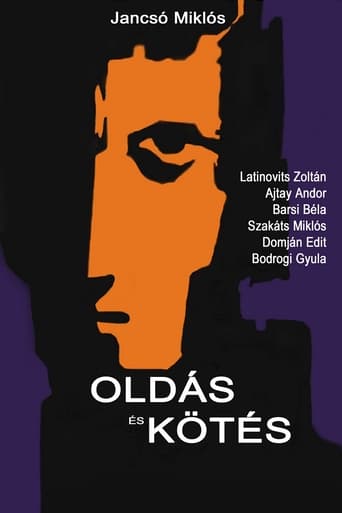
6.8A young doctor undergoes a spiritual crisis when he returns to his rural home.
Cantata
1963
 NR
NRA barber goes for a walk on an average Sunday morning, and end up winning an other guy's wife on card.
Tök az adu
1967
Series credits
8.2Szomszédok was a Hungarian television series, occasionally called the Hungarian Dallas, that ran from 1987–1999 and produced 331 episodes, airing its grand finale on December 31, 1999. The series was a soap opera, dealing with the lives of ordinary people, living and working in or around an average lakótelep. Its characters were explored, over time, in equal depth: ranging from elderly pensioners, busy middle aged professionals, up-and-coming young people, and children growing into their teens. Many consider Szomszédok to be the definitive Hungarian television series, being a period piece of sorts that covers the last few years of the communist era, the rendszerváltozás, and nearly a decade of the new market economy Hungary thereafter.
Szomszédok
1987
No synopsis available yet.
Sakk, Kempelen úr!
1976