
Acting
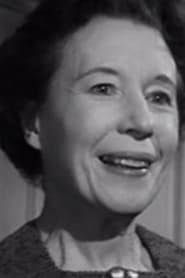
Grace Arnold
Born — Died
1894-09-19 — 1979-02-26
Place of birth
London, England, UK
Known for
Acting
Credits
56 titles
Known for
 7.8
A quirky spy show of the adventures of eccentrically suave British Agent John Steed and his predominantly female partners. Jonathan Steed - an urbane, proper gentleman spy - teams with various assistants throughout the series' run, including Dr. David Keel, Cathy Gale, Emma Peel and Tara King, to repeatedly save the world from diabolical schemes plotted by equally diabolical evil-doers (among them robots and man-eating monsters).
The Avengers
1961
 7.0
ITV Playhouse is a British comedy-drama TV series that ran from 1967 to 1983, which featured contributions from playwrights such as Dennis Potter, Rhys Adrian and Alan Sharp. The series began in black and white, but was later shot in colour and was produced by various companies for the ITV network, a format that would inspire Dramarama. Actors appearing in the series included Leslie Anderson, Gwen Nelson, Ricky Alleyne, Pat Heywood, Michael Elphick, Ian Hendry, Edward Woodward, Margaret Lockwood, Jessie Matthews and Lloyd Peters.
ITV Playhouse
1967
 4.8
No Hiding Place is a British television series that was produced at Wembley Studios by Associated-Rediffusion for the ITV network between 16 September 1959 and 22 June 1967. It was the sequel to the series Murder Bag and Crime Sheet, all starring Raymond Francis as Detective Superintendent, later Detective Chief Superintendent Tom Lockhart.
No Hiding Place
1959
 7.7
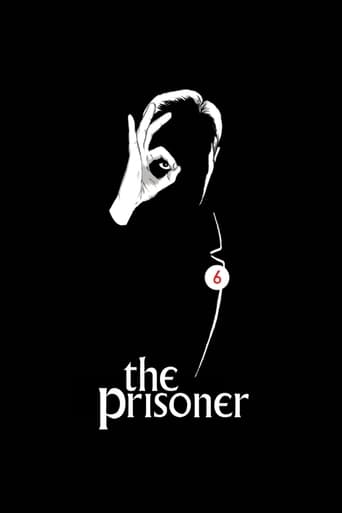
After resigning, a secret agent is abducted and taken to what looks like an idyllic village, but is really a bizarre Kafkaesque prison. His warders demand information. He gives them nothing, but only tries to escape.
The Prisoner
1967
 7.1
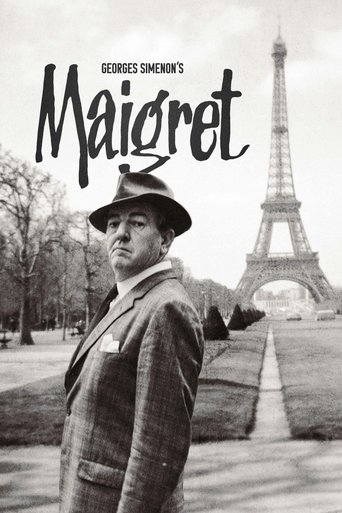
BBC series based on the novels by Georges Simenon which starred Rupert Davies as Inspector Maigret, a French police detective who preferred to watch and listen in order to solve crimes. The series ran from 1960-63 on British television.
Maigret
1960
 7.2
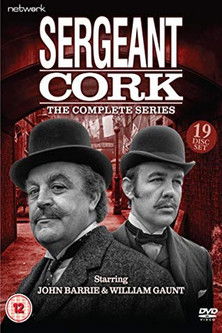
Sergeant Cork is a British detective television series which first aired between 1963 and 1968 on ITV. It was a police procedural show that followed the efforts of two police officers and their battle against crime in Victorian London. In all 66 hour-long episodes were aired during the five-year run, although the last episode was not broadcast until January 1968, 16 months after the others. Journalist Tom Sutcliffe has credited it as a first example of the use of the Victorian-era policeman in a television crime series. A 1969 review in The Age opined that rather than suspense, the strengths of the series were its "excellent period settings and wonderfully thick pea-soupers" which "add up to splendid evocative stuff", as well as the performance of star John Barrie. At no time during the whole series is Sergeant Cork's first name given.
Sergeant Cork
1963
Film credits
1970s · 1 titles

1960s · 5 titles
 4.4
Dr. Decker returns from Africa after a year, presumed dead. In that year, he discovered a way of growing plants and animals to an enormous size. He brings back a baby chimpanzee to test out his theory. As he has many enemies at home, he decides to use his chimp, 'Konga', to 'get rid of them'. Then Konga grows to gigantic proportions and wreaks havoc all over London!
Konga
1961
 6.1
After mercifully killing her terminally ill lover, Dr. Christine Allison loses her medical license and spends two years in prison. Once she has completed her sentence, the lawyer who prosecuted Christine, Stephen Dane, hires her to care for his emotionally unstable wife, Liane. Christine takes the job, but when Liane's allegedly dead father reappears, Christine sets out to reveal the family's dark secrets.
I Thank a Fool
1962
 6.3
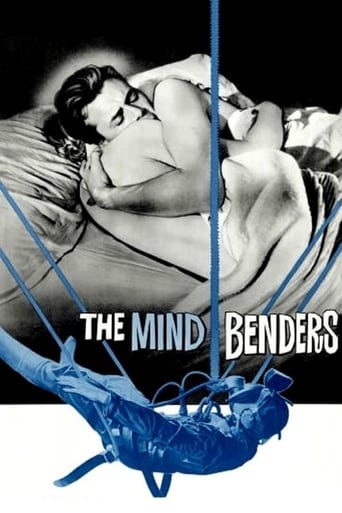
A British scientist is discovered to have been passing information to the Communists, then kills himself. Another scientist decides that they might have brainwashed him by a sensory deprivation technique, but he doesn’t know if someone really can be convinced to act against their strongest feelings. So he agrees to be the subject in an experiment in which others will try to make him stop loving his wife.
The Mind Benders
1963
 NR
A wealthy business man fires one of his employees and becomes the victim of murder attempt. The fired man becomes the prime suspect, but it appears that he himself has been murdered.
Attempt to Kill
1961
 NR
A young policeman becomes involved with a glamorous German woman in London, to his cost.
Playback
1962
1950s · 16 titles
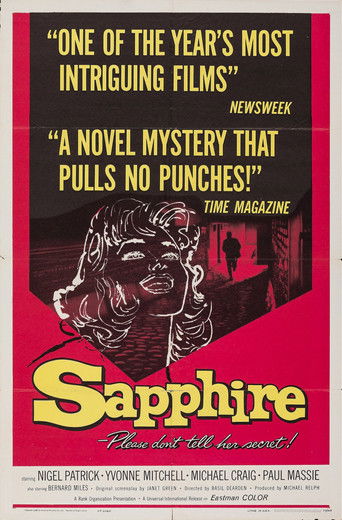 7.0
Two Scotland Yard detectives investigate the murder of a young woman of mixed race who had been passing for white. As they interview a spate of suspects -- including the girl's white boyfriend and his disapproving parents -- the detectives wade through a stubbornly entrenched sludge of racism and bigotry.
Sapphire
1959
 7.2
A Liverpool juvenile liaison officer struggles with a young and dangerous pyromaniac.
Violent Playground
1958
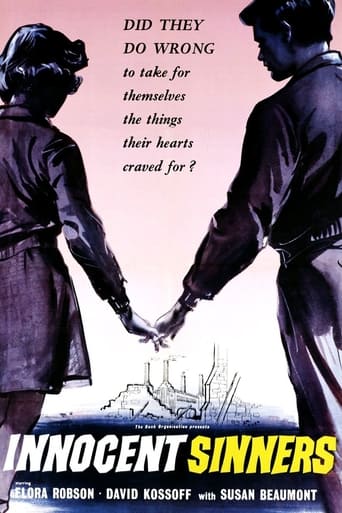 7.5
A neglected girl in post-World War II London befriends street urchins who help her build a tiny garden in a bombed-out church.
Innocent Sinners
1958
 6.5
When an attractive young girl is murdered, suspicion falls on several members of the local tennis club. It falls to Police Inspector Halloran to sort out all the red herrings, and finally after a confrontation at the top of the local church spire, arrest the culprit. Another fascinating look at what life was like in Britain during the 50's.
Town on Trial
1957
 5.1
Special investigator Duke Martin is in London to investigate the authenticity of a rare postage stamp called the Barbados Overplate. Someone is willing to commit murder to get his or her hands on the stamp, which puts a crimp in Duke's efforts to romance every beautiful woman he meets.
Barbados Quest
1955
 6.1
Episodic tale of four factory girls and their various romances at the local dance hall in Chiswick, London. Unusual at the time, the film tells its story from a feminine perspective. Today, it is mainly recognised for its post-war London atmosphere, with bomb sites, trolleybuses and rationing.
Dance Hall
1950
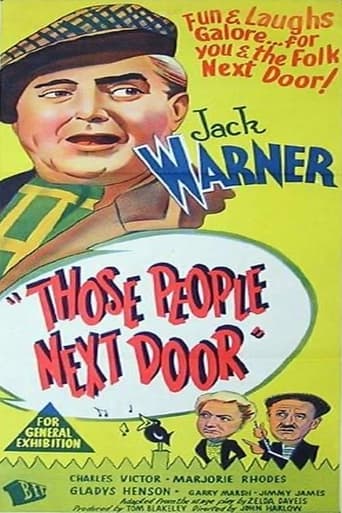 5.8
The Twiggs are a typical working-class family: Sam (Jack Warner) and Mary (Marjorie Rhodes) are trying to bring their family up in the shadow of the Blitz whilst taking everything in good humour. Their neighbours Joe (Charles Victor) and Emma (Gladys Henson) are constantly in the Twiggs house, borrowing a cup of sugar or using their Anderson shelter and between them the two working class families put the world to rights. But when their daughter falls for an upper class RAF pilot the Twiggs are asked by his mother, Lady Diana Stephens to tell their daughter to call the romance off, as the social gap between the families is too large. Incensed by Lady Diana s offer of money, Sam Twigg throws her out of the house. But events take a sudden turn as the war enters the Twiggs own living room. Will the two families manage to overcome their disdain for each other and let true love find its way?
Those People Next Door
1953
 6.6
A lonely child must stay with her uncaring aunt and uncle after her mother is hospitalized. Her estranged father is a fugitive. For love and companionship, the eleven-year old girl becomes friends with the housemaid. When at long last, she meets her dad, she must vow to never reveal his location to the police.
Child in the House
1956
 5.7
When nuclear scientists are kidnapped and smuggled behind the Iron Curtain, an FBI man and a British agent are assigned to catch the kidnappers.
Escape Route
1952
A theatre producer and actor try in vain to have a quiet week in a country cottage. But their efforts turn into comic disaster as a variety of wives, girlfriends and scoutmasters arrive uninvited.
Love's a Luxury
1952
 7.0
Long after being deserted by her husband, Linda Harrison will soon be free to marry her lover, Michael Carteret. But when her husband suddenly reappears, he attempts to blackmail the couple with a threat of ruining Michael's career. When her husband is murdered, Michael appears to be the only obvious suspect - but will the circumstantial evidence be enough to sentence him to death?
Circumstantial Evidence
1952
 6.5
A young couple get involved with a smuggler
Brandy for the Parson
1952
 6.7
The three marriages of a woman: a young man who is killed, a priggish lawyer and a sympathetic barrister. From the novel by Francis Brett Young.
Portrait of Clare
1950
Paul Dixon (Dermot Walsh) is a fiercely competitive racing driver whose meteoric career is cut short after he is paralyzed in a collision. Ann, Paul's conflicted, estranged wife (Wendy Williams), tries to help her husband overcome his self-pity to become productive once again. Paul's perception of himself as a cripple is challenged by his new friend, a former dancer (Anton Rodgers), who urges Paul to strive for rehabilitation and new goals. [Netflix]
Crash Drive
1959
 10.0
A murderer attempts to escape justice by shipping his victims body to Tokyo in a trunk.
Passenger to Tokyo
1954
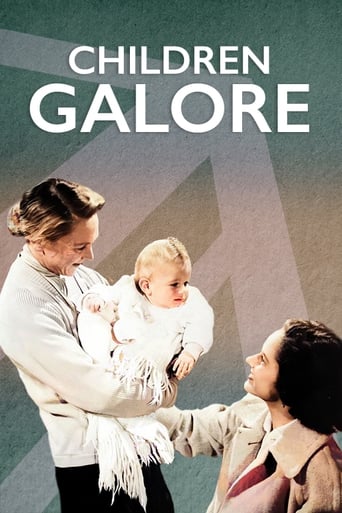 5.3
As a going away gift to a small village, the local Lord and Lady promise a new cottage to the local couple with the most grandchildren. Competitive instincts and petty jealousies ensue.
Children Galore
1955
1940s · 24 titles
 5.8
A tribute to the important work of female nurses during World War II.
The Lamp Still Burns
1943
 6.9
When an unexploded WWII bomb is accidentally detonated in Pimlico, it reveals a treasure trove and documents proving that the region is in fact part of Burgundy, France and thus foreign territory. The British government attempts to regain control by setting up border controls and cutting off services to the area.
Passport to Pimlico
1949
 7.1
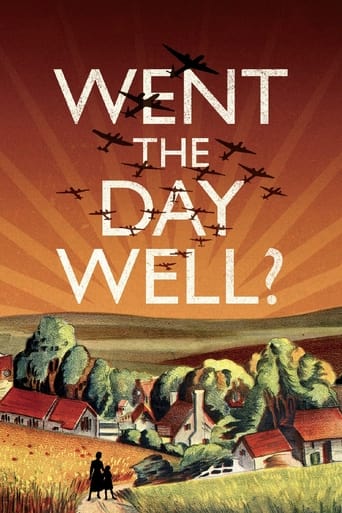
The quiet village of Bramley End is taken over by German troops posing as Royal Engineers. Their task is to disrupt England's radar network in preparation for a full scale German invasion. Once the villagers discover the true identity of the troops, they do whatever they can to thwart the Nazis plans.
Went the Day Well?
1942
 6.6
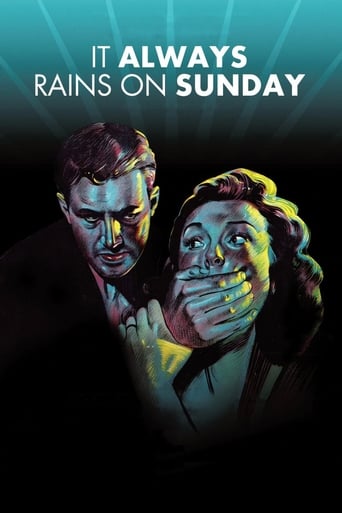
During a rainy Sunday afternoon, an escaped prisoner tries to hide out at the home of his ex-fiance.
It Always Rains on Sunday
1947
 6.4
A series of stories about the lives and loves of men in a Prisoner of War camp over five years. The main story is of Hasek (Redgrave) a Czech soldier who needs to keep his identity a secret from the Nazis. To do this, he poses as a dead English Officer and corresponds with the man's wife. Other inmates’ stories are also revealed. Location shooting in the British occupied part of Germany adds believability.
The Captive Heart
1946
 6.5
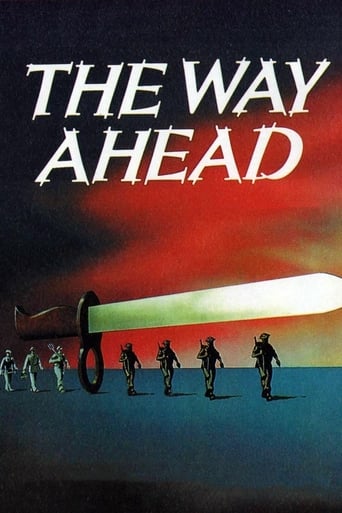
A mismatched collection of conscripted civilians find training tough under Lieutenant Jim Perry and Sergeant Ned Fletcher when they are called up to replace an infantry battalion that had suffered casualties at Dunkirk.
The Way Ahead
1944
 7.8
Joanna Godden falls heir to a farm when her father dies.
The Loves of Joanna Godden
1947
 7.0
In this modest drama, set during World War II, two rival boat families battle it out for supremacy.
Painted Boats
1945
 5.3
Dusty Bates observes some smuggled jewels hidden in a crate aboard a ship; he is pursued by low-lifes when the crate is put ashore.
The Adventures of Dusty Bates
1947
 9.5
Old Mother Riley becomes manager of a hotel - stolen diamonds, murder and pie fights follow.
Old Mother Riley's New Venture
1949
 7.2
Comedian Tommy Trinder plays it straight in this tribute to the wartime AFS (Auxiliary Fire Service). The dedicated band who kept the fires of London under control during the blitz and fire bombings of WWII.
The Bells Go Down
1943
 6.8
The fisherman from a Cornish village have a friendly rivalry with the fishermen (and one formidable woman) from a French port. Then war comes and they must all rethink their petty differences.
Johnny Frenchman
1945
 5.2
In 19th century England, Jassy is a young Gypsy girl blessed with the gift of second sight. Pursued by superstitious villagers, she is rescued by the son of the owner of Mordelaine, a vast stately home. Unfortunately, his father's drinking and gambling threaten the very ownership of the house. Despite her humble origins as a servant girl, Jassy must try to use her talents to climb the social ladder and save Mordelaine for the man whom she loves.
Jassy
1947
 6.8
Jonathan Dakers' early ambition was to become a great surgeon and to marry Edie Martyn. But, on the death of his father, he is obliged to start work as a partner in a poor general practice in the Black Country. Edie falls in love with Jonathan's brother, Harold, who is killed in the Great War, and Jonathan marries her as planned. It is only afterwards that he realises he now loves another.
My Brother Jonathan
1948
 6.2
In this lurid melodrama, Tod Slaughter plays a villain who murders the wealthy Sir Percival Glyde in the gold fields of Australia and assumes his identity in order to inherit Glyde's estate in England. On arriving in England, "Sir Percival" schemes to marry an heiress for her money, and, with the connivance of the cunning Dr. Isidor Fosco, embarks on a killing spree of all who suspect him to be an imposter and would get in the way of his plans to stay Lord of the Manor.
Crimes at the Dark House
1940
 6.2
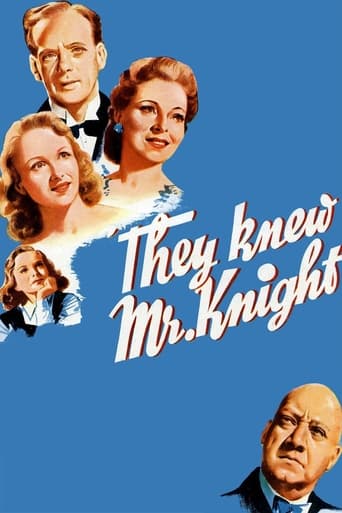
After a chance train encounter with Laurence Knight, Tom Blake's family's fortunes prosper on the beneficence of the great financier. A developing friendship leads to the Knights selling their home to the Blakes when they move back to London. All looks rosy for the Blakes as share prices in Mr Knight's new business venture soar, but is their confidence misplaced?
They Knew Mr. Knight
1946
 6.5
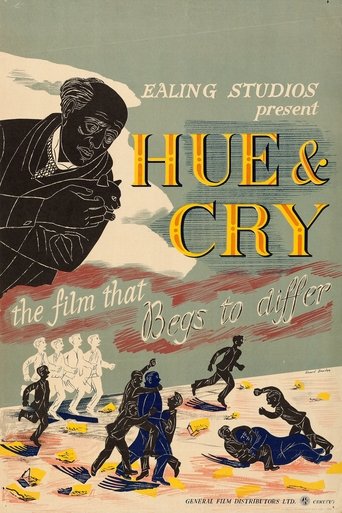
A gang of street boys foil a master crook who sends commands for robberies by cunningly altering a comic strip's wording each week, unknown to writer and printer. The first of the Ealing comedies.
Hue and Cry
1947
When a soldier returns from the Far East after the war, he and his wife have to adjust to life at home.
I'll Turn to You
1946
 7.0
During the War seven women from very different backgrounds find themselves together in the Auxiliary Territorial Services. They are soon drilling, driving lorries, and manning ack-ack batteries.
The Gentle Sex
1943
 5.8
In this psychological thriller, an avaricious man covets his stepbrother's home. The greedy fellow knows that his stepbrother has a heart condition and so sets off a fatal attack by smashing a beloved violin. However, his actions do not come without a terrible price.
House of Darkness
1948
 7.5
The story of three women working as waitresses in post-World War II Britain.
Love in Waiting
1948
A psychic goes to the home of a woman who wants him to contact her dead fiancée, even though she has already remarried. Later, she ends up murdered! Soon the psychic points the finger at her jealous husband.
The Man from Yesterday
1949
 7.0
George is an inept reserve policeman working in wartime Liverpool, who is chosen by a gang of Nazi saboteurs as the stooge for their planned destruction of the British battleship HMS Hercules. Framed by the villains and forced to go on the run, George sets out to clear his name with the aid of new girlfriend, Jane.
Spare a Copper
1940
Opposing ends of a pantomime horse where the 'head' dates a society lady while the 'tail' is unhappily married.
The Trojan Brothers
1946
Series credits
7.8A quirky spy show of the adventures of eccentrically suave British Agent John Steed and his predominantly female partners. Jonathan Steed - an urbane, proper gentleman spy - teams with various assistants throughout the series' run, including Dr. David Keel, Cathy Gale, Emma Peel and Tara King, to repeatedly save the world from diabolical schemes plotted by equally diabolical evil-doers (among them robots and man-eating monsters).
The Avengers
1961
7.0ITV Playhouse is a British comedy-drama TV series that ran from 1967 to 1983, which featured contributions from playwrights such as Dennis Potter, Rhys Adrian and Alan Sharp. The series began in black and white, but was later shot in colour and was produced by various companies for the ITV network, a format that would inspire Dramarama. Actors appearing in the series included Leslie Anderson, Gwen Nelson, Ricky Alleyne, Pat Heywood, Michael Elphick, Ian Hendry, Edward Woodward, Margaret Lockwood, Jessie Matthews and Lloyd Peters.
ITV Playhouse
1967
4.8No Hiding Place is a British television series that was produced at Wembley Studios by Associated-Rediffusion for the ITV network between 16 September 1959 and 22 June 1967. It was the sequel to the series Murder Bag and Crime Sheet, all starring Raymond Francis as Detective Superintendent, later Detective Chief Superintendent Tom Lockhart.
No Hiding Place
1959
7.7After resigning, a secret agent is abducted and taken to what looks like an idyllic village, but is really a bizarre Kafkaesque prison. His warders demand information. He gives them nothing, but only tries to escape.
The Prisoner
1967
7.7After resigning, a secret agent is abducted and taken to what looks like an idyllic village, but is really a bizarre Kafkaesque prison. His warders demand information. He gives them nothing, but only tries to escape.
The Prisoner
1967
7.1BBC series based on the novels by Georges Simenon which starred Rupert Davies as Inspector Maigret, a French police detective who preferred to watch and listen in order to solve crimes. The series ran from 1960-63 on British television.
Maigret
1960
7.2Sergeant Cork is a British detective television series which first aired between 1963 and 1968 on ITV. It was a police procedural show that followed the efforts of two police officers and their battle against crime in Victorian London. In all 66 hour-long episodes were aired during the five-year run, although the last episode was not broadcast until January 1968, 16 months after the others. Journalist Tom Sutcliffe has credited it as a first example of the use of the Victorian-era policeman in a television crime series. A 1969 review in The Age opined that rather than suspense, the strengths of the series were its "excellent period settings and wonderfully thick pea-soupers" which "add up to splendid evocative stuff", as well as the performance of star John Barrie. At no time during the whole series is Sergeant Cork's first name given.
Sergeant Cork
1963
 7.2
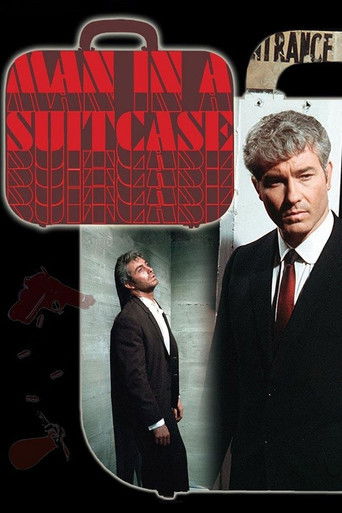
Accused of treason, a former U.S. intelligence officer based in London tries to clear his name, taking on freelance jobs around Europe as he searches for answers.
Man in a Suitcase
1967