
Acting
George Waring
Born — Died
1925-02-20 — 2010-02-15
Place of birth
Eccles, Lancashire, England, UK
Known for
Acting
Credits
50 titles
George Waring was a British television actor from 1962 to 2000. He also had occasional feature film credits. He was best known for appearing on Coronation Street as Arnold Swain, the bigamist husband of Emily Bishop in 1980. Earlier in the 1970s he appeared in Crown Court, the long running ITV courtroom drama series.
Known for
 5.3
The residents of Coronation Street are ordinary, working-class people, and the show follows them through regular social and family interactions at home, in the workplace, and in their local pub, the Rovers Return Inn. Britain's longest-running soap.
Coronation Street
1960
 7.9
The adventures of The Doctor, a time-traveling humanoid alien known as a Time Lord. He explores the universe in his TARDIS, a sentient time-traveling spaceship. Its exterior appears as a blue British police box, which was a common sight in Britain in 1963 when the series first aired. Along with a succession of companions, The Doctor faces a variety of foes while working to save civilizations, help ordinary people, and right many wrongs.
Doctor Who
1963
 8.2
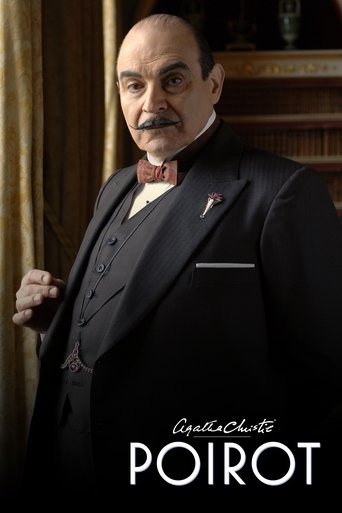
From England to Egypt, accompanied by his elegant and trustworthy sidekicks, the intelligent yet eccentrically-refined Belgian detective Hercule Poirot pits his wits against a collection of first class deceptions.
Agatha Christie's Poirot
1989
 5.7
Crown Court is an afternoon television courtroom drama produced by Granada Television for the ITV network that ran from 1972, when the Crown Court system replaced Assize courts and Quarter sessions in the legal system of England and Wales, to 1984.
Crown Court
1972
 6.8
The daily lives of the men and women at Sun Hill Police Station as they fight crime on the streets of London. From bomb threats to armed robbery and drug raids to the routine demands of policing this ground-breaking series focuses as much on crime as it does on the personal lives of its characters.
The Bill
1984
 6.5
Peak Practice is a British drama series about a GP surgery in Cardale — a small fictional town in the Derbyshire Peak District — and the doctors who worked there. It ran on ITV from 10 May 1993 to 30 January 2002 and was one of their most successful series at the time. It originally starred Kevin Whately as Dr Jack Kerruish, Amanda Burton as Dr Beth Glover and Simon Shepherd as Dr Will Preston, though the roster of doctors would change many times over the course of the series. Cardale was based on the Staffordshire village of Longnor for the final series, but was previously based in the Derbyshire village of Crich, although certain scenes were filmed at other nearby Derbyshire towns and villages, most notably Matlock, Belper and Ashover.
Peak Practice
1993
Film credits

1970s · 7 titles
A bookmaker moves in with two sisters. He gets more than he bargained for.
Crippled Bloom
1972
 6.8
Set in the English countryside of the 1920s - when otter hunting was still legal - this film follows the life of Tarka the Otter from his birth into adulthood. We witness his close shaves, and his struggle with a man who tries to keep our furry hero as a pet.
Tarka the Otter
1979
 NR
Based on a Court Martial held aboard HMS Hibernia in Malta in 1893. The court endeavours to determine why, during fleet manoeuvres, HMS Victoria is sunk in a collision resulting in a grievous loss of life.
The Sinking of the HMS Victoria
1977
 NR
An out of work man must take his son to a school poetry competition while accompanied by his friendly neighbours, of which, he's not too secretly been having an affair with the wife.
Competition
1971
 NR
A man is heartbroken after his wife walks out on him. Reasoning that he has nothing to live for, he hires a peculiar odd job man to kill him and put him out of his misery.
The Odd Job
1971
In London, Tom and Phyl are self-assured and in control of the situation whenever they meet their friends Huw and Tegwen. But when they're not on home ground and when they accept an invitation to visit Huw and Tegwen’s home in Wales, relationships change more than a little Huw, a London barrister, whose heart is in the Welsh hills, is truly king of his castle, and shocks and excites Phul with some of his "Cassanova" qualities. And Tegwen's relationship with her husband intrigues Tom, whose marriage is more of an easy companionship. But why have they been invited for the weekend?
Funny
1971
When a new arrival, a titled lady no less, arrives to shatter the genteel status quo of the St. Elmo Hotel, the entrenched residents are soon sharpening up their knitting needles for battle.
The Winter Ladies
1979
1960s · 2 titles
 7.3
The TARDIS arrives on Earth in a new ice age. The travellers make their way into a base where scientists, commanded by Leader Clent, are using an ioniser device to combat the advance of a glacier.
Doctor Who: The Ice Warriors
1967
Television adaptation of Peter Weiss's play about the Frankfurt Auschwitz trials.
The Investigation
1967
Series credits
5.3The residents of Coronation Street are ordinary, working-class people, and the show follows them through regular social and family interactions at home, in the workplace, and in their local pub, the Rovers Return Inn. Britain's longest-running soap.
Coronation Street
1960
7.9The adventures of The Doctor, a time-traveling humanoid alien known as a Time Lord. He explores the universe in his TARDIS, a sentient time-traveling spaceship. Its exterior appears as a blue British police box, which was a common sight in Britain in 1963 when the series first aired. Along with a succession of companions, The Doctor faces a variety of foes while working to save civilizations, help ordinary people, and right many wrongs.
Doctor Who
1963
8.2From England to Egypt, accompanied by his elegant and trustworthy sidekicks, the intelligent yet eccentrically-refined Belgian detective Hercule Poirot pits his wits against a collection of first class deceptions.
Agatha Christie's Poirot
1989
5.7Crown Court is an afternoon television courtroom drama produced by Granada Television for the ITV network that ran from 1972, when the Crown Court system replaced Assize courts and Quarter sessions in the legal system of England and Wales, to 1984.
Crown Court
1972
6.8The daily lives of the men and women at Sun Hill Police Station as they fight crime on the streets of London. From bomb threats to armed robbery and drug raids to the routine demands of policing this ground-breaking series focuses as much on crime as it does on the personal lives of its characters.
The Bill
1984
6.5Peak Practice is a British drama series about a GP surgery in Cardale — a small fictional town in the Derbyshire Peak District — and the doctors who worked there. It ran on ITV from 10 May 1993 to 30 January 2002 and was one of their most successful series at the time. It originally starred Kevin Whately as Dr Jack Kerruish, Amanda Burton as Dr Beth Glover and Simon Shepherd as Dr Will Preston, though the roster of doctors would change many times over the course of the series. Cardale was based on the Staffordshire village of Longnor for the final series, but was previously based in the Derbyshire village of Crich, although certain scenes were filmed at other nearby Derbyshire towns and villages, most notably Matlock, Belper and Ashover.
Peak Practice
1993
 5.2
A BBC television anthology series featuring productions of classic and contemporary stage plays usually broadcast on BBC1. Each production featured a different work, often using prominent British stage actors in the leading roles. The series was transmitted from October 1965 to September 1983.
BBC Play of the Month
1965
 6.3
New Scotland Yard is a police drama series produced by London Weekend Television for ITV from 1972 and 1974. It features the activities of two officers from the Criminal Investigations Department in the Metropolitan Police force headquarters at New Scotland Yard, as they dealt with the assorted villains of the day.
New Scotland Yard
1972
 7.2
Theatre 625 is a British television drama anthology series, produced by the BBC and transmitted on BBC2 from 1964 to 1968. It was one of the first regular programmes in the line-up of the channel, and the title referred to its production and transmission being in the higher-definition 625-line format, which only BBC2 used at the time.
Theatre 625
1964
 4.8
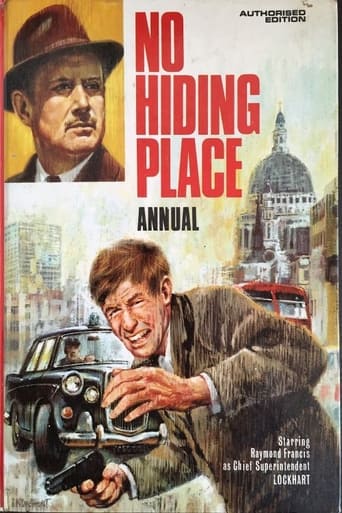
No Hiding Place is a British television series that was produced at Wembley Studios by Associated-Rediffusion for the ITV network between 16 September 1959 and 22 June 1967. It was the sequel to the series Murder Bag and Crime Sheet, all starring Raymond Francis as Detective Superintendent, later Detective Chief Superintendent Tom Lockhart.
No Hiding Place
1959
 4.5
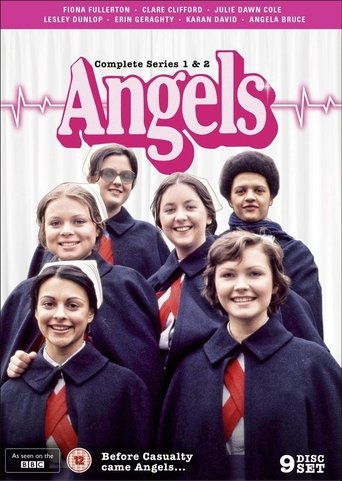
Angels is a BBC medical soap-opera which launched on 1st September 1975 and was the blue print for such medical soaps as Casualty, Holby City, plus daytime soap, Doctors. The medical soap focuses on different departments within Heath Green Hospital and was a highly successful continuing drama.
Angels
1975
 4.6
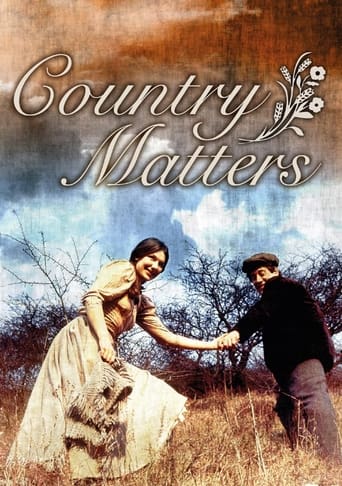
An anthology series adapted from plays and short stories by A.E Coppard and H.E. Bates, depicting English country life and rural romance at the turn of the 20th-century. It presents unsentimental stories of human relationships and raw emotions – heartfelt passions, crippling frustrations, unspoken love and destructive jealousy.
Country Matters
1972
 9.0
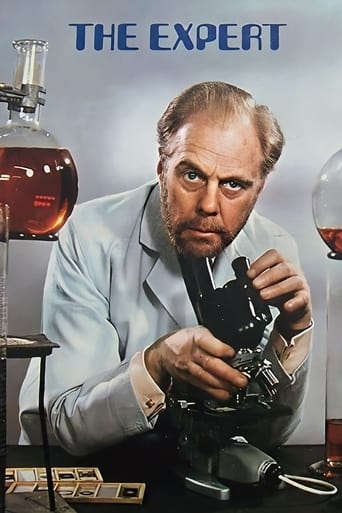
The Expert is a British television series produced by the BBC between 1968 and 1976. The series starred Marius Goring as Dr. John Hardy, a pathologist working for the Home Office and was essentially a police procedural drama, with Hardy bringing his forensic knowledge to solve various cases. The Expert was created and produced by Gerard Glaister. The series was also one of the first BBC dramas to be made in colour, and throughout its four series had numerous high quality guest appearances by actors such as John Carson, Peter Copley, Rachel Kempson, Peter Vaughan, Clive Swift, Geoffrey Palmer, Peter Barkworth, Jean Marsh, Ray Brooks, George Sewell, Anthony Valentine, Bernard Lee, Lee Montague, Geoffrey Bayldon, Mike Pratt, Edward Fox, André Morell, Brian Blessed, Nigel Stock, Philip Madoc and Warren Clarke.
The Expert
1968
 7.6
Two lovers are reunited after decades apart following a mutual misunderstanding.
As Time Goes By
1992
 8.2
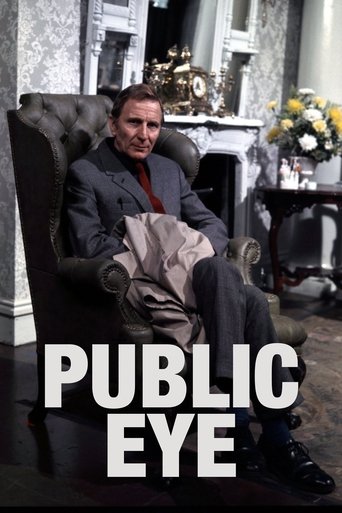
Public Eye is a British television drama broadcast from 1965 to 1975 on ITV1. Produced by ABC Television for three series, and Thames Television for a further four, the programme follows the investigations and cases handled by the unglamourous enquiry agent Frank Marker.
Public Eye
1965
 6.0
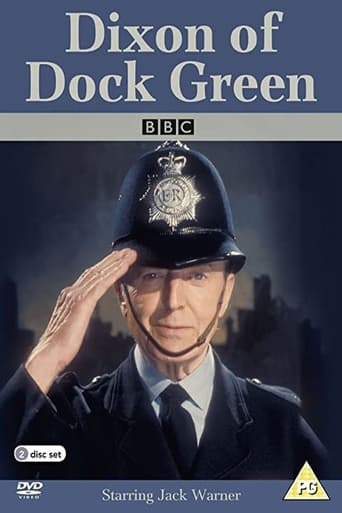
Dixon of Dock Green was a BBC television series following the activities of police officers at a fictional Metropolitan Police station in the East End of London from 1955 to 1976. Some episodes were later remade as a BBC radio series in 2005 and 2006.
Dixon of Dock Green
1955
 7.3
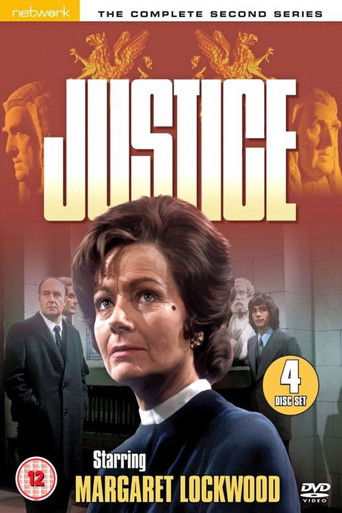
Justice is a British drama television series which originally aired on ITV in 39 hour-long episodes between 8 August 1971 and 16 October 1974. Margaret Lockwood stars as Harriet Peterson a female barrister in the North of England. It was made by Yorkshire Television and was based loosely on Justice Is a Woman, an episode of ITV Playhouse broadcast in 1969 in which Lockwood had previously also played a barrister. The theme music was Crown Imperial by William Walton.
Justice
1971
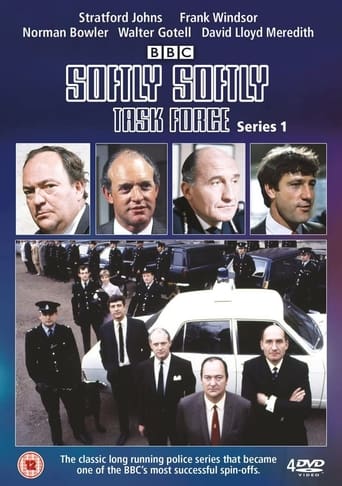 7.5
Softly, Softly is a British television drama series, produced by the BBC and screened on BBC 1 from January 1966. It centred around the work of regional crime squads, plain-clothes CID officers based in the fictional region of Wyvern, supposedly in the Bristol area of England.
Softly, Softly
1966
 5.0
Churchill's People is a British anthology series based on A History of the English-Speaking Peoples, Winston Churchill's four-volume history of Britain and its former colonies. 26 episodes were produced by the BBC and initially broadcast from 30 December 1974 to 23 June 1975.
Churchill's People
1974
 7.0
An anthology of plays and novels adapted into feature length TV movies, broadcast on BBC2 from September 1977 to April 1979.
BBC2 Play of the Week
1977
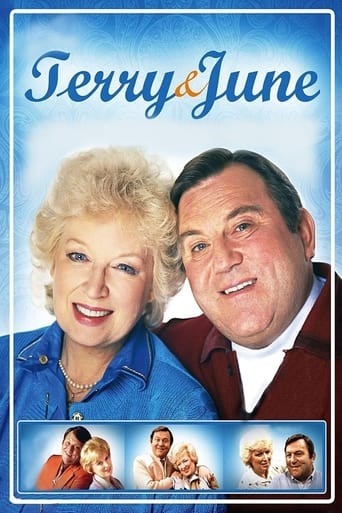 6.5
Middle-aged Terry and June Medford are beginning to find the trials of life more difficult as they try to succeed in their daily lives. The couple have just moved to Purley, south-east London... Aunt Lucy and the mynah bird have disappeared, as had the occasionally visiting daughters. Terry and June now mixed with friendly next door neighbour Beattie; Terry's chatty work colleague, Malcolm; and their gruff boss Sir Dennis Hodge. Otherwise, things were much as before, with Terry's pigheaded childishness causing no end of problems, usually thwarting June's attempts at leading a cosy life.
Terry and June
1979
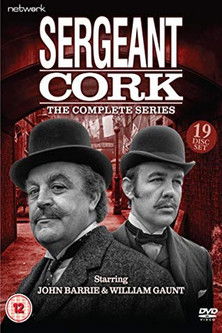 7.2
Sergeant Cork is a British detective television series which first aired between 1963 and 1968 on ITV. It was a police procedural show that followed the efforts of two police officers and their battle against crime in Victorian London. In all 66 hour-long episodes were aired during the five-year run, although the last episode was not broadcast until January 1968, 16 months after the others. Journalist Tom Sutcliffe has credited it as a first example of the use of the Victorian-era policeman in a television crime series. A 1969 review in The Age opined that rather than suspense, the strengths of the series were its "excellent period settings and wonderfully thick pea-soupers" which "add up to splendid evocative stuff", as well as the performance of star John Barrie. At no time during the whole series is Sergeant Cork's first name given.
Sergeant Cork
1963
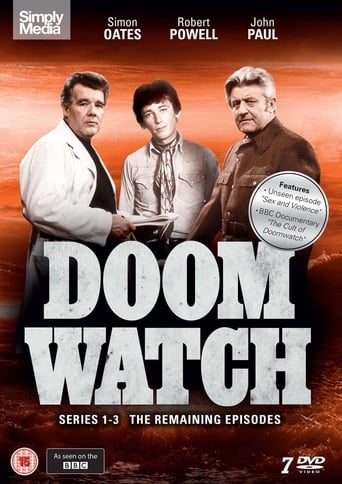 6.4
Doomwatch is a British science fiction television programme produced by the BBC, which ran on BBC 1 between 1970 and 1972. The series was set in the then present-day, and dealt with a scientific government agency led by Doctor Spencer Quist, responsible for investigating and combating various ecological and technological dangers. The series was followed by a film adaptation produced by Tigon British Film Productions and released in 1972, and a revival TV film was broadcast on Channel 5 in 1999.
Doomwatch
1970
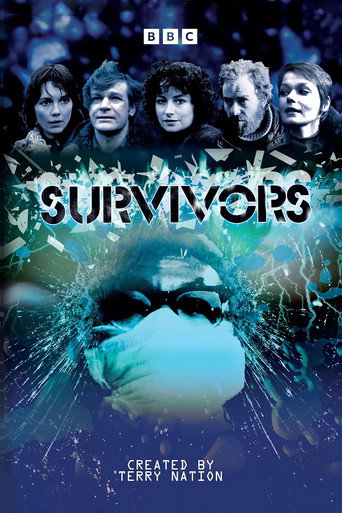 7.9
Survivors is a British post-apocalyptic fiction television series devised by Terry Nation and produced by Terence Dudley at the BBC from 1975 to 1977. It concerns the plight of a group of people who have survived an accidentally released plague – referred to as "The Death" – that kills nearly the entire human population of the planet.
Survivors
1975
 6.8
This ten episode program was based on ten short stories written by Agatha Christie but with wide-ranging themes. Some were romances, some had supernatural themes and a couple were adventures. The common link was that all came from the talented pen of Agatha Christie, all were entertaining and each drama was carefully crafted and well cast with many of Britain's best known actors of the time represented.
The Agatha Christie Hour
1982
 6.3
Ace of Wands is a fantasy-based British children's television show broadcast on ITV between 1970 and 1972, created by Trevor Preston and Pamela Lonsdale and produced by Thames Television. The title, taken from the name of a Tarot card describes the principal character, called "Tarot" who combined stage magic with supernatural powers. Tarot has a pet Owl named Ozymandias, played by Fred Owl. The series ran for two seasons of thirteen episodes and a third season of twenty, with fourteen story arcs, in a similar manner to early Doctor Who. Many, if not all, of the first 26 episodes are believed to have been wiped, although the final season is intact.
Ace of Wands
1970
 6.2
The Adventures of Black Beauty is a British family adventure series broadcast on ITV1. Produced by London Weekend Television, the 52-episode series was inspired by Anna Sewell's novel but featured new characters, including Dr James Gordon and his children, who, in 19th century rural England, take in the horse Black Beauty.
The Adventures of Black Beauty
1972
 7.5
In Colne, Lancashire, in the North West of England, Nellie and Eli Pledge may be siblings, but their personalities are polar opposites. If not for inheritance, they would never even think of becoming business partners for five years.
Nearest and Dearest
1968
 8.0
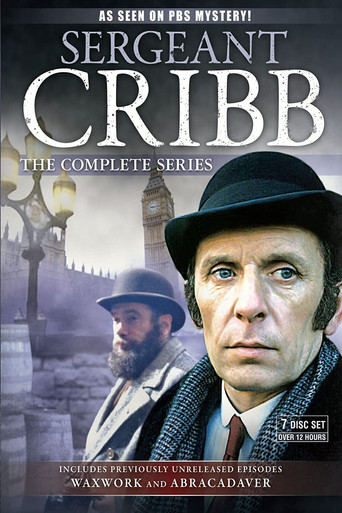
Victorian England, the late 1800s: Detective Sergeant Daniel Cribb of the newly formed Criminal Investigation Department (CID) is determined to remove crime from the streets of London using the latest detection methods.
Cribb
1980
 5.2
Hazell is a British television drama based on the novel series by Terry Venables and Gordon Williams (collectively known as P.B. Yuill), and starring Nicholas Bell as James Hazell, a 'smart parody' of Philip Marlowe and Sam Spade. The program ran for 2 series, from January 1978 to July 1979.
Hazell
1978
 6.6
That's My Boy is a British sitcom produced by Yorkshire Television for ITV from 1981 to 1986. It stars Mollie Sugden as Ida Willis, who takes a job as a housekeeper for her son, whom she gave up for adoption years earlier.
That's My Boy
1981
 6.8
Shadows is a British Supernatural television anthology series produced by Thames Television for ITV between 1975 and 1978. Extending over three seasons, it featured ghost and horror dramas for children. Guest actors included John Nettleton, Gareth Thomas, Jenny Agutter, Pauline Quirke, Brian Glover, June Brown, Rachel Herbert, Jacqueline Pearce and Gwyneth Strong. The series was also notable for reviving the character of Mr. Stabs. Notable writers for the series included J. B. Priestley, Fay Weldon and PJ Hammond.
Shadows
1975
 10.0
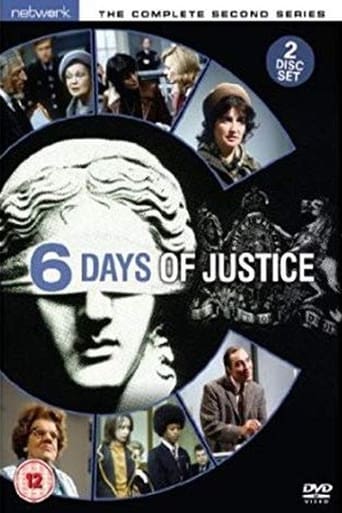
Six Days of Justice is a British television drama anthology series of single plays created by Thames Television and shown on ITV from 1972 to 1975, over four seasons of six episodes apiece.
Six Days of Justice
1972
 7.2
Following the death of the sitting Labour Party Member of Parliament, Bill Brand is selected as Labour candidate for a Lancashire textile constituency.
Bill Brand
1976
 7.3
A 13-episode miniseries from Yorkshire Television, about Charles Dickens, by now an internationally renowned novelist, during an 1869 tour of America, looking back over his life.
Dickens of London
1976
 7.4
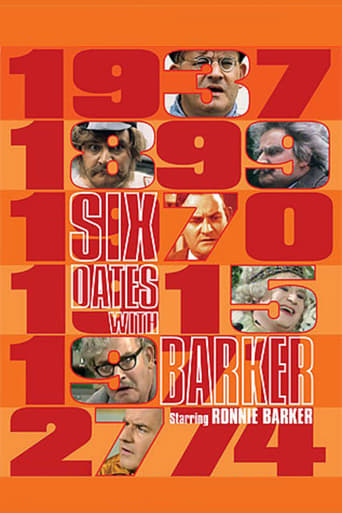
Six Dates with Barker is a 1971 ITV series of six one-off, half-hour situation comedies showcasing the talents of Ronnie Barker. Three of the stories were further developed: The Phantom Raspberry Blower of Old London Town was made into a serial as part of the 1976 sketch comedy programme The Two Ronnies; The Odd Job Man was adapted as a feature film, titled The Odd Job; and The Removals Person became Barker's final programme Clarence.
Six Dates with Barker
1971
 6.8
Mixed Blessings is a British sitcom produced by LWT for broadcast on the ITV network between 1978 and 1980, It was created by comedy-writer Sid Green and starred Christopher Blake and Muriel Odunton. White Thomas Simpson and Black Susan Lambert are a young couple who wed without their families' knowledge, forcing them to navigate the challenges of introducing their families to their relationship. The show explores themes of cultural differences and family dynamics within the context of a mixed-race marriage.
Mixed Blessings
1978
 10.0
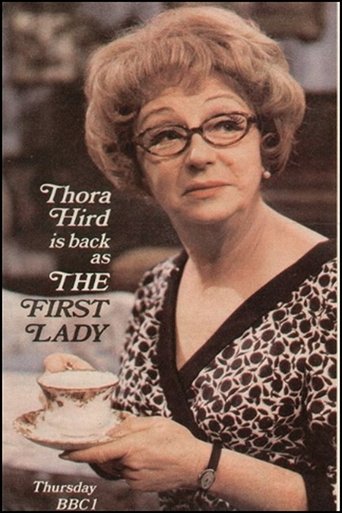
The First Lady is a British television drama produced for BBC One, starring Thora Hird as crusading local councillor Sarah Danby, set around the fictional Lancashire borough of Furness. Capitalising on the popularity of its lead actress, The First Lady was a down-to-earth series exploring the inner workings of local government.
The First Lady
1968
 NR
War vet Hedley Green has been the station master of Burberry Halt railway station for 30 years. A quiet, run-down country station on the Milchester line that sees three trains a day, Hedley stills wears the uniform of the Great Western Railway and uses a 1933 rulebook. Assisted by Peter Pringle, their time is mostly spent dealing with crises caused by area manager Mr Potts, who is later replaced by Mr Pitts.
The Train Now Standing
1972
 NR
An anthology of six plays, contemporary twists on well-loved tales with dark endings.
Bedtime Stories
1974