
Acting
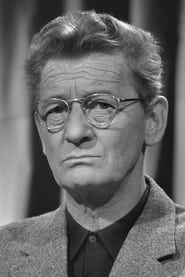
Simon Carmiggelt
Born — Died
1913-10-07 — 1987-11-30
Place of birth
Den Haag
Known for
Acting
Credits
13 titles
Simon Carmiggelt (1913–1987) was a Dutch writer, journalist and poet, best known for his daily newspaper columns signed with his pen name Kronkel ("Twist", or "Kink").
Known for
 NR
A truthful portrait of one of the Netherlands' most important public intellectuals of the postwar era: Renate Rubinstein.
Tamar: The Truths of Renate Rubinstein
2022
 9.0
A gentle comedy about three brothers, each of whom inherited something of their deceased father’s personality. Their paths keep crossing in curious ways.
Bicycling to the Moon
1963
 7.2
Bert Haanstra paints a portrait of The Netherlands and the Dutch, in his own unparalleled manner. Partly with the aid of a hidden camera he observes people in the most diverse situations. He shows the unusual in the usual and the usual in the unusual. The harsh years of the post war era of reconstruction have passed and for most people life is better than before.
Everyman
1963
 NR
Short film in which Dutch author Simon Carmiggelt visits the hairdresser.
The Hairdresser
1983
 5.8
The story of three torn apart families on the verge of Sinterklaasavond, the Dutch equivalent of Christmas Eve.
That Joyous Eve...
1960
 NR
Recording of the duo cabaret show by the Dutch cabaret artists Wim Sonneveld and Ina Faassen.
Wim Sonneveld and Ina van Faassen
1969
Film credits
1980s · 2 titles

1960s · 4 titles
9.0A gentle comedy about three brothers, each of whom inherited something of their deceased father’s personality. Their paths keep crossing in curious ways.
Bicycling to the Moon
1963
7.2Bert Haanstra paints a portrait of The Netherlands and the Dutch, in his own unparalleled manner. Partly with the aid of a hidden camera he observes people in the most diverse situations. He shows the unusual in the usual and the usual in the unusual. The harsh years of the post war era of reconstruction have passed and for most people life is better than before.
Everyman
1963
5.8The story of three torn apart families on the verge of Sinterklaasavond, the Dutch equivalent of Christmas Eve.
That Joyous Eve...
1960
 6.9
The Netherlands and water, they are inseparable from one another. Water in its soothing form, as a place of work and pleasure and as a source of threat and misery. Bert Haanstra thought it a great subject for a big cinema documentary and made The Voice of the Water. At the start, while the credits are still running, it is already apparent how remarkable and original he portrays the beauty of the landscape of the Dutch coastline. In the following ninety minutes we see numerous people that live, work and recreate on, by and in the water. Often they are being observed in a gentle humorous way that reminds us of The Human Dutch. Some people prefer to stay far away from all the wetness: the little boy having a swimming lesson, but who doesn’t dare to put his head under water, is forever imprinted on the memory of many of the viewers.
The Voice of the Water
1966
Behind the camera
7.2Bert Haanstra paints a portrait of The Netherlands and the Dutch, in his own unparalleled manner. Partly with the aid of a hidden camera he observes people in the most diverse situations. He shows the unusual in the usual and the usual in the unusual. The harsh years of the post war era of reconstruction have passed and for most people life is better than before.
Everyman
1963
NRRecording of the duo cabaret show by the Dutch cabaret artists Wim Sonneveld and Ina Faassen.
Wim Sonneveld and Ina van Faassen
1969
 9.5
Recording of Wim Sonneveld’s successful one man show ‘An Evening with Wim Sonneveld’, which ran from 1964 to 1966.
An Evening with Wim Sonneveld
1965
 NR
Recording of the theatre program by the Dutch cabaret artists Wim Sonneveld, Willem Nijholt and Corrie van Gorp.
Wim Sonneveld with Willem Nijholt and Corrie van Gorp
1973
6.9The Netherlands and water, they are inseparable from one another. Water in its soothing form, as a place of work and pleasure and as a source of threat and misery. Bert Haanstra thought it a great subject for a big cinema documentary and made The Voice of the Water. At the start, while the credits are still running, it is already apparent how remarkable and original he portrays the beauty of the landscape of the Dutch coastline. In the following ninety minutes we see numerous people that live, work and recreate on, by and in the water. Often they are being observed in a gentle humorous way that reminds us of The Human Dutch. Some people prefer to stay far away from all the wetness: the little boy having a swimming lesson, but who doesn’t dare to put his head under water, is forever imprinted on the memory of many of the viewers.
The Voice of the Water
1966