
Acting
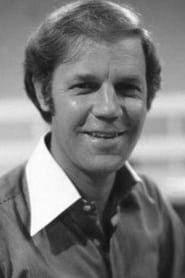
Brian Cant
Born — Died
1933-07-12 — 2017-06-19
Place of birth
Ipswich, Suffolk, England, UK
Known for
Acting
Credits
34 titles
Known for
 7.9
The adventures of The Doctor, a time-traveling humanoid alien known as a Time Lord. He explores the universe in his TARDIS, a sentient time-traveling spaceship. Its exterior appears as a blue British police box, which was a common sight in Britain in 1963 when the series first aired. Along with a succession of companions, The Doctor faces a variety of foes while working to save civilizations, help ordinary people, and right many wrongs.
Doctor Who
1963
 6.2
Drama series about the staff and patients at Holby City Hospital's emergency department, charting the ups and downs in their personal and professional lives.
Casualty
1986
 6.6
Play for Today is a British television anthology drama series, produced by the BBC and transmitted on BBC1 from 1970 to 1984. During the run, more than three hundred programmes, featuring original television plays, and adaptations of stage plays and novels, were transmitted. The individual episodes were between fifty and a hundred minutes in duration.
Play for Today
1970
 4.8
Set in the fictional Midlands town of Letherbridge, defined as being close to the city of Birmingham, this soap opera follows the staff and families of a doctor's surgery.
Doctors
2000
 7.3
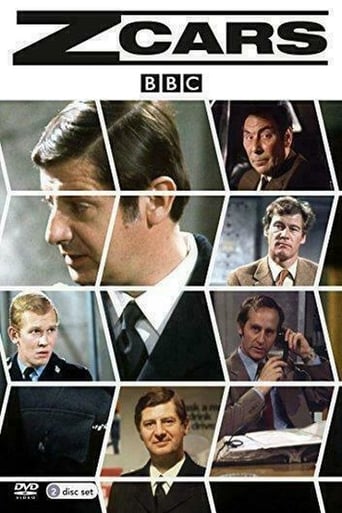
Z-Cars or Z Cars is a British television drama series centred on the work of mobile uniformed police in the fictional town of Newtown, based on Kirkby, Merseyside. Produced by the BBC, it debuted in January 1962 and ran until September 1978.
Z-Cars
1962
 4.8
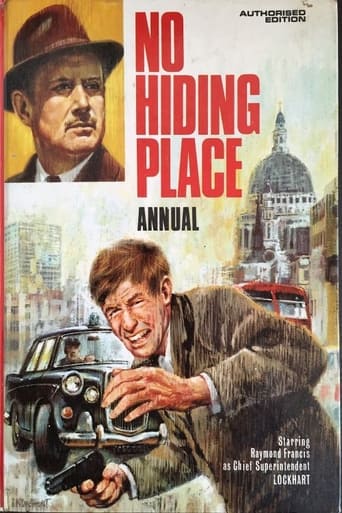
No Hiding Place is a British television series that was produced at Wembley Studios by Associated-Rediffusion for the ITV network between 16 September 1959 and 22 June 1967. It was the sequel to the series Murder Bag and Crime Sheet, all starring Raymond Francis as Detective Superintendent, later Detective Chief Superintendent Tom Lockhart.
No Hiding Place
1959
Film credits


1960s · 4 titles
 5.6
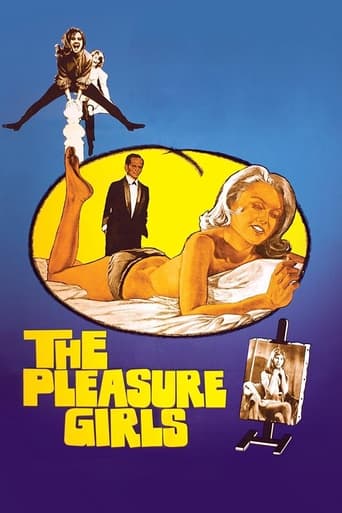
When Sally moves to London to pursue a modelling career, she moves in with Angela and Dee and discovers the world of the carefree bachelor girl in Swinging London. Over one weekend - filled with parties, blossoming friendships, and romantic encounters with Keith and Nikko (Klaus Kinski) - the vivacious girls learn about life's pleasures and pains.
The Pleasure Girls
1965
 7.9
In the year 4000, the Daleks conspire to conquer the Solar System. Their scheme involves treachery at the highest levels and a weapon capable of destroying the very fabric of time. Only the Doctor and his friends can prevent catastrophe — and there is no guarantee they will escape with their lives...
Doctor Who: The Daleks' Master Plan
1965
 5.3
When two belligerent Dominators and their robotic servant Quarks land on the peaceful planet Dulkis planning to drop a radioactive seed into the planet's core to refuel their spaceship, the Second Doctor, Jamie and Zoe must attempt to inspire the pacifist Dulcians to resist.
Doctor Who: The Dominators
1968
 NR
Mr Munnings is printing some posters advertising the Fire Brigade band's forthcoming concert. Captain Flack tells his men to put the posters up around town but where can they put them? Nick Fisher the bill poster helps them out.
Trumpton: The Bill Poster
1967
Series credits
7.9The adventures of The Doctor, a time-traveling humanoid alien known as a Time Lord. He explores the universe in his TARDIS, a sentient time-traveling spaceship. Its exterior appears as a blue British police box, which was a common sight in Britain in 1963 when the series first aired. Along with a succession of companions, The Doctor faces a variety of foes while working to save civilizations, help ordinary people, and right many wrongs.
Doctor Who
1963
6.2Drama series about the staff and patients at Holby City Hospital's emergency department, charting the ups and downs in their personal and professional lives.
Casualty
1986
6.6Play for Today is a British television anthology drama series, produced by the BBC and transmitted on BBC1 from 1970 to 1984. During the run, more than three hundred programmes, featuring original television plays, and adaptations of stage plays and novels, were transmitted. The individual episodes were between fifty and a hundred minutes in duration.
Play for Today
1970
4.8Set in the fictional Midlands town of Letherbridge, defined as being close to the city of Birmingham, this soap opera follows the staff and families of a doctor's surgery.
Doctors
2000
7.3Z-Cars or Z Cars is a British television drama series centred on the work of mobile uniformed police in the fictional town of Newtown, based on Kirkby, Merseyside. Produced by the BBC, it debuted in January 1962 and ran until September 1978.
Z-Cars
1962
4.8No Hiding Place is a British television series that was produced at Wembley Studios by Associated-Rediffusion for the ITV network between 16 September 1959 and 22 June 1967. It was the sequel to the series Murder Bag and Crime Sheet, all starring Raymond Francis as Detective Superintendent, later Detective Chief Superintendent Tom Lockhart.
No Hiding Place
1959
 7.2
Theatre 625 is a British television drama anthology series, produced by the BBC and transmitted on BBC2 from 1964 to 1968. It was one of the first regular programmes in the line-up of the channel, and the title referred to its production and transmission being in the higher-definition 625-line format, which only BBC2 used at the time.
Theatre 625
1964
Pebble Mill was a re-launched version of the 1970s daily chat show Pebble Mill (also known as Pebble Mill At One for a while) which aired on BBC1 in the United Kingdom. The series premiered on October 14, 1991. The show was a mixture of celebrity guests and music. Alan Titchmarsh was a presenter on the show throughout it's complete run. Other presenters included Judi Spiers, Gloria Hunniford and Ross King.
Pebble Mill
1991
 6.0
Screenplay was a drama anthology television series, broadcast on BBC between 1986 and 1993. Numerous episodes were produced including one named "Boswell and Johnson's Tour of the Western Islands" starring Robbie Coltrane as English writer Samuel Johnson who in the autumn of 1773, visits the Hebrides off the north-west coast of Scotland. That episode was directed by John Byrne and co-starred John Sessions and Celia Imrie.
ScreenPlay
1986
 9.0
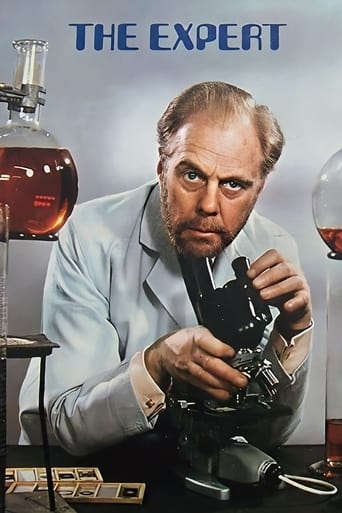
The Expert is a British television series produced by the BBC between 1968 and 1976. The series starred Marius Goring as Dr. John Hardy, a pathologist working for the Home Office and was essentially a police procedural drama, with Hardy bringing his forensic knowledge to solve various cases. The Expert was created and produced by Gerard Glaister. The series was also one of the first BBC dramas to be made in colour, and throughout its four series had numerous high quality guest appearances by actors such as John Carson, Peter Copley, Rachel Kempson, Peter Vaughan, Clive Swift, Geoffrey Palmer, Peter Barkworth, Jean Marsh, Ray Brooks, George Sewell, Anthony Valentine, Bernard Lee, Lee Montague, Geoffrey Bayldon, Mike Pratt, Edward Fox, André Morell, Brian Blessed, Nigel Stock, Philip Madoc and Warren Clarke.
The Expert
1968
 5.1
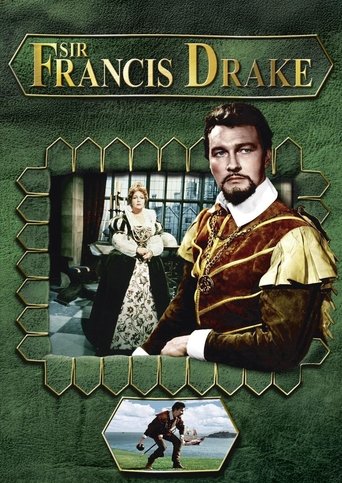
Sir Francis Drake was a British adventure television series starring Terence Morgan as Sir Francis Drake, commander of the sailing ship the Golden Hind. As well as battles at sea, sword fights, the series also deals with intrigue at Elizabeth's court, often caused by Spaniard, Mendoza.
Sir Francis Drake
1961
 7.2
Dramarama is the name of a British children's anthology series broadcast on ITV between 1983 and 1989. It tended to feature drama of a science fiction or supernatural bent. The series was created by Anna Home, then head of children's and youth programming at TVS, however production responsibilities were divided amongst most of the regional ITV franchise holders. Thus, each episode was in practice a one-off production with its own cast and crew, up to and including the executive producer. Dramarama was largely a place for new talent to prove themselves and was a launching pad for the likes of Anthony Horowitz, Paul Abbott, Kay Mellor, Janice Hally, Tony Kearney, David Tennant and Ann Marie Di Mambro. It was one of Dennis Spooner's last credits. One of Dramarama's episodes, "Dodger, Bonzo And The Rest", gained so much popularity that it was turned in to its own series the following year. It starred Lee Ross and was based around a large foster home. The episode "Blackbird Singing In The Dead of Night" was developed by Granada into the TV series Children's Ward. It was also repeated for the first time since its original broadcast on 5 January 2013, during CITV's 30th anniversary Old Skool Weekend. The Series 7 episode "Back To Front" – notable for featuring a mirror image of the Yorkshire Television logo card at the end – was repeated on 6 January 2013, again as part of CITV's 30th anniversary Old Skool Weekend.
Dramarama
1983
 6.8
Manhunt is a World War II drama series consisting of 26 episodes, produced by London Weekend Television in 1969 and broadcast nationwide.
Manhunt
1970
The adventures of Richard Crane, cafe owner & part-time smuggler, around the coast of Morocco, aided (and sometimes abetted) by his ex-Foreign Legion sidekick Orlando, waitress Halina, and local cop Colonel Mahmoud.
Crane
1963
A completely lost BBC1 drama series centred on the King family, who love, live, fight and work around a harbour in the Thames estuary.
King of the River
1966
 6.5
The Sentimental Agent is a television drama series spin-off from Man of the World. Produced in the United Kingdom in 1963 by Associated Television and distributed by ITC Entertainment, the series ran for 13 one-hour monochrome episodes. Some episodes were edited into a 1962 feature film Our Man in the Caribbean. Argentinian Carlos Varela is a successful import-export agent based in London, whose company takes him into unusual and sometimes dangerous situations. Impeccably dressed, cigar smoking and using wit, ingenuity, and charm, which often involves a damsel in distress, he is typically assisted by Chin, a resourceful Chinese manservant, and Miss Carter, an ultra-efficient secretary.
The Sentimental Agent
1963
 7.0
This Morning With Richard Not Judy or TMWRNJ is a BBC comedy television programme, written by and starring Lee and Herring. Two series were broadcast in 1998 and 1999 on BBC2. The name was a satirical reference to ITV's This Morning which was at the time popularly referred to as This Morning with Richard and Judy. The show was a reworking of old material from their previous work together along with new characters. The show was hosted in a daytime chat show format in front of a live studio audience, although it featured a small proportion of pre-recorded location inserts. It was structured by the often strange obsessions of Richard Herring; examples include his rating of the milk of all creatures and attempting to popularise the acronym of the show. The show featured repetition, with regular and vigilant viewers being rewarded by jokes that would make no sense to casual viewers. The show seemed to oscillate between the intellectual and puerile. However, irony was often used, even though the citing of irony as an excuse was mocked by the show's stars in one of many self-referential jokes.
This Morning with Richard Not Judy
1998
The Great Egg Race was a BBC television series that ran from 1979 to 1986 and featured Brian Cant, Professor Heinz Wolff and Lesley Judd, who joined the series in 1984. It was later revived on BBC Choice and was presented by Johnny Ball. In a similar vein to the later Channel 4 series Scrapheap Challenge, the show featured teams creating Heath Robinson-esque mechanical creations in an attempt to solve a problem set at the start of the show.
The Great Egg Race
1979
The Hunchback of Notre Dame is a 1966 television series and an adaptation of the novel The Hunchback of Notre Dame by Victor Hugo.
The Hunchback of Notre Dame
1966
 8.0
A company director has been murdered by a perfect stranger. DI Alan Milton is put in charge of the case. He is the former fiancé of the victim's secretary. She is now about to marry a mysterious figure with a connection to the murder suspect.
A Man Called Harry Brent
1965
 7.9
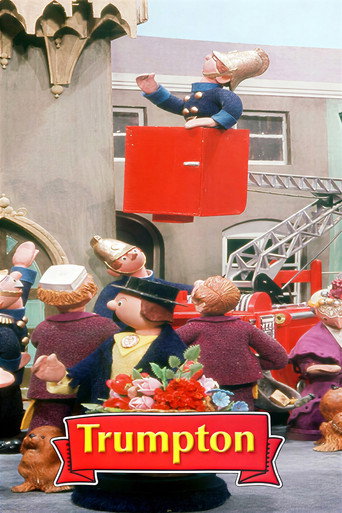
Trumpton is a stop-motion children's television show from the producers of Camberwick Green. First shown on the BBC in the 1960s, It was the second series in the Trumptonshire Trilogy, which comprised Camberwick Green, Trumpton, and Chigley. Trumpton was narrated by Brian Cant, animation was by Bob Bura, John Hardwick and Pasquale Ferrari. Scripts are by Alison Prince; all other production details were identical to Camberwick Green.
Trumpton
1967
When Lisa Martin's body is dragged from the Thames, it becomes clear that the evil she caused has not died with her. A year after Lisa's death, a dress is found at the point where her body was recovered and an investigation begins.
Girl in a Black Bikini
1967
 NR
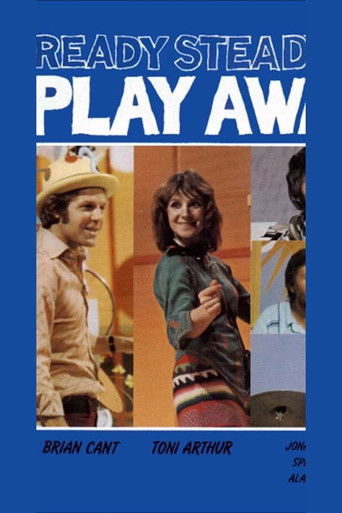
Play Away is a British television children's programme. A sister programme to the infants' series Play School, it was aimed at slightly older children. It ran from 1971 until 1984, and was broadcast on Saturday afternoons on BBC 2. While Play School had a more gentle, intimate feel, featuring just two presenters in a studio with the usual collection of toys, Play Away was much more lively, including songs, games and many jokes. The first eight series were shot in a studio, usually at BBC Television Centre, London, although certain episodes were recorded in Bristol or Manchester. Later episodes were recorded in front of a live studio audience. The format was a little like a music-hall variety show or 'end-of-the-pier' show. The Musical Director was Jonathan Cohen on piano, with Spike Heatley on double bass and Alan Rushton on drums, often with accomplished guest musicians such as trombonist George Chisholm.
Play Away
1971
 7.7
Camberwick Green is a British children's television series, originally seen on BBC1, featuring stop-motion puppets.
Camberwick Green
1966
 9.0
Chigley is the third and final stop-motion children's television series in Gordon Murray's Trumptonshire sequence. Production details are identical to Camberwick Green. As in Camberwick Green and Trumpton, the action centres around a small community, in this case the fictitious village or hamlet of Chigley, near Camberwick Green in Trumptonshire. Chigley is more of an industrial area, and according to Gordon Murray, the three communities are at the corners of an equilateral triangle. A digitally restored version of the series from the rediscovered original film masters emerged in 2012.
Chigley
1969
 5.5
Play School is a British children's television series produced by the BBC which ran from 21 April 1964 until 11 March 1988. Devised by Joy Whitby, it accidentally became the first ever programme to be shown on the fledgling BBC2 after a power cut halted the opening night's programming. Play School originally appeared on weekdays at 11am on BBC2 and later acquired a mid-afternoon BBC1 repeat. The morning showing was transferred to BBC1 in September 1983 when BBC Schools programming transferred to BBC2. It remained in that slot even after daytime television was launched in October 1986 and continued to be broadcast at that time until it was superseded in October 1988 by Playbus, which soon became Playdays. When the BBC scrapped the afternoon edition of Play School in September 1985, to make way for a variety of children's programmes in the afternoon, a Sunday morning compilation was launched called Hello Again!. There were several opening sequences for Play School during its run, the first being "Here's a house, here's a door. Windows: 1 2 3 4, ready to knock? Turn the lock - It's Play School." This changed in the early seventies to "A house, with a door, 1 2 3 4, ready to play, what's the day? It's..." In this version blinds opened on the windows as the numbers were spoken.
Play School
1964