
Known for
On crowded dance floors at queer club nights in Tokyo, Yogyakarta and Rotterdam, ravers celebrate the lives and works of Japanese author Fumiko Hayashi, Indonesian author Suwarsih Djojopuspito and Dutch-Indonesian author Beb Vuyk. These women challenged patriarchal and nationalist politics from the 1930s to the 1950s, a turbulent period marked by violence, war and decolonization. They wrote openly about sensitive subjects such as women’s labour, sex work and resistance to colonial and patriarchal oppression. Contemporary activists, artists and researchers engage with the authors’ literary legacies through collective reading, and performance. These local actors quote from the writers’ work and, through improvisation, enact how these women might have responded to complex situations. The writers’ artistic practice, activism and feminism resonate with the creative practices of today’s transnational queer community, connecting different ways of creating and claiming space.
Lyrical Vengeance
—
 9.0
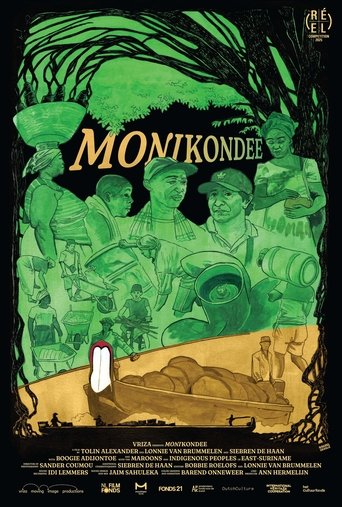
Along the Maroni River between Suriname and French Guiana, Boogie, a boatman, transports fuel and supplies to remote Maroon and Indigenous communities by motorized canoe. As gold mining, floods, and corporate exploitation reshape life along the river, each stop becomes a place of exchange — of goods, stories, and songs. Moving against the current, he must navigate obligations to his clan, the river, and an unforgiving economy.
Monikondee
2025
Griffith once noticed: "What the modern movie lacks is the beauty of moving wind in the trees." As third part of the series of filmworks Monument to Another Man’s Fatherland, View from the Acropolis explores the site where the Pergamon Altar was taken from in the late 19th century. Today a Berlin highlight, the altar was originally built around 200 BC in Anatolia (present day Turkey). In the landscape, different cultures, present and past are interwoven, connected by their presence, the wind and the changing light.
View from the Acropolis
2012
 6.0
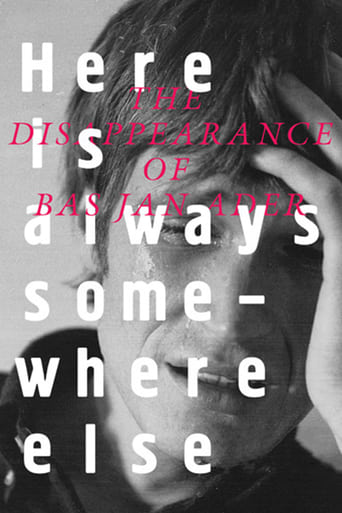
The life and work of enigmatic Dutch/Californian conceptual artist Bas Jan Ader, who in 1975 disappeared under mysterious circumstances at sea in the smallest boat ever to cross the Atlantic. As seen through the eyes of fellow emigrant filmmaker René Daalder, the picture becomes a sweeping overview of contemporary art films as well as an epic saga of the transformative powers of the ocean.
Here Is Always Somewhere Else
2007
 NR
An immersive initiation into the life of a Maroon community in the former Dutch colony of Suriname. Combining stories of African ancestral traditions and escaped slavery with enacted contemporary rituals, the film explores how the community’s powerful ties to the land have become endangered as industries threaten to devastate the region through deforestation and mining.
Stones Have Laws
2019
The third in a film triptych, Lefkosia was shot from within UN controlled territory on the border between south Cyprus and the Turkish occupied North. Like the previous two parts, this episode explores the landscape’s composition along the current borders of Europe. It presents a silent camera traveling along a heavily guarded border, where even photography is forbidden without permission.
Grossraum (Borders of Europe): Lefkosia
2005
Film credits
Behind the camera
On crowded dance floors at queer club nights in Tokyo, Yogyakarta and Rotterdam, ravers celebrate the lives and works of Japanese author Fumiko Hayashi, Indonesian author Suwarsih Djojopuspito and Dutch-Indonesian author Beb Vuyk. These women challenged patriarchal and nationalist politics from the 1930s to the 1950s, a turbulent period marked by violence, war and decolonization. They wrote openly about sensitive subjects such as women’s labour, sex work and resistance to colonial and patriarchal oppression. Contemporary activists, artists and researchers engage with the authors’ literary legacies through collective reading, and performance. These local actors quote from the writers’ work and, through improvisation, enact how these women might have responded to complex situations. The writers’ artistic practice, activism and feminism resonate with the creative practices of today’s transnational queer community, connecting different ways of creating and claiming space.
Lyrical Vengeance
—
9.0Along the Maroni River between Suriname and French Guiana, Boogie, a boatman, transports fuel and supplies to remote Maroon and Indigenous communities by motorized canoe. As gold mining, floods, and corporate exploitation reshape life along the river, each stop becomes a place of exchange — of goods, stories, and songs. Moving against the current, he must navigate obligations to his clan, the river, and an unforgiving economy.
Monikondee
2025
Griffith once noticed: "What the modern movie lacks is the beauty of moving wind in the trees." As third part of the series of filmworks Monument to Another Man’s Fatherland, View from the Acropolis explores the site where the Pergamon Altar was taken from in the late 19th century. Today a Berlin highlight, the altar was originally built around 200 BC in Anatolia (present day Turkey). In the landscape, different cultures, present and past are interwoven, connected by their presence, the wind and the changing light.
View from the Acropolis
2012
NRAn immersive initiation into the life of a Maroon community in the former Dutch colony of Suriname. Combining stories of African ancestral traditions and escaped slavery with enacted contemporary rituals, the film explores how the community’s powerful ties to the land have become endangered as industries threaten to devastate the region through deforestation and mining.
Stones Have Laws
2019
The third in a film triptych, Lefkosia was shot from within UN controlled territory on the border between south Cyprus and the Turkish occupied North. Like the previous two parts, this episode explores the landscape’s composition along the current borders of Europe. It presents a silent camera traveling along a heavily guarded border, where even photography is forbidden without permission.
Grossraum (Borders of Europe): Lefkosia
2005
 6.2
The result of a two-year collaboration with the fishing community of Urk, a former island in the Netherlands. In the previous century, the Dutch closed off and drained their inland sea to reclaim new farmland. The island of Urk, situated in the middle of the sea, suddenly found itself embraced by land. Its inhabitants were expected to switch from fishing to farming, but the fishermen managed to continue their trade. They found new fishing grounds, far out in the North Sea.
Episode of the Sea
2014
6.2The result of a two-year collaboration with the fishing community of Urk, a former island in the Netherlands. In the previous century, the Dutch closed off and drained their inland sea to reclaim new farmland. The island of Urk, situated in the middle of the sea, suddenly found itself embraced by land. Its inhabitants were expected to switch from fishing to farming, but the fishermen managed to continue their trade. They found new fishing grounds, far out in the North Sea.
Episode of the Sea
2014