

Acting
Dilma Lóes
Born — Died
1950-07-22 — 2020-07-31
Place of birth
Rio de Janeiro, Rio de Janeiro, Brazil
Known for
Acting
Credits
31 titles
Dilma Lóes was a Brazilian actress and filmmaker. Dilma was The daughter of actor and broadcaster Urbano Lóes and actress Lídia Mattos, she started writing and directing her own plays at school. She debuted in cinema in 1969 acting in the films Meu Nome é Lampião, Parafernália and o Dia da Caça. She made many pornochanchadas and debuted in soap operas in Tempo de Viver, on TV Rio, but became better known in O Bem-Amado, on TV Globo.
Known for
 8.0
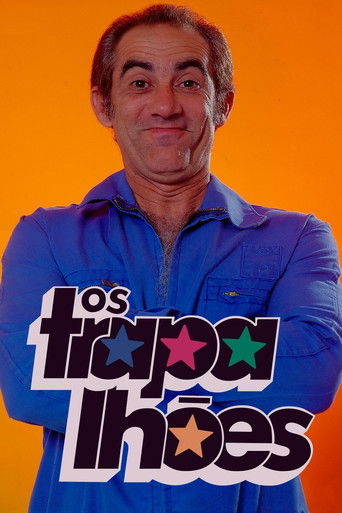
Os Trapalhões was a Brazilian comedy group and also a Brazilian television series created by Wilton Franco. Its members were Dedé Santana, Zacarias, Mussum and their leader Didi Mocó, that was played by Renato Aragão. The name Trapalhões is derived from the Portuguese verb atrapalhar, which means the opposite of helping, to do something the wrong way or to Those that confuse. The name is translated "Tramps" in English DVD subtitles. It was aired by Rede Globo from 1977 to 1999. On March 18, 1990, Zacarias died due to respiratory failure, but the group and the series didn't come to an end until July 29, 1994, when Mussum died due to an unsuccessful heart transplant.
The Trapalhões
1977
 9.0
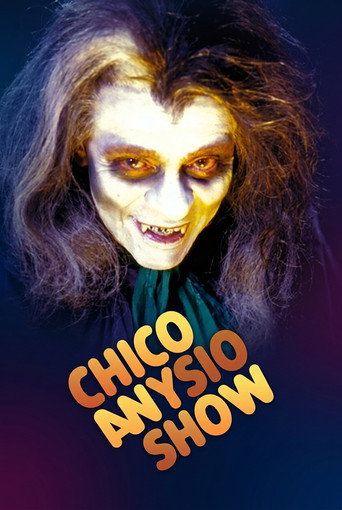
No synopsis available yet.
Chico Anysio Show
1982
 8.2
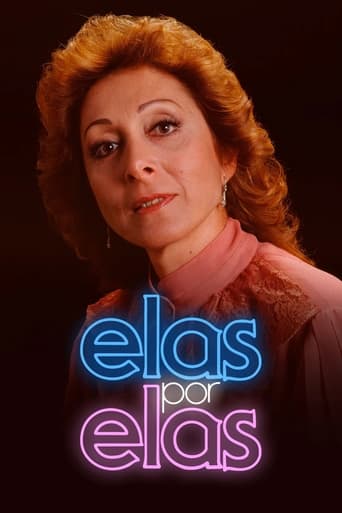
Seven high school friends reunite after 20 years. Memories of the past and coincidences of the present reveal the secrets and affections that bind the women and their families.
Elas por Elas
1982
 7.0
No synopsis available yet.
Tempo de Viver
1972
 8.0
The soap opera told the story of Fernando Dalba, or Nando, a fruit vendor who works with his mother, the Baroness, and his friends Gino and Guiomar. His life changes after he meets the wealthy widow Cristina Guimarães, owner of a beauty salon, who decides to teach him how to behave like a man of high society. Cristina's intention is to win a bet, but she falls in love with Nando, who is engaged to Candinha.
Pigmalião 70
1970
 9.1
O Bem-Amado is a Brazilian telenovela that first aired on Rede Globo in 1973. It is based on a play by Dias Gomes called Odorico, o Bem-Amado ou Os Mistérios do Amor e da Morte, written in 1962. It was the first Brazilian color telenovela. It was shot in Rio de Janeiro. Broadcast by Rede Globo between January 22 and October 3, 1973.
O Bem-Amado
1973
Film credits
2000s · 3 titles
 3.5
Marquinhos (Lúcio Andrey) lives in the Rocinha favela, in the city of Rio de Janeiro. He gets involved with Débora (Priscila Assum), a young woman from the upper middle class with whom she starts to face adult life and several difficulties that try to separate them.
Cafuné
2005
 9.0
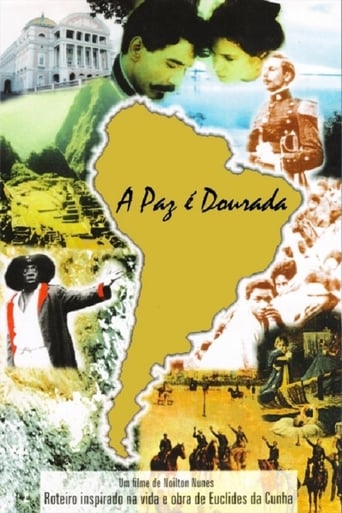
The film chronicles both the life and work of Brazilian author and engineer Euclides da Cunha and a failed attempt at directing his biopic in the 1980s and 1990s. Footage from the unfinished film is included alongside archive and documentary material.
A Paz é Dourada
2008
 7.0
"In the 1970s, Brazil - and much of the rest of Latin America - was ruled by military dictatorships. O amigo Dunor (the friend from the North) is not only set during these 'years of lead', it looks as if the film comes directly from that, as if the cans of film have only recently been found in someone's cellar. ... Marcel, a young French writer, comes to Brazil to fulfill his childhood dream: to get to know exotic Brazil, go to the Amazon and write a book about his experiences. After his arrival in Rio de Janeiro, he quickly makes friends with a group of people working on a crime thriller. Stan is the director of this film, his wife Carla and her daughter Melissa act in it. Julio, an Argentine refugee, is the scriptwriter. This film in the film is about the blind Louis and the handicapped Marta, a married couple with many problems in their relationship and with money … inter-cut with the world of Marcel and his new friends..” - IFFR
O amigo Dunor
2005
1970s · 9 titles
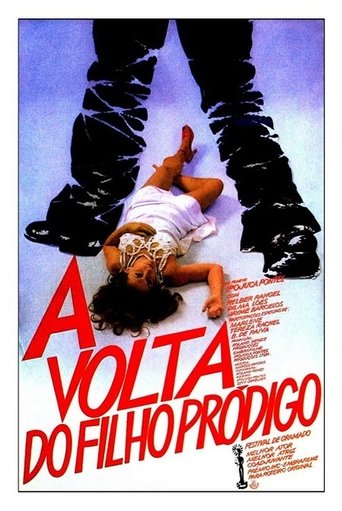 7.0
Unemployed, penniless in the big city and after accidentally stealing and killing his landlady, Antonio flees Rio de Janeiro towards Northeast of Brazil to find his mother. On the way he meets a beautiful woman and a pair of criminals.
A Volta do Filho Pródigo
1978
 9.0
A couple of freelance explosives experts find jungle adventure while being stalked by a revolutionary leader and a diamond hunter.
River of Mystery
1971
 5.7
Three segments with stories about the sexual relationships between adolescent boys and the maids who work at their homes.
Como é Boa Nossa Empregada
1973
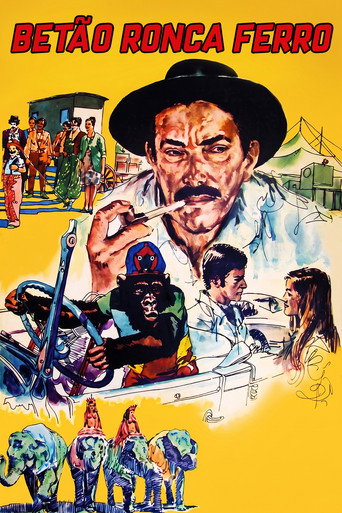 7.5
Betão is a countryman who works in a circus, selling peanuts. His daughter also works there, and becomes the circus's greatest attraction. But she decides to marry a rich man, and another circus comes to town, putting his employment in danger.
Betão Ronca Ferro
1970
 4.0
Three English women on vacation in Brazil shake the structures of a Brazilian bourgeois family, but while one of them finds love, the other two are disappointed in flirting.
Quando as Mulheres Paqueram
1971
 5.7
A couple do everything in order to stay together, against their families' wish.
Essa Gostosa Brincadeira a Dois
1974
 NR
No synopsis available yet.
Vida e Glória de um Canalha
1970
 7.0
"Lula, 'bon vivant' who subsists at the expense of small blows, goes on with his life without a present or future purpose. Basically, he just tries to forget having been abandoned by his fiancee Helena, who gave in to his father's imposition. The situations in which he gets involved from then on are paradoxical, trying to survive in the best possible way and spending money he doesn't have, but which comes to him in one way or another. On a day of complete despair, Lula meets a group of "hippies" and leaves catechized. Willing to anything, he becomes a preacher of new customs and new ethics of life. In turn, Helena, whose marriage had failed, dreams of meeting Lula again, hoping to return to his arms.
O Grande Gozador
1972
 10.0
No synopsis available yet.
Ascensão e Queda de um Paquera
1970
1960s · 3 titles
 4.8
Sumuru, the beautiful leader of the all-female kingdom of Femina, plans to use her women to take over the world.
The Girl from Rio
1969
 9.2
Lampião's gang raids a farm just as the wedding of Antônio Saraiva and the Baroness's goddaughter is being prepared. In the shootout, Lampião's brother, Ezequiel, is killed, and in revenge, Lampião burns the Baroness alive and orders the bride to be beaten. Upon arriving at the farm, Antônio discovers everything and vows to follow the gang's footsteps to hell. The cangaceiros continue their atrocities, robbing, killing, and looting, until a priest places a curse on Lampião. The curse transforms into the avenging figure of Antônio, who acquires supernatural powers. He meets Lampião during Maria Bonita's birthday party, and a life-or-death duel ensues.
Meu Nome é Lampião
1969
 NR
Paulo is a middle-class playboy who reluctantly gets involved in a terrorist conspiracy and ends up exiled with the engaged Letícia in an embassy, after a guerrilla camp is discovered by the police and two of them, Sócrates and Mário, fall into shrapnells. Luís and Márcia, a rich couple, spend their time looking for different emotions. They get smet with a couple of lesbians, Márcia flirts with one of them, provoking the jealousy of the other, Susana.
Parafernália, o Dia da Caça
1968
Series credits
8.0Os Trapalhões was a Brazilian comedy group and also a Brazilian television series created by Wilton Franco. Its members were Dedé Santana, Zacarias, Mussum and their leader Didi Mocó, that was played by Renato Aragão. The name Trapalhões is derived from the Portuguese verb atrapalhar, which means the opposite of helping, to do something the wrong way or to Those that confuse. The name is translated "Tramps" in English DVD subtitles. It was aired by Rede Globo from 1977 to 1999. On March 18, 1990, Zacarias died due to respiratory failure, but the group and the series didn't come to an end until July 29, 1994, when Mussum died due to an unsuccessful heart transplant.
The Trapalhões
1977
9.0No synopsis available yet.
Chico Anysio Show
1982
8.2Seven high school friends reunite after 20 years. Memories of the past and coincidences of the present reveal the secrets and affections that bind the women and their families.
Elas por Elas
1982
7.0No synopsis available yet.
Tempo de Viver
1972
8.0The soap opera told the story of Fernando Dalba, or Nando, a fruit vendor who works with his mother, the Baroness, and his friends Gino and Guiomar. His life changes after he meets the wealthy widow Cristina Guimarães, owner of a beauty salon, who decides to teach him how to behave like a man of high society. Cristina's intention is to win a bet, but she falls in love with Nando, who is engaged to Candinha.
Pigmalião 70
1970
9.1O Bem-Amado is a Brazilian telenovela that first aired on Rede Globo in 1973. It is based on a play by Dias Gomes called Odorico, o Bem-Amado ou Os Mistérios do Amor e da Morte, written in 1962. It was the first Brazilian color telenovela. It was shot in Rio de Janeiro. Broadcast by Rede Globo between January 22 and October 3, 1973.
O Bem-Amado
1973
 NR
No synopsis available yet.
Humor Livre
1984
Behind the camera
4.0Three English women on vacation in Brazil shake the structures of a Brazilian bourgeois family, but while one of them finds love, the other two are disappointed in flirting.
Quando as Mulheres Paqueram
1971
5.7A couple do everything in order to stay together, against their families' wish.
Essa Gostosa Brincadeira a Dois
1974
 7.0
Documentary focusing on contemporary black race status in Brazil, with interviews intertwined with staged scenes.
When Blacks Dance
1988
7.0Documentary focusing on contemporary black race status in Brazil, with interviews intertwined with staged scenes.
When Blacks Dance
1988
 NR
Documentary about working mothers who, without government support, have to struggle to care for their children. Through interviews and an intimate camera that wanders through the daily lives of the characters – a bus conductor, a woman who cares for more than ten children in a precarious home, a teacher at an improvised daycare center, among others – Lóes constructs a sensitive and precise argument about the division of care work.
Só Amor Não Basta
1977
NRDocumentary about working mothers who, without government support, have to struggle to care for their children. Through interviews and an intimate camera that wanders through the daily lives of the characters – a bus conductor, a woman who cares for more than ten children in a precarious home, a teacher at an improvised daycare center, among others – Lóes constructs a sensitive and precise argument about the division of care work.
Só Amor Não Basta
1977
 8.0
The documentary addresses the stereotypes that imprison both men and women, the prejudice against women at the time and the need to legalize abortion to avoid the damage caused by illegal abortion.
Our Lives
1985
8.0The documentary addresses the stereotypes that imprison both men and women, the prejudice against women at the time and the need to legalize abortion to avoid the damage caused by illegal abortion.
Our Lives
1985