
Sound
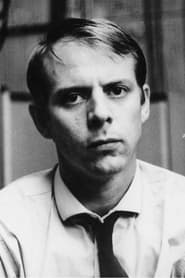
Karlheinz Stockhausen
Born — Died
1928-08-22 — 2007-12-05
Place of birth
Mödrath, Kerpen, Germany
Known for
Sound
Credits
22 titles
Karlheinz Stockhausen was a German composer, acknowledged by critics as one of the most important but also controversial composers of the 20th and early 21st centuries. He is most known for his groundbreaking work in electronic music, aleatory (controlled chance) in serial composition, and musical spatialization.
Known for
 8.5
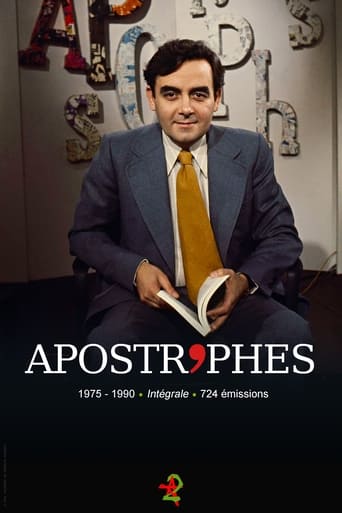
8.5Apostrophes was a live, weekly, literary, prime-time, talk show on French television created and hosted by Bernard Pivot. It ran for fifteen years (724 episodes) from January 10, 1975, to June 22, 1990, and was one of the most watched shows on French television (around 6 million regular viewers). It was broadcast on Friday nights on the channel France 2 (which was called "Antenne 2" from 1975 to 1992). The hourlong show was devoted to books, authors and literature. The format varied between one-on-one interviews with a single author and open discussions between four or five authors.
Apostrophes
1975
 6.7
6.7A weekly BBC Two magazine programme focusing on the best of the week's arts and culture news, covering books, art, film, architecture and more.
The Culture Show
2004
 NR
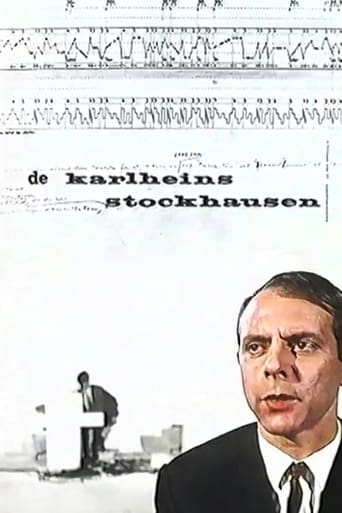
NRStudio recording of Mikrophonie I with the Stockhausen-Ensemble. Short introduction by Stockhausen in French and German.
Mikrophonie I
1966
Olivier Assayas’ Eldorado is a riveting documentary chronicling the efforts of Ballet Preljocaj to choreograph an otherworldly icon of 21st century music: Karlheinz Stockhausen’s ethereal Sonntags-Abschied.
Eldorado
2008
 6.0
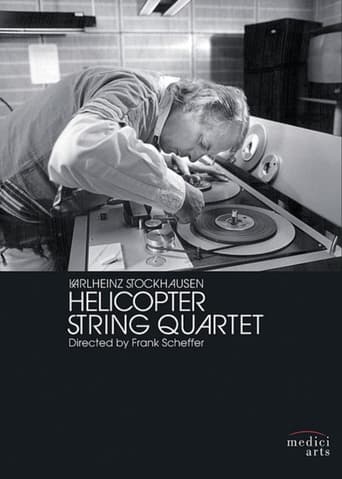
6.0One morning, the late Karlheinz Stockhausen awoke from a dream that told him to take to the sky. Stockhausen envisioned four helicopters swirling in the clouds, with each of a quartet’s members tucked inside his own chopper, communicating through headsets, stringing away in sync to the rotor-blade motors. He immediately set forth to make that dream a reality. In 1995, Dutch film director Scheffer followed Stockhausen in the days leading up to the premiere performance of his Helicopter String Quartet in Amsterdam. The resulting film offers a rare glimpse of Stockhausen as he patiently dictates every agonizingly detailed measure to the Arditti Quartet.
Helicopter String Quartet
1996
 8.1
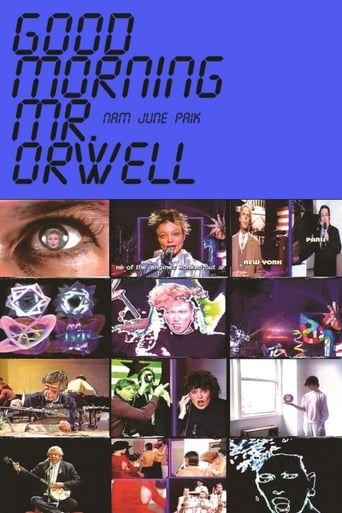
8.1In his book "1984", George Orwell saw the television of the future as a control instrument in the hands of Big Brother. Right at the start of the much-anticipated Orwellian year, Paik and Co. were keen to demonstrate satellite TV's ability to serve positive ends-- Namely, the intercontinental exchange of culture, combining both highbrow and entertainment elements. A live broadcast shared between WNET TV in New York and the Centre Pompidou in Paris, linked up with broadcasters in Germany and South Korea, reached a worldwide audience of over 10 or even 25 million (including the later repeat transmissions).
Good Morning, Mr. Orwell
1984
Film credits
2000s · 2 titles
Olivier Assayas’ Eldorado is a riveting documentary chronicling the efforts of Ballet Preljocaj to choreograph an otherworldly icon of 21st century music: Karlheinz Stockhausen’s ethereal Sonntags-Abschied.
Eldorado
2008
 6.5
6.5A woman sits alone on a chair at a table in a room on one of the top floors of an asylum. Bright spot lights dot the night, sometimes shining on her window. She sharpens pencils and writes on a page in a copy book. The pencil point often breaks under her fingers' force. She places broken points outside the window on the sill. A satanic figure is somewhere nearby, animated but of straw or clay, not flesh. She finishes her writing, tears the paper from the pad, folds it, places it in an envelope, and slips it through a slot. Is she writing to her husband? "Sweetheart, come."
In Absentia
2000
1990s · 4 titles
6.0One morning, the late Karlheinz Stockhausen awoke from a dream that told him to take to the sky. Stockhausen envisioned four helicopters swirling in the clouds, with each of a quartet’s members tucked inside his own chopper, communicating through headsets, stringing away in sync to the rotor-blade motors. He immediately set forth to make that dream a reality. In 1995, Dutch film director Scheffer followed Stockhausen in the days leading up to the premiere performance of his Helicopter String Quartet in Amsterdam. The resulting film offers a rare glimpse of Stockhausen as he patiently dictates every agonizingly detailed measure to the Arditti Quartet.
Helicopter String Quartet
1996
 8.0
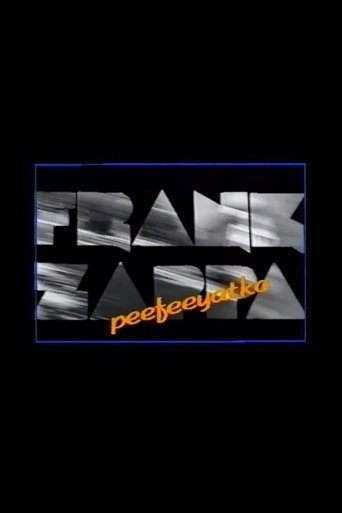
8.0For the past ten years Zappa in composing has turned away from Rock and Roll music - for which he first became famous - and has been working on new, contemporary, orchestral electronic music; in solitude and beyond any commercial conventions or commitments. It is the first time that Zappa has allowed a film crew to study him during compositional work, actually filming the first moments of a new compositional process. By contrast, in a staged interview Zappa gives comments on music. This film seeks to reveal the sensetivities of Zappa's personality and character also beyond narrative content.
Frank Zappa: Peefeeyatko
1991
 7.2
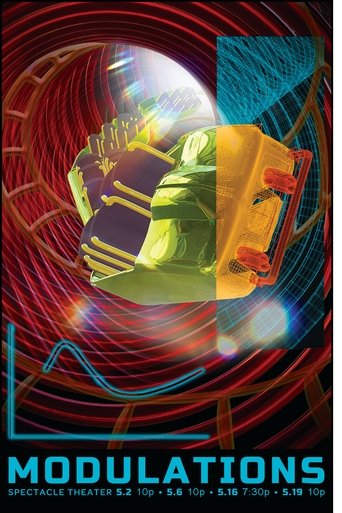
7.2Less a documentary than a primer on all electronic music. Featuring interviews with nearly every major player past and present, as well as a few energetic live clips, Modulations delves into one of electronica's forgotten facets: the human element. Lee travels the globe from the American Midwest to Europe to Japan to try to express the appeal of music often dismissed as soulless. Modulations shows that behind even the most foreign or alien electronic composition lies a real human being, and Lee lets many of these Frankenstein-like creators express and expound upon their personal philosophies and tech-heavy theories. Lee understands that a cultural movement as massive and diverse as dance music can't be contained.
Modulations
1998
 NR
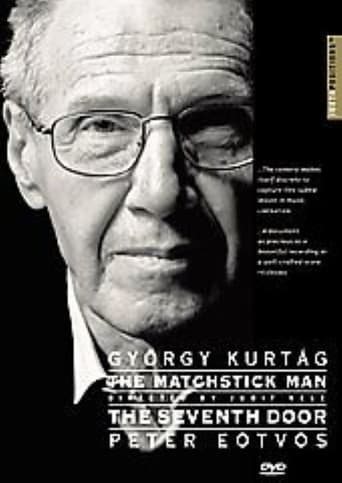
NRA documentary about the life and work of the Hungarian composer and conductor, Peter Eotvos.
The Seventh Door
1998
1980s · 2 titles
8.1In his book "1984", George Orwell saw the television of the future as a control instrument in the hands of Big Brother. Right at the start of the much-anticipated Orwellian year, Paik and Co. were keen to demonstrate satellite TV's ability to serve positive ends-- Namely, the intercontinental exchange of culture, combining both highbrow and entertainment elements. A live broadcast shared between WNET TV in New York and the Centre Pompidou in Paris, linked up with broadcasters in Germany and South Korea, reached a worldwide audience of over 10 or even 25 million (including the later repeat transmissions).
Good Morning, Mr. Orwell
1984
 NR
NRAssesses the contribution made by British avant-garde composer, Cornelius Cardew, to contemporary music. Includes interviews with Stockhausen and other composers, and extracts from Cardew's own works.
Cornelius Cardew: 1936-1981
1986
1970s · 1 titles
1960s · 3 titles
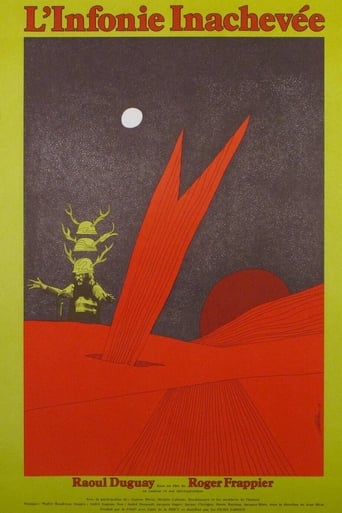
NRStudio recording of Mikrophonie I with the Stockhausen-Ensemble. Short introduction by Stockhausen in French and German.
Mikrophonie I
1966
 NR
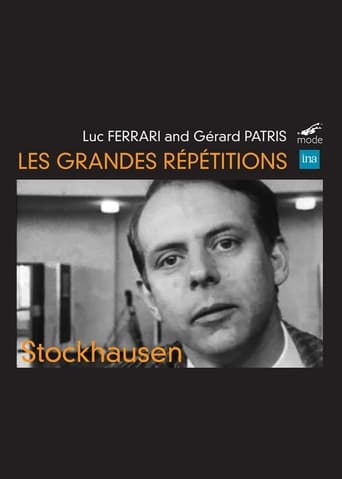
NRFilmed during rehearsals for the premiere of Stockhausen's monumental work Momente. The revealing rehearsal sequences are interspersed with Stockhausen speaking of his youth, work process and the genesis and meaning of Momente.
The Great Rehearsals: Momente
1966
This fascinating film documents the U.S. premiere production of Originale, a Happening by German composer Karlheinz Stockhausen. Filmed at the "2nd Annual Avant Garde Festival of New York," which was produced by Norman Seaman and Charlotte Moorman, the stage production was directed by Allan Kaprow. Performers include Nam June Paik, Moorman, Jackson Mac Low and Allen Ginsberg, among many others.
Stockhausen's Originale: Doubletakes
1964
Series credits
8.5Apostrophes was a live, weekly, literary, prime-time, talk show on French television created and hosted by Bernard Pivot. It ran for fifteen years (724 episodes) from January 10, 1975, to June 22, 1990, and was one of the most watched shows on French television (around 6 million regular viewers). It was broadcast on Friday nights on the channel France 2 (which was called "Antenne 2" from 1975 to 1992). The hourlong show was devoted to books, authors and literature. The format varied between one-on-one interviews with a single author and open discussions between four or five authors.
Apostrophes
1975
6.7A weekly BBC Two magazine programme focusing on the best of the week's arts and culture news, covering books, art, film, architecture and more.
The Culture Show
2004
Behind the camera
 NR
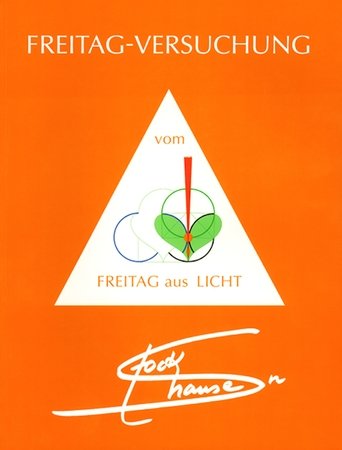
NRFreitag aus Licht (Friday from Light), the main body of which is also titled Freitag-Versuchung (Friday Temptation), is the fifth to be composed of the seven operas that comprise Licht (Light), by Karlheinz Stockhausen. It was the last of the operas to receive a staged production with the composer's involvement. Freitag is the Day of Temptation, where the Licht antagonist Lucifer (here represented by the character "Ludon") attempts to lure the female protagonist Eve into bonding with his son, "Caino", and joining his revolution against Heaven (and the hero Michael).
Freitag aus Licht
2022
 NR
NRSonntag aus Licht (‘Sunday of Light’) is the final installment of Stockhausen’s monumental Licht, a cycle of seven cosmic operas performed over an entire week! In this twenty-nine hour musical work—focusing on the characters of Eve, Michael, and Lucifer—each opera corresponds to a day of the week, in turn associated with a planet. Sonntag, Day of the Sun, is the most dense and impressive score in the cycle. Premiered after the composer's death, the piece focuses on the mystical union of Eve and Michael, while exploring the concepts of space-time and the ‘spatialisation’ of sound. The brilliant staging of Le Balcon and Maxime Pascal, who also conducts the musicians of the Orchestre de Chambre de Paris, plunges us into an immersive experience where we can discover the captivating world of Karlheinz Stockhausen.
Sonntag aus Licht
2023
 NR
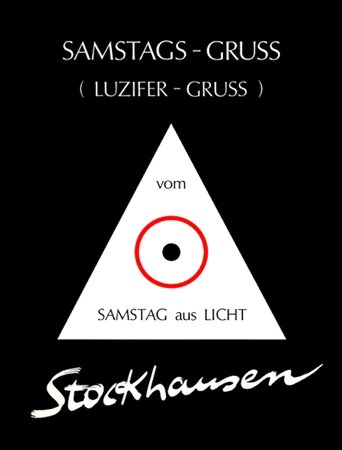
NRSamstag aus Licht (Saturday from Light) is an opera by Karlheinz Stockhausen in a greeting and four scenes, and was the second of seven to be composed for the opera cycle Licht: die sieben Tage der Woche (Light: The Seven Days of the Week). It was written between 1981 and 1983, to a libretto written by the composer and incorporating a text by Saint Francis of Assisi.
Samstag aus Licht
2019
 NR
NRDonnerstag was the first completed work of the gigantic seven-opera cycle Licht by German composer Karlheinz Stockhausen. Composed over a span of 25 years and lasting nearly 30 hours in total, the cycle offers up a wide-ranging, experimental take on theology, time, and the nature of the universe. In Donnerstag, the protagonist Michael comes to life in three different guises, played by a singer, a dancer, and a trumpeter as he passes from an impoverished childhood to an artistically successful adulthood and, finally, to the celestial realm as an archangel.
Donnerstag aus Licht
2021
 NR
NRDienstag aus Licht (Tuesday from Light) is an opera by Karlheinz Stockhausen in a greeting and two acts, with a farewell, and was the fourth of seven to be completed for the opera cycle Licht: Die sieben Tage der Woche (Light: The Seven Days of the Week). It was begun in 1977 and completed from 1988 to 1991, to a libretto by the composer. The main theme of Dienstag is the struggle between the protagonist Michael and his antagonist Lucifer (with the feminine character Eve appearing in a more tangential role, trying to broker a peace between them or mourning the carnage). The first Act portrays this competition in the form of a "time game", in which the two combatants employ humorous tactics and feints in orders to stop/start time's march. This initial "fight by proxy" leads to the more direct 2nd (and final) Act, which portrays all-out war using mobile sound-warriors in an apocalyptic 3D sound environment.
Dienstag aus Licht
2021
6.5A woman sits alone on a chair at a table in a room on one of the top floors of an asylum. Bright spot lights dot the night, sometimes shining on her window. She sharpens pencils and writes on a page in a copy book. The pencil point often breaks under her fingers' force. She places broken points outside the window on the sill. A satanic figure is somewhere nearby, animated but of straw or clay, not flesh. She finishes her writing, tears the paper from the pad, folds it, places it in an envelope, and slips it through a slot. Is she writing to her husband? "Sweetheart, come."
In Absentia
2000