
Known for
 7.3
With WWI finally ending in 1918, Croatian journalist Kresimir Horvat travels from Zagreb to his village of Vucjak in Zagorje and becomes a witness of history as Austria-Hungarian Empire dissolves.
Journey to Vucjak
1986
 NR
In 1928 young Communist activist was arrested and put on trial for anti-state activity. Years later he became known as Tito, Communist president of Yugoslavia, and this miniseries was made for the 50th anniversary of those events.
Bombing Process
1978
 NR
During WW2, a young student of medicine comes to the big city to discover the secret of death, and stays at a motel that turns out to be a brothel. He is asked from Ustasha officer to perform experiments of resurrecting the dead, while the Fascist authorities look for a female communist hiding in the city.
Devil's Due
1979
 NR
The series follows the capture of the inserted Ustashas during Operation Guardian in 1947-1948.
Traps
—
 9.0
This series, mostly humorous, yet epic in proportions, chronicles the city of Split in turbulent times between 1910 and 1947. Although the story has numerous subplots and dozens of different characters, the main accent is given to "Hajduk", world-famous soccer club and its founders.
The Big Town
1980
 5.2
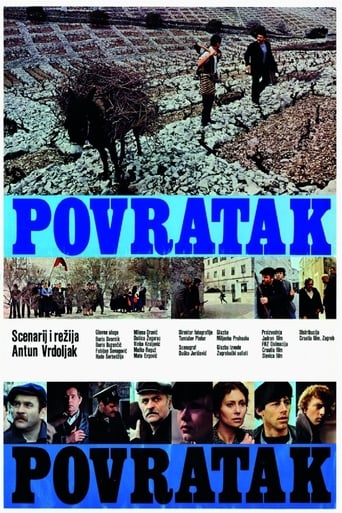
Despite the ongoing WW2, most of the people were just minding their own business. But everything changes when police arrests the group of youths under suspicion of being resistance sympathizers. Outraged townsfolk organize the siege of police station.
The Return
1979
Film credits

1980s · 7 titles
 NR
Once a year, on his father’s name day, Slavek Slivar, an employee of the city waterworks, is traveling with his wife and daughter to the village outside Zagreb to congratulate “years” to his father who lives there. Slavek’s sister Mira and her husband Miroslav also come here to congratulate.
A Year
1980
 6.5
The story begins in a small rural village in Ladimirevci, Eastern Croatia in 1943, where a land owner Sima is helping the Partisan Movement and the official Ustasha regime in order to save the life of his son Beneš, who is enlisted in the German army. Sima doesn't want to let his son fight for the wrong side any more, and doesn't want to give him to the Partisans either, so he hides him in his attic for the time being. The story is interwoven with episodes of Sima trying to muster a beautiful stallion - Sokol - who only answers to his son Beneš and clearly doesn't like his old man.
Sokol Did Not Love Him
1988
 8.0
Life and times of August Šenoa, popular Croatian novelist who was one of the most influential writers in 19th Century. The movie was made for the 100th anniversary of his death.
The Life and Times of August Šenoa
1981
 5.9
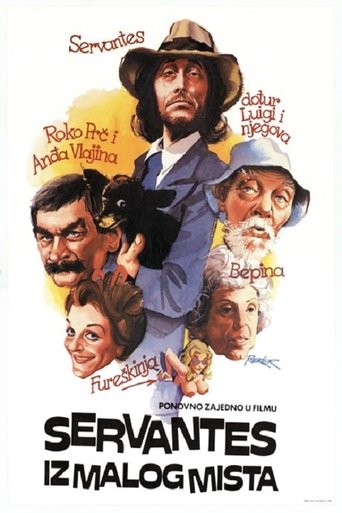
'Malo Misto' lives its own life, but not far behind the times. Hotel manager Roko Prč strives to organise tourism, so he introduces the first nudist beach. His wife Anđa brings two of her cousins from the Dalmatian hinterland and demands Roko to hire them. One of them, a young man named Ikan, earns the attention of a beautiful Swedish tourist. From Chile to Malo Misto returned Tonči, nicknamed Servantes, of course, without any money. He fell on the back of his hardworking aunt Keka, who even without him has enough problems of her own. Servantes also experiences an unexpected romance.
Cervantes from the Small Town
1982
 6.5
Mirko is happily married man in his forties, employed in a record company. His quiet life is interrupted when a pretty young woman moves into an apartment on the upper floor. With the help of his friend Stipe, Mirko tries to seduce the aspiring singer - but their plans don't work out as expected.
Anticasanova
1985
 8.0
Based on a TV sit-com series and set in World War II, about how an ordinary woodcutter develops into an active partisan fighter.
Find a Way, Comrade
1981
 4.8
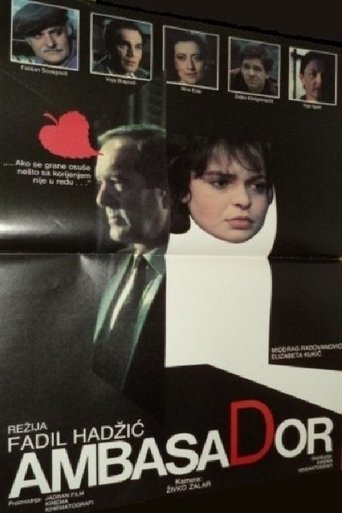
Vlado Miljkovic, a former member of the International Brigades in the Spanish Civil War, partisan fighter and retired ambassador, lives in his villa in Zagreb with his children whom he lost contact with, if he ever had one. His daughter Mickey is morbidly devoted to the worship of the cult of her dead mother, and attempts suicide in a state of distress; son Roni plays drums in a rock group and engages in a car theft, while the eldest son Mark has achieved a prestigious career as a doctor, but has problems with his demanding wife and asks father to borrow him money. Complex family relations in the ambassador's house bear witness to central heating repairman...
The Ambassador
1984
1970s · 22 titles
5.2Despite the ongoing WW2, most of the people were just minding their own business. But everything changes when police arrests the group of youths under suspicion of being resistance sympathizers. Outraged townsfolk organize the siege of police station.
The Return
1979
 8.0
A love couple finds their secret place on a desolated river bank, without knowing about the fisherman and trio of pop musicians who found themselves there by accident, and who now use this opportunity for voyeurism.
Afternoon of a Pheasant
1972
 NR
It is about difficult times in Croatian family in Istria under Italian rule and the beginning of Italian fascism.
Istrian Rhapsody
1978
 5.8
After the murder of the Russian Emperor Peter III, who was succeeded by Empress Catherine, Satan decides that the balance between good and evil on Earth has been destabilized. In order to set things right, he sends his representative to Earth - the teacher Farfa, who bears an unusual resemblance to Peter III. His mission is to seize power from the old Duke of Montenegro, and then to take back the Russian throne as Peter III. The people of Montenegro accept Farfa as their new leader, and he proclaims himself the new Emperor, Scepan Mali, successfully resisting an invasion by the Turks. Farfa is touched by the Montenegrins' kindness and courage, falls in love with the beautiful Elfa, and fails to follow Satan's plan. Not one to be crossed, Satan sets out to kill him.
The Man to Kill
1979
 NR
Through Šimun’s conflict with the head of the new agricultural cooperative, where he is forced to work in order to feed his family, the changes that land reclamation has brought to everyday life in the Neretva Valley are depicted, destroying the traditional way of life.
The Hunt
1974
 6.3
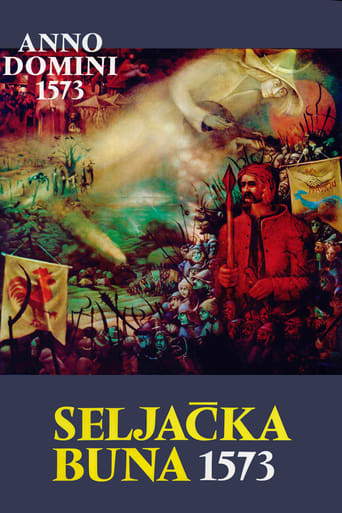
Europe in second half of 16th century was very rough place to live. Peasants of Slovenia and Croatia had even rougher times because of the constant threat of Turk raids and being taxed to death in order to provide defence against the Turks. But, the worst things were arrogant local feudal lords led by Franjo Tahi who were oppresing the common folk. All that led to the great peasant revolt of 1573. The movie is made for the 400th anniversary of the event.
Anno Domini 1573
1975
 9.0
The action takes place in a village where police investigates a murder committed because of an accordion.
The Accordion
1972
 7.5
In a village of heterogeneous ethnic composition (populated by Serbs and Croats), the local hunter gets wounded by an accidental shot which stirs up passion among the two communities.
A Shot
1977
 7.4
I. S. returns after many years to his hometown, from which he escaped after WW II, fearing that, as a civil clerk of the NDH, could suffer prosecution from the new government. He has been falsely accused to be a member of Ustasha movement.
The Deer Hunt
1972
 7.4
Communist party commissar Ivica is sent to the lowland village to monitor the local partisan squad. Despite their disagreements he befriends their leader Dikan and they plan to evacuate the chief headquarters. Dikan also sees the opportunity to have his personal revenge on an enemy officer, responsible for death of one of his men.
The Pine Tree in the Mountain
1971
 6.8
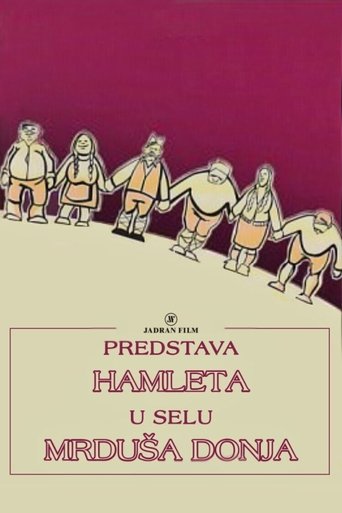
A corrupt village commissar insists on mounting a production of Hamlet. The clever local teacher, however, casts the son of a man framed for theft as Hamlet, and the commissar as the usurping king, leading to a climax of truly Shakespearean proportions.
A Performance of Hamlet in the Village of Mrdusa Donja
1974
 6.6
A story about a couple whose problems start when she takes a job as a teacher in order to financially support his education.
To Live on Love
1973
 NR
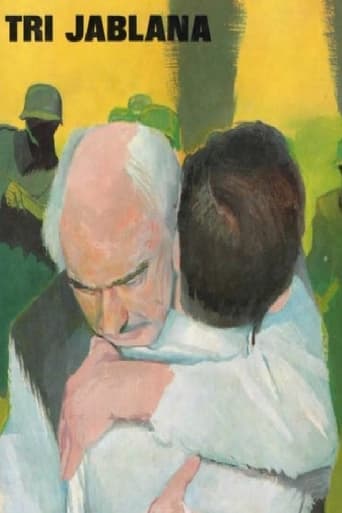
The film was created based on the stories of Marino Zurl, head of humanitarian action of the weekly Arena newspapers, who from 1963 to 1971 was looking for the next of kin of children separated from their parents during World War II and taken to camps and shelters. Many of them later grew up in orphanages or foster families, like the three main characters of this film, Ana (Biserka Ipša), Nenad (Mustafa Nadarević) and Toma (Božidar Orešković). Each of them relates in a different way to the past and the possibility that, as young accomplished adults, they can finally solve the secret of their identity and meet members of their real families.
Three Poplars
1976
Our hero is Glista - a young Zagreb punk whose (sub)urban adventures depict his world and philosophy.
Ya Know, Mate
1973
 6.6
Before and during WW II and the German occupation of Serbia, in a village in Vojvodina, inhabitants are separated based on their nationality. Local Volksdeutschers (ethnic Germans) enlist with the Nazi occupiers. The village bum, Leksi, jumps at the opportunity to put on a uniform and parade around with a gun. Leksi gets into an argument with villagers Marko and Joca, who devise a plan to get rid of him. At the same time, Marko tries to seduce Leksi's wife, Anika.
Hitler from Our Street
1975
 NR
Due to idealism, honesty and resoluteness, a driver in a transport company faces numerous problems in his living and working environment.
The Case of Filip Franjic
1978
 NR
The action takes place in the Dalmatian hinterland and displays how the effects of modern life disintegrate local population in the villages.
Big Shade
1978
 5.8
A story about life adversities of an old emigrant who returns from America to his native village.
Snowstorm
1977
 6.5
A film about a small-time gangster, a loser who seems is finally on the road of going straight.
Deps
1974
 6.9
Sfaira (1971-1984) dedicated to Pythagoras and Plato is a homage to two of his favourite spheroids: the Earth and the Sun.
Daredevil Times
1977
 7.4
A group of village boys found a gang under the leadership of the most intelligent amongst them - Pero the Lump. They decide to renovate an old and abandoned watermill on the outskirts of their village. A discord amongst the villages has caused the mill to remain unused. To make sure it stays closed, the corrupted steam mill owner is ready to bribe customers. Pero's gang does not want to give in under the pressure of corrupt villagers...
Pero the Lump's Gang
1970
 NR
A young female student of music finds herself in a Dalmatian town in order to practice organo playing in the local church, and there she falls in love with a timid young man who helps her with it.
The Organ and the Firemen
1974
1960s · 4 titles
 6.6
Perez kidnaps the President's daughter to trade her for imprisoned revolutionaries.
The Taste of Violence
1961
 7.0
Dalmatia in the 1930s. Mate Pivac, a policeman and father of eight, finds out that the King himself becomes godfather to every ninth children in the country, and tries to make his wife sure that they need another child hoping for financial or any other kind of support. Eventually in the town arrives a circus troop, whose main star looks identically to Our Lady of the Angel. The attractive lady arouses male fantasies, so local women ask from Mate to make her leave the town by force. The trouble is that Mate himself is not immune to her beauty.
Love and Sometimes a Curse
1969
 7.5
After one of the pupils lost his pencil in the classroom, the other children accuse Dika that he stole it. Dika decides to fight for the truth, and luckily his teacher is the only one who believes him.
The Lost Pencil
1960
 6.2
A man cannot bear the superficiality of human relationships, and when his best friend lets him down, he commits suicide by jumping off a skyscraper.
Protest
1967
1950s · 3 titles
 6.9
The story about colonization of poor Dalmatian peasants to the fertile Pannonian plain shortly after WWII.
Train without a Timetable
1959
 7.0
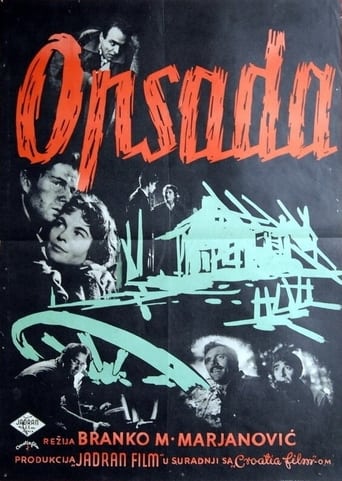
A group of partisans is under siege, surrounded by strong German forces. Some of them remember the events that preceded the siege. This is an omnibus of three intertwined stories.
The Siege
1956
 7.1
Due to negligence that caused the death of a family cow, an extremely poor but handsome young man Iva must obey his father's demands to marry an unattractive and limping daughter of wealthy villagers.
Master of His Own Body
1957
Series credits
7.3With WWI finally ending in 1918, Croatian journalist Kresimir Horvat travels from Zagreb to his village of Vucjak in Zagorje and becomes a witness of history as Austria-Hungarian Empire dissolves.
Journey to Vucjak
1986
NRIn 1928 young Communist activist was arrested and put on trial for anti-state activity. Years later he became known as Tito, Communist president of Yugoslavia, and this miniseries was made for the 50th anniversary of those events.
Bombing Process
1978
NRDuring WW2, a young student of medicine comes to the big city to discover the secret of death, and stays at a motel that turns out to be a brothel. He is asked from Ustasha officer to perform experiments of resurrecting the dead, while the Fascist authorities look for a female communist hiding in the city.
Devil's Due
1979
NRThe series follows the capture of the inserted Ustashas during Operation Guardian in 1947-1948.
Traps
—
9.0This series, mostly humorous, yet epic in proportions, chronicles the city of Split in turbulent times between 1910 and 1947. Although the story has numerous subplots and dozens of different characters, the main accent is given to "Hajduk", world-famous soccer club and its founders.
The Big Town
1980
 8.5
Based on the Ante Kovačić's novel "U registraturi" (In the Registrar's Office, 1888.) Tells the story of Ivica Kicmanovic – from his childhood to his eventual downfall caused by a femme fatale Laura. 9 episodes in total.
In the Registrar's Office
1974
 NR
An adaptation of Ivo Kozarčanin's novel of the same name and consists of four episodes. The protagonist is a young official named Valentin, and the plot shows his childhood, growing up and a disastrous marriage that will end in murder.
The Man Himself
1970
 9.0
Apart from the fact that he feels neither as a citizen nor as a peasant, nothing binds the main protagonist to his place of birth in this typical Simunovic work about homo duplex, deeply contaminated with a feeling of pain.
The Foreigner
—