
Acting
Kurt Heintel
Born — Died
1924-11-24 — 2002-12-10
Place of birth
Wien, Austria
Known for
Acting
Credits
35 titles
Known for
 NR
No synopsis available yet.
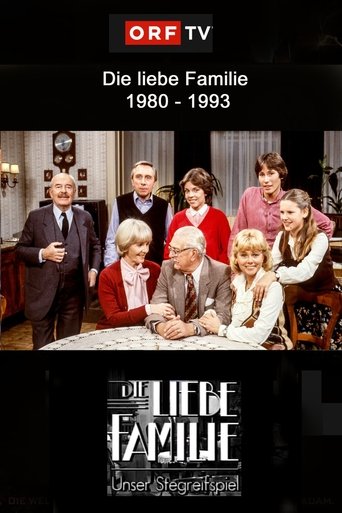
Die liebe Familie
1980
 8.0
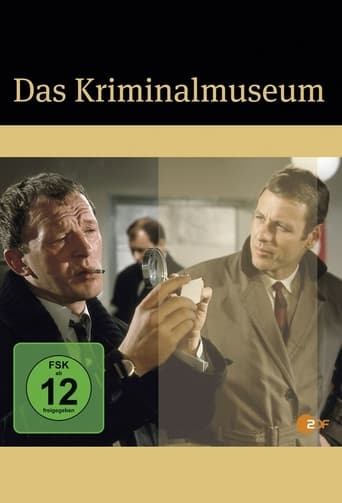
Das Kriminalmuseum was a German television series. It ran from 1963 to 1970 on ZDF and was one of its first programs. Each episode began with a tracking shot through an unspecified crime museum, stopping at one of the displays, whose story was then told. Each episode was between 60 and 75 minutes long and featured different actors as the criminal commissioner. The best known was Erik Ode, who in 1969 moved to Der Kommissar, appearing in 97 episodes. The theme music of the series was written by German composer Martin Böttcher, who also composed the complete scores for five episodes.
Das Kriminalmuseum
1963
No synopsis available yet.
Leuchtfeuer
1967
 NR
No synopsis available yet.
Emilia Galotti
1971
The mermaid Undine is looking for a man who is worthy of her love.
Undine 74
1974
No synopsis available yet.
Leihhauslegende
1959
Film credits
1980s · 3 titles
No synopsis available yet.
Die weiße Stadt
1980
TV-Movie directed by Franz Antel.
Die Lacher Macher
1988
 NR
The storyline of this episodic film, made on the occasion of the 150th anniversary of the Austrian Federal Railways (ÖBB), is a PR team's train journey through Austria. The professionals are to use the inspiring surroundings to develop a new advertising concept for ÖBB. Various stories are embedded, in each of which the railroad naturally plays a leading role.
Höchste Eisenbahn
1987
1970s · 7 titles
NRNo synopsis available yet.
Emilia Galotti
1971
The mermaid Undine is looking for a man who is worthy of her love.
Undine 74
1974
No synopsis available yet.
Eifersucht
1978
 9.0
No synopsis available yet.
Jedermann
1970
 8.0
Summer 1914, Vienna. Franz, a handsome young hussar lieutenant, falls in love with Sissi, daughter of the Austrian Generalissimo. Shortly afterwards, the First World War breaks out. It provides Franz with the perfect opportunity to earn his stripes and claim the girl's hand in marriage.
War Is War
1972
 NR
Arthur Schnitzler's key piece describes the liaisons of his artist colleagues from the Cafe Central, Vienna. Behind the character "Treuenhof" is Peter Alterberg recognized, "Winkler" = Arthur Schnitzler, "Flatterer" = Frida Uhl, "Rapp" = Stefan Großmann, "Willi" = Hans Lang, "Van Zack" = Adolf Loos, and "Lisa" = Lina Loos.
Das Wort
1970
No synopsis available yet.
Mit sich allein
1970
1960s · 13 titles
No synopsis available yet.
Leuchtfeuer
1967
No synopsis available yet.
Der Kaufmann von Venedig
1969
No synopsis available yet.
Die Geschichte der 1002. Nacht
1969
 8.0
Everyman (German: Jedermann) is a 1961 Austrian drama film directed by Gottfried Reinhardt, based on the play written by Hugo von Hofmannsthal. The film was selected as the Austrian entry for the Best Foreign Language Film at the 34th Academy Awards, but was not nominated.
Everyman
1961
 5.8
Valentin Hase (Peter Alexander) falls in love with the rich but cleptomanic society girl Babs (Connie Froboess) without knowing her true identity as the daughter of a chocolate company owner.
Hilfe, meine Braut klaut
1964
 5.8
During a cattle drive, Don McGow leaves the herd in charge of his younger brother and rides off. When the herd is reported stolen he blames himself and goes in search of the thieves.
Duel at Sundown
1965
No synopsis available yet.
Du holde Kunst - Szenen um Lieder von Franz Schubert
1961
No synopsis available yet.
Der Bürger als Edelmann
1969
No synopsis available yet.
Das schwedische Zündholz
1967
No synopsis available yet.
Umbruch
1964
No synopsis available yet.
Judith
1965
No synopsis available yet.
Die Spur der Leidenschaft
1961
No synopsis available yet.
Troilus und Cressida
1969
1950s · 10 titles
No synopsis available yet.
Leihhauslegende
1959
 6.5
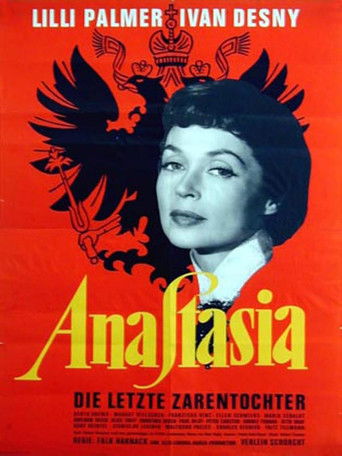
In 1920, an unknown 24-year-old woman was fished out of Berlin's Landwehr kanal after a suicide attempt. Since she has no papers and no answers to any questions, they soon assign them to the insane asylum Dallendorf. A co-patient believes she recognizes the Czar's daughter Anastasia Romanowa - who apparently was the only one who survived the murder of the tsar's family in 1918.
Anastasia: the Czar's Last Daughter
1956
 5.3
The third part of Paul May′s "08/15" trilogy based on the novel by Hans Hellmut Kirst takes place shortly before the end of World War II: In the spring of 1945, the German troops are practically defeated, and the battalion of Kowalski, major general von Plönnies and Asch who had risen to the rank of lieutenant in the meantime is left to its own devices to a large extent. They hope to be able to wait for the end of the war without having to encounter any combat operations. At the same time, Asch tries to prevent high-level Nazi officers from disappearing unnoticed and from cashing in on the chaotic circumstances.
08/15 at Home
1955
An ageing farmer and his young wife live in a lonely hut in the mountains. The farmer is a smuggler who the border police are trying to put a stop to. A young border hunter is sent to seduce the woman in order to find out where the man is hiding the smuggled goods. He in turn urges the woman to turn the border hunter's head so that he can go about his business undisturbed. But then the frontier hunter and the woman become truly passionate about each other, and the drama ends with murder and suicide. Based on the stage play by Karl Schönherr.
A Devil of a Woman
1951
 7.0
No synopsis available yet.
Der Adler vom Velsatal
1957
 5.7
No synopsis available yet.
Der Glockengießer von Tirol
1956
 7.5
When seminarian Martin Rufmann arrives in St. Eustachen, idyllically located in the Carinthian mountains, the local choral society is celebrating a joyous festival. Martin is the youngest son of the widowed head forester Thomas Rufmann. Martin's older brother Friedolin has inherited his father's love of hunting and is one of the best hunters in the area. He is also engaged to the pretty innkeeper's daughter Helene Schwarzaug. At the feast, Friedolin and his cronies drink heavily to the black liquor of the charcoal burner Krauthaas. Friedolin and the townspeople Günther have a loud argument in front of everyone. When Günther is found murdered a short time later, suspicion immediately falls on Friedolin. To save his brother, Martin accuses himself of the crime. The two brothers are arrested. The real culprit soon turns himself in, but in the meantime Thomas Rufmann has disappeared without a trace.
Die Försterbuben
1955
No synopsis available yet.
Das letzte Aufgebot
1953
No synopsis available yet.
Der rote Prinz
1954
 7.0
No synopsis available yet.
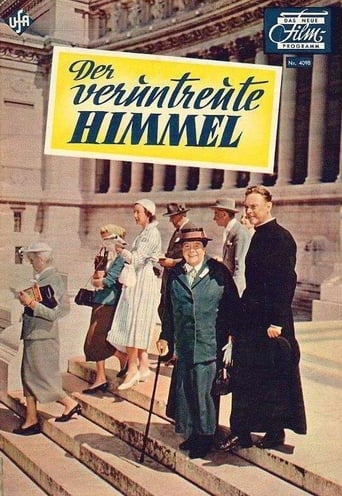
Embezzled Heaven
1958
Series credits
NRNo synopsis available yet.
Die liebe Familie
1980
8.0Das Kriminalmuseum was a German television series. It ran from 1963 to 1970 on ZDF and was one of its first programs. Each episode began with a tracking shot through an unspecified crime museum, stopping at one of the displays, whose story was then told. Each episode was between 60 and 75 minutes long and featured different actors as the criminal commissioner. The best known was Erik Ode, who in 1969 moved to Der Kommissar, appearing in 97 episodes. The theme music of the series was written by German composer Martin Böttcher, who also composed the complete scores for five episodes.
Das Kriminalmuseum
1963