
Directing
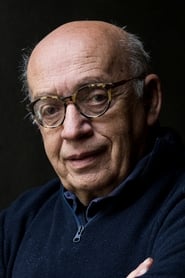
Jorge Silva Melo
Born
1948-08-07 (78)
Place of birth
Lisbon, Portugal
Known for
Directing
Credits
60 titles
Jorge Silva Melo is a Portuguese actor, theatre director, writer, playwright and translator. In 1973 Melo founded the Teatro da Cornucópia with Luís Miguel Cintra. He received critical acclaim for his work as a playwright. From Wikipedia, the free encyclopedia
Known for
 6.9
A bewitching combinatory adaptation of the Bluebeard tale and a 15th century Portuguese fable of a damsel who disguises herself as a knight errant.
Silvestre
1982
 6.0
One night, a group of workers realises that the administration is stealing machines and raw materials from their own factory. As they organize to survey the equipment and block the relocation of production, they are forced to stand at their posts with no work to do, as a form of retaliation, while negotiations over general lay-offs take place. The pressure leads to a breakdown of the workers along with the world around them.
The Nothing Factory
2017
 NR
The film's starting point was an exhibit at the Centre of Modern Art (Gulbenkian) in Lisbon. By evoking a time in the past and the adventures of the artist's generation, Silva Melo is able to depict the oeuvre and the artistic persona of António Palolo.
A. Palolo: Ver o Pensamento a Correr
1995
 7.6
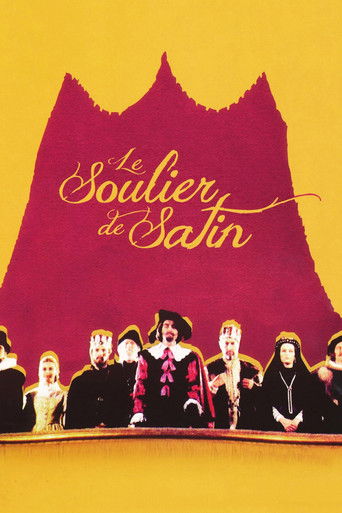
During the century of the Spanish Gold, Doña Prouhèze, wife of a nobleman, deeply loves Don Rodrigo, who is forced to leave Spain and go to America. Meanwhile Prouhèze is sent to Africa to rule the city of Mogador. Ten years later Rodrigo leaves America and travels to Africa in search of Prouhèze to find out that she died and eventually meeting her daughter.
The Satin Slipper
1986
 NR
Documentary about the work of the painter António Sena and a way to see the transformation of forms over time
António Sena - A Mão Esquiva
2009
 6.5
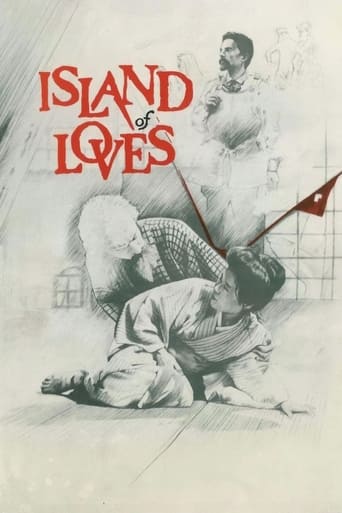
This film depicts the life of the 19th-century Portuguese writer Wenceslau De Moraes by means of nine ancient ballads from China. The writer married a Chinese woman after he left his wife and family to go live in Macao. Later, he moved to Japan where he fell in love with a Japanese woman, staying in Japan for the rest of his life. Mixed in with the career and loves of Moraes is the history of Portugal at home and in its colonies.
Island of Loves
1982
Film credits
2020s · 2 titles
 NR
A renowned symbol of Portuguese interventionist theatre, Cornucópia emerged from the darkness of fascism to fight dictatorship on stage. Among the classics, a project is born and dies, but one face remains emblematic: Luís Miguel Cintra, who shared his art with the constant complicity of set designer Cristina Reis. Together, guided by images, they bear witness, telling this story.
Memoirs of Teatro da Cornucópia
2025
 NR
A theatre having national as part of its name, at the top of a square, reflecting a country’s history. But which one? This is a voyage through the various narratives about D. Maria II National Theatre, forged through the intentions of the several regimes that intended to convey their own ideologies within the theatre’s mission. This is also the story of those who fought against it, opposed the institution and became part of it. How can one become heir of these stories, even if never having set foot inside.
Auto da Casa
2026
2000s · 2 titles
 NR
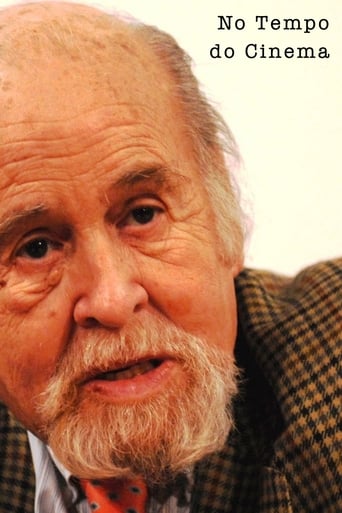
A 58 minute documentary about the life of João Bénard da Costa.
No Tempo do Cinema
2006
 NR
When he was 16-years-old, a young man was so impressed by the paintings of an obscure painter, that he did his best to get acquainted with him, as an artist, and a painter. Eventually, the artist started writing, and impressing the cultural world of his country to the point he became an established artistic name, and a college teacher. So, too, did that young man grow to be a theater and film writer, producer, and director.
Álvaro Lapa: A Literatura
2008
1990s · 3 titles
 7.0
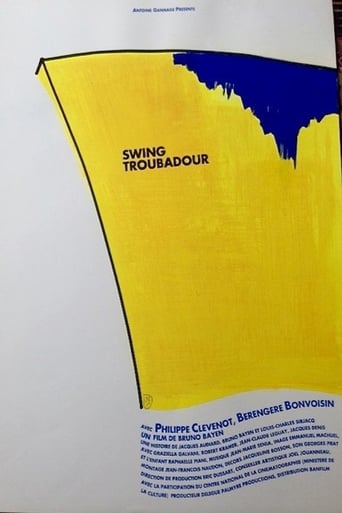
In Brazzaville, in 1944, Alex Emmerich was sentenced to wander the seas by Hélène Latray, the wife of Félix Beauvois, the man Alex loved. In 1962, exiled on Hatray cruises and feeling the coming death, Alex decides to compose for his love a testament: the photographic report of his agony.
Swing troubadour
1991
 8.3
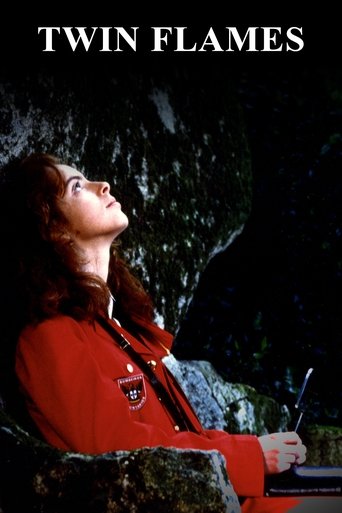
Redheaded twins Armando and Beatriz always dreamed of being firefighters but during a rainy, uneventful winter they find themselves spending less time putting out infernos than they do helping neighbors who’ve locked themselves out of their apartments. This is how Armando meets a pretty young woman with whom he begins a tentative courtship. But soon a rift grows between the siblings and, spurred by Armando’s exaggerated stories about his nascent relationship, Beatriz begins experiencing aural hallucinations that can only be remedied through music and, finally, the love of a stranger. Pinto made this impassioned fairy tale as part of a series of films about the four elements. - FilmLinc
Twin Flames
1992
 6.5
The city during the beginning of cinema. The typical city at the time of the dictatorship. The New Lisbon of the New Cinema. Lisbon after the Revolution. The white city of foreigners. A geographical and moviegoer screenplay of Lisbon through the images of films and testimonies of several filmmakers who filmed in Lisbon.
Lisboa no Cinema, Um Ponto de Vista
1994
1980s · 10 titles
6.9A bewitching combinatory adaptation of the Bluebeard tale and a 15th century Portuguese fable of a damsel who disguises herself as a knight errant.
Silvestre
1982
7.6During the century of the Spanish Gold, Doña Prouhèze, wife of a nobleman, deeply loves Don Rodrigo, who is forced to leave Spain and go to America. Meanwhile Prouhèze is sent to Africa to rule the city of Mogador. Ten years later Rodrigo leaves America and travels to Africa in search of Prouhèze to find out that she died and eventually meeting her daughter.
The Satin Slipper
1986
6.5This film depicts the life of the 19th-century Portuguese writer Wenceslau De Moraes by means of nine ancient ballads from China. The writer married a Chinese woman after he left his wife and family to go live in Macao. Later, he moved to Japan where he fell in love with a Japanese woman, staying in Japan for the rest of his life. Mixed in with the career and loves of Moraes is the history of Portugal at home and in its colonies.
Island of Loves
1982
 6.5
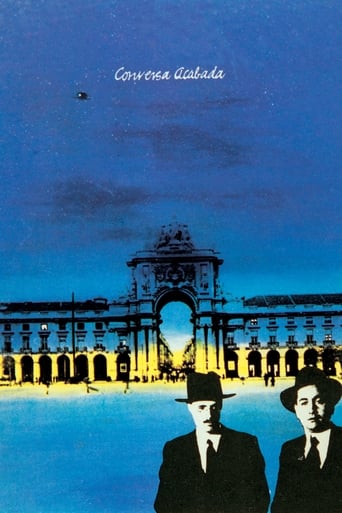
The film was to be a documentary, but evolved during production to a fictional film. It nevertheless adheres strictly to the poems and letters exchanged by two of the most outstanding names of the Modernist Movement, Fernando Pessoa (in Lisbon) and Mário de Sá-Carneiro (in Paris). Their endless conversation was dramatically and suddenly terminated.
The Conversation Is Over
1982
In a specialized, hermetic drama about love won and lost, not necessarily by the same individuals, novice director Christine Laurent has focused on the backstage melodramas of an opera company. The conductor for an upcoming performance of the Marriage of Figaro has his mind and heart on other matters -- an entrancing diva who keeps him enraptured with her presence and voice. In the meantime, he finds fault with his cast members who cannot, of course, measure up to the woman of his dreams. As singers encounter one problem or another, it is clear that something has to be done about the conductor. Director Laurent designed costumes for both theater and opera, giving her some insight into the venue.
Vertiges
1985
 6.2
It is the end of summer and Isabel is a relationship with Diogo. She don't quite know what she wants from her life going forward as her father gets sick.
A Girl in Summer
1986
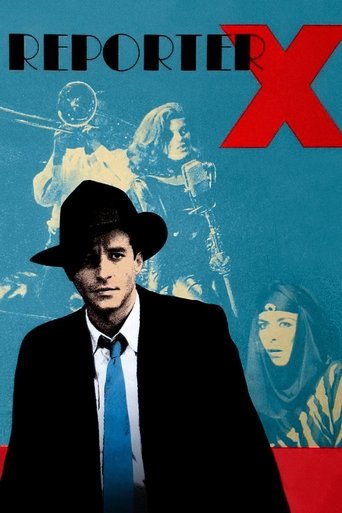 9.0
A story about character created by Reinaldo Ferreira (1897-1935), action reporter, mystery novelist and emotion journalist.
Repórter X
1987
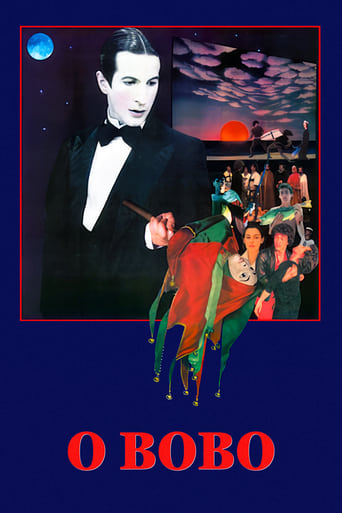 6.8
Set four years after the Portuguese revolution and the simultaneous loss of the Portuguese empire in Africa, the story concerns a director who sells guns to finance his play.
The Jester
1987
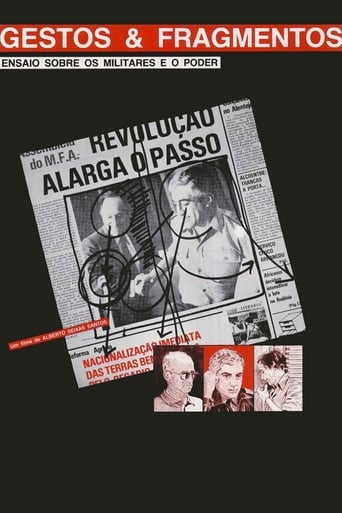 7.0
"Essay on the Military and the Power", a phrase that also belongs to the title of "Gestures & Fragments", sums up the spirit of the film, based on three points of view on the same theme: Otelo Saraiva de Carvalho and Eduardo Lourenço, in their own roles, and the one played by Robert Kramer, as an American journalist bent on seeking explanations for the process of the Portuguese Revolution.
Gestures and Fragments
1983
No synopsis available yet.
No Speaking
1984
1970s · 2 titles
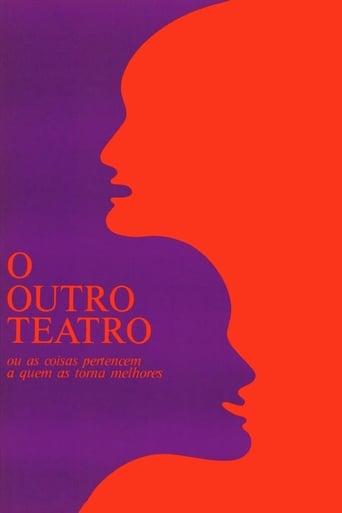 NR
O Outro Teatro proposes a look at the independent theater manifestations that came in the wake of the pioneering gestures of Teatro Experimental do Porto.
O Outro Teatro ou As Coisas Pertencem a Quem as Torna Melhores
1977
 NR
The film of a performance of a selection of cabaret comedy sketches by Karl Valentin, with Jorge Silva Melo as stage director. The show was a complete success and has become almost legendary. Solveig Nordlund shot it, adding some more sketches that weren’t included on the show.
E Não se Pode Exterminá-lo?
1979
Behind the camera
6.0One night, a group of workers realises that the administration is stealing machines and raw materials from their own factory. As they organize to survey the equipment and block the relocation of production, they are forced to stand at their posts with no work to do, as a form of retaliation, while negotiations over general lay-offs take place. The pressure leads to a breakdown of the workers along with the world around them.
The Nothing Factory
2017
NRThe film's starting point was an exhibit at the Centre of Modern Art (Gulbenkian) in Lisbon. By evoking a time in the past and the adventures of the artist's generation, Silva Melo is able to depict the oeuvre and the artistic persona of António Palolo.
A. Palolo: Ver o Pensamento a Correr
1995
NRDocumentary about the work of the painter António Sena and a way to see the transformation of forms over time
António Sena - A Mão Esquiva
2009
The subtle story of a man and a woman, with their respective families and situations, which, after some time, coincide by chance.
O Tempo
2019
 5.0
One night Jorge will meet with a Japanese industrialist, who will allow him to abandon his teaching position and resume his chemical work. However, when he gets home he finds a person there.
Poor George
1993
5.0One night Jorge will meet with a Japanese industrialist, who will allow him to abandon his teaching position and resume his chemical work. However, when he gets home he finds a person there.
Poor George
1993
In an old house, around a table, under a lamp, four men play a game of cards. This house is a haven where all failures are accepted, where all are allowed. Failure is the rule, not the exception. Money has disappeared, as has any possibility of personal success.
Jogadores
2017
 7.0
A boy in Lisbon, in this Lisbon in permanent renovation.
Antonio, a Boy in Lisbon
2002
7.0A boy in Lisbon, in this Lisbon in permanent renovation.
Antonio, a Boy in Lisbon
2002
 NR
Bartolomeu Cid dos Santos (1931-2008), engraver, painter, is one of the great artists of the 20th century. His world is the crepuscular world of the end of the Portuguese Empire, he who created the first metaphors against the Portuguese Colonialism. And who, with constant vitality, has opposed himself against the New World Order. Knowing, with Eliot, that “the past and the future time are both always present on the present time”
Bartolomeu Cid dos Santos - Por Terras Devastadas
2009
 6.5
Director Jorge Silva Melo has developed a viable, though highly intellectual mystery story about the world of art and culture and murder in this somewhat theatrical presentation. When German artist Bernd Hoffmann (Michael König) arrives in Lisbon to oversee the installation of his paintings in a joint exhibition with another Berlin artist, Hanna Brauer (Charlotte Schwab), Hanna never shows up. Hoffmann is puzzled because he is certain he saw a video sequence with Hanna at the exhibition, and he begins to look for her. Another Lisbon cultural center, a theater, is also having problems that may or may not be related -- and the mystery deepens when Hanna is found dead, either by her own hand, or murdered.
No One Twice
1985
6.5Director Jorge Silva Melo has developed a viable, though highly intellectual mystery story about the world of art and culture and murder in this somewhat theatrical presentation. When German artist Bernd Hoffmann (Michael König) arrives in Lisbon to oversee the installation of his paintings in a joint exhibition with another Berlin artist, Hanna Brauer (Charlotte Schwab), Hanna never shows up. Hoffmann is puzzled because he is certain he saw a video sequence with Hanna at the exhibition, and he begins to look for her. Another Lisbon cultural center, a theater, is also having problems that may or may not be related -- and the mystery deepens when Hanna is found dead, either by her own hand, or murdered.
No One Twice
1985
 7.0
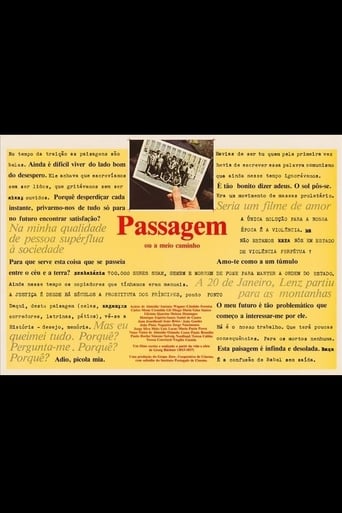
Ambulatory history, freely inspired by Georg Büchner's biography (1813-37) and the reasons that led him first to political intervention and then to strict isolation. With students of unidentified present time (1968? 1970?), the themes developed, in Büchner, are triggered by the publication of "The Messenger of Hesse", a pamphlet addressed to the peasants, urging them to revolt. Their misunderstanding, as well as the repression of the young revolutionaries, leads Büchner to a particularly skeptical and painful attitude...
Passagem ou a Meio Caminho
1986
7.0Ambulatory history, freely inspired by Georg Büchner's biography (1813-37) and the reasons that led him first to political intervention and then to strict isolation. With students of unidentified present time (1968? 1970?), the themes developed, in Büchner, are triggered by the publication of "The Messenger of Hesse", a pamphlet addressed to the peasants, urging them to revolt. Their misunderstanding, as well as the repression of the young revolutionaries, leads Büchner to a particularly skeptical and painful attitude...
Passagem ou a Meio Caminho
1986
 6.9
Xavier returns to Lisbon after a military stint, determined to lead a meaningful life, only to find his world closing in on him.
Xavier
1991
 NR
The painter Sofia Areal is a singular case in the portuguese arts. Her paintings are expansive, open, solar, vital and affirmative. The documentary starts in 2011, with the artist being filmed during several ocasions.
Sofia Areal: An Anti-Pain Office
2016
 NR
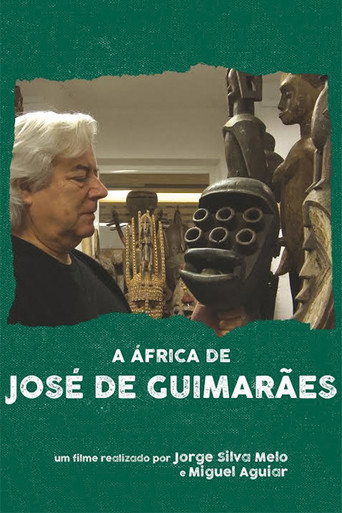
José de Guimarães's artistic life changed when he went to Africa in 1967 on military service. A revisit to his past.
A África de José de Guimarães
2013
A train trip with a mother and her son, to whom she speaks.
Trip to Happiness
1978
 7.5
A girl answers a job interview and little by little her past is revealed and called into question.
O Pedido de Emprego
2000
 NR
A documentary about Gravura, the Portuguese cooperative founded in Lisbon in 1956.
A Gravura: Esta Mútua Aprendizagem
2008
Documentary about the painter Ângelo de Sousa
Ângelo de Sousa - Tudo o Que Sou Capaz
2009
 NR
Documentary about the work of the painter Nikias Skapinakis from the exhibition “Imaginary Bedrooms” which in June 2006 opened at the Museum Arpad Scenes-Vieira da Silva. Film by Jorge Silva Melo that closely follows the work of one of the most important painters of the second half of the 20th century, specifically in the area of portrait.
Nikias Skapinakis: O Teatro Dos Outros
2006
NRThe film of a performance of a selection of cabaret comedy sketches by Karl Valentin, with Jorge Silva Melo as stage director. The show was a complete success and has become almost legendary. Solveig Nordlund shot it, adding some more sketches that weren’t included on the show.
E Não se Pode Exterminá-lo?
1979
 7.8
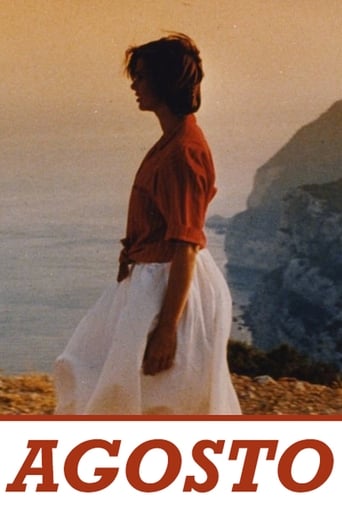
Summer of 1964. The professor Carlos and the couple Dário and Alda spend time together in the beach during vacations. Away from the colonial war, everything seems lost in time.
Agosto
1988
7.8Summer of 1964. The professor Carlos and the couple Dário and Alda spend time together in the beach during vacations. Away from the colonial war, everything seems lost in time.
Agosto
1988
NRWhen he was 16-years-old, a young man was so impressed by the paintings of an obscure painter, that he did his best to get acquainted with him, as an artist, and a painter. Eventually, the artist started writing, and impressing the cultural world of his country to the point he became an established artistic name, and a college teacher. So, too, did that young man grow to be a theater and film writer, producer, and director.
Álvaro Lapa: A Literatura
2008
 6.0
This visually striking drama is taken from the classic Japanese novel Tales Of Genji by Marasaki Shikibu. Set in modern Portugal, Joao (Luis Miguel Cintra) is a left-wing political leader and ladies man with a bright future. His ex-wife Isabel (Manuela de Freitas) both loves and hates him as Joao plays on her wavering emotional state. He is sent to Italy to retrieve wayward family member Antonia (Caroline Chaniolleau), the beautiful young woman with a terrorist boyfriend. Joao is forced to recognize his feelings as the political and amorous climate changes around him.
The Mountains of the Moon
1987
 6.6
Nogueira, a man in his fifties, is a relic of times long past. While the youngsters at the school where he works as a caretaker still think the world is their oyster, Nogueira knows that, for him, most doors have long closed.
Step by Step
1990
 NR
A walk for half a century, yes, a letter perhaps. Travels in my life, I could call it, which I like Garrett so much. A traveling as he would like, a loose story, memories, projects, meetings. Also because, since 1995, I have done several portraits of artists (Palolo, Bravo, Lapa, Skapinakis, Bartolomeu, Angelo, Sena, Ana Vieira and I prepare Sofia Areal and Fernando Lemos), I started to think that this is my life, these meetings , see, hear, cut, show, tease. I want, with this film continue to show what I see. [Jorge Silva Melo]
Ainda Não Acabámos: Como Se Fosse Uma Carta
2016
NRA walk for half a century, yes, a letter perhaps. Travels in my life, I could call it, which I like Garrett so much. A traveling as he would like, a loose story, memories, projects, meetings. Also because, since 1995, I have done several portraits of artists (Palolo, Bravo, Lapa, Skapinakis, Bartolomeu, Angelo, Sena, Ana Vieira and I prepare Sofia Areal and Fernando Lemos), I started to think that this is my life, these meetings , see, hear, cut, show, tease. I want, with this film continue to show what I see. [Jorge Silva Melo]
Ainda Não Acabámos: Como Se Fosse Uma Carta
2016
 NR
A father and a son. The father will be seventy years old, the son is in his twenties. The son drives the father to the hospital. Classical music in the radio. The father did not know that the son liked classical music, and the son did not know that that would be the last time he would speak to his father. But Mozart asks that souls rejoice, that men rejoice.
A Felicidade
2009
NRA father and a son. The father will be seventy years old, the son is in his twenties. The son drives the father to the hospital. Classical music in the radio. The father did not know that the son liked classical music, and the son did not know that that would be the last time he would speak to his father. But Mozart asks that souls rejoice, that men rejoice.
A Felicidade
2009
 7.0
Joaquim Bravo (Évora, 1935 - Lisbon, 1990) exhibited for the first time in 1964, inaugurating what would become one of the most decisive Portuguese galleries, the 111 in Campo Grande. Its doctrinal influence and its enormous capacity for enthusiasm would mark in the early sixties Évora's group of painters (Lapa, Palolo) and, in the 80's, artists such as Xana and Cabrita Reis. At his death, a moving tribute was paid to him by a huge and varied group of artists ranging from João Vieira to Miranda Justo. His work is scattered in a large number of private and institutional collections.
Joaquim Bravo, Évora 1935, Etc. Etc. Felicidades
1999
 NR
Fernando Lemos, a creator who stood out for photographing actors, artists and writers in Portugal from the 1940s and 1950s.
Fernando Lemos - Como, Não é Retrato?
2017
Ana Vieira's place in Portuguese art is unusual: working the trail, the shadow, the passage of light (or bodies?), the reflection, the overlap, the footprint, the memory or planning of the future, her art streak the invisible. And it questions the place of art - and of the viewer, always placed "outside" or with the awareness of "off".
Ana Vieira: E o que não é visto
2011
Jorge Silva Melo's follow-up to his 2007 documentary film "Nikias Skapinakis - O Teatro dos Outros".
Nikias Skapinakis (Continuando)
2012
 8.0
Catalyst in the story of crossed paths is a 1957 Ford Fairlane being driven through Portugal’s Alentejo region to a new owner. Film’s overly protracted opening has car’s drivers (Filipe Cochofel, Antonio Pedro Figueiredo) joy riding the night away until the roadster breaks down. Momentum picks up at sunrise with their attempts to fix the car. A retired mechanic-turned-beekeeper with a heart condition (Canto e Castro) does the trick and convinces Figueiredo to take him cross-country on a motorbike to look up an old friend. Cochofel and the mechanic’s alarmed niece (Maysa Marta) follow in pursuit. The old man dies peacefully on the road, but Figueiredo, having wholeheartedly grasped his deliverance mission, keeps going.
Far Away from Here
1994
 10.0
A documentary about the actress Glicínia Quartin on her 80th birthday. Her family, the anarcho-syndicalism, readings at his parents' house, prisons, experimental theaters, surrealists, the encounter with José Ernesto de Sousa on the unfolding of Cinema Novo with “Dom Roberto”, Italy, fantasy, Beckett, Genet, Vitor Garcia, the encounter with Luís Miguel Cintra - a life in motion.
Conversas com Glícínia
2004