
Directing
Shadi Abdel Salam
Born — Died
1930-03-15 — 1986-10-08
Place of birth
Alexandria, Egypt
Known for
Directing
Credits
12 titles
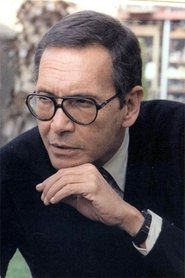
Shadi Abdel Salam (Arabic: شادي عبد السلام) was an Egyptian film director, screenwriter and costume and set designer. Born in Alexandria on 15 March 1930, Shadi graduated from Victoria College, Alexandria, 1948, and then moved to England to study theater arts from 1949 to 1950. He then joined faculty of fine arts in Cairo where he graduated as an architect in 1955. He worked as assistant to the artistic architect, Ramsis W. Wassef, 1957, and designed the decorations and costumes of some of the most famous historical Egyptian films among which are; Wa Islamah, Al Nasser Salah Ad-Din, Almaz wa Abdu El Hamouly. He worked as a historical consultant and supervisor of the decoration, costumes an…
Known for
 7.1
Based on one of the major literary texts survived from the Middle Kingdom, the classical period of Egyptian literature, The Eloquent Peasant is a combination of a morality/folk tale and a poem. The events are set between 2160 and 2025 BC. When the peasant Khun-anup and his donkey stumble upon the lands of the noble Rensi, the peasant’s goods are confiscated and he’s unjustly accused of theft. The peasant petitions Rensi who is so taken by the peasant’s eloquence that he report his astonishing discovery to the king. The king realises the peasant has been wronged but delays judgement so as to he can hear more of his eloquence. The peasant makes a total of nine petitions until finally, his goods are returned.
The Eloquent Peasant
1970
 7.6
Set in 1881, a year before the start of British colonial rule, it is based on the true story of the Abd el-Rasuls, an Upper-Egyptian clan that had been robbing a cache of mummies they have discovered at tomb DB320 near the village of Kurna, and selling the artifacts on the black market. After a conflict within the clan, one of its members made a crucial decision when the Antiquities Service arrived.
The Night of Counting the Years
1969
 8.0
Experimental Film. Documentary reflects the cultural life in modern Egypt.
Horizons
1972
 NR
Posthumously completed film trilogy, conceived during the 1970s and left incomplete at the time of Abdelsalam's death in 1986, the trilogy reflects his lifelong mission of reconnecting modern Egyptians with the spiritual, cultural, and philosophical legacy of ancient Egypt. The work consists of three short films—The Fortress, The Dandarawiya, and The Tragedy of the Great House – Akhenaten—which examine ancient Egyptian civilization, religious thought, and humanity's search for meaning.
Road to God
2026
 NR
This documentary tries to capture the fresh sense of triumph in the eyes of the Egyptian soldiers after the 1973 war with Israel.
Army of the Sun
1973
 NR
Salah, a boy, wanders about with his uncle through the Cairo museum, where he is fascinated by the statues and especially the restauration work in progress on Tutankhamun's throne. His uncle tells him the story of ancient Egypt and of the relation between Tutankhamun and Akhenaten.
Throne of Tutankhamun
1982
Behind the camera
7.1Based on one of the major literary texts survived from the Middle Kingdom, the classical period of Egyptian literature, The Eloquent Peasant is a combination of a morality/folk tale and a poem. The events are set between 2160 and 2025 BC. When the peasant Khun-anup and his donkey stumble upon the lands of the noble Rensi, the peasant’s goods are confiscated and he’s unjustly accused of theft. The peasant petitions Rensi who is so taken by the peasant’s eloquence that he report his astonishing discovery to the king. The king realises the peasant has been wronged but delays judgement so as to he can hear more of his eloquence. The peasant makes a total of nine petitions until finally, his goods are returned.
The Eloquent Peasant
1970
7.6Set in 1881, a year before the start of British colonial rule, it is based on the true story of the Abd el-Rasuls, an Upper-Egyptian clan that had been robbing a cache of mummies they have discovered at tomb DB320 near the village of Kurna, and selling the artifacts on the black market. After a conflict within the clan, one of its members made a crucial decision when the Antiquities Service arrived.
The Night of Counting the Years
1969
8.0Experimental Film. Documentary reflects the cultural life in modern Egypt.
Horizons
1972
8.0Experimental Film. Documentary reflects the cultural life in modern Egypt.
Horizons
1972
NRPosthumously completed film trilogy, conceived during the 1970s and left incomplete at the time of Abdelsalam's death in 1986, the trilogy reflects his lifelong mission of reconnecting modern Egyptians with the spiritual, cultural, and philosophical legacy of ancient Egypt. The work consists of three short films—The Fortress, The Dandarawiya, and The Tragedy of the Great House – Akhenaten—which examine ancient Egyptian civilization, religious thought, and humanity's search for meaning.
Road to God
2026
NRThis documentary tries to capture the fresh sense of triumph in the eyes of the Egyptian soldiers after the 1973 war with Israel.
Army of the Sun
1973
NRThis documentary tries to capture the fresh sense of triumph in the eyes of the Egyptian soldiers after the 1973 war with Israel.
Army of the Sun
1973
NRThis documentary tries to capture the fresh sense of triumph in the eyes of the Egyptian soldiers after the 1973 war with Israel.
Army of the Sun
1973
NRSalah, a boy, wanders about with his uncle through the Cairo museum, where he is fascinated by the statues and especially the restauration work in progress on Tutankhamun's throne. His uncle tells him the story of ancient Egypt and of the relation between Tutankhamun and Akhenaten.
Throne of Tutankhamun
1982
 NR
Mythic, quiet, and beautifully shot on 35mm film in the deserts of California, Clark’s film explores themes of culture, cultural excavation and appropriation, and the construction of history. Playing with movement and light in natural settings, with a glorious score, layered with a dialogue of two explorers, the film re-enacts the negotiations of an archaeologist from Cairo with members of an Egyptian tribe who guard ancient culture hidden in tombs lost in the desert. The scenario for the film was adapted from the 1969 Egyptian film A Night of Counting the Years, directed by Shadi Abdel Salam, creating a layered story with echoes of ancient Egypt, reflections on the diversity of desert ecology, and recent archaeological digs for lost Hollywood film sets.
A Distant Echo
2016