
Directing
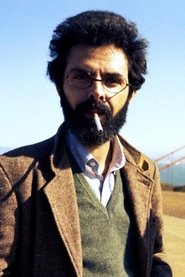
Sohrab Shahid-Saless
Born — Died
1944-06-28 — 1998-07-02
Place of birth
Qazvin, Iran
Known for
Directing
Credits
43 titles
Sohrab Shahid-Saless was born in Tehran in 1944 to a middle-class family and lived in Tehran. Shahid-Saless was a storyteller as a child, with a passion for visualizing his narrations. In 1963, Shahid-Saless left Iran for Vienna, where he attended a film school and an acting school at the same time, but his studies were discontinued there in 1967 due to a sudden diagnosis of tuberculosis. In the midst of treatment, he left for Paris to continue his film studies at the prestigious Independent Conservatory of French Cinema, and shortly thereafter, in 1968, he returned to Iran. Upon his return to Tehran, Shahid-Saless began work with the Iranian Ministry of Culture as a documentary fil…
Known for
Annual awarding of the Grimme Awards.
Grimme Award
1964
No synopsis available yet.
Telestar
1983
 9.0
9.0An elderly man lives a solitary and rhythmic life by a dilapidated mill near a river. His days are spent almost entirely in silence, fishing under the shade of a massive, ancient willow tree that seems as old and weathered as he is. One Sunday, while fishing, he witnesses a murder.
The Willow Tree
1984
 10.0
10.0A woman leaves her husband and starts living with a Turkish man.
Addressee Unknown
1983
 7.5
7.5A married couple adopts a child. The mother's relationship with the new family member quickly deteriorates.
Changeling
1987
 7.1
7.1A railway crossing guard and his wife live in a routine of total isolation and uneventfulness.
Still Life
1974
Film credits
Series credits
Behind the camera
9.0An elderly man lives a solitary and rhythmic life by a dilapidated mill near a river. His days are spent almost entirely in silence, fishing under the shade of a massive, ancient willow tree that seems as old and weathered as he is. One Sunday, while fishing, he witnesses a murder.
The Willow Tree
1984
9.0An elderly man lives a solitary and rhythmic life by a dilapidated mill near a river. His days are spent almost entirely in silence, fishing under the shade of a massive, ancient willow tree that seems as old and weathered as he is. One Sunday, while fishing, he witnesses a murder.
The Willow Tree
1984
10.0A woman leaves her husband and starts living with a Turkish man.
Addressee Unknown
1983
10.0A woman leaves her husband and starts living with a Turkish man.
Addressee Unknown
1983
7.5A married couple adopts a child. The mother's relationship with the new family member quickly deteriorates.
Changeling
1987
7.1A railway crossing guard and his wife live in a routine of total isolation and uneventfulness.
Still Life
1974
7.1A railway crossing guard and his wife live in a routine of total isolation and uneventfulness.
Still Life
1974
 7.1
7.1A young boy learns of his mother's occupation while trying to save money for a bicycle.
Time of Maturity
1976
7.1A young boy learns of his mother's occupation while trying to save money for a bicycle.
Time of Maturity
1976
 5.8
5.8Documentary on the life of Cechov.
Anton P. Chekhov: A Life
1981
5.8Documentary on the life of Cechov.
Anton P. Chekhov: A Life
1981
 7.0
7.0Short film made with stop motion animation techniques.
Black and White
1972
7.0Short film made with stop motion animation techniques.
Black and White
1972
 7.0
7.0Historian, author, and movie critic Lotte H. Eisner is the subject of this documentary. She recalls her early childhood in Germany and her association with such legendary directors as F.W. Murnau and Fritz Lang. Leaving Germany for Paris in 1933, her anticipation of WW II saw her relocating to the South of France. Eisner gives her considerable and insightful opinions on classic German Expressionist Films, as several of her admirers drop by during the interview conducted by director Sohrab Shadid-Saless.
The Long Vacation of Lotte H. Eisner
1979
7.0Historian, author, and movie critic Lotte H. Eisner is the subject of this documentary. She recalls her early childhood in Germany and her association with such legendary directors as F.W. Murnau and Fritz Lang. Leaving Germany for Paris in 1933, her anticipation of WW II saw her relocating to the South of France. Eisner gives her considerable and insightful opinions on classic German Expressionist Films, as several of her admirers drop by during the interview conducted by director Sohrab Shadid-Saless.
The Long Vacation of Lotte H. Eisner
1979
 NR
NRSecond short film of Sohrab Shahid Saless
Dances of Torbat-e Jam
1970
 NR
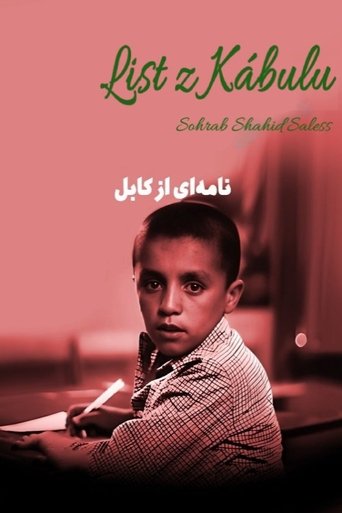
NRThe nine-year-old Mahmud writes a letter to his 'friends in distant countries' and reports on life in Kabul during the years of the Afghan revolution and counter-revolution.
A Letter from Kabul
1987
NRThe nine-year-old Mahmud writes a letter to his 'friends in distant countries' and reports on life in Kabul during the years of the Afghan revolution and counter-revolution.
A Letter from Kabul
1987
 7.0
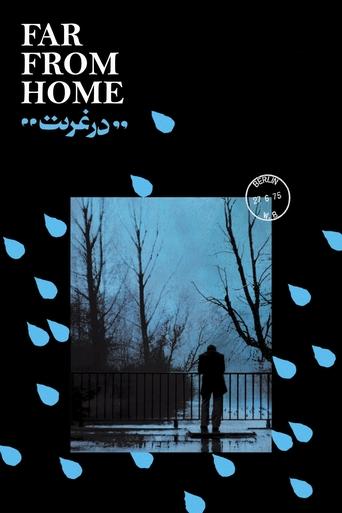
7.0Turkish migrant Husseyin spends his days in hypnotic routine as a “guest worker” in ‘70s West Berlin, living in a small, shared apartment and commuting daily to his job at a factory pressing machine parts. Diligently saving up his wages he hopes to one day marry and buy a house back home, but his immediate future in Berlin is clouded by indignities at the hands of racist coworkers and botched attempts at romantic intimacy.
Far from Home
1975
7.0Turkish migrant Husseyin spends his days in hypnotic routine as a “guest worker” in ‘70s West Berlin, living in a small, shared apartment and commuting daily to his job at a factory pressing machine parts. Diligently saving up his wages he hopes to one day marry and buy a house back home, but his immediate future in Berlin is clouded by indignities at the hands of racist coworkers and botched attempts at romantic intimacy.
Far from Home
1975
 6.3
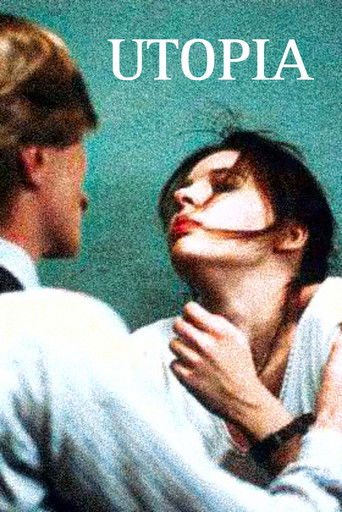
6.3A treatise on love and desire tainted by harsh reality of capitalism, in which submission to the laws of lust-as-commerce is played out by five prostitutes and their pimp, who pits them against one another so that they are incapable of standing up to him collectively.
Utopia
1983
6.3A treatise on love and desire tainted by harsh reality of capitalism, in which submission to the laws of lust-as-commerce is played out by five prostitutes and their pimp, who pits them against one another so that they are incapable of standing up to him collectively.
Utopia
1983
 10.0
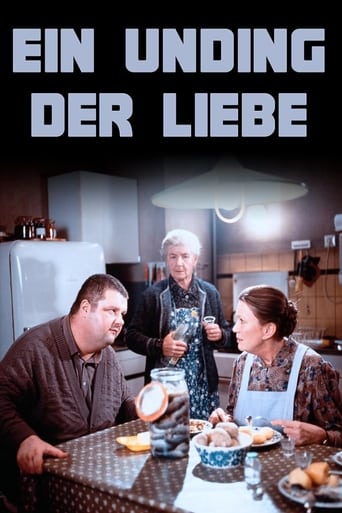
10.0Left behind by his mother, an alcoholic prostitute, Georg grew up carelessly with his aunt and grandmother. As an adult he works in a department store canteen and has become an outsider due to his shape and infantile appearance.
Bleeding Heart
1988
 4.8
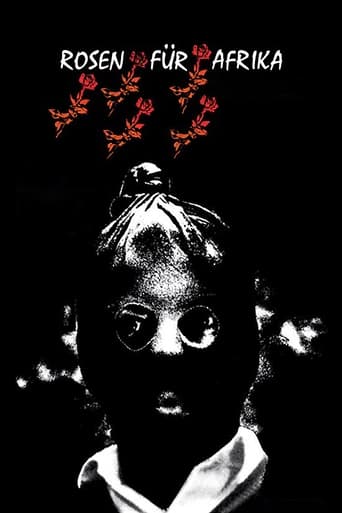
4.8A psychodrama about how injustice is turned into oblivion about an opportunity worker and a woman from the civil house of a marriage for 30 years . Soon the relationship fails due to the aggressive, also destructive tendencies of the man who enters a deep personal crisis. When the marriage coined/shaped of force and Psychoterror goes finally into the breaks, the man looks for comfort in the alcohol and becomes criminal.
Roses for Africa
1992
4.8A psychodrama about how injustice is turned into oblivion about an opportunity worker and a woman from the civil house of a marriage for 30 years . Soon the relationship fails due to the aggressive, also destructive tendencies of the man who enters a deep personal crisis. When the marriage coined/shaped of force and Psychoterror goes finally into the breaks, the man looks for comfort in the alcohol and becomes criminal.
Roses for Africa
1992
 NR
NRFirst work of Iranian director, Sohrab Shahid Saless.
Dance of Bojnourd
1969
 6.1
6.1The story of a ten years old Iranian schoolboy living with his mother and his father in Northern coasts of Iran. The boy helps his father in selling the latter's illegal fishing and helps his mother in shopping for her and bringing home water from a well. The three characters live together in only one room. Their life is austere. The boy eats only bread and milk every day... One day the boy's mother dies.
A Simple Event
1973
6.1The story of a ten years old Iranian schoolboy living with his mother and his father in Northern coasts of Iran. The boy helps his father in selling the latter's illegal fishing and helps his mother in shopping for her and bringing home water from a well. The three characters live together in only one room. Their life is austere. The boy eats only bread and milk every day... One day the boy's mother dies.
A Simple Event
1973
 NR
NRvideo report of the 2nd Asian international trade fair ran from 5 to 24 October 1969 in Tehran-Iran.
2nd Asian Expo
1969
 7.0
7.0A young man lives through the end of World War II
Hans: A Young Man in Germany
1985
7.0A young man lives through the end of World War II
Hans: A Young Man in Germany
1985
 NR
NRA short documentary about social issues which Iranian people are struggling with in 1971.
If...?
1971
 6.6
6.6A diary of a lonely 30 year old man who works as a butcher in a supermarket. The movie shows his daily life between the supermarket and his flat. His ability to communicate is limited. From time to time his mother visits him. But his relationship to her is rather reserved. Constantly he's waiting for his girlfriend which is not visiting him anymore after they had a fight.
Diary of a Lover
1977
6.6A diary of a lonely 30 year old man who works as a butcher in a supermarket. The movie shows his daily life between the supermarket and his flat. His ability to communicate is limited. From time to time his mother visits him. But his relationship to her is rather reserved. Constantly he's waiting for his girlfriend which is not visiting him anymore after they had a fight.
Diary of a Lover
1977
 5.0
5.0Depiction of the short life of the influential, troubled playwright Christian Dietrich Grabbe. Impoverished and suffering from illness, Grabbe returns to his hometown of Detmold in 1823 seeking peace and reconciliation. His final days are marked by rapidly deteriorating health, an intense struggle with alcohol, and complex, strained relationships with his sister and friends who attempt to care for him.
Grabbe's Last Summer
1980
 6.5
6.5Herbert (Heinz Lieven) is a solid, middle-class engineer who one day quits his job and ensconces himself at home (preferably in the bathroom), refusing to say very much to anyone. His wife (Dorothea Moritz ) is all the more upset at his behavior because on Sunday mornings he goes out into the street and yells at the top of his lungs for everyone to "get up." Eventually, the hard-working wife who is also earning their support convinces Herbert to go to a clinic for treatment. But is it a clinic he needs? Or is Herbert rebelling against a society that is too ordered, too sterile, too buried in the monotony of routine?
All in Order
1980
6.5Herbert (Heinz Lieven) is a solid, middle-class engineer who one day quits his job and ensconces himself at home (preferably in the bathroom), refusing to say very much to anyone. His wife (Dorothea Moritz ) is all the more upset at his behavior because on Sunday mornings he goes out into the street and yells at the top of his lungs for everyone to "get up." Eventually, the hard-working wife who is also earning their support convinces Herbert to go to a clinic for treatment. But is it a clinic he needs? Or is Herbert rebelling against a society that is too ordered, too sterile, too buried in the monotony of routine?
All in Order
1980