
Directing
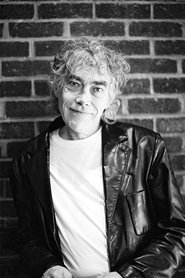
William Raban
Known for
Directing
Credits
42 titles
William Raban is an artist filmmaker who has exhibited worldwide in both art and film contexts. Initially known for his landscape and expanded cinema films of the 1970s, Raban's landscape interests, were framed in the 80s towards a more historical and socio-political context: the history of London and the Thames.
Known for
 NR
NRHome movies shot on Super 8mm by W+B Hein over 10 years.
Home Movies 1971-81
1985
 7.0
7.0Jonas Mekas assembles 160 portraits, appearances, and fleeting sketches of underground and independent filmmakers captured between 1955 and 1996. Fast-paced and archival in spirit, the film celebrates the avant-garde as its own “nation of cinema,” a vital community existing outside the dominance of commercial film.
Birth of a Nation
1997
 NR
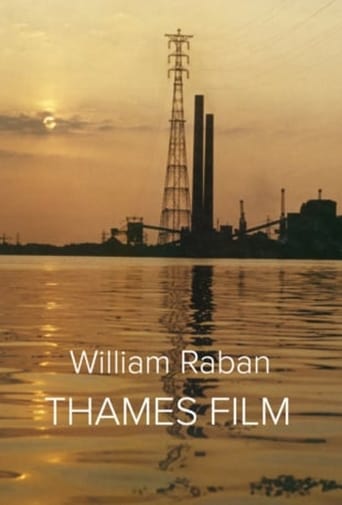
NRExperimental documentary following the flow of the Thames out of London to the sea.
Thames Film
1986
No synopsis available yet.
Confessions
—
 NR
NR"This experiment determines what happens when a negative is superimposed upon its own positive image. The center of the picture forms the optical soundtrack on both left and right screens so that what you see finds its aural equivalent in sound." - Anthology Film Archives
Surface Tension
1976
A witty take on the contingencies of the conditions in which to best read Marx. Filmed over 6 days, the time-lapse technique compresses a classic text (Karl Marx's 'Das Kapital') into a 9 minute experience, raising questions as to how film might transcend verbal language. The picture is offset by David Cunningham’s score which is composed solely from the two words of the book’s title.
Available Light
2016
Film credits
1970s · 2 titles
 NR
NRLe déjeuner sur l’herbe is simultaneously perceived from four different camera positions in a work which engages with the pro-filmic in order to question documentation, illusion and the film viewing process.
After Manet, After Giorgione – Le Dejeuner sur l'Herbe or Fete Champetre
1975
 NR
NR"Like all the works I have done which refer directly to another artist, After Lumière… is not directly 'about' the Lumière original. It is the starting point for an investigation. In this case it is an investigation into consequentiality, or at least the significance of sequentiality in the construction of meaning and concept. As such, the film encroaches on 'narrative' cinema, but in a way which treats narrativization as problematic, not transparent." - Malcolm Le Grice
After Lumière – l'Arroseur arrosé
1974
Behind the camera
NRExperimental documentary following the flow of the Thames out of London to the sea.
Thames Film
1986
NRExperimental documentary following the flow of the Thames out of London to the sea.
Thames Film
1986
No synopsis available yet.
Confessions
—
NR"This experiment determines what happens when a negative is superimposed upon its own positive image. The center of the picture forms the optical soundtrack on both left and right screens so that what you see finds its aural equivalent in sound." - Anthology Film Archives
Surface Tension
1976
A witty take on the contingencies of the conditions in which to best read Marx. Filmed over 6 days, the time-lapse technique compresses a classic text (Karl Marx's 'Das Kapital') into a 9 minute experience, raising questions as to how film might transcend verbal language. The picture is offset by David Cunningham’s score which is composed solely from the two words of the book’s title.
Available Light
2016
 NR
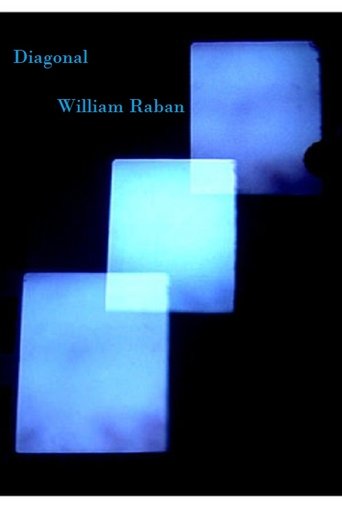
NRThree screen piece. "I was looking for a pure image, an image which was intrinsic to the medium of film. This film is not an abstract film; the subject is the projector gate, the plane where the film frame is arrested in the projected light beam, and the frame whose edges contain and divide the projected illusion from the blacked-out present of the movie theatre. W.R."
Diagonal
1973
 NR
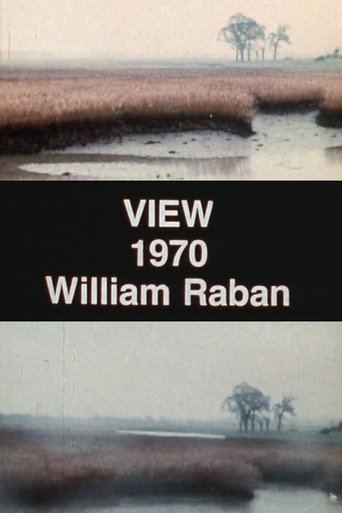
NR"The film alternates from recording in time-lapse (one frame every ten seconds) to running through the camera at 24 f.p.s. (regular speed). The film was made in a continuous heavy rainstorm, and the front element of the Angenieux lens accumulated drops of rain on its surface until the view became obscured. The bursts of film at normal speed occur just after the lens had been wiped dry to reveal the trees, marsh grass, and watersedge in clear sharp focus beyond" William Raban
View
1970
With the threat of nuclear conflict between North Korea and America comes the realization that the blast effects of a nuclear strike would be outweighed by the potentially irreparable damage to the Earth’s atmosphere. In 1783 the Laki volcanic eruption, and the resulting haze that covered vast swathes of the northern hemisphere, caused widespread crop failures and consequent starvation across Europe, parts of America, North Africa, and India. Raban’s new film connects this ecological theme with the current political crisis in Europe and America
Lakakigar
2019
 NR
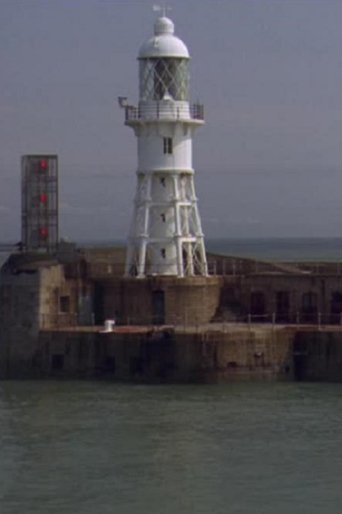
NRA land and sea-scape film drawn from rich sources of imagery: the constantly changing mood of the sea to the distinctly different shorelines of Kent and the Pas de Calais – twenty-one miles of water that define both the “island race” and English hostility towards a wider integration within Europe.
Continental Drift
2005
A camera recorded one frame every minute (day and night) for two separate three-week periods in autumn and spring. The film is shown on two adjacent screens, each having a soundtrack that was recorded on a sampling basis. The left hand screen was shot at the autumn equinox and the right-hand screen at the spring equinox. The structure of the film is based on the rotation and tilting of the earth as we pass from summer to winter and back. The centre of the film coincides with the equinox and is the point at which day and night are the same length on both the left and the right screen.
River Yar
1972
"For this short film event, the film is removed from the film feed reel, and is unwound, to span the space between the projector and screen. The projector starts, and the film snakes back through the audience, as it is consumed by the projector. The screen image is a film footage counter which measures the 'throw' of the cinema. (WR)"
Take Measure
1973
 NR
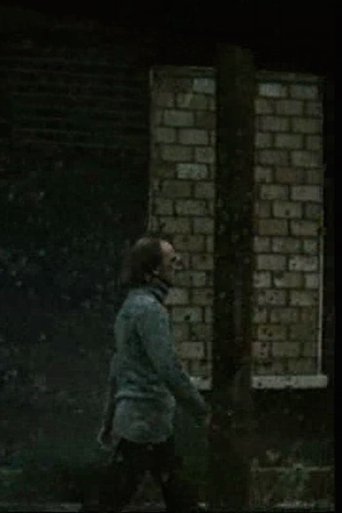
NRDirected by William Raban.
Fergus Walking
1978
 NR
NRA rapid time-lapse journey from the London Houses of Parliament to the English Channel near the port of Dover is offset by David Cunningham’s musical score composed from fragments of Margaret Thatcher’s Belgrano speech.
Civil Disobedience
2004
 NR
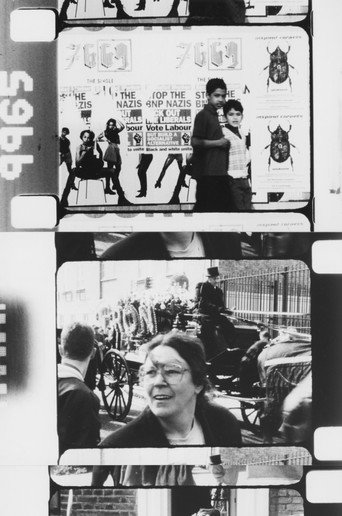
NR"ISLAND RACE contrasts everyday events with actions of right wing extremists, counter anti-racist demonstrations, the funeral of a gangland leader, and the jingoistic street parties celebrating Victory in Europe Day. Using only picture and sound, with no added commentary, Raban gives viewers the space to draw their own conclusions about the film’s portrayal of English national identity in the late 1990s." - Anthology Film Archives
Island Race
1996
NR"ISLAND RACE contrasts everyday events with actions of right wing extremists, counter anti-racist demonstrations, the funeral of a gangland leader, and the jingoistic street parties celebrating Victory in Europe Day. Using only picture and sound, with no added commentary, Raban gives viewers the space to draw their own conclusions about the film’s portrayal of English national identity in the late 1990s." - Anthology Film Archives
Island Race
1996
 NR
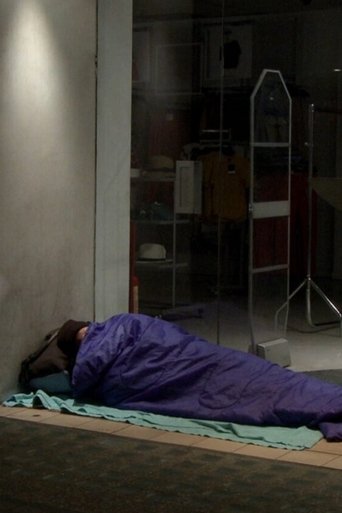
NRA documentary/art film inspired by the Charles Dickens essay "Night Walks."
The Houseless Shadow
2011
 NR
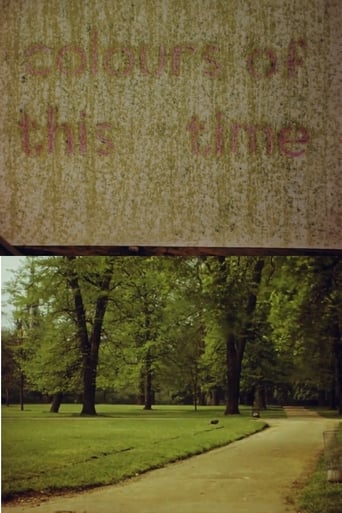
NRWhilst working on previous time-lapse films, I found that colour film tended to record the actual colour of the light source rather than local colour when long time exposures were used. Using this phenomenon, Colours of this Time records all the imperceptible shifts of colour temperature in summer daylight, from first light until sunset.
Colours of this Time
1972
 NR
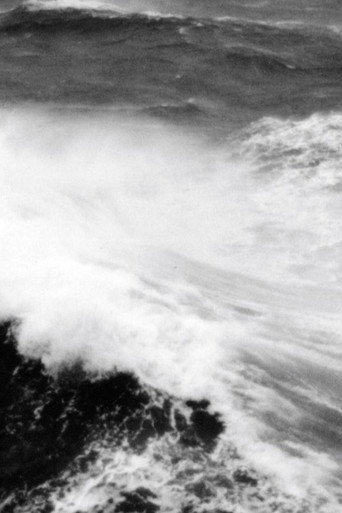
NRCommissioned by Channel 4 Television, "From 60 Degrees North" dispels the myth of the sinking of the Spanish Armada. Using records from the Spanish and Irish archives, it tells the story of those who survived shipwreck, starvation, persecution and disease and made it back to Spain. It is filmed largely on the seas where the events took place.
From 60 Degrees North
1991
 NR
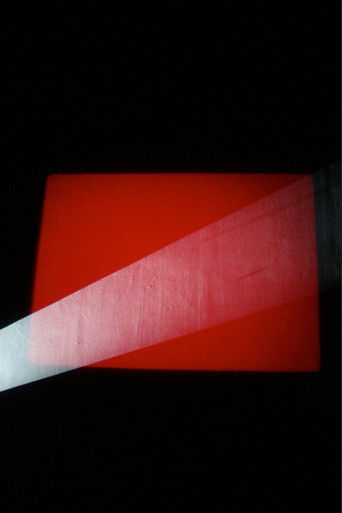
NRPart One: Variation in Density a)The picture on each of the five screens is identical, seven second fades from black, through clear, to black again. The same fade is printed onto the optical sound track to synchronise with the picture. b)Then follow fades from light to dark. c)And from dark to light. Part Two: Intermittency Relative patterns of occlusion and exposure occupy 2 screens. Each exposure fires a stroboscopic flash of colour: yellow for one screen; blue for the other, filling the centre of both screens with colour, haloed with after-image complementaries. W.R.
Wave Formations
1977
 4.5
4.5Documentary about architectural structures in the UK.
MM
2004
4.5Documentary about architectural structures in the UK.
MM
2004
 5.0
5.0William Raban's Sundial (1992), shot in the same location as his film Island Race, combines strongly formal procedures with an equally emphatic political message, which is conveyed through careful juxtaposition of objects in the field of view.
Sundial
1992
Originally, this was a four-minute time-lapse film that was shot continuously over a twenty-four-hour period. The camera was positioned on a busy pathway in Regent's Park, and recorded three frames a minute. The shutter was held open for the twenty-second duration between exposures, so that on projection, individual frames merge together making the patterned flows of human movement clearly perceptible. The time-lapse original was then expanded by various processes of re-filming to reveal the frame-by-frame structure of the original. – William Raban
Broadwalk
1972
 NR
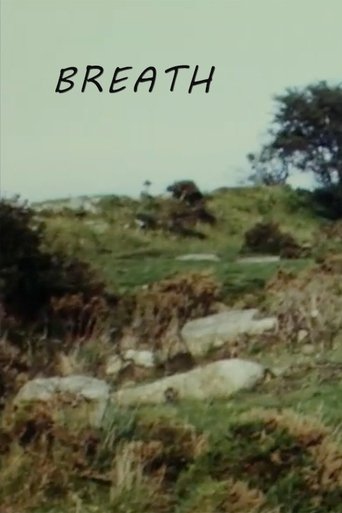
NRShot in a remote part of Dartmoor, Breath is structured around a precise score. Three people are each given a camera loaded with 100ft of Kodachrome film and instructed to walk away from a tape recorder that has been placed within the landscape. The camera operators’ breath and whistling become a measure for the duration of the shots as they film their journey.
Breath
1974
 NR
NR“The film image is a row of boarded-up town houses pending demolition. Two cameras film in alternation this derelict facade from two changing viewpoints. They pan in opposing crossways movements and develop a picture view that appears to extend beyond the edges of the screen. The durations and sequencing of one shot in relation to another are not pre-scripted; the shooting patterns take the form of a space-time game where a new movement or action on one camera provokes a corresponding reaction from the second camera.” –William Raban
Time Stepping
1974
 NR
NRFollowing the eruption of the Lakakigar volcano, Iceland in 1783, a sulphurous haze shrouded vaste swathes of the northern hemisphere, causing widespread crop failures, consequent famine and disease across Europe, parts of America, North Africa, and India. It is estimated to have killed millions of people. Using first-hand accounts from Iceland and from across Europe, Raban’s film connects this event with the current global political and ecological crisis. It continues recent film investigations into the use of the long single take and revisits Raban’s preoccupations with landscape film from the early 1970s.
Laki Haze
2020
 NR
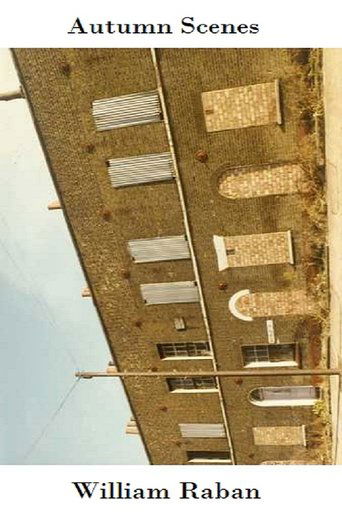
NR“The film is in three parts, each one exploring the fragmentary experience of perception by resorting to various forms of temporal and spatial dislocation. ‘Concrete Fall’ and ‘Fergus Walking’ are both filmed from a moving viewpoint, and the camera motion is ‘converted’ through simple editing and printing procedures to register subtle depths in space, the layering between foreground and infinity. In ‘Packeted Passages’ I filmed with two synchronized cameras and fused the two views in the printing stage into one disintegrated screen space.” – William Raban
Autumn Scenes
1978
 NR
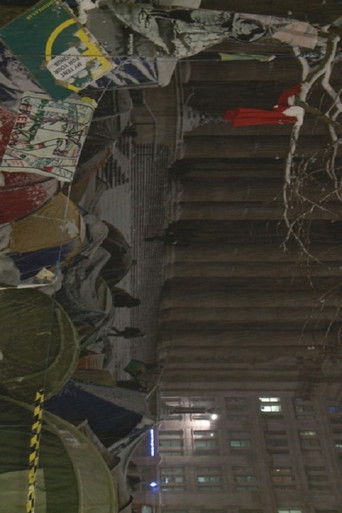
NRThe paradox of the present as a time that cannot be reflected upon until it has already become past, seems consistent with the idea of thinking about the passage of time as the movement within a wave, where the individual particles of water remain static despite an illusion of movement upon the surface. Might not the succession of events in daily life pertain to a similar form of illusory movement? Time and the Wave engages with this paradox by focusing on key London events filmed in 2012 and 2013: the opening of Westfield Shopping Centre at Stratford, the Saint Paul's Occupy movement, the Queen's Jubilee Thames pageant and the funeral of Margaret Thatcher to expose the condition of this country in the time of crisis of late capitalism.
Time and the Wave
2013
 NR
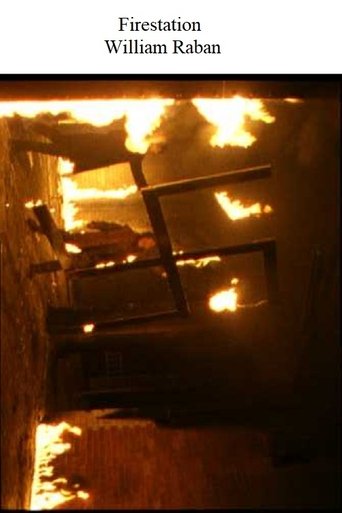
NRThis film documents the transformation of a derelict fire station into studio and living spaces for artists. The opening of the restored building is celebrated in performances and installations by its new occupants. In common with Raban’s films that reflect upon different aspects of the changing face of London’s East End, this tightly structured film-poem confronts the present with the past: the building’s war-time role is recalled in archival images, and by women who served in it as Auxiliary Fire Service officers.
Firestation
2000
Made two months in advance of the referendum to decide whether the UK should remain within or leave the European Union, speculates on the outcome of the vote. This is a satirical fairytale – a political provocation that invites the audience to guess the outcome of the referendum to decide London’s fate
London Republic
2016
 NR
NRDocumentary about the surroundings of a skyscraper in London.
A. 13
1994
NRDocumentary about the surroundings of a skyscraper in London.
A. 13
1994
Directed by William Raban.
Thames Barrier
1977
 NR
NR72-82 tells the story of the first ten years of Acme Studios and their ground breaking work providing artists' housing and studios in London. It also features some of the pioneering exhibitions at the Acme Gallery that was based in Covent Garden from 1976-81. The film comprises visual archive materials brought to life by the voices of the artists involved.
72-82
2014
No synopsis available yet.
Beating the bridges
1998
 NR
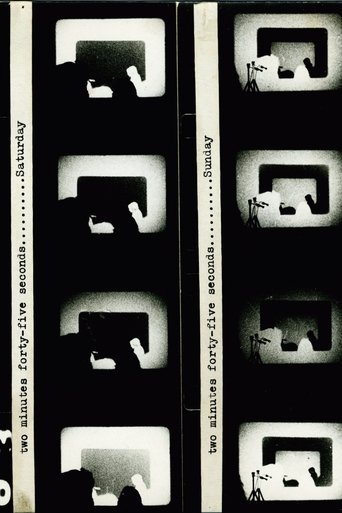
NRRaban layers recordings of successive film performances in which he stands before a projection, states the date and time, and says "A camera is filming the audience watching yesterday's audience watching the blank screen. Sounds of the projection and the audience's responses are being recorded."
2'45"
1973
 NR
NRShot from the 21st floor of the iconic Balfron Tower, the film takes in the city of London below. Filmed mostly in time-lapse with the camera tracking across this aerial field of view, the intention is to create a cinematic map that exposes the neural networks of the post-modern metropolis; producing a film that reveals the workings of London’s nervous system.
About Now MMX
2010
 NR
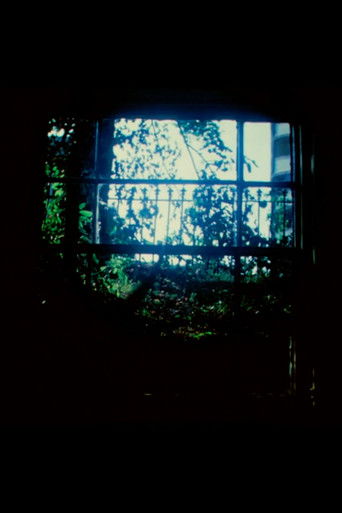
NR“This film is the starting point of a continuous investigation into ways of presenting cubist space in terms of the flat surface of the film screen. The film image is the view through a window, the window-frame providing a constant spatial reference point, as the view beyond is modified by a series of major and minor variations in camera viewpoint. The film is presented un-edited just as it was filmed in the camera. The patterns of camera movement are not the product of a pre-given shooting script, but rather they evolved actually at the time of filming.” – William Raban
Angles of Incidence
1973