
Known for
 6.4
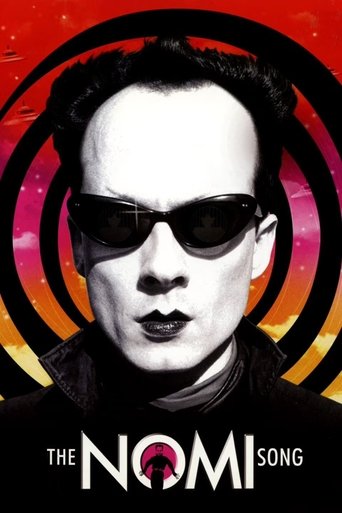
6.4Looks like an alien, sings like a diva - Klaus Nomi was one of the 1980s' most profoundly bizarre characters to emerge through rock music: a counter tenor who sang pop music like opera and brought opera to club audiences and made them like it. The Nomi Song is a film about fame, death, friendship, betrayal, opera, and the greatest New Wave rock star that never was!
The Nomi Song
2004
 10.0
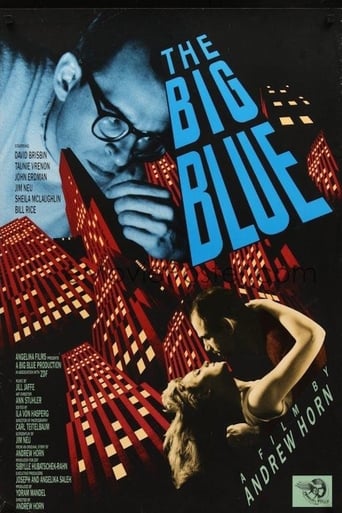
10.0Not to be confused with Luc Besson's film of the same title from the same year. Documentarian Andrew Horn's second narrative feature.
The Big Blue
1988
 NR
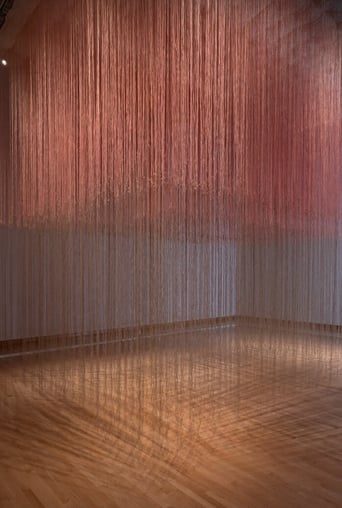
NRAndy De Groat dances inside "The Four Armed Cloud"--A sculpture by Leonore Tawney. Poetry by Christopher Knowles and "Sun Music" by Michael Galasso accompany the piece. 1979.
Cloud Dance
1979
 NR
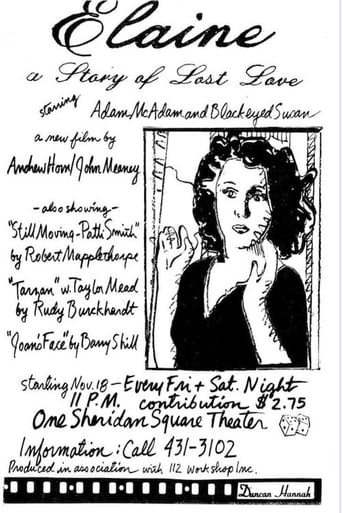
NRAdapted from an obscure Guy de Maupassant novella, lifted from a paperback bought by Meaney as an undergrad for 99 cents. What’s evident is Horn’s fascination for squared-off blocking and choreography, including a glimpse at a performance of Orpheus and Eurydice in minature. Star Adam Macadam brought on other members of Charles Ludlam’s Ridiculous Theater Company, many of whom would return to work on DOOMED LOVE. Featuring ancient costumes on loan from the Metropolitan Opera (repurposed from early twentieth century productions of Tosca and La Traviata), ELAINE aspires to high gothic on a shoestring budget. Horn and Meaney shot at locations including the Morris-Jumel Mansion in Washington Heights, the Frick, and the Carnegie Hall Cinema, then operated by Sid Geffen and Jackie Raynal – the programmers responsible for hosting the first-ever New York City screenings of films by Marguerite Duras, an influence on the filmmakers (alongside Daniel Schmid, Douglas Sirk and Alain Resnais.)
Elaine: A Story of Lost Love
1976
 6.6
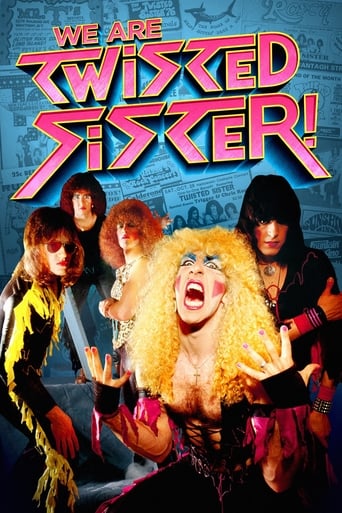
6.6In 1984, American heavy metal band Twisted Sister became a global sensation. For 30 years, they been synonymous with hairspray, women's clothing and tasteless album covers. Until now. Ten years ago, director Andrew Horn was granted access to the archives of Twisted Sister founder Jay French and he explores the decade that preceded their breakthrough.
We Are Twisted Fucking Sister!
2016
Experimental feature about two young men trying to make a film.
The Fatal Telephone
1986
Film credits
1980s · 2 titles
Experimental feature about two young men trying to make a film.
The Fatal Telephone
1986
 5.5
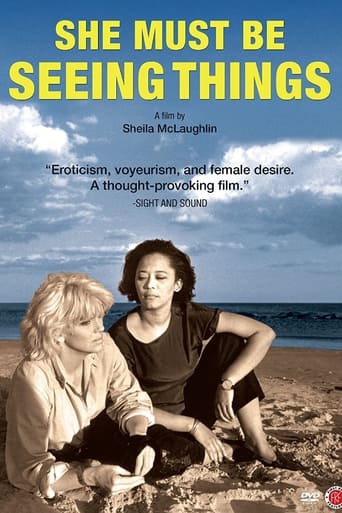
5.5Agatha is an international lawyer, Jo a filmmaker. The two women are lovers. While Jo is on the road showing her films, Agatha discovers and reads her diaries. Problems ensue as Agatha's transgressions lead to jealousy and a spiraling cycle of sexual obsession.
She Must Be Seeing Things
1988
Behind the camera
6.4Looks like an alien, sings like a diva - Klaus Nomi was one of the 1980s' most profoundly bizarre characters to emerge through rock music: a counter tenor who sang pop music like opera and brought opera to club audiences and made them like it. The Nomi Song is a film about fame, death, friendship, betrayal, opera, and the greatest New Wave rock star that never was!
The Nomi Song
2004
6.4Looks like an alien, sings like a diva - Klaus Nomi was one of the 1980s' most profoundly bizarre characters to emerge through rock music: a counter tenor who sang pop music like opera and brought opera to club audiences and made them like it. The Nomi Song is a film about fame, death, friendship, betrayal, opera, and the greatest New Wave rock star that never was!
The Nomi Song
2004
6.4Looks like an alien, sings like a diva - Klaus Nomi was one of the 1980s' most profoundly bizarre characters to emerge through rock music: a counter tenor who sang pop music like opera and brought opera to club audiences and made them like it. The Nomi Song is a film about fame, death, friendship, betrayal, opera, and the greatest New Wave rock star that never was!
The Nomi Song
2004
10.0Not to be confused with Luc Besson's film of the same title from the same year. Documentarian Andrew Horn's second narrative feature.
The Big Blue
1988
10.0Not to be confused with Luc Besson's film of the same title from the same year. Documentarian Andrew Horn's second narrative feature.
The Big Blue
1988
NRAndy De Groat dances inside "The Four Armed Cloud"--A sculpture by Leonore Tawney. Poetry by Christopher Knowles and "Sun Music" by Michael Galasso accompany the piece. 1979.
Cloud Dance
1979
NRAdapted from an obscure Guy de Maupassant novella, lifted from a paperback bought by Meaney as an undergrad for 99 cents. What’s evident is Horn’s fascination for squared-off blocking and choreography, including a glimpse at a performance of Orpheus and Eurydice in minature. Star Adam Macadam brought on other members of Charles Ludlam’s Ridiculous Theater Company, many of whom would return to work on DOOMED LOVE. Featuring ancient costumes on loan from the Metropolitan Opera (repurposed from early twentieth century productions of Tosca and La Traviata), ELAINE aspires to high gothic on a shoestring budget. Horn and Meaney shot at locations including the Morris-Jumel Mansion in Washington Heights, the Frick, and the Carnegie Hall Cinema, then operated by Sid Geffen and Jackie Raynal – the programmers responsible for hosting the first-ever New York City screenings of films by Marguerite Duras, an influence on the filmmakers (alongside Daniel Schmid, Douglas Sirk and Alain Resnais.)
Elaine: A Story of Lost Love
1976
6.6In 1984, American heavy metal band Twisted Sister became a global sensation. For 30 years, they been synonymous with hairspray, women's clothing and tasteless album covers. Until now. Ten years ago, director Andrew Horn was granted access to the archives of Twisted Sister founder Jay French and he explores the decade that preceded their breakthrough.
We Are Twisted Fucking Sister!
2016
6.6In 1984, American heavy metal band Twisted Sister became a global sensation. For 30 years, they been synonymous with hairspray, women's clothing and tasteless album covers. Until now. Ten years ago, director Andrew Horn was granted access to the archives of Twisted Sister founder Jay French and he explores the decade that preceded their breakthrough.
We Are Twisted Fucking Sister!
2016
6.6In 1984, American heavy metal band Twisted Sister became a global sensation. For 30 years, they been synonymous with hairspray, women's clothing and tasteless album covers. Until now. Ten years ago, director Andrew Horn was granted access to the archives of Twisted Sister founder Jay French and he explores the decade that preceded their breakthrough.
We Are Twisted Fucking Sister!
2016
 7.5
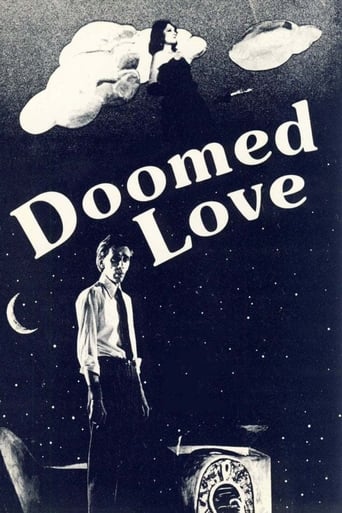
7.5Depressed after losing his lover a long time ago, Andre visits a psychiatrist. While in the doctor's waiting room, he strikes up a friendship with Lois, the doctor's receptionist, and later with Lois' husband, Bob. Although the couple wants to help Andre recover from his depression, Andre finds himself unable to pull his life out of the past.
Doomed Love
1983
7.5Depressed after losing his lover a long time ago, Andre visits a psychiatrist. While in the doctor's waiting room, he strikes up a friendship with Lois, the doctor's receptionist, and later with Lois' husband, Bob. Although the couple wants to help Andre recover from his depression, Andre finds himself unable to pull his life out of the past.
Doomed Love
1983
 NR
NRScripted collaboratively with King and Brintzenhofe, the filmmakers created a cinedance that takes the viewer through the thresholds of dreaming, waking, and transcendental awareness, using real and painted images of the city, a 19th century attic and outer space. King’s voice recounts a dream of space without walls, a time of childhood and ecstacy. © 1981 Robyn Brentano, Andrew Horn, Kenneth King
Space City
1981
NRScripted collaboratively with King and Brintzenhofe, the filmmakers created a cinedance that takes the viewer through the thresholds of dreaming, waking, and transcendental awareness, using real and painted images of the city, a 19th century attic and outer space. King’s voice recounts a dream of space without walls, a time of childhood and ecstacy. © 1981 Robyn Brentano, Andrew Horn, Kenneth King
Space City
1981
 6.5
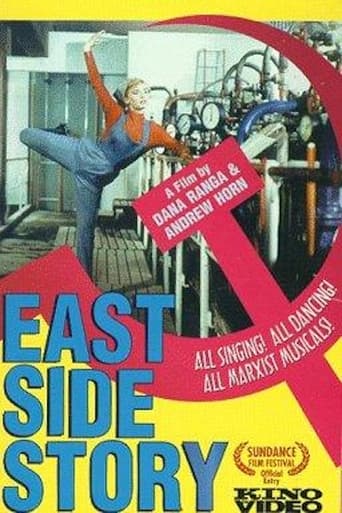
6.5A look at Communist musicals that strove to be ideologically correct - and entertaining, besides.
East Side Story
1997
6.5A look at Communist musicals that strove to be ideologically correct - and entertaining, besides.
East Side Story
1997
 NR
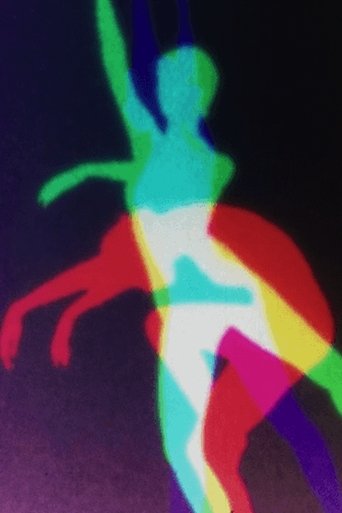
NRShot at New York University, Horn’s wordless, mindblowing student film CHROMA might be the missing link between the avant-garde cinema of the 1970s and Horn’s later dance films to follow. The silhouettes of three dancers (red, green and blue) are played off one another while the grids and ladders of the modern metropolis – one feature that’s recognizable across almost every film made by Horn – crossfade and overtake the screen. CHROMA received a special award of merit from the Academy of Motion Picture arts and Sciences; on his CV, Horn described the film like this: “real images are manipulated through special effects and printing to create an artificial dreamscape.”
Chroma
1974