
Acting
Kinnosuke Takamatsu
Born — Died
1898-01-13 — 1979-05-14
Place of birth
Hakodate, Hokkaido, Japan
Known for
Acting
Credits
60 titles
Known for
 7.8
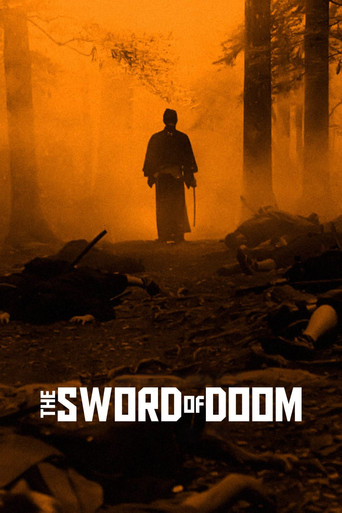
Ryunosuke, a gifted swordsman plying his trade during the turbulent final days of Shogunate rule, has no moral code and kills without remorse. It’s a way of life that leads to madness.
The Sword of Doom
1966
 7.3
An elderly man visits his mentally ill wife in a psychiatric hospital. Years earlier, she had tried to drown their child and then take her own life. Crushed by guilt and powerless to change what has happened, he stays on at the clinic as a janitor. Soon, their daughter comes to tell him she is getting married, and with her arrival come painful memories and tormenting visions.
A Page of Madness
1926
 7.4
Tragicomic road movie set during the Edo period. It follows a samurai, his two servants – including spear-carrier Genpachi – and the various people they meet on their journey, including a policeman in pursuit of a thief, a young child and a woman who is to be sold into prostitution.
Bloody Spear at Mount Fuji
1955
 7.5
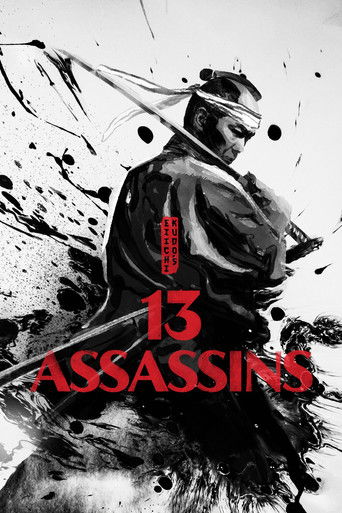
A sadistic Daimyo (feudal lord) rapes a woman and murders both her and her husband, but even when one of his own vassals commits suicide to bring attention to the crime, the matter is quickly hushed up. Not only will there be no punishment, but because the Daimyo is the Shogun's younger brother, he will soon be appointed to a high political position from which he could wreak even more havoc. Convinced that the fate of the Shogunate hangs in the balance, a plot is hatched to assassinate the Daimyo. The two most brilliant strategic minds of their generation find themselves pitted against each other; one is tasked to defend a man he despises, and has a small army at his disposal. The other is given a suicide mission, and has 12 brave men. They are the 13 Assassins.
13 Assassins
1963
 7.8
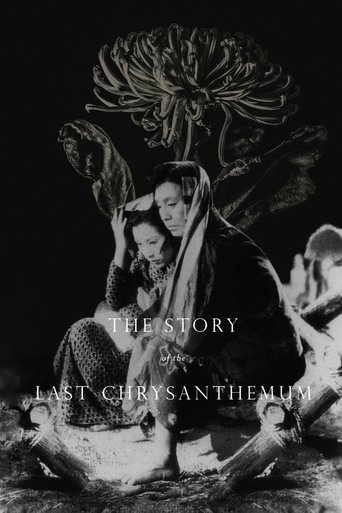
In late 19th-century Tokyo, Kikunosuke Onoue, the adopted son of a legendary actor, himself an actor specializing in female roles, discovers that the praise he receives is only due to his status as his father's heir. Devastated, he turns to Otoku, a servant of his family, for comfort, and they fall in love. Kikunosuke becomes determined to leave home and develop as an actor on his own merits, and Otoku faithfully joins him.
The Story of the Last Chrysanthemum
1939
 7.1
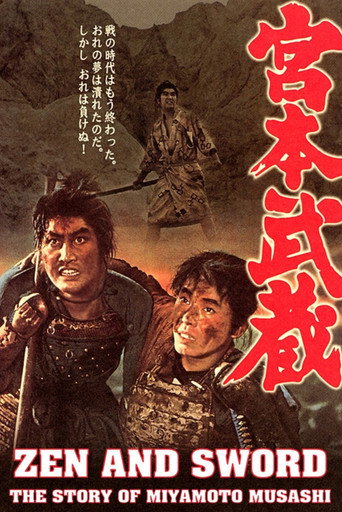
In this first episode, we are introduced to Takezo, what Musashi used to be before he became the man of legend. His beginning are not exactly auspicious. He sides with the Toyotomi at Sekigahara, and as a result finds himself on the losing side of the historic battle. He and his friend Matahachi manage to escape the slaughter although the latter is wounded in his leg. They stumble across the young Akemi who makes her living with her mother Oko by robbing corpses of their armor and anything else they can sell. Oko takes it into her head to seduce Matahachi, which she does first by skillfully sucking the gangrene from his blood, and then just by sucking.
Miyamoto Musashi
1961
Film credits
1960s · 33 titles
7.8Ryunosuke, a gifted swordsman plying his trade during the turbulent final days of Shogunate rule, has no moral code and kills without remorse. It’s a way of life that leads to madness.
The Sword of Doom
1966
7.5A sadistic Daimyo (feudal lord) rapes a woman and murders both her and her husband, but even when one of his own vassals commits suicide to bring attention to the crime, the matter is quickly hushed up. Not only will there be no punishment, but because the Daimyo is the Shogun's younger brother, he will soon be appointed to a high political position from which he could wreak even more havoc. Convinced that the fate of the Shogunate hangs in the balance, a plot is hatched to assassinate the Daimyo. The two most brilliant strategic minds of their generation find themselves pitted against each other; one is tasked to defend a man he despises, and has a small army at his disposal. The other is given a suicide mission, and has 12 brave men. They are the 13 Assassins.
13 Assassins
1963
7.1In this first episode, we are introduced to Takezo, what Musashi used to be before he became the man of legend. His beginning are not exactly auspicious. He sides with the Toyotomi at Sekigahara, and as a result finds himself on the losing side of the historic battle. He and his friend Matahachi manage to escape the slaughter although the latter is wounded in his leg. They stumble across the young Akemi who makes her living with her mother Oko by robbing corpses of their armor and anything else they can sell. Oko takes it into her head to seduce Matahachi, which she does first by skillfully sucking the gangrene from his blood, and then just by sucking.
Miyamoto Musashi
1961
 8.7
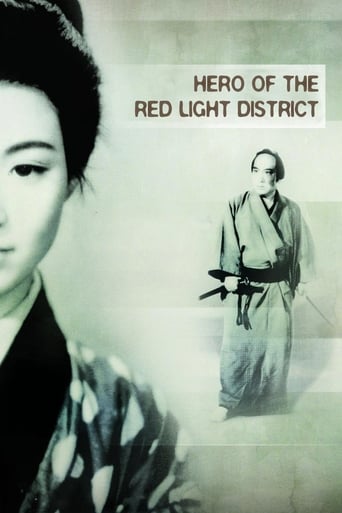
A successful textile industrialist from the provinces, who is beloved by his employees for his kindness, cannot find a wife because of a disfiguring birthmark on his face. Even the courtesans in Yoshiwara refuse to entertain him, until an indentured peasant prostitute, Tamarazu, takes the unsavoury assignment and treats him with brash tenderness.
Hero of the Red Light District
1960
 8.0
A young son of a master of the Kuwana clan gets disowned for his rebellious behavior. After he goes from the mountains to the ocean defeating the evil, he becomes a fine man.
Fine Man
1961
 6.0
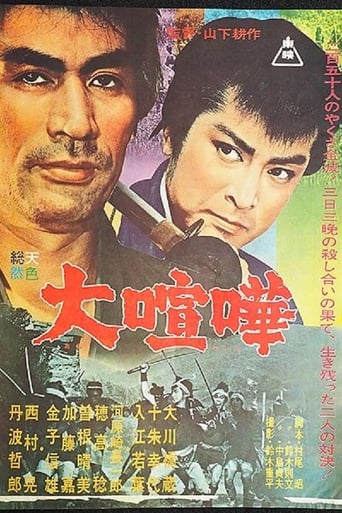
In this gritty tale of gamblers battling in the samurai era, Okawa Hashizo gives perhaps his greatest performance as a gambler returning to his home town. Swearing allegiance to his fiancée’s father, a decent boss, he had taken to the road after a gang fight until things cooled down. While honing his sword skills in his travels, everything in the town had changed and he descended into a virtual hell of violence. Opponents were being slaughtered by a former samurai ‘Bodyguard’ played by Tanba Tetsuro at the height of his amazing career. While these two master swordsmen are fated to meet, before that can even happen they must survive one of the longest, bloodiest swordfights in movie history!
Giant Rumble
1964
 9.0
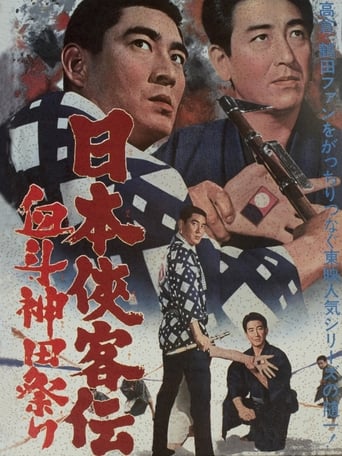
The Domain: Kanda Festival Showdown
The Domain: Kanda Festival Showdown
1966
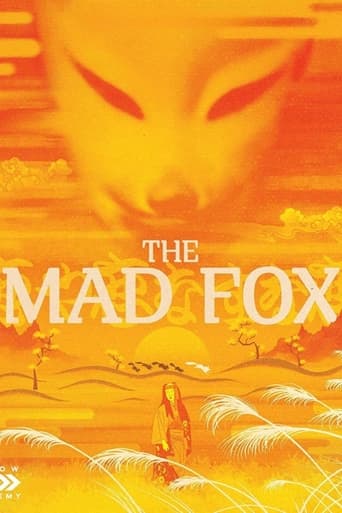 7.4
A court fortune-teller loses his mind after a conspiracy leads to the death of his lover. Hope appears to be on the horizon after he becomes romantically involved with his dead lover's twin sister, but more complications arise thanks to a chance encounter with a clan of shape-shifters.
The Mad Fox
1962
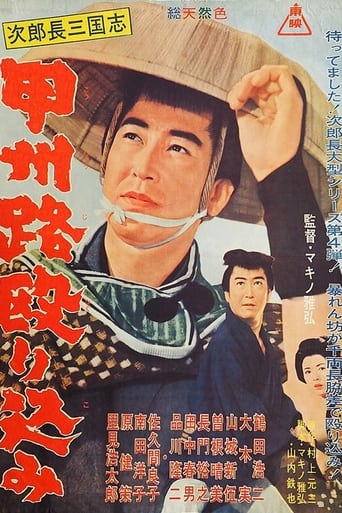 8.0
The continuing adventures of the Jirocho gang.
The Kingdom of Jirocho 4
1965
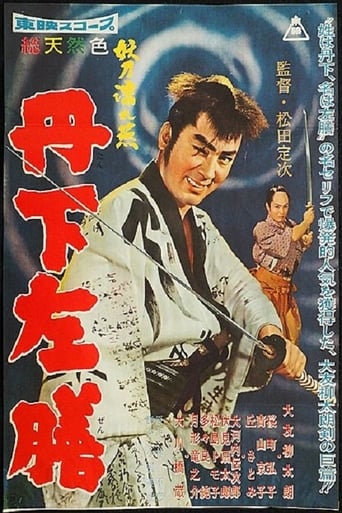 6.0
The legendary one-eyed one-armed swordsman Tange Sazen is back to aid a Magistrate in his efforts to steal bribe money on its way to Edo for the benefit to poor farmers.
Return of the One-Armed Swordsman
1960
 7.1
In Osaka during the Edo period, ruler Sanada Yukimura was in losing position, fearing Toyotomi's blood descendents would end, he impregnates one of five Shinano female ninja with the seed of Toyotomi Hideyoshi in hopes of continuing the bloodline. Princess Sen and the five female ninja escape from Osaka castle by blending in with the handmaidens. Lord Tokugawa Ieyasu who was supposed to rule all under the heavens was informed of this secret. So Ieyasu orders five samurai of the Iga Ninja clan (brought by Hattori Hanzo) to stop the Toyotomi bloodline by killing the Kunoichi ninja. An attack of ninja magic arts unfolds in a battle of the sexes.
Female Ninja Magic
1964
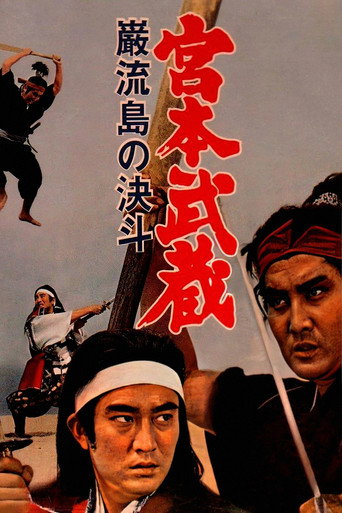 7.2
The fifth and final installment with the build up of the epic battle between Sasaki Kojiro and Miyamoto Musashi. With all the familiar characters making appearances: Otsu (Musashi's great love), Akemi, Matahachi (his former fellow soldier), old lady Osugi (still doggedly trying to defeat Musashi), and even the return of Priest Takuan (the man responsible for his journey towards enlightenment). But most of all, the boastful, long-haired and long-sworded Sasaki Kojiro.
Miyamoto Musashi V: Musashi vs Kojiro
1965
 7.8
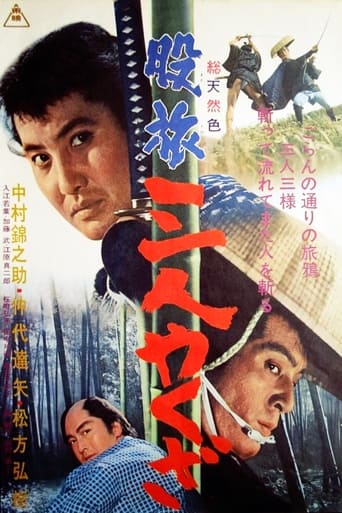
A tale of three Yakuza gamblers who traveled Japan during the samurai era living by their wits and sword skills. Told in 3 separate vignettes, each part tells the story of a different drifter’s life. Part 1: A man is on the run after killing two Hasshu Officials to avenge his Boss. He must make a life or death decision as he is asked to protect a gang from attack. Part 2: A pair of gamblers chased out of a crooked game must fight not only their pursuers, but the ghosts of their pasts as well. Part 3: A wanderer who wants to live according to the Yakuza Code, but is not sure that he can do so when asked to save a town from an evil official.
Three Yakuza
1965
 7.7
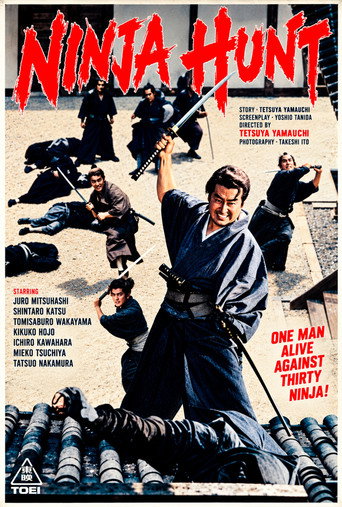
Four ninja are hired to fight against the Shogunate’s plot to abolish the Gamo Clan, the regional barons struggling to reinstate their young heir Tanemaru as their Lord.
The Ninja Hunt
1964
 7.5
Organized thieves battle against the Shogun’s ruthless ruling in attempt to get back their land.
Black Thief
1964
 5.5
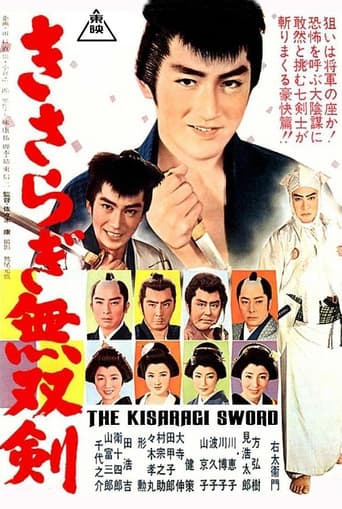
The story concerns the efforts of seven master swordsman who join together to protect the new inexperienced Shogun Tokugawa Yoshimune from the evil plans of the Owari Clan's corrupt Lord. It's a colorful bunch, a drunk samurai, a master thief, a sword instructor and a Lord who is disguised as a ronin since it is an executable offense for a lord to wander outside of their domain without permission. As the Chief Magistrate becomes suspicious of the Owari plot to send men to Kodenmacho Prison to start a riot he begins to investigate the rumors. He soon calls upon the Lord of Mikazuki Castle and the Shogun's best friend to help thwart the evil ambitions and battle the rouge swordsman hired by the Owari Clan.
Kisaragi Sword
1962
 NR
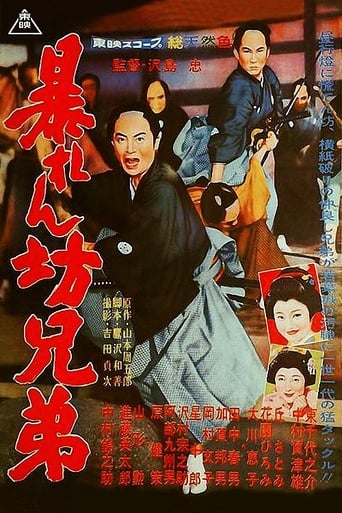
Taisuke is kind-hearted but overall lacks ambition. Taizo is smarter, but given to fits of emotion and impulsive violence. The samurai brothers fight against corruption in a castle.
Unwieldy Brothers
1960
 7.5
No synopsis available yet.
The Tattooed Lord
1965
 7.0
No synopsis available yet.
Knightly Advice
1962
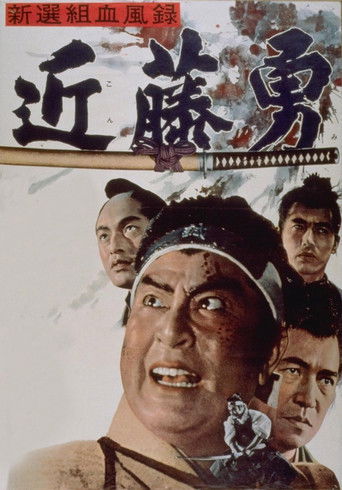 10.0
No synopsis available yet.
Bloody Record of the Shinsengumi
1963
 7.2
A touching story following young shamisen string maker, Saku. Beautiful Saku moves to Lake Yogo, known for its production of quality shamisen strings, only to find her peaceful life turned upside down when a master musician takes personal interest in her.
Koto—The Lake of Tears
1966
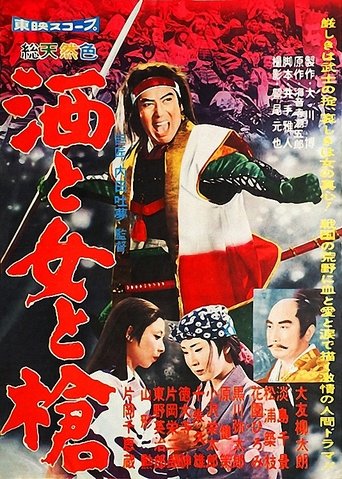 6.0
Kurando is a retired samurai. Granted a last-second reprieve from the obligation to commit harakiri, he decides to settle down and marry one of the two kabuki actresses who helped him enjoy what he thought would be his final days.
The Master Spearman
1960
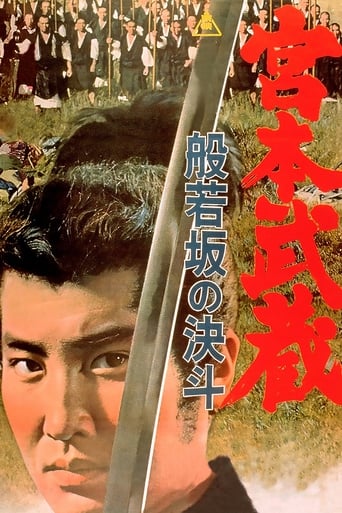 7.3
The remake of Yoshikawa's novel continues with the second installment in which Takezo, soon to be Miyamoto Musashi, emerges from the Himeji Castle after three years of intense contemplation and philosophical study and starting on his epic quest to complete his skill in the Way.
Miyamoto Musashi: Showdown at Hannyazaka Heights
1962
 7.0
Okawa Hashizo is 'Red Peony' Hanji who is thrown into a prison cell where he gets involved in a plot to steal government gold from the Shogun's vault. A tough fighter, he has to show his ability in order to keep from getting himself killed by the prisoners, too. Co-starring some of the biggest name in movies at the time, including Kataoka Chiezo and Tanba Tetsuro this film is loaded with surprises. From the opening moments when prisoners carry out their own form of justice, killing a crooked ex-constable, it is clear that this is the work of a visionary filmmaker.
The Shogun's Vault
1964
 NR
No synopsis available yet.
Tsubakuro dōchū
1960
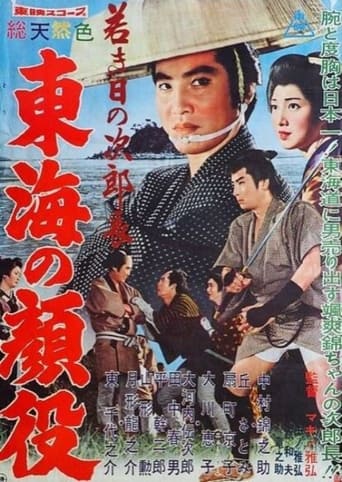 7.0
His skill and courage were the best in Japan! The life story of Jirocho, a man who protected people on the Tokaido Road. The fearless Kinnosuke Nakamura enthusiastically plays the young Jirocho from Shimizu in this chivalrous story.
Jirocho’s Days of Youth: Boss of the Tokai Region
1960
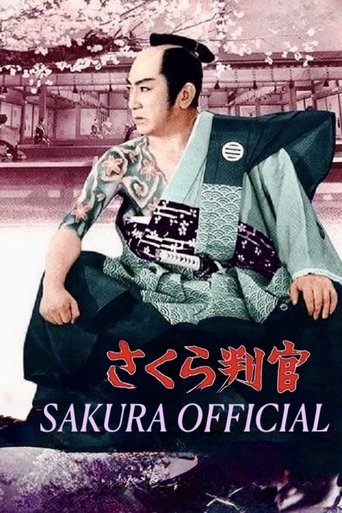 7.0
As Japan’s Tokugawa shogunate nears the end of its rule, Edo North Magistrate Toyama no Kinsan is called upon to judge the most difficult case of his career. In a masterfully woven tale, he has to face the truth about his estranged father’s possible involvement in a nefarious plot to take over rule of the Hizen Shimabara clan by assassinating the rightful lord, his son, and install one of Shogun Ienari’s offspring as daimyo.
Sakura Official
1962
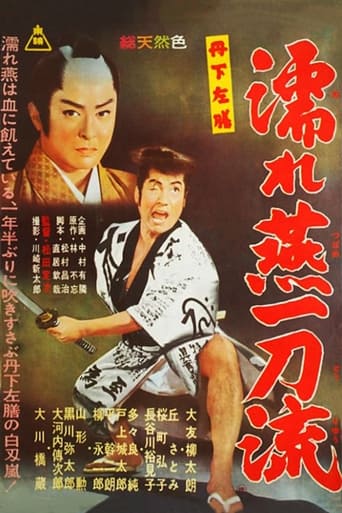 5.8
Tange Sazen interferes with an evil plot against the Iga Yagyu family.
Tange Sazen and the Princess
1961
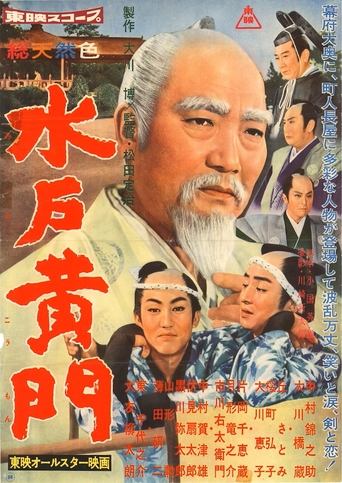 8.3
In 1691 a terrible fire broke out in Denmacho, Yotsuya, burning down the towns around it, up to the shores of Shibaura. A month and a half later, another fire broke out, this time in Komagome, burning down the two gates of Asakusa and Sujikai, and continuing on into the night. As the government Elders consider evidence that these fires were arson, a fire breaks out in Hirakawa-cho, outside of Hanzo Gate. Nishonmaru catches on fire and burns down completely. When this rash of fires even strikes Kyoto, the task of finding who’s behind the arson, and stopping them falls to the Shogun’s uncle, the Elder Lord of Mito. Together with his trusted bodyguards, Kaku and Suke, the trio set of to save Japan from this scourge of evil. Featuring virtually all of their most famous stars, this is the best film in the Toei series about Mito Komon, one of Japan’s most popular historical figures who traveled through the country incognito to check on the people and fight injustice.
Lord Mito: All Star Version
1960
 6.5
Fishmonger Tasuke and Shogun Iemitsu swap their identities in pretence for the protection of Iemitsu.
The Shogun and the Fishmonger
1961
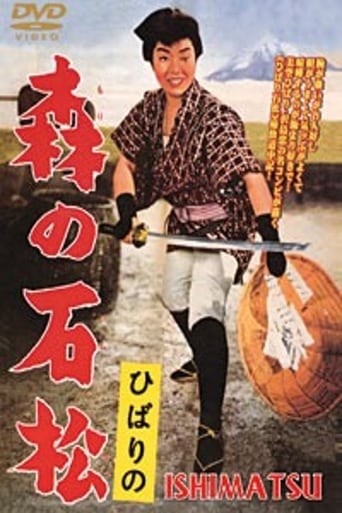 7.5
Some of the finest jidai-geki actors appear in this exciting and entertaining tale of intrigue and action in old Japan. Teaming up the ever-popular Misora Hibari with the greatest samurai action hero of all-time Wakayama Tomisaburo is a brilliant stoke of casting. Hibari takes on the role of Mori no Ishimatsu, a young man who gets involved with real-life Yakuza legend, Shimizu no Jirocho, 'Boss of the Tokaido'. Ishimatsu manages to interfere with a dispute between the Shimizu and their competition, the Marugame family, even going so far as to become an avenger's assistant. It's not the first time Hibari has played a man in a film (also in Benten Kozo), and her acting skills are at their best as she mixes in a bit of humor along with excellent swordplay. Wakayama Tomisaburo, as always, gives an outstanding performance as the powerful and beloved Yakuza Boss Jirocho.
Ishimatsu: the One-Eyed Avenger
1960
 6.0
The famed ninja Yagyu Jubei fights to suppress a coup d’etat plotted against Tokugawa Shogunate.
The Yagyu Military Art: The One-Eyed Ninja
1963
 NR
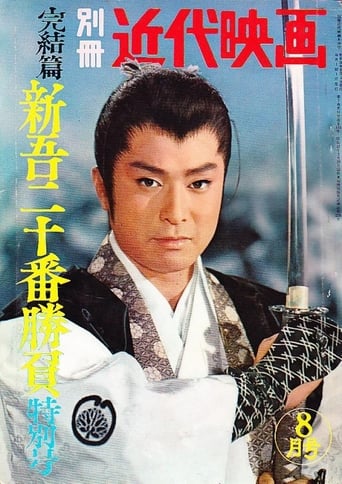
The adventures of Aoi Shingo continue. Shingo is finally given permission to officially meet his father, the Shogun. However, his journey is disturbed by those who wish to claim his life. This is the third part of "THE 10 DUELS OF YOUNG SHINGO", following the first 2 parts (which were actually done as one movie). The tension mounts as young Shingo must face obstacles the like of which he had never before seen. And, can he avenge the death of his master? The man to whom he owes everything.
Shingo's Original Challenge, Part 3
1960
1950s · 24 titles
7.4Tragicomic road movie set during the Edo period. It follows a samurai, his two servants – including spear-carrier Genpachi – and the various people they meet on their journey, including a policeman in pursuit of a thief, a young child and a woman who is to be sold into prostitution.
Bloody Spear at Mount Fuji
1955
 NR
No synopsis available yet.
Super Hawk Volume II
1954
 NR
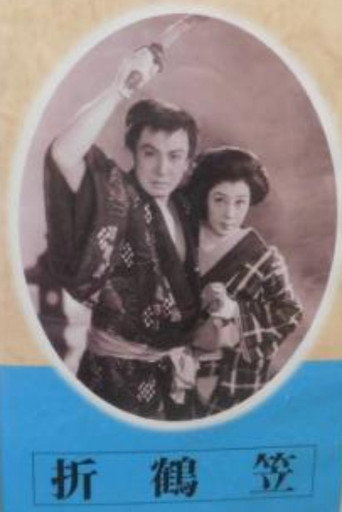
A historical drama about a foul-mouthed but good-natured traveller.
Orizuru kasa
1951
 NR
No synopsis available yet.
Super Hawk Volume III
1954
 8.2
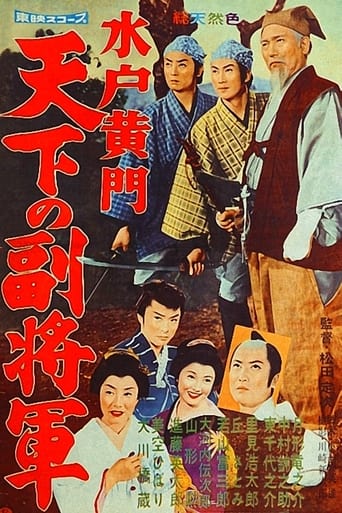
After settling the matter of shogunal succession, the retired Old Lord of Mito finds himself in a sea of trouble when he gets involved in the succession of the Takamatsu clan. The usurpers try by every means to effect their takeover, even if it leads to blood being spilled. Along with Kaku and Suke, the elder must face the most dangerous time of his life, in a battle against those corrupt individuals who would use any means to further their dastardly conspiracy, regardless of how many lives might be destroyed. The great Misora Hibari gives a bravura performance, as does the rest of this all-star cast. This is another outstanding effort on the part of the Toei Films, blending fact and fiction to bright back Japan’s golden era of the Genroku period.
Lord Mito 2: The Nation's Vice Shogun
1959
 6.6
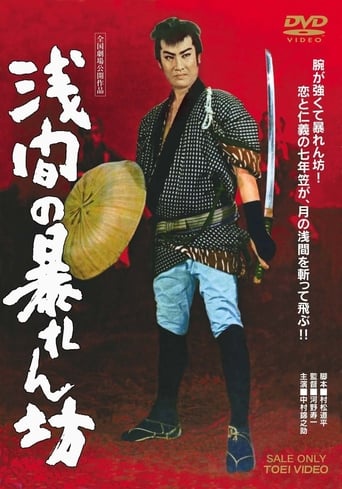
When Boss Juzo's Shinmachi Yakuza family struck fear into the hearts of his adversaries, Boss Shohei's Okabe Yakuza family with a merciless gang of raiders, Itaro of Asama was missing. With the courage of a lion he had gone off to face the enemy and settle the score all by himself. As a result he had to take the blame in place of Boss Shohei, and went off to adventures on his own.
Roughneck From Asama
1958
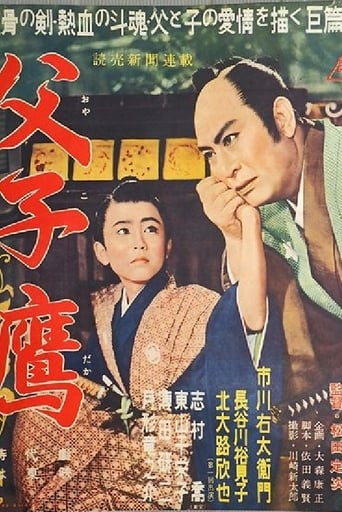 NR
Adaptation of the novel by Kan Shimozawa.
Virtue in Spades
1956
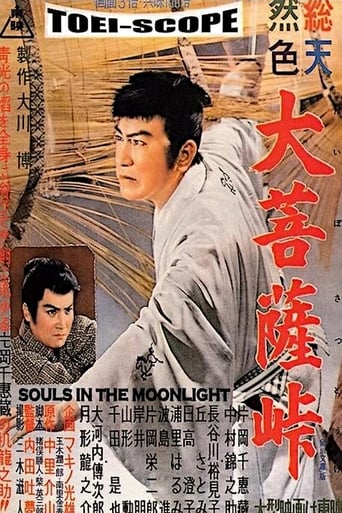 7.0
First part of the famous Dai-bosatsu toge trilogy, based on Kaizan Nakazato’s unfinished long series of novels (41 books, written from 1913 to 1941). Set in the last period of the Tokugawa Shogunate, Daibosatsu Toge tells the story of Tsuke Ryunosuke, a nihilistic swordmaster who doesnt hesitate to kill anyone, bad or good. Despite the authors explicit refusal, the series were later made into plays and movies several times.
Souls in the Moonlight
1957
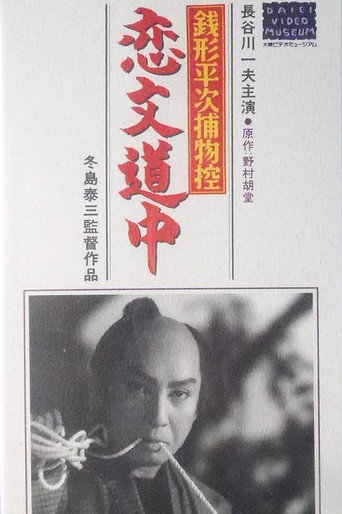 NR
A murder case tied to a missing love letter… Heiji heads west along the Tōkaidō in pursuit of thirteen suspicious individuals.
Zenigata heiji torimono hikae: Koibumi dōchū
1951
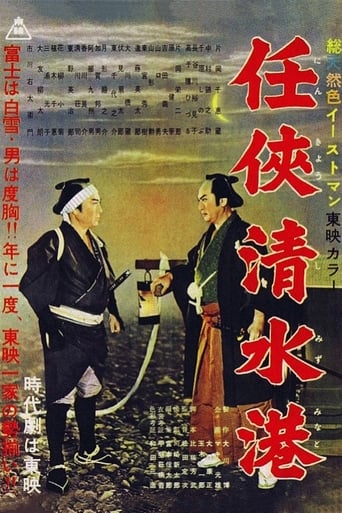 8.0
An all-star cast highlights this Jidai-Geki classic. Set in the samurai era, this is the tale of period Yakuza. One of the real classics in this genre. In this dramatic portrayal of the real-life gambling boss Jirocho, a good-hearted and honest boss sets out to take revenge for a fellow boss. At the same time, the other local bosses, in a bid to increase their own power, plot to dispose of Jirocho. Starring Kataoka Chiezo in one of his signature roles, this is an excellent portrayal of a figure who is not well known outside of Japan. Co-starring Nakamura Kinnosuke, this exciting tale of period yakuza brings history to life.
Shimizu Port of Chivalry
1957
 5.4
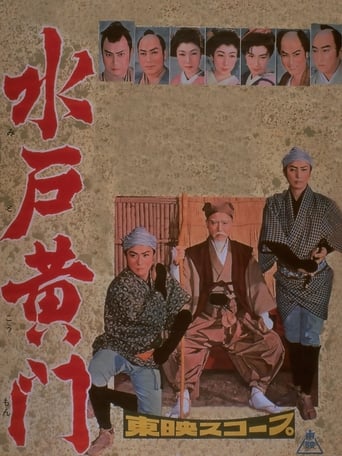
This most celebrated all-star movie version of the popular series features Tsukigata Ryunosuke as Mito Komon, the sage who wanders the countryside rectifying government corruption along with his faithful attendants Suke and Kaku.
Lord Mito
1957
 8.0
A young samurai learns that he is the illegitimate son of the Shogun. Hoping to reunite with his birth father, he travels to Edo to find Shogun Yoshimune.
Shingo's Original Challenge, Part 1 and 2
1959
 NR
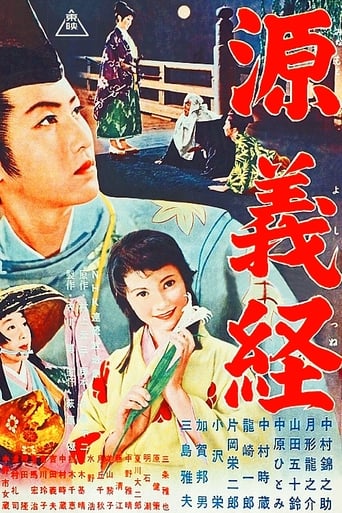
A historical scroll depicting the story of the tragic fate of the young samurai Minamoto Yoshitsune, based on the novel by Genzo Murakami. The action of the first part takes place in the late Heian period, when the Taira clan came to power, and Genji was oppressed. The great dream and ambitions of Genkuro Yoshitsune in his youth are depicted, he joins forces with his older brother Yoritomo to raise an army to defeat the Taira clan, and the second part depicts the fall of the clan, persecution and murder.
Minamoto Yoshitsune
1955
 NR
After getting permission to dig up the pawnbroker's grave, Young lord samurai was surprised to find the body was missing, as was the Gosu plate. He had a suspect in mind, and was able to use him to learn of the pawnbroker's hideout and try to piece together the parts of the puzzle. A superb and exciting conclusion to a very clever mystery story set during the Golden Age of Japan. With no easy questions and his life hanging in the balance, can Young lord solve the mystery and regain the valuable plate?
Case of a Young Lord 2
1956
 NR
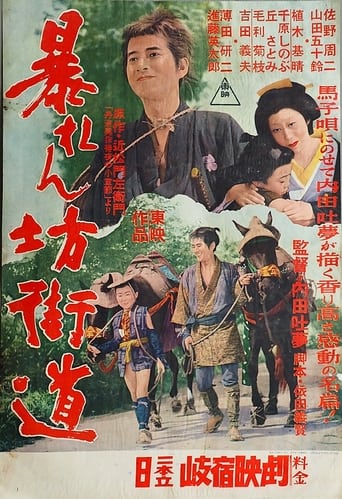
A humble page fathers a child by the daughter of a clan official and is banished. Years later, the child, now a stable boy, is reunited with his father, but feudal codes threaten their happiness. Uchida’s poignant masterpiece condemns the inflexible class system and launches an indictment of values that favor symbolic objects over human life. The film’s focus is on character rather than swordplay, and charged performances - especially child actor Motoharu Ueki - add to the emotional power.
The Horse Boy
1957
 6.0
Master swordsman and loyal vassal Saotome Mondonosuke goes on a mission to find a missing princess.
Bored Hatamoto: The Daimonji Conspiracy
1959
 NR
No synopsis available yet.
Zoku Shurajō Hibun: Hiryū no Maki
1952
 NR
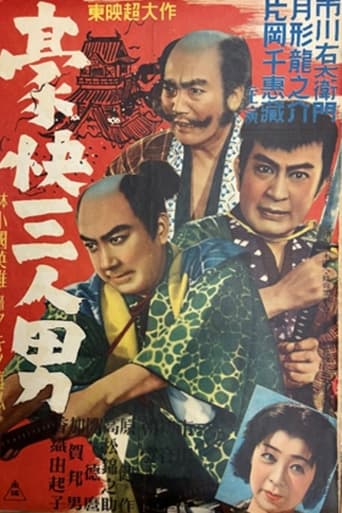
In the midst of the Siege of Osaka in the Sengoku period, a thrilling tale unfolds featuring a trio of ronin who manipulate a group of spies, a mysterious woman protecting a young lord, and the overwhelming roar of the Warring States captured on the silver screen.
豪快三人男
1951
 6.3
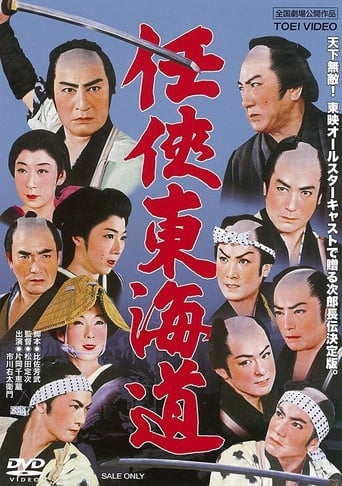
One of the great stories from Japan’s rich history comes to life in this true tale of the bloody showdown between two rival yakuza gangs in the 1840’s. The battle between Boss Sukegoro of Iioka and Boss Shigezo of Sasagawa has been portrayed many times, most notably in the first Zatoichi film, where the blind man befriends the tubercular ronin Hirate Miki, before cutting him down in one of the great duels in cinema history. This all-star extravaganza pulls out all the stops, with appearances by virtually all of the great actors and actresses from Toei’s studio at the time. Ichikawa Utaemon’s portrayal of the kind-hearted, noble yakuza boss Shigezo of Sasagawa contrasts sharply with the devious Sukegoro of Iioka. Corrupt as he may have been, his men were all willing to give up their lives for him.
A Spectacular Showdown
1959
 7.0
An all-star cast highlights this Jidai-Geki classic. Set in the samurai era, this is the tale of period Yakuza. One of the real classics in this genre. Jirocho, an honorable and respected gang boss, uncovers a conspiracy organized by his rivals while on a quest to bring justice to three murders. Some of the most famous actors from Toei studios make this a must-see for everyone! Featuring a very young Nakamura Kinnosuke, who went on to become one of Japan's mosted noteworthy actors under the name Yorosuya Kinnosuke. This is one of the best examples his early work.
A Chivalrous Spirit
1958
 NR
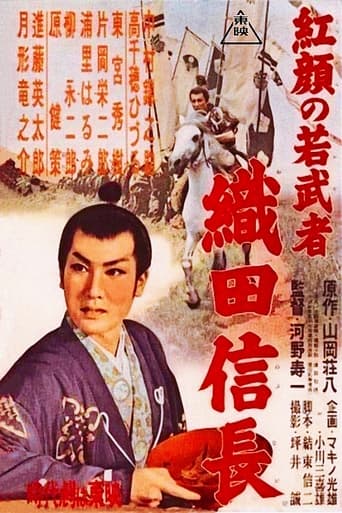
A dynamic story depicting the rise to power of Oda Nobunaga. The story of a young man on the battlefields of the Sengoku era, who possessed character and courage, and who became a great commander and ruler, while some called him a great dictator. A film adaptation of the novel by Sohachi Yamaoka.
Young Ruddy Warrior: Nobunaga Oda
1955
 5.5
Master swordsman and loyal 'Hatamoto' (direct vassal to the Shogun), Saotome Mondonosuke, is sent to investigate an intrigue centering on the Date Clan. The 300th film in the long and illustrious career of Ichikawa Utaemon, one of the most popular Japanese film stars of the period; it brought out an all-star cast as well.
Bored Hatamoto: Idle Vassal Tribute
1958
 NR
Revenge breeds revenge. Ikuta Denpachiro, the martial arts instructor of the Honda family in Koriyama, lost a fight to the young samurai Enjo Sozaemon in a martial arts tournament and as a result lost his position and was expelled from home. Wanting to avenge the mockery of himself, he treacherously kills Sozaemon and goes on the run. After long wanderings, Denpachiro, it would seem, finds a peaceful life and love in the face of a devoted and courageous Okatsu, but the brothers of the murdered man are already on his trail, wanting to avenge the death of Sozaemon. The film is based on a story by Itaro Yamagami.
Temple of Revenge
1957
 NR
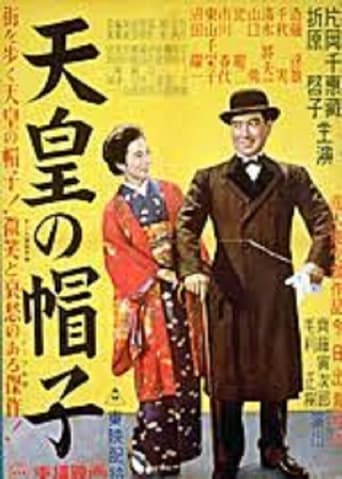
A man working in a museum steals the Emperor's hat on display.
The Emperor's Hat
1950
1930s · 2 titles
7.8In late 19th-century Tokyo, Kikunosuke Onoue, the adopted son of a legendary actor, himself an actor specializing in female roles, discovers that the praise he receives is only due to his status as his father's heir. Devastated, he turns to Otoku, a servant of his family, for comfort, and they fall in love. Kikunosuke becomes determined to leave home and develop as an actor on his own merits, and Otoku faithfully joins him.
The Story of the Last Chrysanthemum
1939
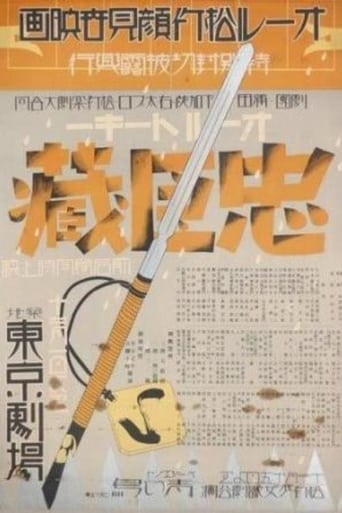 NR
This 1932 adaptation is the earliest sound version of the ever-popular and much-filmed Chushingura story of the loyal 47 retainers who avenged their feudal lord after he was obliged to commit hara-kiri due to the machinations of a villainous courtier. As the first sound version of the classic narrative, the film was something of an event, and employed a stellar cast, who give a roster of memorable performances. Director Teinosuke Kinugasa was primarily a specialist in jidai-geki (period films), such as the internationally celebrated Gate of Hell (Jigokumon, 1953), and although he is now most famous as the maker of the avant-garde silent films A Page of Madness (Kurutta ichipeji, 1926) and Crossroads (Jujiro, 1928), Chushingura is in fact more typical of his output than those experimental works. The film ranked third in that year’s Kinema Junpo critics’ poll, and Joseph Anderson and Donald Richie noted that 'not only the sound but the quick cutting was admired by many critics.
The Loyal 47 Ronin
1932