
Acting
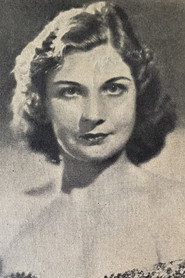
Věra Hanslíková
Born — Died
1913-05-04 — 2004-01-01
Place of birth
Praha, Československo
Known for
Acting
Credits
17 titles
Věra Hanslíková was a Czech stage and film actress born in Prague on May 4, 1913. She came from an old Prague merchant family. After graduating from the French lyceum in Nîmes, she worked in her father's shop. Before launching her acting career, she was a well-known swimmer and a front-crawl champion, holding three swimming records at the time. Additionally, she won the City of Prague gold medal in archery, paddled canoes, and skied. Věra pursued amateur acting in secret, with only her mother's knowledge, as her father strongly opposed her acting career. It was only after his death that she joined the theater. She initially performed in Brno and Plzeň. Following her performance in the play …
Known for
 9.0
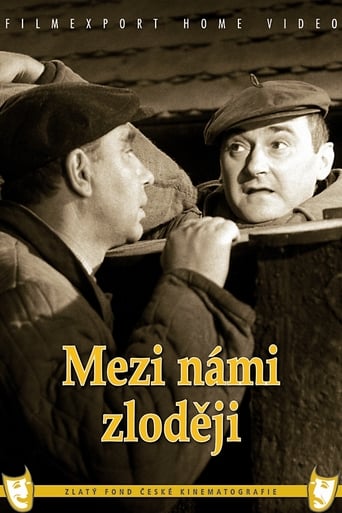
9.0The story of a trio of released criminals that even prison re-education did not reform. They intend to "bankrupt" a farming cooperative, but soon discover that they must first deal with the local thieves. Not surprisingly, therefore, they end up championing the right cause and make the commons flourish...
Among Us Thieves
1964
 4.8
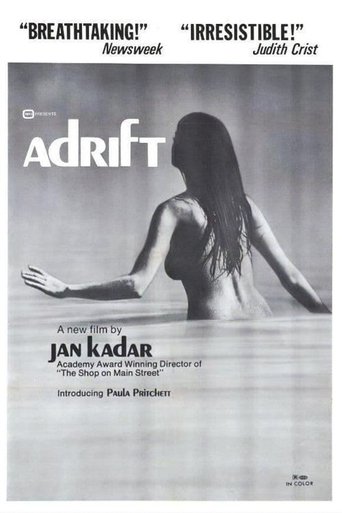
4.8A fisherman saves Anada, a woman adrift, from drowning. He takes her to his home, and protects her. Eventually, she occupies a larger place than was to be expected. He commits adultery with her, but his own wife seems to be in love with the strange young woman.
Adrift
1971
 7.0
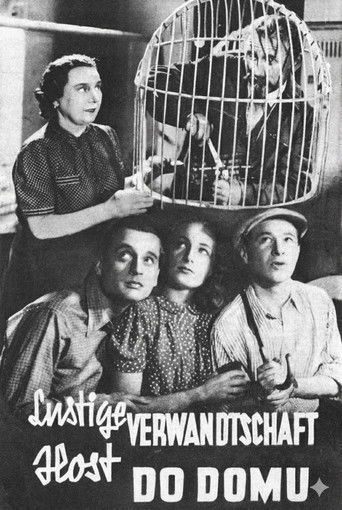
7.0Pavel Hora offers his friend Jiří Pulpán a place to live. When they get home, they find out that the landlord has evicted Pavel to the yard because he found a love letter from his daughter Zuzanka. So the two men arrange an apartment in the yard. When the landlord catches Jiří with his other daughter Pepička, he sends both daughters to his brother Sylvester on the farm.
Host do domu
1942
 6.0
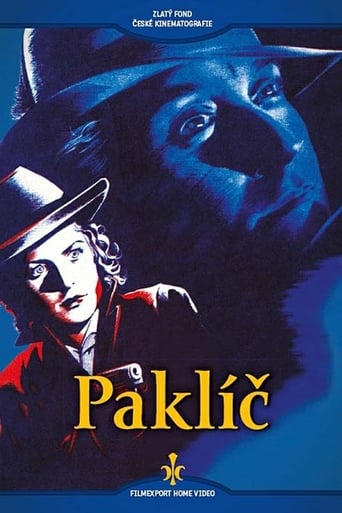
6.0Successful writer Gabriel Anděl still loves his wife Lola very much, but he can't stand the way she is always getting involved in his work, so he decides to divorce her. Just as he is about to move into his country villa, a police inspector appears on the scene with a warning that some crooks are planning to sell the house in question to a rich Czech-American. Anděl and the inspector immediately drive there and indeed find a gang of criminals disguised as servants. However, these are far from the only crooks involved in this complicated case. Before the crazy night is over, Gabriel and Lola will have many more surprises and complicated situations...
Paklíc
1944
 6.0
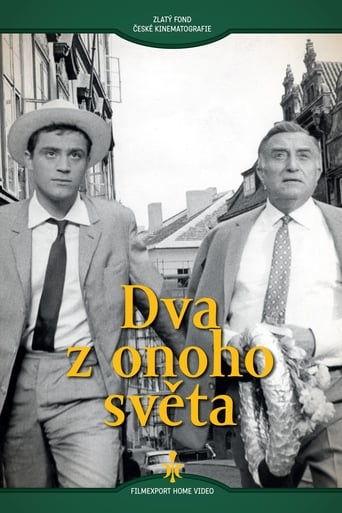
6.0A musical comedy about two indistinguishably similar siblings who love music, but each of them is completely different. Pavel Fořt is a professor of classical music at a pedagogical institute, his brother is a jazz musician and plays music in America. When the twin brother suddenly appears in Prague, they switch roles.
Dva z onoho světa
1962
 4.5
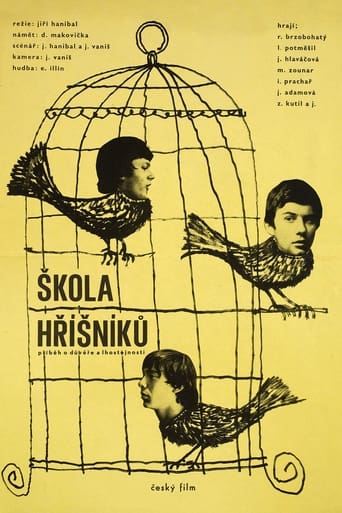
4.5Pavlata, the director of an educational institution for juvenile offenders, will push for the early release of Pepík Adamec, whom he respects for his sincere efforts and good work record. However, the boy bears the dishonest and dishonourable behaviour of adults in his new job and in his family.
Škola hříšníků
1966
Film credits
1970s · 3 titles
4.8A fisherman saves Anada, a woman adrift, from drowning. He takes her to his home, and protects her. Eventually, she occupies a larger place than was to be expected. He commits adultery with her, but his own wife seems to be in love with the strange young woman.
Adrift
1971
 6.0
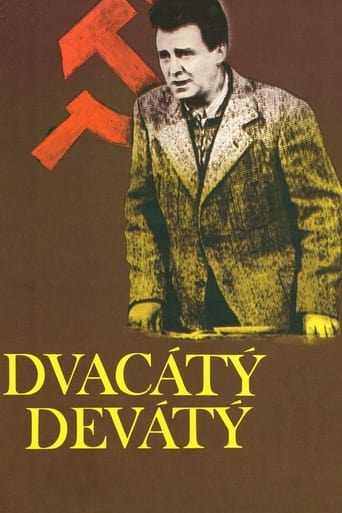
6.0In the era of normalisation, a number of (pseudo)historical films were made, even described as reconstructions, which glorified the world-building mission of the Communist Party and attributed to it exclusively humanitarian intentions ("Days of Betrayal", "Sokolovo", "Liberation of Prague", "The Victorious People"). In 1929, when its fifth congress met, Klement Gottwald, who had taken the line of the Russian Bolsheviks, took over the leadership of the Communists...
Dvacátý devátý
1975
 7.5
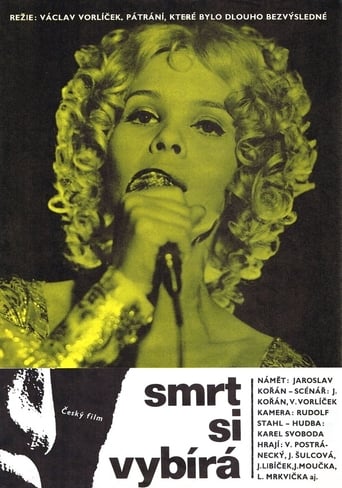
7.5Radek Simek, the driver of a postal car, is shot dead on his regular route. The Investigators give up initial suspicions of robbery, because he carried no greater amount of money. Even questioning Honza Marek, another mail car driver, brings no result. When the circumstances are becoming more and more suspicious. Marek decides to track down the killer on his own.
Death Chooses
1973
1960s · 7 titles
9.0The story of a trio of released criminals that even prison re-education did not reform. They intend to "bankrupt" a farming cooperative, but soon discover that they must first deal with the local thieves. Not surprisingly, therefore, they end up championing the right cause and make the commons flourish...
Among Us Thieves
1964
6.0A musical comedy about two indistinguishably similar siblings who love music, but each of them is completely different. Pavel Fořt is a professor of classical music at a pedagogical institute, his brother is a jazz musician and plays music in America. When the twin brother suddenly appears in Prague, they switch roles.
Dva z onoho světa
1962
4.5Pavlata, the director of an educational institution for juvenile offenders, will push for the early release of Pepík Adamec, whom he respects for his sincere efforts and good work record. However, the boy bears the dishonest and dishonourable behaviour of adults in his new job and in his family.
Škola hříšníků
1966
 9.0
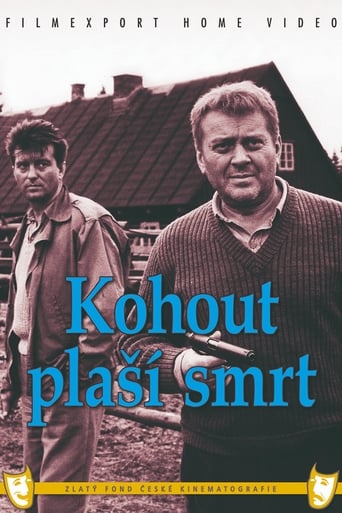
9.0A group of saboteurs search for a weapons cache hidden by the Nazi army. Beskydy in the summer of 1950: the StB agent Borek infiltrates a group of saboteurs hidden in the Beskydy mountains. They are preparing terrorist actions against the ongoing collectivisation in the village. The group is led by Ervín Kopal and Metud Hanák. Borek is to make contact with them, secure the saboteurs and discover a weapons depot. After many dramatic events, the task is accomplished, but at the highest cost...
Kohout plaší smrt
1962
 7.0
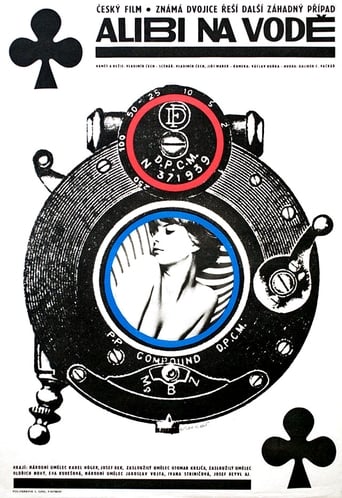
7.0Miss Nováková reports to Major Tuma (Karel Höger) from the police about the disappearance of her roommate, the model Zuzana. Shortly afterwards, a film director named Konrád (Otomar Krejca) asks Tuma to cooperate on a new cinéma-vérité film describing the story of Zuzana's disappearance.
Alibi on the Lake
1966
No synopsis available yet.
Sváteční jezdec
1969
 7.5
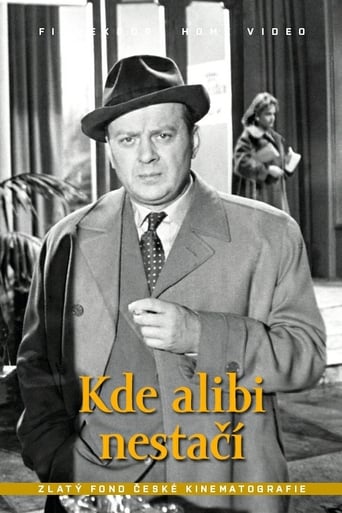
7.5“A bored housewife, a husband who married her for show, and a stupid boy who is full of himself because he is dating a Swiss woman.” The words of Inspector Tůma sound like they’re from a European melodrama, but in fact they come from a Czechoslovak crime story. A pair of detectives, counterfeit medicine, the high-society setting of a Karlovy Vary hotel, and Oldřich Nový as the aging hotel manager Kraus.
Where an Alibi Is Not Everything
1961
1950s · 3 titles
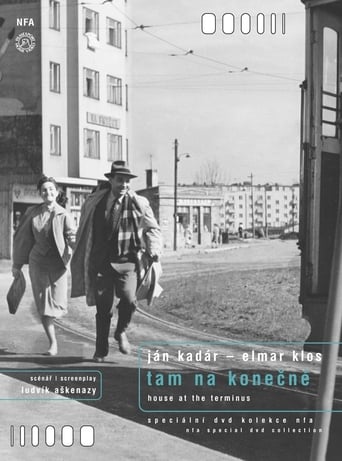 6.6
6.6Several bittersweet stories set in a Prague apartment building.
At the Terminus
1957
 5.0
5.0The year is 1918. Toník returns home from the front. In Kladno, where he arrives, things are seething with discontent. The Social Democrats are in government, but nothing has changed. Socialization has not been implemented, there is hunger and food is still being skimped on. The first news about a socialist state arrives from Russia. On May 1st, the workers' Kladno manifests its loyalty to the ideals of the Great October Socialist Revolution. In December 1920, a general strike is declared in Kladno as well. The workers arm themselves, workers' councils take over the administration of the city and are also established in the surrounding villages. An armed uprising is being prepared. However, the right-wing leadership of the Social Democratic Party attacks the workers in the back. The army is sent to Kladno...
A red glow over Kladno
1956
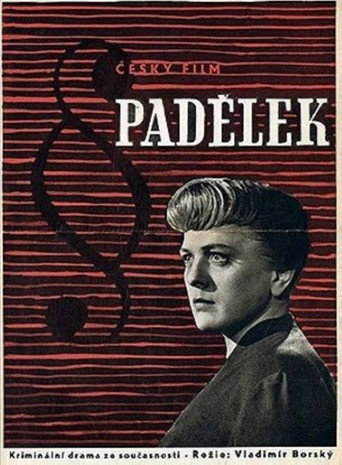 5.0
5.0Olga finds her husband Karel Brand, whom she has just divorced, shot dead after returning from the cinema. It appears to be a clear case of suicide, but Lieutenant Dusek of the Public Security Service suspects that it is a murder, which, it is not impossible, as a number of evidences point against it, could have been committed by Mrs Olga. A letter from the dead man to his wife seems to dispel any doubt that it could have been murder. Lieutenant Dusek, however, investigates further. Much more than he, however, learns about the true circumstances from Mrs. Olga's legal advisor, Dr. Klimesh. He learns that the letter is indeed a forgery and that Brand's death is linked to the raids of an anti-state gang. He hesitates for a long time whether to confide in security, believing that doing so would testify in favor of Dusek's theory that the murder was committed by Olga...
Padělek
1957
1940s · 4 titles
7.0Pavel Hora offers his friend Jiří Pulpán a place to live. When they get home, they find out that the landlord has evicted Pavel to the yard because he found a love letter from his daughter Zuzanka. So the two men arrange an apartment in the yard. When the landlord catches Jiří with his other daughter Pepička, he sends both daughters to his brother Sylvester on the farm.
Host do domu
1942
6.0Successful writer Gabriel Anděl still loves his wife Lola very much, but he can't stand the way she is always getting involved in his work, so he decides to divorce her. Just as he is about to move into his country villa, a police inspector appears on the scene with a warning that some crooks are planning to sell the house in question to a rich Czech-American. Anděl and the inspector immediately drive there and indeed find a gang of criminals disguised as servants. However, these are far from the only crooks involved in this complicated case. Before the crazy night is over, Gabriel and Lola will have many more surprises and complicated situations...
Paklíc
1944
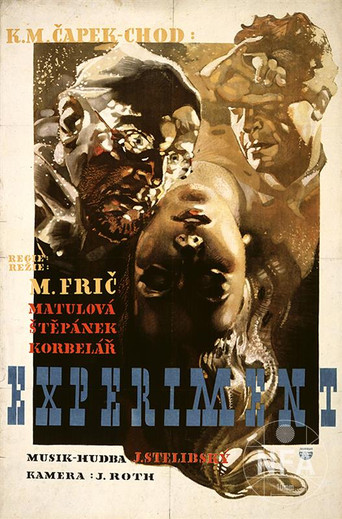 6.5
6.5No synopsis available yet.
Experiment
1943
 5.5
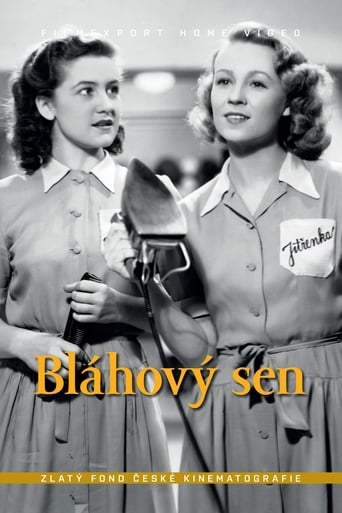
5.5Hairdresser Žofka Stárková desires fame perhaps more than other girls. The petty plans of her fiancé František do not satisfy her wild imagination. Žofka suddenly gains popularity when, while on her way to get an autograph, she discovers the dead body of the famous tenor Helbich and is arrested on suspicion of murder. Helbich actually committed suicide because he lost his voice. After being released from prison, Žofka receives an offer for the lead role in a forthcoming film. The dubious fame confuses her. She leaves her parents' modest apartment and quits her hairdressing business. Unfortunately, it soon becomes clear that she has no talent for acting, and the desperate director has the film edited in such a way that Žofka practically disappears from it...
Bláhový sen
1943