
Known for
 5.6
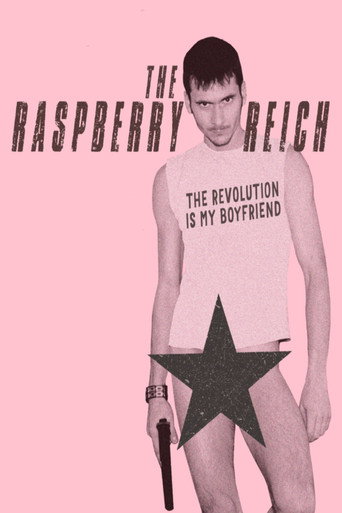
5.6Gudrun has modeled her amateur German terrorist group after the 1970s Red Army Faction (Baader-Meinhof Gang). She attempts to imitate her heroes by kidnapping the son of a wealthy industrialist and hopes to negotiate leftist demands from the father. When Gudrun’s not spouting leftist verses (including during a hilariously brilliant fuck session), she’s trying to convince her all-male gang to abandon their heterosexuality, which she believes is the result of mass delusion.
The Raspberry Reich
2004
 3.4
3.4With things growing a bit stale in the bedroom, lesbian couple Claudia and Dylan agree to seek sexual experiences outside their relationship. Dylan discovers new pleasures at a sex club, while Claudia, in drag as Claude, finds a surprising partner.
Mommy Is Coming
2012
 3.8
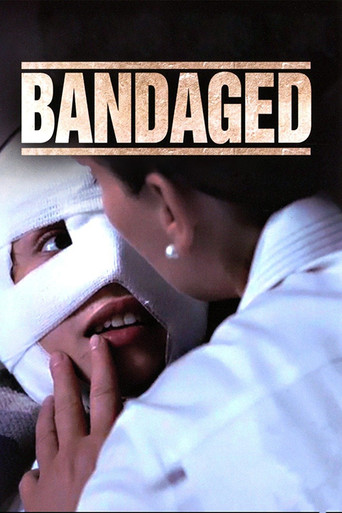
3.8Since his wife's death, Arthur, a peculiar and severe surgeon, cloisters his teen daughter Lucille inside a strange mansion. Desperate, Lucille tries to commit suicide and ends up with her face completely burned and bandaged. Arthur, with the assistance of his aunt, prepares a weird skin graft in order to give back Lucille a face, a face that resembles his beloved and deceased wife. To take care of her, the father then hires Joan, an attractive nurse with a somber past. Lucille and Joan start a forbidden and passionate love affair.
Bandaged
2009
 5.3
5.3Invited by the conductor Premil Petrovic to stage Arnold Schoenberg’s Pierrot Lunaire, a musical theater work from 1912 based on the poems of Albert Giraud, LaBruce transposed a strange and tragic episode of true crime onto the composition. Complementing the original atonal score is a narrative about a trans man who is outed by his girlfriend’s father and forbidden from seeing the young woman again. Crestfallen, the protagonist decides to prove the fact of his manhood by castrating a taxi driver and then revealing his newly transplanted member to the two of them. This story, which for LaBruce “serves as a kind of allegory for all gender radicals and outcasts driven to extremes by the disapproval and hostility of the dominant order,” is rendered in a visual style that nods to the era of Schoenberg’s melodrama. LaBruce cheekily appropriates the formal vocabulary of silent cinema with black-and-white photography, irises, and intertitles like “A cock, a cock, my kingdom for a cock!”
Pierrot Lunaire
2014
 5.9
5.9Kôichi is a Japanese man living alone in Berlin. He has no job and hardly any friends. One night Kôichi meets Ryota at a bar which is also a sex club. Ryota came to Berlin to visit a German guy whom he had "met" on a dating app. His high hopes for romance (and marriage?) were quickly crushed since the German was only interested in sex, not even letting Ryota stay for the night. That is why Ryota ended up spending the night in the dark room of the sex club. Kôichi for some reason lets Ryota stay at his apartment. They have sex. Ryota goes out almost everyday to get laid by various local men and comes home to Kôichi's. Increasingly caught up with a strange feeling that is akin to but not quite frustration or curiosity (needless to say, it is not even close to love), Kôichi gradually gives himself up to sex with Ryota.
Berlin Drifters
2017
Film credits
Behind the camera
3.8Since his wife's death, Arthur, a peculiar and severe surgeon, cloisters his teen daughter Lucille inside a strange mansion. Desperate, Lucille tries to commit suicide and ends up with her face completely burned and bandaged. Arthur, with the assistance of his aunt, prepares a weird skin graft in order to give back Lucille a face, a face that resembles his beloved and deceased wife. To take care of her, the father then hires Joan, an attractive nurse with a somber past. Lucille and Joan start a forbidden and passionate love affair.
Bandaged
2009
5.3Invited by the conductor Premil Petrovic to stage Arnold Schoenberg’s Pierrot Lunaire, a musical theater work from 1912 based on the poems of Albert Giraud, LaBruce transposed a strange and tragic episode of true crime onto the composition. Complementing the original atonal score is a narrative about a trans man who is outed by his girlfriend’s father and forbidden from seeing the young woman again. Crestfallen, the protagonist decides to prove the fact of his manhood by castrating a taxi driver and then revealing his newly transplanted member to the two of them. This story, which for LaBruce “serves as a kind of allegory for all gender radicals and outcasts driven to extremes by the disapproval and hostility of the dominant order,” is rendered in a visual style that nods to the era of Schoenberg’s melodrama. LaBruce cheekily appropriates the formal vocabulary of silent cinema with black-and-white photography, irises, and intertitles like “A cock, a cock, my kingdom for a cock!”
Pierrot Lunaire
2014
5.9Kôichi is a Japanese man living alone in Berlin. He has no job and hardly any friends. One night Kôichi meets Ryota at a bar which is also a sex club. Ryota came to Berlin to visit a German guy whom he had "met" on a dating app. His high hopes for romance (and marriage?) were quickly crushed since the German was only interested in sex, not even letting Ryota stay for the night. That is why Ryota ended up spending the night in the dark room of the sex club. Kôichi for some reason lets Ryota stay at his apartment. They have sex. Ryota goes out almost everyday to get laid by various local men and comes home to Kôichi's. Increasingly caught up with a strange feeling that is akin to but not quite frustration or curiosity (needless to say, it is not even close to love), Kôichi gradually gives himself up to sex with Ryota.
Berlin Drifters
2017