
Known for
 6.8
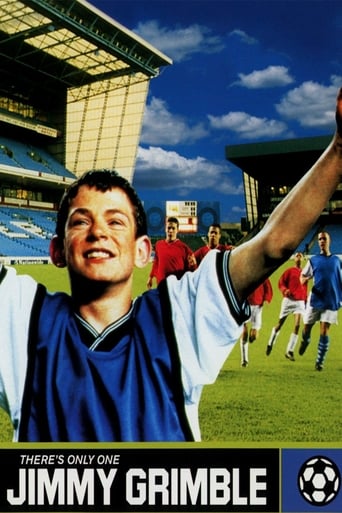
6.8Jimmy Grimble is a shy Manchester school boy. At school he is constantly being bullied by the other kids, and at home he has to face his mother's new boyfriend. However, through football, and some special boots, he manages to gain the confidence to succeed and leads his school football team towards the final of the local schools cup.
There's Only One Jimmy Grimble
2000
 NR
NRReuniting the founding creative team, this documentary tells the story of the genesis of the satirical puppet show `Spitting Image', with contributions from caricaturists Peter Fluck and Roger Law and TV producer John Lloyd. Spanning the early years of Margaret Thatcher's government to the end of John Major's, the puppets became almost as famous as the politicians they lampooned. In 2000, the puppets were auctioned off at Sotheby's and we find out where they now reside.
Whatever Happened to Spitting Image?
2010
 5.8
5.8A comedy about loss, grief, and the redemptive power of love. Dean is a NY illustrator who falls hard for an LA woman while trying to prevent his father from selling the family home in the wake of his mother's death.
Dean
2016
 NR
NRJohn Pilger documentary from 1974.
Israel: After the Earthquake
1974
 NR
NRDocumentary about innocent people confined to prison on remand. John Pilger reports that more than half of the 500,000 people remanded in custody by magistrates each year are eventually found not guilty, fined or, as in the case of “Helen”, given a conditional discharge. Helen, charged with stealing a pair of slippers but with no previous convictions, recalls her day in Holloway Prison, London, which started at 7am when she joined 96 other prisoners in a rush to use four toilets whose conditions were “disgusting”. Between then and lunchtime, all prisoners were locked up, with just half-an-hour’s walk round a large yard for exercise. Lunch was eaten in cells, with tea at 3.30pm, before they were locked up until the following morning.
Guilty Until Proven Innocent
1974
 NR
NRJohn Pilger returns to Vietnam in 1974. America had withdrawn its ground forces at the beginning of the previous year, he reports, yet the war had not ended. During this ‘peace’, more than 70,000 soldiers and civilians had been killed.
Vietnam: Still America's War
1974
Film credits
Behind the camera
5.8A comedy about loss, grief, and the redemptive power of love. Dean is a NY illustrator who falls hard for an LA woman while trying to prevent his father from selling the family home in the wake of his mother's death.
Dean
2016
NRJohn Pilger documentary from 1974.
Israel: After the Earthquake
1974
NRDocumentary about innocent people confined to prison on remand. John Pilger reports that more than half of the 500,000 people remanded in custody by magistrates each year are eventually found not guilty, fined or, as in the case of “Helen”, given a conditional discharge. Helen, charged with stealing a pair of slippers but with no previous convictions, recalls her day in Holloway Prison, London, which started at 7am when she joined 96 other prisoners in a rush to use four toilets whose conditions were “disgusting”. Between then and lunchtime, all prisoners were locked up, with just half-an-hour’s walk round a large yard for exercise. Lunch was eaten in cells, with tea at 3.30pm, before they were locked up until the following morning.
Guilty Until Proven Innocent
1974
NRJohn Pilger returns to Vietnam in 1974. America had withdrawn its ground forces at the beginning of the previous year, he reports, yet the war had not ended. During this ‘peace’, more than 70,000 soldiers and civilians had been killed.
Vietnam: Still America's War
1974
NRJohn Pilger returns to Vietnam in 1974. America had withdrawn its ground forces at the beginning of the previous year, he reports, yet the war had not ended. During this ‘peace’, more than 70,000 soldiers and civilians had been killed.
Vietnam: Still America's War
1974
 NR
NRIn the 1960s, as West Indians, Pakistanis, Indians and Africans began to arrive in Britain from former British colonies, race became a political issue. In the 1964 General Election, a swing to the Conservative Party in Labour’s Smethwick constituency and Enoch Powell’s “rivers of blood” speech on immigration four years later put attitudes towards ethnic minorities on the political and social agenda. In One British Family, made in 1974, John Pilger focuses on Gus and Julie Gill, who arrived in Britain from Trinidad in 1961. They now had three children and their own house on Tyneside, where they were the only black family in the street. “They take less from the social services than the equivalent white families,” says Pilger. “They’re not on any council’s housing lists and they’ve never been out of work.”
One British Family
1974
In this, the first of his 58 documentary films, John Pilger combines candid interviews and amazing frontline footage of Vietnam to portray a growing rift between the US military bureaucrats - "lifers" - and the soldiers who physically and mentally fight the war on the ground, the "grunts". By 1970, it is an internal sense of disillusionment and frustration born from this rift that is triggering the withdrawal of US forces from Vietnam.
Vietnam: The Quiet Mutiny
1970
 NR
NRAllied to a four-year Daily Mirror campaign by John Pilger that helped achieve compensation for many of the forgotten and mostly working class victims of the notorious drug prescribed to women during pregnancy. Broadcast in 1974, the theme of Thalidomide: The Ninety-Eight We Forgot was to become a Pilger hallmark: injustice.
Thalidomide: The Ninety-Eight We Forgot
1974
 NR
NRAlabama governor George Wallace made his name as a segregationist remembered for standing “in the schoolhouse door” of the University of Alabama in 1963 in an attempt to stop the enrolment of black students. John Pilger subsequently interviewed Wallace on the campaign trail during two general elections.During the second, in 1972, Wallace was shot in an assassination attempt, leaving him paralysed and in a wheelchair. In The Most Powerful Politician in America, made in 1974, Pilger looks at the likelihood that a reinvented Wallace will run for the White House two years later, manipulating contemporary American passions and exploiting his influence in the powerful “Dixie” states controlled by the Democratic Party.
The Most Powerful Politician in America
1974
NRAlabama governor George Wallace made his name as a segregationist remembered for standing “in the schoolhouse door” of the University of Alabama in 1963 in an attempt to stop the enrolment of black students. John Pilger subsequently interviewed Wallace on the campaign trail during two general elections.During the second, in 1972, Wallace was shot in an assassination attempt, leaving him paralysed and in a wheelchair. In The Most Powerful Politician in America, made in 1974, Pilger looks at the likelihood that a reinvented Wallace will run for the White House two years later, manipulating contemporary American passions and exploiting his influence in the powerful “Dixie” states controlled by the Democratic Party.
The Most Powerful Politician in America
1974