
Directing
John Pilger
Born — Died
1939-10-09 — 2023-12-30
Place of birth
Sydney, Australia
Known for
Directing
Credits
92 titles
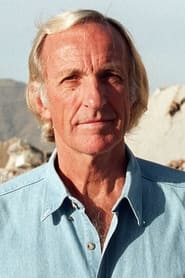
John Richard Pilger was an Emmy Award winning Australian journalist based in London. Pilger lived in the United Kingdom from 1962. Since his early years as a war correspondent in Vietnam, Pilger was a strong critic of American, Australian and British foreign policy, which he considered to be driven by an imperialist agenda. Pilger also criticised his native country's treatment of indigenous Australians and the practices of the mainstream media. In the British print media, he had a long association with the Daily Mirror, and wrote a fortnightly column for the New Statesman magazine. Pilger twice won Britain's Journalist of the Year Award, in 1967 and 1979. His documentaries, screened intern…
Known for
 6.9
6.9A United States daily progressive, nonprofit, independently syndicated program of news, analysis, and opinion.
Democracy Now!
2001
 7.0
7.0World in Action was Granada Television’s flagship ITV current affairs series, running from 7 Jan 1963 to 7 Dec 1998, and built a reputation for film-led investigative reporting and a forceful editorial stance. Its journalism produced major public and political repercussions—including investigations associated with miscarriages of justice such as the Birmingham Six—and it also served as a platform for landmark documentary projects, including the first broadcast of “Seven Up!” as part of the strand in 1964.
World in Action
1963
 6.0
6.0Examining the meaning and significance of the insights that WikiLeaks shared with the world, the resulting behaviour of the governments involved, the extraordinary personal risk taken by Assange, and the wider fundamental issues around press freedom that affect all of us and our right to know.
The Trust Fall: Julian Assange
2024
 6.5
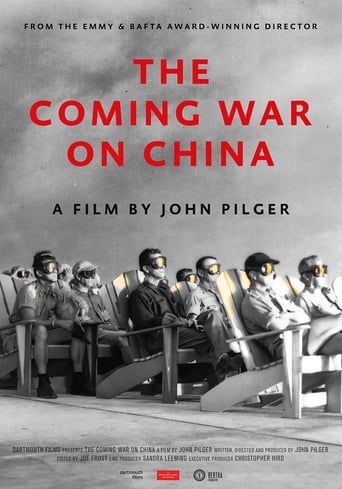
6.5John Pilger reveals what the news doesn't - that the United States and the world's second economic power, China (both nuclear armed) are on the road to war. Pilger's film is a warning and an inspiring story of resistance.
The Coming War on China
2016
 7.5
7.5Set both in Latin America and the United States, the film explores the historic and current relationship of Washington with countries such as Venezuela, Bolivia and Chile. Pilger says that the film "...tells a universal story... analysing and revealing, through vivid testimony, the story of great power behind its venerable myths. It allows us to understand the true nature of the so-called "war on terror". According to Pilger, the film’s message is that the greed and power of empire is not invincible and that people power is always the "seed beneath the snow".
The War on Democracy
2007
 7.8
7.8This film investigates how the media has reported war, from the First World War to the present day.
The War You Don't See
2010
Film credits
2010s · 4 titles
6.5John Pilger reveals what the news doesn't - that the United States and the world's second economic power, China (both nuclear armed) are on the road to war. Pilger's film is a warning and an inspiring story of resistance.
The Coming War on China
2016
7.8This film investigates how the media has reported war, from the First World War to the present day.
The War You Don't See
2010
 9.0
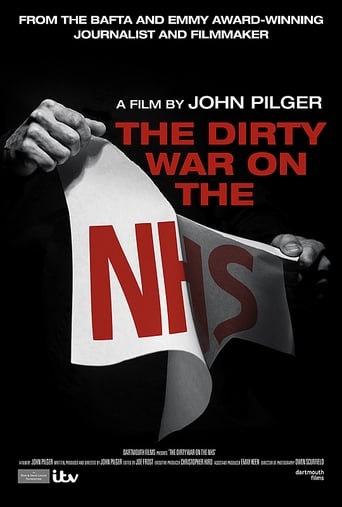
9.0John Pilger unearths the hidden agenda behind the NHS crisis.
The Dirty War on the NHS
2019
 5.7
5.7Documentary by John Pilger looks at the awful truth behind white Australia's dysfunctional relationship with Indigenous Australians
Utopia
2013
2000s · 7 titles
7.5Set both in Latin America and the United States, the film explores the historic and current relationship of Washington with countries such as Venezuela, Bolivia and Chile. Pilger says that the film "...tells a universal story... analysing and revealing, through vivid testimony, the story of great power behind its venerable myths. It allows us to understand the true nature of the so-called "war on terror". According to Pilger, the film’s message is that the greed and power of empire is not invincible and that people power is always the "seed beneath the snow".
The War on Democracy
2007
 NR
NRNews on Sunday was a left-wing tabloid that launched to great fanfare in 1987 and went bankrupt just eight weeks later. It was one of the boldest business ventures ever attempted by the far left and it was a disaster. A group who met through a tiny left-wing faction called Big Flame were convinced it was possible to market a left-wing mass-circulation newspaper. They were led by ex-Ford worker Alan Hayling (now head of BBC Documentaries) under the editorial leadership of John Pilger, who walked out before the paper had even launched.
Lefties: A Lot Of Balls
2006
 6.6
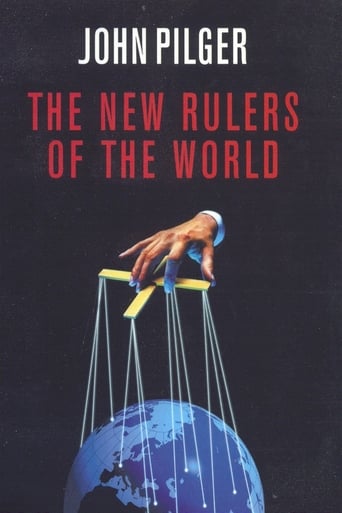
6.6The myths of globalisation have been incorporated into much of our everyday language. "Thinking globally" and "the global economy" are part of a jargon that assumes we are all part of one big global village, where national borders and national identities no longer matter. But what is globalisation? And where is this global village? In 2001, John Pilger made 'The New Rulers of the World', a film exploring the impact of globalisation. It took Indonesia as the prime example, a country that the World Bank described as a 'model pupil' until its 'globalised' economy collapsed in 1998. Globalisation has not only made the world smaller. It has also made it interdependent. An investment decision made in London can spell unemployment for thousands in Indonesia, while a business decision taken in Tokyo can create thousands of new jobs for workers in north-east England.
The New Rulers of the World
2001
 8.3
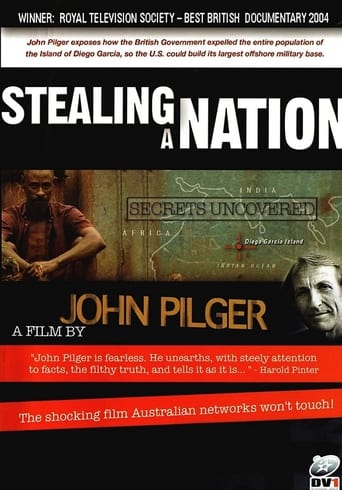
8.3This tells a story literally 'hidden from history'. In the 1960s and 70s, British governments, conspiring with American officials, tricked into leaving, then expelled the entire population of the Chagos islands in the Indian Ocean. The aim was to give the principal island of this Crown Colony, Diego Garcia, to the Americans who wanted it as a major military base. Indeed, from Diego Garcia US planes have since bombed Afghanistan and Iraq. The story is told by islanders who were dumped in the slums of Mauritius and in the words of the British officials who left a 'paper trail' of what the International Criminal Court now describes as 'a crime against humanity'
Stealing a Nation
2004
 7.4
7.4A documentary about the Israeli-Palestinian conflict that has lasted for more than 50 years. Contains some interviews with the children in this conflict.
Palestine Is Still the Issue
2003
 7.3
7.3A critical documentary about the war on terror since 9-11.
Breaking the Silence: Truth and Lies in the War on Terror
2003
 7.6
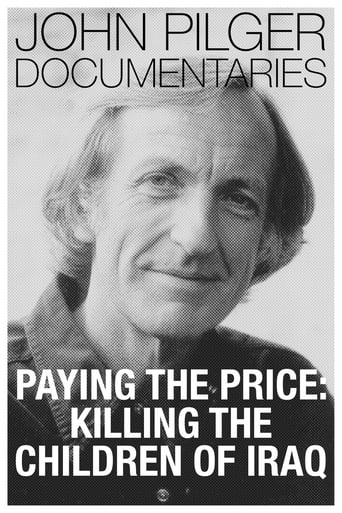
7.6An analysis of the effect of economic sanctions on Iraq.
Paying the Price: Killing the Children of Iraq
2000
1990s · 11 titles
 7.0
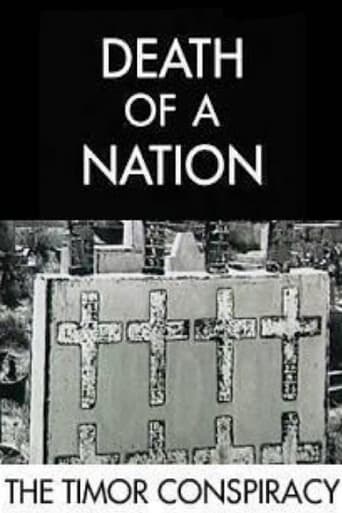
7.0The sensational expose of the complicity of Britain, USA and Australia in the continuing genocide in East Timor.
Death of a Nation: The Timor Conspiracy
1994
Britain is still a world leader. Indeed it has twenty percent of a world market, second only to the United States. And this industry is considered so important by the government that it consumes almost half of all research and development funds. Strangely it produces not consumer goods that people want, but machines that hardly any of us use or want to use. Moreover, for all its’ preeminence, its’ future is uncertain and depends to a large degree on secret deals with some of the most corrupt and brutal regimes on Earth. One of the biggest manufacturing industries in Britain at the close of the century is ARMS. John Pilger and David Munro look behind the political rhetoric and discover the world of international arms dealing.
Flying the Flag, Arming the World
1994
 NR
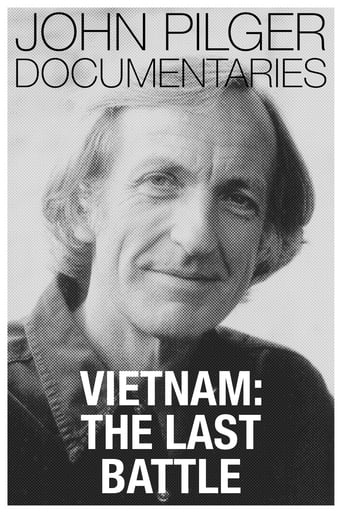
NRIn 1975, John Pilger reported the end of the Vietnam War from the American Embassy in Saigon, where the last American troops fled from the roof-top helicopter pad. He was made Journalist of the Year and International Reporter of the Year for his reporting of the Vietnam War over a period of almost ten years. In 1995’s ‘Vietnam: The Last Battle’, Pilger returns to Vietnam to review those twenty years, seeking to rescue something of Vietnamese past and present from Hollywood images which pitied the invader while overshadowing one of the most epic struggles of the 20th century. And with the embargo on the country now lifted by President Clinton, he describes Vietnam's latest battle against the economic plunder of the country by the United States and other powerful countries
Vietnam: The Last Battle
1995
Welcome to Australia is a 1999 Carlton Television documentary, written and presented by John Pilger, which was directed and produced by Alan Lowery, and charts the history of injustice endured by indigenous Australians in the context of the build-up to the Sydney 2000 Summer Olympic Games.
Welcome to Australia
1999
 NR
NRWar By Other Means is a 1992 television documentary by John Pilger and David Munro concerning loans to developing countries from the World Bank which cause them to pay more interest then they ever receive in international aid ("debt as a weapon"). It also analyses Structural Adjustment Programs, which are proclaimed to enable countries to compete in the global economy, but have the effect of lowering wages which results in the transfer of wealth from poor to rich. It features Dr. Susan George, author of The Debt Boomerang.
War By Other Means
1992
 NR
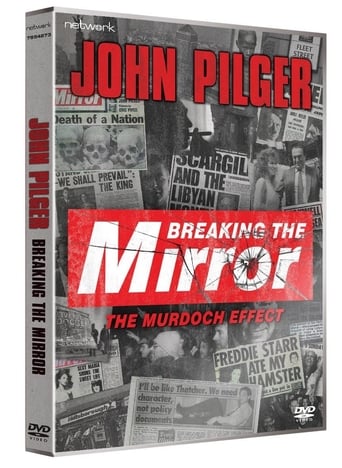
NRThis 1997 film considers the downfall of the Daily Mirror, the newspaper Pilger worked on for 23 years: a popular, intelligent tabloid once read by a quarter of the British population and which genuinely reflected its readers' concerns. Pilger asks why the qualities seen in the paper prior to the 1970s are no longer apparent, examining the contraction of the press following the Sun's symbolic move to Wapping, coverage of the Hillsborough disaster, the fate of the Daily Mirror under Robert Maxwell, and the stranglehold of Rupert Murdoch.
Breaking The Mirror: The Murdoch Effect
1997
 10.0
10.0John Pilger shows how the UN has allowed the Khmer Rouge to grow stronger.
Cambodia: Return to Year Zero
1993
 6.0
6.0An analysis of South Africa's new, democratic regime.
Apartheid Did Not Die
1998
 NR
NR1999. An updated version of the 1994 film that exposed the betrayal of the East Timorese by the international community.
The Timor Conspiracy (Update)
1999
“On the surface, everything appears serene... But Burma is also a secret country, isolated for the past 34 years since a brutal dictatorship seized power, the assault on its people all but forgotten. To tell their story, we had to go undercover. What we found was a land of fear.”
Inside Burma: Land of Fear
1996
 6.0
6.01990. The plight of a people who have struggled to rebuild their stricken country.
Cambodia: The Betrayal
1990
1980s · 11 titles
The shameful history of persecution of the Aborigines in Australia. The secret history of Australia is a historical conspiracy of silence. Written history has long applied selectivity to what it records, largely ignoring the shameful way that the Aborigines were, and continue to be, treated. Because Aborigines had not cultivated the land they were seen by British colonists as having no proprietorial rights to the land. They had no treaty and therefore no rights under British colonial rule. Little of their resistance is recorded.
The Secret Country: The First Australians Fight Back
1986
 NR
NR1983. The worldwide propaganda surrounding the nuclear arms race is scrutinised.
The Truth Game
1983
 NR
NR1981. The shabby treatment of returning combat soldiers from Vietnam is investigated.
Heroes
1981
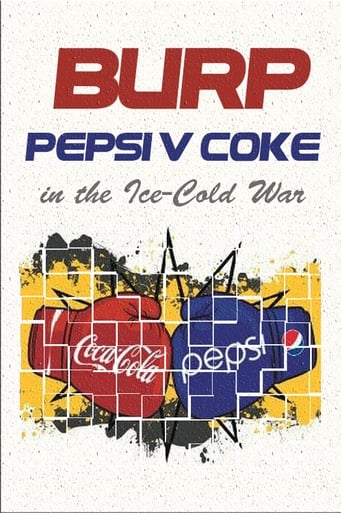 7.0
7.0Burp! Pepsi Vs Coke in the Ice Cold War traces the history of these brands against the backdrop of global politics. The second world war was the perfect vehicle for Coca-Cola distribution (including to the Nazis), with bottling plants on front lines paid for by the US war department.
Burp! Pepsi v. Coke in the Ice-Cold War
1984
 6.7
6.7How can a country survive when its jungle borders hold 4000 hostile troops?
Nicaragua: A Nation's Right to Survive
1983
 8.0
8.01989. The British government and the UN react to the outcry over the situation in Cambodia.
Cambodia: Year Ten (Update)
1989
 NR
NRA look at Japanese society and its emergent nationalism.
Japan Behind the Mask
1987
 8.0
8.01989. An examination of how the UN protected and revitalised the Khmer Rouge.
Cambodia: Year Ten
1989
 NR
NR1980. A report on political repression in Mexico.
The Mexicans
1980
 NR
NR“What is the role of the media in wartime? Is it simply to record or is it to explain, and from whose point of view – the military, the politicians or the victims?”
Frontline: The Search for Truth in Wartime
1983
 NR
NR1980. The effect of aid to Cambodia and the extent of the country's new-found stability.
Cambodia: Year One
1980
1970s · 23 titles
 NR
NRJohn Pilger documentary from 1974.
Israel: After the Earthquake
1974
 NR
NRIn A Nod and a Wink, John Pilger demonstrates how the charge of conspiracy is being used as a means of political suppression in Britain, comparing this with statutes in police states such as Brazil and the Soviet Union, which use “a vague law” to silence and imprison people for their political or religious views.
A Nod and a Wink
1975
 NR
NRIn the first of a trilogy of documentaries made in the United States, John Pilger reveals American Secretary of State Henry Kissinger’s policy of refusing aid to countries that do not support his government in the United Nations and the existence of a “Zap Office” – officially, the Office of Multilateral Diplomacy – specially set up in the State Department to monitor voting patterns.
Zap!! The Weapon Is Food
1976
 NR
NRAmerican defence policy under Gerald Ford, successor to a disgraced president, is the subject of Mr Nixon’s Secret Legacy. John Pilger says that military thinkers in Washington are for the first time “thinking the unthinkable” and Strategic Arms Limitation Talks with the Soviet Union announced by Ford and Henry Kissinger are “no more than a sham”. Before resigning over Watergate, President Richard Nixon had given Pentagon generals a flexible strategy that would blur the distinction between conventional and nuclear warfare.
Mr Nixon's Secret Legacy
1975
 NR
NRThis film expresses John Pilger’s belief that working people are seldom allowed a place in an essentially bourgeois media on their own political terms. In 1971, John Pilger travelled to the West Yorkshire industrial town of Keighley. This documentary features 36-year-old Jack Walker, a dye house worker, and is intended to present the views of a rank-and-file trade unionist: his life, struggle and hopes.
Conversations With a Working Man
1971
 NR
NRThree years after the fall of Saigon, Pilger returns to examine the new regime
Do You Remember Vietnam
1978
 NR
NRJohn Pilger’s first documentary on the aftermath of the Vietnam War, To Know Us Is to Love Us, features a caring, humane American community in Fort Smith, Arkansas, welcoming South Vietnamese refugees just months after the United States’s defeat and humiliation in south-east Asia – while their own dead of the war lie in the town’s graveyard.
To Know Us Is To Love Us
1975
 NR
NRThe second of John Pilger’s three 1976 documentaries made in the United States. In Pyramid Lake Is Dying, he reports on the demise in the culture of native Americans and the stealing of their resources. Pyramid Lake, in Nevada, home to the Paiute peoples and once described as “one of the few remaining unspoiled natural wonders in the American West”, is drying up and its fisheries and wildlife disappearing due to changes to the local ecology made by white settlers. In addition to their natural resources, the Paiute peoples' culture and lifestyle are also under threat.
Pyramid Lake Is Dying
1976
 NR
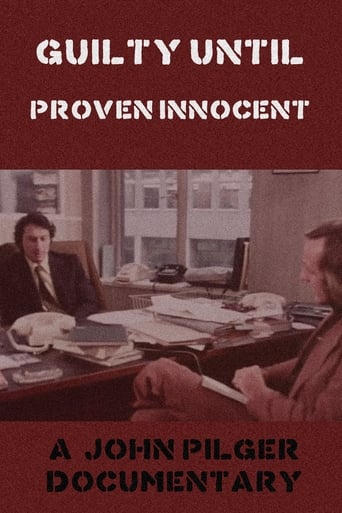
NRDocumentary about innocent people confined to prison on remand. John Pilger reports that more than half of the 500,000 people remanded in custody by magistrates each year are eventually found not guilty, fined or, as in the case of “Helen”, given a conditional discharge. Helen, charged with stealing a pair of slippers but with no previous convictions, recalls her day in Holloway Prison, London, which started at 7am when she joined 96 other prisoners in a rush to use four toilets whose conditions were “disgusting”. Between then and lunchtime, all prisoners were locked up, with just half-an-hour’s walk round a large yard for exercise. Lunch was eaten in cells, with tea at 3.30pm, before they were locked up until the following morning.
Guilty Until Proven Innocent
1974
 7.8
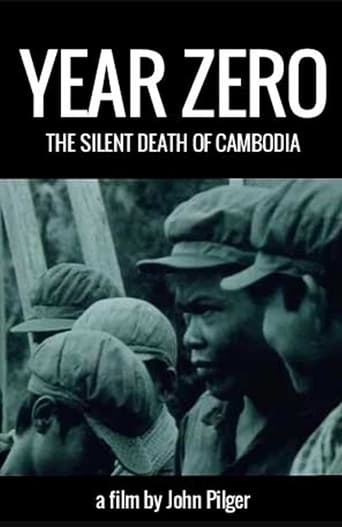
7.8John Pilger vividly reveals the brutality and murderous political ambitions of the Pol Pot/Khmer Rouge totalitarian regime which bought genocide and despair to the people of Cambodia while neighboring countries, including Australia, shamefully ignored the immense human suffering and unspeakable crimes that bloodied this once beautiful country.
Year Zero: The Silent Death of Cambodia
1979
 NR
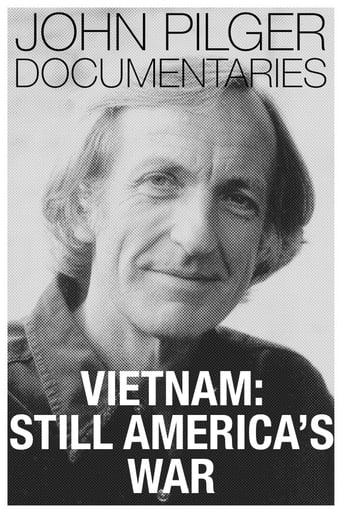
NRJohn Pilger returns to Vietnam in 1974. America had withdrawn its ground forces at the beginning of the previous year, he reports, yet the war had not ended. During this ‘peace’, more than 70,000 soldiers and civilians had been killed.
Vietnam: Still America's War
1974
 NR
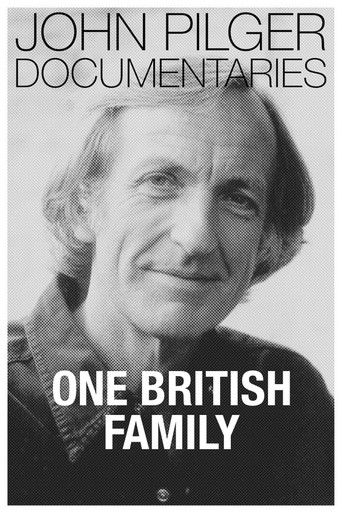
NRIn the 1960s, as West Indians, Pakistanis, Indians and Africans began to arrive in Britain from former British colonies, race became a political issue. In the 1964 General Election, a swing to the Conservative Party in Labour’s Smethwick constituency and Enoch Powell’s “rivers of blood” speech on immigration four years later put attitudes towards ethnic minorities on the political and social agenda. In One British Family, made in 1974, John Pilger focuses on Gus and Julie Gill, who arrived in Britain from Trinidad in 1961. They now had three children and their own house on Tyneside, where they were the only black family in the street. “They take less from the social services than the equivalent white families,” says Pilger. “They’re not on any council’s housing lists and they’ve never been out of work.”
One British Family
1974
In this, the first of his 58 documentary films, John Pilger combines candid interviews and amazing frontline footage of Vietnam to portray a growing rift between the US military bureaucrats - "lifers" - and the soldiers who physically and mentally fight the war on the ground, the "grunts". By 1970, it is an internal sense of disillusionment and frustration born from this rift that is triggering the withdrawal of US forces from Vietnam.
Vietnam: The Quiet Mutiny
1970
 NR
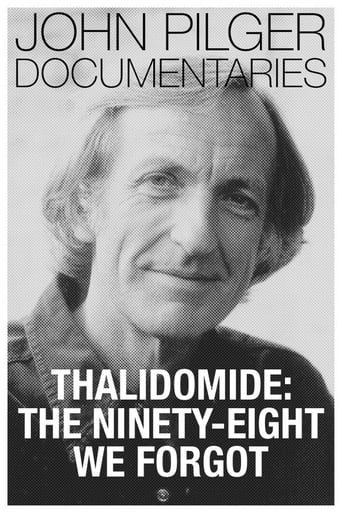
NRAllied to a four-year Daily Mirror campaign by John Pilger that helped achieve compensation for many of the forgotten and mostly working class victims of the notorious drug prescribed to women during pregnancy. Broadcast in 1974, the theme of Thalidomide: The Ninety-Eight We Forgot was to become a Pilger hallmark: injustice.
Thalidomide: The Ninety-Eight We Forgot
1974
 NR
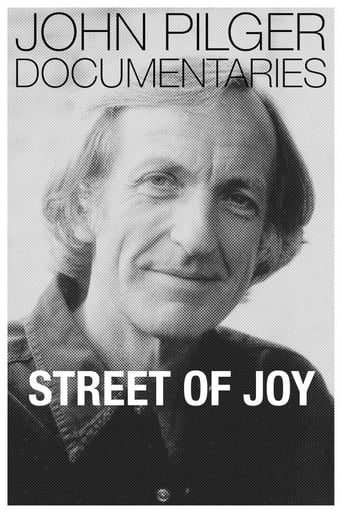
NRMadison Avenue, the centre of the American advertising industry, is the subject of the last of John Pilger’s three 1976 documentaries made in the United States. At a time of recession and nine million unemployed, $26 billion a year is still being spent on advertising.
Street of Joy
1976
 NR
NRAlabama governor George Wallace made his name as a segregationist remembered for standing “in the schoolhouse door” of the University of Alabama in 1963 in an attempt to stop the enrolment of black students. John Pilger subsequently interviewed Wallace on the campaign trail during two general elections.During the second, in 1972, Wallace was shot in an assassination attempt, leaving him paralysed and in a wheelchair. In The Most Powerful Politician in America, made in 1974, Pilger looks at the likelihood that a reinvented Wallace will run for the White House two years later, manipulating contemporary American passions and exploiting his influence in the powerful “Dixie” states controlled by the Democratic Party.
The Most Powerful Politician in America
1974
 NR
NRIn 1974, when famine hit the country, Pilger returned to Bangladesh to make An Unfashionable Tragedy. It contains harrowing scenes of starving children but also puts the horrors into a geopolitical context. This is Pilger’s first documentary to highlight his theme of expendability, whereby countries with no oil, strategic value or military power are considered unimportant to the superpowers. Bangladesh, he points out, is not one of the United States’s “client states” on a priority list to receive its surplus food.
An Unfashionable Tragedy
1975
 NR
NR1976. A candid look at the highs and lows of Australian society.
Pilger in Australia
1976
 NR
NRDocumentary from 1975 on the plight of mentally handicapped children held in appalling circumstances in the UK.
Nobody's Children
1975
 NR
NRChildren growing up in poverty is the subject of Smashing Kids, 1975. John Pilger meets the Hopwoods, of Liverpool, where hunger has become a way of life during father Harry’s unemployment as his family of five survive on £1 a day. The wallpaper in their council house is torn and there are no clothes in the couple’s wardrobe and no sheets on their bed. The family have never had a holiday and Harry tells Pilger: “It would be easier to serve time than to put up with this.”
Smashing Kids
1975
 NR
NRA Labour government imposing cutbacks on the National Health Services is the theme of Dismantling a Dream. Pilger recalls the establishment of the NHS in 1948 and Health Minister Aneurin Bevan’s declaration that the “silent suffering” of the old, young, chronically sick and handicapped had no place in a civilised society. But, in December 1976, an official report revealed that thousands of children who could be saved were dying.
Dismantling a Dream
1977
 NR
NRThe potential dangers of nuclear weapons and the planned new breed of plutonium-fuelled reactors are the subject of An Unjustifiable Risk, made in 1977. John Pilger begins by explaining that just a speck of plutonium, the main component of an atomic bomb, can cause cancer, but there is no absolutely safe way of storing, protecting or transporting it. Although the government is planning to build the first commercial nuclear power station fuelled by plutonium – a so-called fast-breeder reactor intended to solve the country’s energy problems – an independent royal commission has declared the process dangerous.
An Unjustifiable Risk
1977
 NR
NRShortly after his 1977 Daily Mirror reports on dissidents in the Soviet Union, John Pilger entered Czechoslovakia undercover to film A Faraway Country… a people of whom we know nothing, a title taking the words that British Prime Minister Neville Chamberlain used to describe Czechoslovakia dismissively in 1938 when it was invaded by the Nazis.
A Faraway Country
1977
Series credits
6.9A United States daily progressive, nonprofit, independently syndicated program of news, analysis, and opinion.
Democracy Now!
2001
7.0World in Action was Granada Television’s flagship ITV current affairs series, running from 7 Jan 1963 to 7 Dec 1998, and built a reputation for film-led investigative reporting and a forceful editorial stance. Its journalism produced major public and political repercussions—including investigations associated with miscarriages of justice such as the Birmingham Six—and it also served as a platform for landmark documentary projects, including the first broadcast of “Seven Up!” as part of the strand in 1964.
World in Action
1963
Behind the camera
6.5John Pilger reveals what the news doesn't - that the United States and the world's second economic power, China (both nuclear armed) are on the road to war. Pilger's film is a warning and an inspiring story of resistance.
The Coming War on China
2016
6.5John Pilger reveals what the news doesn't - that the United States and the world's second economic power, China (both nuclear armed) are on the road to war. Pilger's film is a warning and an inspiring story of resistance.
The Coming War on China
2016
7.5Set both in Latin America and the United States, the film explores the historic and current relationship of Washington with countries such as Venezuela, Bolivia and Chile. Pilger says that the film "...tells a universal story... analysing and revealing, through vivid testimony, the story of great power behind its venerable myths. It allows us to understand the true nature of the so-called "war on terror". According to Pilger, the film’s message is that the greed and power of empire is not invincible and that people power is always the "seed beneath the snow".
The War on Democracy
2007
7.5Set both in Latin America and the United States, the film explores the historic and current relationship of Washington with countries such as Venezuela, Bolivia and Chile. Pilger says that the film "...tells a universal story... analysing and revealing, through vivid testimony, the story of great power behind its venerable myths. It allows us to understand the true nature of the so-called "war on terror". According to Pilger, the film’s message is that the greed and power of empire is not invincible and that people power is always the "seed beneath the snow".
The War on Democracy
2007
7.8This film investigates how the media has reported war, from the First World War to the present day.
The War You Don't See
2010
7.8This film investigates how the media has reported war, from the First World War to the present day.
The War You Don't See
2010
7.8This film investigates how the media has reported war, from the First World War to the present day.
The War You Don't See
2010
7.0The sensational expose of the complicity of Britain, USA and Australia in the continuing genocide in East Timor.
Death of a Nation: The Timor Conspiracy
1994
John Pilger's documentary, The Dirty War on the NHS, "goes to the heart of the struggle for democracy today", he says. Britain's National Health Service, the NHS, was the world's first universal public health service. Designed to give millions of people "freedom from fear", the NHS today is under threat of being sold off and converted to a free market model inspired by America's disastrous health insurance system, which results in an estimated 45,000 people dying every year. Donald Trump said the NHS is "on the table" in any future trade deal with America. Filmed in Britain and the United States, this timely, compelling documentary touches us all and reveals what may be the last battle to preserve the most fundamental human right.
Health as a Luxury: When Greed Takes over Health Systems
—
6.6The myths of globalisation have been incorporated into much of our everyday language. "Thinking globally" and "the global economy" are part of a jargon that assumes we are all part of one big global village, where national borders and national identities no longer matter. But what is globalisation? And where is this global village? In 2001, John Pilger made 'The New Rulers of the World', a film exploring the impact of globalisation. It took Indonesia as the prime example, a country that the World Bank described as a 'model pupil' until its 'globalised' economy collapsed in 1998. Globalisation has not only made the world smaller. It has also made it interdependent. An investment decision made in London can spell unemployment for thousands in Indonesia, while a business decision taken in Tokyo can create thousands of new jobs for workers in north-east England.
The New Rulers of the World
2001
6.6The myths of globalisation have been incorporated into much of our everyday language. "Thinking globally" and "the global economy" are part of a jargon that assumes we are all part of one big global village, where national borders and national identities no longer matter. But what is globalisation? And where is this global village? In 2001, John Pilger made 'The New Rulers of the World', a film exploring the impact of globalisation. It took Indonesia as the prime example, a country that the World Bank described as a 'model pupil' until its 'globalised' economy collapsed in 1998. Globalisation has not only made the world smaller. It has also made it interdependent. An investment decision made in London can spell unemployment for thousands in Indonesia, while a business decision taken in Tokyo can create thousands of new jobs for workers in north-east England.
The New Rulers of the World
2001
9.0John Pilger unearths the hidden agenda behind the NHS crisis.
The Dirty War on the NHS
2019
9.0John Pilger unearths the hidden agenda behind the NHS crisis.
The Dirty War on the NHS
2019
Britain is still a world leader. Indeed it has twenty percent of a world market, second only to the United States. And this industry is considered so important by the government that it consumes almost half of all research and development funds. Strangely it produces not consumer goods that people want, but machines that hardly any of us use or want to use. Moreover, for all its’ preeminence, its’ future is uncertain and depends to a large degree on secret deals with some of the most corrupt and brutal regimes on Earth. One of the biggest manufacturing industries in Britain at the close of the century is ARMS. John Pilger and David Munro look behind the political rhetoric and discover the world of international arms dealing.
Flying the Flag, Arming the World
1994
5.7Documentary by John Pilger looks at the awful truth behind white Australia's dysfunctional relationship with Indigenous Australians
Utopia
2013
NRIn 1975, John Pilger reported the end of the Vietnam War from the American Embassy in Saigon, where the last American troops fled from the roof-top helicopter pad. He was made Journalist of the Year and International Reporter of the Year for his reporting of the Vietnam War over a period of almost ten years. In 1995’s ‘Vietnam: The Last Battle’, Pilger returns to Vietnam to review those twenty years, seeking to rescue something of Vietnamese past and present from Hollywood images which pitied the invader while overshadowing one of the most epic struggles of the 20th century. And with the embargo on the country now lifted by President Clinton, he describes Vietnam's latest battle against the economic plunder of the country by the United States and other powerful countries
Vietnam: The Last Battle
1995
Welcome to Australia is a 1999 Carlton Television documentary, written and presented by John Pilger, which was directed and produced by Alan Lowery, and charts the history of injustice endured by indigenous Australians in the context of the build-up to the Sydney 2000 Summer Olympic Games.
Welcome to Australia
1999
Welcome to Australia is a 1999 Carlton Television documentary, written and presented by John Pilger, which was directed and produced by Alan Lowery, and charts the history of injustice endured by indigenous Australians in the context of the build-up to the Sydney 2000 Summer Olympic Games.
Welcome to Australia
1999
The shameful history of persecution of the Aborigines in Australia. The secret history of Australia is a historical conspiracy of silence. Written history has long applied selectivity to what it records, largely ignoring the shameful way that the Aborigines were, and continue to be, treated. Because Aborigines had not cultivated the land they were seen by British colonists as having no proprietorial rights to the land. They had no treaty and therefore no rights under British colonial rule. Little of their resistance is recorded.
The Secret Country: The First Australians Fight Back
1986
NRWar By Other Means is a 1992 television documentary by John Pilger and David Munro concerning loans to developing countries from the World Bank which cause them to pay more interest then they ever receive in international aid ("debt as a weapon"). It also analyses Structural Adjustment Programs, which are proclaimed to enable countries to compete in the global economy, but have the effect of lowering wages which results in the transfer of wealth from poor to rich. It features Dr. Susan George, author of The Debt Boomerang.
War By Other Means
1992
8.3This tells a story literally 'hidden from history'. In the 1960s and 70s, British governments, conspiring with American officials, tricked into leaving, then expelled the entire population of the Chagos islands in the Indian Ocean. The aim was to give the principal island of this Crown Colony, Diego Garcia, to the Americans who wanted it as a major military base. Indeed, from Diego Garcia US planes have since bombed Afghanistan and Iraq. The story is told by islanders who were dumped in the slums of Mauritius and in the words of the British officials who left a 'paper trail' of what the International Criminal Court now describes as 'a crime against humanity'
Stealing a Nation
2004
8.3This tells a story literally 'hidden from history'. In the 1960s and 70s, British governments, conspiring with American officials, tricked into leaving, then expelled the entire population of the Chagos islands in the Indian Ocean. The aim was to give the principal island of this Crown Colony, Diego Garcia, to the Americans who wanted it as a major military base. Indeed, from Diego Garcia US planes have since bombed Afghanistan and Iraq. The story is told by islanders who were dumped in the slums of Mauritius and in the words of the British officials who left a 'paper trail' of what the International Criminal Court now describes as 'a crime against humanity'
Stealing a Nation
2004
7.8John Pilger vividly reveals the brutality and murderous political ambitions of the Pol Pot/Khmer Rouge totalitarian regime which bought genocide and despair to the people of Cambodia while neighboring countries, including Australia, shamefully ignored the immense human suffering and unspeakable crimes that bloodied this once beautiful country.
Year Zero: The Silent Death of Cambodia
1979
NRThis 1997 film considers the downfall of the Daily Mirror, the newspaper Pilger worked on for 23 years: a popular, intelligent tabloid once read by a quarter of the British population and which genuinely reflected its readers' concerns. Pilger asks why the qualities seen in the paper prior to the 1970s are no longer apparent, examining the contraction of the press following the Sun's symbolic move to Wapping, coverage of the Hillsborough disaster, the fate of the Daily Mirror under Robert Maxwell, and the stranglehold of Rupert Murdoch.
Breaking The Mirror: The Murdoch Effect
1997
7.4A documentary about the Israeli-Palestinian conflict that has lasted for more than 50 years. Contains some interviews with the children in this conflict.
Palestine Is Still the Issue
2003
7.3A critical documentary about the war on terror since 9-11.
Breaking the Silence: Truth and Lies in the War on Terror
2003
7.3A critical documentary about the war on terror since 9-11.
Breaking the Silence: Truth and Lies in the War on Terror
2003
NR1981. The shabby treatment of returning combat soldiers from Vietnam is investigated.
Heroes
1981
In this, the first of his 58 documentary films, John Pilger combines candid interviews and amazing frontline footage of Vietnam to portray a growing rift between the US military bureaucrats - "lifers" - and the soldiers who physically and mentally fight the war on the ground, the "grunts". By 1970, it is an internal sense of disillusionment and frustration born from this rift that is triggering the withdrawal of US forces from Vietnam.
Vietnam: The Quiet Mutiny
1970
6.0An analysis of South Africa's new, democratic regime.
Apartheid Did Not Die
1998
NR1976. A candid look at the highs and lows of Australian society.
Pilger in Australia
1976
“On the surface, everything appears serene... But Burma is also a secret country, isolated for the past 34 years since a brutal dictatorship seized power, the assault on its people all but forgotten. To tell their story, we had to go undercover. What we found was a land of fear.”
Inside Burma: Land of Fear
1996
6.01990. The plight of a people who have struggled to rebuild their stricken country.
Cambodia: The Betrayal
1990