
Writing
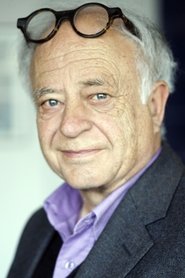
Pierre Christin
Born
1938-07-27 (88)
Place of birth
Saint-Mandé, Val-de-Marne, France
Known for
Writing
Credits
6 titles
Pierre Christin (born 27 July 1938) is a French comics creator and writer. Christin was born at Saint-Mandé in 1938. After graduating from the Sorbonne, Christin pursued graduate studies in political science at SciencesPo and became a professor of French literature at the University of Utah, Salt Lake City. His first comics story, Le Rhum du Punch, illustrated by his childhood friend Jean-Claude Mézières, was published in 1966 in Pilote magazine. Christin returned to France the following year to join the faculty of the University of Bordeaux. That year he again collaborated with Mézières to create the science-fiction series Valérian and Laureline for Pilote. The first episode was Les Mauva…
Known for
 8.5
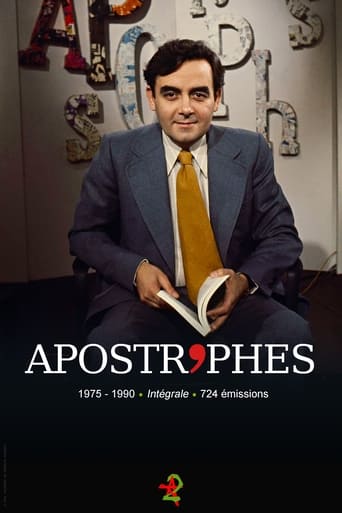
8.5Apostrophes was a live, weekly, literary, prime-time, talk show on French television created and hosted by Bernard Pivot. It ran for fifteen years (724 episodes) from January 10, 1975, to June 22, 1990, and was one of the most watched shows on French television (around 6 million regular viewers). It was broadcast on Friday nights on the channel France 2 (which was called "Antenne 2" from 1975 to 1992). The hourlong show was devoted to books, authors and literature. The format varied between one-on-one interviews with a single author and open discussions between four or five authors.
Apostrophes
1975
 6.0
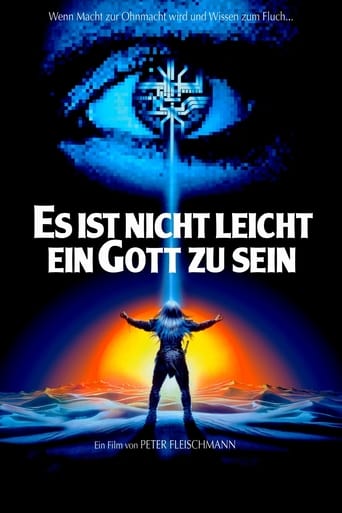
6.0Another planet in the period of medieval times. An employee of the institute of experimental history from Earth, who is send under the name of noble don Rumata of Estor as a spy with a mission to contact the local resident of the institute, arrives in the city of Arkanar. But the resident perishes under an unlucky attempt to make a palace coup, and Rumata have to take his place as the resident. Soon he meets all the horrors of the medieval society - a peasant war, palace coups, mass executions. To continue to be an indifferent watcher of all these horrors turns out to be simply impossible...
Hard to Be a God
1990
 6.3
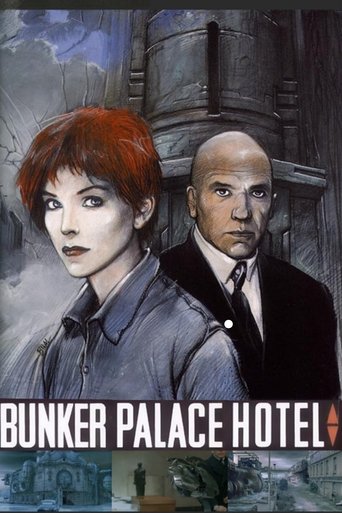
6.3In an imaginary dictature of a futuristic world, rebellion has broken out. The men in power scramble to the Bunker Palace Hotel, a bunker built long ago for just this kind of contingency. But a rebel spy sneaks in, and although her nature is very quickly suspected, she is left to observe the raving of the decadent power class, who keeps wondering what happened to their leader, who has failed to show up.
Bunker Palace Hotel
1989
 6.8
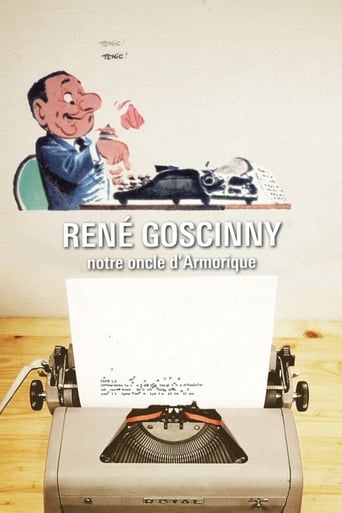
6.8The career of French comic author René Goscinny was a living blend of cultures and an expression of the great importance this artist attached to the production and dissemination of sophisticated popular culture. Goscinny left behind an extremely extensive body of work: "Asterix", "Lucky Luke", "Isnogud", "Little Nick" and many more.
René Goscinny, Our Uncle From Armorica
2017
 7.0
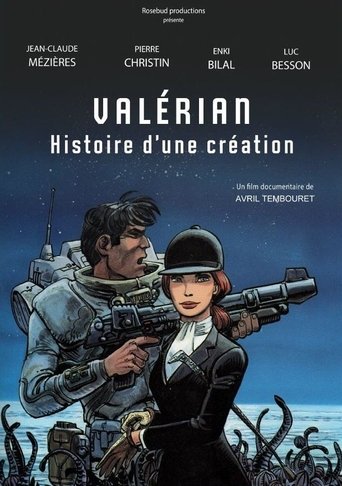
7.0No synopsis available yet.
Valérian, histoire d'une création
2017
 6.5
6.5From 1957 —the year in which the Soviets put the Sputnik 1 satellite into orbit— to 1969 —when American astronaut Neil Armstrong walked on the surface of the moon—, the beginnings of the space conquest were depicted in popular culture: cinema, television, comics and literature of the time contain numerous references to an imagined future.
Generation Sputnik
2016
Film credits
2010s · 3 titles
6.8The career of French comic author René Goscinny was a living blend of cultures and an expression of the great importance this artist attached to the production and dissemination of sophisticated popular culture. Goscinny left behind an extremely extensive body of work: "Asterix", "Lucky Luke", "Isnogud", "Little Nick" and many more.
René Goscinny, Our Uncle From Armorica
2017
7.0No synopsis available yet.
Valérian, histoire d'une création
2017
6.5From 1957 —the year in which the Soviets put the Sputnik 1 satellite into orbit— to 1969 —when American astronaut Neil Armstrong walked on the surface of the moon—, the beginnings of the space conquest were depicted in popular culture: cinema, television, comics and literature of the time contain numerous references to an imagined future.
Generation Sputnik
2016
Series credits
Behind the camera
6.0Another planet in the period of medieval times. An employee of the institute of experimental history from Earth, who is send under the name of noble don Rumata of Estor as a spy with a mission to contact the local resident of the institute, arrives in the city of Arkanar. But the resident perishes under an unlucky attempt to make a palace coup, and Rumata have to take his place as the resident. Soon he meets all the horrors of the medieval society - a peasant war, palace coups, mass executions. To continue to be an indifferent watcher of all these horrors turns out to be simply impossible...
Hard to Be a God
1990
6.3In an imaginary dictature of a futuristic world, rebellion has broken out. The men in power scramble to the Bunker Palace Hotel, a bunker built long ago for just this kind of contingency. But a rebel spy sneaks in, and although her nature is very quickly suspected, she is left to observe the raving of the decadent power class, who keeps wondering what happened to their leader, who has failed to show up.
Bunker Palace Hotel
1989