

Directing
Ana Vaz
Born
1986-01-01 (40)
Place of birth
Brasília, Distrito Federal, Brazil
Known for
Directing
Credits
32 titles
Ana Vaz (b. 1986, Brasília) is an artist and filmmaker whose films and other expanded works speculate upon the relationships between self and other, myth and history through a cosmology of signs, references and perspectives. Assemblages of found and shot materials, her films combine ethnography and speculation in exploring the frictions and fictions imprinted upon both cultivated and savage environments and their multiple inhabitants. A graduate from the Royal Melbourne Institute of Technology and Le Fresnoy – Studio National des Arts Contemporains, Ana was also a member of SPEAP (SciencesPo School of Political Arts), a project conceived and directed by Bruno Latour. Recent screenings of her…
Known for
 NR
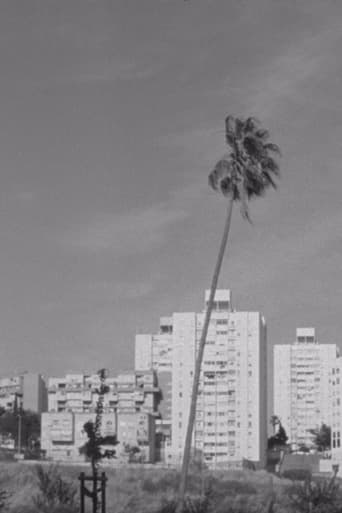
NRTaking its title from the poem by Wallace Stevens, the film is composed of a series of attempts at looking and being looked at. Beginning as a city state commission under the name and attitude of “Unschool”, the film became a kaleidoscope of the experiences, questions and wonders of a couple of high school students after a year of experiences with filmmaker Ana Vaz questioning what cinema can be. Here, the camera becomes an instrument of inquiry, a pencil, a song.
Thirteen Ways of Looking at a Blackbird
2021
 NR
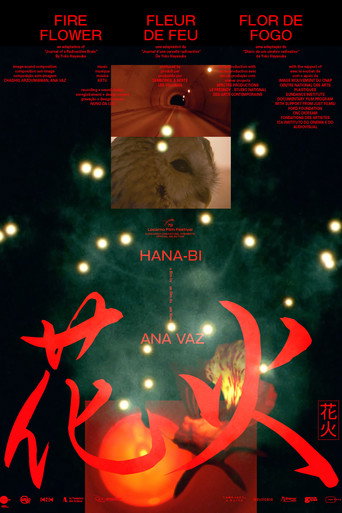
NRYoko Hayasuke's journal is set in the wake of the tsunami and nuclear disaster after the Tōhoku earthquake. Something happened yet life goes on: Tokyo continues to expand, new soil replaces irradiated land.
Fire Flower
2026
 NR
NRSacris Pulso departs from the dismemberment of another film, "Brasiliários". This film is an interpretation of Clarice Lispector's chronic "Brasília", her vision of the modernist capital, as it is the film which marks the encounter of my mother, playing Lispector, and my father, composer of the film's sound score. Through the juxtaposition of "Brasiliários" with a series of reassembled found footage, the film takes the form of a voyage of remembrance and imagination, of a past and future time dreamt between personal and collected materials, between memory and fiction.
Sacris Pulso
2008
 NR
NRNo synopsis available yet.
El Espejo
2023
 6.3
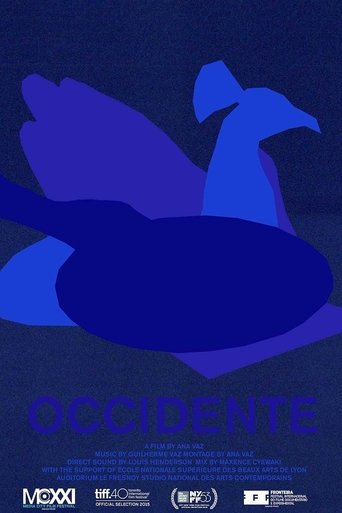
6.3In a spellbinding, textural blend of 16mm and HD video, Ana Vaz refracts the colonial history of Brazil and Portugal through objects, gestures, and contemporary customs.
Occidente
2015
 7.0
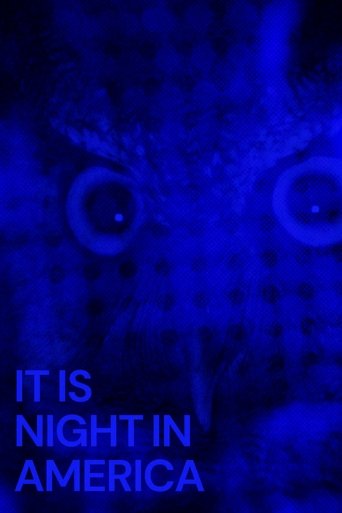
7.0In Brasília, the modern capital of Brazil, an anteater is found dead by the side of a road, a boa constrictor wanders across the suburbs, and foxes prowl vacant streets. Meanwhile, in the city zoo—home to hundreds of displaced and rescued wild species—the animals look back at us humans.
It Is Night in America
2024
Film credits
2020s · 2 titles
NRTaking its title from the poem by Wallace Stevens, the film is composed of a series of attempts at looking and being looked at. Beginning as a city state commission under the name and attitude of “Unschool”, the film became a kaleidoscope of the experiences, questions and wonders of a couple of high school students after a year of experiences with filmmaker Ana Vaz questioning what cinema can be. Here, the camera becomes an instrument of inquiry, a pencil, a song.
Thirteen Ways of Looking at a Blackbird
2021
NRYoko Hayasuke's journal is set in the wake of the tsunami and nuclear disaster after the Tōhoku earthquake. Something happened yet life goes on: Tokyo continues to expand, new soil replaces irradiated land.
Fire Flower
2026
2010s · 2 titles
 NR
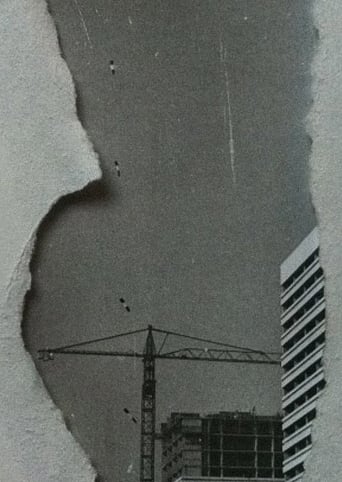
NRA meditation and a reverie upon a city at once real and imagined. Conceptualized as a documentary on the ZUP buildings in France, the film has instead found form as poetic & expansive confrontation with the psychogeography of a contemporary Europe in crisis. A requiem for a city dreamt between its past and present.
Entre Temps
2012
 NR
NRBased on Gertrude Stein’s eponymously named screenplay, written in 1929 as European fascism was building momentum. Beatrice Gibson’s adaptation, set almost a century later in contemporary Paris, deploys Stein’s script as a talismanic guide through a contemporary moment of comparable social and political unrest. An original soundtrack, written especially for the film by British composer Laurence Crane, responds to the repetition, duplication and duality at play in Stein’s script. Both a fictional thriller and an act of collective representation, Deux Soeurs proposes empathy and friendship as means to reckon with an increasingly turbulent present.
Two Sisters Who Are Not Sisters
2019
Behind the camera
NRTaking its title from the poem by Wallace Stevens, the film is composed of a series of attempts at looking and being looked at. Beginning as a city state commission under the name and attitude of “Unschool”, the film became a kaleidoscope of the experiences, questions and wonders of a couple of high school students after a year of experiences with filmmaker Ana Vaz questioning what cinema can be. Here, the camera becomes an instrument of inquiry, a pencil, a song.
Thirteen Ways of Looking at a Blackbird
2021
NRYoko Hayasuke's journal is set in the wake of the tsunami and nuclear disaster after the Tōhoku earthquake. Something happened yet life goes on: Tokyo continues to expand, new soil replaces irradiated land.
Fire Flower
2026
NRYoko Hayasuke's journal is set in the wake of the tsunami and nuclear disaster after the Tōhoku earthquake. Something happened yet life goes on: Tokyo continues to expand, new soil replaces irradiated land.
Fire Flower
2026
NRSacris Pulso departs from the dismemberment of another film, "Brasiliários". This film is an interpretation of Clarice Lispector's chronic "Brasília", her vision of the modernist capital, as it is the film which marks the encounter of my mother, playing Lispector, and my father, composer of the film's sound score. Through the juxtaposition of "Brasiliários" with a series of reassembled found footage, the film takes the form of a voyage of remembrance and imagination, of a past and future time dreamt between personal and collected materials, between memory and fiction.
Sacris Pulso
2008
NRNo synopsis available yet.
El Espejo
2023
6.3In a spellbinding, textural blend of 16mm and HD video, Ana Vaz refracts the colonial history of Brazil and Portugal through objects, gestures, and contemporary customs.
Occidente
2015
7.0In Brasília, the modern capital of Brazil, an anteater is found dead by the side of a road, a boa constrictor wanders across the suburbs, and foxes prowl vacant streets. Meanwhile, in the city zoo—home to hundreds of displaced and rescued wild species—the animals look back at us humans.
It Is Night in America
2024
NRA meditation and a reverie upon a city at once real and imagined. Conceptualized as a documentary on the ZUP buildings in France, the film has instead found form as poetic & expansive confrontation with the psychogeography of a contemporary Europe in crisis. A requiem for a city dreamt between its past and present.
Entre Temps
2012
NRA meditation and a reverie upon a city at once real and imagined. Conceptualized as a documentary on the ZUP buildings in France, the film has instead found form as poetic & expansive confrontation with the psychogeography of a contemporary Europe in crisis. A requiem for a city dreamt between its past and present.
Entre Temps
2012
 5.0
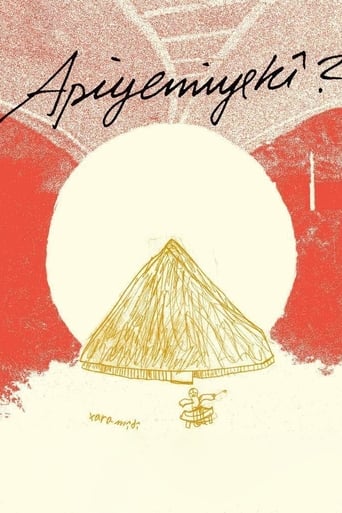
5.0Apiyemiyekî? addresses the genocide of the Waimiri-Atroari people in 1970s, when during the Brazilian dictatorship indigenous lands in the mid-west were invaded for the construction of the national road BR-174 and the installation of a mining company. Illustrations about the period, created by the indigenous population, including children, reveal a traumatic history, referring us to the present day.
Apiyemiyekî?
2020
5.0Apiyemiyekî? addresses the genocide of the Waimiri-Atroari people in 1970s, when during the Brazilian dictatorship indigenous lands in the mid-west were invaded for the construction of the national road BR-174 and the installation of a mining company. Illustrations about the period, created by the indigenous population, including children, reveal a traumatic history, referring us to the present day.
Apiyemiyekî?
2020
 NR
NRPseudosphinx is the scientific name of the fire-caterpillars soon to become butterfies, or as they're commonly (and auspiciously) called: witches. These butterfy-witches are associated with several myths. Pseudosphinx is at the same time sphinx, meaning inhuman chtonic monstrosity that spells charades; and pseudo, as in artificial, insincere, deceptive, unreal, illusive, mimetic. Pseudosphynx keeps its meaning veiled, like a secret kept by those who save in their retinas the haptic impression of its fight. [Punto de Vista]
PSEUDOSPHYNX
2020
 NR
NRMade for Somewhere From Here to Heaven, exhibition at Askuna Zentroa, Bilbao.
The Tree
2022
 NR
NR"Há terra! is an encounter, a hunt, a diachronic tale of looking and becoming. As in a game, as in a chase, the film errs between character and land, land and character, predator and prey."
There Is Land!
2025
NR"Há terra! is an encounter, a hunt, a diachronic tale of looking and becoming. As in a game, as in a chase, the film errs between character and land, land and character, predator and prey."
There Is Land!
2025
 NR
NRFor Dreaming the Dark: hands that see, eyes that touch, Ana Vaz invited artists and filmmakers whose work trust cinema’s capacity to transform relationships between the body and the camera to propose works that will engage with both perception and embodiment. Could cinema be an art of embodiment? By what rituals and actions could vision become tactile?
Dreaming In The Dark
2018
 NR
NRFields of newborn flowers, small gatherings of surviving bees, resistant plant species and new types of eggs lay upon our shore, engaging us to dig and search for the meaning of such unexpected life...
Atomic Garden
2018
No synopsis available yet.
Meteoro
2023
 NR
NRDefying gravity, a game of levitation becomes at once the possibility of magic; or a translation of an irrepressible desire for mastery.
Amazing Fantasy
2018
 NR
NRThe ecologic crisis is a political, economic and social crisis. It is also cinematographic, as cinema coincides historically and in a critical and descriptive way with the development of the Anthropocene. A Film, Reclaimed is a conversation, an essay that reads the terrestrial crisis under the influence and with the help of the beautiful and terrible films which have accompanied it.
A Film, Reclaimed
2015
NRThe ecologic crisis is a political, economic and social crisis. It is also cinematographic, as cinema coincides historically and in a critical and descriptive way with the development of the Anthropocene. A Film, Reclaimed is a conversation, an essay that reads the terrestrial crisis under the influence and with the help of the beautiful and terrible films which have accompanied it.
A Film, Reclaimed
2015
 NR
NRIt is said that in the year of 1492, the first European ship led by Christopher Columbus, disembarked on the coast of Samaná, present-day Dominican Republic, and was received by a rain of arrows carefully plotted by the Caribbean Taíno. Presently, a saline lake named after the Taíno chief Enriquillo witnesses profound eco-systemic changes leading to species migration, forced evacuation and an expanding choral desert revealing the lake’s geologic past. Taking the camera itself as an arrow, a foreign body, Amérika: Bay of Arrows looks for ways in which to animate, to awaken, to make vibrate again this gesture in the present - arrows against a perpetual “falling sky”.
Amérika: Bahia de las Flechas
2016
 5.4
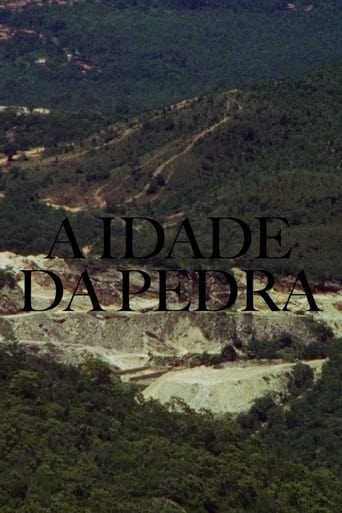
5.4A voyage into the far west of Brazil leads us to a monumental structure - petrified at the centre of the savannah. Inspired by the epic construction of the city of Brasília, the film uses this history to imagine it otherwise. "I look at Brasília the way I look at Rome : Brasília began with a final simplification of ruins". Through the geological traces that lead us to this fictive monument, the film unearths a history of exploration, prophecy and myth.
The Age of Stone
2013
5.4A voyage into the far west of Brazil leads us to a monumental structure - petrified at the centre of the savannah. Inspired by the epic construction of the city of Brasília, the film uses this history to imagine it otherwise. "I look at Brasília the way I look at Rome : Brasília began with a final simplification of ruins". Through the geological traces that lead us to this fictive monument, the film unearths a history of exploration, prophecy and myth.
The Age of Stone
2013
 NR
NR“Look closely at the mountains!”: the phrase was coined by artist Manfredo de Souzanetto during Brazil’s years of dictatorhsip. Mining activities were destroying the environment in the state of Minas Gerais in the south west of the country. Through editing, Ana Vaz draws parallels between this region and the very distant Nord-Pas-de-Calais in northern France, also marked by over three centuries of mining. On one side, eroded mountains plague its inhabitants with deadly landslides. Hollow and gutted, these mountains become the receptacles of a ghostly memory. On the other side, in France, mining waste stacks become mountains and reservoirs of biodiversity, where the frontier between nature and technology is now indiscernible.
Look Closely at the Mountains
2025
NR“Look closely at the mountains!”: the phrase was coined by artist Manfredo de Souzanetto during Brazil’s years of dictatorhsip. Mining activities were destroying the environment in the state of Minas Gerais in the south west of the country. Through editing, Ana Vaz draws parallels between this region and the very distant Nord-Pas-de-Calais in northern France, also marked by over three centuries of mining. On one side, eroded mountains plague its inhabitants with deadly landslides. Hollow and gutted, these mountains become the receptacles of a ghostly memory. On the other side, in France, mining waste stacks become mountains and reservoirs of biodiversity, where the frontier between nature and technology is now indiscernible.
Look Closely at the Mountains
2025
 NR
NRA postcard, Saint-Ouen flea markets.
Les Mains, Négatives
2012