
Directing
Roberto Omegna
Born — Died
1876-05-28 — 1948-11-09
Place of birth
Turin, Italy
Known for
Directing
Credits
15 titles
Roberto Omegna, (born May 28, 1876, Turin, Italy—died Nov. 9, 1948, Turin), motion picture cameraman, director, and producer ofdocumentaries, one of the pioneers of the Italian cinema. His thorough research and filmmaking skills place him in the forefront of early documentarians. After receiving degrees in physics and mathematics, Omegna attended the Bassi and Ristori school of acting in Turin. In 1901 he and a partner opened the Edison Cinema in Turin, where he began to make short travel documentaries to both show at his theatre and sell to other exhibitors. He helped found the Ambrosio film studio in 1905 and went on to produce almost 100 films during his 18-year tenure with the company, …
Known for
At Megara, near Carthage (204 B. C.), the slave merchant Sahabalcar lusts after his roman slave Licia, who loves Terentius instead. Threatening her with sacrifice to the man-eating god Moloch, he is still refused. As the rite begins, Terentius rescues her, unleashing lions on the pursuing crowd, and the two lovers escape by boat toward freedom and happiness.
The Slave of Carthage
1910
Signed by neurology professor Camillo Negro and cinematographer Roberto Omegna for the Società Anonima Ambrosio of Turin, Neuropathology is one of the first and most significant scientific documentaries in the history of cinema. Premiering in Italy on February 17, 1908, this film meticulously records a series of clinical cases of patients with various pathologies of the nervous system observed at the Cottolengo Hospital and neuropathological clinics in Turin between 1906 and 1908. The material includes studies of convulsions, spasms, ocular paralysis, ataxia, epileptic seizures, and other neurological disorders, presented with a didactic and scientific objective for physicians and neurology students.
Neuropathology
1908
No synopsis available yet.
Un pioniere del cinema scientifico. Roberto Omegna 1876 - 1948
1974
 4.9
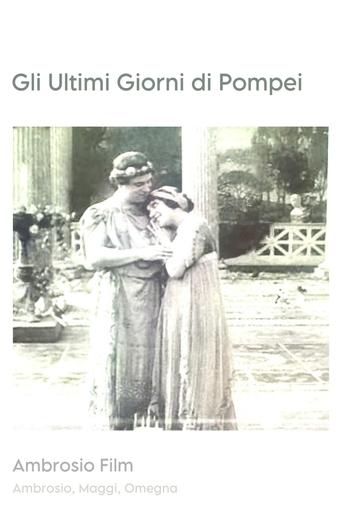
Pompeii 79AD, mere days before the Vesuvian eruption. Glaucus and Jone are in love with each other. Arbaces, the Egyptian High Priest, is determined to conquer Jone. Glaucus purchases Nydia, the blind and long-suffering slave. Nydia falls in love with Glaucus and asks Arbaces for his help. He gives her a potion to make Glaucus fall in love with her-- In fact, a poison which will cause violent insanity.
The Last Days of Pompeii
1908
No synopsis available yet.
L’occhio
—
 6.4
No synopsis available yet.
The Life of the Butterfly
1911
Film credits
1970s · 1 titles
Behind the camera
At Megara, near Carthage (204 B. C.), the slave merchant Sahabalcar lusts after his roman slave Licia, who loves Terentius instead. Threatening her with sacrifice to the man-eating god Moloch, he is still refused. As the rite begins, Terentius rescues her, unleashing lions on the pursuing crowd, and the two lovers escape by boat toward freedom and happiness.
The Slave of Carthage
1910
Signed by neurology professor Camillo Negro and cinematographer Roberto Omegna for the Società Anonima Ambrosio of Turin, Neuropathology is one of the first and most significant scientific documentaries in the history of cinema. Premiering in Italy on February 17, 1908, this film meticulously records a series of clinical cases of patients with various pathologies of the nervous system observed at the Cottolengo Hospital and neuropathological clinics in Turin between 1906 and 1908. The material includes studies of convulsions, spasms, ocular paralysis, ataxia, epileptic seizures, and other neurological disorders, presented with a didactic and scientific objective for physicians and neurology students.
Neuropathology
1908
4.9Pompeii 79AD, mere days before the Vesuvian eruption. Glaucus and Jone are in love with each other. Arbaces, the Egyptian High Priest, is determined to conquer Jone. Glaucus purchases Nydia, the blind and long-suffering slave. Nydia falls in love with Glaucus and asks Arbaces for his help. He gives her a potion to make Glaucus fall in love with her-- In fact, a poison which will cause violent insanity.
The Last Days of Pompeii
1908
No synopsis available yet.
L’occhio
—
6.4No synopsis available yet.
The Life of the Butterfly
1911
 5.0
Maude, engaged to a doctor, was adopted years earlier by the president of an anti-alcoholic league. A Gypsy violinist falls in love with her, who, after having kidnapped and immobilized the girl's boyfriend, takes her to a villa and, to try to make her give in to his coaxing, has some gypsies offer her champagne.
Champagne caprice
1919
Time lapse documentary about the lifecycle of flowers.
I Fiori
1933
 9.0
No synopsis available yet.
Gloria
1934
No synopsis available yet.
Morfologia del Fiore
1942
Short documentary about crickets.
The Life of the Field Cricket
1926
Directed by Roberto Omegna.
Abyssinian Marriage
1909
A medical documentary for students.
Dr. Isnardi: Amputation
1907
 NR
No synopsis available yet.
Vita della pianta
—