
Directing
Franco Brocani
Born — Died
1938-09-10 — 2023-09-14
Place of birth
Murazzano, Piedmont, Italy
Known for
Directing
Credits
39 titles
Franco Brocani was an Italian film director, screenwriter, and actor. He was known for his avant-garde and experimental approach to cinema. Brocani directed films such as Necropolis (1970), which explored themes of death and the supernatural. His work often challenged traditional narrative structures, contributing to the experimental film movement in Italy.
Known for
 6.0
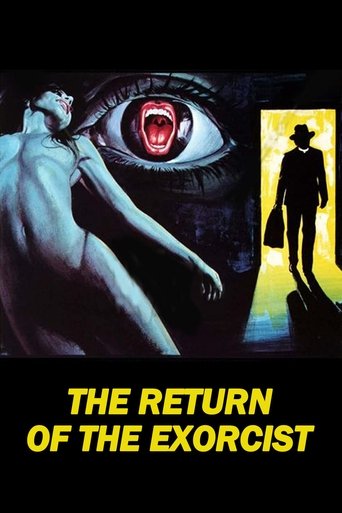
6.0An archaeology student photographs a mysterious naked woman by a waterfall, unaware that she is a female demon called Haggia, who soon takes possession of him via a cursed amulet.
The Return of the Exorcist
1975
 3.3
3.3Freely adapted from a story by Marcel Schwob in 'Screw imaginary' and deeply focused on the thought of Georges Bataille, the film wants to give substance to Clodia tragic affair, the Roman noblewoman loved by Catullo and made him immortal in his ways, with the Lesbia pseudonym.
Clodia - Fragmenta
1982
 6.2
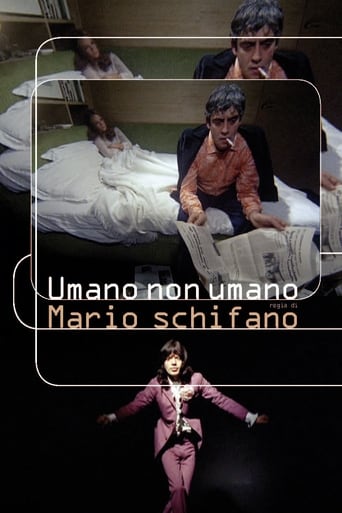
6.2Artists and poets meet in a dreamlike space between walks and performances.
Umano Non Umano
1969
 4.8
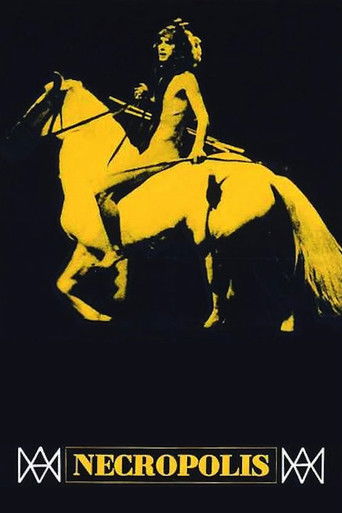
4.8Frankenstein's monster gropes towards the awareness that his mind is a universe; Attila, naked on a white horse, liberates his people from their ignominy; the ultra-caustic Viva bemoans the frustrations of married life and drifts into the elegiac persona of the Bloody Countess Bathory; Louis Waldon is a hip American tourist searching for the (missing) Mona Lisa.
Necropolis
1970
 4.4
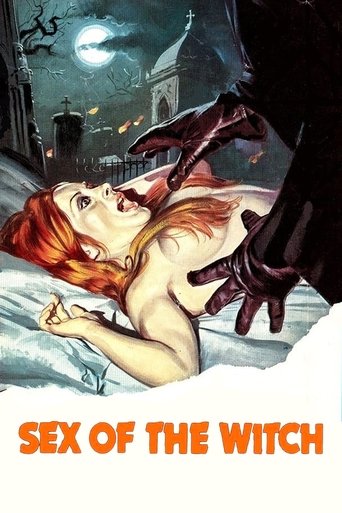
4.4The wealthy patriarch of the Hilton family has just died, and his heirs have gathered at the family castle to collect on their inheritances. However, it's not long before a black clad killer strikes, bumping off several members of the Hilton clan, in gruesome fashion. As the police begin their investigation, long buried secrets are revealed, including curses and connections to black magic.
Sex of the Witch
1973
 6.8
6.8The documentary focuses on Marco Ferreri and shows an unconventional man, extreme, provocative in ways, always a step ahead in its work, and often considered a visionary and experimental. The documentary honors the memory of a filmmaker too soon forgot that left an indelible mark in the seventh art.
Marco Ferreri: The Director Who Came from the Future
2007
Film credits
1960s · 2 titles
6.2Artists and poets meet in a dreamlike space between walks and performances.
Umano Non Umano
1969
 8.0
8.0Trapianto heralds the end of utopia, the death of that underground, but is also the best prologue in Necropolis, which is not by chance found alive. It 's a film that establishes the passage of rolling between two friends, and Brocani Schifano, shared the same passions, and from living the cinema as a challenge urgent and vital, suspended between dream and action.
Transplantation, Consumption and Death of Franco Brocani
1969
Behind the camera
6.0An archaeology student photographs a mysterious naked woman by a waterfall, unaware that she is a female demon called Haggia, who soon takes possession of him via a cursed amulet.
The Return of the Exorcist
1975
3.3Freely adapted from a story by Marcel Schwob in 'Screw imaginary' and deeply focused on the thought of Georges Bataille, the film wants to give substance to Clodia tragic affair, the Roman noblewoman loved by Catullo and made him immortal in his ways, with the Lesbia pseudonym.
Clodia - Fragmenta
1982
3.3Freely adapted from a story by Marcel Schwob in 'Screw imaginary' and deeply focused on the thought of Georges Bataille, the film wants to give substance to Clodia tragic affair, the Roman noblewoman loved by Catullo and made him immortal in his ways, with the Lesbia pseudonym.
Clodia - Fragmenta
1982
4.8Frankenstein's monster gropes towards the awareness that his mind is a universe; Attila, naked on a white horse, liberates his people from their ignominy; the ultra-caustic Viva bemoans the frustrations of married life and drifts into the elegiac persona of the Bloody Countess Bathory; Louis Waldon is a hip American tourist searching for the (missing) Mona Lisa.
Necropolis
1970
4.8Frankenstein's monster gropes towards the awareness that his mind is a universe; Attila, naked on a white horse, liberates his people from their ignominy; the ultra-caustic Viva bemoans the frustrations of married life and drifts into the elegiac persona of the Bloody Countess Bathory; Louis Waldon is a hip American tourist searching for the (missing) Mona Lisa.
Necropolis
1970
4.4The wealthy patriarch of the Hilton family has just died, and his heirs have gathered at the family castle to collect on their inheritances. However, it's not long before a black clad killer strikes, bumping off several members of the Hilton clan, in gruesome fashion. As the police begin their investigation, long buried secrets are revealed, including curses and connections to black magic.
Sex of the Witch
1973
The documentary, black and white, has "space" as theme, both as an abstract category and as a scope and "scene" of human relations.
By Now My Return to Knossos Is Certain
1967
 NR
NRExperimental short by Franco Brocani, Claudio Capotondi and Luca Maria Patella.
Screck!
1966
 4.3
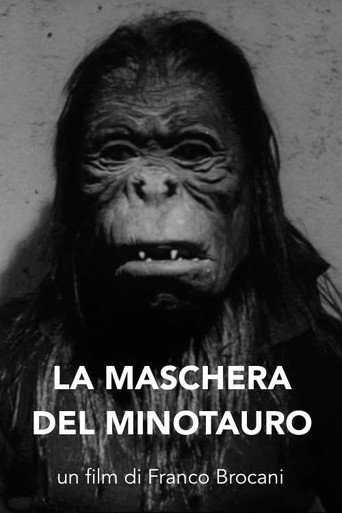
4.3A man wearing a mask of King Kong walks through a maze unrolling a ball of thread. Franco Brocani renewes his interest in the dens of perdition providing a free vision of the classic myth of the Minotaur. Shot in an art gallery in Rome and adapted from a story by Jorge L. Borges.
The Minotaur Mask
1971
8.0Trapianto heralds the end of utopia, the death of that underground, but is also the best prologue in Necropolis, which is not by chance found alive. It 's a film that establishes the passage of rolling between two friends, and Brocani Schifano, shared the same passions, and from living the cinema as a challenge urgent and vital, suspended between dream and action.
Transplantation, Consumption and Death of Franco Brocani
1969
 4.8
4.8Set in 1997, this short sci-fi film narrates the story of a normal world that slowly degenerates into an amoral and lifeless place.
Signal from a Dying Planet
1972
 NR
NRAn essay on contemporary Italian poetry with the works of Dario Bellezza and Amelia Rosselli.
On Poetry
1984
 1.0
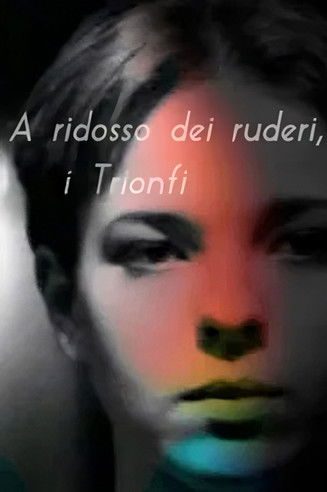
1.0History as immersion and dispersion in the fragments of the past, a visionary journey accompanied by the voice of Patty Pravo. Presented at the Taormina Festival '97.
Triumph and Ruins
1997
1.0History as immersion and dispersion in the fragments of the past, a visionary journey accompanied by the voice of Patty Pravo. Presented at the Taormina Festival '97.
Triumph and Ruins
1997
 NR
NRNo synopsis available yet.
L'Inventore
1970
Contemporary to La città sublime, also edited and photographed by Ceccarelli and Rubini for Corona, it is a continuation of the investigation into Rome in the mid-1970s from a particular point of view.
S.P.Q.R.
1975
Short film by Franco Brocani.
Chi mi pettina?
1967
No synopsis available yet.
The Hippogriff
1974
 7.7
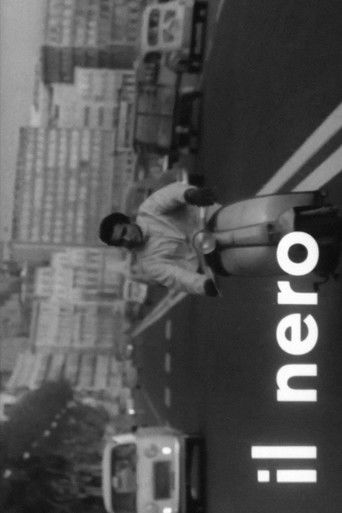
7.7The events in Naples of a few ‘figli della Madonna’ (Madonna’s sons), young people born between 1945 and 1946 from the relationship between the local women and Afro-American soldiers.
Il nero
1966
“While you are alive, act like a dead man, and everything will be fine. Silence is the mother tongue.”
Click!
1971
 NR
NRNo synopsis available yet.
Il racconto del naufrago
1971
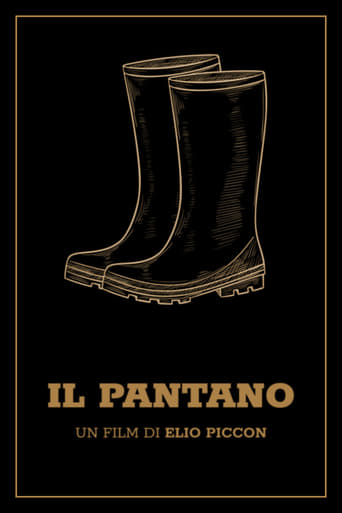 NR
NRNo synopsis available yet.
Il pantano
1967
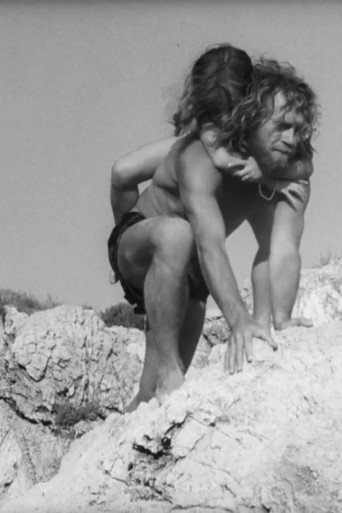 NR
NRNo synopsis available yet.
Il Centauro
1971
 NR
NRNo synopsis available yet.
Homage to William Blake
1972
The documentary describes the work of goldsmiths in Valenza, of cabinet-makers in Canelli, of farmers in the provinces of Alessandria and Asti where such activities are still the backbone of the local econimic structure. It analyzes also the politics of monopoly concentration pursued by the big industrial forces and its effects such as the impoverishment of the countryside, the decline of traditional activities based on craftmanship - a heavy toll on the future of the young.
A settentrione
1967
 NR
NRNo synopsis available yet.
Insaziabilità
1971
A monkey paces inside a cage: visually, the short film confines itself to this stark simplicity, yet its message resonates deeply. It draws on whispered excerpts from Goffman’s seminal Asylums on total institutions, paired with a poignant citation from Poe. In the spirit of post-'68 thought, closed and segregated spaces take center stage in the social and cultural discourse, and this film embodies that reflection with radical intensity.
The Cage-Shaped Mirror
1970
 NR
NRAn art documentary portraying Stanley William Hayter – considered the inventor of modern incision – at work in his Paris studio. At the Hayter’s Atelier 17 artists have studied, since the early ’30s, including Brauner, Calder, Max Ernst, Giacometti, Kandinsky, Miro, Matta, Picasso, and Chagall.
Due o tre cose: a proposito di W. Hayter
1968
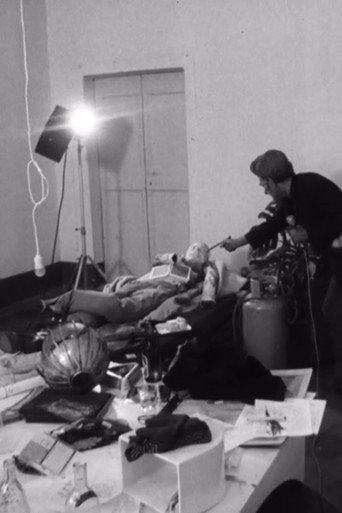 NR
NRNo synopsis available yet.
Considerazioni sul romanzo e sulla pittura
1970
No synopsis available yet.
Schifanosaurus Rex
2009
An inexorable journey through mental and visionary archaeology. Not real encounters, but ghostly iridescence, enticements in a game of reflections.
Le opere e i giorni
2006
Reflections on the contemporary city, through quotations from José Ortega y Gasset, Oswald Spengler and Frank Lloyd Wright and images of Rome (in particular the EUR district, construction sites, walls covered with graffiti and torn posters, the Forum, the Altar of the Fatherland).
La città sublime
1975
 NR
NRNo synopsis available yet.
Lexiomatia
1971
No synopsis available yet.
Medicina, i misteri
2002
No synopsis available yet.
Umano, decifrabile perduto
1972
Experimental short film.
Night, Proud Sister
1971