
Acting
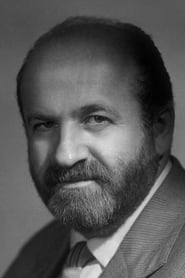
Felix le Breux
Born — Died
1918-04-05 — 1974-02-04
Place of birth
Plzen/Pilsen, Bohemia, Austria-Hungary [now Plzen, Czech Republic]
Known for
Acting
Credits
64 titles
Known for
 7.2
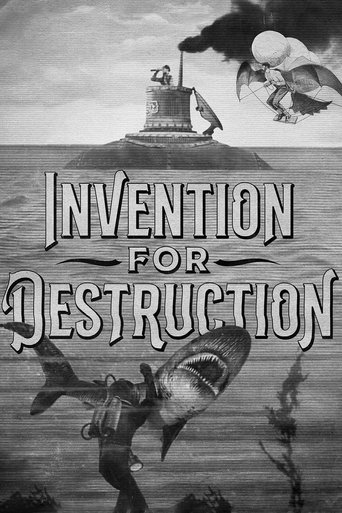
7.2As the world progresses into the industrial age, a professor studying the "nature of pure matter" is spirited away by a would-be dictator and connived into building a super-bomb, as a young reporter and a girl rescued from the sea attempt to warn him of their mutual kidnapper's intentions to dominate the world with a new and more-deadly-yet weapon.
The Fabulous World of Jules Verne
1958
 7.5
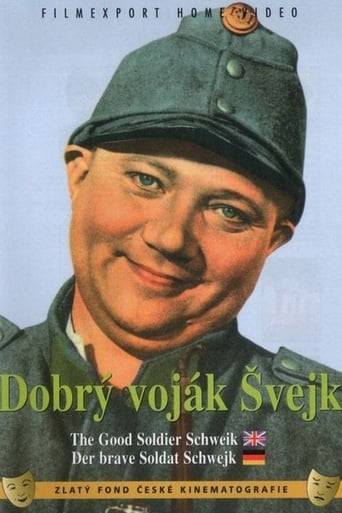
7.5Good-natured and garrulous, Schweik becomes the Austrian army's most loyal Czech soldier when he is called up on the outbreak of World War I -- although his bumbling attempts to get to the front serve only to prevent him from reaching it. Playing cards and getting drunk, he uses all his cunning and genial subterfuge to deal with the police, clergy, and officers who chivy him toward battle.
The Good Soldier Švejk
1957
No synopsis available yet.
Alexandr Dumas starší
1970
No synopsis available yet.
Rozsudek
1971
No synopsis available yet.
Případy komisaře Mejzlíka
1965
No synopsis available yet.
Živé zkameněliny
1951
Film credits
1970s · 3 titles

1960s · 12 titles
 7.5
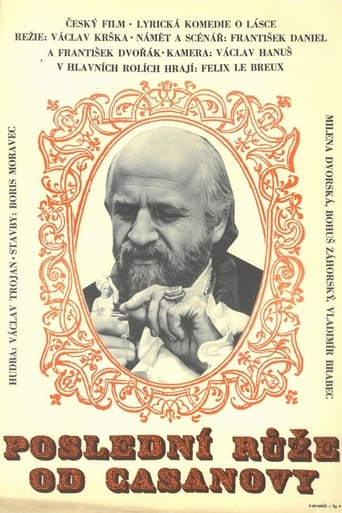
7.5The story takes place at the time when Giacomo Casanova, probably the most famous conqueror of women, held the position of librarian at the Valdštejn castle in Duchcov. He was then a rather bored and grumpy old man who enjoyed only writing his memoirs and then a daily game of cards with the Count. But all that changed when Wallenstein's young nephew František Adam arrived at the chateau with his charming wife Valeria. She wanted to see the famous seducer with her own eyes. However, she was somewhat disappointed by the reality, as well as by the seducer's outdated views on love.
Poslední růže od Casanovy
1966
Two friends are living in Verona, Valentino and Proteo. Proteo professes his love to the charming Julia, who, after an initial misunderstanding, reciprocates his feelings. Valentino mocks his infatuation, but not for long. He leaves for Milan, where he falls in love with Silvia, the duke's daughter.
Dva šlechtici z Verony
1966
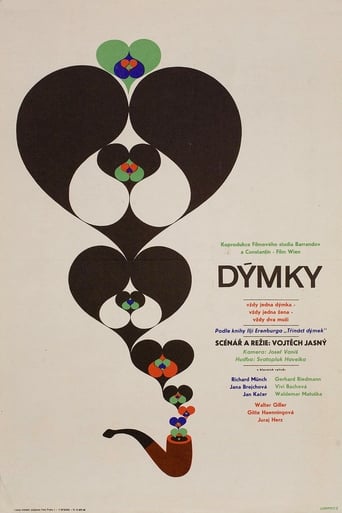 6.0
6.0This three-part Austrian/Czech comedy stretches the boundaries of what is considered to be humorous. Part one finds a silent film actor upset because of a rival actor's attention to the former's wife. When he kills his rival, it is only when he is strapped to the electric chair that he realizes that this is his last live scene. The second episode has the wife of an elderly British nobleman having an affair with the young gamekeeper of their estate. Part three finds a peasant woman taking a lover when her husband goes off to fight the war.
The Pipes
1966
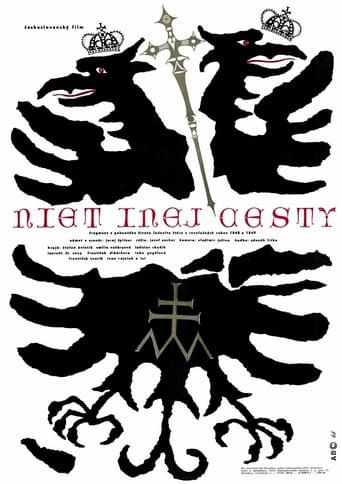 7.0
7.0A biographical film about the Slovak nationalist Ľudovít Štúr. It captures the revolutionary events of 1848 in Austria-Hungary, when Štúr, as a member of the Diet, led the fight for the national rights of the Slovak people.
Niet inej cesty
1968
A group of wealthy American Jewish businessmen have been captured by the SS and are told that they are to be traded to the American army for several SS officers. However, these hostages are being required to pay bribes for their "transportation costs." In order to ensure that the businessmen will be more cooperative in paying up, a beautiful female singer is placed in their midst as a bargaining chip. The group of hostages are then placed on a train which is supposed to take them to the ship that will deliver them to freedom, but a series of "mishaps" delays their escape.
A Prayer for Katerina Horovitzova
1965
No synopsis available yet.
Záhady aneb S Karlem Čapkem v soudní síni
1960
Television lighting engineer Honza borrows an apartment from successful architect Zdeněk so that he can meet his love Marta alone. The architect pretends that Honza's request is convenient for him, because he has a program in the early evening anyway. However, the opposite is true, the architect spends the most important time of the year in a pub. He is successful and carefree only on the surface, but in reality he is unhappy, his marriage has ended in bankruptcy. On the other hand, Honza and Marta are happy, although they lack their own apartment to be happy. They have their love...
Romance štědrovečerní
1963
 NR
NROn her fifteenth birthday, when mermaids are allowed to sail above the sea for the first time, the little mermaid saves the life of a handsome prince. She falls in love with him so much that she is willing to sacrifice anything for his love - even her immortality or her voice. She is not afraid of pain and, with the help of a sea witch, transforms into a human being. She then meets her prince on the seashore...
Malá mořská víla
1966
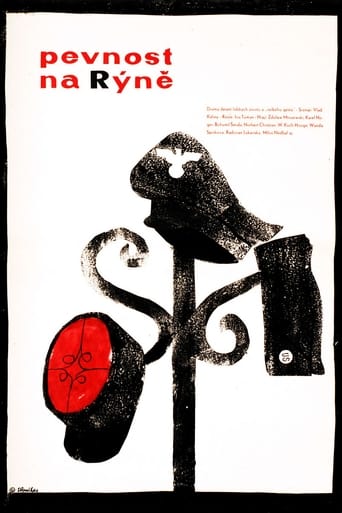 8.0
8.0During the Second World War, an old fortress is transformed into a detention camp for arrested allied generals who the Germans provide with every possible comfort. In the nearby garrison camp, however, hundreds of captured private soldiers try to survive hunger and cold.
Fortress on the Rhine
1962
No synopsis available yet.
Komediantská historie
1969
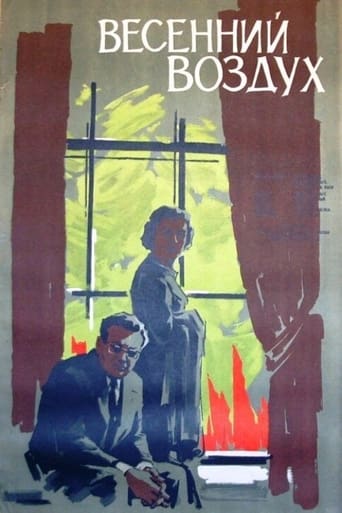 8.5
8.5People in Czechoslovakia perceive the events of February 1948 differently. This movie tells how they behave depending on their views, beliefs and character.
Jarní povětří
1961
No synopsis available yet.
Lékař v rozpacích
1966
1950s · 30 titles
7.2As the world progresses into the industrial age, a professor studying the "nature of pure matter" is spirited away by a would-be dictator and connived into building a super-bomb, as a young reporter and a girl rescued from the sea attempt to warn him of their mutual kidnapper's intentions to dominate the world with a new and more-deadly-yet weapon.
The Fabulous World of Jules Verne
1958
7.5Good-natured and garrulous, Schweik becomes the Austrian army's most loyal Czech soldier when he is called up on the outbreak of World War I -- although his bumbling attempts to get to the front serve only to prevent him from reaching it. Playing cards and getting drunk, he uses all his cunning and genial subterfuge to deal with the police, clergy, and officers who chivy him toward battle.
The Good Soldier Švejk
1957
No synopsis available yet.
Živé zkameněliny
1951
 7.0
7.0The Emperor's mismanagement of his country is provoking some in his court to plot to overthrow him. He feels successful, at least, when he discovers the legendary Golem, which he believes can protect him and even cure his imaginary illnesses but, when he disappears while on a bender, his kindly baker, who looks just like him, is mistaken for him, and begins to put things in order. However, the conspirators, not to be outdone, determine to bring the Golem back to life to do their bidding.
The Emperor and the Golem
1951
No synopsis available yet.
Kůrovec
1951
This two-partfilm was made in connection with the visit of Soviet collective farmers to agricultural cooperative in Mělnické Vtelno. They come to share with local people the experiences they have gained in cultivating crops and raising livestock. Among others, the visitors include Praskovya Andreyevna Malininova, who demonstrates a three-stage udder massage for increasing milk yields in cows.
Beloved Guests
1951
No synopsis available yet.
Žampiony
1952
No synopsis available yet.
Něco se tu změnilo
1955
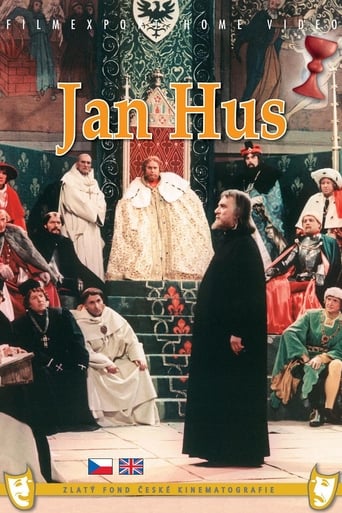 6.3
6.3The first part of the "Hussite Revolutionary Trilogy", completed with Jan Žižka (1955) and Proti všem (Against All Odds, 1957). The film captures the period from May 1412 to the summer of 1415, a turbulent time in the Czech Kingdom, during which there were protests in Prague against the sale of "omnipotent indulgences" whose sale throughout the kingdom was announced by Pope John XXIII. The ideological leader of this movement is the preacher Master Jan Hus, whose words, calling for the elimination of church abuses, are listened to in the Bethlehem Chapel by thousands of ordinary Praguers, Czech lords and Queen Sophie, wife of the Czech King Wenceslas IV.
Jan Hus
1955
No synopsis available yet.
Volavky na Velkém Tisém
1951
 5.0
5.0The year is 1918. Toník returns home from the front. In Kladno, where he arrives, things are seething with discontent. The Social Democrats are in government, but nothing has changed. Socialization has not been implemented, there is hunger and food is still being skimped on. The first news about a socialist state arrives from Russia. On May 1st, the workers' Kladno manifests its loyalty to the ideals of the Great October Socialist Revolution. In December 1920, a general strike is declared in Kladno as well. The workers arm themselves, workers' councils take over the administration of the city and are also established in the surrounding villages. An armed uprising is being prepared. However, the right-wing leadership of the Social Democratic Party attacks the workers in the back. The army is sent to Kladno...
A red glow over Kladno
1956
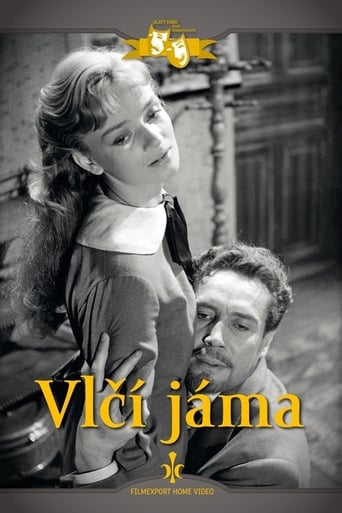 5.6
5.6An orphaned young woman named Jana moves into the household of Robert and his older, possessive wife, Klára. While Klára maintains a strict and manipulative control over the home, a mutual attraction develops between Robert and Jana. The three characters continue to live together as their domestic tensions increase.
Wolf Trap
1958
The film responds to the housing shortage that young couples in particular have had to deal with. This problem is also addressed by the couple Slávka and Olda. The girl gets a sublet on Hradčanské náměstí, in the large flat of the widowed pensioner Benda. Benda lived almost his whole life there, and is bound to the apartment by a thousand memories and feelings. The strange and sickly old man has to overcome his crankiness and distrust of people before he fully accepts his lodger and her husband "as his own"...
První a poslední
1959
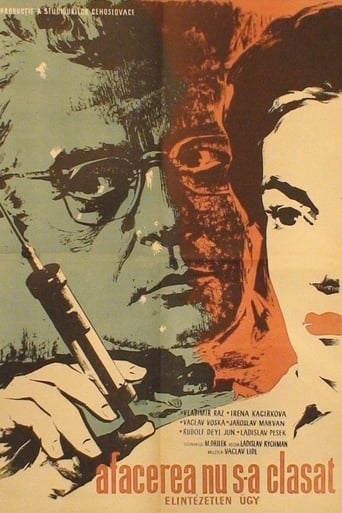 8.0
8.0From a scientific enterprise, a large sum of money has been stolen, in addition, research protocols have been photographed...
The Case Is Not Yet Closed
1957
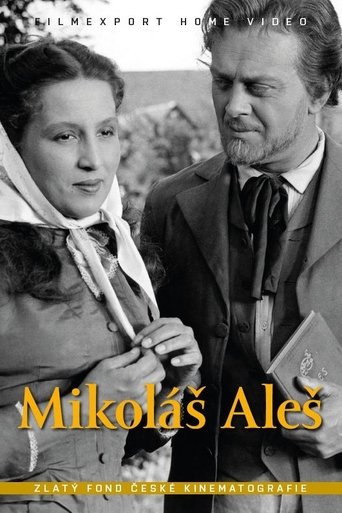 7.5
7.5A biographical film about the famous Czech painter Mikoláš Aleš, portrayed as part of the vanguard of the working class and a spokesman for the oppressed, who asserts himself despite the opposing bourgeoisie and reactionaries of all kinds. The film focuses on the period when Mikoláš Aleš participated in the competition to decorate the National Theatre.
Mikoláš Aleš
1952
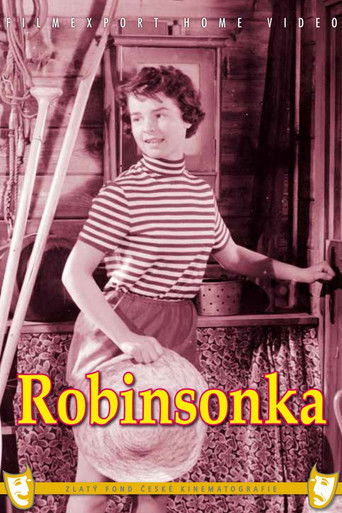 5.7
5.7A thirteen-year-old girl whose mother suddenly dies during the birth of her second child is forced to start taking care not only of herself, but also of her father and newborn brother.
The Girl Robinson Crusoe
1957
No synopsis available yet.
Muž s puškou
1955
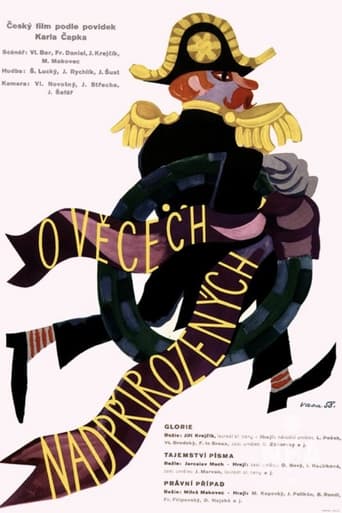 5.5
5.5An anthology of three absurd, ironic tales inspired by Čapek’s “Tales from One Pocket” and “Fables and Side Stories,” each showing uncanny forces disrupting ordinary lives: in Krejčík’s “Glorie,” a gentle clerk is haunted by a sudden halo; the other two segments by Mach and Makovec similarly blend everyday routines with ironic, supernatural twists.
Of Things Supernatural
1959
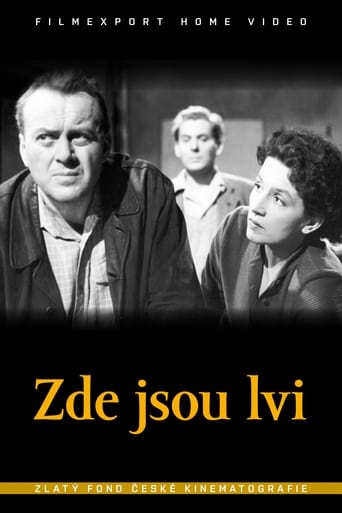 9.0
9.0The rude and bitter mining engineer Štěrba strongly opposes the proposal of his colleague Ing. Vochoče to reopen mining in the old mine. Vochoč's plan is precisely prepared and could solve many problems. However, Štěrba does not want to explain anything to anyone, he does not want to talk to anyone, his only refuge is the pub and his only friend is a glass of alcohol. He has resigned himself to a relationship with his wife. No one knows that he has very good reasons to prevent Vochoč and the others from taking their meritorious initiative...
Zde jsou lvi
1958
No synopsis available yet.
Píseň jižních Čech
1951
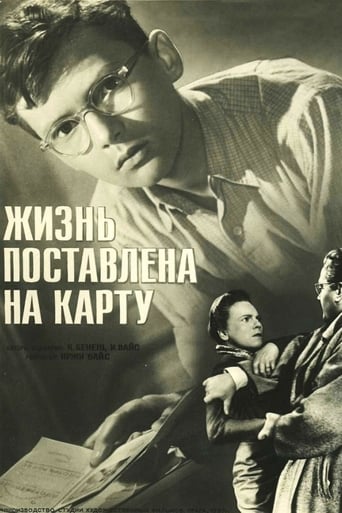 6.2
6.2The year is 1941 and the German Nazis rule Bohemia with a free hand. Engineer Otakar Racek is an extremely cautious man who tries to avoid problems at all costs. While some of his colleagues are being arrested by the Gestapo, he receives an offer to become the director of a new department. When he refuses to help the wife of an arrested resistance fighter, his wife Vlasta is shaken. However, she loves him, to the point of even resigning herself to the hatred of Otakar's wealthy mother. One day, Vlasta lets her old acquaintance Ondřej Rýdl, who is on the run from the Gestapo, stay at her house for a few days. The wife passes him off to her husband as a distant relative. However, Otakar succumbs to jealousy and, on his mother's advice, hires a private detective to follow Vlasta. However, the detective is also a Gestapo informant and receives a hefty reward for every arrested resistance fighter...
A Life at Stake
1956
No synopsis available yet.
Na věky přátelé
1954
 8.0
8.0The feature-length film by engineers J. Hanzelka and M. Zikmund captures how the two travelers prepared for their first trip around the world and in documentary footage describes their experiences from the first half of the trip through Africa. You will see for yourself what obstacles they had to overcome on the ravaged roads of Abyssinia and in what danger the fate of the expedition was during the daring passage through the Nubian desert. The film culminates with an ascent to the highest mountain in Africa, the extinct volcano Kilimanjaro, whose peak is covered in ice all year round.
Africa - Part I - From Morocco to Kilimanjaro
1953
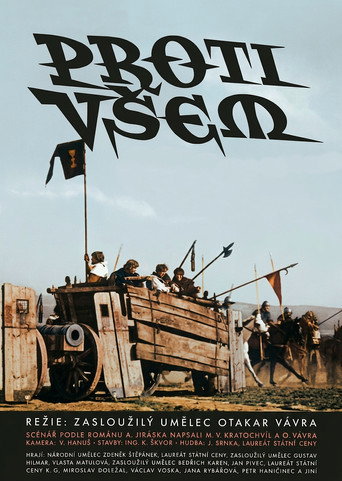 6.1
6.1After the battle of Sudoměř the Hussite teaching spreads through the whole country and people start leaving their homes to help build the fortification of Tábor. Prague citizens request help against the army of Zikmund. The Hussite army with Jan Žižka in the lead make their way towards Prague. They fortify themselves on the mountain Vítkov and engage in a bloody battle with Zikmund’s huge army.
Against All
1957
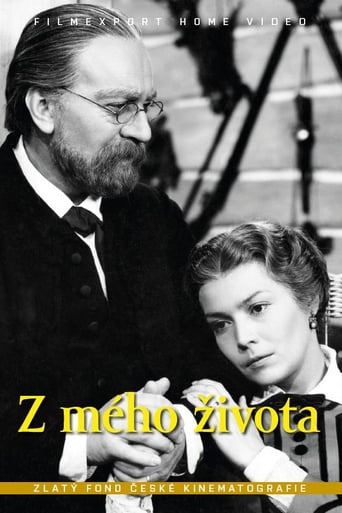 7.5
7.5The film, in individual episodes, captures the fate of Bedřich Smetana from 1856 until the end of his life, from his young years until the moment when, exhausted by human and artistic hardship, he sees the fulfillment of his great dream, the opening of the National Theatre.
From My Life
1955
On his first day in a new place, waiter Josef Kučera stands up for his old servant Bartoš and bellhop Svát. His actions earn him the distrust of the café owner Stýbl, the admiration of the maid Jindřiška, and the hatred of her suitor, the waiter Vacek. One evening, Kučera overhears a strange conversation between two guests and confides in the editor of Rudý právo Rokos. When a scandal breaks out about the bank robbery of the minister's son-in-law Zakhar, Rokos deduces from the conversation that it was a fake robbery...
Kavárna na hlavní třídě
1954
No synopsis available yet.
We will be ready
1955
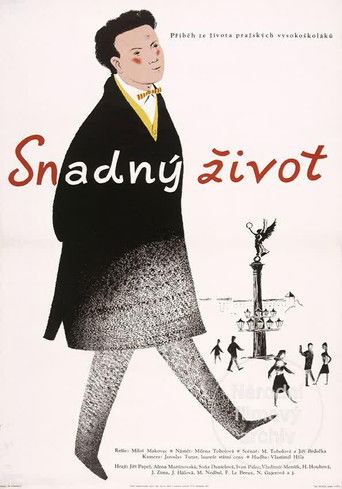 5.0
5.0Depiction of Czech students in the 1950s. The kids are less interested in communism than in rock n’ roll. Czech authorities deemed the work decadent and subversive, which led to the director being kicked out of film school.
An Easy Life
1957
No synopsis available yet.
Let's protect the common property
1954
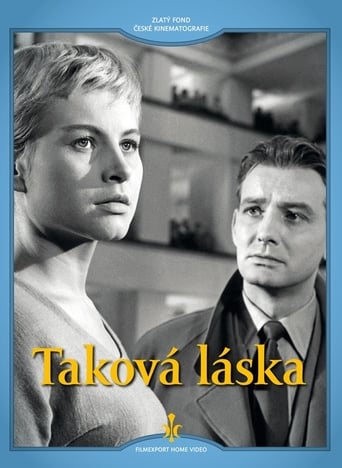 6.5
6.5A student commits suicide out of unhappy love to a married man; story is recounted in retrospective by a "judge" who asks the audience to decide who is the guilty party.
That Kind of Love
1959
1940s · 14 titles
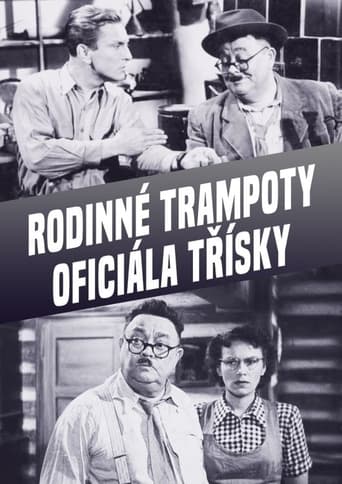 5.6
5.6The plump, punctual and slightly despotic Mr. Tříška worked as a housing officer, which completely damaged his psychological resilience, he is short-tempered and easily angered. The intended rest in the countryside, where he went with his whole family, however, turns out completely differently than he expected - because all the hardworking hands join together to ensure the fastest possible completion of the agricultural work, and there is also time left for his singing interests. And the main character is finally so carried away by the new environment that he eagerly joins in.
Rodinné trampoty oficiála Tříšky
1949
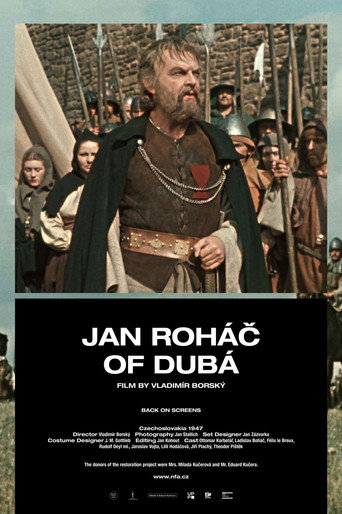 5.0
5.0After the Battle of Lipany, the remnants of the Hussite troops concentrated under the leadership of Jan Roháč of Dubé at Sion Castle. However, he had no prospects of victory against the soldiers of the Lordship. Sion was conquered, Roháč of Dubé was captured and executed as a pest in Prague on September 9, 1437.
Warriors of Faith
1947
 NR
NRNo synopsis available yet.
Vítězný lid
1949
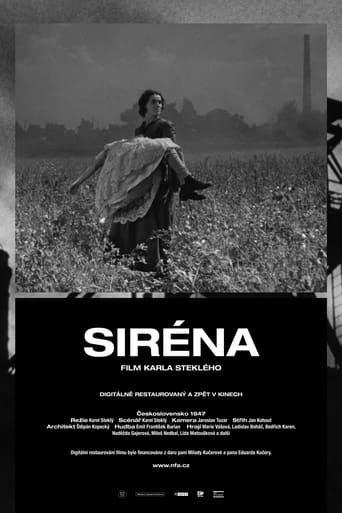 6.0
6.0In late 19th century Czech-speaking Bohemia, oppressed workers at German-owned mines and foundries revolt against their harsh working conditions. Made shortly after World War II as Czechoslovakia was falling to communism, the film resonates in Czech resentment of the German occupation.
The Strike
1947
The Czech revival movement is divided at the end of the first half of the 19th century. While the older generation, such as František Palacký, urges restraint, students lean towards radical positions. A report on the revolutionary events in Paris prompts Czech Prague residents to write down the demands of the Czech nation for self-determination and the proclamation of a constitution. Tensions peak during the All-Slavic Congress in Prague's Žofín. Vienna rejects the Czech demands and the congress is brutally dispersed by the Austrian police. Prague begins to build barricades...
Year of the Revolution 1848
1949
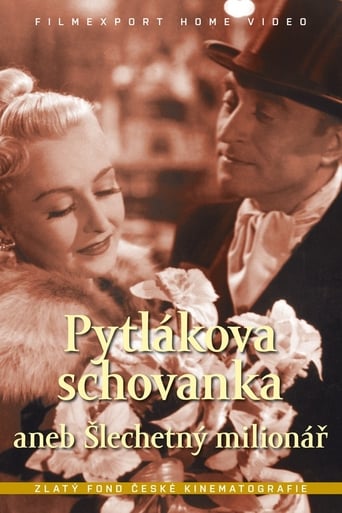 6.6
6.6Elén, a girl living with her mother and stepfather in a secluded forest, has a great singing talent. On her twenty-first birthday, she runs away from home and on the train, millionaire René falls in love with her. Their paths soon diverge, only to be reunited soon after. Violinist Pavel Sedloň falls in love with Elén, and although Elén does not love him, she is determined to marry him. At that time, René dies, exhausted from working on the operetta Srdce v delirium. However, he is saved at the last moment and everything comes to a happy ending when Oldřich Nový explains how the authors actually meant it all.
The Poacher's Foster Daughter or Noble Millionaire
1949
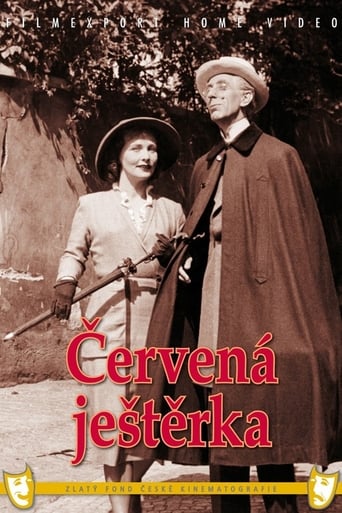 10.0
10.0Grammar school teacher Bláha hurts himself in pursuit of a red lizard, and is lying unconscious in the lonely house of Santrucek family. The postman, who found Bláha's coat and hat in the water, announces to everyone in town that the professor has drowned. But, the venerable citizens are at that moment more interested in the theatre group with the beautiful guest actress Eva Gazdová. They demand a change of repertoire and manage to persuade the theatre manager to have the group play the musical comedy The Red Lizard instead of an established play.
Red Lizard
1949
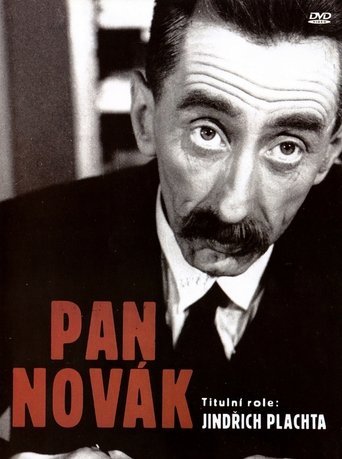 NR
NRMr. Novák, an insurance company clerk, only cares about his job, nothing else interests him. Even the social changes in February 1948 leave him indifferent. He only becomes aware of them when the insurance company is closed down. He has to make a decision: either retire or go to work in a factory. Neither of these options appeals to Mr. Novák...
Pan Novák
1949
Cold War Spy FIlm
Pan Habětín odchází
1949
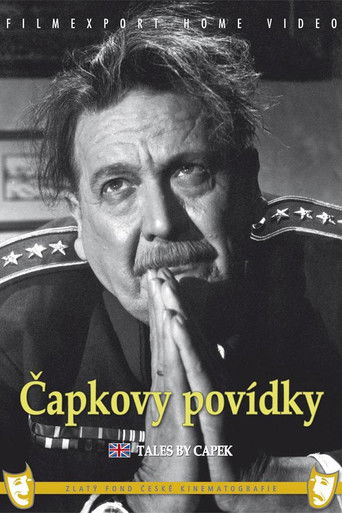 7.7
7.7Five crime stories connected by the narration of police superintendent Bartosek.
Capek's Tales
1947
A film explaining the importance of national insurance for an ordinary citizen. It presents means of medical care in childhood, active adulthood, and old age. It also outlines treatment possibilities in spa facilities and recreational options.
One Is Not Alone
1949
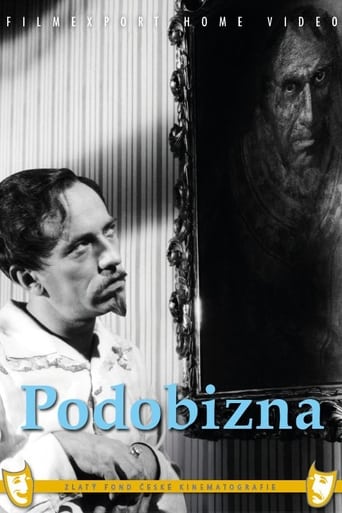 7.7
7.7People are afraid of the usurer Chazaj and are convinced that he is the bearer of evil. One day Chazaj pays a visit to the poor artist Simon Jordán and asks him to paint his portrait. Simon agrees but as he progresses with the work his mind conjures up terrible thoughts and in the end he commits suicide. The portrait looks lifelike and Chazaj is content with the results. After Chazaj's death the picture changes hands and brings misfortune to all who own it. The last victim is the young painter Roman who buys Chazaj's portrait in a bazaar. He finds a treasure in the frame and begins to live well off it. The comfortable life suits him so well that he rejects his original artistic aims and becomes a painter of fashionable kitsch.
The Portrait
1948
No synopsis available yet.
Zpěvem k srdci
1948
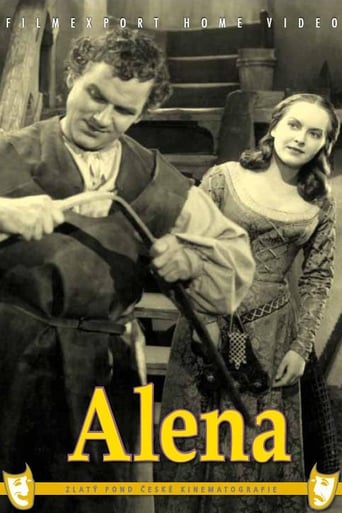 8.8
8.8Master armourer Tomás has young wife Alena, of whom he is very jealous. One day the ruler of town sees Alena and decides to win her over for himself. To get a free hand for his love affairs, he sends Master Tomás to acquire more skills in Flanders. Jealous husband does not know how to secure fidelity of his beautiful wife while he is away, and finally accepts aid of the devil, to whom he signs his soul as a reward. Devil in the disguise of Master Ondrej works in Tomás's workshop and protects Alena against various courtiers and the ruler of town. But finally he falls in love with Alena himself and becomes her lover.
Alena
1947