

Directing
Marion E. Wong
Born — Died
1895-01-02 — 1969-02-04
Place of birth
San Francisco, California, USA
Known for
Directing
Credits
4 titles
From Wikipedia, the free encyclopedia Marion E. Wong (January 2, 1895 – February 4, 1969) was a Chinese American company director, costume designer, director, actress, producer, music performer and screenwriter. Marion Evelyn Wong was born in San Francisco but was raised in Oakland, California. In 1911, Wong traveled to China to meet her future husband. Her two brothers, who were looking for wives, accompanied her. One of her brothers died in China due to smallpox. The other brother, Albert Wong, married Violet, who was the sister-in-law to Marion. Wong returned home without a husband because she refused to marry him. She was a student at the University of California for some time. In 191…
Known for
Film credits
Behind the camera
 5.7
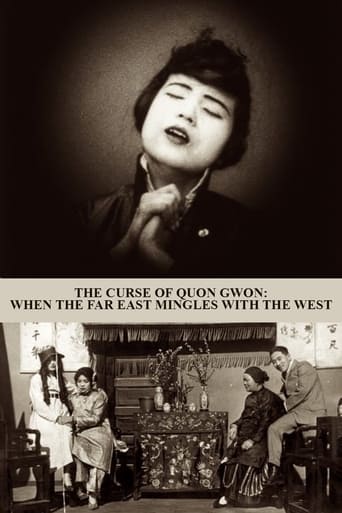
The Curse of Quon Gwon is the oldest known Chinese-American film and one of the earliest American silent features made by a woman. Only two reels of the film survive, and no intertitles are known to exist, making it difficult to parse out the exact plot. An article in the July 17, 1917 issue of The Moving Picture World states that the film "deals with the curse of a Chinese god that follows his people because of the influence of western civilization." The film also touches on themes of Chinese assimilation into American society. Formally premiering in 1917, no distributor was willing to purchase a Chinese-American film without racial stereotypes. Considered a devastating financial failure, the film was only screened two more times until its rediscovery in 2004. Preserved by the Academy Film Archive in 2005.
The Curse of Quon Gwon: When the Far East Mingles with the West
1916
5.7The Curse of Quon Gwon is the oldest known Chinese-American film and one of the earliest American silent features made by a woman. Only two reels of the film survive, and no intertitles are known to exist, making it difficult to parse out the exact plot. An article in the July 17, 1917 issue of The Moving Picture World states that the film "deals with the curse of a Chinese god that follows his people because of the influence of western civilization." The film also touches on themes of Chinese assimilation into American society. Formally premiering in 1917, no distributor was willing to purchase a Chinese-American film without racial stereotypes. Considered a devastating financial failure, the film was only screened two more times until its rediscovery in 2004. Preserved by the Academy Film Archive in 2005.
The Curse of Quon Gwon: When the Far East Mingles with the West
1916