
Acting
John Bailey
Born — Died
1912-06-27 — 1989-02-18
Place of birth
Lewisham, London, England, UK
Known for
Acting
Credits
72 titles
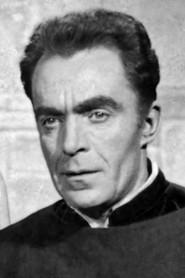
John Albert Bailey (26 June 1912 – 18 February 1989) was a British screen and TV actor who had a long screen, stage and TV career.
Known for
 5.3
The residents of Coronation Street are ordinary, working-class people, and the show follows them through regular social and family interactions at home, in the workplace, and in their local pub, the Rovers Return Inn. Britain's longest-running soap.
Coronation Street
1960
 7.9
The adventures of The Doctor, a time-traveling humanoid alien known as a Time Lord. He explores the universe in his TARDIS, a sentient time-traveling spaceship. Its exterior appears as a blue British police box, which was a common sight in Britain in 1963 when the series first aired. Along with a succession of companions, The Doctor faces a variety of foes while working to save civilizations, help ordinary people, and right many wrongs.
Doctor Who
1963
 5.7
Crown Court is an afternoon television courtroom drama produced by Granada Television for the ITV network that ran from 1972, when the Crown Court system replaced Assize courts and Quarter sessions in the legal system of England and Wales, to 1984.
Crown Court
1972
 7.8
A quirky spy show of the adventures of eccentrically suave British Agent John Steed and his predominantly female partners. Jonathan Steed - an urbane, proper gentleman spy - teams with various assistants throughout the series' run, including Dr. David Keel, Cathy Gale, Emma Peel and Tara King, to repeatedly save the world from diabolical schemes plotted by equally diabolical evil-doers (among them robots and man-eating monsters).
The Avengers
1961
 7.4
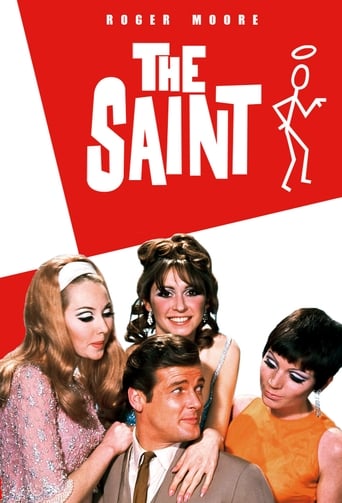
Simon Templar is The Saint, a handsome, sophisticated, debonair, modern-day Robin Hood who recovers ill-gotten wealth and redistributes it to those in need.
The Saint
1962
 5.2
A BBC television anthology series featuring productions of classic and contemporary stage plays usually broadcast on BBC1. Each production featured a different work, often using prominent British stage actors in the leading roles. The series was transmitted from October 1965 to September 1983.
BBC Play of the Month
1965
Film credits

1980s · 4 titles
 6.0
Fed up with working hard just to scrape by, Christine Painter comes up with a bold plan to become the madam of a brothel and earn her financial freedom: she opens a house of spanking to fabulous reviews.
Personal Services
1987
 9.5
The jealous King Leontes falsely accuse his wife Hermione of infidelity with his best friend, and she dies. Leontes exiles his newborn daughter Perdita, who is raised by shepherds for sixteen years and falls in love with the son of Leontes' friend. When Perdita returns home, a statue of Hermione "comes to life", and everyone is reconciled.
The Winter's Tale
1981
 8.5
Timon loves to give parties and objects to friends, but when he cannot pay his creditors, his "friends" refuse to help him, and he becomes a misanthropic hermit.
Timon of Athens
1981
 4.7
After the TARDIS collides with a spacecraft delivering human tributes to the evil bull-like Nimon, the Doctor and Romana must stop the fearsome alien's quest to rule the galaxy.
Doctor Who: The Horns of Nimon
1980
1970s · 4 titles
 8.0
When an undergraduate commits suicide, his best friend is sent down from university because he did nothing to prevent the death, which he felt was a choice his friend had a right to make.
Running Scared
1972
 8.0
Two female tourists are taken hostage by criminals who are chasing a man recently released from prison who knows the whereabouts of stolen money
Kill Two Birds
1975
 5.9
Set in London’s East End, The 14 (aka The Wild Little Bunch aka Existence) is based on the true story of fourteen children who struggle against overwhelming pressures to stay together after the death of their single mother.
The 14
1973
 6.6
Henry is a proud monarch who flies in the face of the church in seeking to divorce Queen Katherine and marry Anne Bullen. As cardinal Wolsey, the powerful Lord Chancellor of England, attempts to bend Rome to the King's wishes, the court reverbates with political intrigue and accusations of treachery.
Henry VIII
1979
1960s · 9 titles
 6.9
The story of the breakout of the German battleship Bismarck—accompanied by the heavy cruiser Prinz Eugen—during the early days of World War II. The Bismarck and her sister ship, Tirpitz, were the most powerful battleships in the European theater of World War II. The British Navy must find and destroy Bismarck before it can escape into the convoy lanes to inflict severe damage on the cargo shipping which was the lifeblood of the British Isles. With eight 15 inch guns, it was capable of destroying every ship in a convoy while remaining beyond the range of all Royal Navy warships.
Sink the Bismarck!
1960
 5.9
Rasputin, a crazed and debauched monk wreaks havoc at the local inn one night, chopping off the hand of one of the drinkers. As the bitter locals plan their revenge, the evil Rasputin works his power over the beautiful women who serve at the Tsar's palace. Even the Tsarina herself is seduced by his evil ways and, as his influence begins to dominate government policy, there is only one course of action left... to destroy him before he destroys them all.
Rasputin: The Mad Monk
1966
 6.5
John Cummings, an unsuccessful London cosmetics salesman, has his unpaid-for car stolen by a hood in the employ of Lionel Meadows, sadistic organiser of a car conversion racket. As the vehicle is uninsured, and since the police seem indifferent, Cummings decides to find it himself — and gets himself involved in an underworld battle.
Never Let Go
1960
 5.8
The Doctor, Ian, Barbara and Susan arrive in the TARDIS on board a spaceship. Their initial concern is for the ship's human crew, who are suffering from telepathic interference from the Sensorites, but Susan communicates with the Sensorites and finds the aliens fear an attack by the humans and are just defending themselves. Travelling to the Sense Sphere (the Sensorites' planet) the Doctor seeks to cure an illness to which the Sensorites and Ian have succumbed, but finds it has been caused by deliberate poisoning. The political manoeuvring of the Sensorite City Administrator poses another threat to the TARDIS crew as he seeks to discredit and implicate them.
Doctor Who: The Sensorites
1964
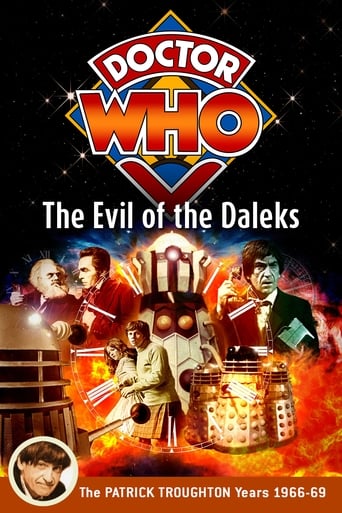 8.3
The Daleks draft the Second Doctor into distilling the Human Factor. Once implanted, it will make the Dalek race invincible. Jamie's faith in the Doctor is stretched to the limit as the Doctor appears to be collaborating with the Daleks. The Doctor has a few tricks up his sleeve, but then again so might the Daleks.
Doctor Who: The Evil of the Daleks
1967
 NR
Inspired by a real-life case, a woman encourages her lover to murder her older husband.
Death of a Teddy Bear
1967
 6.5
In this look at Charles Lutwidge Dodgson (1832-1898), aka Lewis Carroll, Dennis Potter mixed biographical drama with a psychological profile to explore the roots of Dodgson's creativity. Dodgson tells stories to ten-year-old Alice Liddell, leading to recreations of scenes adapted from ALICE'S ADVENTURES IN WONDERLAND (1865), designed to resemble the original Sir John Tenniel illustrations.
Alice
1965
 NR
TV Movie consisting of two episodes of the UK TV series "Journey to the Unknown" (1968): 'Matakitas is Coming' (episode 1.3) and 'The Last Visitor' (episode 1.9).
Journey to the Unknown
1969
 8.0
Candidate Nigel Barton goes from idealism to cynicism as he becomes disillusioned and suspicious of hollow campaign promises.
VOTE, VOTE, VOTE for Nigel Barton
1965
1950s · 10 titles
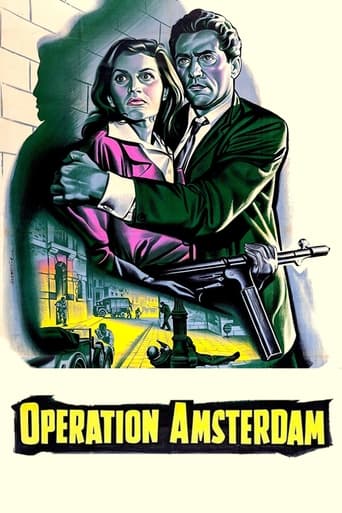 6.1
When Germany invades Holland in 1940, a British intelligence officer and two Dutch diamond merchants go to Amsterdam to persuade the Dutch diamond merchants to evacuate their diamond supplies to England.
Operation Amsterdam
1959
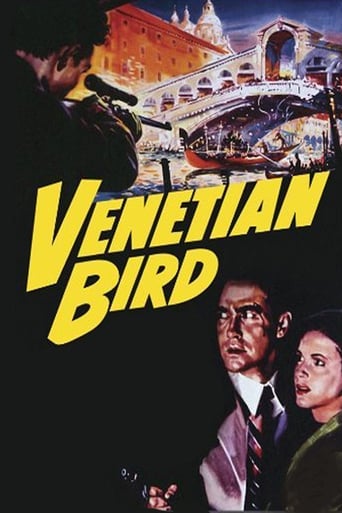 6.2
Travelling to Venice to locate an ex-partisan on behalf of a French insurance company, a British private detective gets mixed-up in a political assassination conspiracy.
Venetian Bird
1952
 5.7
Men from Scotland Yard and military intelligence build a dossier on a sabotage ring.
High Treason
1951
 7.4
During World War II, German soldiers occupy the home of a beautiful Belgian girl and her mother.
So Little Time
1952
 7.0
When a beautiful young artist's model is strangled in her bed, Scotland Yard find themselves with three suspects -- her sinister ex-husband (Elwyn Brook-Jones), a sexually disturbed artist (Ballard Berkeley) and her violent new boyfriend (John Bailey), who is prone to unexplained blackouts.To catch the killer, the police must set a dangerous trap with the aid of a famous sculptress (Hy Hazell).
The Night Won't Talk
1952
 6.5
An American comes to Britain to investigate the murky circumstances of his brother's death that occurred during a WW2 commando raid.
Circle of Danger
1951
 6.4
In colonial Egypt, a British police officer sets out on a daring hunt for drug smuggling gangs operating along the notorious Cairo Road.
Cairo Road
1950
 7.2
An English country lawyer weighs the case of a schoolgirl who claims she was kidnapped by two women.
The Franchise Affair
1951
A naive young man falls in love with a beautiful, dying courtesan
The Lady of the Camellias
1958
 6.2
In this political thriller, set within an unnamed country, revolutionaries try to prevent their leader's execution by kidnapping the president's daughter. A brave hostage pilot, breaks out and heroically saves the girl as the revolutionary leader is killed.
The Hostage
1956
1940s · 4 titles
 6.7
An Army deserter, still a fugitive in Post-War Britain, wanders into a pawn-shop robbery and finds himself wanted for murder. He meets a war widow who helps him elude the police while he looks for the real criminals.
Man on the Run
1949
 7.0
An actress, urged by her detective boyfriend, takes a job as housekeeper for a wealthy elderly woman. The woman's new young husband claims she's ill and refuses entry, raising suspicions about her whereabouts.
Celia: The Sinister Affair of Poor Aunt Nora
1949
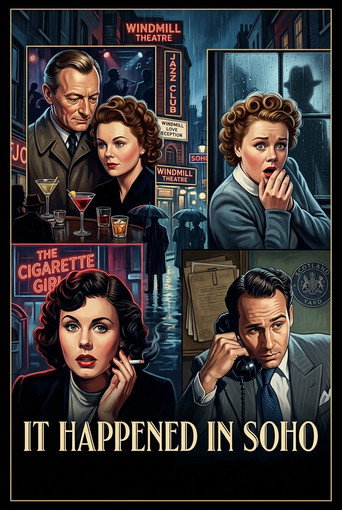 6.0
Murder drama set in Soho involving a police inspector, a newspaper reporter and a country girl.
It Happened in Soho
1948
 6.5
Meet Simon Cherry was based on a popular BBC radio program of the 1940s titled Meet the Rev. Hugh Moxey plays the title role, a Father Brown-style clergyman who solves crimes when he isn't saving souls
Meet Simon Cherry
1949
Series credits
5.3The residents of Coronation Street are ordinary, working-class people, and the show follows them through regular social and family interactions at home, in the workplace, and in their local pub, the Rovers Return Inn. Britain's longest-running soap.
Coronation Street
1960
7.9The adventures of The Doctor, a time-traveling humanoid alien known as a Time Lord. He explores the universe in his TARDIS, a sentient time-traveling spaceship. Its exterior appears as a blue British police box, which was a common sight in Britain in 1963 when the series first aired. Along with a succession of companions, The Doctor faces a variety of foes while working to save civilizations, help ordinary people, and right many wrongs.
Doctor Who
1963
5.7Crown Court is an afternoon television courtroom drama produced by Granada Television for the ITV network that ran from 1972, when the Crown Court system replaced Assize courts and Quarter sessions in the legal system of England and Wales, to 1984.
Crown Court
1972
7.8A quirky spy show of the adventures of eccentrically suave British Agent John Steed and his predominantly female partners. Jonathan Steed - an urbane, proper gentleman spy - teams with various assistants throughout the series' run, including Dr. David Keel, Cathy Gale, Emma Peel and Tara King, to repeatedly save the world from diabolical schemes plotted by equally diabolical evil-doers (among them robots and man-eating monsters).
The Avengers
1961
7.4Simon Templar is The Saint, a handsome, sophisticated, debonair, modern-day Robin Hood who recovers ill-gotten wealth and redistributes it to those in need.
The Saint
1962
7.4Simon Templar is The Saint, a handsome, sophisticated, debonair, modern-day Robin Hood who recovers ill-gotten wealth and redistributes it to those in need.
The Saint
1962
5.2A BBC television anthology series featuring productions of classic and contemporary stage plays usually broadcast on BBC1. Each production featured a different work, often using prominent British stage actors in the leading roles. The series was transmitted from October 1965 to September 1983.
BBC Play of the Month
1965
 5.2
An anthology series of television plays which aired on BBC1 from October 1964 to May 1970. The plays were usually written for television, although adaptations from other sources also featured.
The Wednesday Play
1964
5.2An anthology series of television plays which aired on BBC1 from October 1964 to May 1970. The plays were usually written for television, although adaptations from other sources also featured.
The Wednesday Play
1964
5.2An anthology series of television plays which aired on BBC1 from October 1964 to May 1970. The plays were usually written for television, although adaptations from other sources also featured.
The Wednesday Play
1964
5.2An anthology series of television plays which aired on BBC1 from October 1964 to May 1970. The plays were usually written for television, although adaptations from other sources also featured.
The Wednesday Play
1964
5.2An anthology series of television plays which aired on BBC1 from October 1964 to May 1970. The plays were usually written for television, although adaptations from other sources also featured.
The Wednesday Play
1964
 6.8
A British television anthology of stories, often with sinister and wryly comedic undertones, and a twist at the end. With early episodes written and presented by Roald Dahl, the series featured a plethora of big name guest stars.
Tales of the Unexpected
1979
 7.0
ITV Playhouse is a British comedy-drama TV series that ran from 1967 to 1983, which featured contributions from playwrights such as Dennis Potter, Rhys Adrian and Alan Sharp. The series began in black and white, but was later shot in colour and was produced by various companies for the ITV network, a format that would inspire Dramarama. Actors appearing in the series included Leslie Anderson, Gwen Nelson, Ricky Alleyne, Pat Heywood, Michael Elphick, Ian Hendry, Edward Woodward, Margaret Lockwood, Jessie Matthews and Lloyd Peters.
ITV Playhouse
1967
 4.2
An anthology of short plays shown on BBC Television between 1965 and 1973, used in part at least as a training ground for new writers, on account of its short length, and which therefore attracted many writers who later became well known.
Thirty-Minute Theatre
1965
 3.5
Sunday Night Theatre was a long-running series of televised live television plays screened by BBC Television from early 1950 until 1959. The productions for the first five years or so of the run were re-staged live the following Thursday, partly because of technical limitations in this era, and the theatrical basis of early television drama. Some of the earliest collaborations between Rudolph Cartier and Nigel Neale were produced for this series, including Arrow to the Heart and Nineteen Eighty-Four. The Sunday night drama slot was subsequently renamed The Sunday-Night Play which ran for four seasons between 1960 and 1963. ITV transmitted its own unrelated run of Sunday Night Theatre between 1971 and 1974.
Sunday Night Theatre
1950
 4.8
No Hiding Place is a British television series that was produced at Wembley Studios by Associated-Rediffusion for the ITV network between 16 September 1959 and 22 June 1967. It was the sequel to the series Murder Bag and Crime Sheet, all starring Raymond Francis as Detective Superintendent, later Detective Chief Superintendent Tom Lockhart.
No Hiding Place
1959
4.8No Hiding Place is a British television series that was produced at Wembley Studios by Associated-Rediffusion for the ITV network between 16 September 1959 and 22 June 1967. It was the sequel to the series Murder Bag and Crime Sheet, all starring Raymond Francis as Detective Superintendent, later Detective Chief Superintendent Tom Lockhart.
No Hiding Place
1959
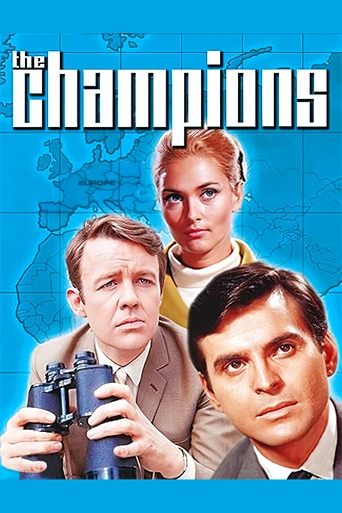 6.5
After a plane carrying three Agents crashes in the Himalayas, they are rescued by an advanced civilisation secretly living in Tibet who grant them enhanced versions of the ordinary five senses, and intellectual and physical abilities.
The Champions
1968
 7.0
Anthology series of dramatic works.
ITV Saturday Night Theatre
1969
 7.0
Thriller is a British television series, originally broadcast in the UK from 1973 to 1976. It is an anthology series: each episode has a self-contained story and its own cast. As the title suggests, each story is a thriller of some variety, from tales of the supernatural to down-to-earth whodunits.
Thriller
1973
 9.0
The Expert is a British television series produced by the BBC between 1968 and 1976. The series starred Marius Goring as Dr. John Hardy, a pathologist working for the Home Office and was essentially a police procedural drama, with Hardy bringing his forensic knowledge to solve various cases. The Expert was created and produced by Gerard Glaister. The series was also one of the first BBC dramas to be made in colour, and throughout its four series had numerous high quality guest appearances by actors such as John Carson, Peter Copley, Rachel Kempson, Peter Vaughan, Clive Swift, Geoffrey Palmer, Peter Barkworth, Jean Marsh, Ray Brooks, George Sewell, Anthony Valentine, Bernard Lee, Lee Montague, Geoffrey Bayldon, Mike Pratt, Edward Fox, André Morell, Brian Blessed, Nigel Stock, Philip Madoc and Warren Clarke.
The Expert
1968
9.0The Expert is a British television series produced by the BBC between 1968 and 1976. The series starred Marius Goring as Dr. John Hardy, a pathologist working for the Home Office and was essentially a police procedural drama, with Hardy bringing his forensic knowledge to solve various cases. The Expert was created and produced by Gerard Glaister. The series was also one of the first BBC dramas to be made in colour, and throughout its four series had numerous high quality guest appearances by actors such as John Carson, Peter Copley, Rachel Kempson, Peter Vaughan, Clive Swift, Geoffrey Palmer, Peter Barkworth, Jean Marsh, Ray Brooks, George Sewell, Anthony Valentine, Bernard Lee, Lee Montague, Geoffrey Bayldon, Mike Pratt, Edward Fox, André Morell, Brian Blessed, Nigel Stock, Philip Madoc and Warren Clarke.
The Expert
1968
 6.0
Dixon of Dock Green was a BBC television series following the activities of police officers at a fictional Metropolitan Police station in the East End of London from 1955 to 1976. Some episodes were later remade as a BBC radio series in 2005 and 2006.
Dixon of Dock Green
1955
 6.2
Van der Valk is a British television series that was produced by Thames Television for the ITV network. It starred Barry Foster in the title role as Dutch detective Commissaris "Piet" van der Valk. Based on the characters and atmosphere of the novels of Nicolas Freeling, the first series was shown in 1972.
Van der Valk
1972
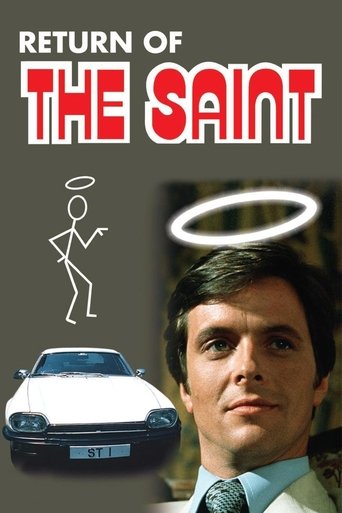 7.0
Follow the swashbuckling exploits of Simon Templar, a modern-day Robin Hood of sorts.
Return of the Saint
1978
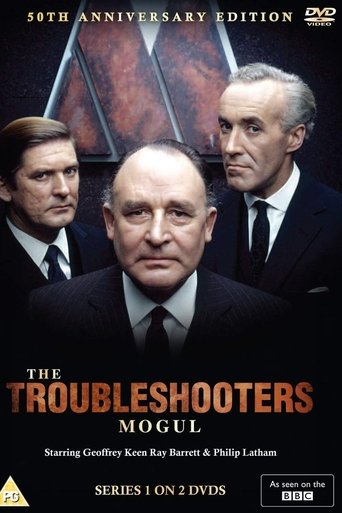 7.3
The Troubleshooters is a British television series made by the BBC between 1965 and 1972, created by John Elliot. During its run, the series made the transition from black and white to colour transmissions. The series was based around an international oil company – the "Mogul" of the title. The first series was mostly concerned with the internal politics within the Mogul organisation, with episodes revolving around industrial espionage, internal fraud and negligence almost leading to an accident on a North Sea oil rig.
The Troubleshooters
1965
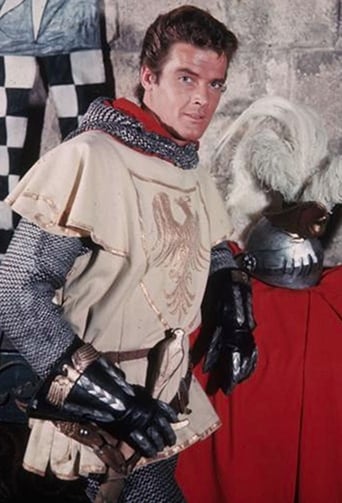 6.4
Ivanhoe is a British television series first shown on ITV in 1958-59. The show features Roger Moore in his first starring role, as Sir Wilfred of Ivanhoe, in a series of adventures aimed at a children's audience. The characters were drawn loosely from Sir Walter Scott's 1819 novel.
Ivanhoe
1958
6.4Ivanhoe is a British television series first shown on ITV in 1958-59. The show features Roger Moore in his first starring role, as Sir Wilfred of Ivanhoe, in a series of adventures aimed at a children's audience. The characters were drawn loosely from Sir Walter Scott's 1819 novel.
Ivanhoe
1958
6.4Ivanhoe is a British television series first shown on ITV in 1958-59. The show features Roger Moore in his first starring role, as Sir Wilfred of Ivanhoe, in a series of adventures aimed at a children's audience. The characters were drawn loosely from Sir Walter Scott's 1819 novel.
Ivanhoe
1958
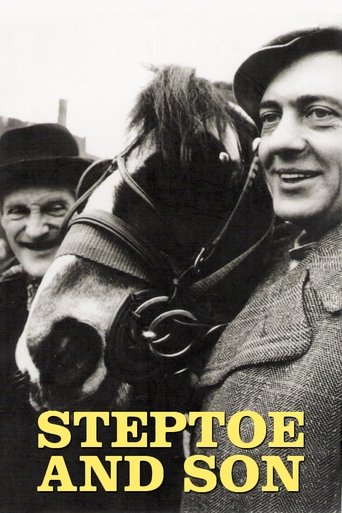 7.8
A father and son who work as rag-and-bone men live together in Shepherd's Bush, London. While Albert is content with their way of life, Harold aspires to better himself and build a life of his own, but his attempts are repeatedly thwarted by his father, leading to frequent clashes between the two.
Steptoe and Son
1962
 5.5
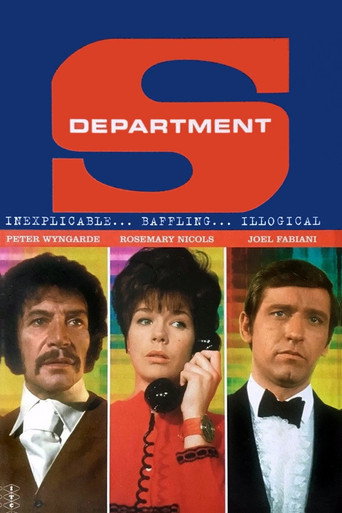
Department S is a United Kingdom spy-fi adventure series produced by ITC Entertainment. The series consists of 28 episodes which originally aired in 1969–1970. It starred Peter Wyngarde as author Jason King, Joel Fabiani as Stewart Sullivan, and Rosemary Nicols as computer expert Annabelle Hurst. The trio were agents for a fictional special department of Interpol. The head of Department S was Sir Curtis Seretse.
Department S
1969
 7.0
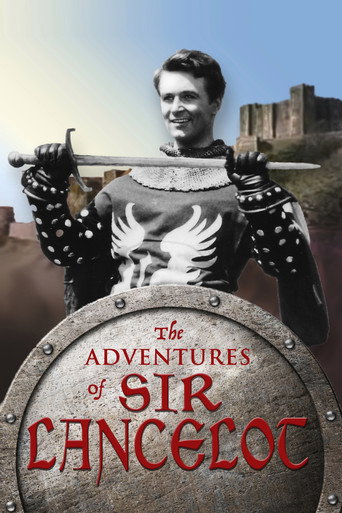
The Adventures of Sir Lancelot is a British television series first broadcast in 1956, produced by Sapphire Films for ITC Entertainment and screened on the ITV network. The series starred William Russell as the eponymous Sir Lancelot, a Knight of the Round Table in the time of King Arthur at Camelot.
The Adventures of Sir Lancelot
1956
 7.3
Berlin, Germany, 1935. The day Karl Weiss, a Jewish painter, and Inga Helms, a Christian woman, marry, is the one in which both of them and the entire Weiss family are caught up in the maelstrom of the Nazi regime, the storms of World War II and the horrors of the criminal Final Solution, the Holocaust, the Shoah; while Erik Dorf, an ambitious lawyer, undertakes his fall into hell at the hands of the sinister Reinhard Heydrich.
Holocaust
1978
 7.0
A British television anthology series with a fantasy, science fiction and supernatural theme, similar to the American television series The Twilight Zone, and deals with normal people whose everyday situations somehow become extraordinary.
Journey to the Unknown
1968
 9.0
A BBC anthology series featuring adaptations of detective stories over 45 episodes in three seasons that ran from 1964 to 1969. As with many BBC programmes made before the early 1970s, many of its episodes no longer exist. Of the eighteen episodes from the first season only twelve are currently known to exist; likewise six of the sixteen editions from the second run are considered lost, and just one of the final ten survives in the archives.
Detective
1964
 7.5
The Edgar Wallace Mysteries was a British second-feature film series, produced at Merton Park Studios for Anglo-Amalgamated. There were 46 films in the series, made between 1960 and 1965. The films were loose adaptations of Edgar Wallace's books and stories. Very few used his original titles, and there was no attempt to set them in the period in which Wallace wrote, probably to obviate the need for elaborate costumes and sets. A 1962 article in Scene magazine quotes £22,000 as the budget for an episode then in production.
Edgar Wallace Mysteries
1959