
Known for
 NR
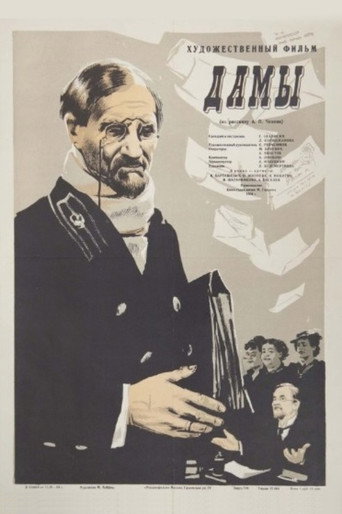
Student work, artistic director Sergei Gerasimov. A post as a clerk is promised to the impoverished teacher Vremensky, who has lost his job. However, as a result of the intrigues of influential city ladies, the director of the public schools gives the position to the young careerist Polzukhin.
Ladies
1954
 4.9
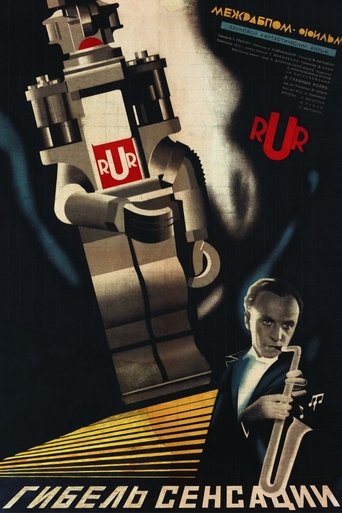
In an unnamed English-speaking capitalist land, a young engineer invents inexhaustible giant robots to replace the fragile human workers on high-volume assembly-lines, and soon finds his invention co-opted by the military-industrial complex.
Loss of Feeling
1935
 NR
Educational film on why corporal punishment is unacceptable in children's upbringing and is a relic of the past.
The Last Grudge
1930
 6.2
Khokhlova, a young female Moscow reporter, falls in love with factory manager Petrovsky. To her he's the epitome of manliness–virile, decisive, strong-minded. Conversely, she rejects the sensitive, diffident editor Vasilchikov, who's in love with her, as unmanly. Her infatuation affects her work, and she is fired.
Your Friend
1927
 5.2
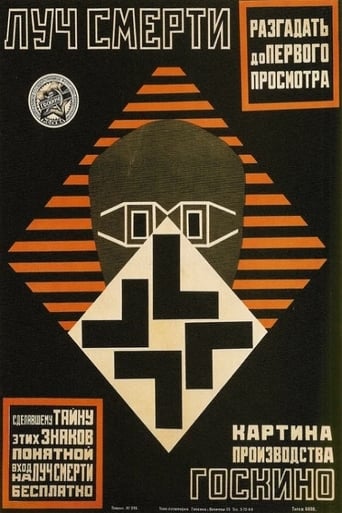
In a Western capitalist country where a fascist government attempts to suppress a socialist uprising, revolutionary leader Thomas Lamm is imprisoned by the government but he escapes to the Soviet Union. There, he meets the engineer Podobed who invents the 'death ray' – a device which explodes gunpowder and fuel mixtures at a distance.
The Death Ray
1925
 5.5
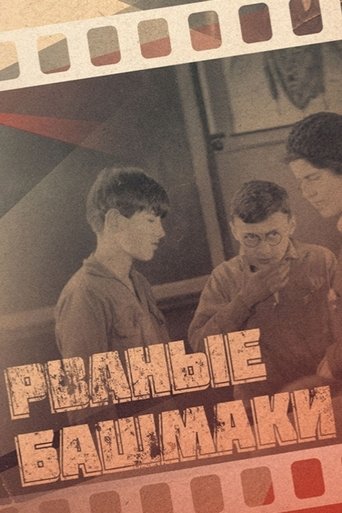
Working with children led Barskaya to create superb direct sound and an inspired style of shooting. Don’t look for conventional cinematic syntax here. The film is chaotic in the way that Soviet films still knew how to be, and Langlois couldn’t help but be seduced by its rebellious spirit, its anarchy and love of children, comparable to Vigo’s Zero de conduite. As well as being a film made with and for children, it offers a complex take on Western society. Pre-Nazi Germany is not named as such but is carefully reconstructed, possibly under advice from Karl Radek, and children offer a playful reflection of class struggle – doubly excluded, as proletarians and as minors. “They play in the same way that they live”, one intertitle says. The interaction between their comical games and the yet more ludicrous ones played by adults is developed on several levels.
Torn Boots
1933
Film credits
1930s · 6 titles
4.9In an unnamed English-speaking capitalist land, a young engineer invents inexhaustible giant robots to replace the fragile human workers on high-volume assembly-lines, and soon finds his invention co-opted by the military-industrial complex.
Loss of Feeling
1935
NREducational film on why corporal punishment is unacceptable in children's upbringing and is a relic of the past.
The Last Grudge
1930
5.5Working with children led Barskaya to create superb direct sound and an inspired style of shooting. Don’t look for conventional cinematic syntax here. The film is chaotic in the way that Soviet films still knew how to be, and Langlois couldn’t help but be seduced by its rebellious spirit, its anarchy and love of children, comparable to Vigo’s Zero de conduite. As well as being a film made with and for children, it offers a complex take on Western society. Pre-Nazi Germany is not named as such but is carefully reconstructed, possibly under advice from Karl Radek, and children offer a playful reflection of class struggle – doubly excluded, as proletarians and as minors. “They play in the same way that they live”, one intertitle says. The interaction between their comical games and the yet more ludicrous ones played by adults is developed on several levels.
Torn Boots
1933
 NR
A feature film that depicts scenes from the census of Imperial Russia in 1882 and the upcoming census of the Soviet Union as of January 17, 1939. The census takers interview citizens, fill out census forms in the homes of urban residents, collective farmers, and among the guests of the "Moscow" hotel.
The Great Count
1938
 5.3
Following the end of the Russian Civil War, three close friends and former Red Army commanders—Langovoy, Zhyoltikov, and their elder comrade Uncle Sasha—return to their hometown to serve in the military headquarters. While Sasha and Zhyoltikov remain bachelors and share a room, Langovoy lives with his wife, Mashenka, whom he married during the war.
A Simple Case
1930
 NR
The brave son of a woman inthe political underground tries to save her from Nazi stormtroopers.
Karl Brunner
1936
1920s · 4 titles
6.2Khokhlova, a young female Moscow reporter, falls in love with factory manager Petrovsky. To her he's the epitome of manliness–virile, decisive, strong-minded. Conversely, she rejects the sensitive, diffident editor Vasilchikov, who's in love with her, as unmanly. Her infatuation affects her work, and she is fired.
Your Friend
1927
5.2In a Western capitalist country where a fascist government attempts to suppress a socialist uprising, revolutionary leader Thomas Lamm is imprisoned by the government but he escapes to the Soviet Union. There, he meets the engineer Podobed who invents the 'death ray' – a device which explodes gunpowder and fuel mixtures at a distance.
The Death Ray
1925
 NR
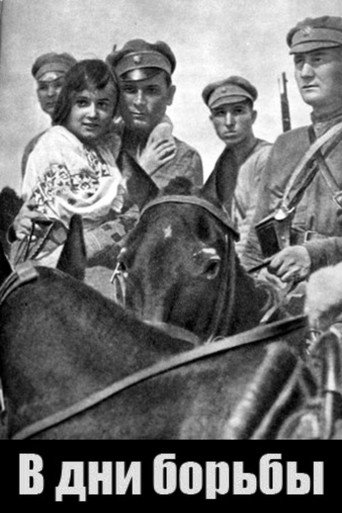
An agit-film about the struggle of Ukrainian peasants against the White Poles. A young woman, the daughter of a blacksmith taken prisoner by the White Poles, and a Red commander organise a partisan unit. One scene depicts the capture of a Polish landowner attempting to elude capture. He had been hiding from the Red Army soldiers in a barrel. The peasants nailed the barrel shut and, having inscribed the words: ‘To Warsaw – to Mr Piłsudski’, threw it into the Dnieper. Lost film.
In the Days of Struggle
1920
 NR
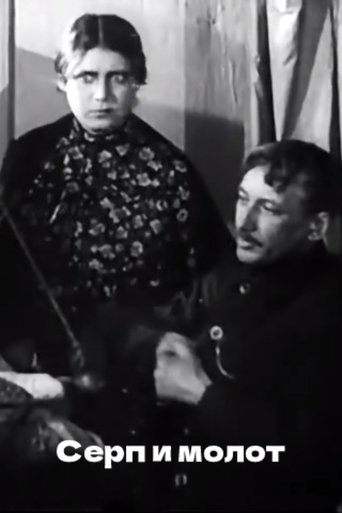
A down on his luck peasant goes to fight in World War I and returns home a hero. Partially lost.
Sickle and Hammer
1921