
Writing
Hergé
Born — Died
1907-05-23 — 1983-03-03
Place of birth
Etterbeek, Belgium
Known for
Writing
Credits
10 titles
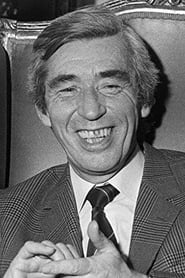
Georges Prosper Remi (22 May 1907 – 3 March 1983), known by the pen name Hergé, was a Belgian cartoonist. He is best known for creating The Adventures of Tintin, the series of comic albums which are considered one of the most popular European comics of the 20th century. He was also responsible for two other well-known series, Quick & Flupke (1930–1940) and The Adventures of Jo, Zette and Jocko (1936–1957). His works were executed in his distinct ligne claire drawing style. From Wikipedia, the free encyclopedia
Known for
 8.5
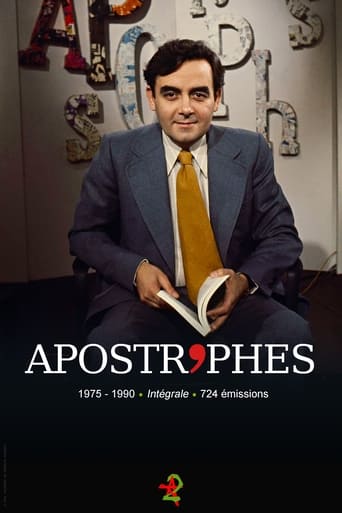
8.5Apostrophes was a live, weekly, literary, prime-time, talk show on French television created and hosted by Bernard Pivot. It ran for fifteen years (724 episodes) from January 10, 1975, to June 22, 1990, and was one of the most watched shows on French television (around 6 million regular viewers). It was broadcast on Friday nights on the channel France 2 (which was called "Antenne 2" from 1975 to 1992). The hourlong show was devoted to books, authors and literature. The format varied between one-on-one interviews with a single author and open discussions between four or five authors.
Apostrophes
1975
 6.0
6.0A talk show presented by Michel Drucker
Les Rendez-vous du dimanche
1975
No synopsis available yet.
Samedi soir
1971
 NR
NRNo synopsis available yet.
Desenheiros do Instagram
2026
 5.3
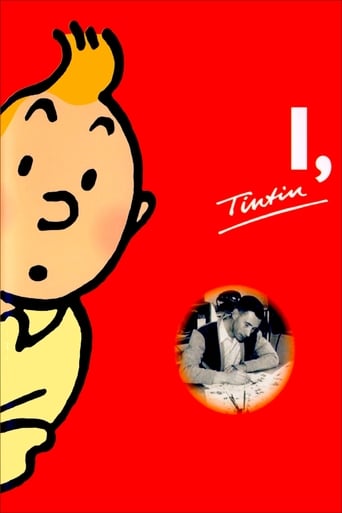
5.3The adventures of Hergé, or how Georges Remi created The Adventures of Tintin. Interviews, archive footage and animation clips tell the story of Tintin, which is the history of the 20th century.
I, Tintin
1976
 7.4
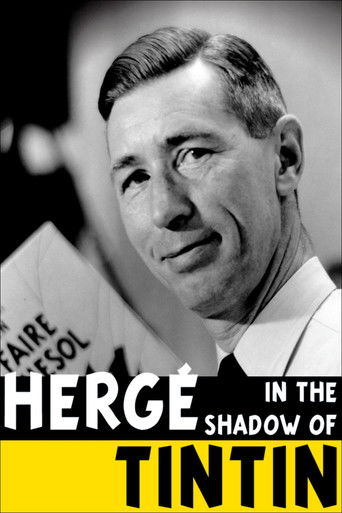
7.4Georges Remi, known as Hergé, a complex and complicated artist, created Tintin, one of the most famous characters in the world. With exceptional access to the archives of Studios Hergé and Moulinsart, this documentary looks at Remi's life and the way he changed the art of comic.
Hergé: In the Shadow of Tintin
2016
Film credits
2020s · 1 titles
2010s · 2 titles
7.4Georges Remi, known as Hergé, a complex and complicated artist, created Tintin, one of the most famous characters in the world. With exceptional access to the archives of Studios Hergé and Moulinsart, this documentary looks at Remi's life and the way he changed the art of comic.
Hergé: In the Shadow of Tintin
2016
 8.3
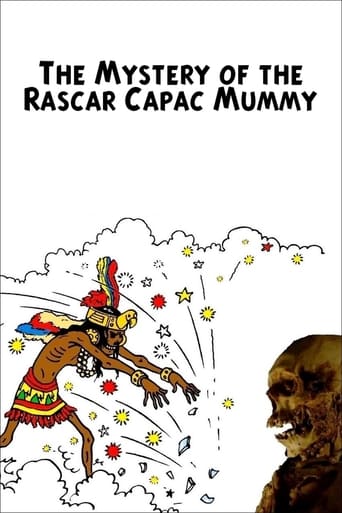
8.3Rascar Capac, the sinister creature featured on Hergé's album The Seven Crystal Balls (1948), has left its mark on many generations of readers. To draw it, the Belgian cartoonist was probably inspired by a mummy exhibited in the first pre-Columbian exhibition organized by the Brussels Cinquantenaire Museum in 1923. Two intrepid archaeologists embark on a fascinating journey to reconstruct the story of the mysterious mummy.
The Mystery of the Rascar Capac Mummy
2019
1990s · 2 titles
 6.0
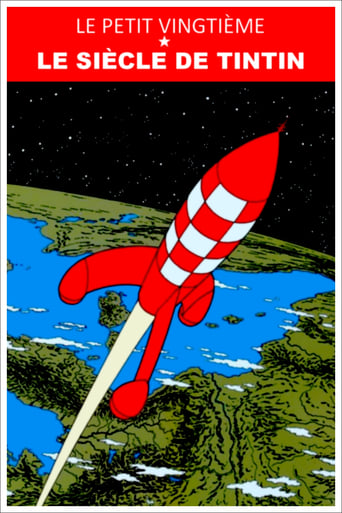
6.0From the beginning, Hergé's work, Tintin's creator, was conditioned by the ideology of his publisher, the weekly child supplement of a Belgian Catholic newspaper. An exciting analysis of the political meaning of the adventures of Tintin.
Le Petit Vingtième : le siècle de Tintin
1995
Hergé, widely recognized as the founder of the clear line style, reflects on his own work. What is a creator? What is an imagined world? What is a line? An ink stroke, a panel border... But what is the clear line style?
The Secret of the Clear Line
1995
Series credits
8.5Apostrophes was a live, weekly, literary, prime-time, talk show on French television created and hosted by Bernard Pivot. It ran for fifteen years (724 episodes) from January 10, 1975, to June 22, 1990, and was one of the most watched shows on French television (around 6 million regular viewers). It was broadcast on Friday nights on the channel France 2 (which was called "Antenne 2" from 1975 to 1992). The hourlong show was devoted to books, authors and literature. The format varied between one-on-one interviews with a single author and open discussions between four or five authors.
Apostrophes
1975
6.0A talk show presented by Michel Drucker
Les Rendez-vous du dimanche
1975
No synopsis available yet.
Samedi soir
1971