
Acting
Fred Düren
Born — Died
1928-12-02 — 2015-03-02
Place of birth
Berlin, Germany
Known for
Acting
Credits
56 titles
Known for
 6.2
Polizeiruf 110 is a long-running German language detective television series. The first episode was broadcast 27 June 1971 in the German Democratic Republic, and after the dissolution of Fernsehen der DDR the series was picked up by ARD. It was originally created as a counterpart to the West German series Tatort, and quickly became a public favorite.
Polizeiruf 110
1971
 NR
No synopsis available yet.
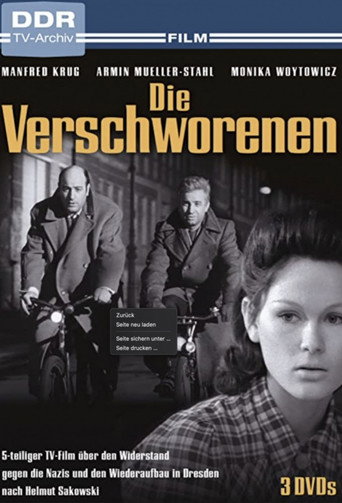
Die Verschworenen
1971
 5.3
Young seminary student Franziskus has been ceremonially ordained. He wants to escape the harshness and injustice of the world and devote himself to the service of God in the quiet seclusion of a monastery. He is also hoping to forget the beautiful lady Aurelie, whose life he saved in a flooded brook and with whom he spent an amorous night. He knows that her father would never allow her to marry him. But the devil dressed in a monk's habit and under the name Viktorin intervenes in Franziskus's destiny and attempts to lead him astray. To do so he first uses the diabolical elixirs kept at the monastery as a rare relic. When the young monk gets expelled from the monastery, Viktorin prepares another trap with the help of Aurelie's stepmother Euphemie.
The Devil's Elixirs
1973
 7.6
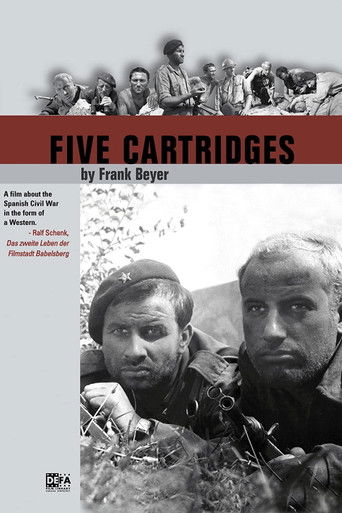
During the Spanish Civil War (1936-1939), five International Brigade soldiers of different nationalities are given a crucial assignment as their commander lies dying: they are to smuggle top-secret information across enemy lines.
Five Cartridges
1960
 6.0
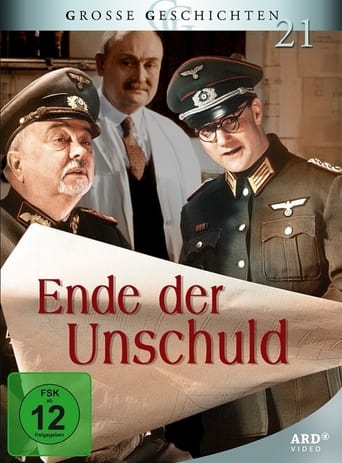
End of Innocence is a two-part television film that focuses on the work of the German Uranium Association during World War II. At Farm Hall in England, the ten German nuclear scientists interned there as part of Operation Epsilon learn of the dropping of the first atomic bomb on Hiroshima in August 1945. In flashbacks, the development of the German uranium project is recapitulated chronologically from the discovery of nuclear fission by Otto Hahn to the work of Kurt Diebner at the Heereswaffenamt to the experiments of the Kaiser Wilhelm Institute for Physics under Werner Heisenberg and Carl Friedrich von Weizsäcker at the Haigerloch research reactor in spring 1945.
End of Innocence
1991
 7.0
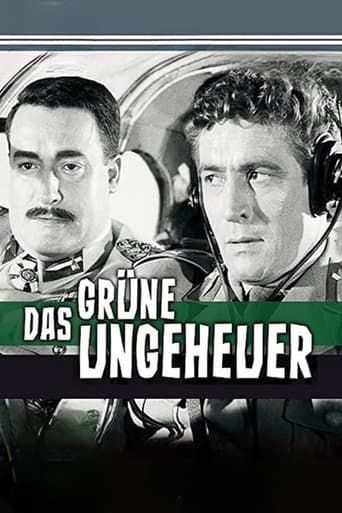
On the run from police in America, Antonio Morena, a former World War II aviator and black-marketeer, finds himself in South America working for the all-powerful United Fruit Company, known to the natives as "the Green Monster".
The Green Monster
1962
Film credits
1980s · 9 titles
 6.3
Sunny is the singer of a band trying to establish itself in the East Berlin music scene. They play regular gigs in small towns, but Sunny feels out of touch with the audience and with her life as a whole. She begins a relationship with Ralph, an amateur saxophonist and philosophy student, who writes her a very personal song—but his obsession with death and unfaithful lifestyle are not for her. After getting into a quarrel with a band member who harasses her and telling off a show host, she is thrown out of the band. Abandoned, she struggles to regain control over her life.
Solo Sunny
1980
 5.5
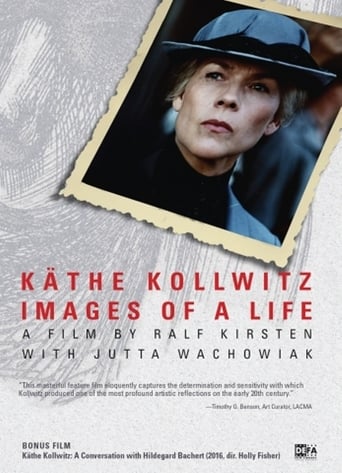
Kathe Kollwitz was 47 years old, and already a well established artist in Germany and abroad when Peter, her youngest son, volunteered to join the German army in WWI and was killed two weeks later. This painful tragedy changed Kollwitz's life and art forever.
Käthe Kollwitz – Pictures of a Life
1987
1985 East German television recording of a production of the play of the same name.
Torquato Tasso
1985
 9.0
The plot revolves around three men waiting to be deported in a prison. To escape the monotony, they form chess pieces from their bread rations, with which they then play against each other. Grünstein, a Polish Jew, proves to be a real talent, because although he is a beginner, he manages to defeat even the experienced player Lodeck, a German sailor, with his "Grünstein Variant".
Die Grünstein-Variante
1985
 9.0
In a small village in West Prussia in the 1870s, Germans, Poles, Gypsies and Jews live together as neighbors. One night Johann, a German mill-owner, secretly opens the dam gates and floods the mill of his Jewish rival Levin. After his business is ruined and his calls for justice go unanswered, Levin leaves town.
Levin's Mill
1980
 7.0
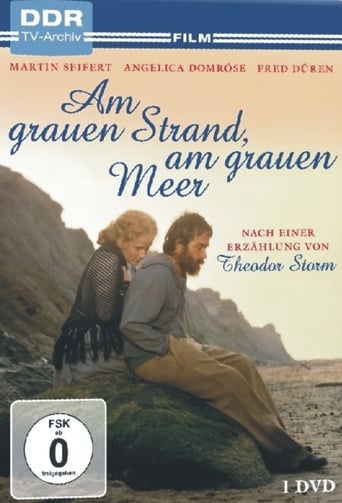
An adaptation of Theodor Storm's novella "Hans and Heinz Kirch".
Am grauen Strand, am grauen Meer
1980
 4.9
In the fall of 1945, nineteen year-old Mark Niebuhr, is accused of murder and is jailed as a prisoner of war in Warsaw, Poland. He maintains his claim of innocence throughout long periods of solitary confinement. When Mark is placed among a group of Polish criminals, he becomes the target of their aggression. Later, Mark experiences true hell in a communal cell with fanatical German war criminals. Turning Point is based on actual events from Hermann Kant's novel of the same name.
The Turning Point
1983
 8.0
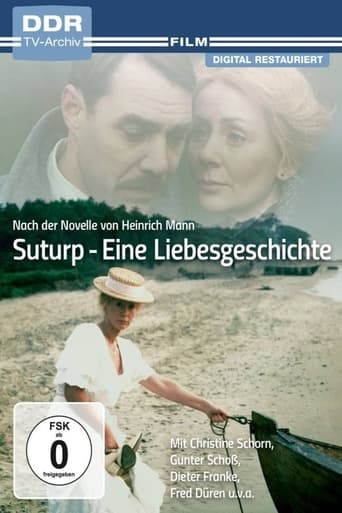
It is the time before the First World War - in a fishing village on the Baltic Sea coast, the unusual love story of the young, ambitious lawyer Belling and the fun-loving actress Franziska begins. The young couple believes in career in the neighboring big city, would not be there the rich businessman of Elchem, who limits their love power of his money. Franziska has found an admirer and patron in the entrepreneur - a woman between two men who plays, but cleverly he makes the couple financially dependent on himself... The film adaptation of the novelle by Heinrich Mann describes the moral decay of a social layer fixed on success and money at the beginning of the 20th century.
Suturp - eine Liebesgeschichte
1981
 8.0
This film, based on a story by Theodor Storm, revolves around the young Hauke Haien, who lives near the sea and improves the safety of the inhabitants with his new ideas for building dykes. However, his new methods and his rejection of conservative traditions, such as the "sacrifice" of a living creature when building a dyke, are not welcomed by the local population, which leads to him meeting with great rejection and ultimately even becoming his undoing.
Der Schimmelreiter
1985
1970s · 13 titles
5.3Young seminary student Franziskus has been ceremonially ordained. He wants to escape the harshness and injustice of the world and devote himself to the service of God in the quiet seclusion of a monastery. He is also hoping to forget the beautiful lady Aurelie, whose life he saved in a flooded brook and with whom he spent an amorous night. He knows that her father would never allow her to marry him. But the devil dressed in a monk's habit and under the name Viktorin intervenes in Franziskus's destiny and attempts to lead him astray. To do so he first uses the diabolical elixirs kept at the monastery as a rare relic. When the young monk gets expelled from the monastery, Viktorin prepares another trap with the help of Aurelie's stepmother Euphemie.
The Devil's Elixirs
1973
 5.3
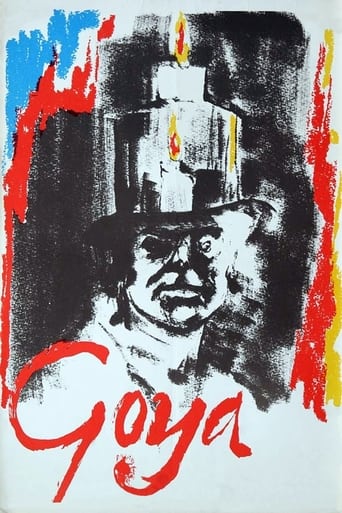
As a painter in the court of King Carlos IV, Goya has attained wealth and reputation. He believes in King and Church, yet he is also a Spaniard who dearly loves his people. This contradiction presents him with a dilemma.
Goya: Or the Hard Way to Enlightenment
1971
 7.5
This musical comedy based on an opera by Jacques Offenbach incorporates a twist on the classic Greek myth: Orpheus, a music teacher at a girls’ school in the ancient Greek city of Thebes, actually does not miss his wife Eurydice that much – until the gods and Offenbach himself pressure him to retrieve her from Hades.
Orpheus in the Underworld
1974
No synopsis available yet.
Auftrag für M & S
1977
 7.0
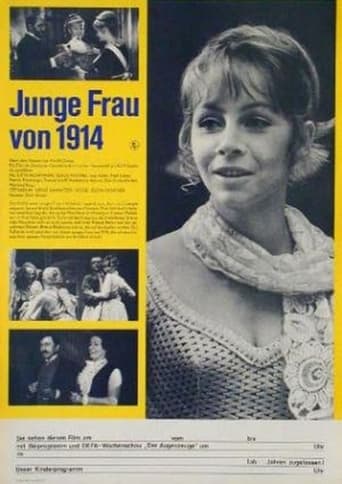
In 1914 Berlin, bank heiress Leonore Wahl and struggling Munich student Werner Bertin fall passionately in love, defying class and her parents’ expectations. Their idyll is shattered by the outbreak of WWI: Werner, swept up in patriotic fervor, is conscripted to the Western Front, while Leonore, pregnant and abandoned, faces her family’s condemnation and a clandestine abortion. Set against the tumult of war, the film explores idealism, social divides, and the personal costs of duty and desire.
Junge Frau von 1914
1970
 7.2
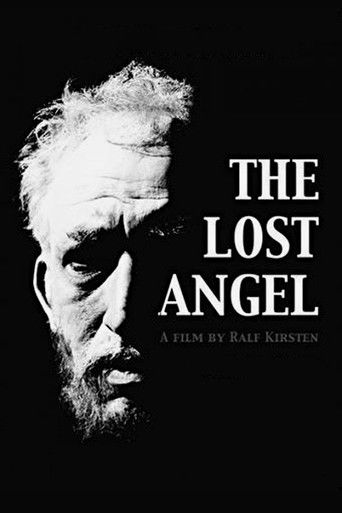
August 24, 1937: a day in the life of expressionist sculptor and author Ernst Barlach (Fred Düren). Barlach lives in the small town of Güstrow, keeping to himself and wanting to steer clear of politics. On this day he learns that the Nazis have dragged his famous 1927 sculpture The Hovering Angel out of the Güstrow Cathedral. Barlach begins to reflect on his life of “inner emigration” and on his work.
The Lost Angel
1971
 4.5
The clever but poor farmer Klaus infuriates the rich big Klaus with his mischief. But little Klaus always manages to get out of the most difficult situations and emerge victorious in the end. But one day, big Klaus has a fit and wants to drown little Klaus. Now he once again has to rely on his intuition and his wit ...
Der kleine und der große Klaus
1971
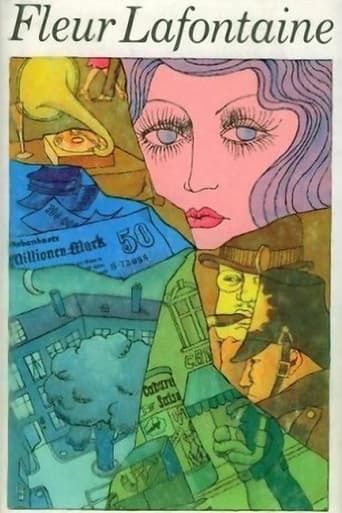 10.0
Berlin, 1948: Paralyzed and robbed of her memory, Fleur regains consciousness after a serious fall. The doctor treating her recognizes that her problem is of a psychological nature and encourages her to face up to her past. The daughter of a brothel owner is reluctant to look back: on a hapless childhood, her relationships with bon vivant Dr. Goldner and the politically committed locksmith Philipp (Hilmar Thate) as well as the difficult period of fascism... This exciting journey into the German past is based on Dinah Nelken's novel "Das angstvolle Heldenleben einer gewissen Fleur Lafontaine".
Fleur Lafontaine
1978
 8.0
The starting point of the story is a scandalous affair that took place in West Germany at the end of the 1950s. It began with the unexpected death of a member of the Bundestag who was known to the public as a well-paid lawyer and influential man in politics. What was not known, however, was that he mysteriously died of poisoning in a foreign hospital for the poor. It was concealed that the deceased, as a contact person for a Swiss arms company, represented a West German arms contract worth 2.5 billion marks. The Military Counterintelligence Service tried everything to conceal the explosive events...
Das letzte Wort
1971
 8.0
The writer Schaffrath enters the office of Dr. Hans Kahler, a graduate engineer, and asks if he may look around the facility, as he intends to write a report on the workers in the new section of an oil refinery.
Netzwerk
1970
 6.0
Adaptation of Antoine de Saint-Exupéry's novella for East German television, produced in 1965/66, not shown until 1972.
The Little Prince
1972
A writer researching an international partisan group during World War II meets with a contemporary witness. Together, they visit the sites of the events in Poland, which bring back memories for the woman. Television film based on the novella of the same name by Kurt David.
Die Überlebende
1975
In the spring of 1969, a young man from a small town arrives at the partner company in Berlin, where he falls in love with red-haired Rita. A love story about "everyday heroes," in which director Egon Günther continues his idiosyncratic formal experiments with actress Jutta Hoffmann, which he began in "Junge Frau von 1914" (Young Woman of 1914).
Anlauf
1971
1960s · 16 titles
7.6During the Spanish Civil War (1936-1939), five International Brigade soldiers of different nationalities are given a crucial assignment as their commander lies dying: they are to smuggle top-secret information across enemy lines.
Five Cartridges
1960
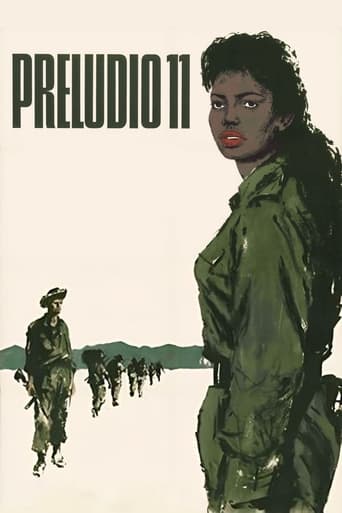 7.0
Daniela – a single mother, whose boyfriend left for the US – believes wholeheartedly in Cuba's revolutionary new order. Meanwhile, in Florida, a plot is afoot. Under the command of an American officer, four Cubans ex-patriots and a Guatemalan land on the Cuban coast to prepare a US invasion of the island. Daniela's superior, the corrupt Cuban officer Palomino, is secretly helping the invaders and the young woman becomes entangled in the intrigue.
Preludio 11
1964
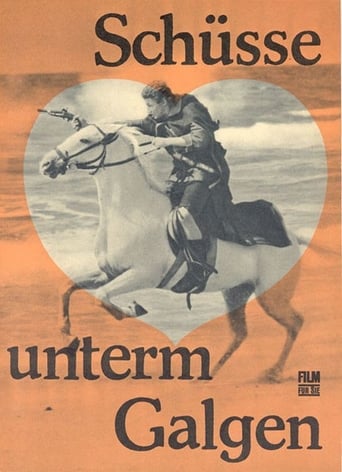 9.0
In Scotland in 1751, young David Balfour is shanghaied aboard a ship where he meets Jacobite rebel Alan Breck Stewart with whom he escapes to the Scottish Highlands, dodging the redcoats.
Schüsse unterm Galgen
1968
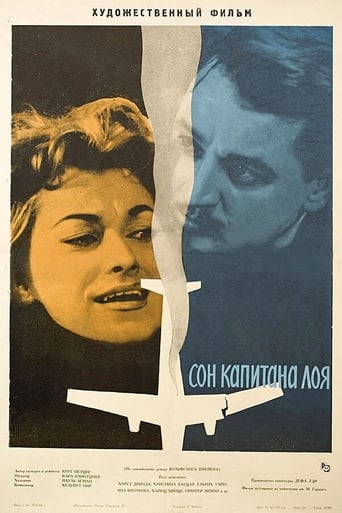 8.0
An American military plane takes six people, who have taken part in a NATO maneuver, from Tripoli to Oslo. Among them are the British Captain Loy and the United States Air Force Corporal Doris Graves. During the flight, the two become closer, and they regret that the trip will end that evening. But everything turns out differently. The flight captain has received orders to pick up an agent at a German NATO airport, who is to be dropped off again on a Soviet island …
The Dream of Captain Loy
1961
 8.0
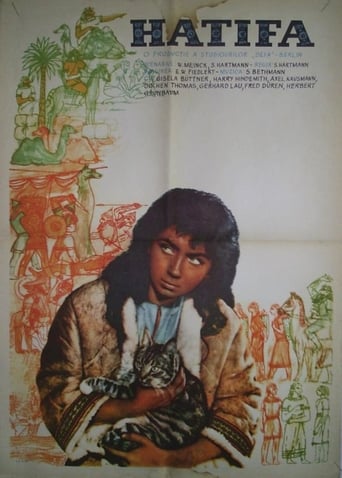
Hatifa is tired of her difficult fate and escapes from the place of her enslavement, a quarry in the desert. There she wanders around in freedom, but ultimately helpless, without water or food. Shortly before dying of thirst, she is saved by the sage Simsal, who is traveling with a caravan of the merchant Ganem. Hatifa quickly makes many friends, including the young servant Hodja. Only to him she confides her secret. The girl had to keep the fact that she was a slave to herself. After all, anyone who helps escaped slaves is mercilessly threatened with the death penalty. Out of consideration for the caravan, they both flee, but are soon picked up by Ganem. When he realizes that he can make a lot of money with Hatifa, he sells her again to a quarry.
Hatifa
1960
 7.0
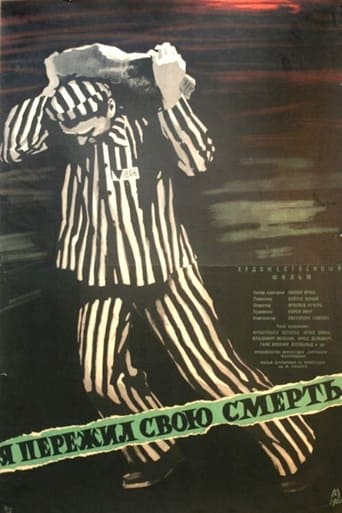
Telling the prisoners of a death camp. Boxer Tony Majer, who got into a concentration camp for a fight with the Gestapo, remembers the murderous work in quarries, on the cruel torture of the Nazis and prison solidarity that helped him survive.
I Survived Certain Death
1960
 8.0
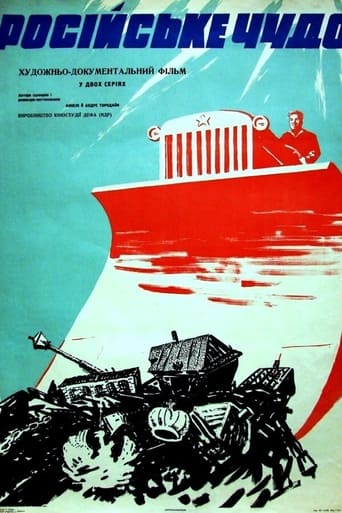
A two-part East German documentary tracing Russia’s transformation from the Tsarist Empire to the Soviet Union, from the 1917 October Revolution to the achievements of the space program. Directed by Andrew Thorndike and Annelie Thorndike, the film assembles extensive archival footage to chart political upheaval, ideological consolidation, and technological ambition in twentieth-century Russia. Produced by DEFA and first broadcast on East German television in 1963.
The Russian Miracle
1963
 6.3
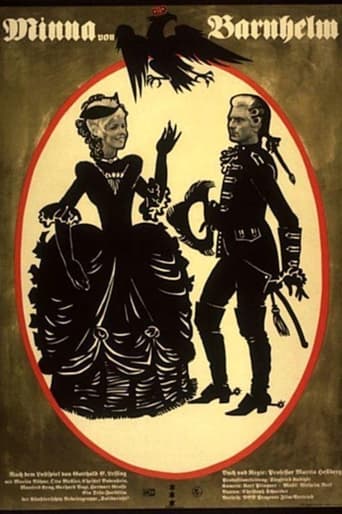
This film takes place during the Seven Years' War. The Prussian Major von Tellheim has become engaged to the Saxon noblewoman Minna von Barnhelm. After the war, the King - in an unwarranted move - deprives the major of his honor. Von Tellheim becomes impoverished and, filled with shame, breaks off his relationship to Minna. An innkeeper in Berlin, who is a police informer, makes the Major move to a shabby little attic because he cannot pay his debt. In the meantime, Minna has also arrived at the inn. She and her lady's maid Franziska are questioned and spied on by the nosy innkeeper. Minna has followed her beloved Tellheim and she now cunningly manages to elicit a new declaration of love from him...
Minna von Barnhelm oder Das Soldatenglück
1962
 10.0
Biography of the comic poet Carlo Goldoni (1707-1793).
Italienisches Capriccio
1961
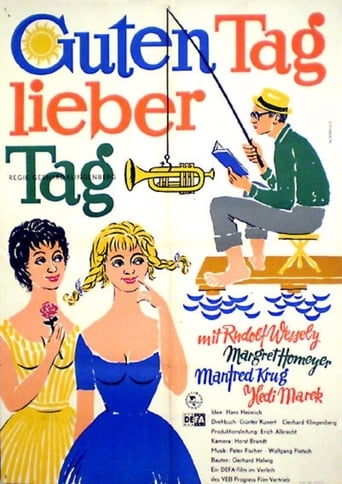 8.0
Engineer Strebel′s apprentices think of nothing else but music and dancing, although they should really concentrate on their marks. Consequently, Strebel is anything but delighted with his pupil. To top it all, a TV show becomes interested in a performance by Strebel′s apprentices. To calm down their teacher, Jutta Fröhlich, who has already cast an eye on Strebel, makes him an offer: When they better their marks, Strebel would permit them to make a performance on television.
Guten Tag, lieber Tag
1961
 6.6
A wild story set in eighteenth-century Prussia. Alexander can do everything that a real devil of a fellow must be able to do: ride, shoot, love and devise clever plots. As a result, he is able to climb the ladder from herder to chamber master, where he makes a fool of the feudal lords.
Mir nach, Canaillen
1964
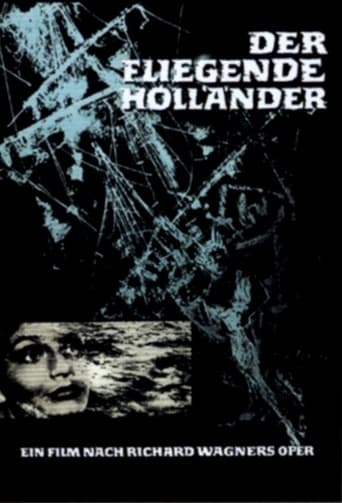 5.8
In order to escape her narrow and restrictive life, Senta, the daughter of a rich shipowner, seeks refuge in her fantasies and dreams. In this realm of imagination, a bold and restless sea captain appears to her—the Flying Dutchman—who is cursed to wander the seas forever. In her obsessive dreams, Senta frees this man through her love for him.
The Flying Dutchman
1964
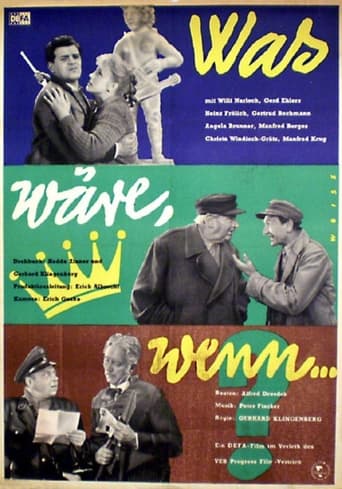 9.0
In the late 1950s, the collectivization of agriculture is in full swing in the East German village of Willshagen on the German-German border. Those in charge have to face many obstacles, especially from a large-scale farmer who is unwilling to join the co-op. All of a sudden, mysterious men in a fancy car appear in the village and show an interest in the rundown manor house. Gossip spreads quickly, and some villagers think there will be a re-parceling of properties and a land swap with West Germany. They assume everything will go back to how it used to be and even expect the count to return to his manor. In preparation, the situation in the village escalates at a fevered pitch.
What Would Happen If...?
1960
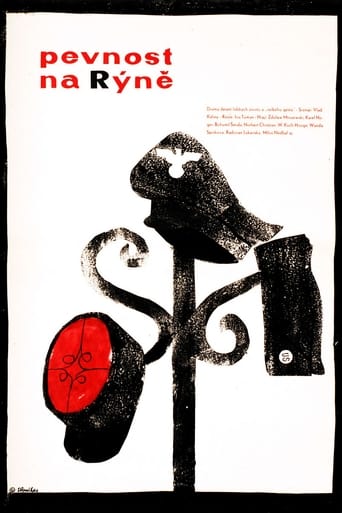 8.0
During the Second World War, an old fortress is transformed into a detention camp for arrested allied generals who the Germans provide with every possible comfort. In the nearby garrison camp, however, hundreds of captured private soldiers try to survive hunger and cold.
Fortress on the Rhine
1962
No synopsis available yet.
Toter Winkel
1960
 NR
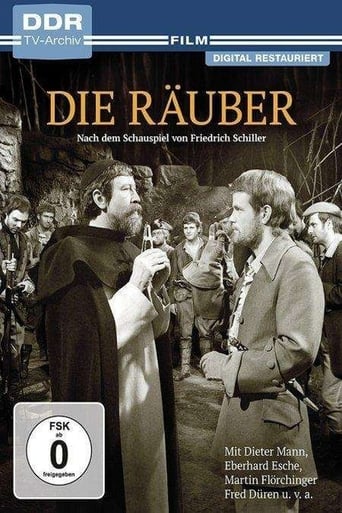
Germany in the 18th century. Two brothers rebel against the narrow confines of the small state and feudal despotism. However, Franz and Karl Moor have very different motives: Franz is interested in satisfying his personal needs, power and wealth, while Karl has a vision of a new, better society. To achieve this, he needs support. He finds it in a gang of robbers, of which he becomes the leader. He soon learns that anarchy can neither rally the masses nor challenge the existing order.
Die Räuber
1967
1950s · 9 titles
 7.0
A refugee from a Nazi concentration camp is discovered by some boys in WWII Berlin. They provide him with food and help him to continue his flight. Later one of the boys, the son of a communist, is charged with theft, arrested and sent to a concentration camp.
They Called Him Amigo
1959
 6.2
A film about the historical uprising of the seamen in Kiel: During the Russian October Revolution of 1917, German and Russian soldiers start to solidarize with each other. By disarming the officers, machinist Henne Lonke and stoker Jens Kasten prevent the attack on a Russian freighter. When German admiralty gives out orders for operation "Nibelungen", which would lead the German fleet into a suicidal attack against England and quell the revolutionary spirit, seamen and soldiers from different political backgrounds unite in protest.
The Sailor's Song
1958
 6.8
A story about thirteen years old Kalle who is moving with the family from West Berlin to East.
Sheriff Teddy
1957
No synopsis available yet.
Die Mutter
1958
 8.0
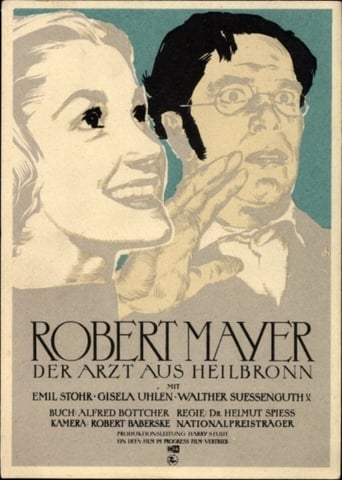
Biographical movie about Julius Robert Mayer (1814-1878), a surgeon and town doctor in Heilbronn, who studied heat for many years and was the first to correctly formulate the basic principles of the theory of mechanical heat and the principle of conservation of energy. Competing Prussian scientists laugh at him, and his life is full of misunderstandings and persecution. The film tells of his fate and his long and futile struggle for recognition of the results of his scientific work.
Robert Mayer, der Arzt aus Heilbronn
1955
 8.5
In a casino in a West German health resort, one often sees Sybille - an attractive young student actress. With her winnings from the roulette table, she attempts to finance her studies. Despite a rather lucky streak, her winnings are a little on the lean side. She doesn't, however, gamble with her own money but with that of Dr. Busch, a lawyer, who likes to stay in the background with the argument that gambling houses are not the proper turf for a serious lawyer. From him, Sybille receives only a small share of her winnings later, and only through the intervention of Gerhard Fischer, a journalist, does Sybille come to realize her role in Dr. Busch's fraudulent scheme.
The Casino Affair
1957
No synopsis available yet.
Mutter Courage und ihre Kinder
1957
No synopsis available yet.
Der Herr aus Zürich
1958
 7.0
The important German wood sculptor Tilman Riemenschneider (born around 1460) is considered to be artistically and socially established. He was a councillor in Würzburg and held several offices. In his works and in the way he conducted his office, he showed himself to be connected to the common people, who revered him. But he also had a patron in the art-loving Prince-Bishop Konrad von Thüngen. But when the peasants' uprising spread to Würzburg in 1525, Riemenschneider stood up for the rights of the peasants and opposed the use of soldiers, Thüngen became his bitter opponent. Although he initially flees from the superior forces, he returns after the uprising has been suppressed and imprisons Riemenschneider. Weeks later, he is released from prison. His hands were broken, but not his steadfastness.
Tilman Riemenschneider
1958
Series credits
6.2Polizeiruf 110 is a long-running German language detective television series. The first episode was broadcast 27 June 1971 in the German Democratic Republic, and after the dissolution of Fernsehen der DDR the series was picked up by ARD. It was originally created as a counterpart to the West German series Tatort, and quickly became a public favorite.
Polizeiruf 110
1971
NRNo synopsis available yet.
Die Verschworenen
1971
6.0End of Innocence is a two-part television film that focuses on the work of the German Uranium Association during World War II. At Farm Hall in England, the ten German nuclear scientists interned there as part of Operation Epsilon learn of the dropping of the first atomic bomb on Hiroshima in August 1945. In flashbacks, the development of the German uranium project is recapitulated chronologically from the discovery of nuclear fission by Otto Hahn to the work of Kurt Diebner at the Heereswaffenamt to the experiments of the Kaiser Wilhelm Institute for Physics under Werner Heisenberg and Carl Friedrich von Weizsäcker at the Haigerloch research reactor in spring 1945.
End of Innocence
1991
7.0On the run from police in America, Antonio Morena, a former World War II aviator and black-marketeer, finds himself in South America working for the all-powerful United Fruit Company, known to the natives as "the Green Monster".
The Green Monster
1962
 NR
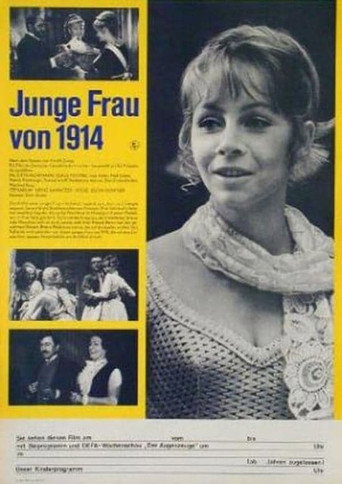
In 1914 Berlin, bank heiress Leonore Wahl and struggling Munich student Werner Bertin fall passionately in love, defying class and her parents’ expectations. Their idyll is shattered by the outbreak of WWI: Werner, swept up in patriotic fervor, is conscripted to the Western Front, while Leonore, pregnant and abandoned, faces her family’s condemnation and a clandestine abortion. Set against the tumult of war, the film explores idealism, social divides, and the personal costs of duty and desire.
Junge Frau von 1914
1970
 10.0
A German couple start a silent campaign against Hitler's dictatorial reign after the loss of their only son at the front.
Everyone Dies Alone
1970
No synopsis available yet.
Doppelt oder nichts
1964