
Known for
 5.7
After the audience is instructed how to use the 3-D glasses they received, demonstrations of three-dimensional films are presented. Various objects move towards the camera, including a ladder being shoved out a window, the slide on a trombone, a woman on a swing, and a thrown baseball.
Audioscopiks
1935
 7.0
Experiments with Stereoscopic film. This film was released on 17 December 1922 in the Ives-Leventhal stereoscopic (3D) process. It was re-released on 22 September 1924 in New York City with sound recorded by the DeForest Phonofilm process. The same effect of the Plastigram Glasses can be achieved by inverting a pair of anaglyph 3D glasses, making cyan on the left and red on the right.
Plastigrams
1922
 6.7
A Pete Smith short that deals with the newly-created 3-D process.
The New Audioscopiks
1938
Mechanical drawings are used to explain how motion picture machines work.
Why Movies Move
1918
 NR
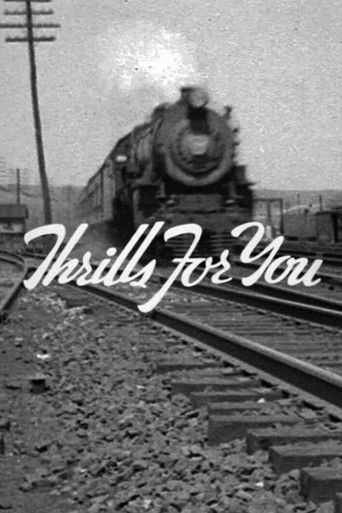
Pioneering 3D promotional film about the Pennsylvania Railroad.
Thrills for You
1940
Behind the camera
5.7After the audience is instructed how to use the 3-D glasses they received, demonstrations of three-dimensional films are presented. Various objects move towards the camera, including a ladder being shoved out a window, the slide on a trombone, a woman on a swing, and a thrown baseball.
Audioscopiks
1935
7.0Experiments with Stereoscopic film. This film was released on 17 December 1922 in the Ives-Leventhal stereoscopic (3D) process. It was re-released on 22 September 1924 in New York City with sound recorded by the DeForest Phonofilm process. The same effect of the Plastigram Glasses can be achieved by inverting a pair of anaglyph 3D glasses, making cyan on the left and red on the right.
Plastigrams
1922
6.7A Pete Smith short that deals with the newly-created 3-D process.
The New Audioscopiks
1938
Mechanical drawings are used to explain how motion picture machines work.
Why Movies Move
1918
NRPioneering 3D promotional film about the Pennsylvania Railroad.
Thrills for You
1940